



If you consider this small town to be more than just a quick train stop, this list of the best things to do in Ollantaytambo is for you. This small Sacred Valley village has major Inca ruins, living stone streets, mountain views in every direction, and enough nearby adventures to fill at least a couple of days of your itinerary.
You can climb its terraces in the morning, browse its markets at lunch, take a short hill walk in the afternoon, and still have time for a good dinner before taking your train to Machu Picchu or your next Inca Trail hike. The beauty of Ollantaytambo is that it feels practical and atmospheric at the same time. It works for first-time visitors, independent travelers who are traveling to Machu Picchu, couples, hikers, and anyone who wants a Sacred Valley base that is scenic without feeling overcomplicated.
Why is Ollantaytambo worth visiting?
Many travelers use Ollantaytambo as a base for their travels to Machu Picchu, since many trains depart from its train station to the Inca citadel. But the place is much more than it seems.
Ollantaytambo was an Inca fortress ordered to be built by the Inca Pachacutec in the 15th century on a pre-Inca structure belonging to the Tampus. In addition to being a fortress, the structure served as an administrative and customs center for trade between the Inca capital, Cusco, and the Antisuyo (where Machu Picchu is located).
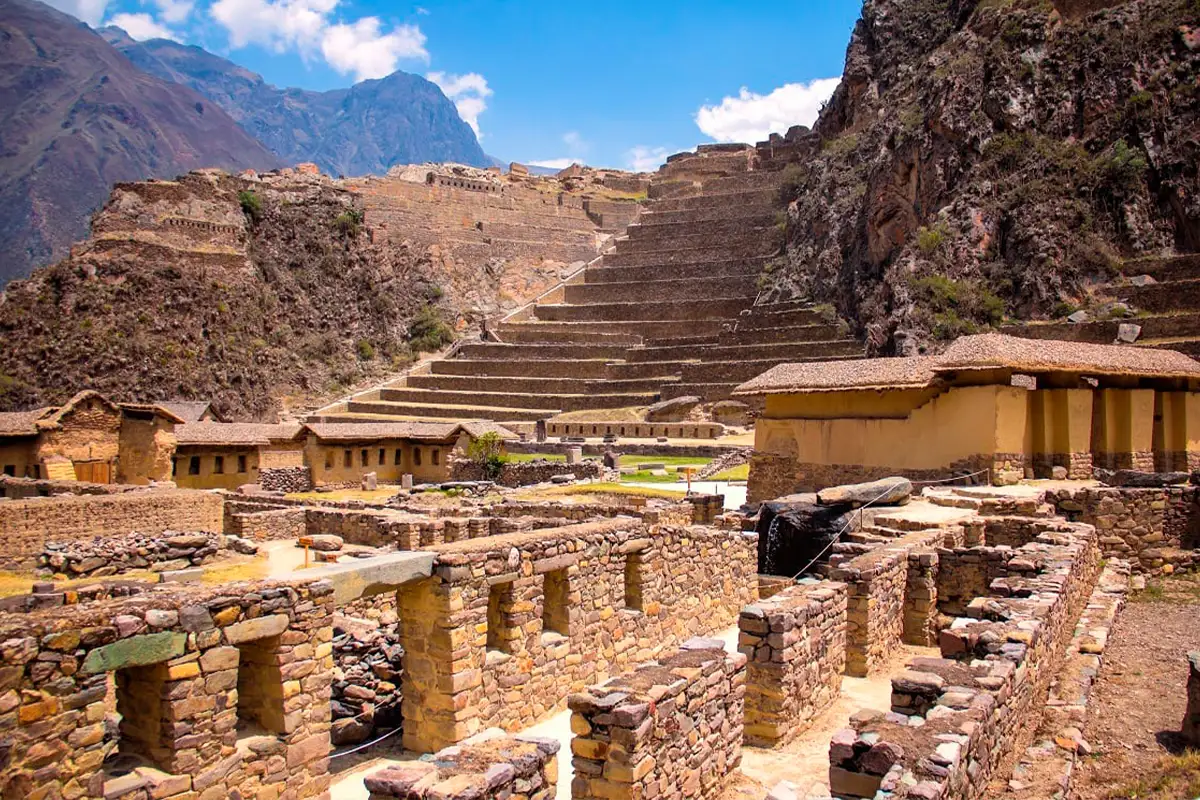
Furthermore, it was the last Inca stronghold. During the Spanish invasion of Cusco, Manco Inca, as the last Inca ruler, used it to resist the European onslaught, defeating them in 1537. Of course, subsequent events forced Manco Inca to abandon the fortress and flee into the Peruvian jungle (Vilcabamba).
Today, Ollantaytambo is easier to walk than in Cusco, calmer than many Peru attractions, and rich in the details that make the place memorable: narrow lanes, running water channels, mountain backdrops, and a real mix of visitor life and local life. Thus, Ollantaytambo is also an old neighborhood, with free viewpoints, small markets, gastronomy, and the feeling of waking up somewhere that still looks and sounds like an Inca town in the current times.
If you are still deciding what to do in Ollantaytambo, the best answer is simple: stay long enough to combine the visit of its famous highlights with its quieter corners. That way, the town stops feeling like a transfer point to the Inca wonder and starts feeling like part of the reason to come to Machu Picchu, Sacred Valley, or Cusco at all.
Many of the top experiences in town are close together, so you can enjoy a full day without spending half of it in transit.
Shall we get started?
The best things to do in Ollantaytambo
Explore the Ollantaytambo archaeological site
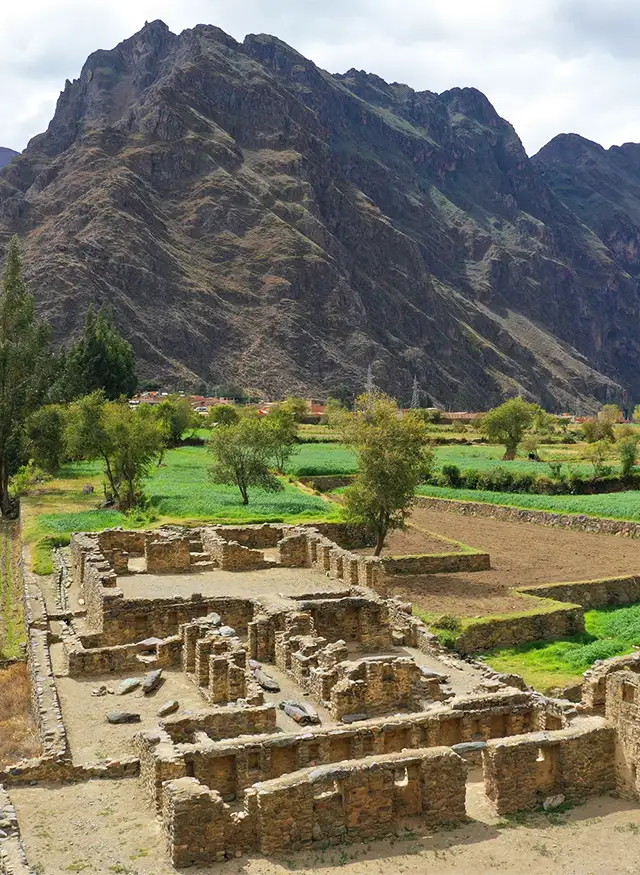
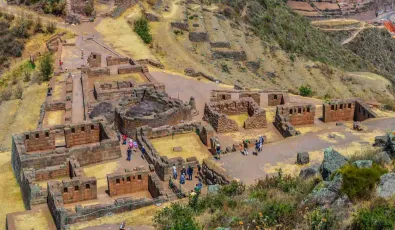
Start with Olantaytambo sanctuary, the main archaeological park, because it gives you the clearest sense of why Ollantaytambo mattered so much to the Incas. On any serious list of things to do in Ollantaytambo, this should be the first stop. This was not just a scenic hill with terraces. It was a fortified city built under Inca Pachacútec and later used as a stronghold by Manco Inca during the Spanish conquest. In practical terms, that means you are visiting a place that combined military defense, religion, farming, administration, water engineering, and urban planning in one dramatic setting above the Sacred Valley.
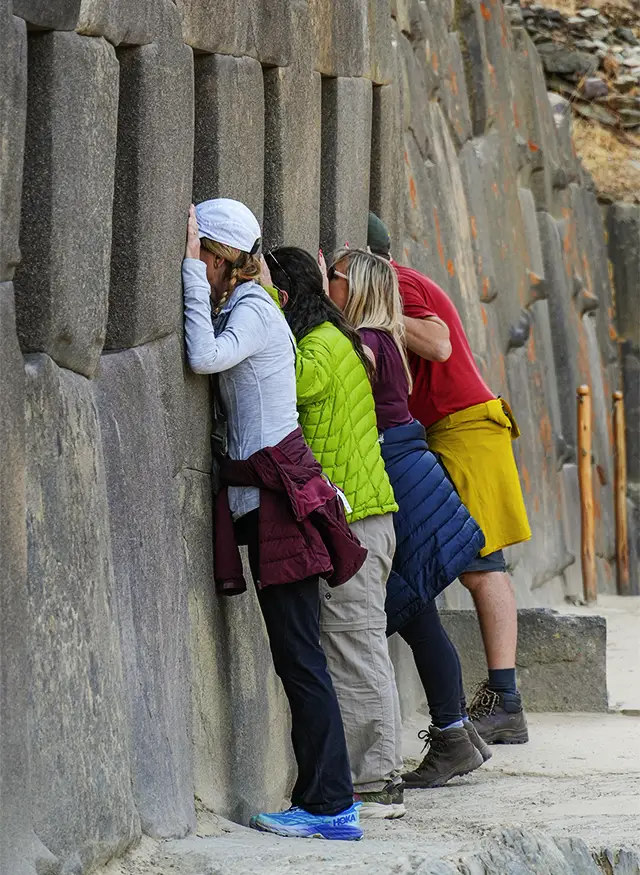
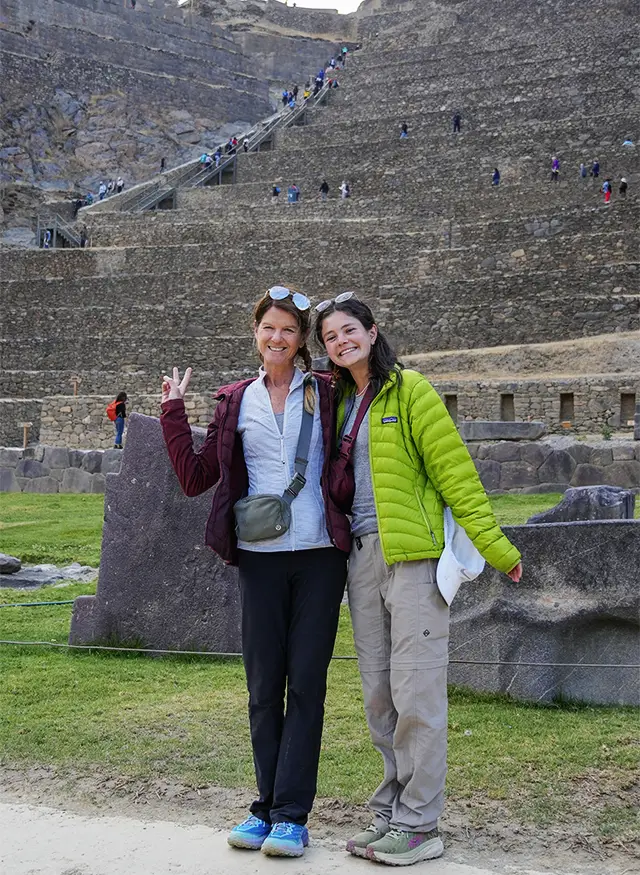
What makes the site so rewarding is its variety. The broad terraces are the first thing you notice, but they are only the beginning. As you climb, you reach the finely worked Wall of Ten Niches and then the Temple of the Sun, a striking structure made from six huge red porphyry monoliths. Lower down, there are ceremonial water features, including the Baño de la Ñusta, where water still runs through carved stone. The canals, fountains, and terraces are not random details. They show how closely Inca design connected ritual, agriculture, and control of the landscape. That is why even travelers who do not usually care much about archaeology often end up loving this site.
 |  |
One useful detail...
There is no standalone ticket for Ollantaytambo. Entry is through the Cusco Tourist Ticket (a several-entry ticket gathered into a single one). As of the current official COSITUC tariff, the Sacred Valley partial ticket is US$ 21 for foreign visitors and US$ 12 for Peruvians or residents, while the full ticket is US$ 39 and US$ 21.
From Plaza de Armas, walk west along Calle Principal and you will reach the entrance in about five minutes. From the train station, it is closer to 20 minutes uphill, or a short tuk-tuk ride.
The official visiting hours are 7:00 a.m. to 4:30 p.m. For the best user experience, go early, carry water and sun protection, and expect real stair climbing if you want the full visit. If altitude or mobility is a concern, the lower part of the park still gives you a very good look at the terraces and stonework.
Go hiking on the easy trail in Pumamarca
Pumamarka is a much quieter archaeological outing, and that is exactly why it deserves space on this list. It lies 6 km north of Ollantaytambo, at around 3,427 m, in the Patacancha valley, and feels far more remote than the famous ruins in town. It was an important 15th-century Inca military fortress and agricultural center, designed to oversee the Patacancha Valley. It served as a strategic point for defense, access control, and food production to protect Ollantaytambo and the Sacred Valley.
The hike from Ollantaytambo to the site and back is not the gentlest stroll on this list. It is a longer, mostly uphill hike from town. The easier version, and the one many independent travelers now prefer, is to take a colectivo or local transport that takes them halfway along the pedestrian path to Pallata (20 minutes by car), climb a path (1 hour of hiking), visit the ruins from there, and then walk back downhill to Ollantaytambo (01:30 hrs of walking).
For the best experience, start in the morning, take water, sun protection, snacks, and an offline map, and try to do it in stable weather. This is one of the best things to do in Ollantaytambo for travelers who want a quieter half-day with archaeology and scenery in the same outing.
Climb up the Pinkuylluna hill and its Inca granaries
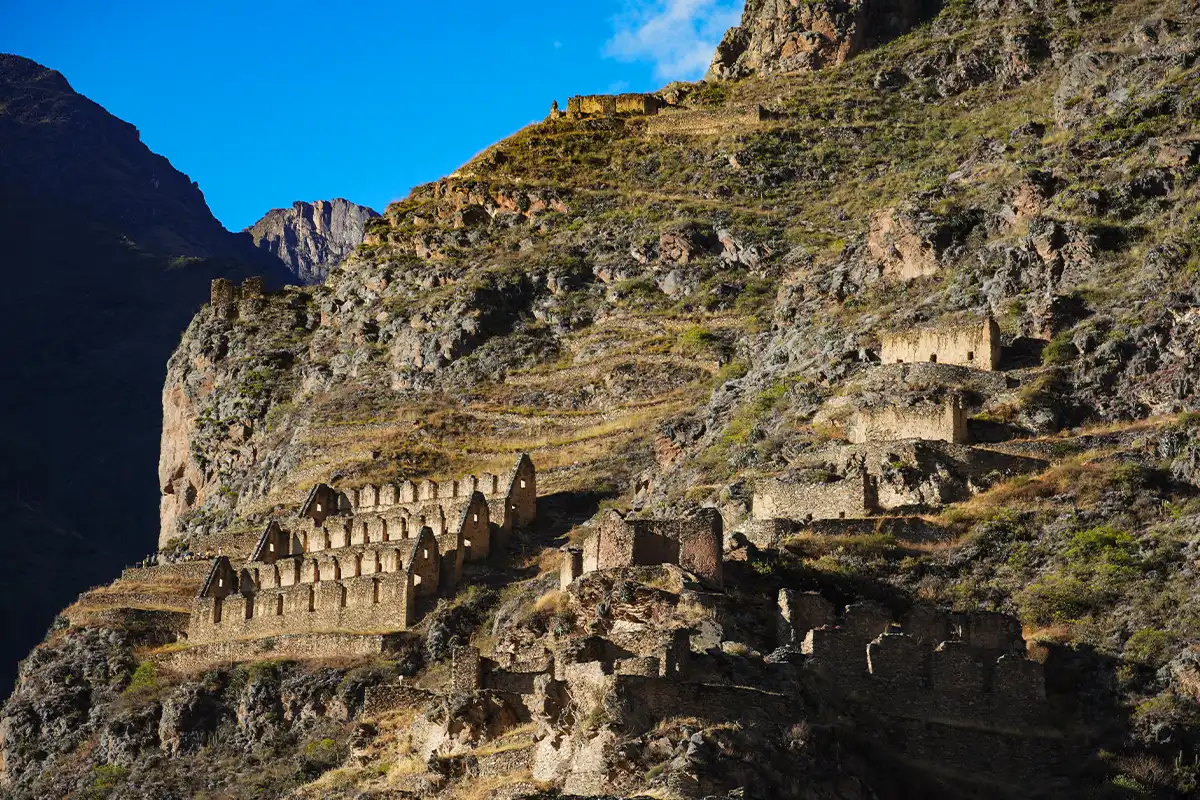
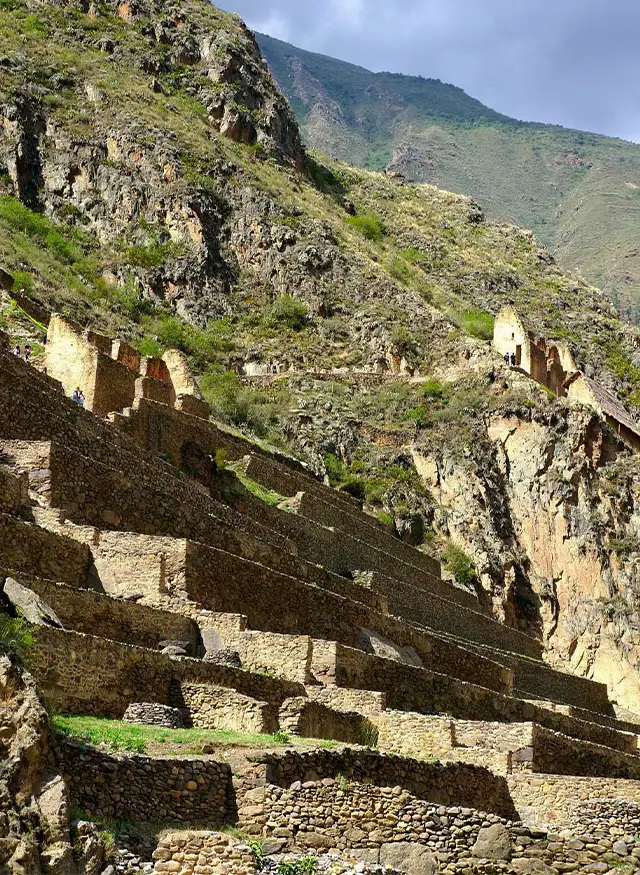
Hiking the Pinkuylluna is one of the town’s best short adventures. The uphill path is real enough to feel earned, but the reward comes quickly: wide views over the town's rooftops, the valley, and the Ollantaytambo ruins across the way. But the most remarkable thing is walking among the Inca granaries found there. These served to store essential foods such as corn, chuño (freeze-dried potatoes), quinoa, and dried meat, as well as clothing, weapons, llama fodder, and basic building materials for times of famine, disasters, or to feed the elderly, thanks to their excellent ventilation.
This experience feels wilder, quieter, and more personal than the visit to the main site, which is exactly why so many travelers end up loving it.
The pedestrian access starts from Qosqo Ayllu, the trail entrance is located on or just off Calle Lares, a short walk from Plaza de Armas. The walk from town is about 300 m / 20 minutes, and currently the entrance to the site is free, with visiting hours of 7:30 a.m. to 4:30 p.m. In practice, most visitors allow 30 to 45 minutes to climb, plus extra time for photos and pauses. Go slowly, bring water, and do not rush the descent. Late afternoon is especially beautiful here, because the light over the ruins and town is softer and more golden.
Visit the Qelloraqay archaeological site
Qelloraqay is small, but it deserves more than a quick mention. The Inca site includes square and rectangular enclosures, a long open cancha-like area, and terraces around the southern side of Ollantaytambo, besides irrigation canals and farmland views, which help explain why the place feels so calm and appealing.
This is not a dramatic showpiece like the main archaeological park. It is a quieter archaeological landscape, and that is exactly its charm. If you are still wondering what to do in Ollantaytambo once you have seen the headline sights, Qelloraqay is the kind of place that makes the town feel deeper and more lived-in.
From Plaza de Armas, walk toward the main ruins but turn left on Av. Estudiante before the bridge, then follow the path past the school and stadium toward the fields and the river. The walk lasts about a 10-minute walk, slightly downhill from the center, near the cemetery, and not far from the train station area. The site is free and lightly visited, which is a big part of the appeal.
 |  |
See the Punku Punku and the Inka Pintay
If someone asks what to see in Ollantaytambo after the famous terraces, this is one of the strongest answers. Punku Punku is one of those small places that many visitors walk past without realizing how much context it adds. It is a short 5-minute walk from the Ollantaytambo main square (Plaza de Armas) in the east, and was the main Inca entrance (door) to Ollantaytambo ruins, marked by a double stone doorway and a water channel running below it.
If you continue beyond the gate, in a walk of 10 minutes, the path leads through open farmland to Inka Pintay, a charming set of free ruins with views toward the Urubamba River. There you'll find small ruins, water channels, and even some rock art.
It's best to visit during the day and dry weather, because the ground and side paths can get slippery after rain. It is a simple stop between bigger sights, but it feels more rewarding if you slow down, stop at the benches, and enjoy the river-and-farm views instead of treating it like a box to tick.
Stroll through the cobbled Inca streets of Qosqo Ayllu
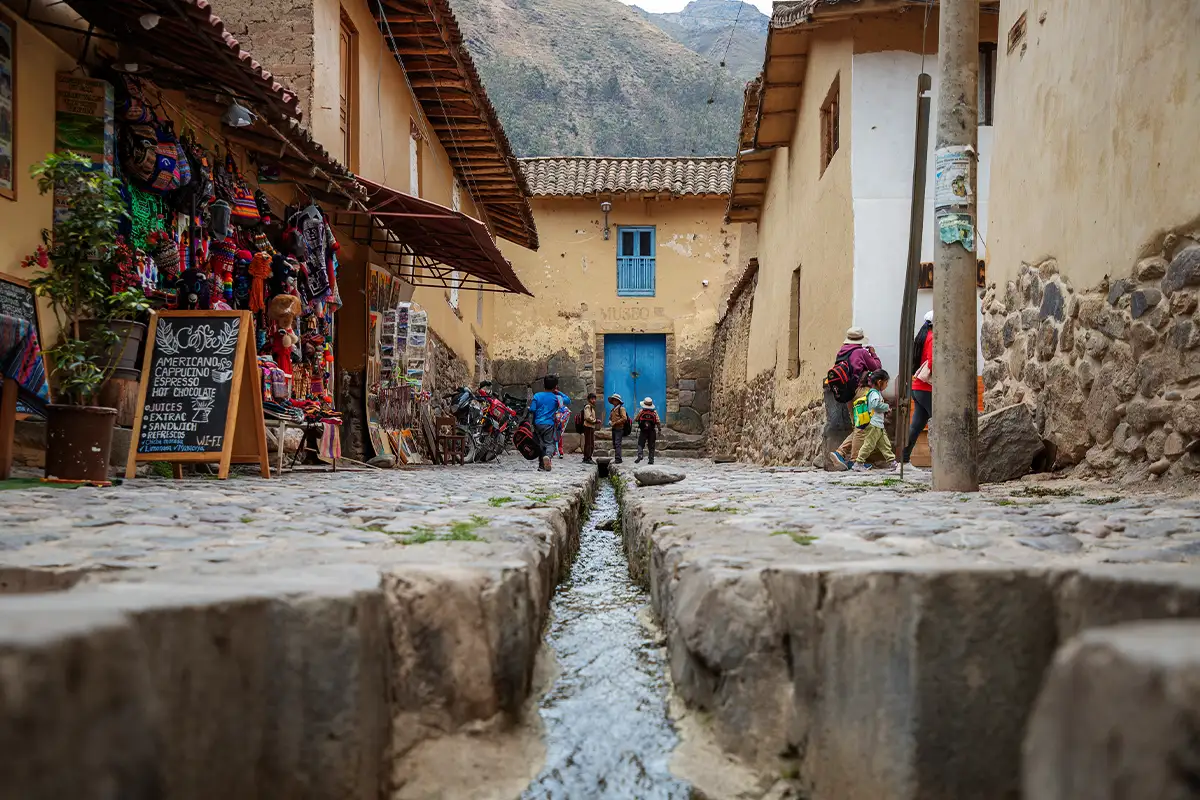
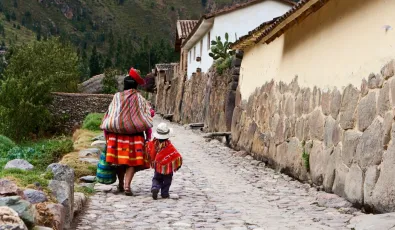
Qosqo Ayllu is not just the current town located in the slopes of the Ollantaytambo fortress (Where the train station is). It is the eastern sector of Ollantaytambo’s original Inca town plan, while Araccama formed the western sector. That is why walking here feels different from walking through an ordinary colonial center. You are moving through a living Inca urban layout with narrow stone lanes, water channels, and old house foundations that still follow Inca lines.
Qosqo Ayllu is an original Inca section of Ollantaytambo town and one of the best-preserved living Inca urban areas in Peru. For readers collecting things to do in Ollantaytambo, this is one of the clearest reminders that the town itself is part of the attraction, not just the ruins above it.
Take a walk early in the morning for soft light and quiet lanes, or near sunset when the stone walls glow. Wander slowly, look at the channels and doorways, and remember that many of these compounds are still private homes.
Go shopping at the local handicraft market of Ollantaytambo
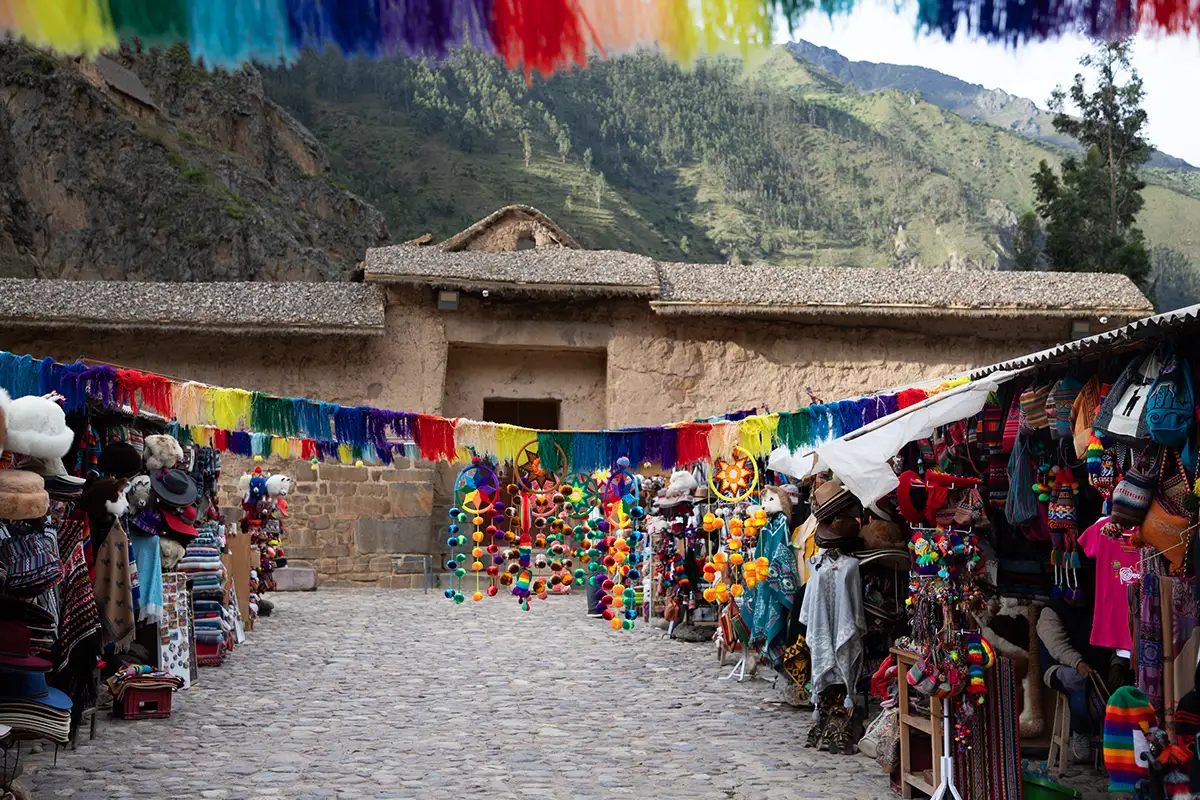
The handicraft market near the entrance of Ollantaytambo archaeological park works best when you know exactly what it is. This is a tourist craft market, so come here for textiles, gifts, clothing, jewelry, and easy browsing. You can browse before or after visiting the Ollantaytambo ruins without changing your route. Its location also gives it a more scenic feel than many souvenir markets, with mountains and stone terraces all around.
The smartest way to shop here is to do one slow round first and a buying round second. Check stitching, fiber, and finish before you decide. If an item is sold as alpaca, ask whether it is baby alpaca, a blend, or synthetic. Even if you buy nothing, the market still adds color and movement to the day, which is why it deserves space on this list instead of being treated as an afterthought.
Dive into the local food market of Ollantaytambo
If you want to see everyday Ollantaytambo instead of only its postcard side, the local food market is the best option. The Mercado Central, Mercado de Abastos, or San Pedro Market is one block east of the southeastern side of Plaza de Armas. It is a compact multi-level market where you can see produce, grains, meat, household goods, and simple prepared food.
For user experience, the best time to visit it is breakfast or lunch, when the place feels busiest and most alive. If you have a sensitive stomach, choose freshly cooked dishes from busy stalls rather than raw items that have been sitting out. If you are a budget traveler, you'll love it because it offers a much cheaper meal than the restaurant zone. But even travelers with a bigger budget should come here for the atmosphere. A simple market visit can tell you more about the rhythm of local lifestyle than another area of the town.
Visit the Guinea Pigs at the Casa de Cuyes
Casa de Cuyes (Guinea pig house) is unusual, memorable, and much easier to understand when you want to know the Andean cultural context. It's a guinea pig farm where you can see the little animals and feed them.
In the Andes, cuy is not just a curious animal for visitors; it is a traditional Peruvian food with deep roots in local cooking. That is why this stop feels different from a petting attraction. It gives travelers a small glimpse into a domestic and culinary tradition that remains part of highland life. The Casa de Cuyes is located in the Qosqo Ayllu area near the Pinkuylluna trail access.
Take a “Colectivo” Day Trip
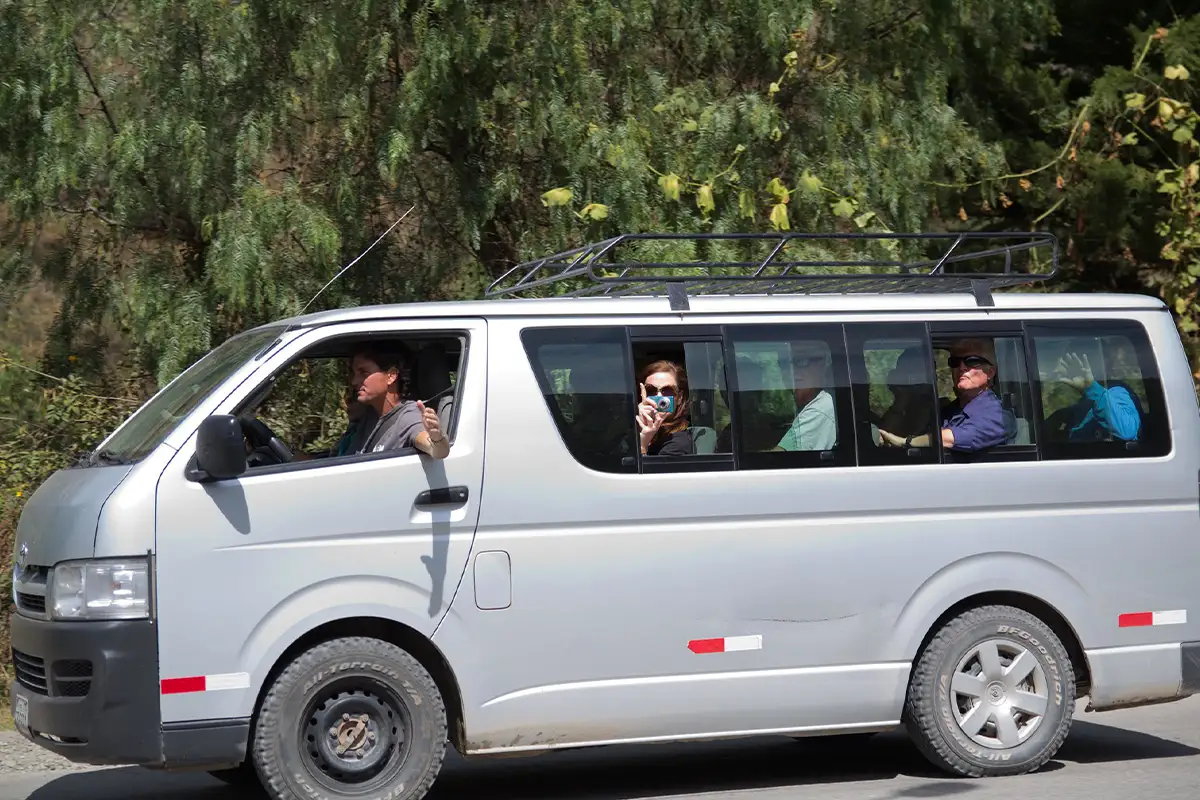
One of the strongest reasons to sleep in Ollantaytambo is how easy it is to use public transport to explore the Sacred Valley. Shared vans, or colectivos, are one of the cheapest and most flexible ways to move between Ollantaytambo, Urubamba, Pisac, Cusco, and connecting points for other valley destinations. This facility is a real advantage for independent travelers who do not want every day locked into a guided tour. So, you'll be able to visit other points of the Sacred Valley at your own pace and in a cheap way.
The public vans depart from a parking zone located one block east of Ollantaytambo main square. The fare ranges from 5 soles or US$ 2 (for most destinations in the Sacred Valley) to 10 soles or US$ 4 (for Cusco itself). Ask the driver about the route and your destination before boarding. Using Google Maps or a translator will be very helpful.
Toast at the Destileria Andina
The Destilería Andina (Andean Distillery) is a local distillery that highlights local ingredients, Andean-inspired spirits, and traditional distillation methods in the Sacred Valley. This bar offers original cocktails based on Pisco (Peru's national drink) and other distilled Andean products.
Destilería Andina is a nice change of pace after a day of stone, steps, and history. It adds a more social, modern layer to the town and works well for couples, friends, or anyone who enjoys local flavors. Not every moment in Ollantaytambo has to revolve around ancient sites. A tasting, a drink, and a slow conversation can be just as memorable in the right setting. If your trip feels too packed with logistics, this is a good place to slow the tempo.
The distillery is located on the side of the Urubamba - Ollantaytambo Highway (between Yanahuara and Pachar) and is open every day from 10 am to 5 pm. Getting there is easy; just take a taxi, negotiate the price beforehand (around US$ 3, one way), and ask if he can arrange for the return trip as well.
Discover the best restaurants in Ollantaytambo
The food scene is one of the town’s small surprises. You will find tourist-friendly cafés, casual local meals, Peruvian food restaurants, and a few places where the setting helps as much as the menu. When travelers ask for the best things to do in Ollantaytambo, meals do not always come first, but they should be part of the conversation. A slow lunch with mountain views or a warm dinner after a hike can shape the mood of your stay just as much as a viewpoint. Choose at least one meal that you enjoy without rushing, because that more leisurely pace would be very good for your stomach. Here are some ideas:

Chuncho Restaurant & Bar
This place offers a unique dining experience with a blend of Peruvian and international cuisine. Plus, its bar is perfect for enjoying various cocktails and drinks.
- Address: Corner of Chaupi street, Plaza Ollantaytambo
- Phone: +51 944 097 059
Apu Verónica Restaurant
Located in a restored colonial house, this restaurant offers a unique dining experience with Peruvian and international dishes and a selection of wines and cocktails.
- Address: La Convención street, Ollantaytambo
- Phone: +51 915 222 637
Pachamama Pizzeria
This place offers the chance to relax with a hearty dish and a glass of wine. The menu offers a variety of items, including meat dishes, pasta, pizzas, and salads.
- Address: Plaza de Armas de Ollantaytambo
- Phone: 084 204 168

Taste the best Andean Chocolate in the Chocomuseo
ChocoMuseo is not only a place to buy chocolate. The Ollantaytambo branch is a free museum-style introduction to cacao history, plus mini workshops and a longer bean-to-bar class. It is a simple, easy stop that brings a little sweetness and variety to the day. It works especially well if you want a break from long walks or if the weather turns and you need something more relaxed. For chocolate lovers, it is an obvious treat. For everyone else, get much more out of the workshop because it adds history, craft, and a hands-on memory to the day. And is still a nice way to pause, browse, and do something a little different from the standard ruin-and-hike routine. It is also handy when you want a central activity that does not require much planning.
The museum is located on Calle Convención in the west direction. From the Ollantaytambo main square, walk 4 blocks in a west direction. After, turn left and go straight one block, on La Convención Street. Finally, you will have arrived at the museum.
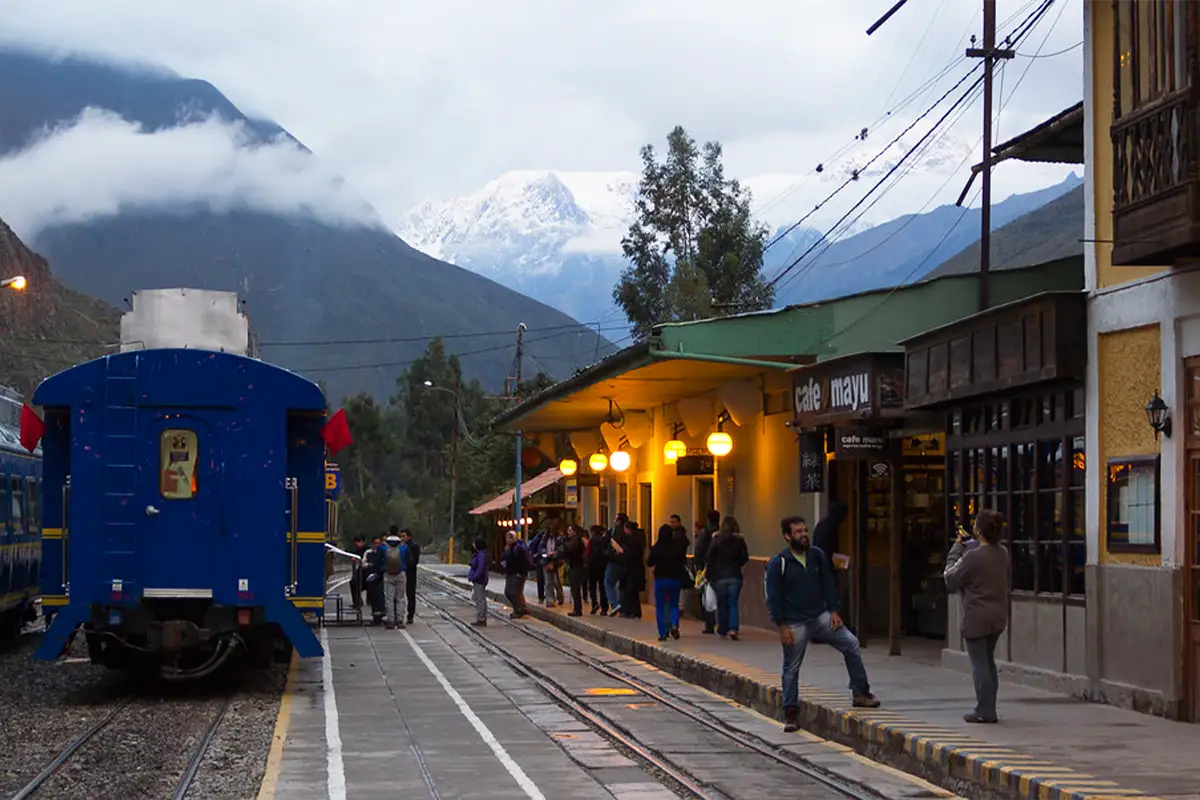
Board a cozy train heading to Machu Picchu
As we told you at the beginning of this article, Ollantaytambo is one of the main boarding points for trains to Machu Picchu Pueblo or Aguas Calientes, which is exactly why the town works so well as an overnight base, and you can get the train the next morning without rushing. Therefore, the Ollantaytambo Station is a popular station in the Sacred Valley with many departure times.
The station is on Av. Ferrocarril and walkable from the plaza for many travelers, but leave extra time if you have luggage. Staying the night before your train departure makes the whole trip calmer.

What to do around Ollantaytambo
If you are asking what to do in Ollantaytambo surroundings after the visit to the main sights inside the town, this is where the town proves it is much more than a gateway or train stop. Ollantaytambo works especially well as a base for your journey because it lets you mix short town walks, archaeological visits, bigger hikes, and valley day trips without changing hotels every night.
Below, we offer you the most popular sightseeing options around Ollantaytambo.
Hike to the Inti Punku Sun Gate and Inca Quarries
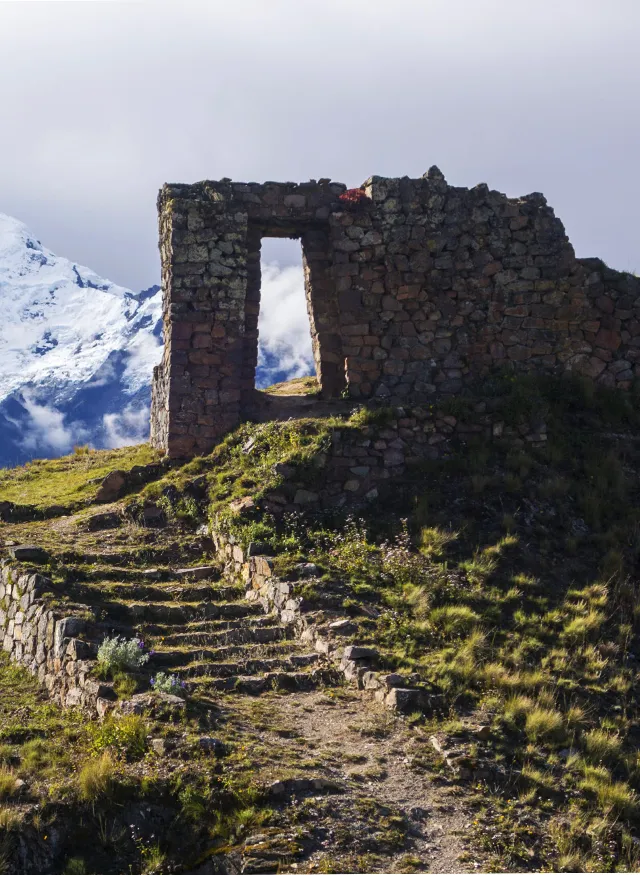
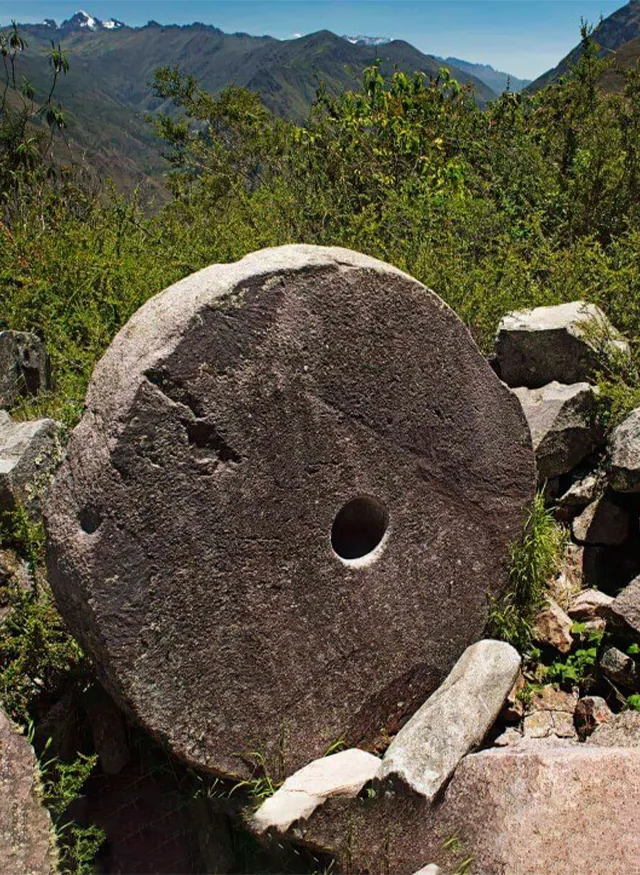
Inti Punku near Ollantaytambo is not the same Sun Gate that overlooks Machu Picchu. But, What is Inti Punku? It is an archaeological site at about 3,885 m.a.s.l with a trapezoidal stone doorway oriented toward Nevado Verónica (Snow). The Incas used to ceremonial, astronomical, and possibly strategic functions, while also linking the area to quarry work and control routes.
The route begins by reaching Socma from Ollantaytambo by road, then continuing on foot to the site. In practical terms, this is a full-day, high-altitude trek that should be treated as a real outing, not an impulsive afternoon walk. Start early, bring layers, sun protection, enough water, and snacks, and do not underestimate the altitude. If you love serious day hikes, it can easily become one of the most unforgettable things to do in Ollantaytambo and the wider valley.
 |  |
By the way...
On our Cachicata Inca Quarry Trek to Machu Picchu - 4 days tour, you'll be able to enjoy this route.
Visit the Sacred Valley archaeological sites
Ollantaytambo works beautifully as a base for the wider Sacred Valley. That means you can pair the town with other famous sites and build a trip that feels more complete, not rushed. The practical advantage is clear: the public transport that departs from the town heading to different tourist attractions like the Pisac archaeological site, the Inca Salt Mines of Maras, the colonial town of Chinchero, or the circular terraces of Moray, among others.
You get to return to a place with real charm at the end of the day instead of just passing through once and moving on to Machu Picchu.
Practice rock climbing in the Sacred Valley (Pachar)
Pachar is a good option if you want to add outdoor adventure to a trip that might otherwise focus only on ruins and markets. It shows another side of the valley and appeals to travelers who like active experiences as much as cultural ones. Pachar is a major climbing zone with multiple sectors, via ferrata-style routes. Few bases in the area combine history, scenery, food, and adventure as well as Ollantaytambo does. Even if you do not climb, there are adventure travel agencies with security equipment and guide-instructors who will make you enjoy the experience.
Pachar is a short ride from Ollantaytambo by taxi, colectivo, or organized transfer, followed by a short approach depending on the sector.
 |  |
Climb up to Ñaupa Iglesia cave alter
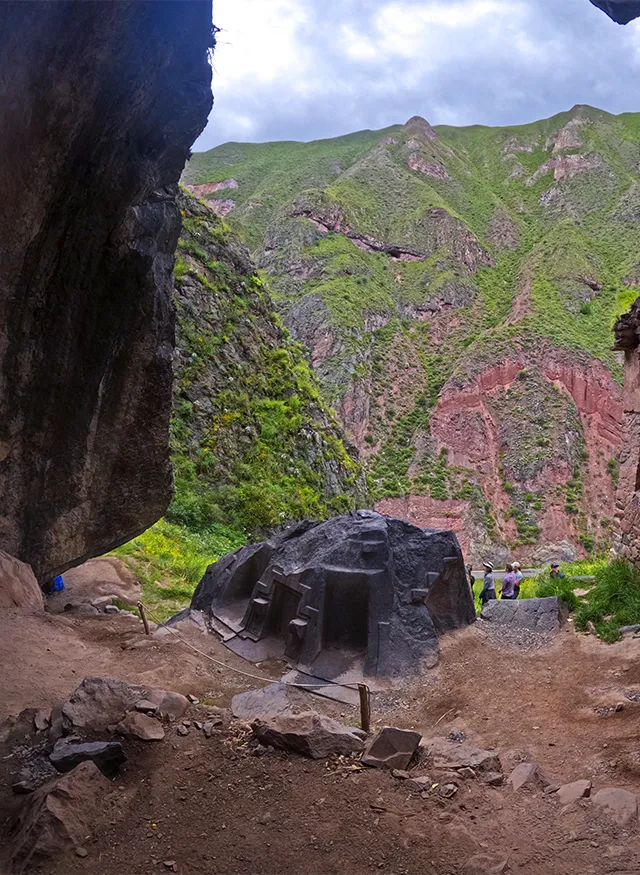
Ñaupa Iglesia is one of the most atmospheric places near Ollantaytambo because it feels Inca half temple and half natural shrine. It's as an Inca archaeological temple in the Pachar community, about 6 km from Ollantaytambo, and have terraces, stairways, a worked basalt huaca (carved stone), double-jamb trapezoidal niches, and associations with solar observation. That combination is exactly why the site feels so mysterious and memorable. It is not just “a cave.” It is a ceremonial space shaped by both rock and Inca masonry.
The most visitors reach the access point by vehicle toward Pachar, then do the short but steep final ascent on foot. Some hikers combine it with a longer walk from Ollantaytambo town, but the last section still needs care. Wear shoes with grip, avoid the steep bits in heavy rain, and take your time on the final climb.
Enjoy the Perolniyoc Waterfalls
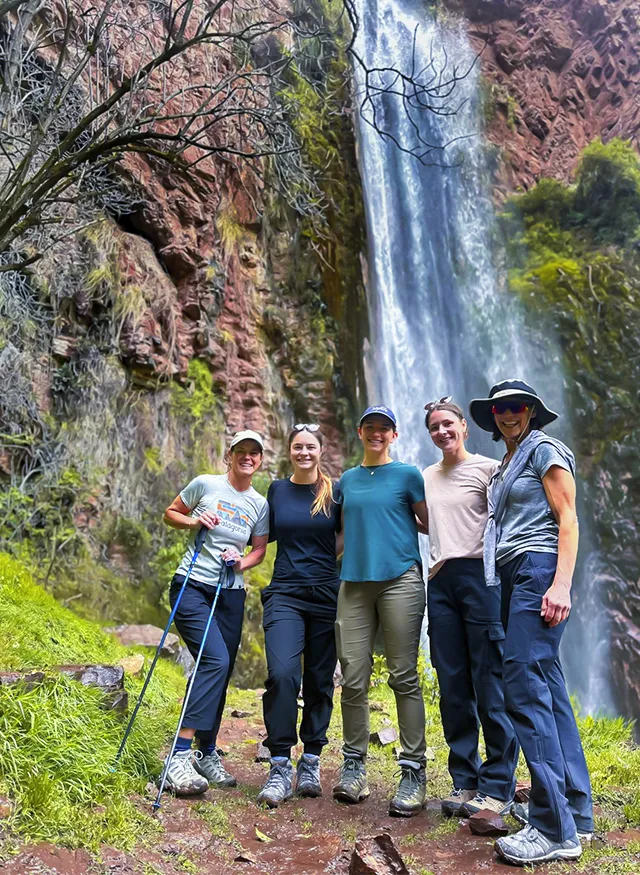
After so much stone and archaeology, a waterfall can feel wonderfully fresh. Perolniyoc is a good choice if you want more nature in the itinerary and a different mood from the town center. Therefore, Perolniyoc is one of the best nature-based outings near Ollantaytambo because it gives readers a real change of scene. It's a waterfall of around 45 m located in the Socma community, reached by an uphill walk through beautiful Sacred Valley scenery
First, you have to go from Ollantaytambo to Socma by taxi or on a tour, then hike up from the village. The signed trail is not especially technical, but it does involve real uphill walking, so readers should bring sun protection, water, and enough time to enjoy the route instead of racing it. This is also why the best things to do in Ollantaytambo become even better when you stay longer: you can combine ruins, mountain scenery, and a more refreshing nature stop in the same trip.
Discover the Inca site of Raqaypata
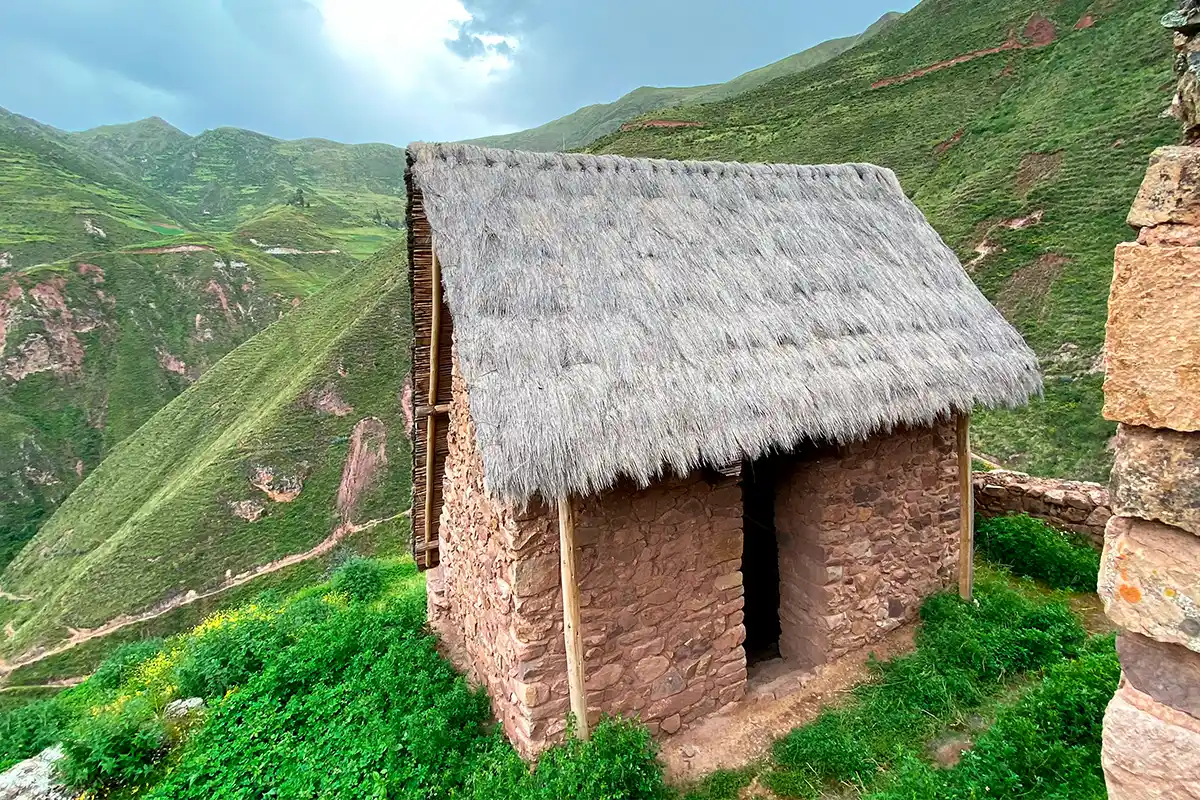
Raqaypata is a good fit for travelers who like a scenic approach, a bit of effort, and the feeling of visiting somewhere that still seems overlooked. It may not be the most famous name in the valley, but that is part of its appeal. In addition, Raqaypata is the archaeological reward that usually comes with the Perolniyoc hike. The site sits above the waterfall and adds terraces, Inca stone remains, and bigger valley views to the outing, which is why the hike feels more complete than a simple Peronliyoc waterfall walk. It is a strong fit for travelers who enjoy places that still feel quieter and less overrun than the classic Sacred Valley circuit.
Most visitors reach Raqaypata on the same route from Socma used for Perolniyoc. The hike lasts about 1 to 1.5 hours uphill from the start to the ruins, depending on your pace. This is not only a scenic walk but a two-in-one outing with both nature and archaeology. That makes it one of the most satisfying nearby adventures for readers who want more than the obvious highlights.

What to do in Ollantaytambo - FAQs
How many days should you spend in Ollantaytambo?
If you only want the main ruins and a quick look around town, one full day can work. For most travelers, though, two nights is the better sweet spot. That gives you time for the archaeological site, the old town, one short hike or nearby outing, and a relaxed train connection instead of trying to squeeze everything into a rushed stop. This recommendation fits the spread of competing advice, which ranges from one or two days to several days for slower travel and acclimation.
Is Ollantaytambo better than Cusco for acclimating before Machu Picchu?
For many travelers, yes. Ollantaytambo sits lower than Cusco, which can make it a gentler first stop while still keeping you close to Machu Picchu trains and Sacred Valley sites. It is not a magic fix for altitude, but it is often a more comfortable place to start if you want to take it easy on your first day in the Andes.
What is the best time to visit Ollantaytambo?
The driest months are usually the easiest for ruins, viewpoints, and hikes. The rainy season can still be beautiful, but trails are wetter and travel can be less predictable. If your readers want a simple answer, say that dry months are best for easy sightseeing, while shoulder months are a good balance of decent weather and fewer crowds.
How do you get from Cusco to Ollantaytambo without a tour?
Most independent travelers go by road, either by shared van/colectivo or by taxi/private transfer. PeruRail also lists road travel from Cusco as a normal way to reach town, and multiple competitor guides give transport its own section, which tells you this is a real reader need. A short answer on your page would help users plan the visit without leaving to find another guide.
Where is the best area to stay in Ollantaytambo?
If you want atmosphere and easy walking, stay near Plaza de Armas or around Qosqo Ayllu. If you have an early train to Machu Picchu, choose a place with an easy walk or quick taxi ride to the station. Competing guides spend real space on lodging because readers want help choosing the right base, not just a list of sights.

Add new comment