



Enjoy Cusco, the Sacred Valley, and the full Salkantay adventure in one smooth premium package. This Salkantay Trail 8 Days to Machu Picchu includes airport pickup, hotels in Cusco, a guided City Tour, the Sacred Valley with Maras and Moray, and the complete Salkantay Trek to Machu Picchu. It is the perfect choice if you want everything organized from arrival to departure, with time to acclimatize before the high mountain trek begins.
Hike to Humantay Lake, sleep at our exclusive Salka Glamp Campsite below Salkantay Mountain, cross the mighty Salkantay Pass, enjoy a traditional Pachamanca and local coffee experience, and camp at Llactapata with distant views of Machu Picchu. Then explore the citadel early in the morning with your guide and return to Cusco on the panoramic Vistadome Train, ending the journey with comfort, culture, and unforgettable Andean views.
 Duration 8 Days 7 Nights
 Activities Hiking, Adventure
 Average Group Size 12 people
 Difficulty Easy to Challenging
 Accommodation Camping, Hotels
 Tour Language English, Spanish
 Destinations Cusco, Sacred Valley, Salkantay Trek, Machu Picchu
 Starts/Ends Cusco - Cusco
8-Day Salkantay Trail to Machu Picchu
This complete Salkantay Trail 8-day tour to Machu Picchu is designed for travelers who want a smooth, premium, and well-planned Cusco experience from the moment they arrive. You do not just join a trek; you enjoy a full journey through Cusco, the Sacred Valley, the Andes, the Cloud Forest, and Machu Picchu.
Your trip begins with airport pickup and hotel accommodation in Cusco, giving you time to settle in and acclimatize before the trek. You’ll explore the most important sites of Cusco on a guided City Tour, then spend a full day in the Sacred Valley visiting Pisac, Moray, the Maras Salt Mines, and Ollantaytambo.
After two days of cultural discovery and gentle acclimatization, the adventure continues with the Salkantay Trek to Machu Picchu. You’ll hike to Humantay Lake, cross the impressive Salkantay Pass at 4,630 m / 15,190 ft, descend into the Cloud Forest, visit local coffee farms, enjoy a traditional Pachamanca barbecue, and camp at Llactapata with distant views of Machu Picchu.
This is a premium small-group experience operated by a 100% Peruvian local team. Our guides, chefs, muleteers, porters when needed, and support staff work together to make the journey feel safe, personal, and well organized. We focus on fresh trail meals, responsible logistics, fair treatment for the trekking team, and a human service style from start to finish.
Your Machu Picchu ticket is included, with Circuit 2 secured by default when available. After the guided tour, you may also add Huayna Picchu Mountain or Machu Picchu Mountain, depending on ticket availability. To finish the experience in style, you’ll return to Cusco on the panoramic Vistadome or 360° train.
Tour Highlights
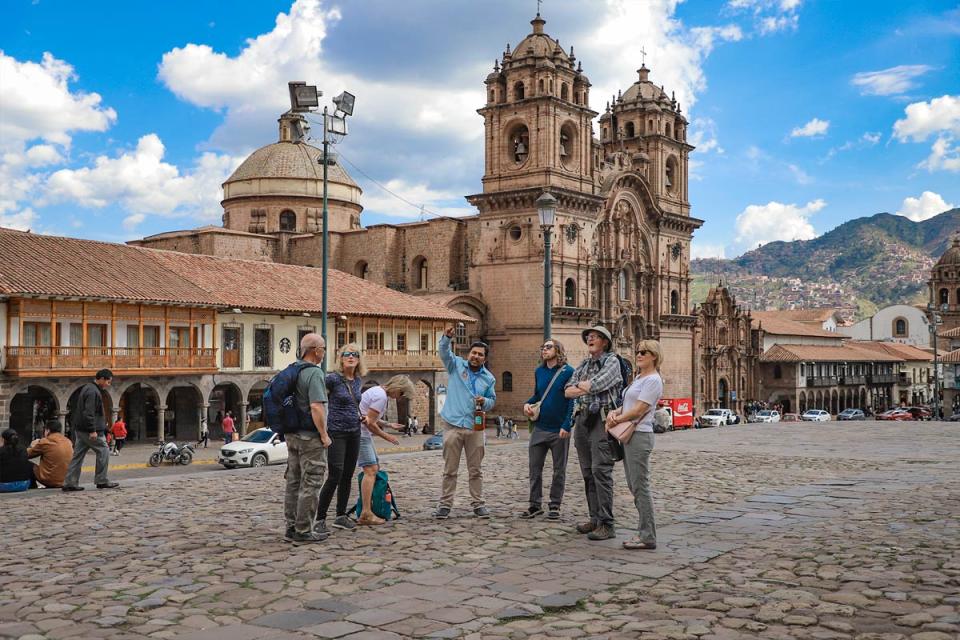
- Cusco City Tour: Visit Plaza de Armas, Qoricancha, Sacsayhuaman, Qenqo, Tambomachay, Puka Pukara, and panoramic viewpoints above the city.
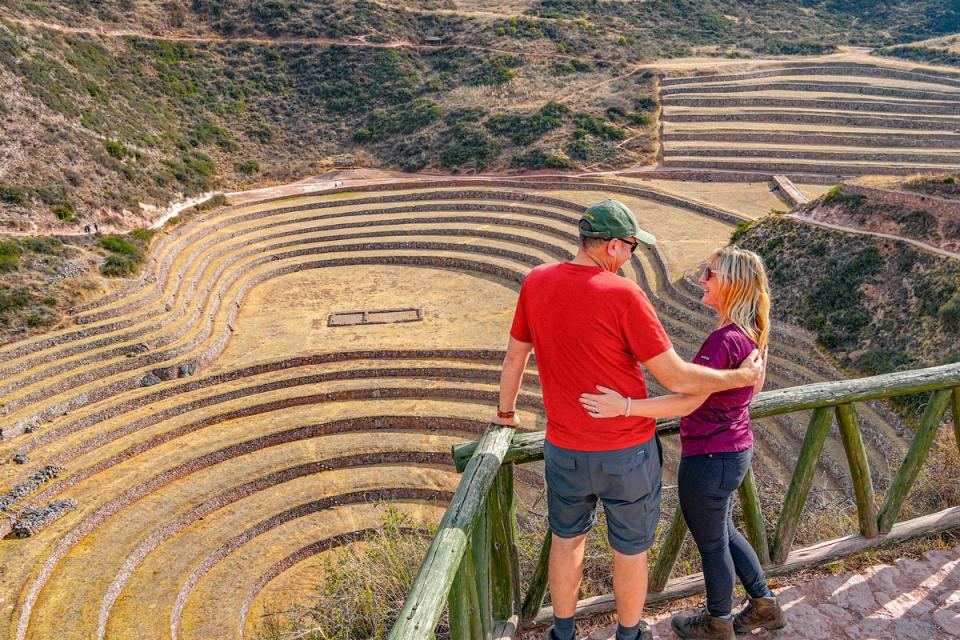
- Sacred Valley VIP Tour: Explore Pisac, the local market, Moray, the Maras Salt Mines, Ollantaytambo, and beautiful valley viewpoints.
- Salkantay Trek to Machu Picchu: Spend 5 days hiking past glaciers, turquoise lakes, cloud forest, coffee farms, and ancient Inca paths.
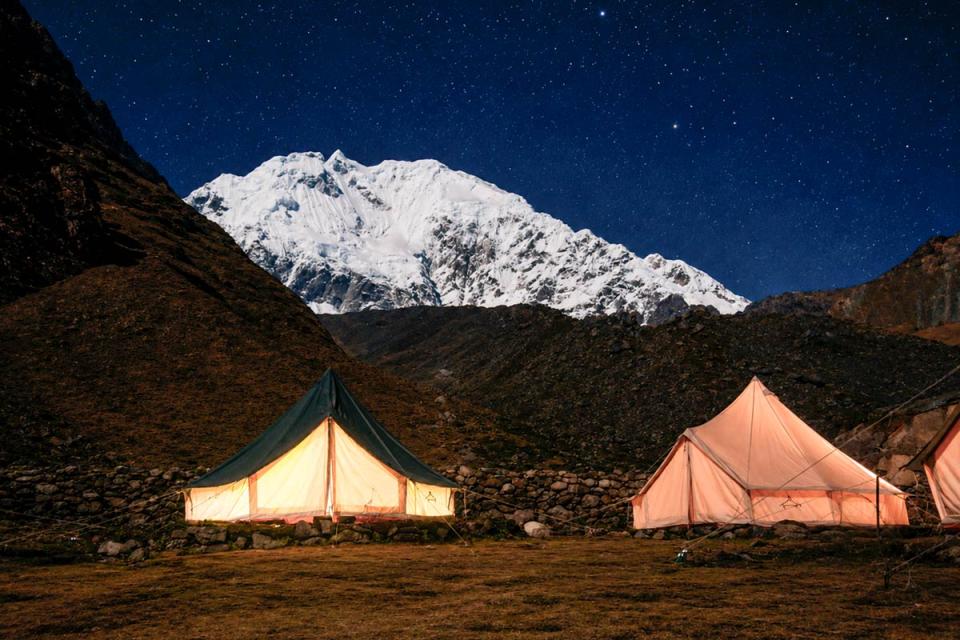
- Salka Glamp Campsite: Sleep below Salkantay Mountain in a quiet, isolated location with glamping-style bell tents and a warm basecamp atmosphere.
- Llactapata and Machu Picchu: Camp facing Machu Picchu from a distance, then explore the citadel early in the morning with your professional guide.
- Panoramic Train Ride: Return on the Vistadome or 360° train with wide windows and beautiful views along the route.
Salkantay Trail 8 Days at a Glance
Day 1: Arrival at the Airport – Cusco City Tour
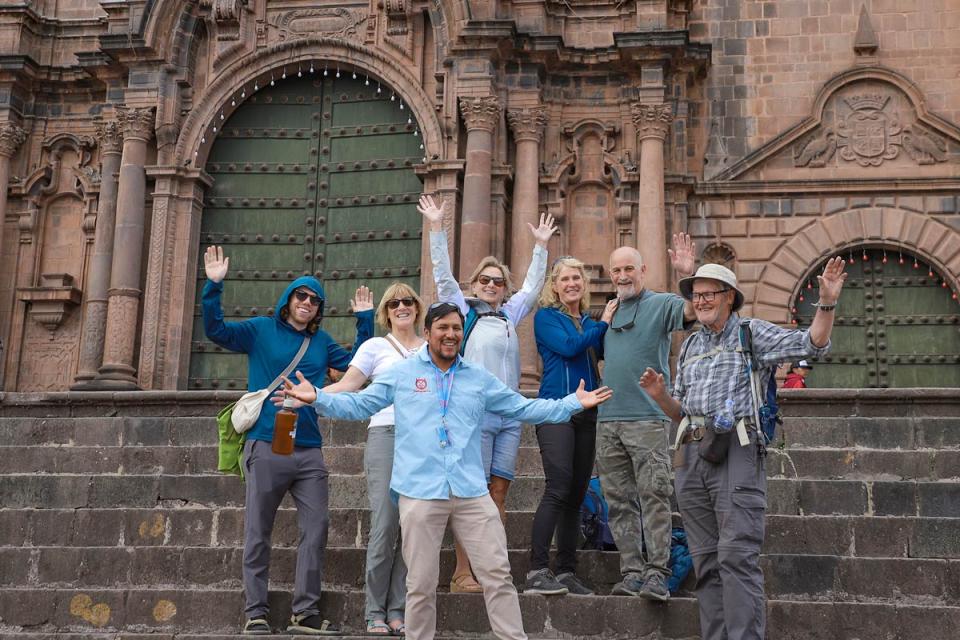
We welcome you at Cusco airport and transfer you to your hotel. In the afternoon, enjoy a guided Cusco City Tour, visiting Plaza de Armas, Qoricancha, Sacsayhuaman, Qenqo, Puka Pukara, Tambomachay, and one of the best viewpoints over the city.
Day 2: Sacred Valley VIP Tour
Travel through the Sacred Valley and visit an alpaca farm, Taray viewpoint, Pisac ruins and market, Moray, the Maras Salt Mines, and Ollantaytambo before returning to your hotel in Cusco.
Day 3: Cusco – Humantay Lake – Salka Glamp Campsite (12 km, 6 hrs)
Begin the Salkantay Trail with an early pickup, breakfast in the mountains, and a hike to Humantay Lake. Continue to our exclusive Salka Glamp Campsite in Salkantaypampa for a peaceful night below Salkantay Mountain.
Day 4: Salkantay Basecamp – Salkantay Pass – Collpapampa (18 km, 9 hrs)
Wake up with coffee in your tent and cross the Salkantay Pass at 4,630 m. After the most challenging and rewarding day of the trek, descend into the Cloud Forest and sleep in Andean huts at a locally owned campsite in Collpapampa.
Day 5: Collpapampa – Lucmabamba – Llactapata (16 km, 8 hrs)
Hike through the Santa Teresa Valley, visit local coffee farms, prepare your own coffee, enjoy a traditional Pachamanca barbecue, and continue to Llactapata, where you’ll camp facing Machu Picchu.
Day 6: Llactapata – Hidroelectrica – Aguas Calientes (14 km, 6 hrs)
Wake up with coffee and distant views of Machu Picchu, then hike down to Hidroelectrica and follow the railway path to Aguas Calientes, where you’ll spend the night in a comfortable hotel.
Day 7: Explore Machu Picchu – Return to Cusco
Enter Machu Picchu early with your professional guide, explore the most important areas of the citadel, and return to Cusco on the panoramic Vistadome or 360° train.
Day 8: Depart Cusco
After breakfast, we transfer you to the airport or bus terminal according to your schedule.
- Machu Picchu entry with Circuit 2 is included by default. If Circuit 2 is sold out for your date, we’ll secure the best available alternative: Circuit 1 or Circuit 3. We’ll confirm your final circuit as soon as tickets are issued.
Included
- Professional tour guide.
- Second guide for groups of 9+ travelers.
- Machu Picchu entrance and all entry tickets to the places visited in the itinerary.
- Airport transfers and all transportation during the tour.
- Return on the panoramic Vistadome Train.
- Round-trip bus to Machu Picchu.
- Camping equipment, including dining tents, tables, and chairs.
- 1 night at Salka Glamp Campsite for a premium glamping experience below Salkantay Mountain.
- 1 night in Andean huts in Collpapampa, blending comfort with the peaceful Cloud Forest setting.
- 1 night in comfortable tents at Llactapata, with distant views of Machu Picchu.
- 1 night in a comfortable 3-star hotel in Aguas Calientes.
- 3 nights in a hotel in Cusco.
- Cargo mules to carry camping equipment and the approved duffel weight.
- Experienced trekking chefs, muleteers, porters when needed, and local support team.
- Lunch on Day 2 during the Sacred Valley Tour.
- Meals on the trek: 7 breakfasts, 5 lunches, and 4 dinners.
- Drinkable water during 4 hiking days, after the first lunch.
- Duffle bag for up to 7 kg / 15 lb of personal gear.
- Pillow, sleeping pad, rain poncho, and hand towels.
- First-aid kit, satellite phones, and oxygen supply.
Not Included
- Sleeping bag, air mattress, and trekking poles. You can rent them from us.
- Meals not indicated in the itinerary.
- Entry to Huayna Picchu Mountain.
- Entry to Machu Picchu Mountain.
- International or domestic flights.
- Travel insurance, strongly recommended.
Machu Picchu Circuit Included
- Circuit 2: This is one of the most requested routes to visit Machu Picchu because it offers a broad experience of the archaeological site and beautiful classic viewpoints.
If Circuit 2 tickets are sold out, we will secure the best available option, which may be Circuit 1 or Circuit 3. We strongly recommend booking early, especially during peak travel months, because Machu Picchu circuits and schedules are limited.
Extra Hikes After the Machu Picchu Tour
- Huayna Picchu Mountain - US$68 per person. The most famous mountain, approximately 2 hours round trip.
- Machu Picchu Mountain - US$68 per person. The highest mountain, approximately 3 hours round trip.
You can only hike one of these mountains, and it is done after the guided tour in Machu Picchu. Advance booking is required for both hikes.
Why Book with TreXperience?
- 100% Peruvian Local Operator: Travel with a Cusco-based team that knows the city, the Sacred Valley, the Salkantay route, and Machu Picchu logistics from the inside.
- Premium Small Groups: Enjoy a more personal experience with professional guides, attentive service, and a well-organized itinerary from arrival to departure.
- Fresh Trail Meals: Our trekking chefs prepare fresh breakfasts, lunches, dinners, snacks, and special experiences like Pachamanca.
- Responsible Team Care: We support fair treatment for guides, chefs, muleteers, porters when needed, and local staff.
- Looking for a higher-end trek? Explore our Luxury Salkantay Trek 5 Days.
Salkantay Trail 8 Days - Full Itinerary
Day 1: Arrival at the Airport – Cusco City Tour
Welcome to Cusco. Upon arrival, our team will pick you up from the airport and take you to a centrally located hotel. If you arrive early, you’ll have free time to rest, settle in, and begin adjusting to the altitude. We recommend booking an early morning flight to Cusco whenever possible.
Your guided City Tour begins at 1:00 p.m. with a walk through the historic center of Cusco. You’ll visit the Plaza de Armas, see the famous 12-angled stone street, and explore Qoricancha, the Temple of the Sun, one of the most important sacred sites of the Inca Empire.
The second part of the tour is by private transport. We’ll drive to Sacsayhuaman, known for its massive stone walls and beautiful views over Cusco. Then visit Qenqo, Tambomachay, and Puka Pukara. If time allows, we’ll also stop at the large white statue of Christ overlooking the city before returning to your hotel.
- Tour Duration: Half-day
- Entry Tickets: Included
- Meals: Not included
- Accommodation: San Agustin International or similar
Day 2: Sacred Valley Tour: Pisac, Moray, Salineras of Maras, Ollantaytambo
After breakfast, we’ll leave your hotel at 7:00 a.m. and travel into the Sacred Valley of the Incas. This day is perfect for acclimatization because it combines beautiful scenery, cultural visits, and gentle walking without the intensity of a full trek.
Our first stop is an alpaca farm, followed by the viewpoint at Taray, where you’ll enjoy wide views of the Sacred Valley, the eastern Andes, and the Urubamba River. Then we continue to Pisac, known for its impressive Inca terraces and lively local market.
After exploring Pisac, we drive to Urubamba for lunch prepared with fresh local ingredients. In the afternoon, visit the circular terraces of Moray and the Salt Mines of Maras, where local families continue using traditional salt-harvesting methods.
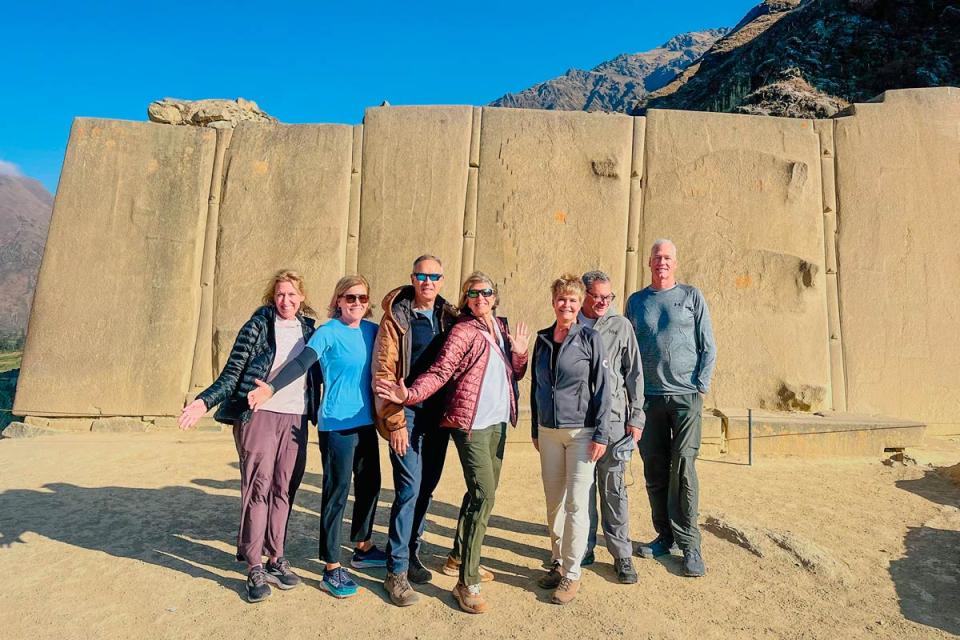
Our final stop is Ollantaytambo, one of the most impressive Inca towns in the Sacred Valley. We’ll walk through original Inca streets and explore the archaeological site before returning to your hotel in Cusco around 6:00 p.m.
- Duration: Full-day
- Entry Tickets: Included
- Meals: Buffet lunch
- Accommodation: San Agustin International or similar
Day 3: Cusco – Humantay Lake – Salkantay Basecamp (12 km, 6 hrs)
We’ll pick you up from your hotel at 4:30 a.m. and drive for about 2 hours to Mollepata, where you’ll enjoy breakfast at a local restaurant with views of the mountains. After breakfast, we continue for another hour to the trailhead at Challacancha (3,600 m / 11,811 ft).
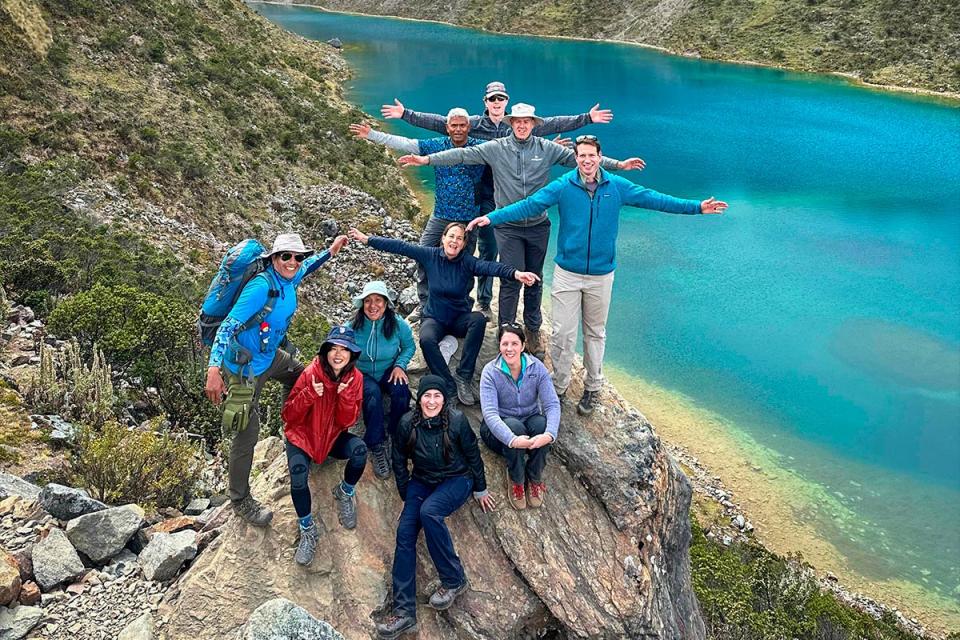
Here, you’ll have time to prepare for the hike, warm up, and meet part of our trekking team, including guides, chefs, muleteers, and support staff. The first section is a 3-hour hike to the famous Humantay Lake (4,200 m / 13,780 ft), one of the most beautiful turquoise lakes in the Andes.
After enjoying the lake, we descend to Soraypampa, where our trekking chef will be waiting with a fresh picnic-style lunch made with local products. After lunch, continue for about 1 hour to our campsite at the base of Salkantay Mountain.
Tonight, you’ll stay at our exclusive Salka Glamp Campsite, located in Salkantaypampa, one of the closest and most peaceful campsite locations below Salkantay Mountain. Away from the usual crowds, you’ll enjoy glamping-style bell tents, clear Andean skies, mountain views, a warm basecamp atmosphere, coffee surrounded by nature, and a freshly prepared dinner.
- Hiking Distance: 12 km / 7.5 mi
- Duration: 6 hours
- Campsite Altitude: 4,150 m / 12,795 ft
- Highest Altitude: 4,200 m / 13,780 ft
- Meals: Breakfast, snacks, lunch, tea time, and dinner
- Accommodation: Salka Glamp Campsite
- Difficulty: Moderate
Day 4: Salkantay Basecamp – Wayracmachay – Collpapampa (18 km, 9 hrs)
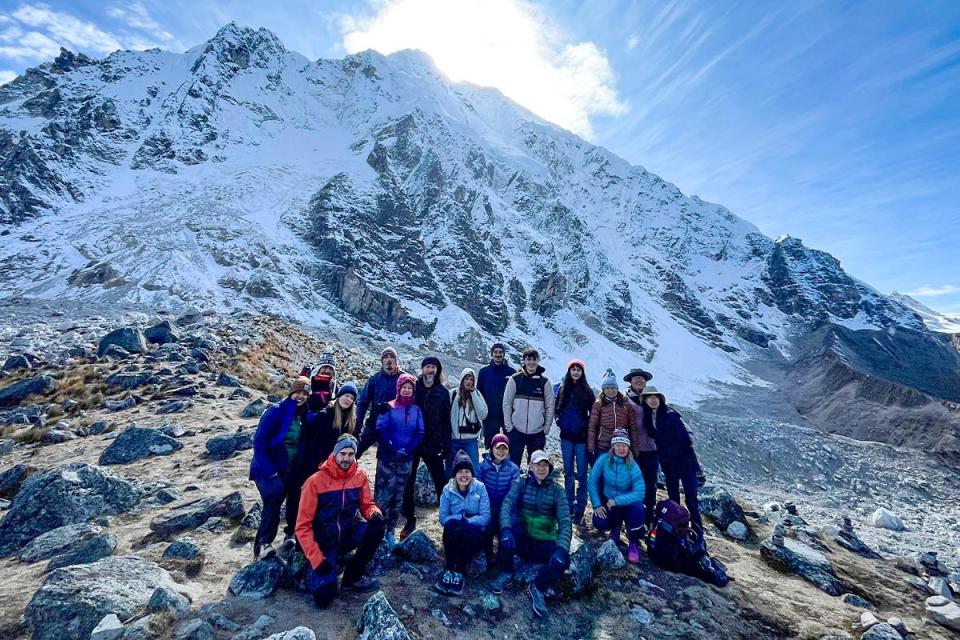
Wake up in your glamping tent with hot coffee or coca tea and spectacular views of the mountains. After breakfast, we begin the most challenging and rewarding day of the Salkantay Trail: the 2-hour ascent to the Salkantay Pass (4,630 m / 15,190 ft).
At the top, you’ll have time to rest, take photos, and feel the power of the Andes. The views include snow-capped peaks, dramatic ridgelines, and the sacred presence of Salkantay Mountain. This is one of the most unforgettable moments of the trek.
From the pass, we descend toward Wayracmachay, where our trekking chef will be waiting with another fresh meal. After lunch, continue downhill as the landscape changes from cold highlands to the green, warmer Cloud Forest.
We arrive at Collpapampa (2,770 m / 9,087 ft), a peaceful village surrounded by vegetation and river sounds. Tonight, you’ll stay in our Andean huts at a locally owned campsite, a calm place to rest after the longest hiking day and connect with the local setting.
- Hiking Distance: 18 km / 11.2 mi
- Duration: 9 hours
- Campsite Altitude: 2,770 m / 9,087 ft
- Highest Altitude: 4,630 m / 15,190 ft
- Meals: Breakfast, snacks, lunch, tea, and dinner
- Accommodation: Andean huts in the remote village of Collpapampa
- Difficulty: Challenging
Day 5: Collpapampa – Lucmabamba – Llactapata (16 km, 8 hrs)
After breakfast, we continue through the Santa Teresa Valley, following the river through a green landscape filled with waterfalls, orchids, fruit trees, coffee farms, and small villages. This is one of the most cultural and flavorful days of the Salkantay Trail.
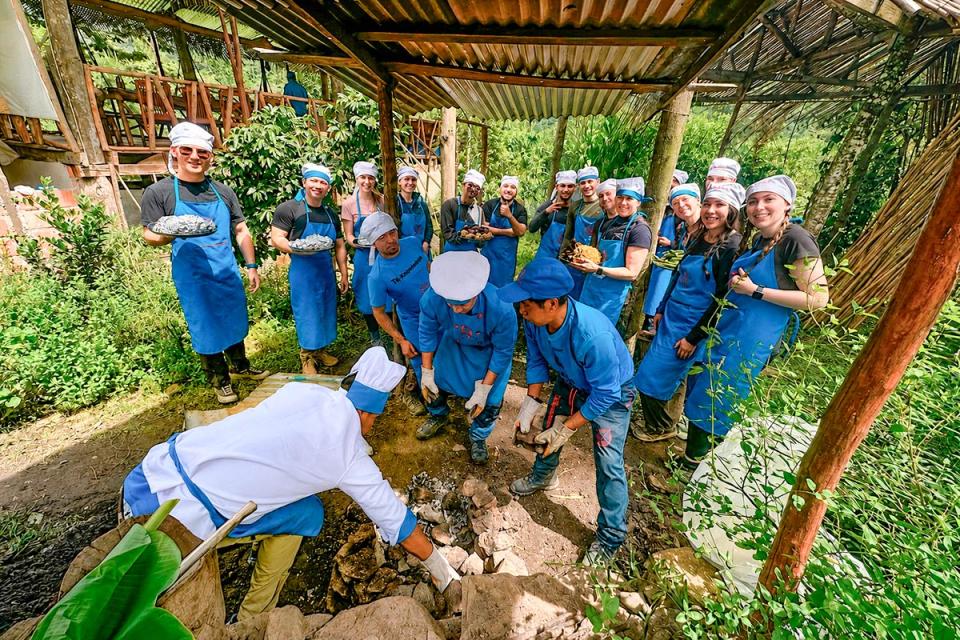
In Lucmabamba, our chef will prepare a traditional Pachamanca, an authentic Peruvian underground hot-stone barbecue made with fresh meat, vegetables, fruits, aromatic herbs, and local ingredients. You’ll participate in the preparation and extraction of the food, making this lunch a real cultural and culinary experience.
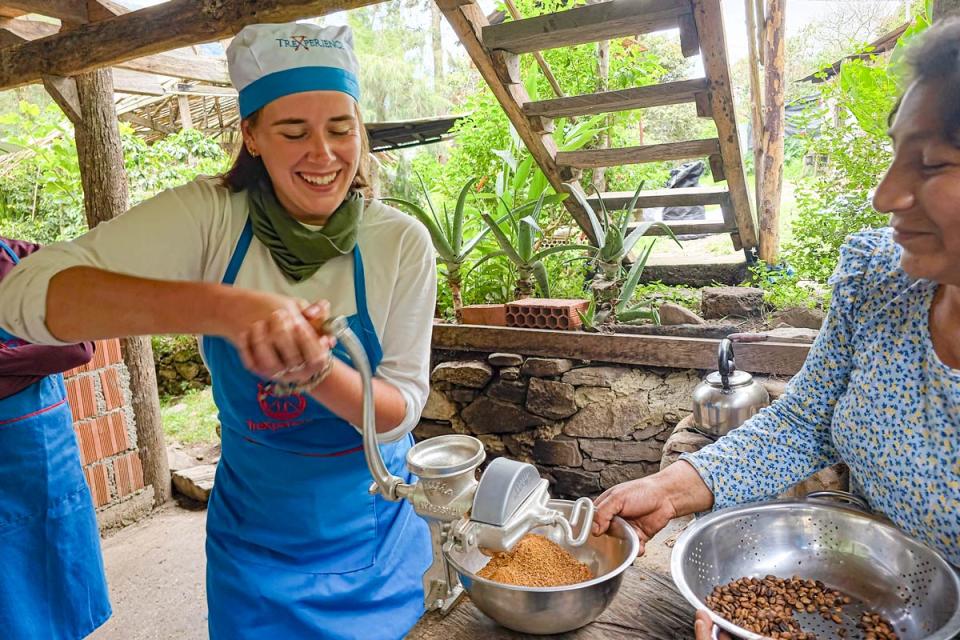
While the Pachamanca cooks underground, you’ll visit a local coffee farm with local hosts. Depending on the season, you may help harvest coffee, learn the process from plant to cup, roast or grind the beans, and prepare your own fresh cup of Peruvian coffee.
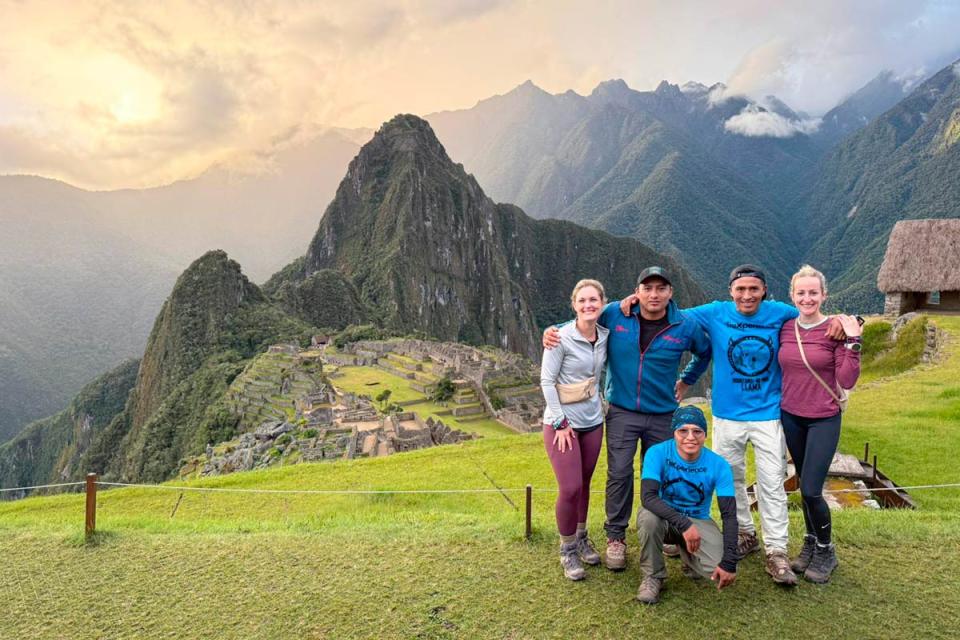
After lunch, we continue along an ancient Inca path for about 3 hours to the beautiful Llactapata archaeological site, located on a mountaintop facing Machu Picchu. Here, you’ll enjoy your first distant view of the citadel and spend the night camping in front of the mountains.
- Hiking Distance: 16 km / 10 mi
- Duration: 8 hours
- Campsite Altitude: 2,750 m / 9,022 ft
- Highest Altitude: 2,750 m / 9,022 ft
- Meals: Breakfast, lunch, dinner
- Accommodation: Camping in front of Machu Picchu
- Difficulty: Moderate
Day 6: Llactapata – Hidroelectrica – Aguas Calientes (14 km, 6 hrs)
Start early, open your tent, and enjoy Machu Picchu from a distance for the second time. If the weather allows, you’ll witness a beautiful sunrise over the mountains while enjoying coffee in one of the most special locations of the route.
After breakfast, we begin a 2-hour downhill hike to Hidroelectrica Station, where you’ll enjoy lunch and say goodbye to our trekking team. Then, continue toward Intiwatana, a carved rock connected with the history of the 1911 expedition.
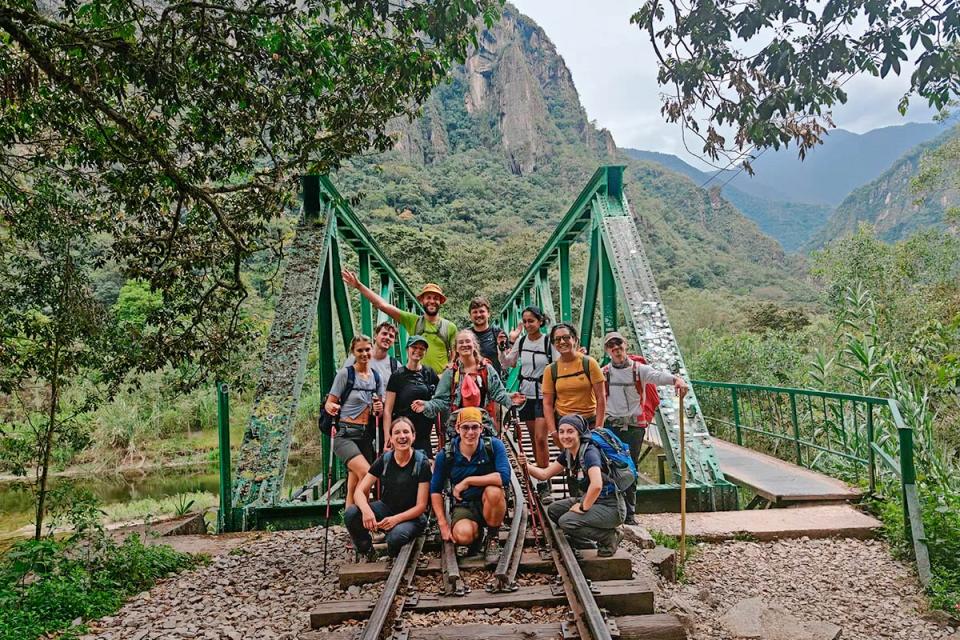
The final hiking section is a 3-hour walk along the railway to Aguas Calientes. This part of the route is full of vegetation, birds, flowers, orchids, and history. Along the way, you may visit the Mandor area, connected to the story of Hiram Bingham and the local farmer Arteaga.
Upon arrival in Aguas Calientes, you’ll check into your hotel, enjoy a relaxing shower, and have dinner at a local restaurant before your visit to Machu Picchu the next morning.
- Hiking Distance: 14 km / 8.6 mi
- Duration: 6 hours
- Aguas Calientes Altitude: 2,000 m / 6,561 ft
- Highest Altitude: 2,750 m / 9,022 ft
- Meals: Breakfast, lunch, dinner
- Hotel: Ferre Machu Picchu or similar
- Difficulty: Moderate
Day 7: Discover Machu Picchu – Return to Cusco
This is the grand day of your Salkantay Trail 8 Days. You’ll wake up early, have breakfast at the hotel, and take one of the first buses to Machu Picchu. The hotel will store your heavier bags so you can enter the citadel with only what you need.
At the entrance, you must show your original passport and entry ticket. During the 2 to 3-hour guided tour, your professional guide will lead you through the most important areas of Machu Picchu, including temples, plazas, terraces, and sacred spaces, while sharing the history and meaning of this extraordinary Inca city.
After the guided visit, and if booked in advance, you can hike Huayna Picchu or Machu Picchu Mountain. These hikes are optional, require an extra ticket, and are subject to availability.
In Machu Picchu, we include Circuit 2 by default when available. If Circuit 2 is sold out, we will secure the best available option, which may be Circuit 3 or Circuit 1. We strongly recommend booking early because the best circuits and schedules sell out first.
After your visit, take the bus back to Aguas Calientes, have lunch on your own, and board the Vistadome panoramic train to Ollantaytambo. From there, our private van will take you back to Cusco and drop you off at your hotel around 7:30 p.m.
- Tour Duration: 2 to 3 hours in Machu Picchu
- Machu Picchu Altitude: 2,430 m / 7,972 ft
- Meals: Breakfast. Other meals not included.
- Accommodation: San Agustin International or similar
- Difficulty: Easy
Day 8: Depart Cusco
After breakfast, we transfer you to the airport or bus terminal according to your schedule. This final service closes your journey with the same care and organization that supported you from your first arrival in Cusco.
Salkantay Trail 8 Days Price and Booking
Join one of our premium small-group departures for a complete Salkantay Trail 8 Days to Machu Picchu experience, including airport pickup, Cusco City Tour, Sacred Valley, hotels, the Salkantay Trek, Machu Picchu, and panoramic train return. If you are traveling with family, friends, or a larger group, contact us for a customized quote based on your group size and travel preferences.
Small-Group Tour: Price Per Person
| Traveler Type | Price Per Person |
|---|---|
| Adults | From US$ 998 |
| Children and students | From US$ 968 |
Private Tour: Price Per Person
| Number of Participants | Price Per Person |
|---|---|
| 1 participant | US$ 2720 |
| 2 participants | US$ 1760 |
| 3 participants | US$ 1490 |
| 4 participants | US$ 1320 |
| 5 participants | US$ 1240 |
| 6 participants | US$ 1180 |
| 7 participants | US$ 1080 |
| 8 participants | US$ 1000 |
| 9+ participants | Contact us for a special rate |
Booking and Payment
- Deposit: US$400 per person to secure your booking. The remaining balance can be paid online or at our office in Cusco by credit card, PayPal, or wire transfer. Contact us if you need an alternative payment option.
- For each traveler, we require the full name exactly as shown on the passport, passport number, date of birth, passport expiration date, and nationality.
- Please inform us in advance of any vegetarian, vegan, gluten-free, or other dietary restrictions.
Student and Child Discount
- US$30 off
This discount applies to all travelers under 17 and students under 25 with a valid university ID. This valid university ID must be presented in original, physical form at our offices upon your arrival in Cusco. To qualify, the ID must include:
- The student’s name, photo, and university name.
- A valid expiration date. Expired IDs will not be accepted.
- ISIC cards are not accepted.
The child discount is applied automatically. Students must send a copy of their university ID when booking; if the ID is not accepted, the adult rate will apply.
Packing List for the Salkantay Trail 8 Days
The Salkantay Trail 8 Days package includes airport pickup, Cusco City Tour, the Sacred Valley, hotels, and a multi-day trek to Machu Picchu. This means you need comfortable clothes for city tours and proper hiking gear for changing mountain weather.
You will experience different conditions: cool mornings in Cusco, sunny days in the Sacred Valley, cold nights near Salkantay Mountain, rain or wind in the high Andes, and warmer weather in the Cloud Forest. Pack smart, travel light, and keep your essentials organized.
What to Pack for the City Tour in Cusco?
On the first day, we pick you up from the airport, bus station, or hotel if you are already in Cusco. We transfer you to a hotel near the center of Cusco, where you’ll have time to unpack and rest before the afternoon City Tour.
For the City Tour, you only need a small backpack with the essentials:
- Small backpack.
- Comfortable clothes and a warm layer.
- Rain jacket or rain poncho in your backpack.
- Sun protection: hat, sunglasses, and sunscreen.
- Water bottle.
- Snacks.
- Extra cash in Peruvian soles.
What to Pack for the Sacred Valley Tour?
On the second day, you’ll explore the best of the Sacred Valley on a full-day tour. Your suitcase stays at the hotel, and you travel with a small daypack.
- Small and comfortable backpack.
- Comfortable clothes for a full-day tour.
- Warm layer for the morning and afternoon.
- Rain gear.
- Comfortable walking shoes.
- Extra cash for souvenirs, drinks, or personal expenses.
What to Pack for the Salkantay Trek?
Here are the essentials for the Salkantay Trail to Machu Picchu:
- Original passport: Valid for at least 6 months after your travel date. A copy will not be accepted at checkpoints.
- Valid student card: Required if you booked with a student discount.
- Comfortable hiking boots: Light, comfortable, waterproof if possible, and already broken in.
- Good-quality daypack: Light, comfortable, and made for hiking.
- Water container: Capacity for at least 2 liters, such as a reusable bottle or hydration bladder.
What to Put in the Daypack
Your daypack stays with you during the day, so pack items you need while hiking. For Machu Picchu, backpack size is restricted, so avoid large or bulky bags.
- Warm clothes for cold mornings.
- Rain jacket or rain poncho.
- Sun protection: sunscreen, hat, and sunglasses.
- Insect repellent.
- Hand sanitizer, toilet paper, and wet wipes.
- Personal medication, band-aids, and blister protection.
- Camera, extra batteries, and headlamp.
- Extra snacks, energy bars, candy, or chocolate.
- Extra money for souvenirs, drinks, showers, and tips.
What to Pack in the Duffel Bag
During the briefing, we will provide one duffle bag to pack up to 8 kg / 17.6 lb of your personal items, including sleeping bag and mattress if you bring or rent them.
Cargo mules and muleteers carry your duffle bag during the trek. You will not have access to these items during the day, only when you arrive at each campsite.
- Sleeping bag. You can rent one from us.
- Air mattress. You can rent one from us.
- Comfortable shoes for camp after hiking.
- Warm jacket, hat, and gloves for cold nights.
- Hiking shirts for the trek.
- Comfortable hiking pants.
- Undergarments and socks.
- Fleece or down jacket for the coldest nights.
- Quick-dry towel and toiletries.
- Power bank or battery charger.
- Plastic or dry bags to separate wet or muddy clothes.
You can also review our complete Salkantay Trek packing list.
Salkantay Trek 8 Days - Travel Information
Below you’ll find practical information to help you prepare for this complete Cusco and Salkantay package. Use this section to plan your acclimatization, packing, expectations, Machu Picchu tickets, and the trekking experience.
Salkantay altitude and 48-hour acclimatization plan
This package is designed to help you acclimatize before the trek. You spend the first two days in Cusco and the Sacred Valley before starting the Salkantay Trail. Cusco sits around 3,300 meters, Humantay Lake reaches 4,200 meters, and the highest point of the trek is Salkantay Pass at 4,630 meters.
We recommend arriving well rested, eating light during the first days, drinking plenty of water, and avoiding alcohol before the trek. The City Tour and Sacred Valley Tour include short walks that help your body adapt before the higher trekking days.
If you want to understand altitude symptoms and prevention before traveling, review this official high-altitude travel advice.
Weather on the Salkantay Trail
Weather in the Andes can change quickly. A sunny morning can turn into rain, wind, or cold conditions within minutes, especially near the Salkantay Pass. As you descend into the Cloud Forest, the climate becomes warmer and more humid.
- April to October: Drier weather, sunnier days, and cold nights. May, June, and July often offer clear skies, but nights can be very cold in high areas.
- November to March: Rainy season. The landscape is greener, but showers are more common and trails can be muddy.
Pack layers, including a base layer, fleece, insulated jacket, waterproof shell, warm hat, gloves, and quick-dry clothing. For more detail, read our Salkantay Trek weather guide. You can also check the official Machu Picchu weather forecast before your trip.
Why this 8-day package is different from the 5-day trek
The 5-day Salkantay Trek focuses mainly on the trekking route. This 8-day package adds airport pickup, hotels in Cusco, Cusco City Tour, Sacred Valley with Pisac, Moray, Maras Salt Mines, Ollantaytambo, and a smoother acclimatization plan before the trek begins.
It is ideal if you want one organized package instead of booking hotels, transfers, day tours, and the trek separately. It also helps your body adapt better before crossing Salkantay Pass.
If you want to compare different route options, visit our Salkantay Trek tours to Machu Picchu.
Humantay Lake
Humantay Lake is one of the most beautiful stops on the Salkantay Trail. Its turquoise water, high mountain setting, and view of the surrounding peaks make it one of the most memorable places of the trek.
For more preparation tips, you can read our Humantay Lake guide.
Food and water on the trail
During the trekking days, our chefs prepare fresh meals using local ingredients whenever possible. You’ll enjoy trail breakfasts, picnic-style lunches, dinners, snacks, and special experiences like Pachamanca and the coffee farm visit.
We provide boiled or filtered water during the trek. Bring a reusable bottle with 1.5 to 2 liters of capacity. If you need vegetarian, vegan, gluten-free, or other special meals, tell us when booking so we can prepare properly.
Charging, Wi-Fi, and signal on Salkantay
Phone signal usually drops after the first trekking day and returns near towns. Some camps may offer limited paid Wi-Fi or charging, but it can be slow and shared. Bring a power bank, switch your phone to airplane mode, and download important information before the trek.
For safety, our team carries communication equipment such as radio or satellite phone, depending on the route and group operation.
Responsible travel on Salkantay
Travel responsibly by packing out your trash, carrying a reusable bottle, avoiding single-use plastics, and staying on marked trails. Keeping your duffel within the weight limit helps protect mules and supports safe working conditions for the trekking team.
TreXperience is a 100% Peruvian local operator. We believe a premium trek should also be responsible: protecting the route, supporting local families, and treating guides, chefs, muleteers, porters when needed, and support staff with dignity.
Machu Picchu is part of the Historic Sanctuary of Machu Picchu and is also listed by UNESCO as a World Heritage Site, so responsible visitor behavior matters.
Bathrooms, showers, and hygiene on the trek
Expect basic toilets at camps and occasional paid facilities along the trail. Carry tissue, hand sanitizer, wet wipes, and a small quick-dry towel for comfort.
Some camps may offer cold showers or hot water for a small fee. You’ll have a proper shower in Aguas Calientes before visiting Machu Picchu.
If plans change: rain, strikes, and contingency plan
Weather, road closures, strikes, or route conditions can affect travel in the Andes. If needed, we adjust start times, pace, transportation, or logistics to prioritize safety and protect the experience.
Travel insurance is strongly recommended. Our team will keep you informed by WhatsApp and during briefings if operational changes are needed.
Machu Picchu tickets and circuits after Salkantay
Machu Picchu tickets are assigned by route and entry time. This package includes a Machu Picchu tour with Circuit 2 by default when available because it offers one of the most complete visits to the archaeological site.
If Circuit 2 is not available, we will secure the best available option, which may be Circuit 1 or Circuit 3. There is no pre-booking hold; tickets are purchased with full names and passport numbers and are subject to availability.
For official information, you can review the official Machu Picchu circuits and routes or the Tu Boleto platform.
Money and tipping on Salkantay
Bring Peruvian soles in small bills for snacks, showers, souvenirs, and optional tips. ATMs are available in Cusco and Aguas Calientes, but not on the trail.
Tipping is optional but customary. Suggested amounts vary by group size, and your guide can explain this during the briefing.
Duffel and daypack guide
Your duffel is carried by pack animals during the trek. Keep it within the weight limit and label it clearly with your name. You will not have access to it during the hiking day, only at each campsite.
Hike with a comfortable daypack for water, layers, rain gear, sun protection, camera, passport, and personal medication. Store larger suitcases in Cusco with your hotel or at our office, and keep valuables with you at all times.
Salkantay Trail 8 Days FAQs
What is included in the Salkantay Trail 8 Days package?
This package includes airport pickup, hotels in Cusco, Cusco City Tour, Sacred Valley Tour with Maras and Moray, the Salkantay Trek, Machu Picchu ticket, guided Machu Picchu tour, panoramic train return, transportation, trekking meals, camping equipment, and local guide support.
Who is this 8-day package best for?
This package is ideal for travelers who want one organized plan from arrival to departure. It is especially good if you want to acclimatize properly, explore Cusco and the Sacred Valley, and then complete the Salkantay Trail to Machu Picchu without arranging hotels, transfers, tours, and trek logistics separately.
Is this different from the Salkantay Trek 5 Days?
Yes. The trekking section follows the Salkantay route, but this 8-day package includes extra services before and after the trek: airport pickup, hotels in Cusco, City Tour, Sacred Valley with Maras and Moray, and final transfer. It is a complete Cusco and Salkantay package, not only the trek.
Do I need permits for the Salkantay Trail?
The Salkantay Trail does not require the same type of permit as the Classic Inca Trail. However, your Machu Picchu ticket must be secured in advance, and this is one of the main reasons we recommend booking early.
Are Machu Picchu tickets included?
Yes. Your Machu Picchu ticket is included. We include Circuit 2 by default when available. If Circuit 2 is sold out, we will secure the best available alternative, which may be Circuit 1 or Circuit 3. You can also read our guide to Machu Picchu Circuits.
Can I hike Huayna Picchu or Machu Picchu Mountain?
Yes. You can add Huayna Picchu Mountain or Machu Picchu Mountain after the guided tour, depending on availability. You can only choose one mountain, and advance booking is required because tickets are limited.
How hard is the Salkantay trekking section?
The trekking section is moderate to challenging. The toughest day is the hike over Salkantay Pass at 4,630 m / 15,190 ft. The first two days in Cusco and the Sacred Valley help with acclimatization, but you should still have good physical condition and be ready for long hiking days.
Does this package help with acclimatization?
Yes. The package includes two guided days before the trek: Cusco City Tour and Sacred Valley Tour. These days include gentle walks and cultural visits, helping your body adjust before the high-altitude trekking section begins.
What is Salka Glamp?
Salka Glamp is our premium campsite in Salkantaypampa, located below Salkantay Mountain and away from the typical crowds. You’ll sleep in comfortable glamping-style bell tents and enjoy clear skies, mountain views, hot drinks, and a peaceful basecamp atmosphere.
What is special about Llactapata?
Llactapata is one of the highlights of the Salkantay route. You’ll camp on a mountaintop facing Machu Picchu from a distance. On a clear morning, waking up with coffee and a view of Machu Picchu is one of the most memorable moments of the trek.
What food experiences are included?
During the trek, our chefs prepare fresh meals on the trail. On Day 5, you’ll also enjoy a traditional Pachamanca barbecue cooked underground with hot stones and a coffee experience with local hosts, where you learn how coffee is harvested, processed, roasted, and prepared.
Is the Vistadome Train included?
Yes. The return includes the panoramic Vistadome Train or 360° Train, depending on availability. These trains have wide windows and offer beautiful views between Aguas Calientes and Ollantaytambo.
Are hotels included?
Yes. This package includes 3 nights in a hotel in Cusco and 1 night in a 3-star hotel in Aguas Calientes, plus camping nights during the Salkantay trekking section.
Can I upgrade the hotel or make the tour private?
Yes. Hotel upgrades and private service may be available for an additional cost. Private tours are ideal for families, couples, or travelers who want more flexibility and a more exclusive experience.
Is camping equipment included?
Yes. Camping equipment is included, including dining tents, tables, chairs, sleeping pad, pillow, rain poncho, and hand towels. Sleeping bag, air mattress, and trekking poles are not included, but you can rent them from us.
Can I leave extra luggage in Cusco?
Yes. You can leave extra luggage safely in Cusco while you are on the trek. Many hotels also offer luggage storage. Keep valuables, passport, money, and essential medication with you.
What makes TreXperience different?
TreXperience is a 100% Peruvian local tour operator focused on premium small groups, safety, responsible tourism, expert guides, fresh food, and fair treatment for the trekking team. We do not just organize the route; we care for the full experience, from your airport pickup to your final transfer in Cusco.