



Choosing the right Machu Picchu circuit may seem confusing at first, but it does not have to be. Each route offers a different way to experience the citadel, its viewpoints, and its mountains. In this guide, you will find a clear, practical, and easy-to-compare explanation to help you decide which Machu Picchu route to choose based on your time, fitness level, interests, and travel style. This way, you can book your ticket with more confidence and make the most of your visit to one of the world’s most famous wonders.
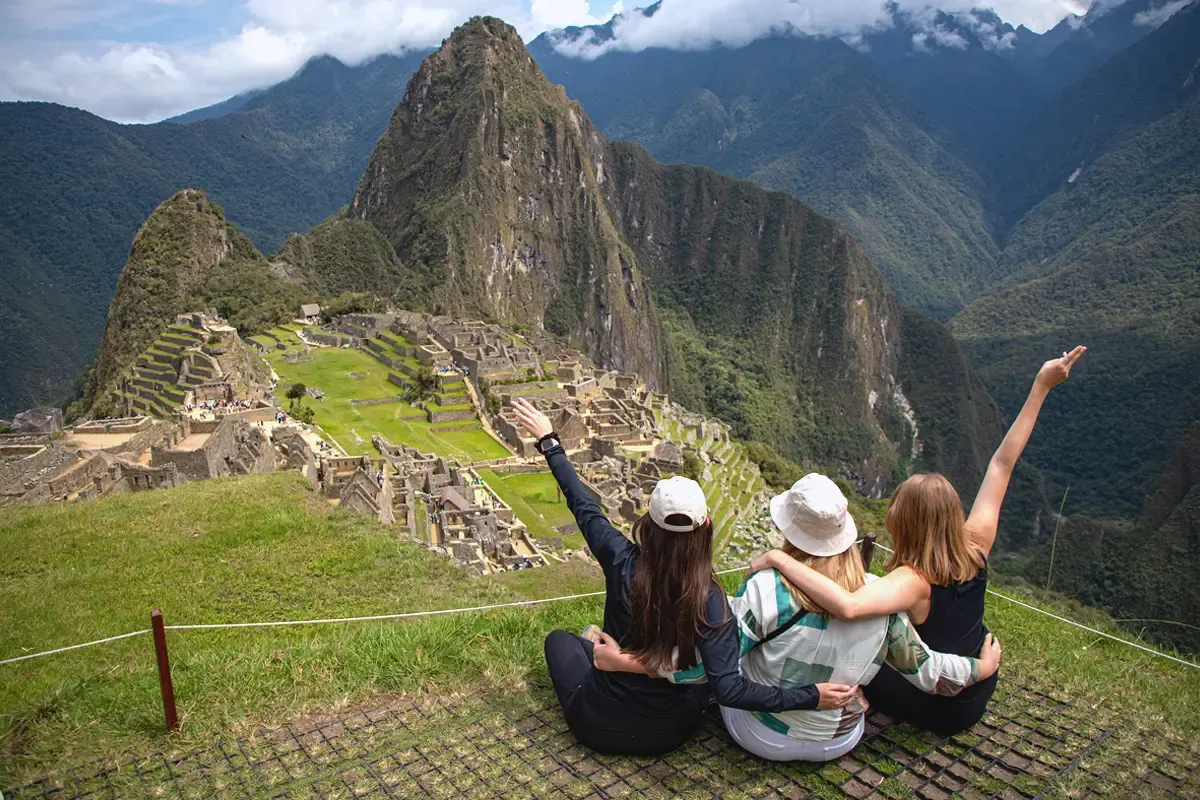
What Is the Best Machu Picchu Circuit?
Circuit 2 is generally considered the best among the circuits of Machu Picchu by most travelers, as it offers the chance to explore the urban area and sacred sector of the Inca citadel in greater detail. These areas are especially valuable because they preserve some of the clearest remains of what was once an original Inca city.
Which Machu Picchu Route Should You Choose?
Beyond general recommendations, it is important to understand that each circuit lets you experience Machu Picchu in a different way. Every route offers a unique perspective of the Historic Sanctuary of Machu Picchu, making it easier to choose one that matches your pace and interests. The table below can help you decide at a quick glance:
| Which Machu Picchu route is right for you? | ||
| Choose this route | If you want to visit... | Best for... |
| Route 1-A: Machu Picchu Mountain | Panoramic platforms and the hike to Machu Picchu Mountain. | Travelers who want a challenging hike and wide scenic views. |
| Route 1-B: Upper Terrace | Panoramic platforms and the classic viewpoint. | Travelers looking for the classic photo in a shorter visit. |
| Route 1-C: Inti Punku | Panoramic platforms and the trail to Inti Punku. | Travelers who want to see Machu Picchu from the ancient Inca Trail entrance. |
| Route 1-D: Inca Bridge | Panoramic platforms and the path to the Inca Bridge. | Travelers looking for a short and less common walk. |
| Route 2-A: Classic Designed Route | The Inca city, plazas, enclosures, and archaeological sectors. | First-time visitors focused on exploring the citadel. |
| Route 2-B: Lower Terrace | A panoramic platform and a route through the Inca city. | A balanced first visit: panoramic photo and citadel tour. |
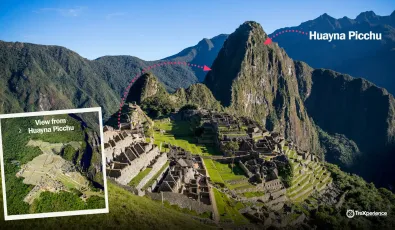
| Route 3-A: Huayna Picchu | The Inca royal area and the hike to Huayna Picchu. | Adventurous travelers who want to climb the most famous mountain. |
| Route 3-B: Designed Royalty Route | The Inca royal area, Temple of the Sun, the Inca’s House, and ceremonial sectors. | A royal sector visit without a mountain climb. |
| Route 3-C: Great Cavern | The Inca royal area and the hike to the Temple of the Moon / Great Cavern. | Travelers looking for a mystical and adventurous route. |
| Route 3-D: Huchuy Picchu | The Inca royal area and the hike to Huchuy Picchu. | Travelers who want a short hike with a touch of adventure. |
Difficulty Level of Each Machu Picchu Route
The intensity of each route depends on your experience, previous preparation, and the hikes you choose, as they vary in altitude at Machu Picchu. Here are some important details to keep in mind:
| How difficult are the Machu Picchu routes? | ||
| Route | Difficulty | Estimated round‑trip duration |
| Route 1-A: Machu Picchu Mountain | Hard | 3 to 4 hrs of hiking |
| Route 1-B: Upper Terrace | Moderate | max 2h30 of exploring |
| Route 1-C: Inti Punku | Hard | 2 to 3 hrs of hiking |
| Route 1-D: Inca Bridge | Hard | 50 to 60 min of hiking |
| Route 2-A: Classic Designed Route | Moderate to hard | max 2h30 of exploring |
| Route 2-B: Lower Terrace | Moderate to hard | 2 to 2:30 hrs of touring |
| Route 3-A: Huayna Picchu | Hard | 3 to 3h30 of hiking |
| Route 3-B: Designed Royalty Route | Moderate | max 2h30 of exploring |
| Route 3-C: Great Cavern | Hard | 2 to 2h30 of hiking |
| Route 3-D: Huchuy Picchu | Moderate | 1h30 to 2 hours of hiking |
Machu Picchu Circuits Explained in Simple Terms
Machu Picchu is one of the world’s most visited wonders, known for the harmony between its natural setting, rich flora and fauna, remarkable archaeology, and scenic landscapes. Its visit is divided into 3 different circuits, each with its own routes.
New Machu Picchu Regulations
Since June 1, 2024, the Ministry of Culture implemented the Machu Picchu new circuits and routes. These stricter rules were designed to help preserve the site and manage the flow of more than one and a half million visitors each year.
The new Machu Picchu regulations allow for a more organized visit, with proper time slots and better control to avoid overcrowding. However, despite these improvements, the new system has created uncertainty for many travelers who are not sure which circuit best matches what they are looking for. High ticket demand also makes this decision feel more urgent.
Circuit 1: Panoramic
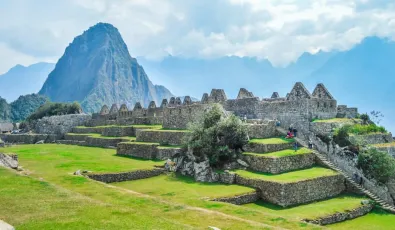
Machu Picchu Circuit 1 covers the upper area on the southern side and the hiking route to Machu Picchu Mountain, among others. The routes in Circuit 1 offer open views, making this circuit ideal for taking Machu Picchu pictures and capturing the classic postcard image: the Guardian’s House with the Inca city in the foreground, surrounded by mountains. This circuit includes the following hikes:
- Machu Picchu Mountain: the most important sacred mountain
- Inti Punku or Sun Gate: the original entrance to Machu Picchu
- Inca Bridge: Machu Picchu’s most protected ancestral access point
The routes that make up Panoramic Circuit 1 are:
| Route | Machu Picchu Entry Time | Advance purchase |
| - Route 1-A: Machu Picchu Mountain | - Morning: 07:00 and 09:00 | 3 months in advance |
| - Route 1-B: Upper Terrace | - Morning: 06:00, 07:00, 08:00, 09:00, 10:00, 11:00 - Afternoon: 12:00, 13:00, 14:00, 15:00 | 2 - 3 months in advance |
| - Route 1-C: Inti Punku Gateway ** | - Morning: 07:00, 8:00, 09:00, 10:00 | 2 months in advance |
| - Route 1-D: Inca Bridge ** | - Morning: 8:00, 09:00, 10:00, 11:00 | 2 months in advance |
** Available only during high season
Travelers who finish both the Short Inca Trail and its longer versions enter Machu Picchu through this circuit
Circuit 2: Classic Circuit
Machu Picchu Circuit 2 covers the central area of the Inca city. As its name suggests, this circuit follows the classic route visitors used before the new Machu Picchu rules were introduced.
The routes in Circuit 2 explore the citadel, including its streets, passageways, administrative and domestic buildings, as well as some sacred spaces that were part of the ancient urban landscape.
The routes that make up Classic Circuit 2 are:
| Route | Machu Picchu Entry Time | Advance purchase |
| - Route 2-A: Classic Designed Route | - Morning: 06:00, 07:00, 08:00, 09:00, 10:00, 11:00 - Afternoon: 12:00, 13:00, 14:00, 15:00 | 4 - 5 months in advance |
| - Route 2-B: Lower Terrace | 4 - 5 months in advance |
- These routes are the most in demand, especially during the high season.
Circuit 3: Machu Picchu Royalty
Machu Picchu Circuit 3 covers the Inca city and the mountainous area on the northern side. The routes in Circuit 3 pass through the citadel and visit some of its most sacred enclosures dedicated to certain Inca gods. In this circuit, you can hike to the following attractions:
- Huchuy Picchu Mountain: the smallest and closest mountain to the citadel
- Huayna Picchu Mountain: the most challenging mountain, with impressive views
- The Great Cavern: a hidden Inca Moon temple in the mountain
The routes that make up Machu Picchu Royalty Circuit 3 are:
| Route | Machu Picchu Entry Time | Advance purchase |
| - Route 3-A: Huayna Picchu Mountain | - Morning: 07:00 and 10:00 | 3 - 4 months in advance |
| - Route 3-B: Designed Route (Royalty) | - Morning: 06:00, 07:00, 08:00, 09:00, 10:00, 11:00 - Afternoon: 12:00, 13:00, 14:00, 15:00 | 4 - 5 months in advance |
| - Route 3-C: Great Cavern ** | - Morning: 08:00 and 09:00 | 2 - 3 months in advance |
| - Route 3-D: Huchuy Picchu Mountain ** | - Morning: 09:00 and 11:00 | 2 - 3 months in advance |
- The route 3B is the most in demand, especially during the high season.
** Available only during high season
Machu Picchu Circuits: High and Low Season
High Season
- New Year: January 1
- Holy Week: April 2 to 5
- Mid-year high season: June 19 to November 2
- Year-end holidays: December 30 and 31
Low Season
- Beginning of the year: January 2 to April 1
- Pre-high season: April 6 to June 18
- Post-high season: November 3 to December 29
- Important: during high season, the entry tolerance for Machu Picchu increases from 30 to 45 minutes, but only for the main entrance. There is no tolerance for mountain hike entrances: Huayna Picchu, Huchuy Picchu, and Machu Picchu Mountain.
Read next | Best Time to Visit Machu Picchu
C1 | Route 1-A: Machu Picchu Mountain Route
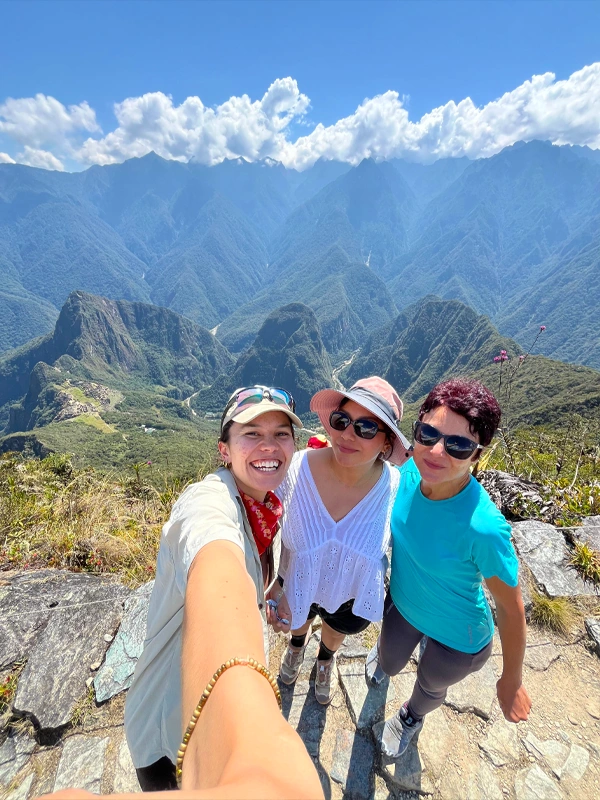
Route 1-A: Machu Picchu Mountain combines classic panoramic views with a challenging hike to the highest sacred mountain in the Sanctuary. From the summit, you get a wide view of the citadel and the geological formation known as the “Vilcabamba Batholith”, the surrounding mountains and the Vilcanota River. On clear days, the snow-capped Salkantay and Pumasillo mountains.
Within Circuit 1, Route 1-A allows you to spend more time inside the sanctuary. It is recommended for travelers in good physical condition who want a mountain experience and open scenic views.
What parts of Machu Picchu are visited on Route 1-A?
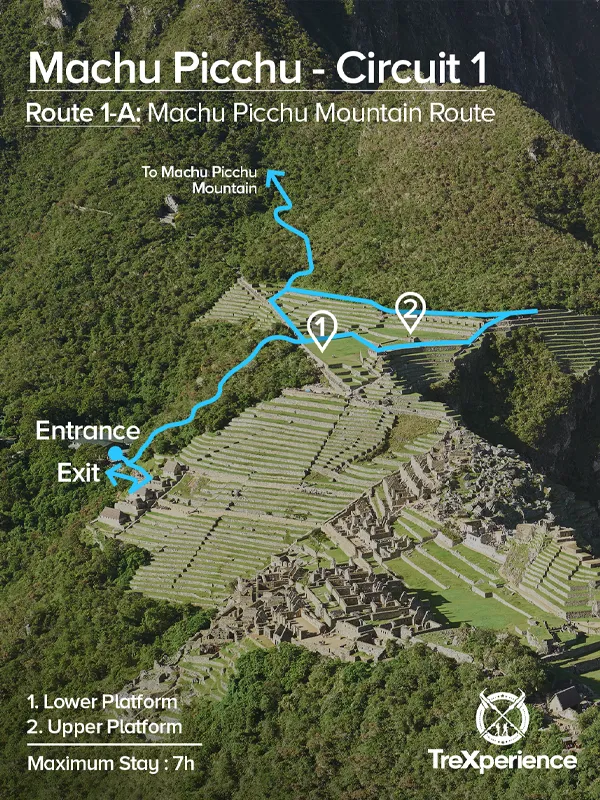
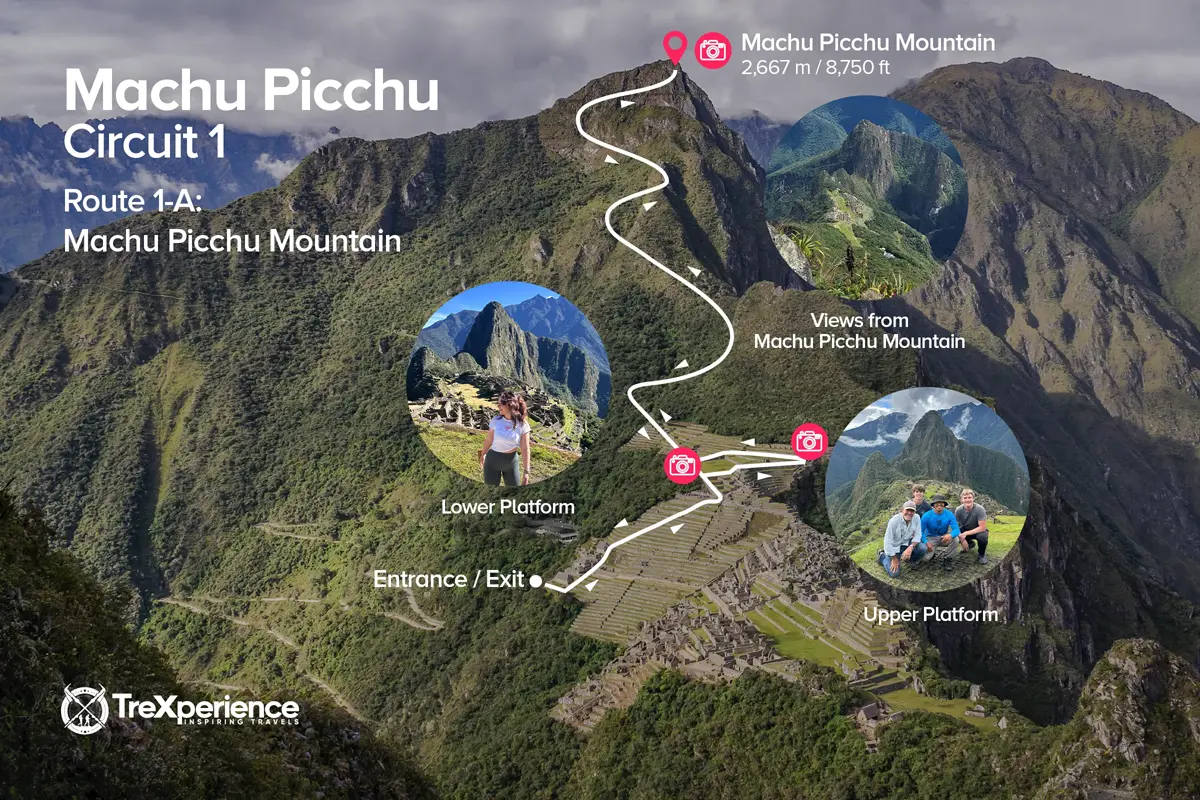
This route includes the agricultural terraces near the Guardhouse, the lower platform and the upper platform (the main panoramic viewpoints). It also gives access to the hike to Machu Picchu Mountain.
Map of Machu Picchu Route 1-A: Machu Picchu Mountain Route
 |  |
Machu Picchu Route 1-A Entrance Ticket Details:
- Included access: 2 scenic platforms of Machu Picchu + entrance to the Machu Picchu Mountain trail
- Maximum time allowed inside: 7 hours
- Available entry times:
- Morning: 07:00 and 09:00
Technical details of the hike to Machu Picchu Mountain:
- Hiking difficulty: Hard
- Hiking duration: 3 to 4 hours round trip
- Hiking distance: 3.8 km round trip
- Maximum altitude: Machu Picchu Mountain 3,061 m / 10,043 ft
Pros and Cons of Route 1-A: Machu Picchu Mountain
| Route 1-A: Machu Picchu Mountain Route | |
| Pros | Cons |
|
|
|
|
|
|
C1 | Route 1-B: Upper Terrace Route
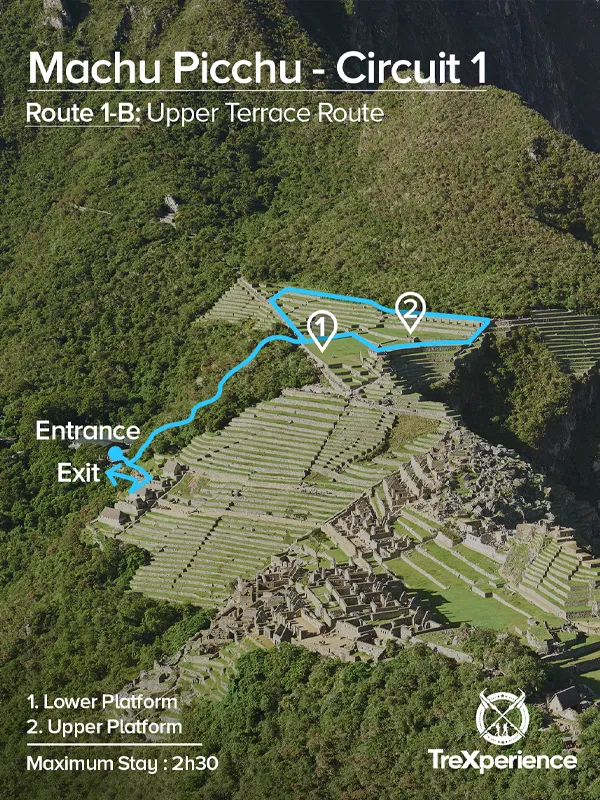
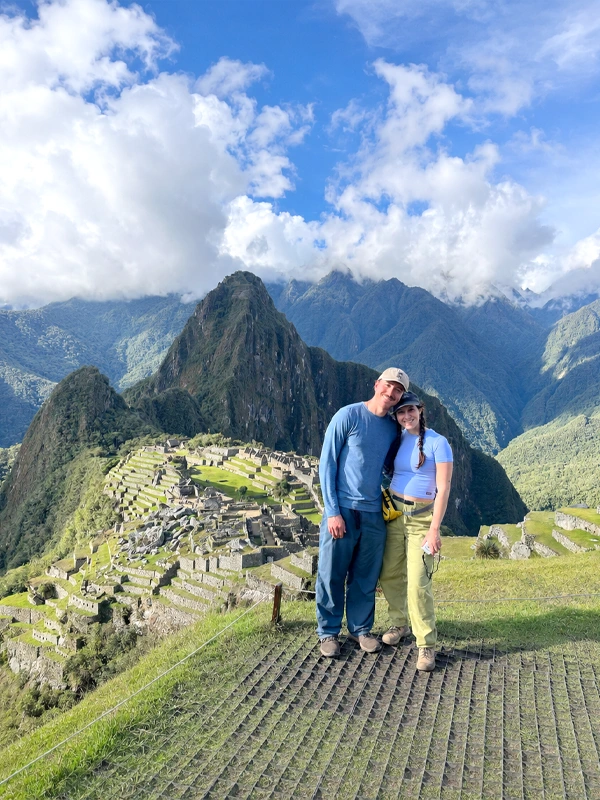
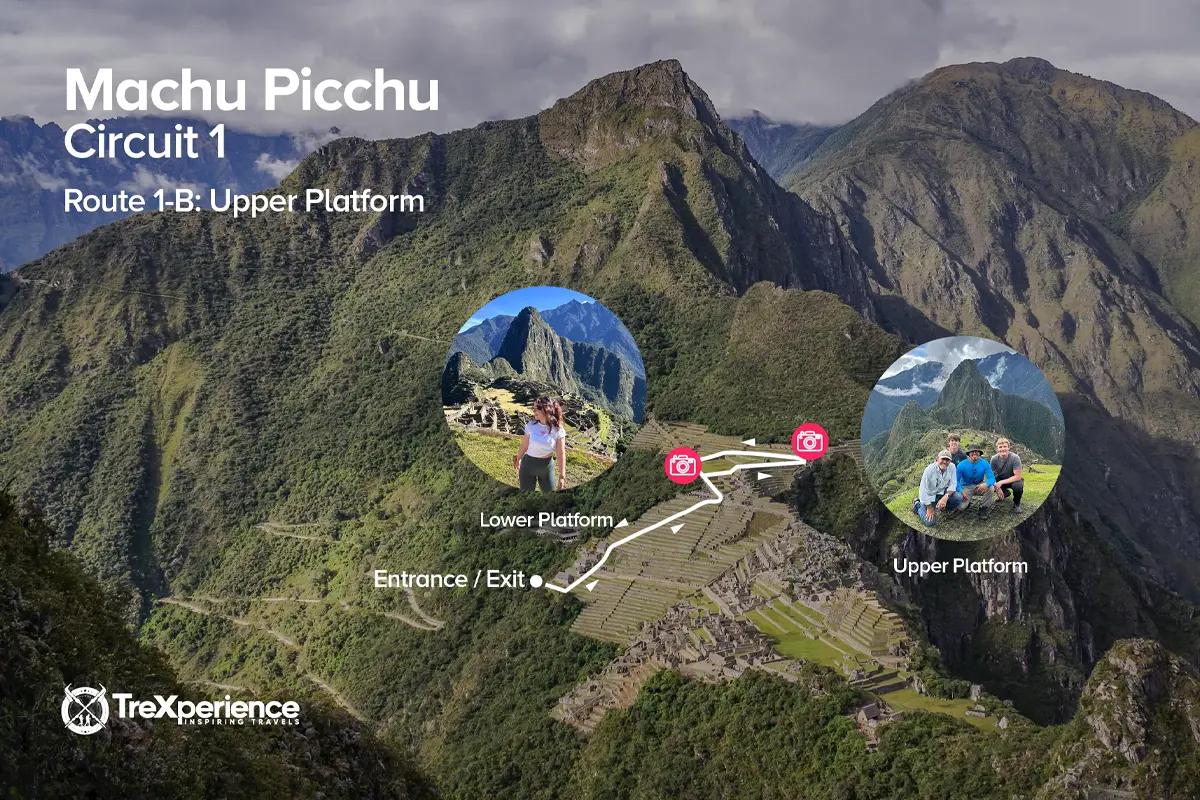
Route 1-B: Upper Terrace is a short, direct, and highly photogenic option. Within Circuit 1, Route 1-B offers the shortest visit to Machu Picchu. It is designed for travelers who want to see Machu Picchu from its famous viewpoints or prioritize the classic photo, without doing a long hike and without taking up too much time.
What parts of Machu Picchu are visited on Route 1-B?
This route passes through the agricultural terraces, the Guardhouse, and gives access to the lower platform and the upper platform, the two best spots for taking panoramic photos of Machu Picchu.
Map of Machu Picchu Route 1-B: Upper Terrace Route
 |  |
Machu Picchu Route 1-B Entrance Ticket Details:
- Included access: 2 scenic platforms of Machu Picchu
- Maximum time allowed inside: 2 hours and 30 minutes
- Available entry times:
- Morning: 06:00, 07:00, 08:00, 09:00, 10:00 and 11:00
- Afternoon: 12:00, 13:00, 14:00 and 15:00
Technical details of Route 1-B:
- Difficulty Level: Moderate
- Duration: 1:30 to 2 hours round trip
- Distance: 1.6 km round trip
Pros and Cons of Route 1-B: Upper Terrace
| Route 1-B: Upper Terrace Route | |
| Pros | Cons |
|
|
|
|
|
|
C1 | Route 1-C: Inti Punku Gateway Route
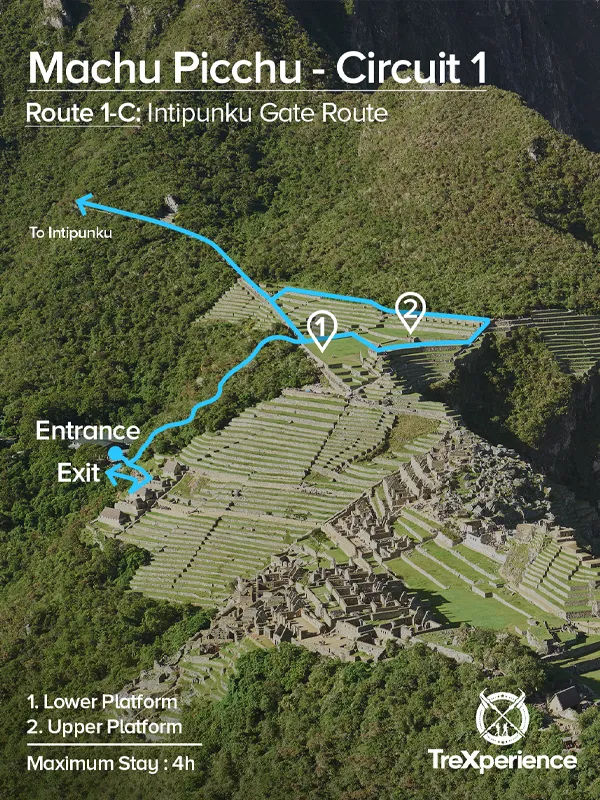
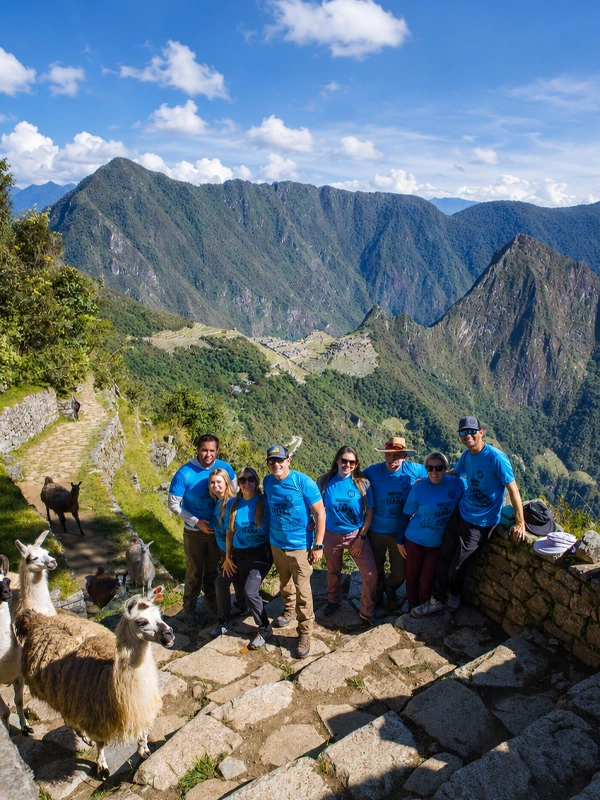
Route 1-C: Inti Punku Gateway combines classic views of Machu Picchu with distant landscapes from the Sun Gate, or Inti Punku, considered the original entrance to the Inca city from the Inca Trail.
Within Circuit 1, Route 1-C allows you to move toward the southern end of the Sanctuary. From this point, you can see the citadel in the distance, like a hidden treasure, the true ancient panorama seen by those who once reached this place. It is a great choice for travelers looking for distant views of Machu Picchu and a bit of hiking.
What parts of Machu Picchu are visited on Route 1-C?
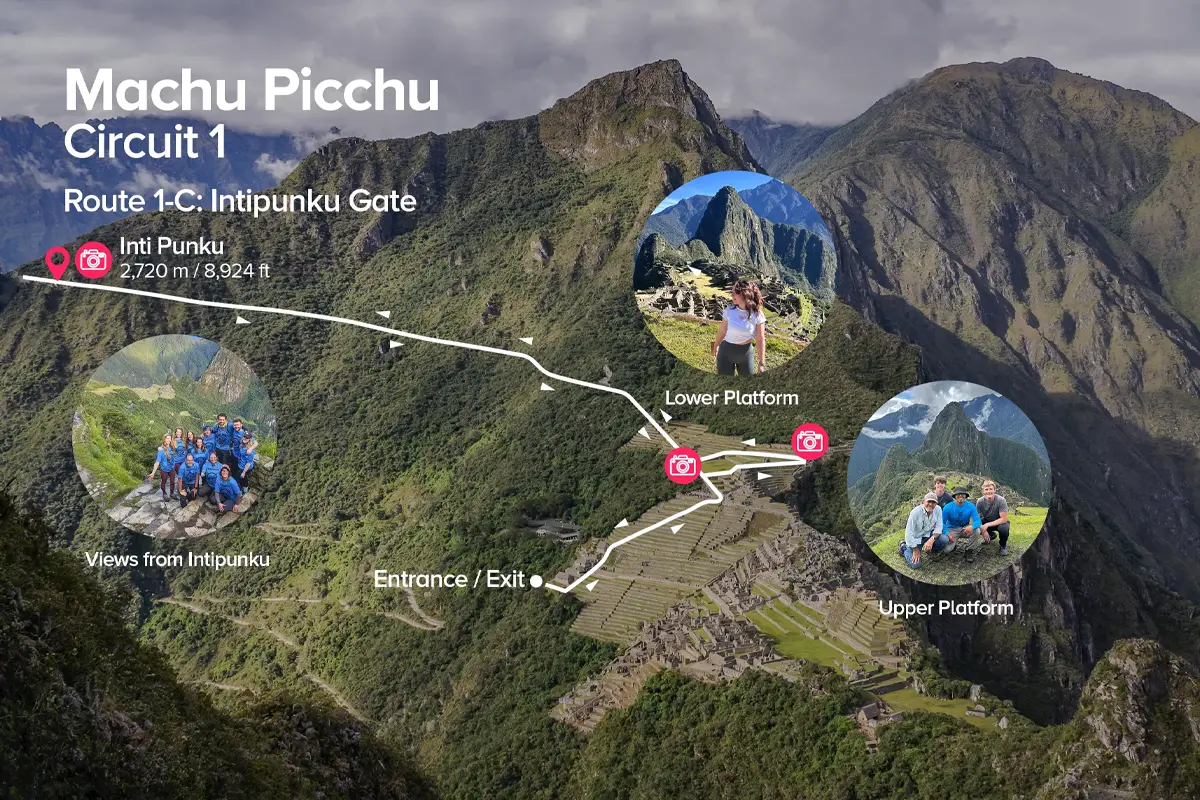
This route visits the agricultural terrace area of Machu Picchu, the Guardhouse, and its ancestral entrance. Highlights along this route include the lower platform and the upper platform, unique spots for photography, as well as the trail to Inti Punku, or the Sun Gate.
Map of Machu Picchu Route 1-C: Inti Punku Route
 |  |
Machu Picchu Route 1-C Entrance Ticket Details:
- Included access: 2 scenic platforms of Machu Picchu + entrance to the Inti Punku trail
- Maximum time allowed inside: 4 hours
- Available entry times:
- Morning: 07:00, 08:00, 09:00, 10:00
Technical details of the hike to the Sun Gate - Inti Punku:
- Hiking difficulty: Hard
- Hiking duration: 2 to 3 hours round trip
- Hiking distance: 3.4 km round trip
- Maximum altitude: Sun Gate, 2,720 m / 8,924 ft
Pros and Cons of Route 1-C: Inti Punku
| Route 1-C: Inti Punku Gateway Route | |
| Pros | Cons |
|
|
|
|
|
|
C1 | Route 1-D: Inca Bridge Route
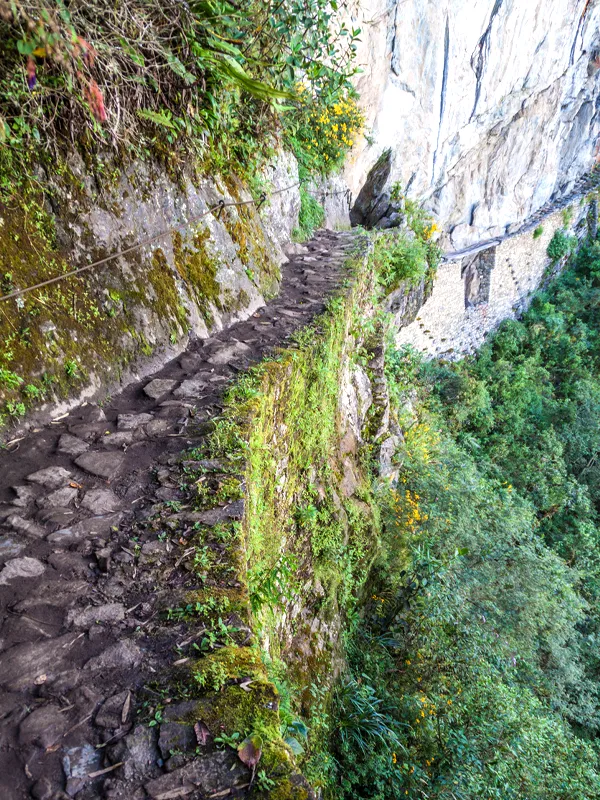
Route 1-D: Inca Bridge offers classic and side views, along with an easy walk to one of the most interesting paths in Machu Picchu. The Inca Bridge was part of the Inca road that led out of the citadel toward the high jungle area.
Within Circuit 1, this route lets you explore a less crowded and more mysterious sector. It is a quick option for travelers looking for a short walk and a quieter connection with the landscape.
What parts of Machu Picchu are visited on Route 1-D?
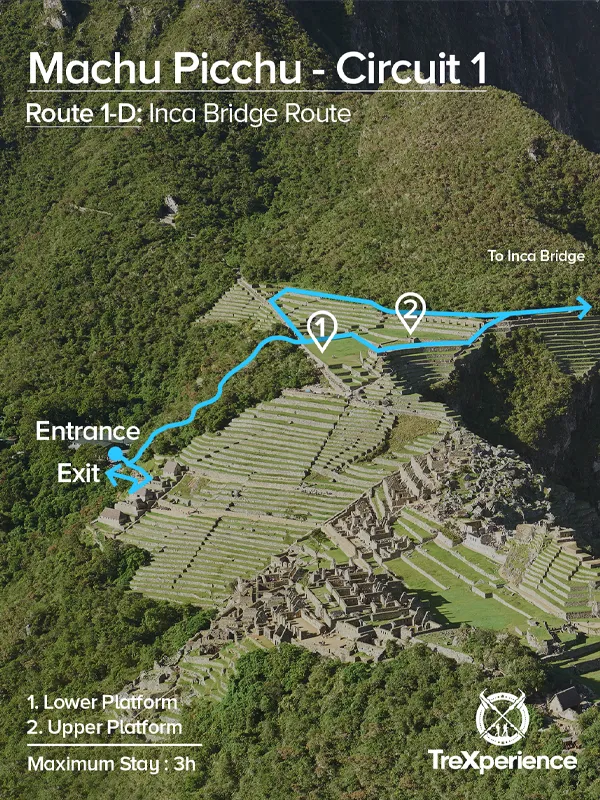
This route passes through the agricultural terraces, goes by the Guardhouse, the lower platform, the upper platform and the path to the Inca Bridge.
Map of Machu Picchu Route 1-D: Inca Bridge Route
 |  |
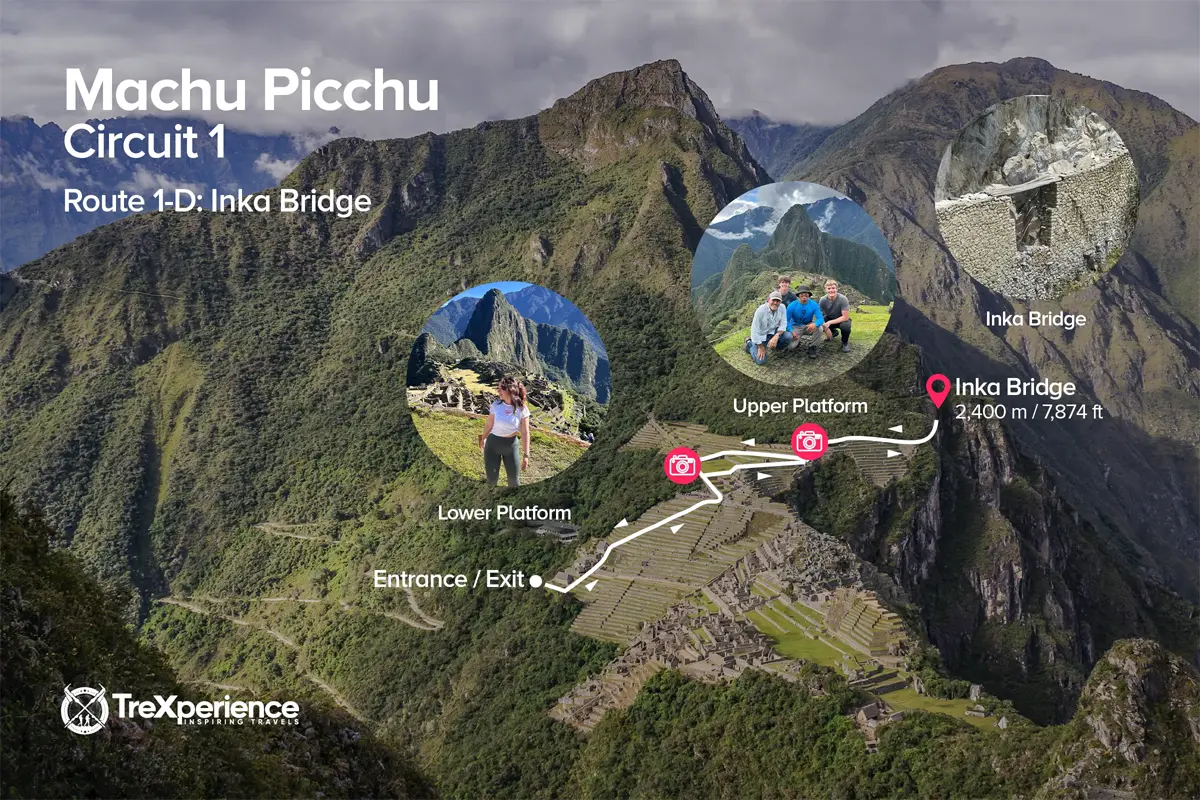
Machu Picchu Route 1-D Entrance Ticket Details:
- Included access: 2 scenic platforms of Machu Picchu + entrance to the Inca Bridge trail
- Maximum time allowed inside: 3 hours
- Available entry times:
- Morning: 08:00, 09:00, 10:00, 11:00
Technical details of the hike to the Inca Bridge of Machu Picchu:
- Hiking difficulty: Hard
- Hiking duration: 50 to 60 minutes round trip
- Hiking distance: 2.6 km round trip
Pros and Cons of Route 1-D: Inca Bridge
| Route 1-D: Inca Bridge Route | |
| Pros | Cons |
|
|
|
|
|
|
C2 | Route 2-A: Classic Designed Route
Route 2-A: Classic Designed Route descends toward the urban area of the citadel, offering a closer experience with the archaeological remains linked to Hiram Bingham.
Route 2-A lets you enjoy the classic Machu Picchu experience: walking through the citadel, seeing its structures up close, and better understanding the organization of the ancient Inca urban space. This is one of the best options for visiting Machu Picchu for the first time.
What parts of Machu Picchu are visited on Route 2-A?
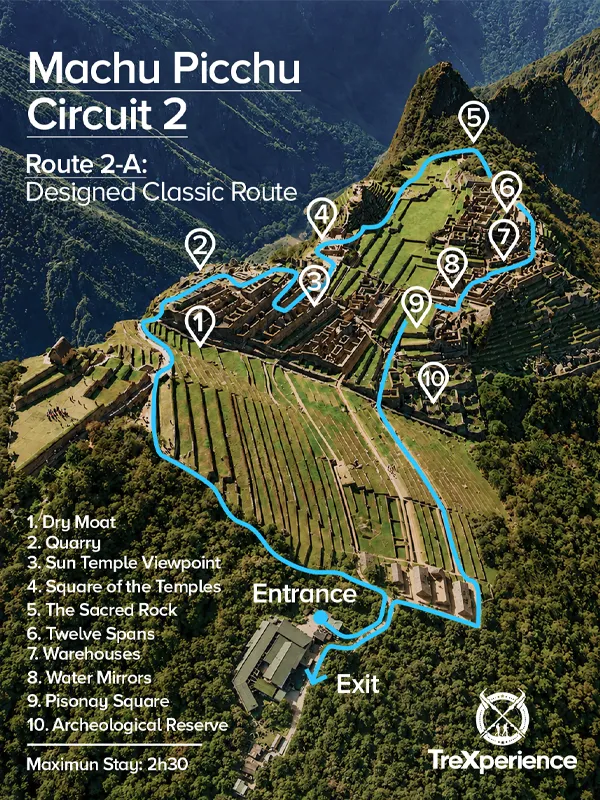
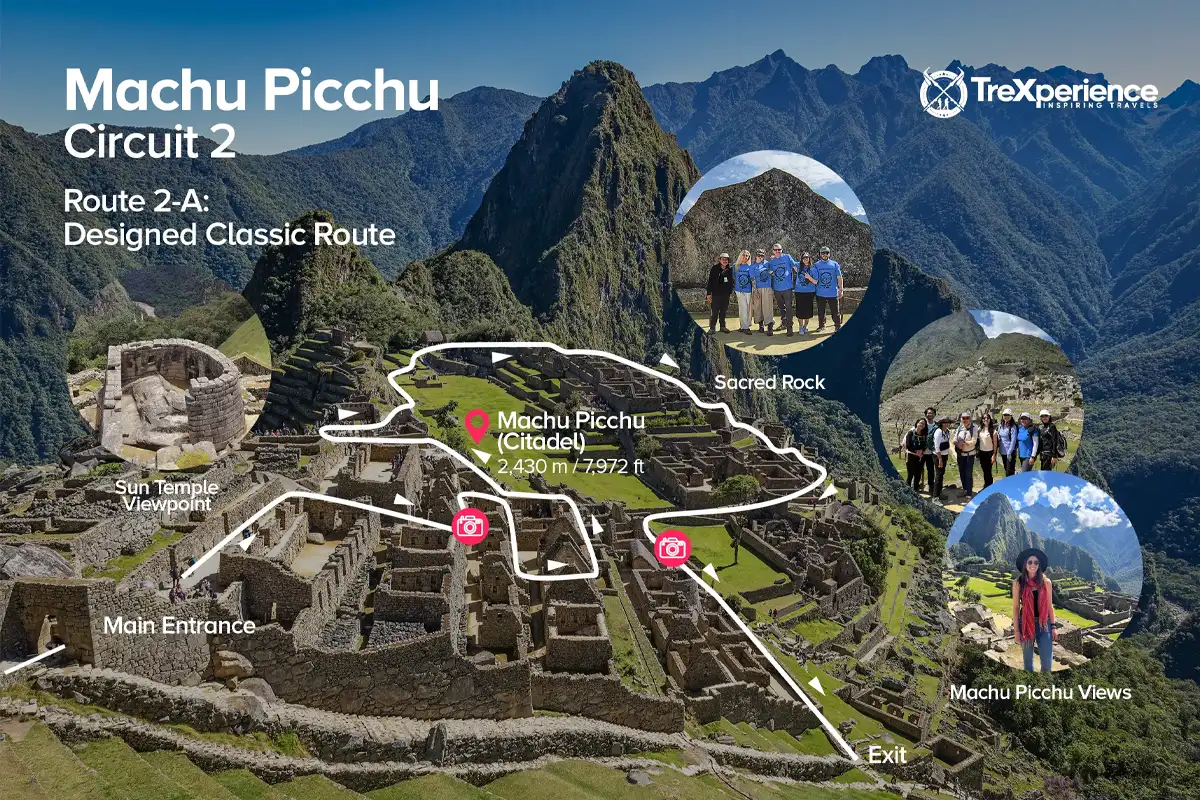
The route begins at the agricultural terraces and continues through the main gate of the Inca city.
Along the way, you visit several important areas such as the Dry Moat, the Granite Chaos, the viewpoint near the Temple of the Sun, the Temple Plaza with views of the Intihuatana Pyramid, the Sacred Rock, the Twelve Doorways, the Eastern Qolqas, the Water Mirrors, Pisonay Plaza, and the Archaeological Reserve.
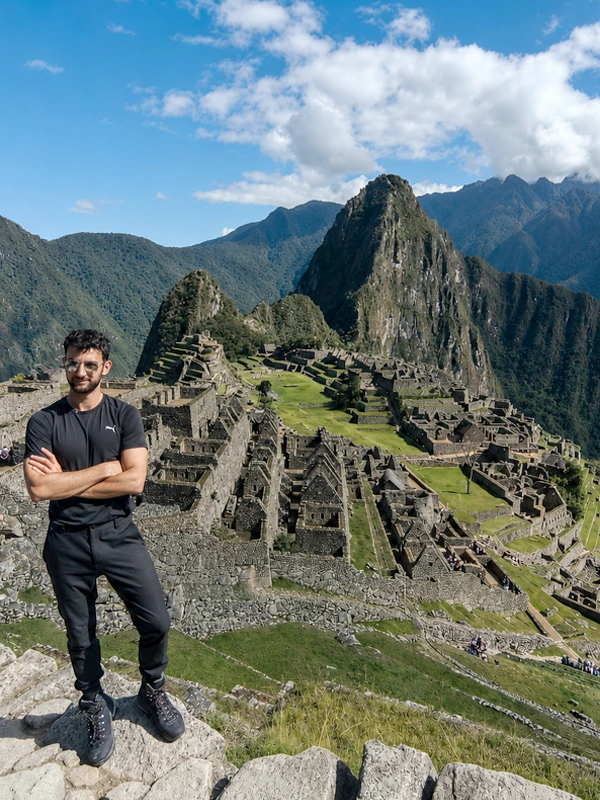
Map of Machu Picchu Route 2-A: Classic Designed Route
 |  |
Machu Picchu Route 2-A Entrance Ticket Details:
- Included access: Inca city of Machu Picchu
- Maximum time allowed inside: 2 hours and 30 minutes
- Available entry times:
- Morning: 06:00, 07:00, 08:00, 09:00, 10:00 and 11:00
- Afternoon: 12:00, 13:00, 14:00 and 15:00
Technical details of Route 2-A:
- Difficulty Level: Moderate to hard
- Duration: 2 hours round trip
- Distance: 2.5 km round trip
Pros and Cons of Route 2-A: Classic Designed Route
| Route 2-A: Classic Designed Route | |
| Pros | Cons |
|
|
|
|
|
|
C2 | Route 2-B: Lower Terrace Route
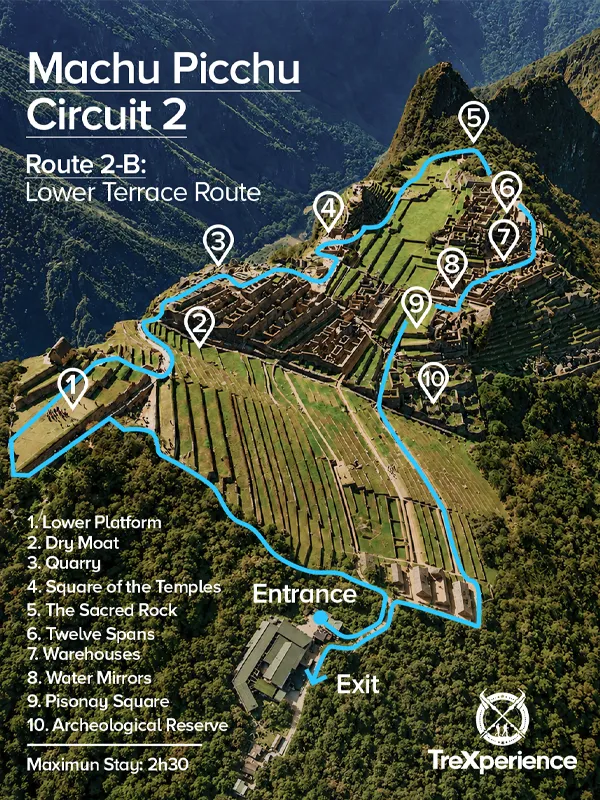
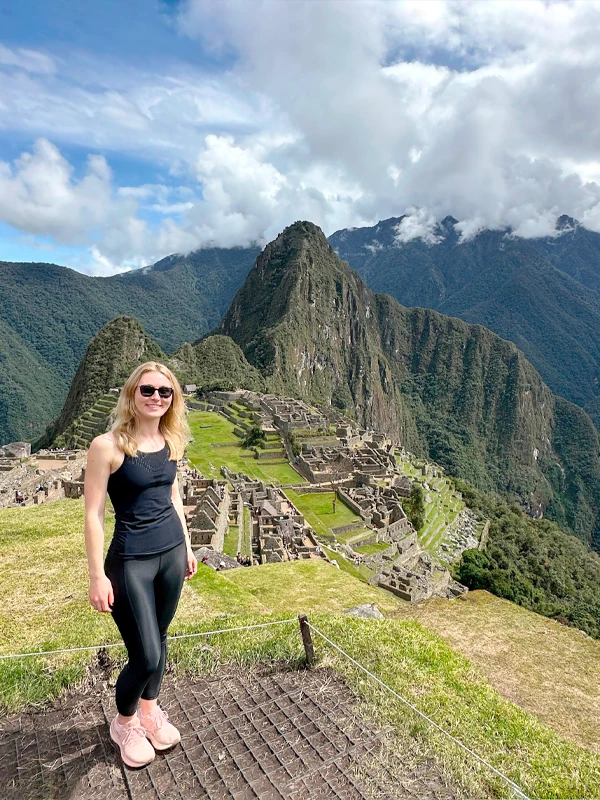
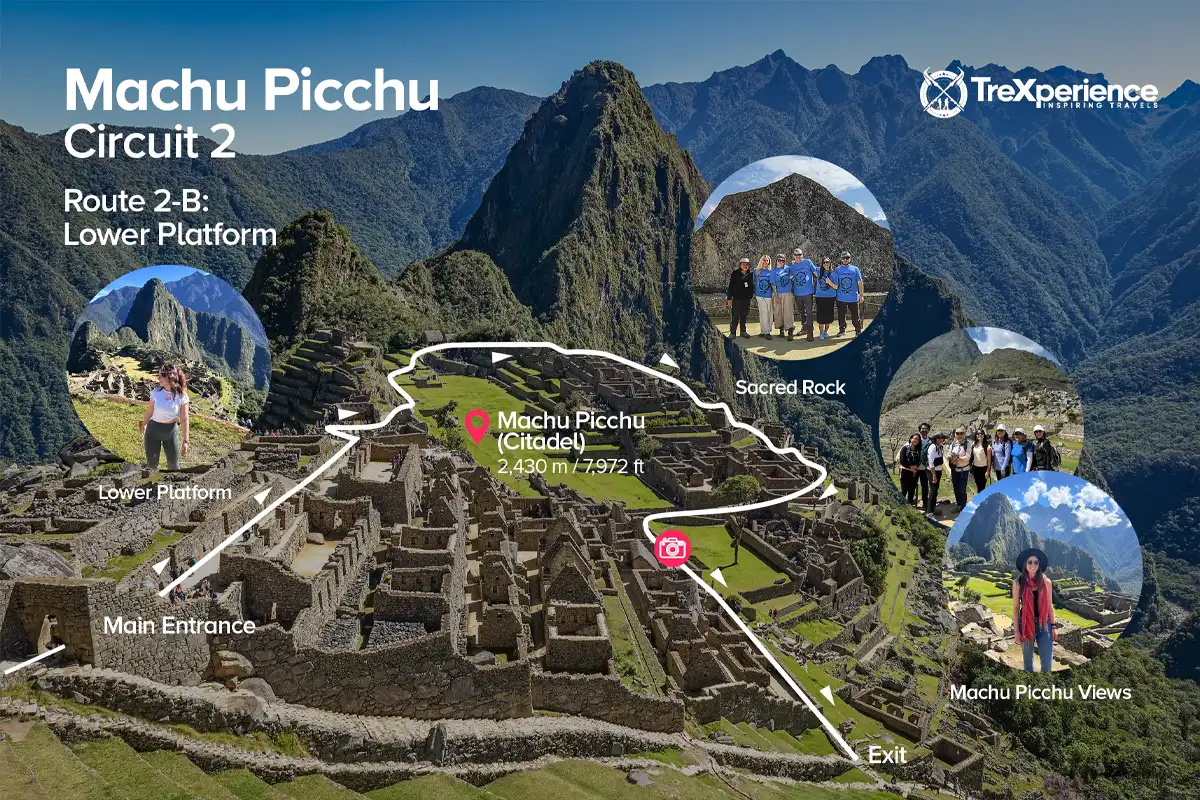
Route 2-B: Lower Terrace combines a panoramic stop at Machu Picchu with a visit through the urban area of the citadel.
Within Circuit 2, Route 2-B offers a very balanced experience: it lets you enjoy the panoramic view of Machu Picchu and then explore its main archaeological areas. It is an excellent alternative for travelers who want the classic photo and a visit inside the citadel. For this reason, it is usually one of the most requested routes among first-time visitors to Machu Picchu.
What parts of Machu Picchu are visited on Route 2-B?
The route begins at the panoramic terraces and continues through the main gate of the Inca city.
During the visit, you explore important points such as the Lower Platform, the Dry Moat, the Granite Chaos, the viewpoint near the Temple of the Sun, the Temple Plaza with views of the Intihuatana Pyramid, the Sacred Rock, the Twelve Doorways, the Eastern Qolqas, the Water Mirrors, Pisonay Plaza, and the Archaeological Reserve.
Map of Machu Picchu Route 2-B: Lower Terrace Route
 |  |
Machu Picchu Route 2-B Entrance Ticket Details:
- Included access: 1 panoramic platform and the Inca city of Machu Picchu
- Maximum time allowed inside: 2 hours and 30 minutes
- Available entry times:
- Morning: 06:00, 07:00, 08:00, 09:00, 10:00 and 11:00
- Afternoon: 12:00, 13:00, 14:00 and 15:00
Technical details of Route 2-B:
- Difficulty Level: Moderate to hard
- Duration: 2 to 2:30 hours round trip
- Distance: 2.7 km round trip
Pros and Cons of Route 2-B: Lower Terrace Route
| Route 2-B: Lower Terrace Route | |
| Pros | Cons |
|
|
|
|
|
|
C3 | Route 3-A: Waynapicchu Mountain Route
Route 3-A: Waynapicchu Mountain combines a visit to the Inca urban and royal areas with a challenging hike to Wayna Picchu, one of the most famous mountains for adventure travelers.
Within Circuit 3, Route 3-A is one of the most suitable options for those looking for a mix of archaeology, ceremonial spaces, and a mountain hike.
It is perfect for adventurous travelers who want to add altitude, physical effort, and unique views to their archaeological tour. It is especially recommended for travelers in good physical condition and for those who want a different view of Machu Picchu from the heights and steep terrain.
What parts of Machu Picchu are visited on Route 3-A?
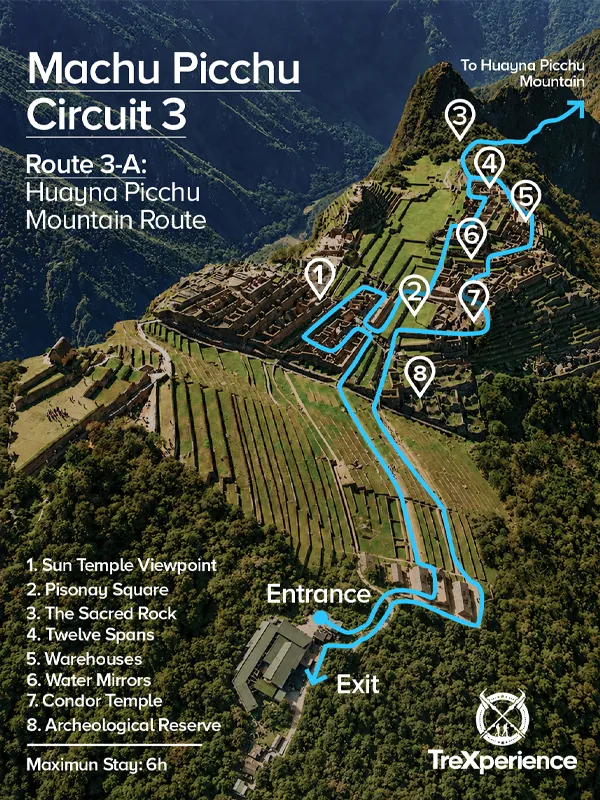
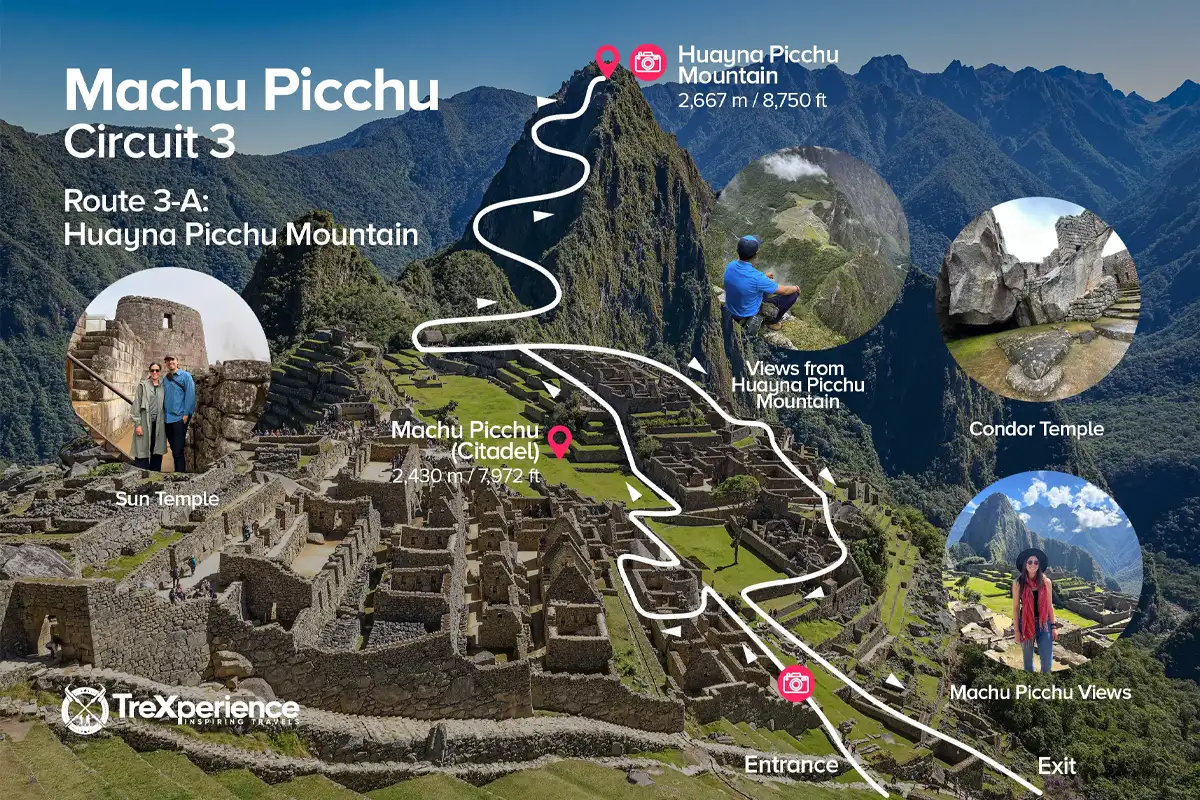
Entry is through the lower part of the agricultural area, and the route continues toward the northern sector, in the direction of the access point for the hike to Waynapicchu Mountain.
Along the route, you can see Inca Royal places such as Pisonay Plaza, the Sacred Rock, the Twelve Doorways, the Eastern Qolqas, the Water Mirrors, and the Archaeological Reserve. This route also includes the Temple of the Sun, the Inca’s House, the Ceremonial Fountains, the Three Doorways, and the Temple of the Condor.
Map of Machu Picchu Route 3-A: Waynapicchu Mountain Route
 |  |
Machu Picchu Route 3-A Entrance Ticket Details:
- Included access: Inca city of Machu Picchu + entrance to the Huayna Picchu Mountain trail
- Maximum time allowed inside: 6 hours
- Available entry times:
- Morning: 07:00, 10:00
Technical details of the hike to Huayna Picchu Mountain:
- Hiking difficulty: Hard
- Hiking duration: 3 to 3:30 hours round trip
- Hiking distance: 2.4 km round trip
- Maximum altitude: Huayna Picchu Mountain, 2,667 m / 8,750 ft
Pros and Cons of Route 3-A: Waynapicchu Mountain
| Route 3-A: Waynapicchu Mountain Route | |
| Pros | Cons |
|
|
|
|
|
|
C3 | Route 3-B: Designed Royalty Route
Route 3-B: Designed Royalty Route is the main option in Circuit 3 for exploring the urban area and the Inca royal sector of Machu Picchu without doing any additional mountain hikes.
Within Circuit 3, Route 3-B offers a calmer visit than the mountain routes. It is a good alternative for travelers looking for a cultural, archaeological, and more direct experience.
What parts of Machu Picchu are visited on Route 3-B?
Entry is through the lower part of the agricultural area and continues through the Inca royal sector inside the citadel.
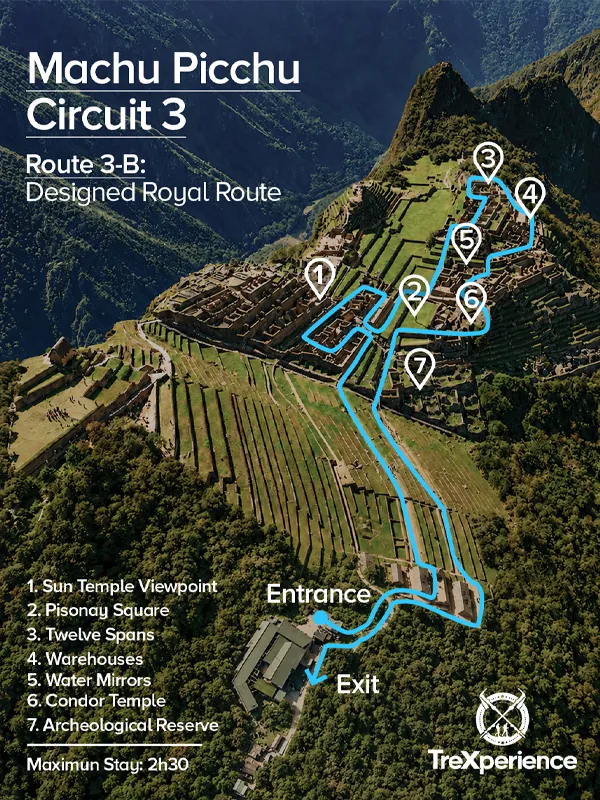
Along the route, you pass places such as Pisonay Plaza, the Twelve Doorways, the Eastern Qolqas, the Water Mirrors, and the Archaeological Reserve. You also visit the Temple of the Sun, the Inca’s House, the Ceremonial Fountains, the Three Doorways, and the Temple of the Condor.
Map of Machu Picchu Route 3-B: Designed Royalty Route
 |  |
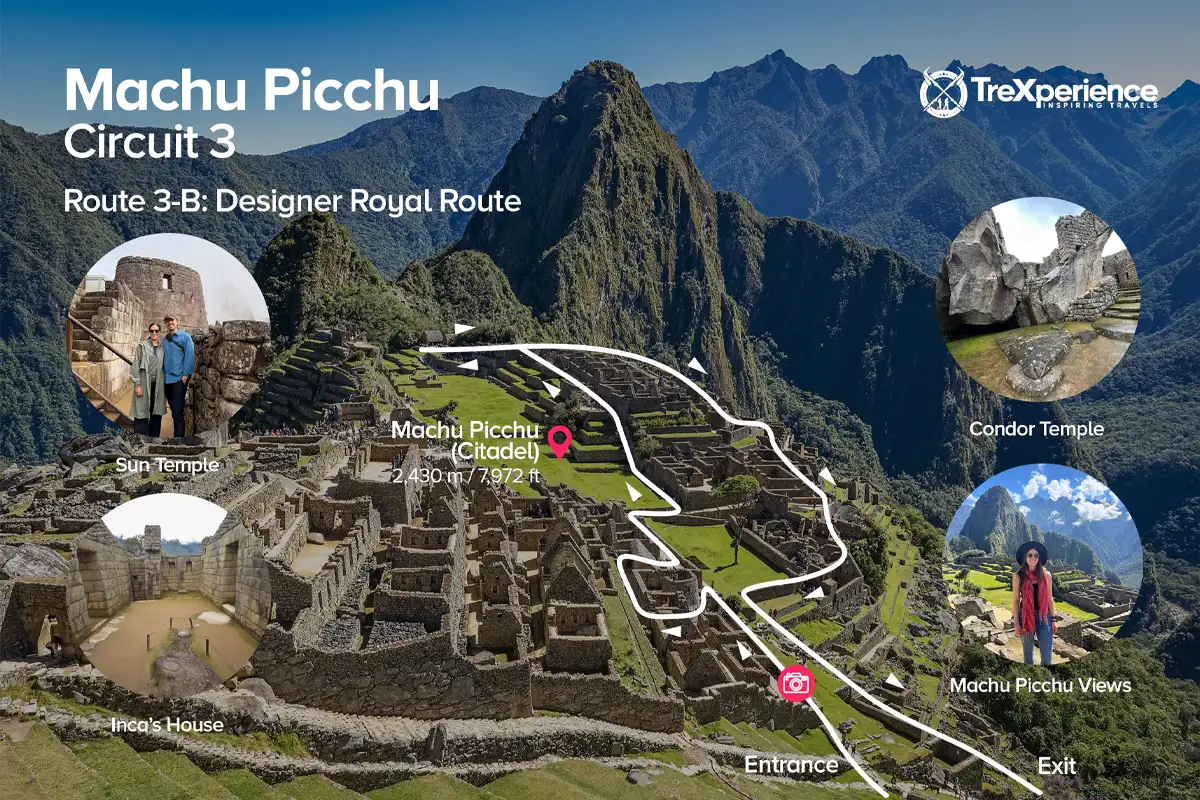
Machu Picchu Route 3-B Entrance Ticket Details:
- Included access: Inca city of Machu Picchu
- Maximum time allowed inside: 2 hours and 30 minutes
- Available entry times:
- Morning: 06:00, 07:00, 08:00, 09:00, 10:00 and 11:00
- Afternoon: 12:00, 13:00, 14:00 and 15:00
Technical details of Route 3-B:
- Route difficulty: Moderate
- Route duration: 2 hours round trip
- Route distance: 1.3 km round trip
Pros and Cons of Route 3-B: Designed Royalty Route
| Route 3-B: Designed Royalty Route | |
| Pros | Cons |
|
|
|
|
|
|
The final section of this route is accessible for wheelchair users.
C3 | Route 3-C: Great Cavern Route
Route 3-C: Great Cavern is one of the most special experiences in Circuit 3. It combines a visit to archaeological sectors of the citadel with a long hike to the Great Cavern, a mystical and mysterious spot in Machu Picchu surrounded by a more remote landscape.
Within Circuit 3, Route 3-C is ideal for travelers who want to step away from the more traditional route and discover a sacred, less-visited area of Machu Picchu.
What parts of Machu Picchu are visited on Route 3-C?
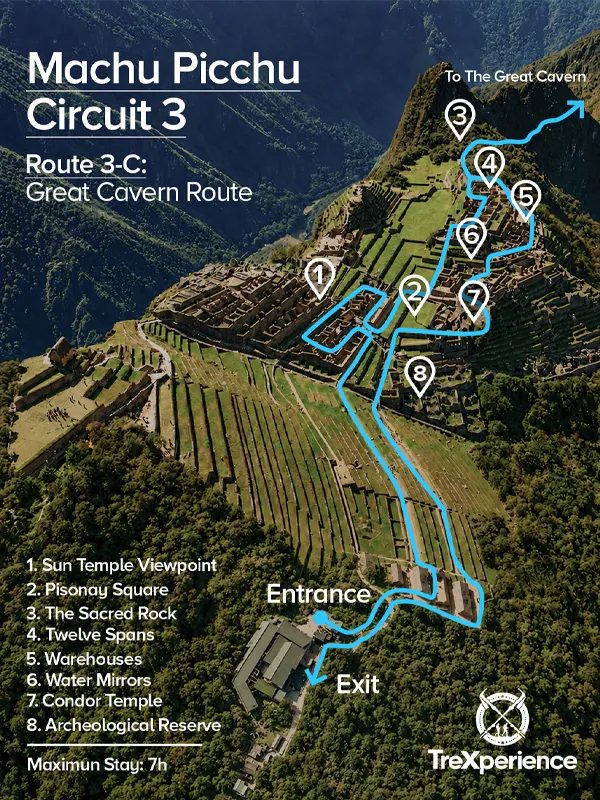
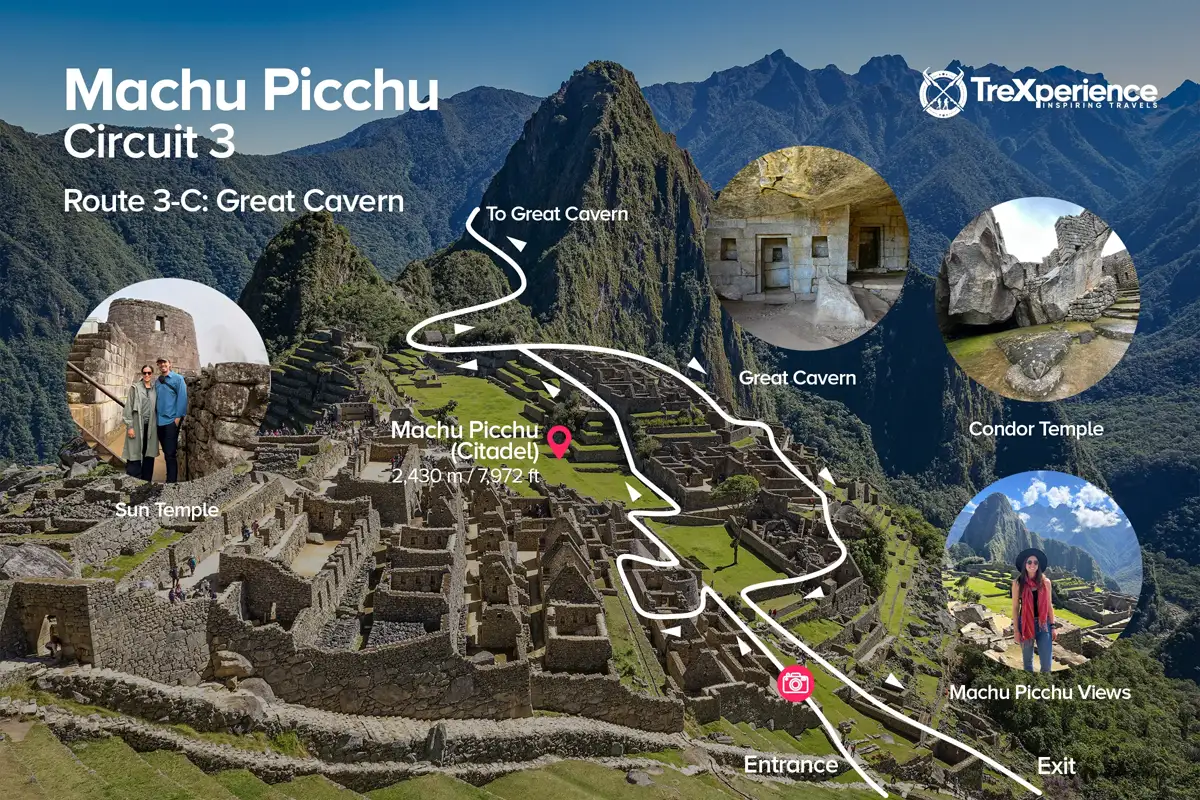
Entry is through the lower part of the agricultural area. The route visits the Inca royal sector inside the citadel and continues with a hike to the Temple of the Moon or the Great Cavern.
Along the way, you pass places such as Pisonay Plaza, the Twelve Doorways, the Eastern Qolqas, the Water Mirrors, and the Archaeological Reserve. You also visit the Temple of the Sun, the Inca’s House, the Ceremonial Fountains, the Three Doorways, and the Temple of the Condor.
Map of Machu Picchu Route 3-C: Great Cavern Route
 |  |
Machu Picchu Route 3-C Entrance Ticket Details:
- Included access: Inca city of Machu Picchu + entrance to the Great Cavern trail
- Maximum time allowed inside: 2 hours and 30 minutes
- Available entry times:
- Morning: 08:00 and 09:00
Technical details of the hike to the Great Cavern:
- Hiking difficulty: Hard
- Hiking duration: 2 to 2:30 hours round trip
- Hiking distance: 3.3 km round trip
- Maximum altitude: Great Cavern, 2,257 m / 7,405 ft
Pros and Cons of Route 3-C: Great Cavern Route
| Route 3-C: Great Cavern Route | |
| Pros | Cons |
|
|
|
|
|
|
C3 | Route 3-D: Huchuy Picchu Route
Route 3-D: Huchuy Picchu combines a visit to the lower area of Machu Picchu with a short hike to a small mountain located close to the citadel.
Within Circuit 3, Route 3-D is a practical option for travelers who wish to add a small touch of adventure to their cultural visit, without requiring a demanding hike.
What parts of Machu Picchu are visited on Route 3-D?
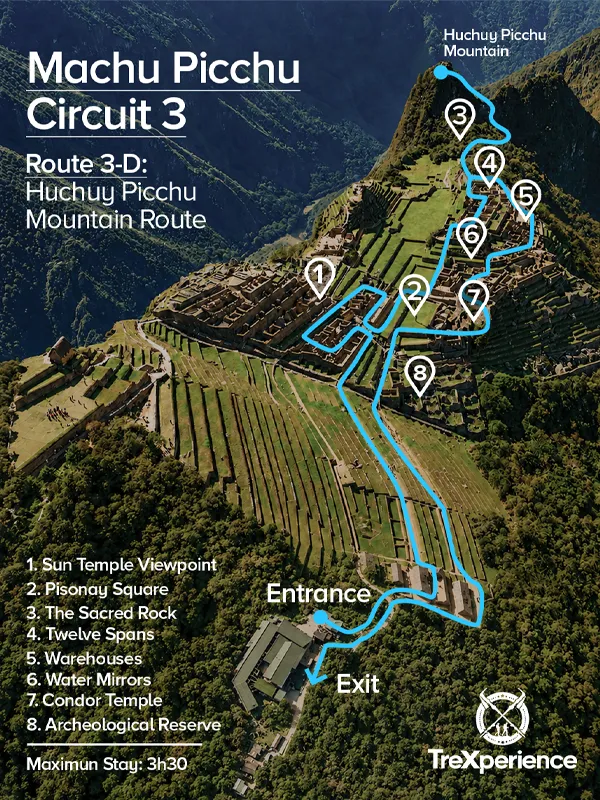
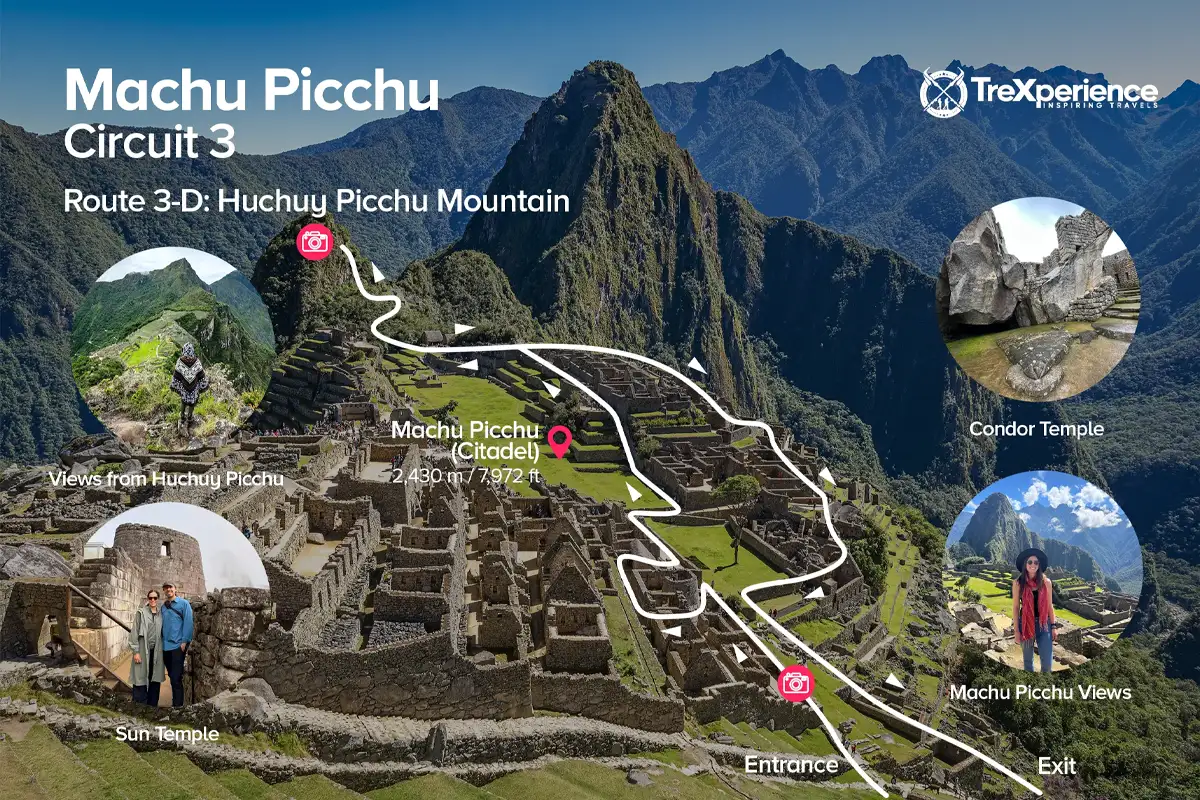
The route passes through the lower part of the agricultural area, visits the Inca royal sector inside the citadel, and includes the hike to Huchuy Picchu Mountain.
The visit covers Pisonay Plaza, the Twelve Doorways, the Eastern Qolqas, the Water Mirrors, and the Archaeological Reserve. It also includes the Temple of the Sun, the Inca’s House, the Ceremonial Fountains, the Three Doorways, and the Temple of the Condor.
Map of Machu Picchu Route 3-D: Huchuy Picchu Route
 |  |
Machu Picchu Route 3-D Entrance Ticket Details:
- Included access: Inca city of Machu Picchu + entrance to the Huchuy Picchu Mountain trail
- Maximum time allowed inside: 3 hours and 30 minutes
- Available entry times:
- Morning: 09:00 and 11:00
Technical details of the Huchuy Picchu hike:
- Hiking difficulty: Moderate
- Hiking duration: 1:30 to 2 hours round trip
- Hiking distance: 1.7 km round trip
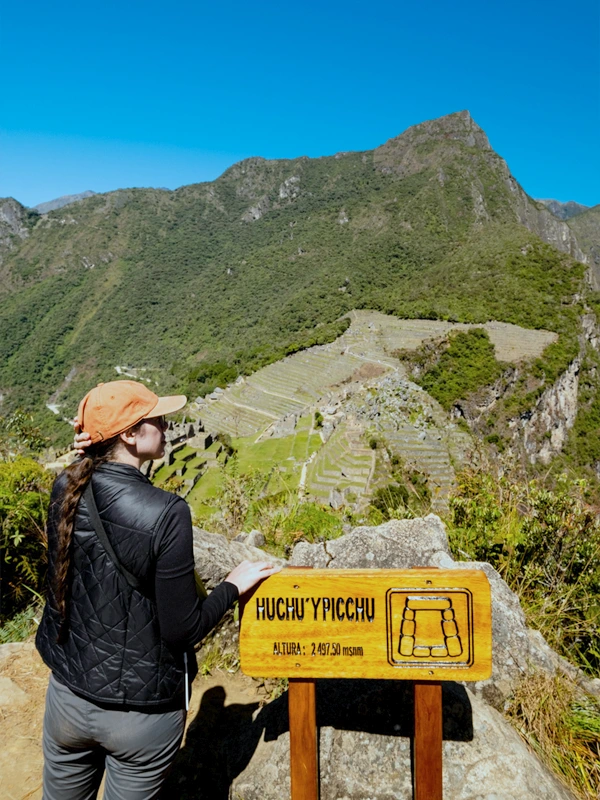
- Maximum altitude: Huchuy Picchu, 2,497 m / 8,192 ft
Pros and Cons of Route 3-D: Huchuy Picchu Route
| Route 3-D: Huchuy Picchu Route | |
| Pros | Cons |
|
|
|
|
|
|
What to Do if Circuit 2 Is Sold Out?
If Machu Picchu tickets for Circuit 2 are sold out, one of the best alternatives is to choose similar routes that also allow you to visit the inside of the Inca city. Among the most popular options are the Circuit 3 routes, which enter the citadel, explore the Royalty Sector (an exclusive area of Circuit 3), and also include walks around the surroundings, where you can enjoy panoramic views of Machu Picchu from north to south.
The main difference between Circuit 2 and Circuit 3 is the level of additional difficulty. The good news is that you can choose the route that best suits your physical condition and enjoy the interior of Machu Picchu at a comfortable pace. Below, we present these options ordered by difficulty level.
Alternative Routes to Machu Picchu Circuit 2 | ||
| Circuit 3 Routes | Difficulty Level | Type of Route |
| Moderate (suitable for children) | Walk through the Inca city and the Inca Royalty Sector. The route most similar to Circuit 2 routes. |
| Moderate (light hiking) | Visit to the citadel + hike to Huchuy Picchu Mountain. |
| High | Exploration of the Inca citadel + hike to the Great Cavern, also known as the Temple of the Moon. |
| High | Internal visit of Machu Picchu + hike to the challenging Wayna Picchu Mountain. |
** Available only during high season in Machu Picchu
Circuits Included in TreXperience Tours
At TreXperience, we choose the Machu Picchu circuits that best match the kind of experience you are looking for.
On our alternative hikes to Machu Picchu and our one-day or multi-day Machu Picchu tours, we always prioritize tickets for Circuit 2, especially Route 2-A: Designed Classic Route and Route 2-B: Lower Terrace Route.
These routes are in high demand, so we strongly recommend booking in advance. If there is no availability due to your visit date being too close, we will select the best available alternative from Circuit 1 or Circuit 3.
Machu Picchu Circuits Included in Inca Trail Tours
For our Inca Trail tours to Machu Picchu, both in the extended versions and the shorter options of up to 2 days, two entrances to Machu Picchu are usually included: one through Circuit 1 and another through Circuit 3.
- The first entrance, through Circuit 1, offers a panoramic experience from the ancient access route that once connected with Cusco, with spectacular views of Machu Picchu from the Sun Gate.
- The second entrance allows you to explore the inside of the citadel, walk through its streets and passageways, and visit areas where the Inca and the royal elite once lived. This circuit also gives access to unique Inca sites within Circuit 3, such as the Temple of the Sun, the Temple of the Condor, and the Inca’s House.
On any Machu Picchu tour with TreXperience, you will have the chance to discover this wonder of the world and appreciate it from different angles, combining panoramic views, history, architecture, and a guided experience inside the Inca city.
If you are planning your trip, our team can help you choose the best tour and circuit based on your travel date, ticket availability, and the type of experience you want to enjoy.
Machu Picchu Circuits FAQs
Can you do two Machu Picchu circuits in a day?
Yes, you can do two Machu Picchu circuits in one day, but you need two separate entrance tickets, each with its own circuit, route, and entry time. One ticket only allows you to follow the specific route printed on it.
If you want to combine two experiences, such as a panoramic route in Circuit 1 and a deeper visit through the citadel in Circuit 2, choose entry times with enough space between them. Keep in mind that tickets are limited and the most popular routes can sell out months in advance.
Is Circuit 2 or 3 better for Machu Picchu?
Circuit 2 is usually better for a first visit to Machu Picchu because it explores the classic area of the Inca citadel, including plazas, passageways, archaeological sectors, and important urban spaces.
Circuit 3 is better if you want to visit the lower royal area, see ceremonial sectors, or add a hike such as Huayna Picchu, Huchuy Picchu, or the Great Cavern. If this is your first time and Circuit 2 is available, choose Circuit 2. If you want adventure or Circuit 2 is sold out, Circuit 3 can still be a great option.
Which Machu Picchu circuits include hiking routes?
Several Machu Picchu circuits include hiking routes:
- Circuit 1 includes Route 1-A to Machu Picchu Mountain, Route 1-C to Inti Punku, and Route 1-D to the Inca Bridge.
- Circuit 2 is mainly focused on visiting the classic archaeological area of the citadel and does not include a mountain hike.
- Circuit 3 includes Route 3-A to Huayna Picchu, Route 3-C to the Great Cavern or Temple of the Moon, and Route 3-D to Huchuy Picchu.
Which Machu Picchu route of Circuit 1 is best?
The best route in Circuit 1 is Route 1-C: Inti Punku, beacause it combine moderate hike with panoramic views of Machu Picchu along the way
However, the best choice depends on what you want from your visit.
- Route 1-B: Upper Terrace is the best option for travelers who are short on time and want the classic Machu Picchu photo with the Guardian’s House and the citadel in the background.
- Route 1-A: Machu Picchu Mountain is better if you want a challenging hike and wide mountain views.
- Route 1-C: Inti Punku is ideal for travelers who want to walk toward the ancient Inca Trail entrance
- Route 1-D: Inca Bridge is best for a shorter and less common walk.
- Routes 1-C and 1-D are available only during high season.
Which Machu Picchu route of Circuit 2 is best?
The best route in Circuit 2 is usually Route 2-B: Lower Terrace if you want the most balanced experience. It combines a panoramic viewpoint with a visit through the Inca city, making it a strong choice for first-time visitors who want both photos and archaeology.
Route 2-A: Classic Designed Route is also excellent, especially if your main interest is walking through the citadel and understanding its streets, plazas, enclosures, and sacred spaces.
- Both routes are highly requested, so booking early is recommended.
Which is better, Machu Picchu Circuit 2A or 2B?
Route 2-B is better for most first-time visitors because it combines a panoramic view with a route through the Inca city. This makes it a more complete option if you want both the classic photo and a close look at the archaeological sectors.
Route 2-A is also a very good choice, especially if your priority is exploring the citadel in detail. In simple terms, choose 2-B for the best balance of views and archaeology, and choose 2-A for a more classic walk through the urban area of Machu Picchu.
Which Machu Picchu route of Circuit 3 is best?
The best route in Circuit 3 is Route 3-B: Designed Royalty Route, especially if you want to visit the urban area and some of Machu Picchu’s most important Inca religious sectors without the physical effort of a mountain hike. However, as mentioned earlier, the best choice depends on what you are looking for in your visit.
- Route 3-A: Huayna Picchu or Waynapicchu Mountain is the best choice for adventurous travelers who want the famous mountain hike and unique views from above.
- Route 3-B: Designed Royalty Route is best for a cultural visit without a mountain hike, as it includes important areas such as the Temple of the Sun, the Inca’s House, ceremonial fountains, and the Temple of the Condor.
- Route 3-C: Great Cavern is better for a more remote and adventurous experience.
- Route 3-D: Huchuy Picchu is ideal for a shorter hike.
Can I buy Machu Picchu tickets in Aguas Calientes?
Yes, you can buy Machu Picchu tickets in Aguas Calientes, also known as Machu Picchu Pueblo, but availability is limited. Tickets are usually sold for the following day, not for immediate entry, and the most popular circuits may not be available.
If you already know your travel date, it is better to book online in advance, especially during high season or if you want Circuit 2 or 3, Huayna Picchu, or Machu Picchu Mountain.
Machu Picchu Mountain Tickets: Check Availability Now
Heads up: availability updates in real time and may change without notice. Seeing open slots doesn’t secure a booking until your reservation is confirmed.

Add new comment