


Peru is located on the western side of South America, bordered by the Pacific Ocean and home to some of the continent’s most remarkable landscapes. But where exactly is Peru on the world map, and what makes its geography so special? In this guide, you'll learn about Peru's location, neighboring countries, major cities, natural regions, climate, and the best times to visit. You'll also find practical information to help you understand the country and plan your Peru vacation with confidence.
Where Is Peru Located on the World Map?
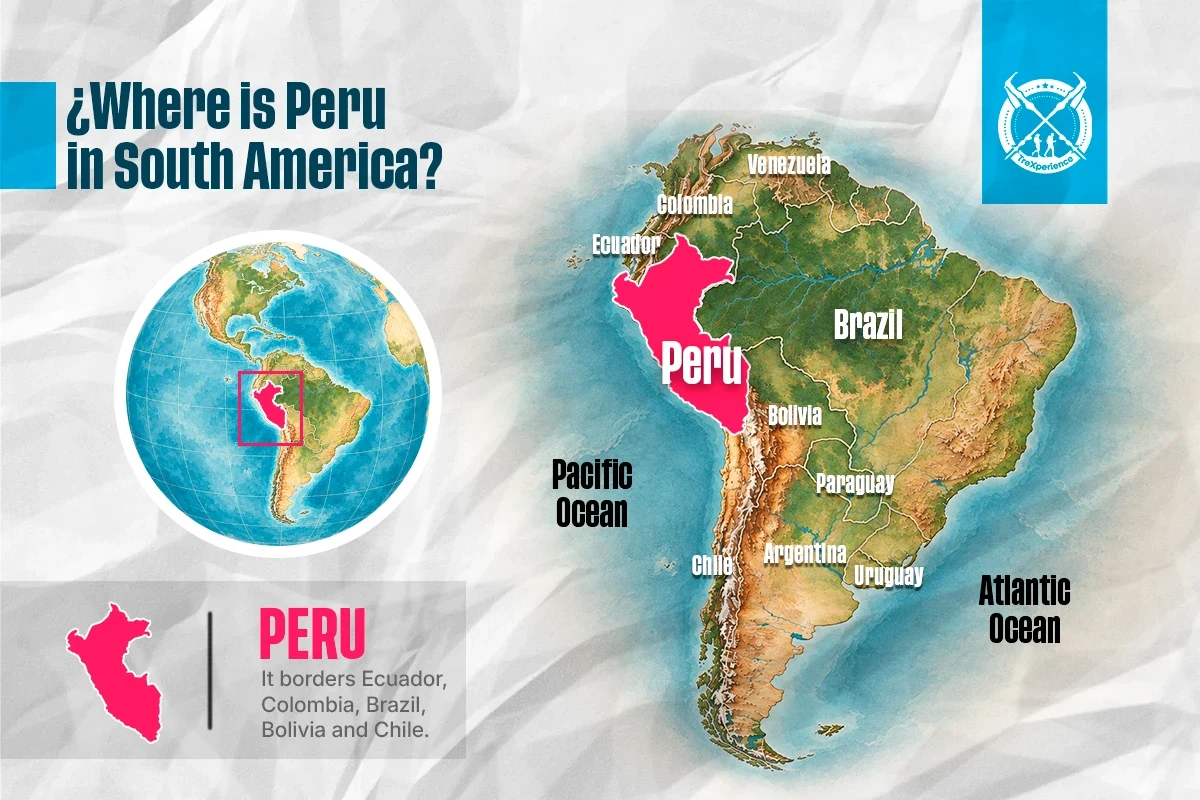
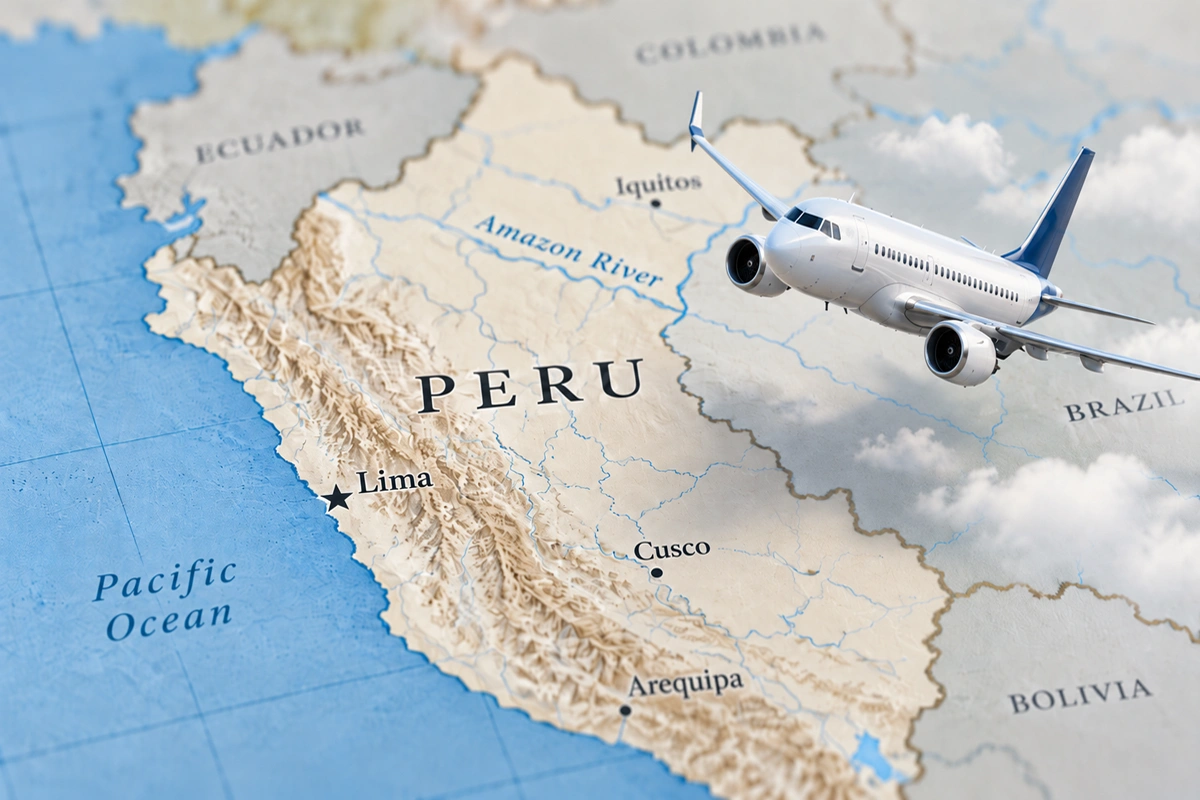
Peru is located in western South America, between the Pacific Ocean and the Amazon rainforest, at approximately 10° S latitude and 76° W longitude. Its unique geography brings together coastal deserts, valleys, snow-capped Andean Mountains, ancient Inca sites, and tropical jungles within one country.
Which Countries Border Peru?
Peru on the Map of South America shares international borders with five countries. Ecuador and Colombia to the north, Brazil to the east, Bolivia to the southeast, and Chile to the south.
How Big Is Peru Compared with the United States?
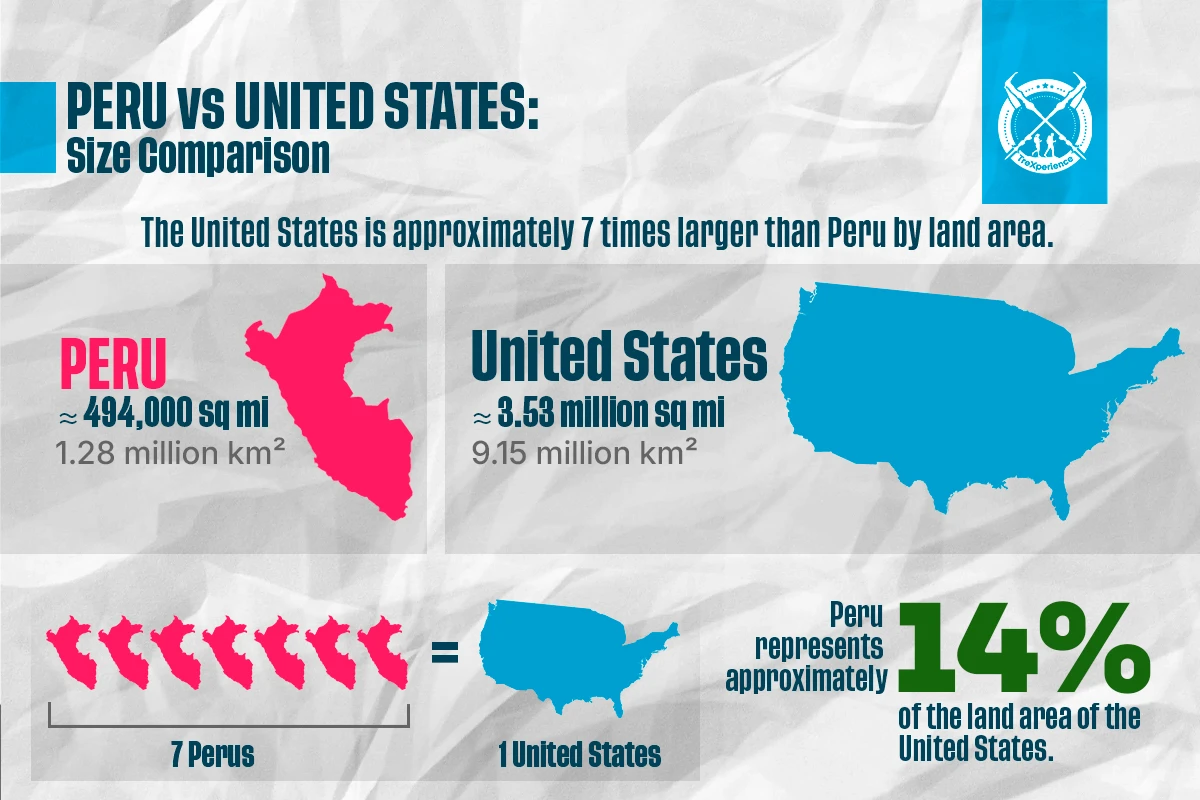
The United States is about seven times as large as Peru by land area. However, Peru is the third-largest country in South America, after Argentina and Brazil.
It has approximately 494,000 square miles of land, compared with around 3.53 million square miles in the United States. That makes Peru roughly 14% of the United States' land area.
Peru at a Glance
Here are some key facts about Peru before exploring its landscapes and attractions.
| Information |
Continent | South America |
Capital of Peru | Lima |
Official Languages | Spanish, Quechua and Aymara |
Currency | Peruvian sol (PEN, symbol: S/) |
Population | More tahn 34 millon inhabitants |
Total area | 494,000 square miles |
Peru Time zone | Peru follows (UTC−5) throughout the year. |
International calling code | +51 |
Main geographic regions | Coast, Andes, and Amazon |
Highest mountain | Huascarán at 22,205 ft |
Major rivers | Ucayali, Madre de Dios and Amazon River |
Peru’s Geographic Regions and Landscapes
Peru's three natural regions are the Pacific coast (Costa), the Andes Mountains (Andes or Sierra), and the Amazon rainforest (Selva). Each has distinct landscapes, weather conditions, and cultural traditions.
Peru’s Pacific Coast (Costa)
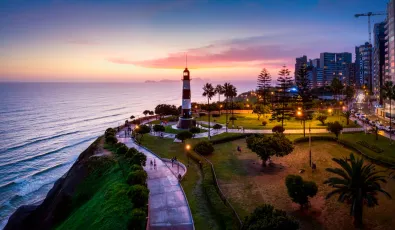
Peru’s coastline stretches for about 1,550 miles along the western edge of the country, from Ecuador in the north to Chile in the south. In this region of Peru, you’ll discover deserts, sand dunes, rocky cliffs, fertile river valleys, beaches and Huacachina, the last natural oasis in South America.
The Humboldt Current
The cold Humboldt Current, which flows northward from the Southern Ocean along South America’s Pacific coast, plays an important role in the coastal environment. Its nutrient-rich waters encourage the growth of plankton, which sustains an abundance of marine life.
However, Peru’s northern coast is less influenced by the cold Humboldt Current due to its proximity to the equator. This region is well known for its warmer waters, whale-watching activities, seaside towns and beautiful beaches.
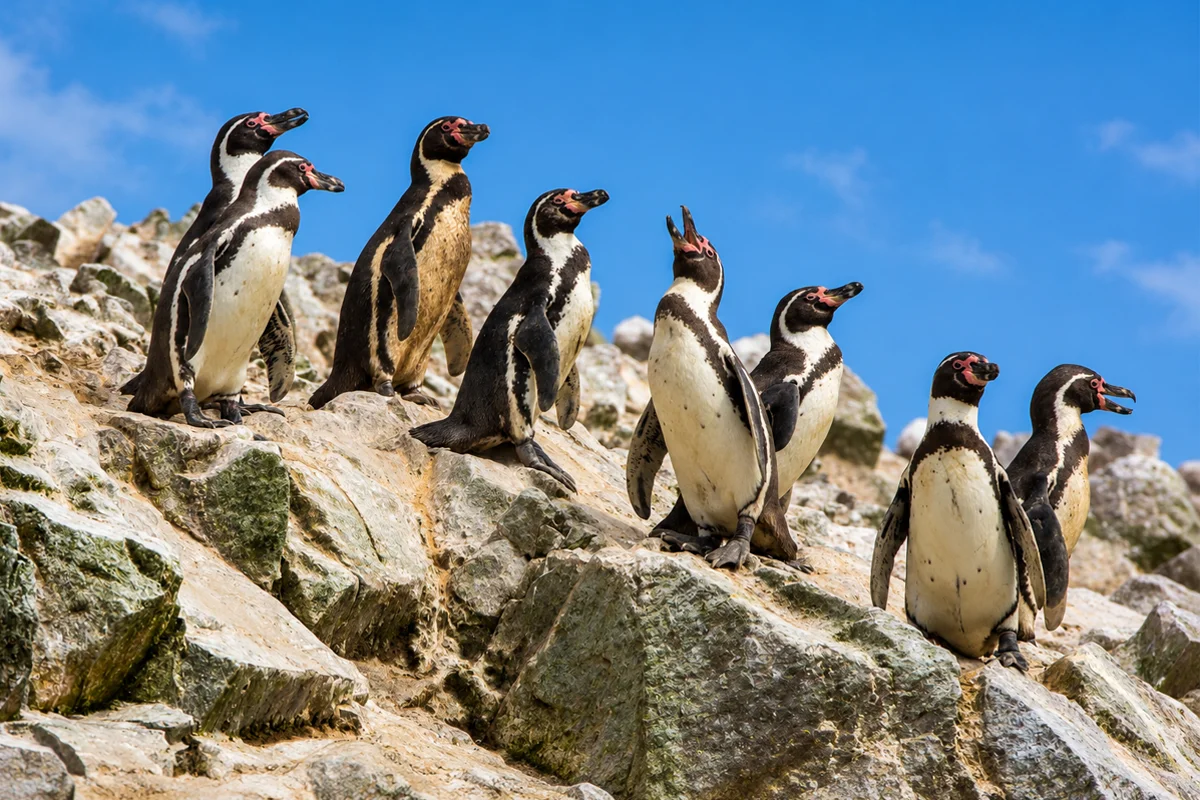
In ancient times, Peru’s coastal region was home to civilizations such as the Nazca and Chimú, along with many other cultures. Today, it is Peru’s most populous region, particularly around the capital, Lima.
The Andes Mountains (Andes or Sierra)
The Andes Mountains run through Peru from north to south. They also stretch across several other South American countries, beginning in Venezuela and reaching the southern tip of the continent, where they continue beneath the ocean. In Peru, the Andes form the country’s mountainous backbone and define its central highland region, separating the Pacific coast from the Amazon Basin.
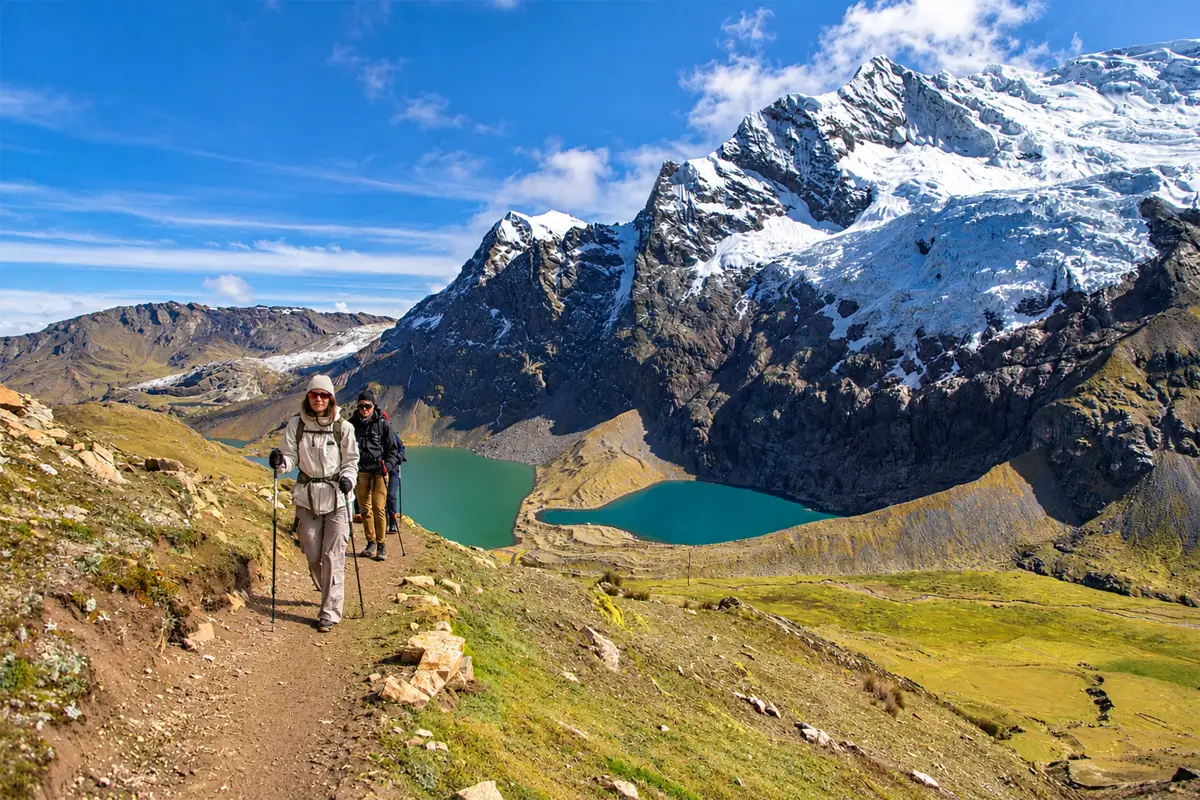
The Andean landscape features warm valleys, deep canyons, high plateaus, mountain ranges, snow-capped peaks, and mountain lakes, along with ancient archaeological sites and traditional Andean communities.
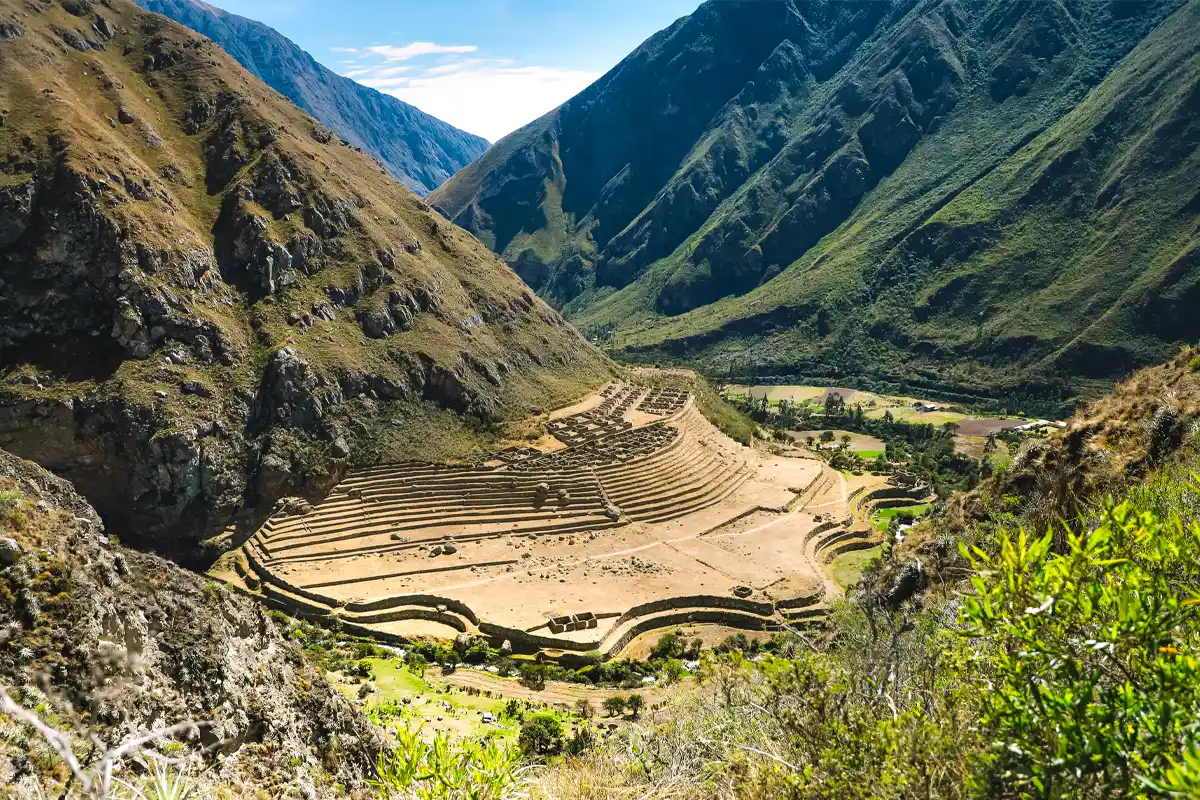
This region is known as the birthplace of the Inca civilization and was also home to many other ancient cultures. Today, their legacy lives on through archaeological sites, sacred temples, ancient settlements, and historic trails.
The Amazon Rainforest (Selva)
East of the Andes, Peru's mountains descend into the Amazon Basin, the world’s largest tropical rainforest and one of the most biodiverse regions on Earth: the Amazon rainforest. Here, the landscape changes dramatically. Snow-covered mountains give way to thick vegetation, winding rivers, beautiful waterfalls and warm, humid tropical forests.
The Peruvian Amazon is home to Amazonian communities and remarkable wildlife, including monkeys, macaws, caimans, river dolphins, and numerous species of insects and plants. Many of these species are protected in national parks and reserves such as Manu and Tambopata.
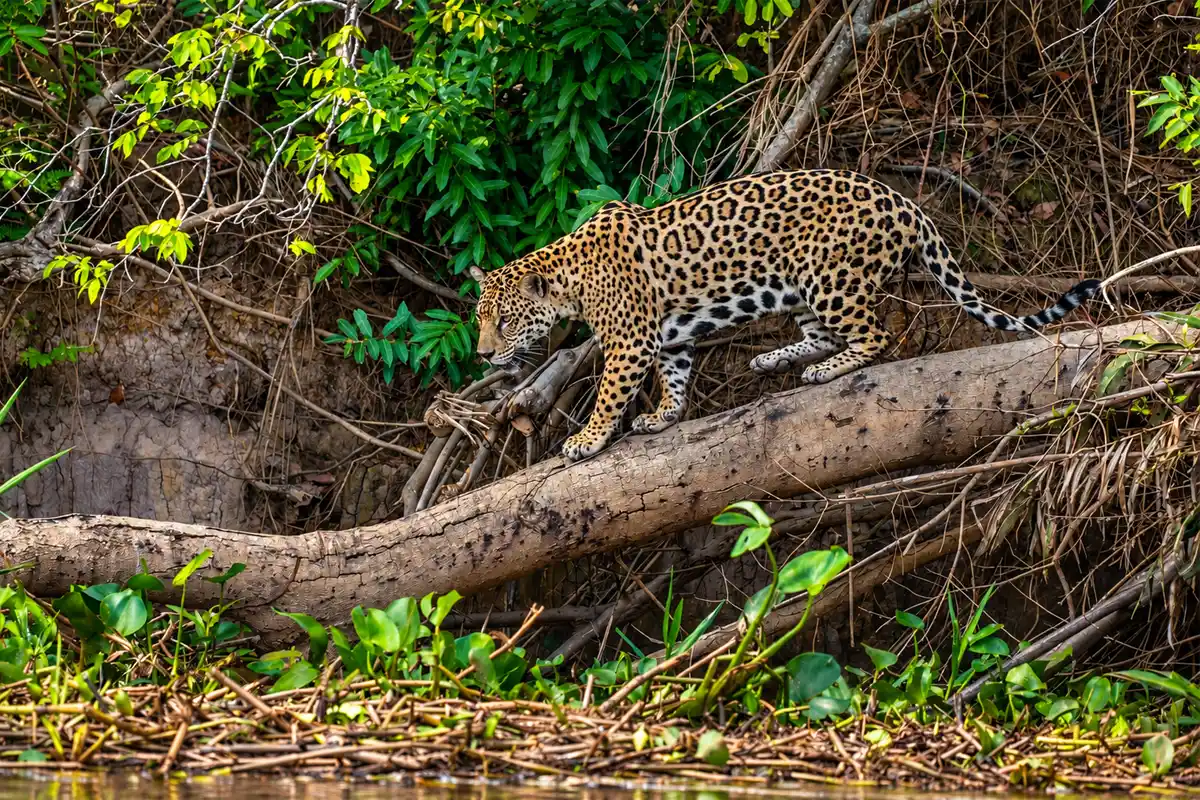
Between the Andes and the lowland rainforest lies the cloud forest, a lush, mountainous transition zone. This area includes Machu Picchu, Choquequirao and Vilcabamba, the last Inca stronghold hidden in Peru’s jungle.
Due to these features, Peru is an appealing destination for travelers interested in history, hiking, wildlife, beaches, and outdoor adventure.
Where Are Lima, Cusco, and Machu Picchu?
Lima, Cusco, and Machu Picchu are three of Peru's most famous destinations, but they are located in different geographical settings.
- Where is Lima? Lima is located on Peru’s central Pacific coast, in the western part of the country at 512 ft above sea level.
- Where is Cusco? Cusco is situated in southeastern Peru, in the Andes Mountains at 11,150 ft above sea level.
- Where is Machu Picchu? Machu Picchu is located in the cloud forest zone of Cusco at 7,972 ft above sea level.
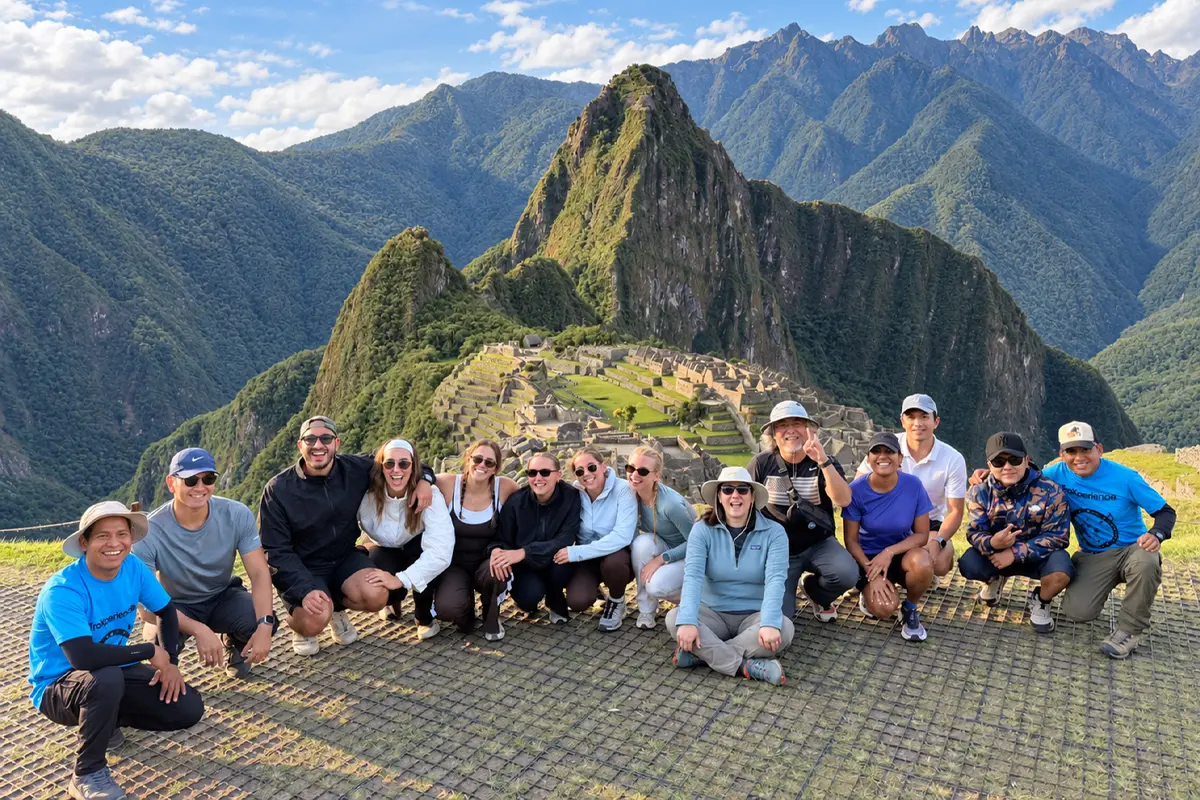
Major Cities in Peru and Best Places to Visit
Peru's major cities are spread across its three regions. Each offers unique attractions, from ancient Inca sites and colonial architecture to beautiful natural landscapes. Here are some of the best cities to visit in Peru and their main attractions:
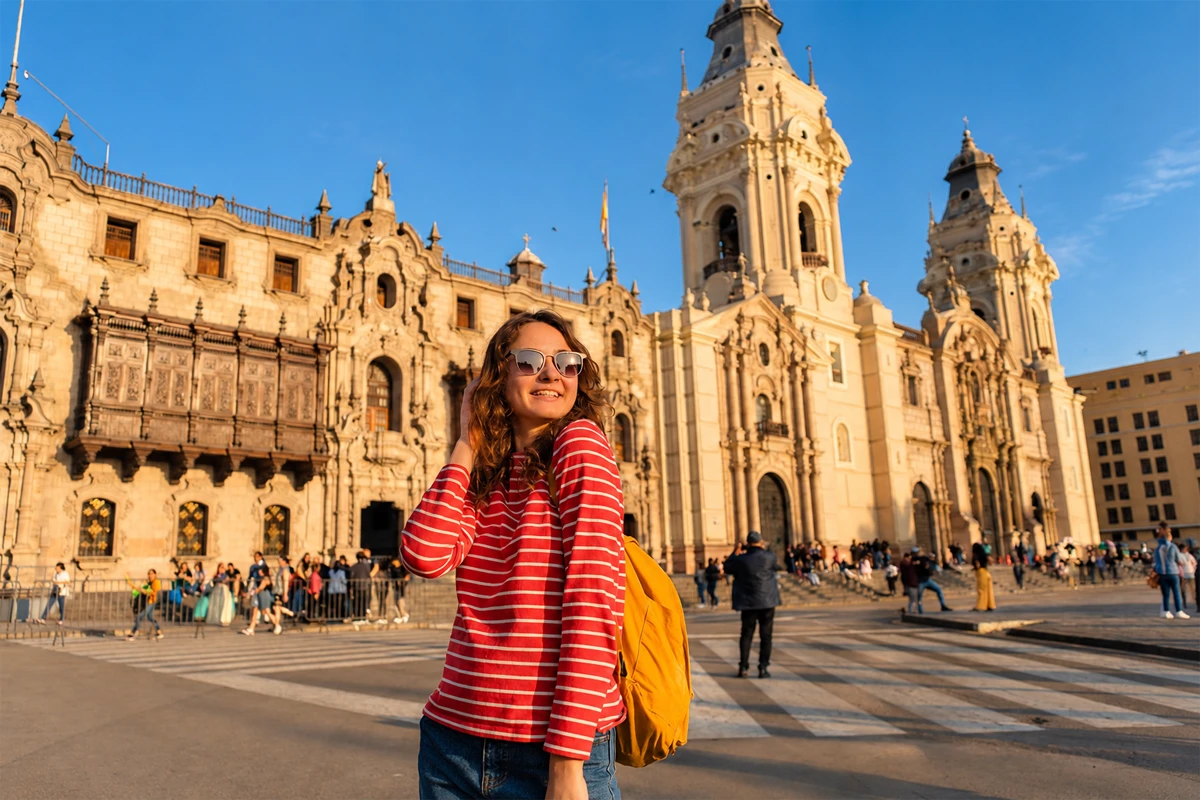
- Lima (Pacific Coast): Historic Center of Lima, Lima Main Square, Miraflores, Barranco, Huaca Pucllana, Larco Museum.
- Cusco (Andes Mountains and Amazon Basin): Qorikancha, Sacsayhuaman, Sacred Valley, Machu Picchu, Rainbow Mountain, Salkantay Mountain, Ausangate Mountain, Inca Trail to Machu Picchu, Choquequirao, Manu Reserve.
- Arequipa (Southern Andes): Santa Catalina Monastery, Plaza de Armas, Yanahuara Viewpoint, Misti Volcano, Colca Canyon.
- Ica (Southern Pacific Coast): Huacachina Oasis, Paracas National Reserve, Ballestas Islands, Nazca Lines, Ica vineyards and wineries, sandboarding, dune buggy tours.
- Puno (Southern Highlands): Lake Titicaca, Uros Floating Islands, Taquile Island, Amantaní Island, Sillustani.
- Puerto Maldonado (Amazon rainforest): Tambopata National Reserve, Lake Sandoval, Madre de Dios River, Monkey Island, macaw clay licks, rainforest lodges, wildlife watching.
- Iquitos (Amazon rainforest): Amazon River, Belén Market, Pacaya Samiria National Reserve, rainforest lodges.
- Trujillo (Northern Coast): Chan Chan, Huacas del Sol y de la Luna, Historic Center, Huanchaco Beach.
- Máncora (Northern Coast): Máncora Beach, Las Pocitas Beach, Vichayito Beach, surfing, seasonal whale-watching, sea turtle spotting, beachfront resorts.
- Ancash (Northern Andes): Huascarán National Park, Huaraz, Cordillera Blanca, Laguna 69, Llanganuco Lakes, Pastoruri Glacier, Santa Cruz Trek, Chavín de Huántar.
What Peru's Geography Means for Your Trip
Peru's geography is one of its greatest attractions, but it also influences how you should plan your journey.
Choose a Region Based on Your Interests
- Culture and Adventure: If you're interested in archaeological sites, Inca history, and challenging yourself with a trek to Machu Picchu along the Inca Trail, consider spending more time exploring the Cusco region.
- Nature and Wildlife: If you love nature and wildlife, spend several days at a rainforest lodge, spot exotic animals, and discover the unique flavors of Peruvian jungle food.
- Northern Beaches: If you're a beach lover, explore Peru's northern coast, snorkel with sea turtles in El Ñuro, spot dolphins and whales, and enjoy freshly prepared Peruvian ceviche.
Plan Your Route Between Regions
A Peru trip may involve traveling between coastal cities, high-altitude mountain destinations, and tropical forests. Each region has different transport connections, weather conditions, and travel considerations.
For example, an itinerary of Lima, Cusco, and Machu Picchu means traveling from the coast to the Andes, then descending through the Sacred Valley before boarding a train to Machu Picchu. Likewise, exploring the Amazon rainforest may involve taking a flight followed by a boat journey along its rivers.
Examples of Peru tour itineraries include:
- Lima → Cusco
- Lima → Cusco → Puerto Maldonado
- Lima → Ica → Cusco
- Lima → Ica → Arequipa → Puno → Cusco
- Lima → Loreto → Cusco
Peru’s Climate and the Best Time to Visit
One of the most important things to understand about Peru's climate is that, unlike countries with four distinct seasons, Peru doesn't experience the same seasonal patterns everywhere, and weather conditions can vary greatly from one region to another.
Four Seasons in One Day in the Peruvian Andes
This is especially noticeable in the Andes, where you might enjoy a warm, sunny morning that feels like summer, followed by a cool, rainy afternoon reminiscent of fall, with snow-covered peaks or campsites that feel like winter and lush green valleys below that resemble spring.
Peru’s Seasons: Dry and Rainy Season
In general, Peru has two main seasons: the dry season and the rainy season. As their names suggest, the dry season typically brings sunnier skies and less rainfall, making it one of the best times to visit Peru, while the rainy season is characterized by more frequent rain and cloudy conditions.
Both seasons can be rewarding times to visit Peru, depending on your destinations and the activities you want to enjoy.
Peru's Region | Best Time to Visit | Least Favorable Time | Travel Considerations |
| Northern Coast | May to Nov: Drier and warmer weather with plenty sunshine. perfect for beach activities. | Dec to April: Rainy season with peak on March | Jul to Oct: Whale-watching season along Peru’s northern coast. |
| Central and South Coast | Dec to Apr: Warmer, sunnier weather, ideal for beaches and outdoor activities. | May to Nov: Cooler, cloudier weather with coastal mist and occasional light drizzle. | Expect overcast skies and higher humidity in coastal cities. |
| Peruvian Andes | May to Sep: Sunny days, cooler nights, and drier trails, ideal for hiking tours. Jun to Aug: Andean winter brings colder nights, especially at higher elevations. | Oct to Apr: Rainfall, cloudy skies, and wetter trails. Dec to Mar: More frequent rainfall. | Most destinations in the Andes, including Cusco and Machu Picchu, can be visited year-round. |
| Amazon Rainforest | May to Sep: Less rainfall, ideal for hiking and wildlife observation. | Oct to Apr: Wetter conditions, frequent showers, and higher river levels. | The Amazon remains warm and humid throughout the year. Wildlife-viewing opportunities vary by season. |
How to Get to Peru
Peru is well connected to international destinations through its airports and overland routes from neighboring South American countries. Flying is generally the most convenient way to reach Peru, especially from the United States, Canada, or Europe. However, you can also enter the country by land or river, depending on where your journey begins.
Getting to Peru by Plane
Most international travelers arrive at Jorge Chávez International Airport (LIM), located in Callao, near Lima. It is Peru's main international airport and an important hub for domestic flights.
- From the United States: Direct flights to Lima are available from major cities such as Miami, New York, Los Angeles, and Atlanta, depending on airline schedules.
- From Canada: Travelers can find direct or connecting flights to Lima, depending on the departure city and season.
- From Europe: Direct flights are available from selected European cities, including Madrid, while other routes require a connection.
- From South America: Peru has flight connections with countries such as Chile, Colombia, Brazil, Argentina, and Bolivia.
Travel tip: If you're traveling from Santiago, Chile; La Paz, Bolivia; or Bogotá, Colombia, you may be able to take a direct flight to Cusco Airport. These flights are a convenient option if you're planning a short trip to Peru from Los Angeles to Machu Picchu.
Getting to Peru by Land
Peru shares borders with Ecuador, Colombia, Brazil, Bolivia, and Chile, making overland travel possible from several neighboring countries.
Some of the most common routes include:
- From Ecuador: Enter northern Peru through the Huaquillas–Aguas Verdes border area.
- From Chile: Cross from Arica to Tacna through the Santa Rosa–Chacalluta border crossing.
- From Bolivia: Travel through the Lake Titicaca region via Desaguadero or Kasani, near Puno.
- From Brazil: Enter southeastern Peru through the Assis Brasil–Iñapari border crossing.
Traveling overland can be an interesting option if you're exploring several South American destinations on one trip. However, journeys can be long, and border-crossing schedules and requirements should be checked before departure.
Getting to Peru by River
River transportation is another way to enter Peru, particularly through remote areas of the Amazon Basin.
For example, travelers coming from Colombia or Brazil can reach the area around Santa Rosa de Yavarí, near the Amazonian tri-border region, and continue toward Iquitos by boat.
These journeys are generally more suitable for travelers planning an extended Amazon adventure, as river connections can be slower and less predictable than flights.
Read Next | How to Get to Machu Picchu from Lima
Entry Requirements for Peru
Before traveling to Peru, make sure you have the necessary travel documents. Peru's entry requirements depend on your nationality, passport type, and purpose of visit, but many international travelers can enter for tourism without applying for a visa in advance.
Here are the main requirements to consider:
- Valid passport: Most international visitors must have a passport valid for at least six months upon entering Peru.
- Tourist visa: Citizens of many countries, including the United States, Canada, the United Kingdom, and several European countries, generally do not need a visa for short tourist visits. Requirements vary by nationality.
- National identity card: Citizens of eligible Andean Community and Mercosur countries may enter Peru using an accepted national identity document instead of a passport.
- Return or onward ticket: Travelers may be asked to show proof of onward travel and accommodation reservations.
- Length of stay: Peruvian immigration authorities determine how long each visitor may remain in the country. Check your authorized stay upon arrival rather than assuming you can stay for the maximum permitted period.
¿Do I need a visa to go to Peru?
To check whether you need a visa, consult the official list of visa requirements and exemptions published by Peru's Ministry of Foreign Affairs.
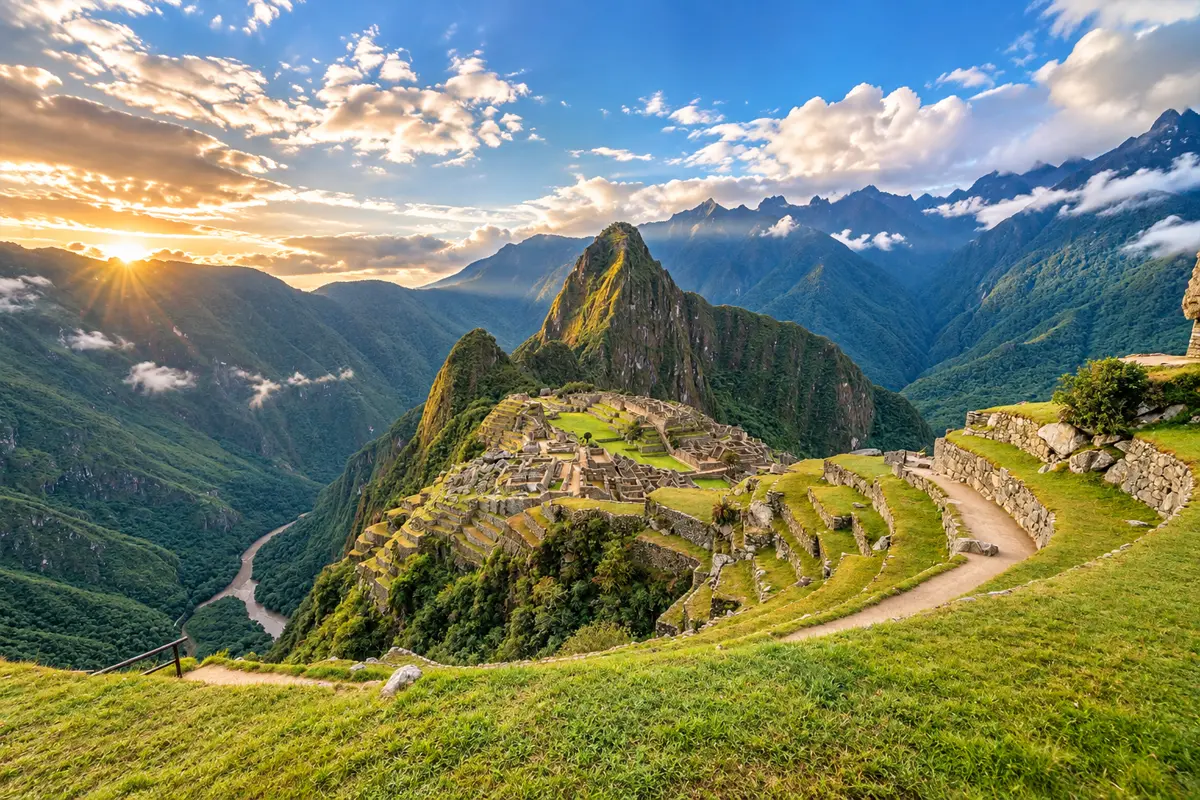
Now that you know where Peru is situated and what makes each region special, it's time to start imagining your own journey. Whether you dream of exploring Machu Picchu, hiking through the Andes, or discovering the Amazon rainforest, Peru has something for every traveler.
Explore our Peru tours or contact our local team to help you plan a trip that matches your interests and travel style.
Where is Peru FAQs
Is Peru north or south of the equator?
Peru is located entirely south of the equator, in the Southern Hemisphere. Its northernmost territory lies close to the equator, but the country does not cross it.
Is Peru part of the Pacific Ring of Fire?
Yes. Peru is part of the Pacific Ring of Fire, a region surrounding the Pacific Ocean known for frequent earthquakes and volcanic activity. This is mainly due to the Nazca Plate moving beneath the South American Plate, a geological process that also contributes to the formation of the mountains of Peru.
Does Peru have islands?
Yes. Peru has numerous islands and islets along its Pacific coastline. Some of the most famous include the Ballestas Islands near Paracas, San Lorenzo Island near Lima, and the Palomino Islets near Callao. Many are home to seabirds, sea lions, and other marine wildlife.
Is Machu Picchu in Cusco city?
No. Machu Picchu is located in the Cusco region, but not within Cusco city. The archaeological site stands on a mountain ridge above the Urubamba River, approximately 2,430 m (7,972 ft) above sea level. Visitors generally reach it by train and bus or through an organized trekking route.
What are Peru's most important Inca cities?
Some of Peru's most important Inca cities and settlements include Cusco, Machu Picchu, Ollantaytambo, Pisac, and Vilcabamba, all located in the Cusco region. Cusco was the capital of the Inca Empire, while other settlements served important religious, agricultural, administrative, or strategic purposes.
Where are deserts found in Peru?
Peru's deserts are mainly found along the Pacific coast, between the ocean and the Andes Mountains. The best-known desert landscapes include the Sechura Desert in northern Peru and the coastal deserts around Ica, Paracas, and Nazca in southern Peru. These areas feature sand dunes, dry valleys, and archaeological sites.
Why is Peru famous?
Peru is famous for Machu Picchu, the Inca civilization, its ancient archaeological sites, and its diverse natural landscapes. The country is also internationally recognized for its cuisine, especially ceviche, traditional Andean cultures, colorful festivals, and destinations such as Lake Titicaca and the Amazon rainforest.


Add new comment