


Machu Picchu Circuit 3, better known as the Royal Circuit, takes you through the lower part of the Inca city, home to the royal quarter and sacred sites with exclusive access, such as the Temple of the Sun and the Temple of the Condor. It is also the only circuit that offers access to the famous Huayna Picchu Mountain.
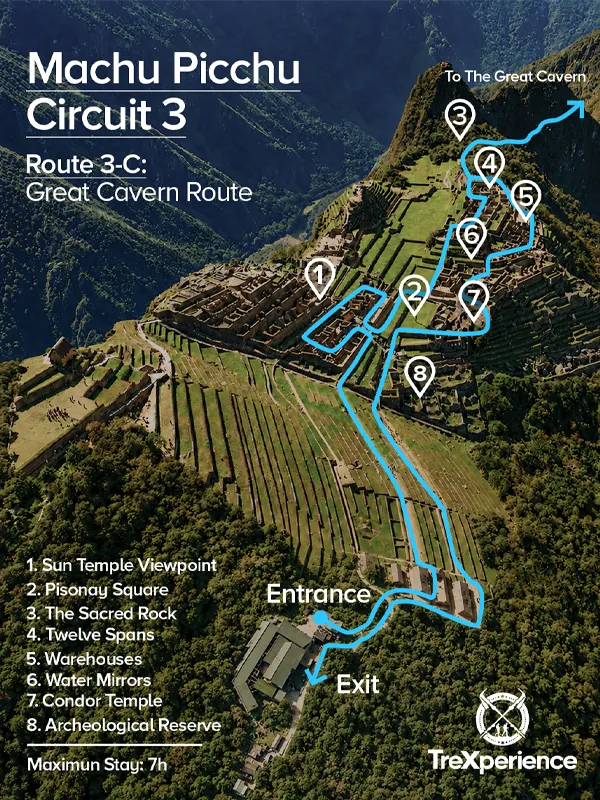
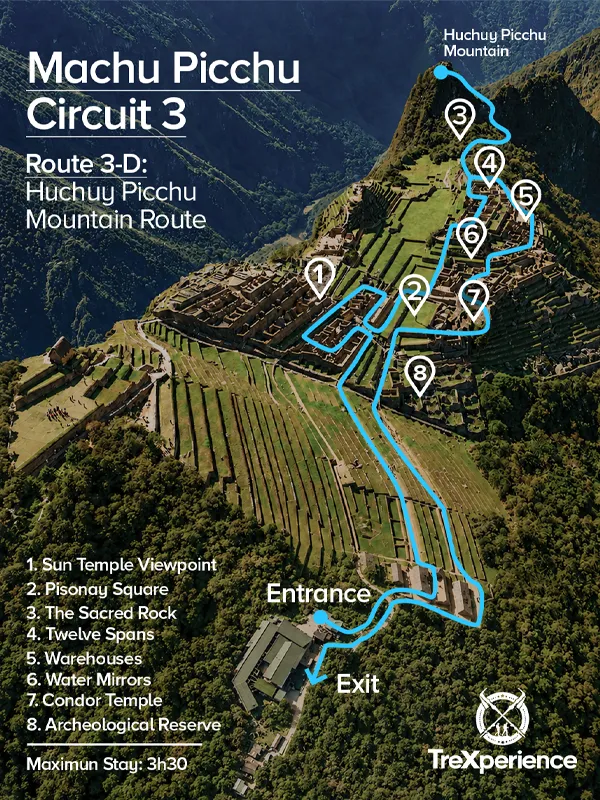
This circuit features four different routes. Route 3A includes the hike up Huayna Picchu, Route 3B focuses on the archaeological tour, Route 3C leads to the Great Cavern, also known as the Temple of the Moon, and Route 3D takes you up Huchuy Picchu, a smaller mountain located next to Huayna Picchu.
Find out what you can see along each route, compare their differences and difficulty levels, and learn everything you need to know about maps, entry times, ticket prices, and availability to plan your visit.
What is Machu Picchu Circuit 3?
Circuit 3, also known as the Royal Circuit, takes you through the lower archaeological sector of the Inca city of Machu Picchu. Here you will find finely crafted stone buildings, including the Inca ruler's residence and ceremonial structures that form part of the city's remarkable architectural complex.
Machu Picchu Circuit 3 is divided into four routes:
- Route 3A, Huayna Picchu Mountain: Royal sector and hike to Huayna Picchu View route →
- Route 3B, Royal Route: Archaeological tour of the Inca royal sector View route →
- Route 3C, Great Cavern: Royal sector and hike to the Great Cavern View route →
- Route 3D, Huchuy Picchu Mountain: Royal sector and hike to Huchuy Picchu View route →
What does Machu Picchu Circuit 3 include?
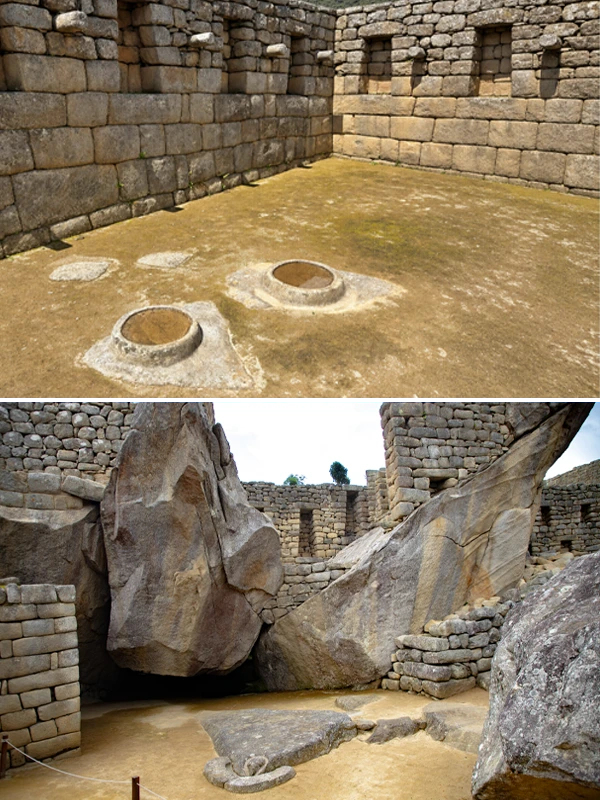
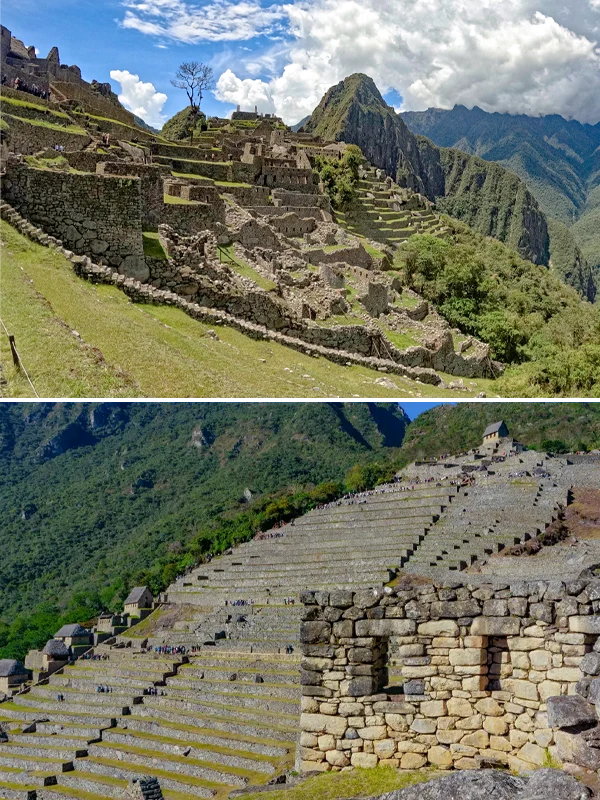
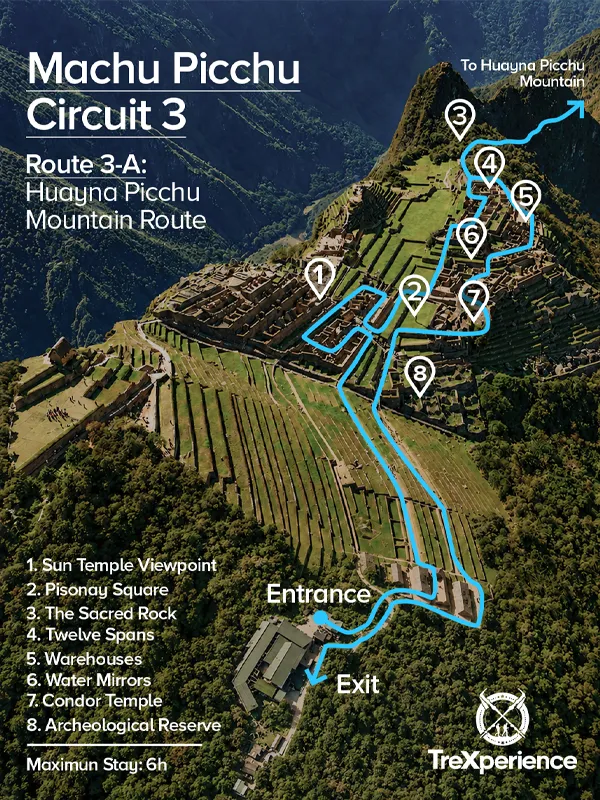
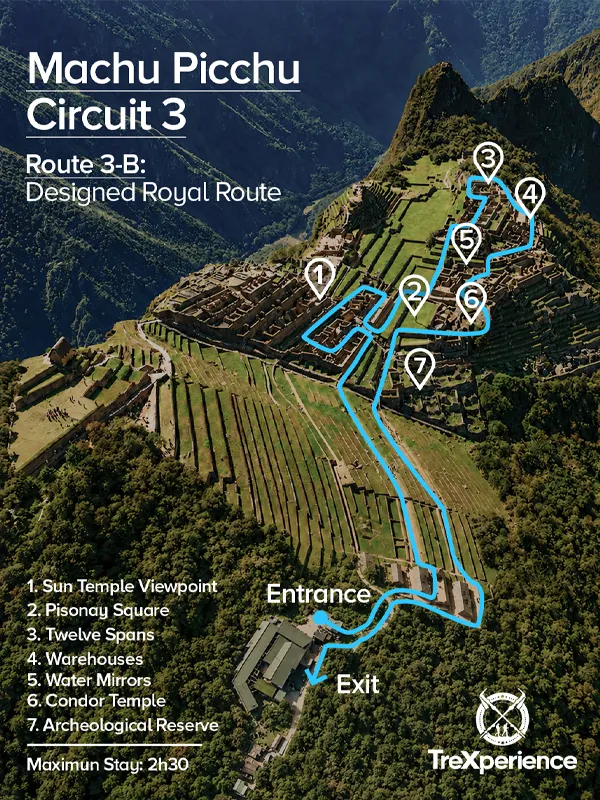
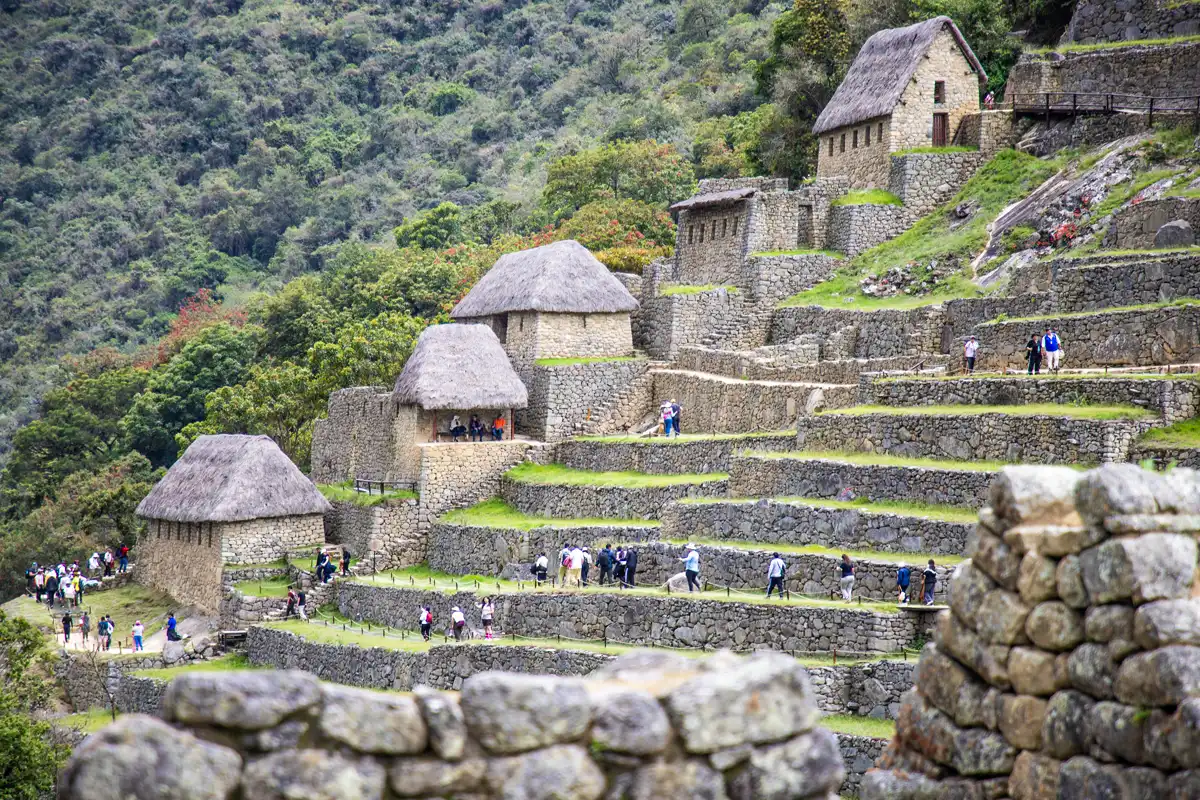
All four routes follow the same path through the lower and eastern sectors of Machu Picchu. The route passes through agricultural terraces and exterior Qolqas (storehouses), the residences of the Inca nobility, including the Inca's House, the Royal Tomb, the Temple of the Sun, ritual fountains, Pisonay Plaza, the Sacred Rock, the Twelve Openings sector, the Eastern Qolqas, the Water Mirrors, the Temple of the Condor, and the Archaeological Reserve.
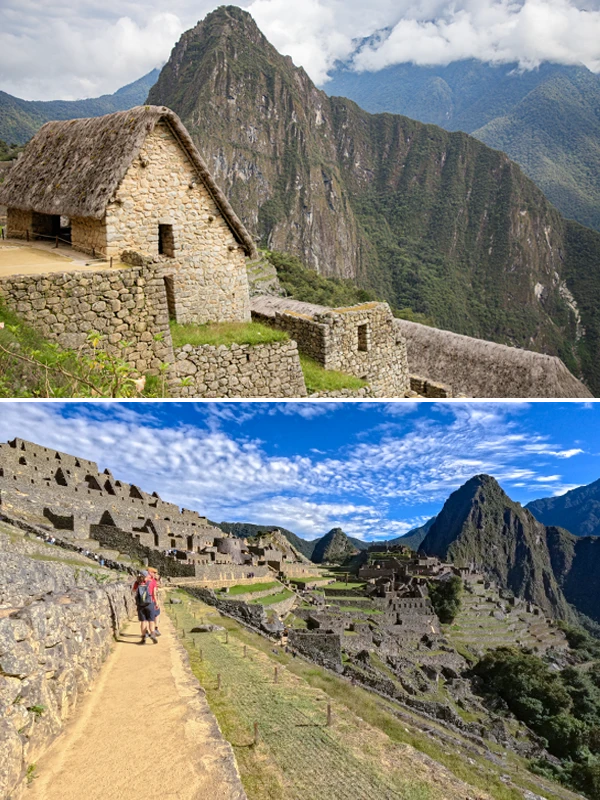 | 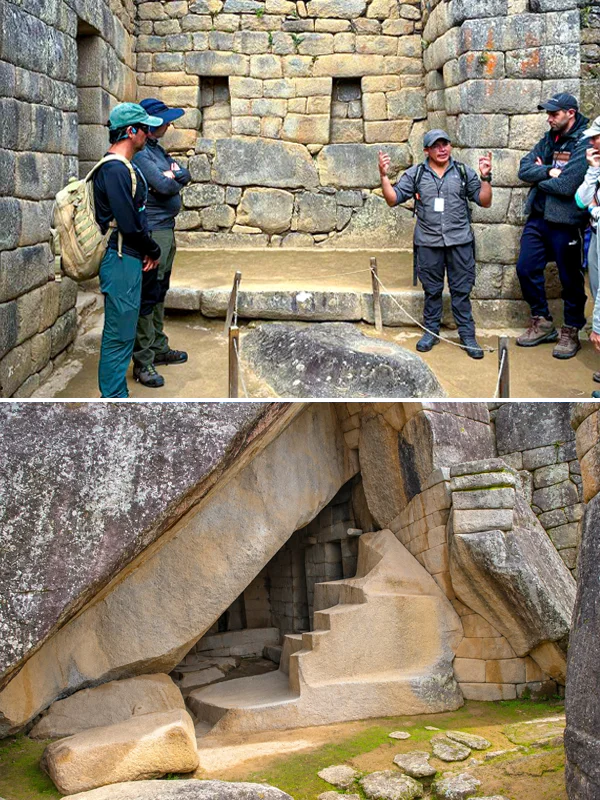 |
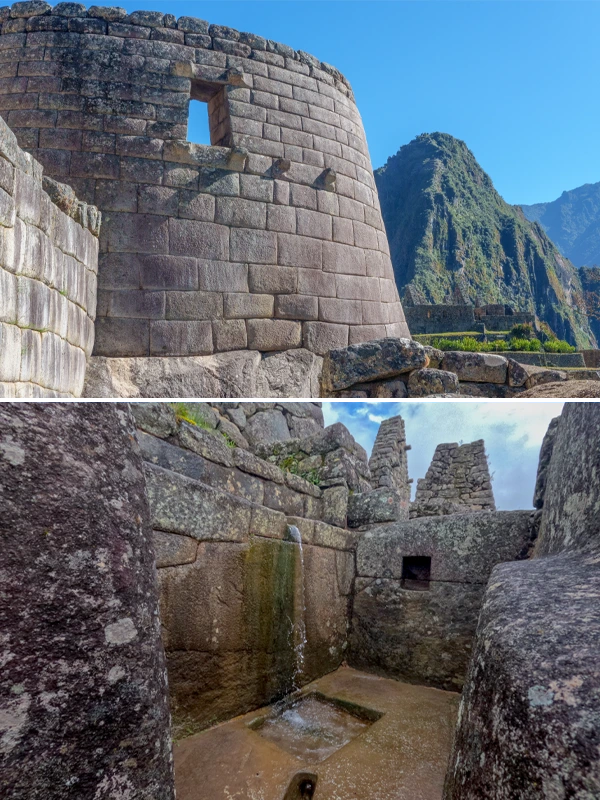 | 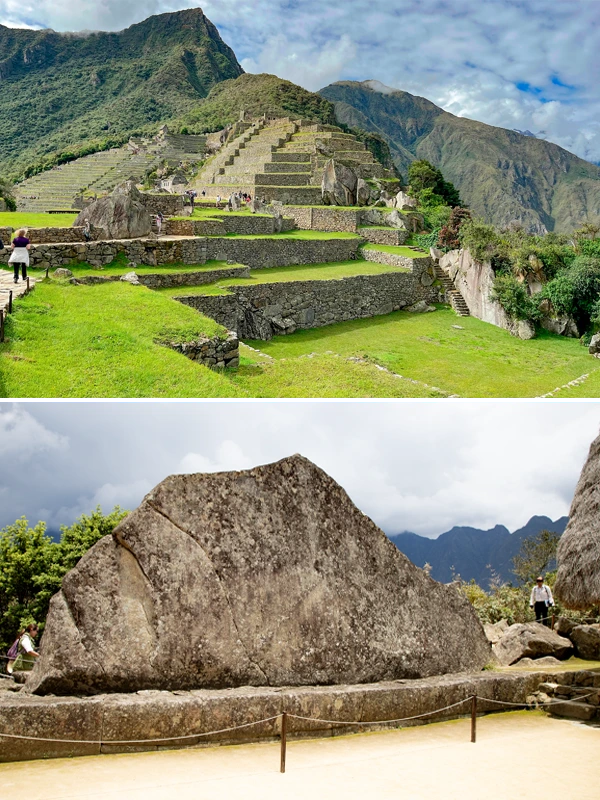 |
 |  |
Depending on the Circuit 3 route you choose, you can also continue along one of the following mountain trails:
- Route 3A - Huayna Picchu Mountain: A challenging hike to the summit of Huayna Picchu.
- Route 3C - Great Cavern: An adventurous hike to the mysterious Temple of the Moon, also known as the Great Cavern.
- Route 3D - Huchuy Picchu: A shorter, less demanding hike up the small mountain of Huchuy Picchu.
What places are not included in Machu Picchu Circuit 3?
While Circuit 3 allows you to see important ceremonial buildings and areas associated with Inca royalty up close, it does not include the famous panoramic viewpoints near the Guardian's House, which are part of Circuit 1, or the viewpoint included in Route 2B.
It also does not offer elevated views of the citadel upon entering or access to the original entrance of Machu Picchu, the Main Temple, or the Temple of the Three Windows.
Which is the best route of Machu Picchu Circuit 3?
Route 3B is one of the best options for visitors who want to experience the royal sector without taking on a demanding hike. Along the way, you can admire ceremonial buildings, finely crafted stone structures, and different spaces that once formed part of the ancient Inca city.
The other routes appeal to experienced hikers who want to add a physical challenge to their Machu Picchu visit. The best choice will depend on your interests, fitness level, and how much time you want to spend at the archaeological site.
Machu Picchu Circuit 3: Routes 3A, 3B, 3C, and 3D compared
Features | Route 3A Huayna Picchu Mountain | Route 3B Royal Route | Route 3C Great Cavern | Route 3D Huchuy Picchu Mountain |
Archaeological visit | Yes | Yes | Yes | Yes |
Mountain hike | Yes | No | Yes | Yes |
Total distance | 2.3 mi (3.7 km) | 0.8mi (1.3 km) | 2.7 mi (4.3 km) | 1.9 mi (3 km) |
Hiking distance | 1.5 mi (2.4 km) | - | 1.9 mi (3 km) | 1.1 mi (1.7 km) |
Maximum visit time | 5 h 30 min | 2 h 30 min | 7 hours | 3 h 30 min |
Difficulty | Challenging | Moderate | Challenging | Moderate |
Availability | Year-round | Year-round | *High season | *High season |
Best for | Hiking and scenery | History and architecture | Adventure and scenery | Short hikes |
When to book? | 3 to 4 months ahead | 6 months ahead | 2 to 3 months ahead | 2 to 3 months ahead |
Machu Picchu's high season runs from June 19 to November 2 and also includes special dates: New Year (December 30 and 31 and January 1) and Easter (April 2 to 5).
 |  |
 |  |
Which Circuit 3 route should you choose?
- Choose Route 3A if you want to experience the climb up Huayna Picchu and admire Machu Picchu from high above.
- Choose Route 3B if you prefer to learn about the history and architecture of the royal sector without a strenuous hike.
- Choose Route 3C if you enjoy longer hikes and want to visit the Great Cavern, one of the least visited archaeological sites in the park.
- Choose Route 3D if you are looking for a shorter, less demanding mountain hike than Huayna Picchu.
Route 3A: Huayna Picchu Mountain
Route 3A combines a tour of the lower sector of the Inca city with one of Machu Picchu's most famous hikes: the climb up Huayna Picchu Mountain.
This is the striking mountain that rises behind the citadel in many photographs. From its summit, you can look down on Machu Picchu from north to south, appreciate the scale of its terraces and stone buildings, and see the Urubamba River winding through the valley far below.
The climb is physically demanding, but the views, ancient stone steps, gravity-defying Inca structures, and beautiful scenery along the way make it a rewarding experience for adventurous travelers.
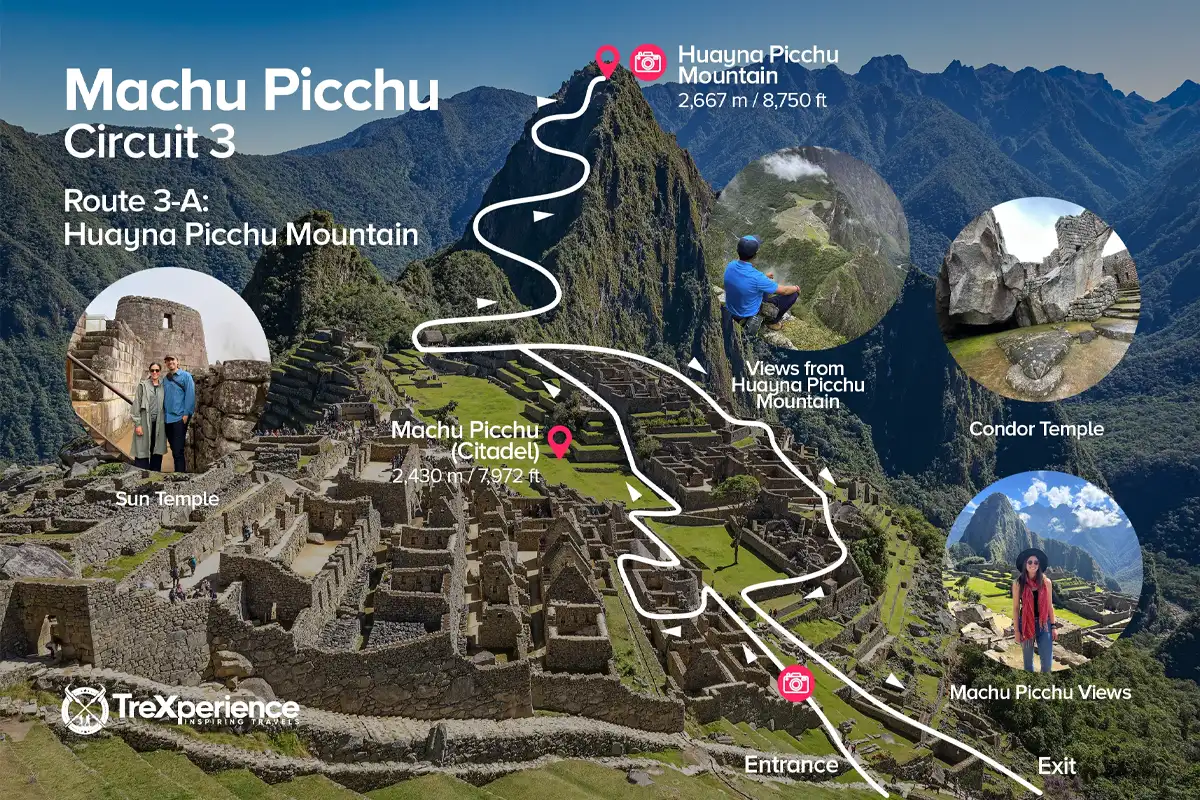
Machu Picchu Route 3A details
- Main attraction: Huayna Picchu summit and archaeological sector.
- Maximum elevation: 8,750 ft (2,667 m) above sea level.
- Difficulty: Challenging, with steep stairs, narrow paths, and some exposed sections.
- Total distance: 2.3 mi (3.7 km).
- Citadel tour: 0.8 mi (1.3 km).
- Maximum visit time: 5 hours and 30 minutes.
- Citadel visit: 2 hours and 30 minutes.
- Entry times:
- Morning: 7:00 a.m. and 10:00 a.m.
- Huayna Picchu mountain checkpoint times:
- Morning: 8:00 a.m. and 11:00 a.m.
- Availability: Year-round.
- Recommended for: Travelers in good physical condition who are comfortable with heights and enjoy mountain hiking.
Keep in mind: The 6-hour time limit for Machu Picchu Route 3A applies only until December 31, 2026.
What is the Huayna Picchu Mountain hike like?
Your visit begins in the lower part of Machu Picchu, following stone paths through agricultural terraces and areas associated with the Inca nobility, including the Inca's House and ritual fountains.
Along the way, you will see the Royal Tomb, the Temple of the Sun, and other ceremonial buildings before continuing toward the Sacred Rock.
Here you will find the Huayna Picchu checkpoint, which marks the beginning of the trail to Huayna Picchu Mountain. This is where the most challenging part of the hike begins.
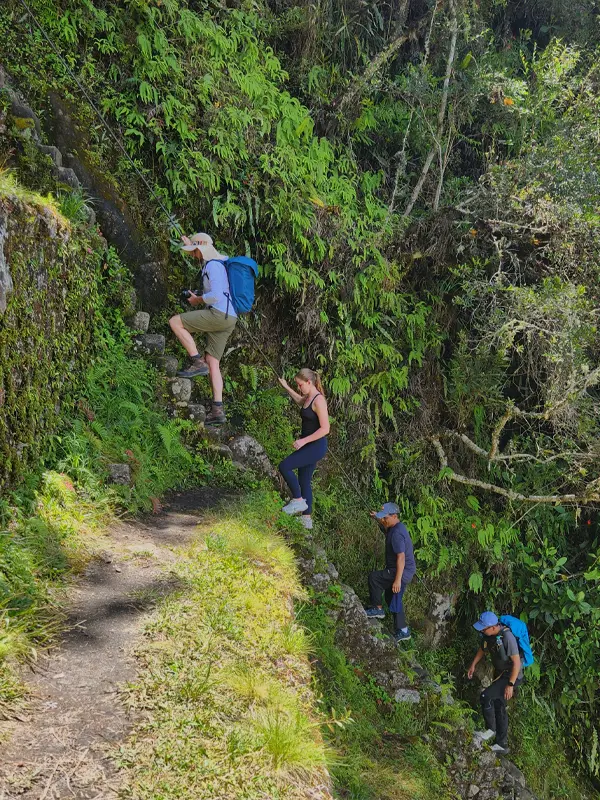
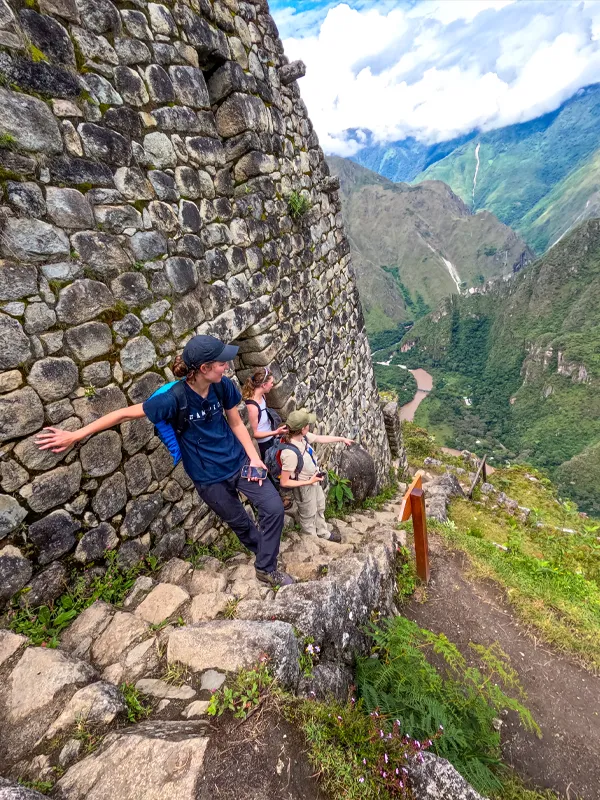
The trail climbs through lush vegetation and long stretches of stone steps. Some sections are narrow and require you to use your hands for balance. You will also encounter stairs near steep drops, so the climb is not recommended for anyone uncomfortable with heights.
As you gain elevation, the vegetation begins to open up, revealing your first views of Machu Picchu and the surrounding mountains.
Near the summit, you will see ancient terraces and small Inca buildings skillfully adapted to the mountainside. From the upper viewpoints, the Inca city looks tiny amid a spectacular mountain landscape, with the Vilcabamba mountain range and snowcapped Salkantay visible on clear days.
After enjoying the views and taking some of the best photos of Machu Picchu, you will descend along the designated trail and continue through the eastern archaeological sector, passing the Twelve Openings, Eastern Qolqas, Water Mirrors, and the magnificent Temple of the Condor before reaching the exit.
This route offers a memorable experience, but it is important to consider its difficulty. We recommend being in good physical condition, wearing suitable hiking shoes, and following the designated entry and hiking times.
 |  |
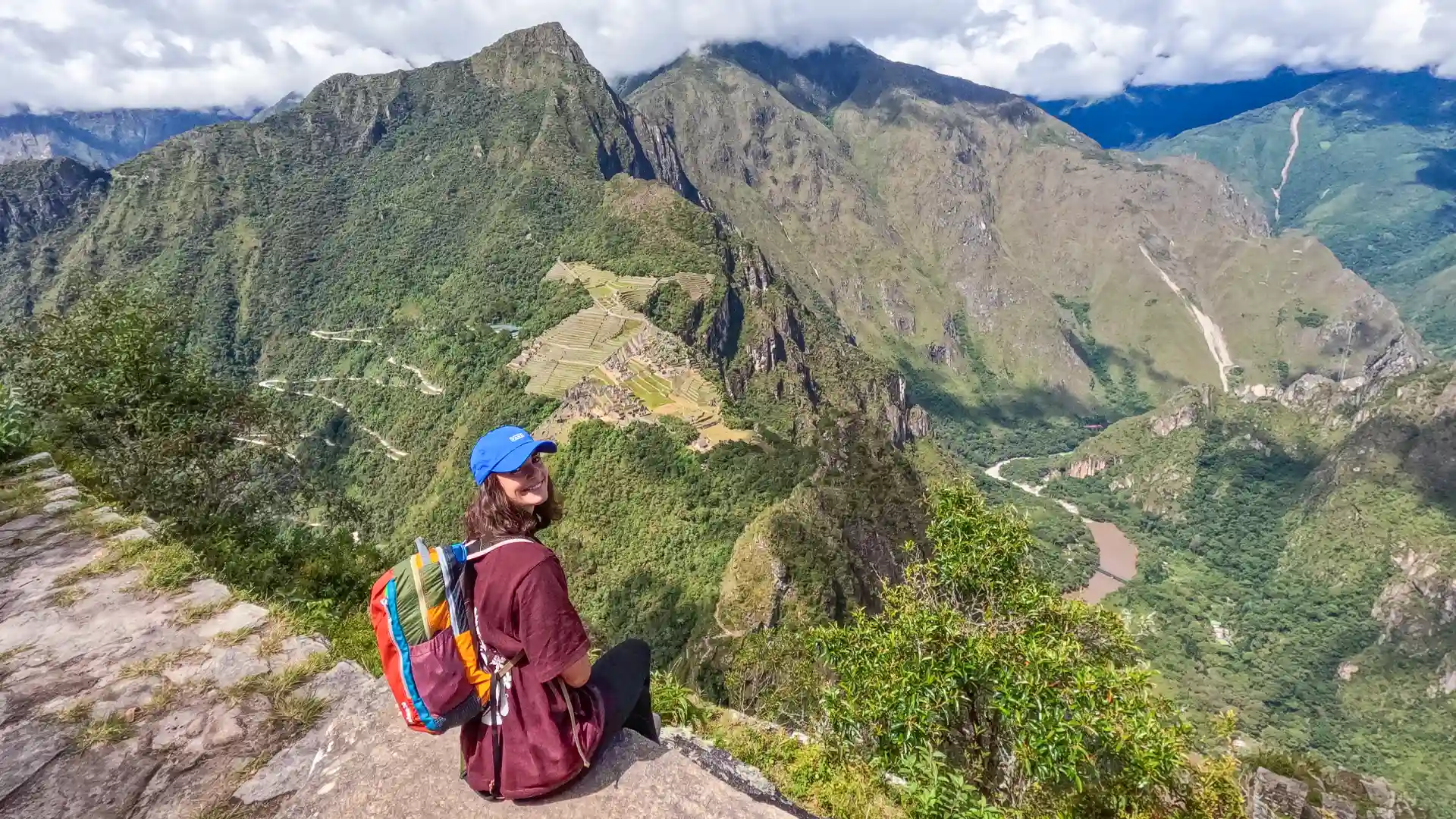
Huayna Picchu Mountain hiking details
- Hiking distance: 1.5 mi (2.4 km) round trip
- Hiking duration: 3 hours round trip
Route 3B: Royal Route
Route 3B takes you through the lower archaeological sector of Machu Picchu without having to continue toward a mountain or take on a more demanding hike.
Its main attraction is the opportunity to get close to the buildings associated with the Inca ruler's residence, ceremonial spaces, and some of the finest examples of stone architecture in the ancient city.
It is a shorter and less demanding route than the other Circuit 3 options, making it ideal for travelers who want to focus on the history and remarkable architectural details of Machu Picchu.
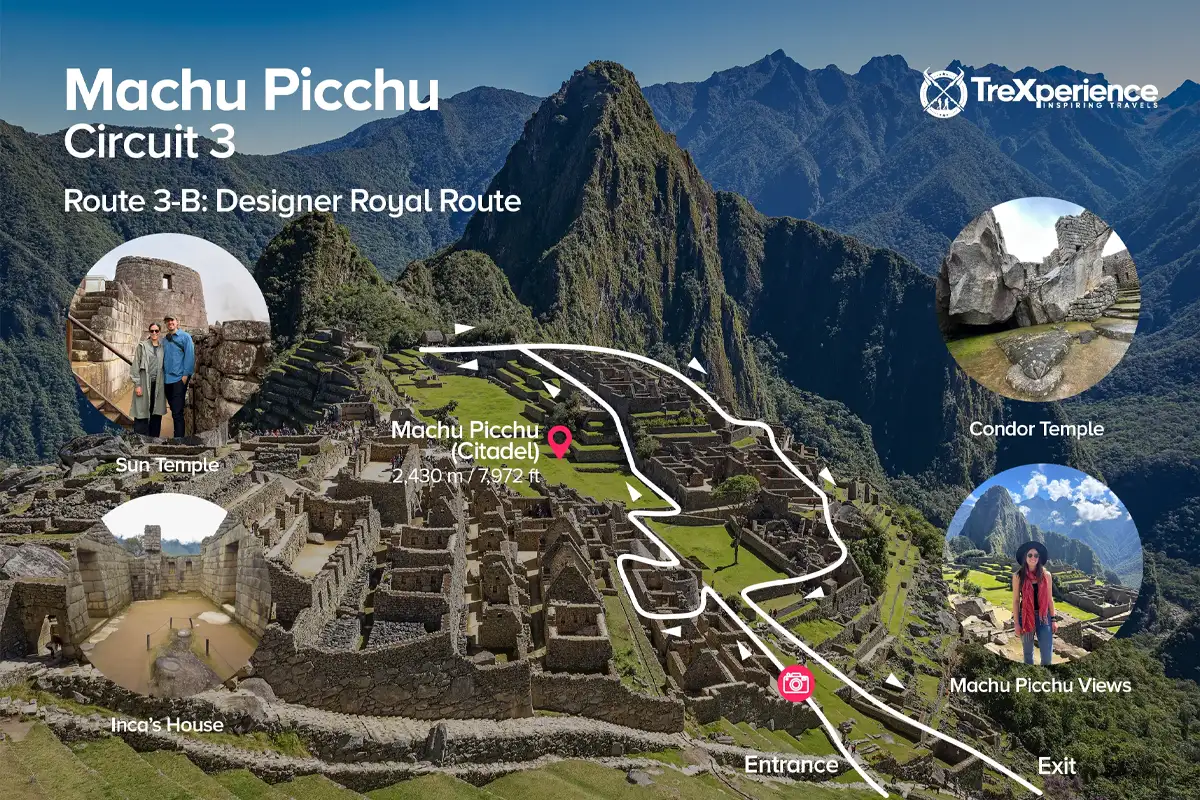
Machu Picchu Route 3B details
- Main attraction: Important ceremonial spaces and buildings associated with Inca royalty.
- Approximate elevation: 7,972 ft (2,430 m) above sea level (Machu Picchu citadel).
- Difficulty: Easy to moderate, with uneven paths and stone steps.
- Total distance: 0.8 mi (1.3 km).
- Maximum visit time: 2 hours and 30 minutes.
- Entry times:
- Morning: 6:00, 7:00, 8:00, 9:00, 10:00, and 11:00 a.m.
- Afternoon: 12:00, 1:00, 2:00, and 3:00 p.m.
- Availability: Year-round.
- Recommended for: Travelers interested in history, architecture, and a relaxed archaeological tour.
What is the Route 3B tour like?
Your visit begins in the agricultural sector, where stone terraces follow the natural slope of the mountain. From this part of Machu Picchu, you can appreciate how the Incas adapted their buildings to the steep mountain terrain.
As you continue, you will enter the royal sector and visit the ritual fountains, residences of the Inca nobility, the Inca's House, the Royal Tomb, and the remarkable Temple of the Sun. The carefully crafted walls, openings, and doorways reflect the importance and high social status of those who once lived here.
The route continues through other areas of the lower urban sector, where you can see ceremonial fountains, the Sacred Rock, the Twelve Niches, and the eastern storehouses, known as Qolqas.
On your way back, you will pass the Water Mirrors and the Temple of the Condor, where natural rock formations and carefully crafted stone structures create one of Machu Picchu's most distinctive architectural features.
Finally, the trail takes you back through the agricultural sector before reaching the exit.
Route 3C: Great Cavern or Temple of the Moon
Route 3C includes the main archaeological tour before heading into the lush, forest-covered mountains north of Machu Picchu.
Its destination is the Great Cavern, also known as the Temple of the Moon, an archaeological site built beneath an enormous natural rock formation.
This route offers a completely different experience from the other Machu Picchu routes. Rather than simply hiking to enjoy views of the citadel, you follow a ceremonial trail through dense vegetation to reach a group of hidden Inca structures behind Huayna Picchu Mountain.
It is a particularly appealing option for adventurous hikers who enjoy a sense of mystery and want to visit lesser-known archaeological sites while enjoying unique views of Machu Picchu.
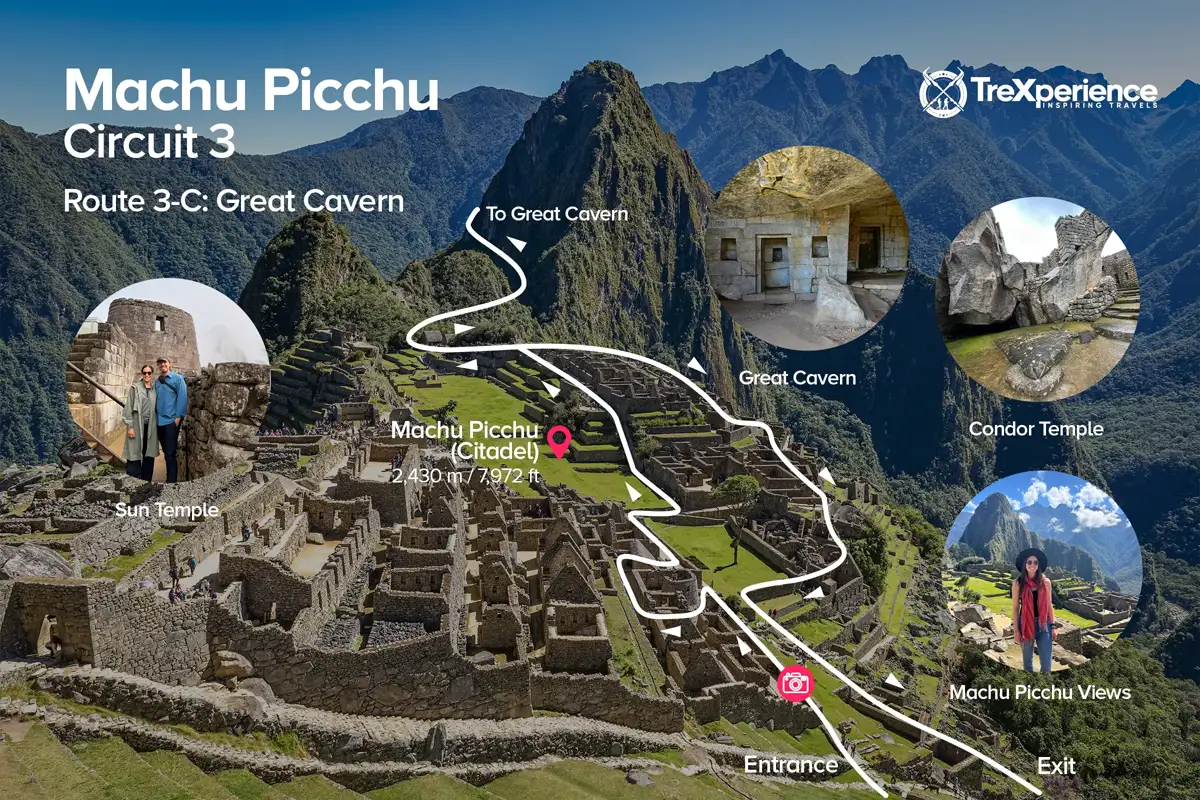
Machu Picchu Route 3C details
- Main attraction: Great Cavern (Temple of the Moon) and archaeological sector.
- Elevation: 7,405 ft (2,257 m) above sea level at the Great Cavern.
- Difficulty: Challenging, with uphill and downhill sections and uneven trails.
- Total distance: 2.7 mi (4.3 km).
- Citadel tour: 0.8 mi (1.3 km).
- Maximum visit time: 7 hours.
- Citadel visit: 3 hours.
- Entry times:
- Morning: 8:00 a.m. and 9:00 a.m.
- Huayna Picchu mountain checkpoint times:
- Morning: 9:00 a.m. and 10:00 a.m.
- Availability: High season only.
- Recommended for: Travelers in good physical condition who are interested in visiting mysterious and lesser-known archaeological sites.
What is the Route 3C hike like?
Your visit begins in the lower sector of Machu Picchu, following the marked path toward the buildings associated with Inca royalty and the ceremonial spaces included in Circuit 3.
After reaching the Sacred Rock area, you will continue to the Huayna Picchu mountain checkpoint, where you register for the hike to the Great Cavern. From here, the trail winds around the slopes of Huayna Picchu.
Unlike Route 3A, this path does not lead to the summit. Instead, it follows the natural contours of the mountain, passing stone stairways, dense vegetation, and several spots where you can admire the scenery.
Some sections descend steeply, so remember to save your energy for the climb back.
Eventually, you will reach the Great Cavern, where Inca structures, walls, stone doorways, and niches blend beautifully with the natural rock inside a large cave.
What makes this place particularly intriguing is how the Incas used the natural features of the terrain to create sacred buildings in a secluded location, hidden within the mountain and far from the ancient city.
After visiting the archaeological site, you will return along the marked trail. The route continues through the eastern part of Machu Picchu toward the exit, passing the Twelve Openings, Water Mirrors, Eastern Qolqas, and Temple of the Condor.
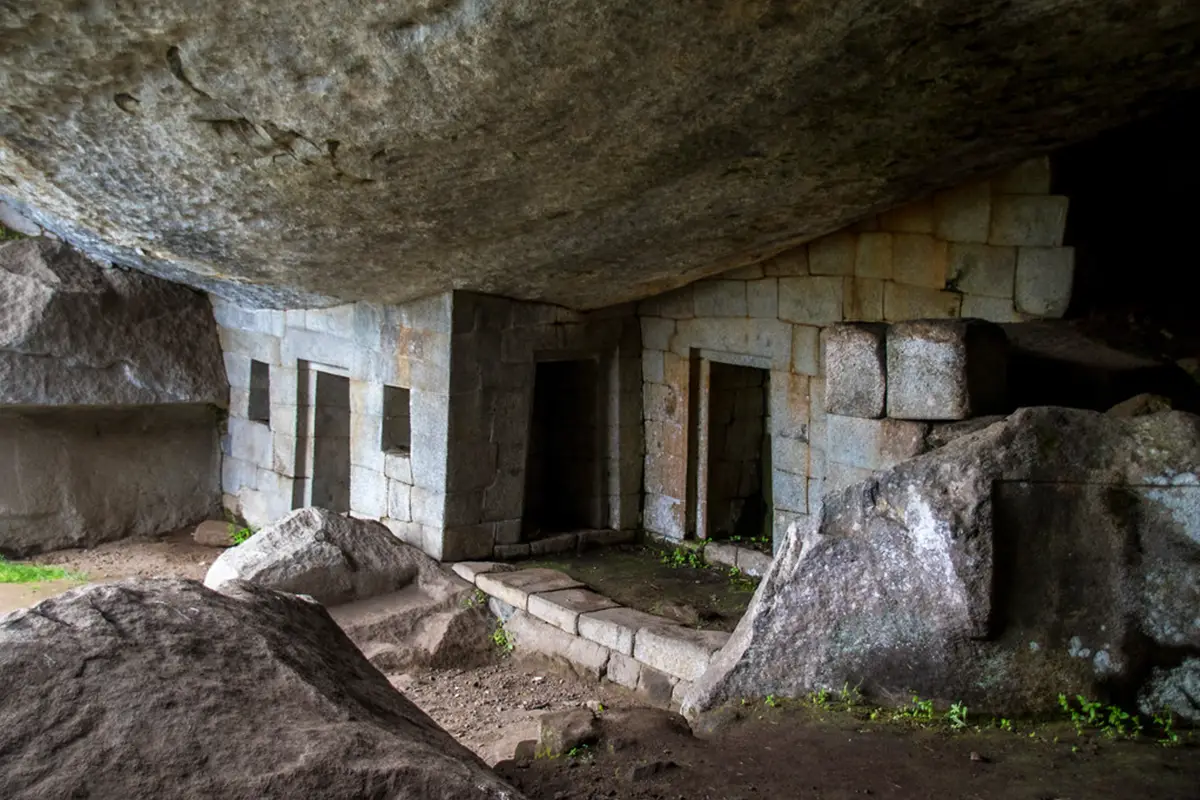
Great Cavern hiking details
- Hiking distance: 1.9 mi (3 km) round trip
- Hiking duration: 4 hours round trip
Route 3D: Huchuy Picchu Mountain
Route 3D combines a tour of the lower archaeological sector of Machu Picchu with a short hike up Huchuy Picchu Mountain.
This small peak stands beside Huayna Picchu. Although it is not as high, it offers beautiful views of the Inca city and surrounding mountains.
It is a great alternative if you want to include a scenic hike in your visit but prefer to avoid the longer, more demanding climb up Huayna Picchu.
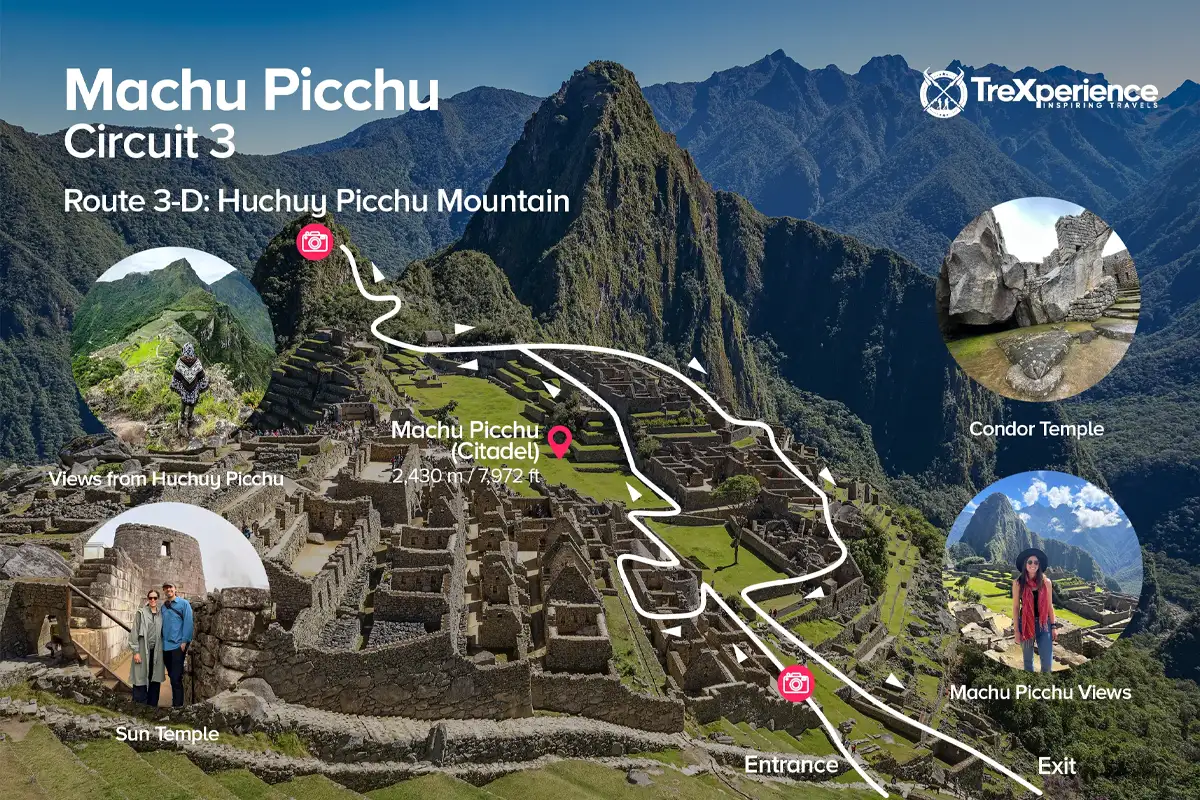
Machu Picchu Route 3D details
- Main attraction: Huchuy Picchu summit and archaeological sector.
- Maximum elevation: 8,192 ft (2,497 m) above sea level.
- Difficulty: Moderate, with stone stairs and uphill trails.
- Total distance: 1.9 mi (3 km).
- Citadel tour: 0.8 mi (1.3 km).
- Maximum visit time: 3 hours and 30 minutes.
- Citadel visit: 2 hours and 30 minutes.
- Entry times:
- Morning: 9:00 a.m. and 11:00 a.m.
- Huayna Picchu mountain checkpoint times:
- 10:00 a.m. and 12:00 p.m.
- Availability: High season only.
- Recommended for: Travelers looking for a short mountain hike and scenic views of Machu Picchu.
What is the Route 3D hike like?
Your visit begins in the lower archaeological sector, walking through the terraces toward the ancient Inca city. You then visit buildings and ceremonial spaces in the royal sector, including the Inca's House, Royal Tomb, Temple of the Sun, and ritual fountains, before reaching the Sacred Rock.
Here you will find the Huayna Picchu checkpoint, where you register for the hike up Huchuy Picchu Mountain. The climb is relatively short, with stone steps and marked paths. Although it is less demanding than Huayna Picchu, some slopes require care, especially when the stones are wet.
As you approach the summit, Machu Picchu comes into view from a higher perspective. From here, you can see the platforms and buildings of the citadel, including the Intihuatana pyramid and its famous carved stone. The agricultural terraces, mountains, and green valleys create a beautiful setting for photographs.
After reaching the viewpoint, you will descend along the marked path and continue through the lower city, passing the Twelve Openings, Water Mirrors, Eastern Qolqas, and Temple of the Condor on your way to the exit.
Route 3D is an excellent choice for travelers who want to combine Machu Picchu's history with a mountain hike without spending several hours on a strenuous climb.
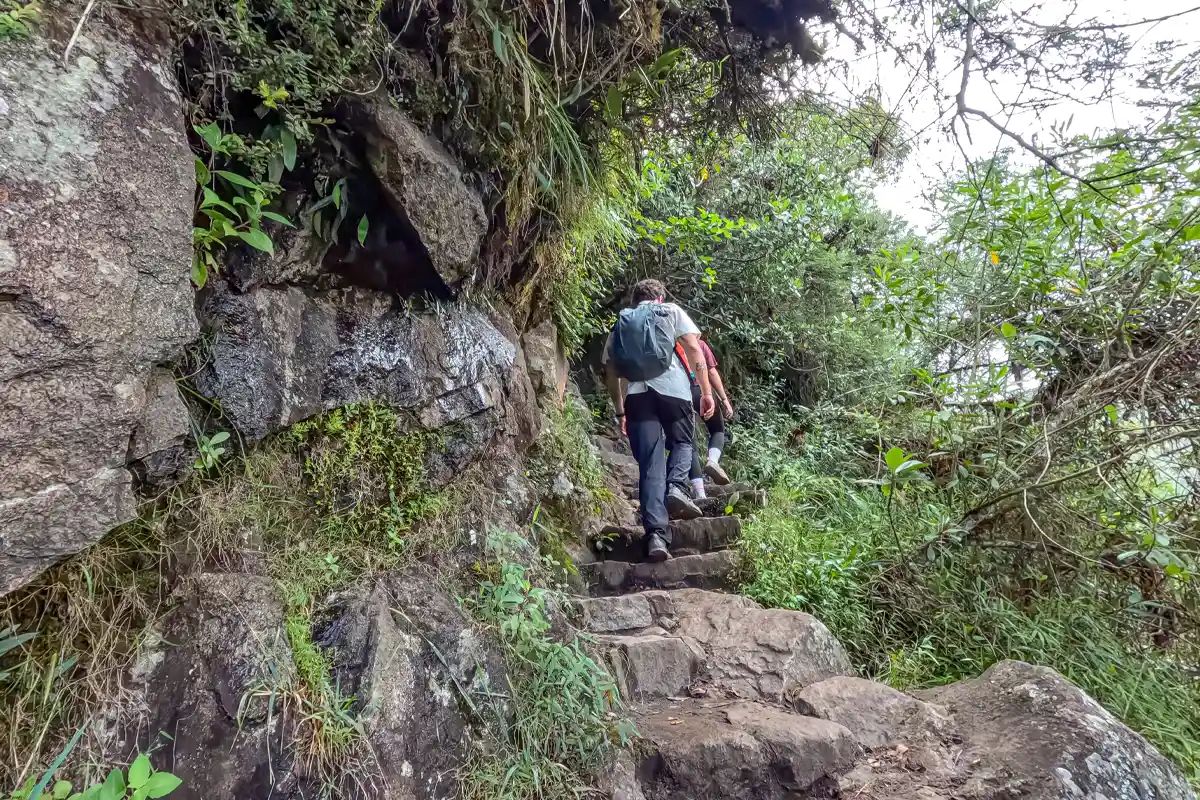
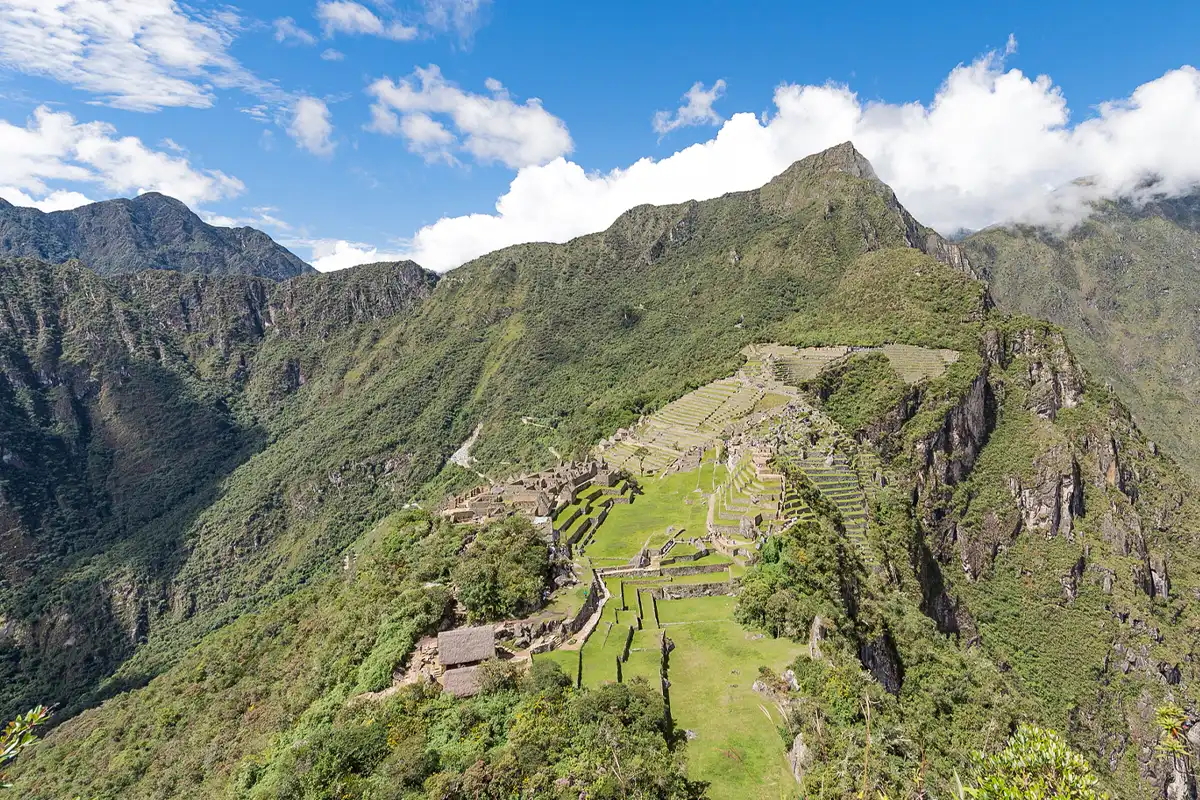
Huchuy Picchu Mountain hiking details
- Hiking distance: 1.1 mi (1.7 km) round trip
- Hiking duration: 1 hour round trip
Machu Picchu Circuit 3 vs. Circuit 2 vs. Circuit 1
Each Machu Picchu circuit offers a different way to experience the archaeological site. Understanding their differences will help you choose the ticket that best matches what you want to see.
| Circuit 3 - Royal | Circuit 2 - Classic | Circuit 1 - Panoramic |
Main experience | Ceremonial buildings and royal sector | Archaeological tour of the Inca city | Southern viewpoints and mountain trails |
Classic panoramic photo | No, mountain hikes offer north-to-south views | Route 2B only | Yes |
Access to the urban sector | Lower and eastern sectors | Wider urban sector | No |
Mountain hikes | Huayna Picchu, Huchuy Picchu, and Great Cavern | None | Machu Picchu Mountain |
Recommended for | Royal sector and mountain hikes | History and architecture lovers | Photography and hiking |
Read next | Machu Picchu Circuits Tour Guide
How much do Machu Picchu Circuit 3 tickets cost?
Machu Picchu Circuit 3 tickets cost between 152 and 200 soles for international adults and between 64 and 112 soles for Peruvians and citizens of Andean Community countries (Colombia, Bolivia, and Ecuador). Children under 3, war veterans, and eligible Cusco residents receive free admission with an advance reservation.
The following tables show the official ticket prices established by Peru's Ministry of Culture:
Machu Picchu Circuit 3 tickets for international visitors (in soles)
Machu Picchu ticket | Adult | Minor | Student | |
| Circuit 3 - Royal | Route 3A Huayna Picchu Mountain | 200 soles | 118 soles | 125 soles |
| Route 3B Royal Route | 152 soles | 70 soles | 77 soles | |
| Route 3C Great Cavern | 200 soles | 118 soles | 125 soles | |
| Route 3D Huchuy Picchu Mountain: | 152 soles | 70 soles | 77 soles | |
Circuit 3 tickets for Peruvians, Andean Community citizens, and foreign residents
Machu Picchu ticket | Adult | Minor | Student | |
| Circuit 3 - Royal | Route 3A Huayna Picchu Mountain | 112 soles | 80 soles | |
| Route 3B Royal Route | 64 soles | 32 soles | ||
| Route 3C Great Cavern | 112 soles | 80 soles | ||
| Route 3D Huchuy Picchu Mountain: | 64 soles | 32 soles | ||
The exchange rate for Peruvian soles may range from 3.4 to 3.6 soles per US dollar.
How to buy Machu Picchu Circuit 3 tickets
The official ticket booking platform is TuBoleto Cultura, managed by Peru's Ministry of Culture.
To book your visit, follow these steps:
1. Visit the official TuBoleto Cultura website.
2. Select Machu Picchu as your destination.
3. Choose Circuit 3 and the specific route you want to visit.
4. Select your preferred date and an available entry time.
5. Enter your personal details exactly as they appear on your passport or ID.
6. Choose the ticket category that applies to you and complete your payment.
7. Save your ticket and double-check that all your booking details are correct.
If you are buying a ticket for Route 3A, 3C, or 3D, make sure you select the correct mountain or destination. Each route requires its own ticket.
You should also coordinate your entry time with your train journey and transportation from Aguas Calientes to the Machu Picchu entrance.
Tip: Tickets for Huayna Picchu and the seasonal routes are limited. If you plan to do any of these hikes, we recommend booking several months in advance.
What to pack and what is the weather like on Circuit 3?
Machu Picchu sits where the Andes meet the cloud forest, so the weather can change quickly throughout the day. A sunny morning can turn cloudy, and rain can fall even during the driest months.
In general, there is less rainfall between April and October, while rain is more frequent from November to March.
On Routes 3A, 3C, and 3D, it is especially important to pay attention to the weather, as stone stairs and mountain trails can become slippery.
For your visit, we recommend bringing:
- Hiking shoes: Wear comfortable footwear with good grip, especially for the mountain routes.
- Waterproof jacket: Bring a lightweight jacket to protect yourself from rain and changing temperatures.
- Sun protection: Remember to bring sunscreen, sunglasses, and a hat, even on cloudy days.
- Reusable water bottle: Bring enough water, particularly if you are planning a mountain hike.
- Small backpack: Pack only the essentials and follow the archaeological site's bag restrictions.
- Camera or smartphone: You will find plenty of spots to photograph ancient buildings, terraces, and landscapes.
- Ticket and identification: Bring the original passport or ID used to make your reservation.
Read next | Best time to visit Machu Picchu
If you plan to climb Huayna Picchu or visit the Great Cavern, check the weather conditions before your visit. Heavy rain or conservation work may cause temporary closures.
Machu Picchu Circuit 3 accessibility and age restrictions
The routes within Circuit 3 vary in their level of physical difficulty.
Route 3B is generally the easiest, as it stays within the lower archaeological sector and does not involve a mountain climb.
Routes 3A and 3C are much more demanding, with steep slopes, narrow paths, and longer hikes. Route 3D is shorter but still involves climbing stone stairs and walking along uneven trails.
How accessible is Machu Picchu Circuit 3?
Route 3B is the best Circuit 3 option for visitors who prefer to avoid long or strenuous hikes, as well as those traveling with children and older adults. It is also the only route with a wheelchair-accessible section, from the entrance to the agricultural terraces. However, accessibility is limited to this area, as the rest of the route follows uneven stone paths, stairs, and changes in elevation that make wheelchair access difficult.
Whether you want to admire the remarkable buildings of the royal sector or experience the climb up Huayna Picchu, choosing the right ticket can make a big difference to your Machu Picchu visit.
Whether you want to visit the ancient Inca royal quarter or enjoy breathtaking views from Huayna Picchu, Machu Picchu Circuit 3 offers something for every type of traveler. Choose the route that best suits your interests and book in advance. We can help you plan your Peru vacation and find the right route to experience Machu Picchu your way.
Machu Picchu Circuit 3 FAQs
Is Machu Picchu Circuit 3 worth it?
Yes. Machu Picchu Circuit 3 is well worth visiting if you are interested in the buildings of the lower sector, the areas once inhabited by Inca royalty, or any of the mountain hikes. Although it does not include the classic viewpoint near the Guardian's House, it allows you to visit important ceremonial sites and enjoy different perspectives of the ancient Inca city.
How long does Machu Picchu Circuit 3 take?
Depending on the route you choose, your visit can last anywhere from 2 hours and 30 minutes to 6 hours. Always follow the entry times and visit duration specified on your ticket. You must also arrive on time at the main entrance and the internal checkpoints before starting any of the mountain hikes.
Is Machu Picchu Circuit 3 difficult?
The difficulty depends on the route you choose. Route 3B is relatively easy, although it includes stone steps and uneven paths. Route 3D involves a moderate uphill hike. Routes 3A and 3C are more physically demanding and are recommended for visitors who are comfortable hiking on mountainous terrain.
Can you take the classic Machu Picchu photo from Circuit 3?
No. Circuit 3 does not include access to the famous panoramic viewpoint near the Guardian's House. However, you can take beautiful photographs from different parts of the Inca city, while the mountain hikes offer elevated views from unique angles. If you want the classic Machu Picchu photo, we recommend choosing a suitable route within Circuit 1 or Circuit 2.
Which is better, Machu Picchu Route 3A or 3B?
Route 3A is the best choice if you want to climb Huayna Picchu and enjoy spectacular mountain scenery. Route 3B, on the other hand, is ideal if you prefer to visit the royal sector and learn about its remarkable Inca architecture without taking on a strenuous hike.
Can you buy Machu Picchu Circuit 3 tickets in Aguas Calientes?
You can purchase Machu Picchu tickets at authorized ticket offices in Aguas Calientes, subject to availability. However, tickets for certain mountain routes can sell out well in advance. Buying tickets in person does not guarantee that your preferred route or entry time will be available.
Can you combine Machu Picchu Circuit 3 with Circuit 1 or Circuit 2?
Yes, but you will need a separate ticket for each circuit. For example, you can visit the panoramic viewpoints on Circuit 1 and then tour the royal sector on Circuit 3. Make sure to coordinate your entry times carefully, allowing enough time to complete each visit, exit the archaeological site, and re-enter through the designated checkpoint.
Is Huayna Picchu included in all Machu Picchu Circuit 3 tickets?
No. Route 3A is the only route that includes the hike to Huayna Picchu. Route 3B covers the lower archaeological sector, Route 3C leads to the Great Cavern, and Route 3D includes the hike up Huchuy Picchu Mountain.
What is the difference between Huayna Picchu and Huchuy Picchu?
Huayna Picchu is the taller, steeper mountain that rises behind Machu Picchu. The climb is more challenging and rewards hikers with impressive views from the summit. Huchuy Picchu is a smaller neighboring mountain with a shorter, less demanding hike. Both offer beautiful elevated views of the archaeological site, but each requires a different entrance ticket.
Do you need a guide to visit Machu Picchu Circuit 3?
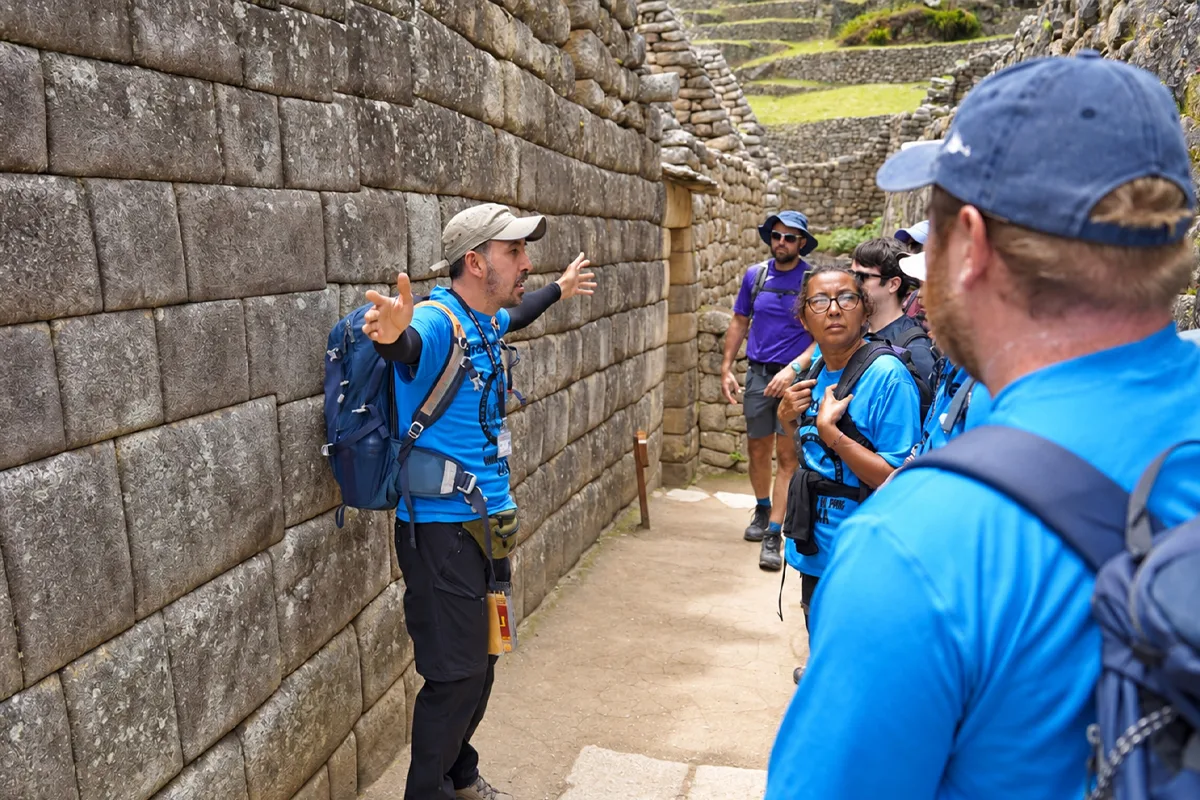
No. Under the updated visitor regulations, hiring a guide is recommended but is not generally mandatory for individual visitors. However, visiting with a professional tour guide can enrich your experience by helping you better understand the history, architecture, and cultural significance of the places you encounter along the Royal Circuit.

Add new comment