



Buying Machu Picchu tickets may seem simple, but choosing the right circuit and route, checking availability, and understanding the entry times can make the difference between a well-organized visit and a complicated experience.
In this guide, you’ll find everything you need to know about Machu Picchu tickets 2026: peak travel seasons, ticket types, official circuits, available routes, reference prices, where to buy, required documents, and important rules for entering the sanctuary.
We’ll also help you compare the routes based on your time, fitness level, and interests, whether you want the classic photo, a walk through the Inca citadel, or a hike to Huayna Picchu, Machu Picchu Mountain, Intipunku, Inca Bridge, or Huchuy Picchu.
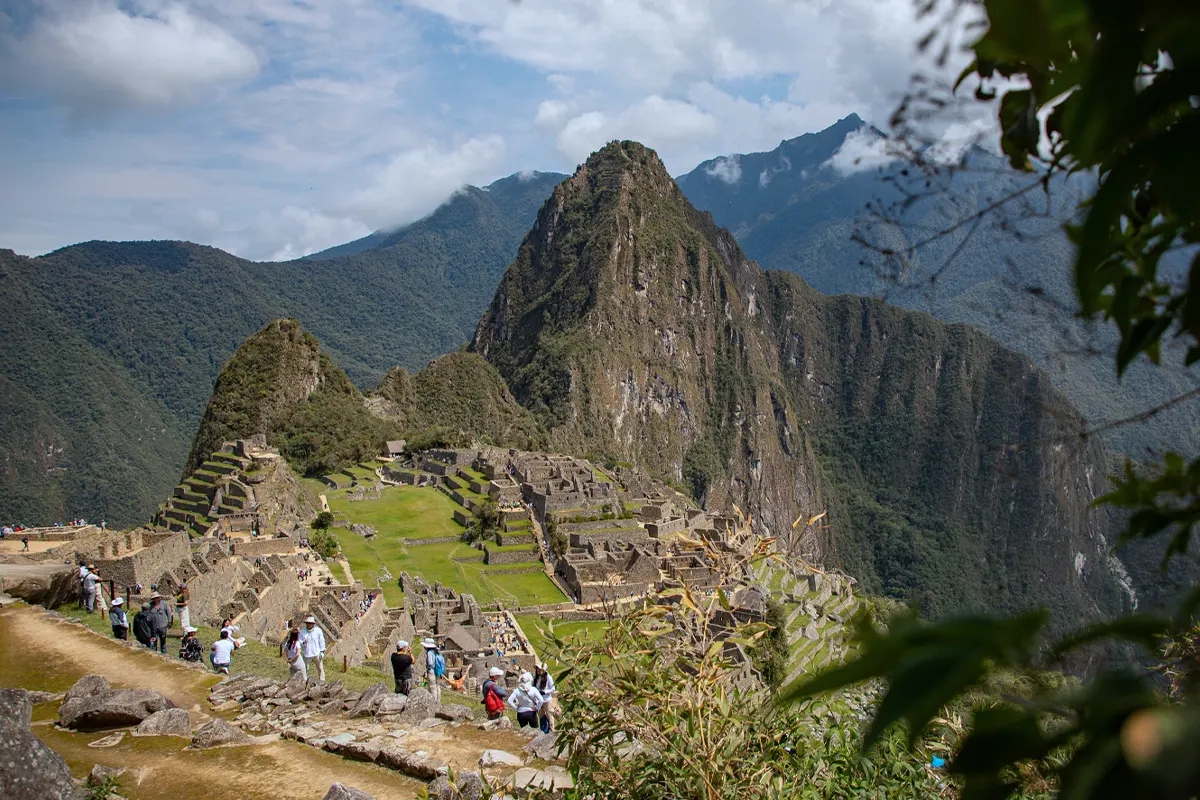
Machu Picchu Tickets 2026: Quick Summary
If you are planning to book your Machu Picchu ticket, it is worth reviewing a few key details first. This quick summary brings together the most important information to help you compare your options and understand the main features of each entrance ticket.
| 1. High Season 2026 | June 19 to November 2 + specific holidays |
| 2. Low Season 2026 | November 3 to June 18 - excluding some holidays |
| 3. Daily Tickets Online and In-Person Sales | - 5,600 - high season - 4,500 - low season |
| 4. In-Person Sales Only in Aguas Calientes | 1,000 additional tickets per day |
| 5. Foreign Visitor Price | From 77 to 200 soles (US$21-54) |
| 6. Price for Peruvians, CAN Citizens, and Foreign Residents | From 32 to 112 soles (US$9-30) |
| 7. Mandatory Document When Buying and Visiting | Passport or other documents, depending on the visitor’s country of origin |
| 8. Main Entrance Grace Period: First Checkpoint | - 45 min - high season - 30 min - low season |
| 9. Second Checkpoint Grace Period Mountain Hike Routes | No grace period: Huayna Picchu, Huchuy Picchu, and Machu Picchu Mountain |
| 10. Services Inside Machu Picchu | There are no restrooms or services along the route |
Understanding the key details about Machu Picchu tickets is important. The information below will help you choose the best date for your visit, avoid booking mistakes, and plan your trip with more confidence.
Machu Picchu Ticket Availability 2026
Availability for Machu Picchu tickets changes throughout the year, mainly because of three factors: the seasons in the Andes (dry and rainy), national holidays, and the flow of visitors. Together, these create two main tourism seasons at Machu Picchu: high season and low season.
1. Seasons of the year
The year is divided into two main seasons, with a few transition months between them.
- The dry season runs from May to September and is known for sunny days, cold nights, and lower humidity.
- The rainy season runs from November to March and brings sudden rainfall, from light showers to heavier rain, along with higher humidity.
- Transition months: April and October share characteristics of both seasons.
2. National holidays
These are special dates when a higher number of daily tickets is made available for Machu Picchu, with a total of 5,600 entries per day. The dates considered are:
- January 1 - New Year’s Day
- April 2 to 5 - Holy Week
- December 30 and 31 - Year-end holidays
3. Tourist flow to Machu Picchu
Visitor flow remains active throughout the year. However, the number of visitors and their country of origin can vary depending on the season. Tourism starts to increase gradually from April and stays high until October, reaching its main peaks in June, July, and August.
This is mainly because this period matches the dry season in the Andes and part of the summer vacation season in the Northern Hemisphere. For this reason, these months usually bring a larger number of international travelers, especially from the United States, Europe, and other countries.
So, when are the high and low seasons at Machu Picchu?
This year, the following tourism seasons have been established for Machu Picchu:
- High season (5,600 tickets per day): from June 19 to November 2 + national holidays.
- Low season (4,500 tickets per day): from November 3 to June 18.
Of the total daily availability, 1,000 entrance tickets are sold in person in the town of Aguas Calientes.
New Machu Picchu Circuits
Since June 1, 2024, Machu Picchu has had three official tourist circuits for visiting the Historic Sanctuary. This update helps organize the flow of visitors, manage daily capacity, and protect the integrity of the archaeological site, helping preserve its value as a World Heritage Site and a Wonder of the Modern World.
The new Machu Picchu circuits are organized around three main ways to visit the sanctuary:
| 1. A panoramic experience with the classic postcard photo. | > Circuit 1 Panoramic** |
| 2. A classic route through the Inca city, its streets, and plazas. | > Circuit 2 Classic Circuit |
| 3. A visit through the Inca royalty area, temples, and citadel. | > Circuit 3 Machu Picchu Royalty** |
** Includes hiking routes
Circuit 1: Panoramic | |
Routes | Type of experience |
|
|
* Available only in high season
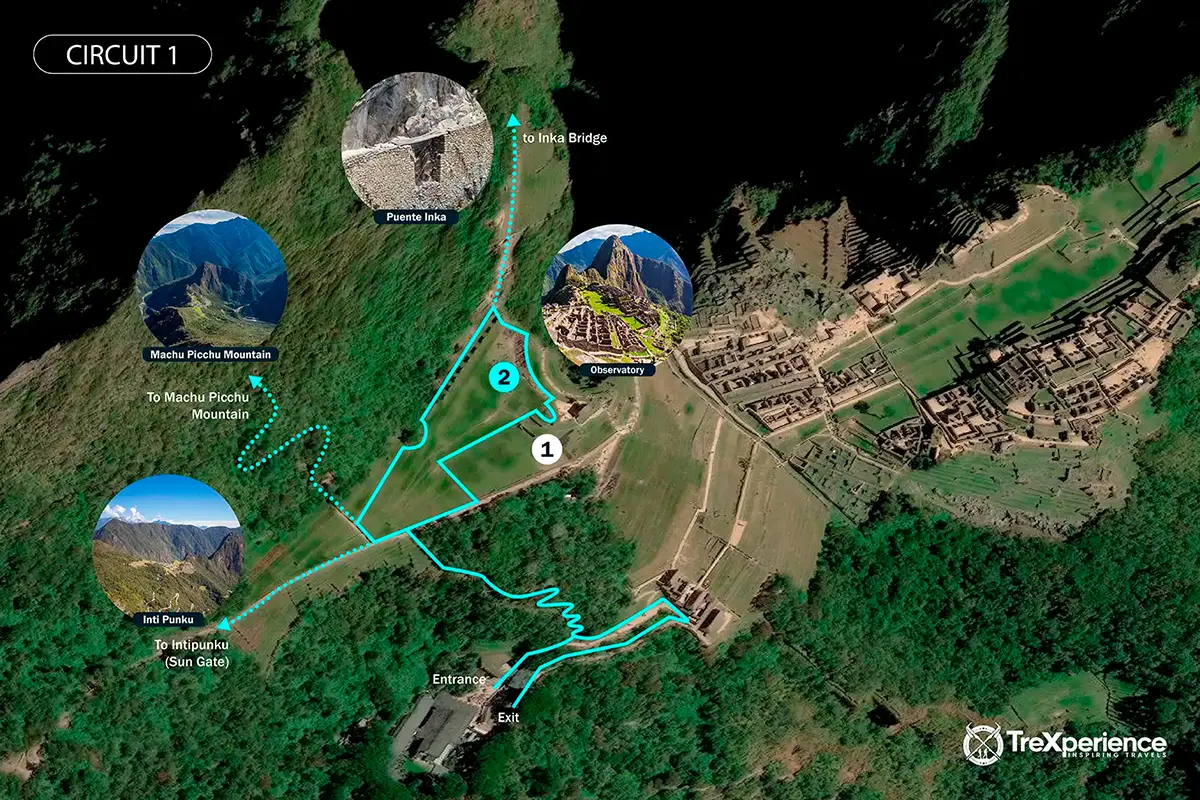
All Circuit 1 routes include the following points:
- Classic 360° view of Machu Picchu, with the famous postcard landscape of the wonder: the citadel in the foreground and the mountains surrounding it.
- (1) Lower Platform
- (2) Upper Platform
Circuit 2: Classic Circuit | |
Routes | Type of experience |
|
|
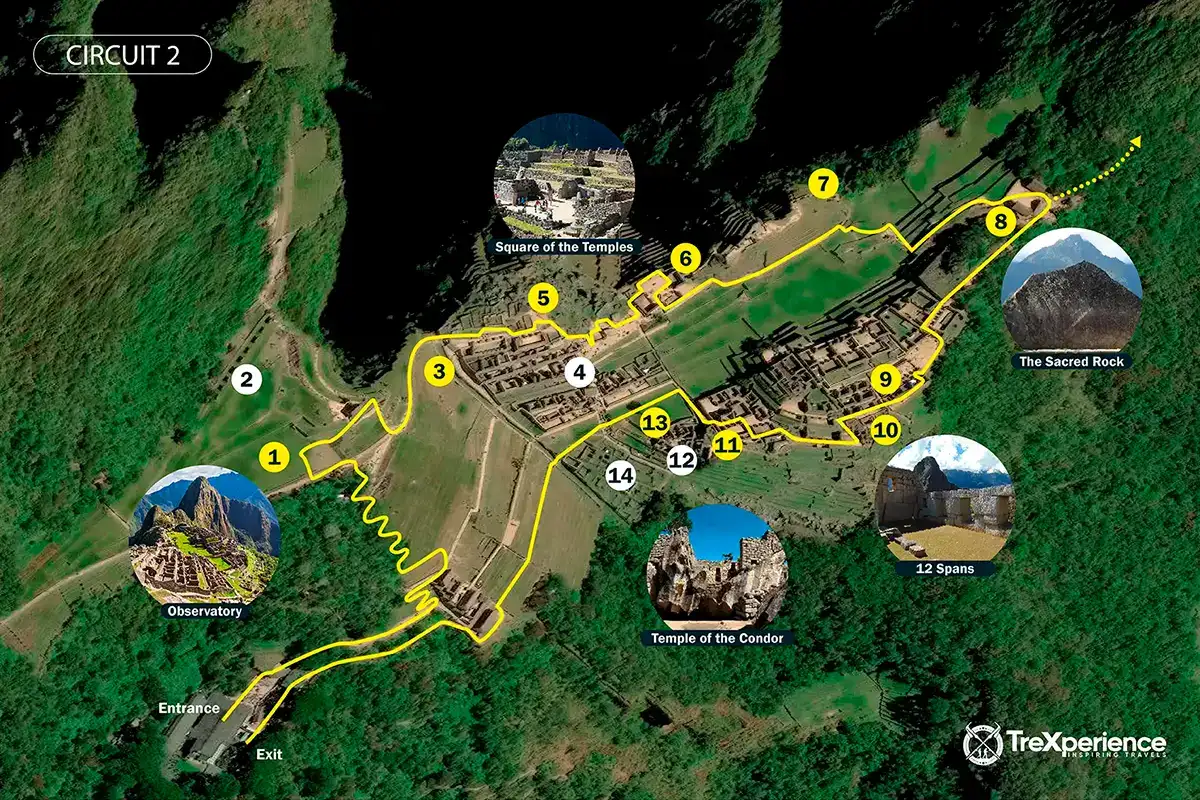
The following points are visited on the Circuit 2 routes:
- (1) Lower Platform - Route 2-B only
- (3) Dry Moat
- (4) Temple of the Sun Viewpoint - Route 2-A only
- (5) Granite Chaos - Route 2-B only
- (6) Temple Plaza
- (7) Intiwatana Pyramid - external viewing
- (8) Sacred Rock
- (9) Twelve Niches
- (10) Eastern Storehouses
- (11) Water Mirrors
- (13) Pisonay Plaza
- (14) Archaeological Reserve - external viewing
Circuit 3: Machu Picchu Royalty | |
Routes | Type of experience |
|
|
* Available only in high season
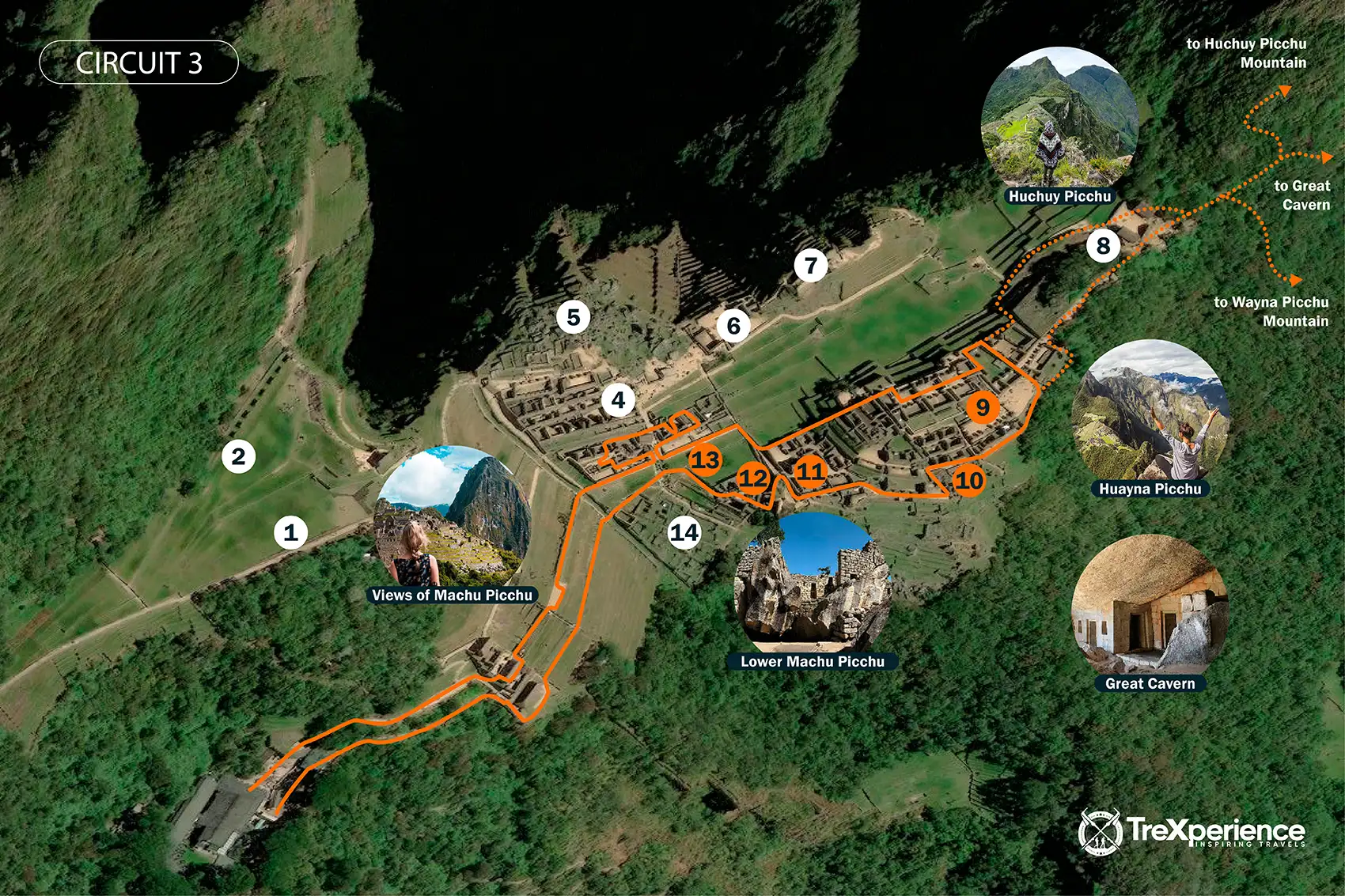
The following points are visited on the Circuit 3 routes:
- Temple of the Sun, Inca’s House, and ceremonial fountains
- (8) Sacred Rock
- (9) Twelve Niches
- (10) Eastern Storehouses
- (11) Water Mirrors
- (12) Temple of the Condor
- (13) Pisonay Plaza
- (14) Archaeological Reserve - external viewing
Read next | Machu Picchu Circuits 2026: Best Routes, Maps, Prices, and Schedules
How Much Does a Machu Picchu Ticket Cost in 2026?
Machu Picchu entrance ticket prices range from 77 to 200 soles for international visitors and from 32 to 112 soles for Peruvian visitors, depending on the circuit, route, and ticket type selected.
The table below will help you compare the available options and choose the Machu Picchu ticket that best fits your budget.
Machu Picchu Tickets for Foreigners (Peruvian soles)
Machu Picchu Tickets | Adult | Minor | Student | |
| Circuit 1 - Panoramic | 1-A Machu Picchu Mountain Route | 200 soles | 118 soles | 125 soles |
| 1-B Upper Terrace Route | 152 soles | 70 soles | 77 soles | |
| 1-C Intipunku Gate Route | 152 soles | 70 soles | 77 soles | |
| 1-D Inca Bridge Route | 152 soles | 70 soles | 77 soles | |
| Circuit 2 - Classic Circuit | 2-A Designed Classic Route | 152 soles | 70 soles | 77 soles |
| 2-B Lower Terrace Route | 152 soles | 70 soles | 77 soles | |
| Circuit 3 - Machu Picchu Royalty | 3-A Huayna Picchu Mountain Route | 200 soles | 118 soles | 125 soles |
| 3-B Designed Royalty Route | 152 soles | 70 soles | 77 soles | |
| 3-C Great Cavern Route | 200 soles | 118 soles | 125 soles | |
| 3-D Huchuy Picchu Route | 152 soles | 70 soles | 77 soles | |
The exchange rate from soles to dollars may vary between 3.5 and 3.8.
Machu Picchu Tickets for Peruvians, CAN countries, and foreign residents
Machu Picchu Tickets | Adult | Minor | Student | |
| Circuit 1 - Panoramic | 1-A Machu Picchu Mountain Route | 112 soles | 80 soles | |
| 1-B Upper Terrace Route | 64 soles | 32 soles | ||
| 1-C Intipunku Gate Route | 64 soles | 32 soles | ||
| 1-D Inca Bridge Route | 64 soles | 32 soles | ||
| Circuit 2 - Classic Circuit | 2-A Designed Classic Route | 64 soles | 32 soles | |
| 2-B Lower Terrace Route | 64 soles | 32 soles | ||
| Circuit 3 - Machu Picchu Royalty | 3-A Huayna Picchu Mountain Route | 112 soles | 80 soles | |
| 3-B Designed Royalty Route | 64 soles | 32 soles | ||
| 3-C Great Cavern Route | 112 soles | 80 soles | ||
| 3-D Huchuy Picchu Route | 64 soles | 32 soles | ||
Free Entry to Machu Picchu
Admission is free for all children under 3 years old. Free entry is also available for Peruvian war veterans and residents of Cusco (advance reservation required).+
Note: Machu Picchu ticket prices for Peruvians and foreigners may include promotional rates approved by MINCUL, with significant discounts on certain dates of the year.
Machu Picchu Tickets: Required Documents
The documents needed to buy Machu Picchu tickets vary depending on the visitor’s nationality or residency status. Please consider the following:
Origen del Turista | Documento |
| Passport |
| Passport or identity card |
| Passport or Foreign Resident Card |
| DNI |
|
Irreversible Policies You Should Know
- Ticket validity: Machu Picchu tickets are valid only for the date shown on the ticket and cannot be used on previous or later dates. They are non-transferable and non-refundable.
- Visitor circuits: You and your tour guide may only visit the circuit indicated on your Machu Picchu ticket. Restricted and closed areas inside the citadel are not open to the public.
- Minors accompanied by an adult: Minors may only enter with an adult who is responsible for their care and safety.
- Identity document: Carry your identity document with you, as it will be requested at each checkpoint during your visit. The valid document must be the same one used to purchase the ticket. If you renewed your document after making the reservation, bring both the old and new document to avoid any issues at the entrance.
- Special rates: If you purchase your ticket as a student, a Peruvian person with a disability, or a Peruvian war veteran, you must bring an official document proving your status on the day of your visit to Machu Picchu. Students must present an original document issued by their university.
Where to Buy Your Machu Picchu Ticket
Machu Picchu tickets can be purchased online or in person in Cusco, or through an authorized travel agency such as TreXperience.
How to buy Machu Picchu tickets in person
Go to the following addresses in Cusco:
- Address: Calle Maruri 340 (see location)
- Address: Calle Garcilaso S/N (see location)
- Opening hours: Monday to Saturday from 7:00 a.m. to 7:00 p.m.
In Aguas Calientes, go to this address:
- Address: Av. Pachacutec 103 (see location)
- Opening hours: Monday to Sunday from 3:00 p.m. to 10:00 p.m.
How to buy Machu Picchu tickets online
Go to the official website: https://tuboleto.cultura.pe, choose your circuit, route, visit date, entry time, visitor category, and then complete the payment.
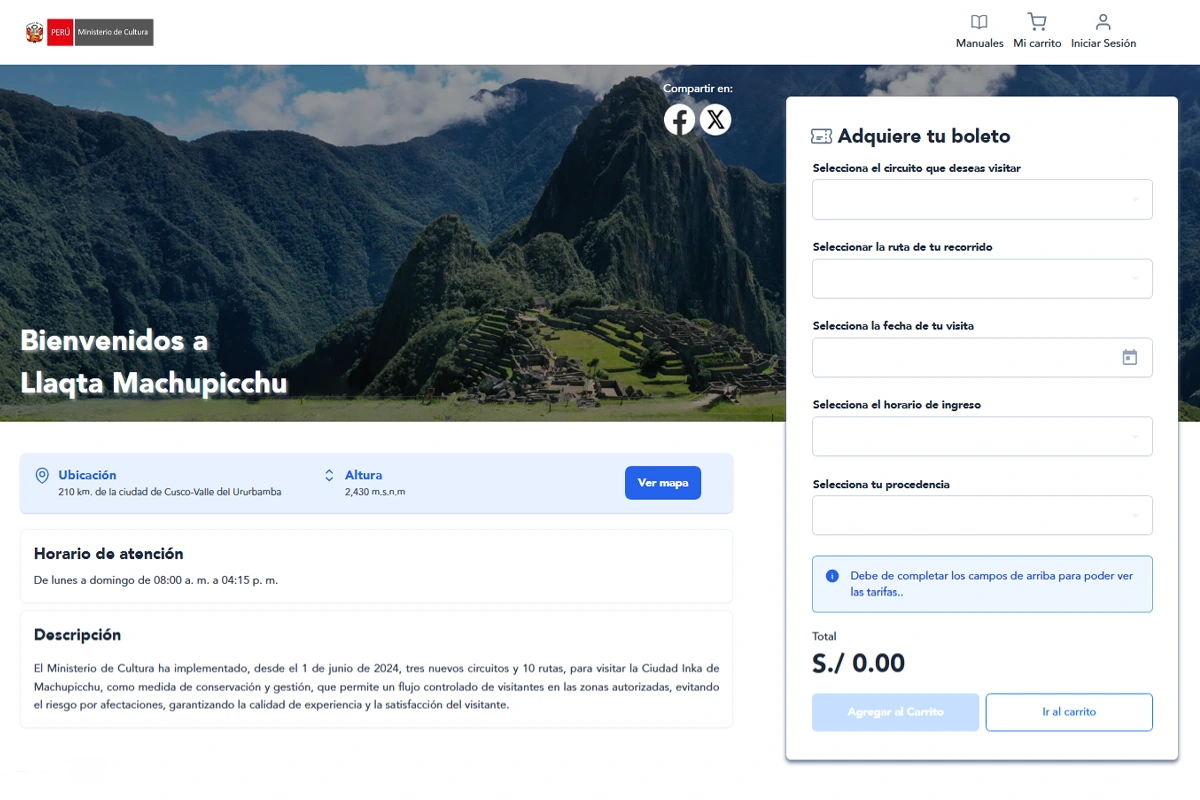
- When paying for your tickets, consider at least a 3% card payment fee.
What to Do if Machu Picchu Tickets Are Sold Out
If the Machu Picchu ticket you want is sold out, you can choose another similar circuit or go to the Machu Picchu ticket office in the town of Aguas Calientes.
Important: In-person entrance ticket sales for Machu Picchu in Aguas Calientes are limited to 1,000 entries per day. These spots are distributed among all available routes and circuits to visit the citadel.
Machu Picchu Tickets: Common Purchase Mistakes
1. Buying from Unofficial Websites
Before making your purchase, make sure your Machu Picchu ticket is bought through the official channel of the Ministry of Culture or through an authorized agency.
2. Leaving Your Purchase Until the Last Minute
The most popular routes usually sell out quickly, especially during the high season or when the visit date is very close. For this reason, it is best to book your tickets in advance, especially if you want to access Circuit 2 or a specific route.
3. Not Checking Which Circuit You Are Buying
Machu Picchu has different circuits and routes, and they do not all offer the same experience. Some routes focus on panoramic views, others enter the citadel, and others include additional hikes. Before paying, carefully check the circuit, route, date, and entry time.
4. Thinking All Tickets Include the Classic Photo
Not all tickets allow you to get the classic panoramic view of Machu Picchu. Some routes, such as those in Circuit 1, are more focused on panoramic viewpoints, while others allow you to explore the inside of the citadel or include additional hikes. Before buying, make sure the ticket includes the type of view or experience you want.
5. Choosing a Time That Does Not Match Your Itinerary
Your entry time should be coordinated with your train arrival and departure times, the bus ride up and down, the duration of your visit inside Machu Picchu, meal breaks, time to collect your belongings, and even the time you may want to spend buying souvenirs before returning to Cusco. Remember that Aguas Calientes does not have urban transportation, so getting around town is done entirely on foot.
6. Entering Your Personal Information Incorrectly
A mistake in your name, passport number, DNI, identity card, or residence card may cause problems when entering Machu Picchu. Have your documents ready when booking and carefully review all the information before making the payment.
7. Buying with a Different Document Than the One You Will Bring on the Day of Your Visit
You must arrive with the same document used during the purchase, whether it is a DNI, foreign resident card, identity card, or passport, depending on your case. If you renewed your document after making the reservation, it is recommended to bring both the old and the new document.
8. Not Checking the Requirements for Special Rates
If you want to access a special rate as a student, a Peruvian person with a disability, or a Peruvian war veteran, you must bring an official document that proves your status on the day of your visit. For students, it is important to present the original document issued by the university.
9. Assuming In-Person Purchase Guarantees Immediate Entry
In-person purchase of Machu Picchu tickets is subject to limited availability. In addition, last-minute purchases are usually assigned for entry starting the following day, so they do not always guarantee same-day access.
10. Buying Separate Tickets for the Same Group
If you are traveling as a couple, family, or group, make sure everyone has the same circuit, route, and entry time. This way, you can visit Machu Picchu together and enjoy the experience without being separated during the tour.
11. Not Saving Your Ticket and Purchase Receipt
It is always recommended to carry a digital copy of your ticket and, if possible, a printed copy as well. This can help avoid problems caused by poor signal, low battery, or difficulty accessing your email on the day of your visit.
12. Not Asking for Assistance When You Have Little Time or Limited Availability
If your travel date is close or Circuit 2 is sold out, an agency or specialized advisor can help you choose the best available alternative based on your itinerary, interests, and physical condition.
13. Trusting Resellers or False Promises
Be careful with unverified people or agencies that promise to get Machu Picchu tickets even when they are sold out.
In many cases, they may deny responsibility at the last minute. For this reason, it is always important to verify credentials, check real reviews, and request information through official channels or authorized agencies.
Entry Points to Machu Picchu
There are two official entrances to Machu Picchu: Intipunku and the main entrance.
Entry Through the Inca Trail
This is the historic entrance used by hikers who complete the Classic Inca Trail or the Short Inca Trail, entering Machu Picchu through the Sun Gate, also known as Inti Punku.
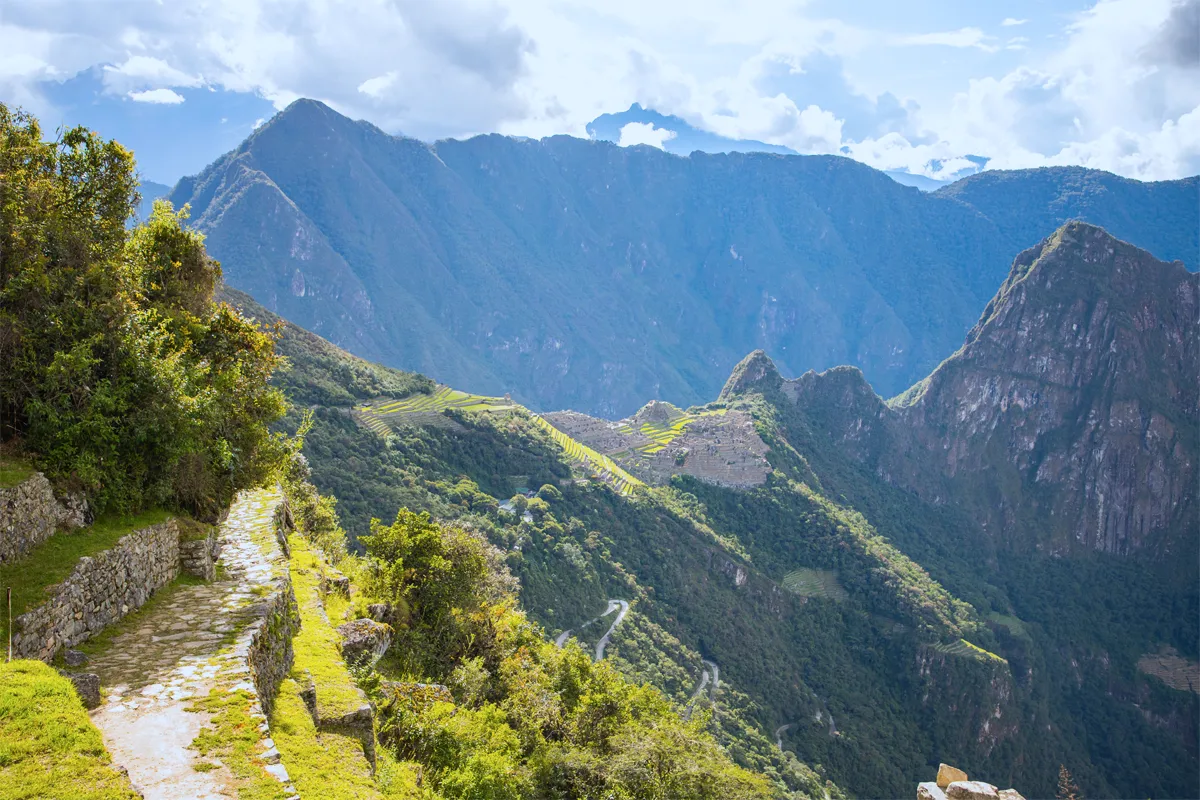
The Inca Trail ticket includes, by default, access through Circuit 1 Panoramic from Intipunku.
Main Entrance
It is the modern access point to Machu Picchu and is located next to the bus stop, where visitors arrive and depart when traveling to and from the town of Aguas Calientes. Most travelers enter through this access point, whether they arrive by bus or on foot from the town.
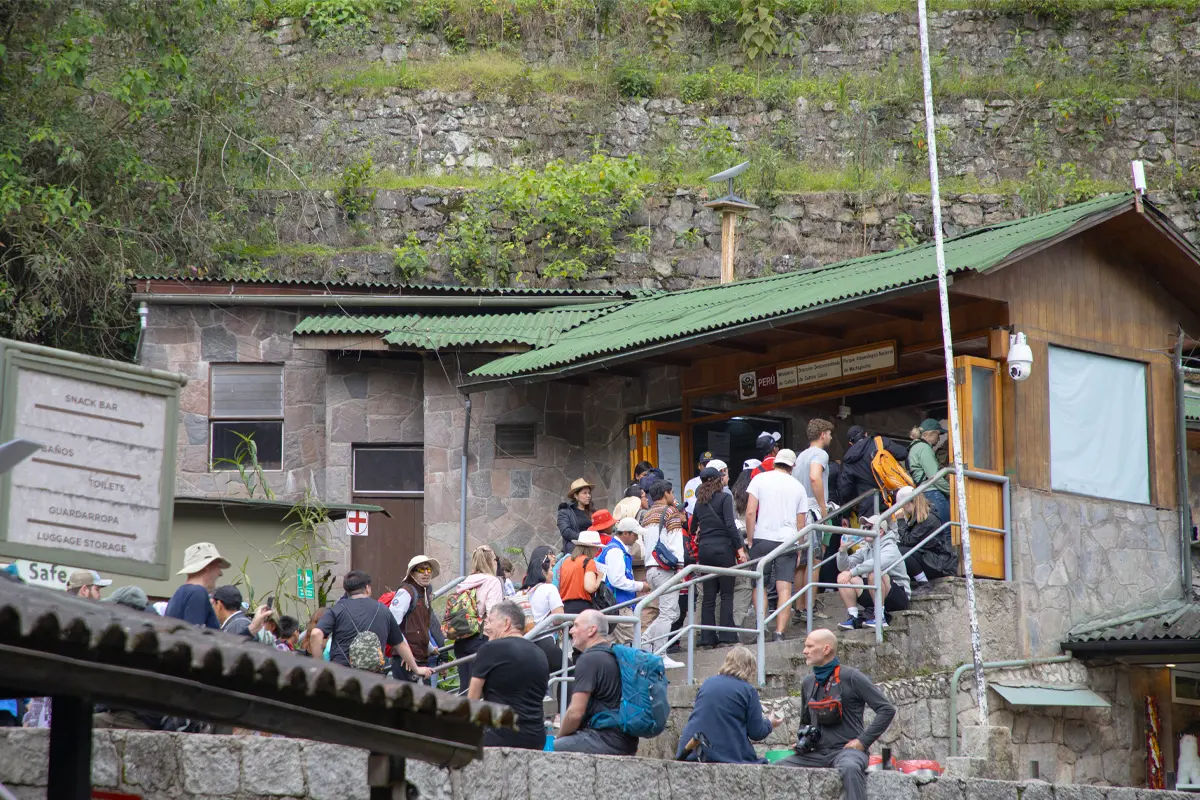
Important: restrooms, luggage storage, and food services are available only near the main entrance. There are no restrooms or other services along the Machu Picchu route.
Check points at Machu Picchu
Machu Picchu ticket checkpoints are located at different entrances and trails throughout the sanctuary. At these points, staff verify the ticket’s validity, entry time, and, in some cases, specific access to the mountain routes.
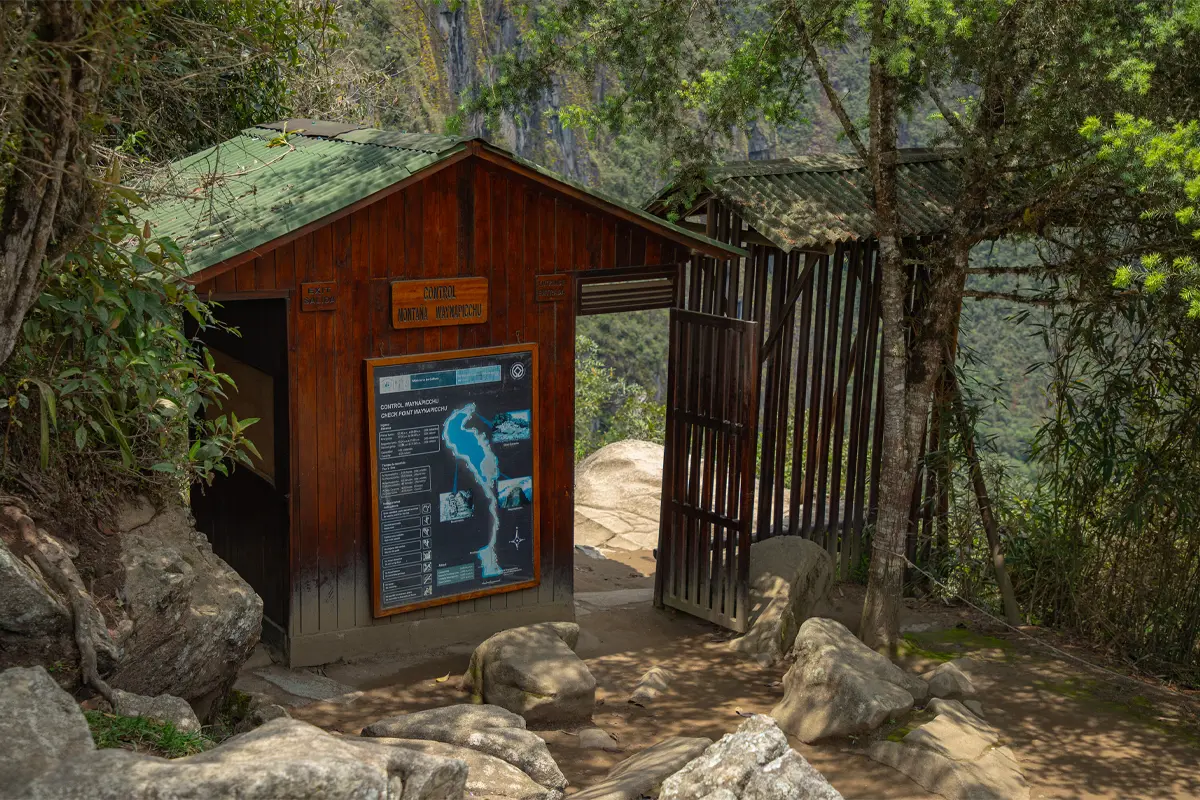
Intipunku Checkpoint:
The Intipunku checkpoint is located along the Inca Trail, about one hour before reaching the Sun Gate. Here, tickets are checked for travelers who completed the Classic Inca Trail or the Short Inca Trail.
Main Entrance Checkpoint
The main entrance is the most commonly used checkpoint for visitors arriving at Machu Picchu from Aguas Calientes. Here, staff check and validate the main entry time shown on the entrance ticket.
Control Points Inside Machu Picchu
There are additional control points beyond the main entrance, especially important for travelers whose Machu Picchu ticket includes a hike. These checkpoints are located inside the complex and are strict with entry times, especially for the mountain hikes in Machu Picchu.
In total, there are four internal control points in Machu Picchu:
- To the South:
- Machu Picchu Mountain checkpoint for Route 1-A.
- Intipunku checkpoint for Route 1-C.
- Inka Bridge checkpoint for Route 1-D.
- To the North:
- Waynapicchu Mountain checkpoint for Routes 3-A, 3-C, and 3-D.
Machu Picchu Checkpoints
Machu Picchu Entry Tolerance
The main entrance checkpoint has an entry tolerance period, which may vary depending on the tourism season at Machu Picchu:
- High season (June 19 to November 2 and national holidays):
- 45 minutes of tolerance after the entry time shown on the ticket.
- Low season (rest of the year):
- 30 minutes of tolerance after the entry time shown on the ticket.
- Mountain routes (Huayna Picchu, Huchuy Picchu, and Machu Picchu Mountain): There is no entry tolerance.
Entry Tolerance for the Machu Picchu Mountains
If your ticket includes a mountain hike inside the sanctuary, keep in mind that there is no entry tolerance. For this reason, you must allow enough time to reach the second checkpoint, which is usually one hour after the main entry time shown on your ticket. This checkpoint is located in the area where the trails split toward each route.
The routes that usually have this second checkpoint are:
- Route 1-A: Hike to Machu Picchu Mountain
- Route 3-A: Hike to Huayna Picchu Mountain
- Route 3-D: Hike to Huchuy Picchu Mountain
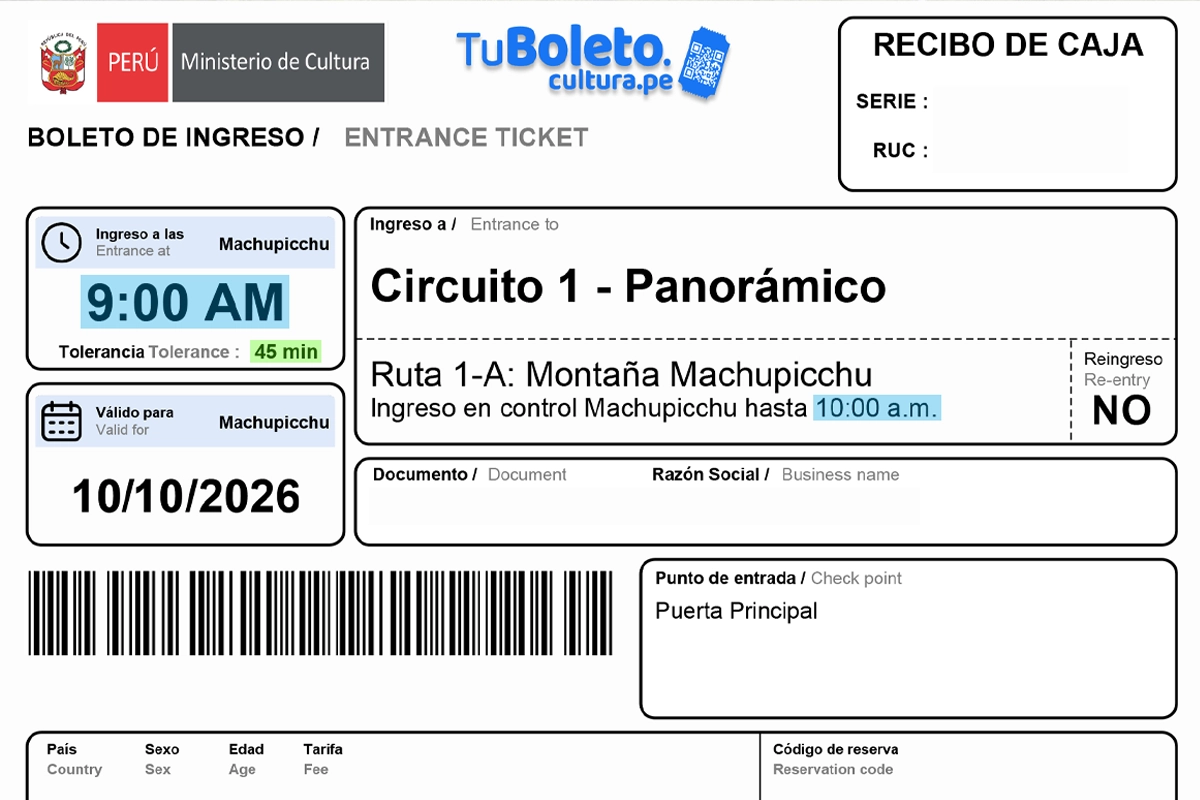
Example image: Main entry time to Machu Picchu: 9:00 a.m., with a 45-minute tolerance period (low season); entry to the Machu Picchu Mountain hiking trail: 10:00 a.m.
Machu Picchu Visitor Regulations
The “Regulations for the Sustainable Use and Tourist Visits for the Conservation of the Inka City of Machu Picchu” were created in 2017 to protect and promote the sustainable use of this Cultural and Natural World Heritage Site, recognized by UNESCO.
The Machu Picchu visitor regulations establish the conditions that all visitors must follow during their visit. The main restrictions include:
Prohibited Items
- Visitors are not allowed to enter or use items that may affect safety, conservation, or the overall experience inside Machu Picchu, such as aerosols, food, alcoholic beverages, drugs, weapons of any kind, musical instruments, megaphones, speakers, banners, signs, posters, umbrellas, sun umbrellas, portable seats, tripods, heavy camera supports, or large selfie sticks and phone extensions.
- Animals, baby strollers, high heels, and clothing intended for advertising purposes are also not allowed. Baby carrier backpacks are permitted.
Prohibited Conduct
- During the visit, it is forbidden to perform actions that disturb order, put the conservation of the site at risk, or affect the experience of other visitors. This includes littering, feeding animals, smoking, vaping, causing disturbances, running, jumping, shouting, whistling, singing, clapping, or making loud and disruptive noises.
- Visitors are also not allowed to change circuits or enter unauthorized routes, climb on or lean against the walls, disturb, collect, or remove native flora and fauna, undress, wear costumes, or fly drones in the area.
Failure to Comply with the Regulations
- Visitors who fail to comply with any of these regulations may be immediately removed from the site, along with their guide and accompanying group members.
Choosing the right Machu Picchu ticket depends on your travel date, availability, fitness level, and the type of experience you want to enjoy. Before booking, carefully check the circuit, route, entry time, and current rules to avoid any setbacks.
If you are still not sure which ticket best fits your trip, you can contact us, and we will help you choose the most convenient option so you can enjoy Machu Picchu with greater peace of mind.
Machu Picchu Tickets FAQs
What are Machu Picchu’s opening hours?
Machu Picchu is open every day from 6:00 a.m. to 5:00 p.m. However, if you want to hike Huayna Picchu Mountain, you should book your ticket in advance, as only 350 tickets are available per day and they usually sell out quickly!
Do I need a tour guide to visit Machu Picchu?
According to Machu Picchu regulations, visitors need an authorized tour guide to enter Machu Picchu. Although some people enter without a guide, we strongly recommend booking a guided tour.
A good guide will help you understand the different buildings and areas of Machu Picchu, share stories and legends about the site, and answer any questions you may have. If you have limited time, express tours are also available and cover the main highlights in a shorter visit.
Can I change the date of my Machu Picchu ticket?
No, the date cannot be changed once the ticket has been purchased. Tickets are non-transferable and non-refundable, so it is very important to plan your visit carefully.
Do I need to bring my passport or ID to visit Machu Picchu?
Yes, you must bring your passport or a valid identity document when visiting Machu Picchu. Your ID will be checked at the entrance to make sure the name on your ticket matches your document.
Are there age restrictions to visit Machu Picchu?
There are no specific age restrictions to visit Machu Picchu. However, visitors under 17 years old may access discounted tickets. It is best to check the official website or ask an authorized travel company for specific details.
When is the best time to book Machu Picchu tickets?
It is recommended to book your tickets as early as possible, especially if you plan to visit during the high season (June 19 to November 2 and national holidays). Tickets can sell out quickly, so securing your spot in advance is always the best option.
Do children need a ticket?
Children under 3 years old enter for free, while children aged 4 and above need a ticket. All minors must be accompanied by an adult.
Can I buy more than one Machu Picchu ticket for the same day?
Yes, you can buy more than one ticket for the same day. Just make sure to choose different entry times so you can make the most of your visit.
On which days is Machu Picchu free?
Entry to Machu Picchu is free only for Cusco residents, who can access this benefit on Sundays.
Even so, advance booking and visit planning are still required, just as they are for foreign visitors, because these entries share the same general availability for access to the Inca citadel.
Are there restrooms inside Machu Picchu?
There is only one restroom area located at the main entrance to Machu Picchu (it costs 2 soles). There are no restrooms inside the archaeological site, so you should use them before entering.
Machu Picchu Mountain Tickets: Check Availability Now
Heads up: availability updates in real time and may change without notice. Seeing open slots doesn’t secure a booking until your reservation is confirmed.

Add new comment