



Peru currency is the Peruvian sol (currency code: PEN, symbol: S/). If you’re travelling to Peru, the big questions are simple: how much cash you really need, where to get the best exchange rate, and when cards will (and won’t) work. In this guide, you'll find everything you need to know about money and currency in Peru, from its history to its current use, along with useful tips for travelers.
What is the currency in Peru?
The official money in Lima and throughout Peru is the "sol" (PEN). The name comes from the "sol de oro," which was used during colonial times. Although it has undergone several transformations, the current sol has been the official currency since 1991. Before that, the "inti" was the national currency, but due to inflation, it was replaced by the "nuevo sol," which was simply renamed "sol" in 2015.
The adoption of the sol marked the beginning of a period of economic stability in the country. Over the years, the currency has had various designs, with banknotes and coins depicting Peru's cultural, historical, and natural aspects.
- Official currency: Peruvian sol
- Currency code: PEN
- Symbol: S/
- Banknotes: 10, 20, 50, 100, 200 soles
- Coins: 10, 20, 50 céntimos & 1, 2, 5 soles
- Best payment setup: A debit card for ATMs + a backup card + some small cash
- Rule of thumb: Outside big cities, assume cash is needed (markets, taxis, small shops).
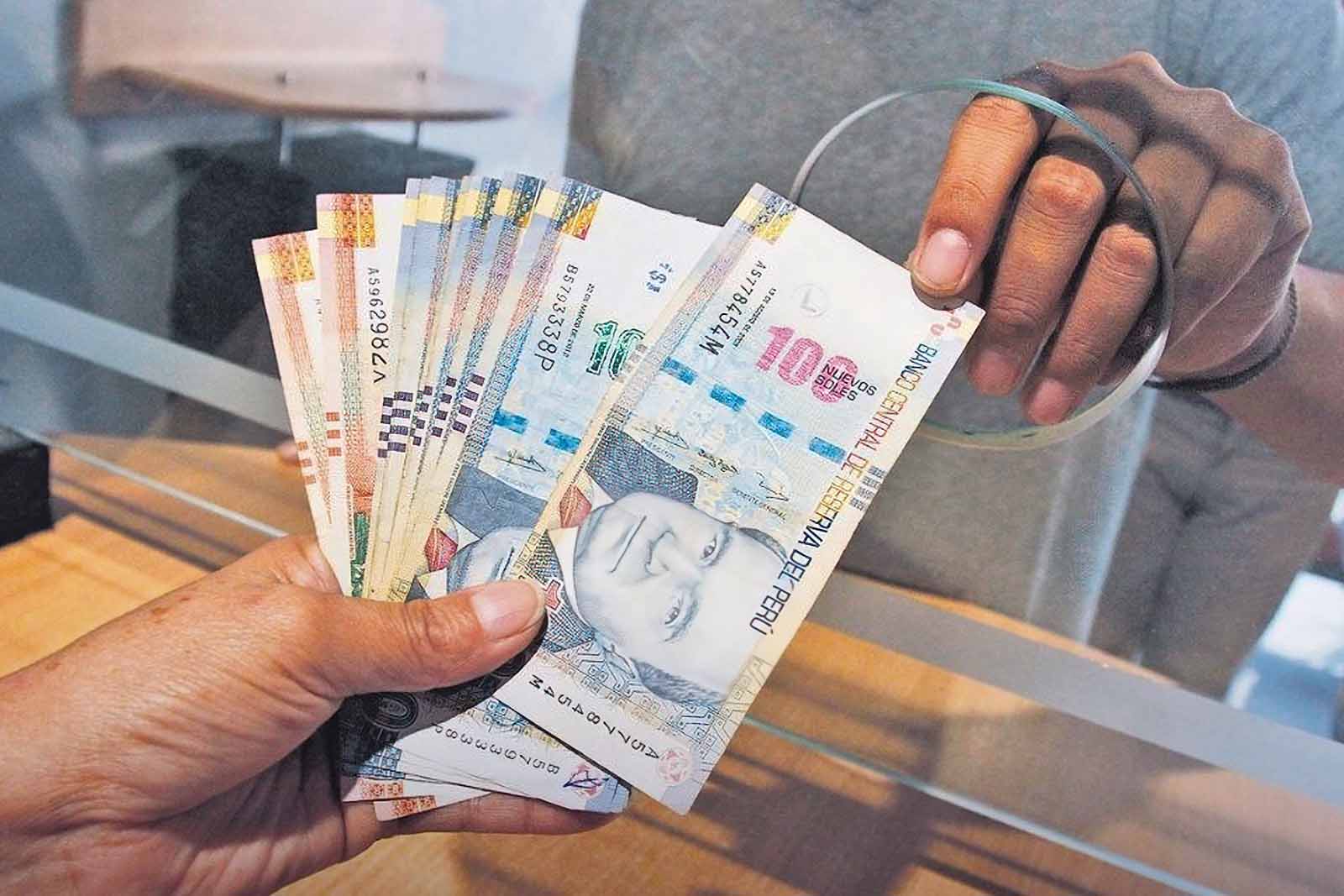
Denominations of the sol: Banknotes and currency of Peru
Today, the sol comes in a variety of banknotes and coins:
Coins: The coins in circulation includes 10, 20, and 50 céntimos, being the monetary unit the 1 Sol coin. From this, the denomination continues in 2, and 5 soles. Peruvian money also features cultural and natural symbols, such as the vicuña and the potato.
| 10 Céntimos | 1 Sol | 2 Soles |
| 20 Céntimos | 5 Soles | |
| 50 Céntimos |
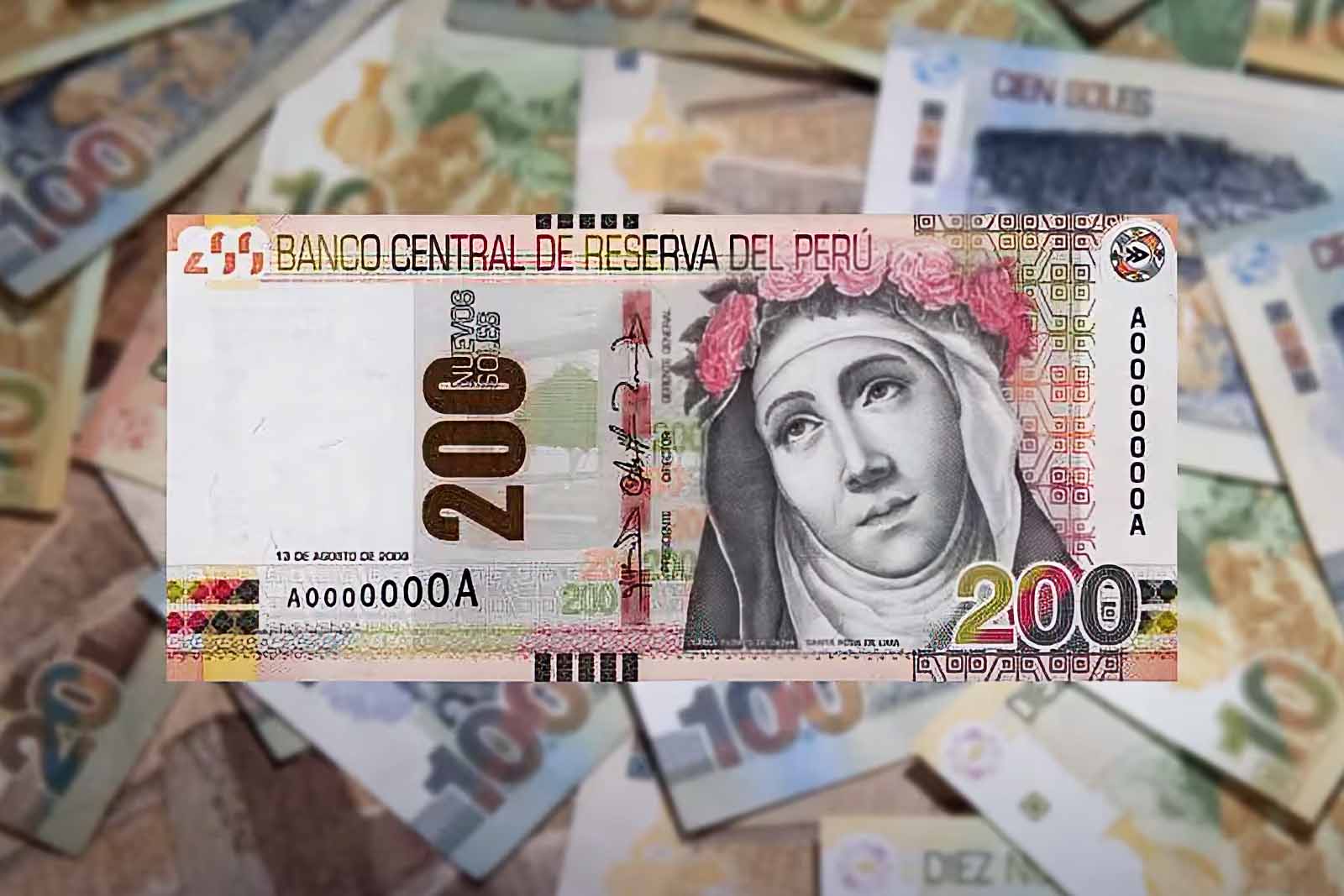
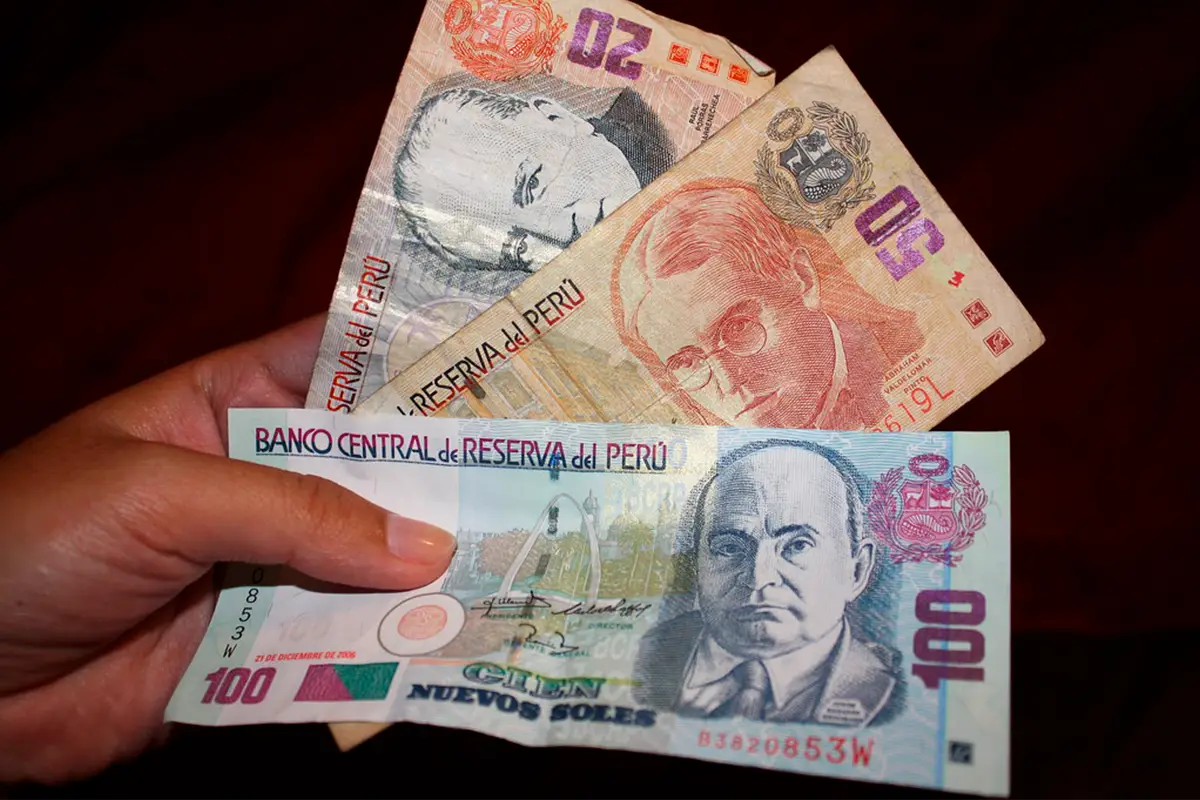
Banknotes: Denominations include 10, 20, 50, 100, and 200 soles. Each note features important historical figures like Chabuca Granda, Jose Maria Arguedas, and Maria Rostorowski, as well as iconic landscapes and archaeological sites. You can check the banknotes in the official web of Central Reserve Bank of Peru.
Denomination | Figure Printed on the Front | Figure Printed on the Back |
| 10 Soles | Chabuca Granda (Distinguished composer of Criollo waltzes) | Vicuna |
| 20 Soles | Jose Maria Arguedas (Renowned Indigenous writer) | Andean condor |
| 50 Soles | Maria Rostorowski (Prominent Peruvian historian) | Amazon jaguar |
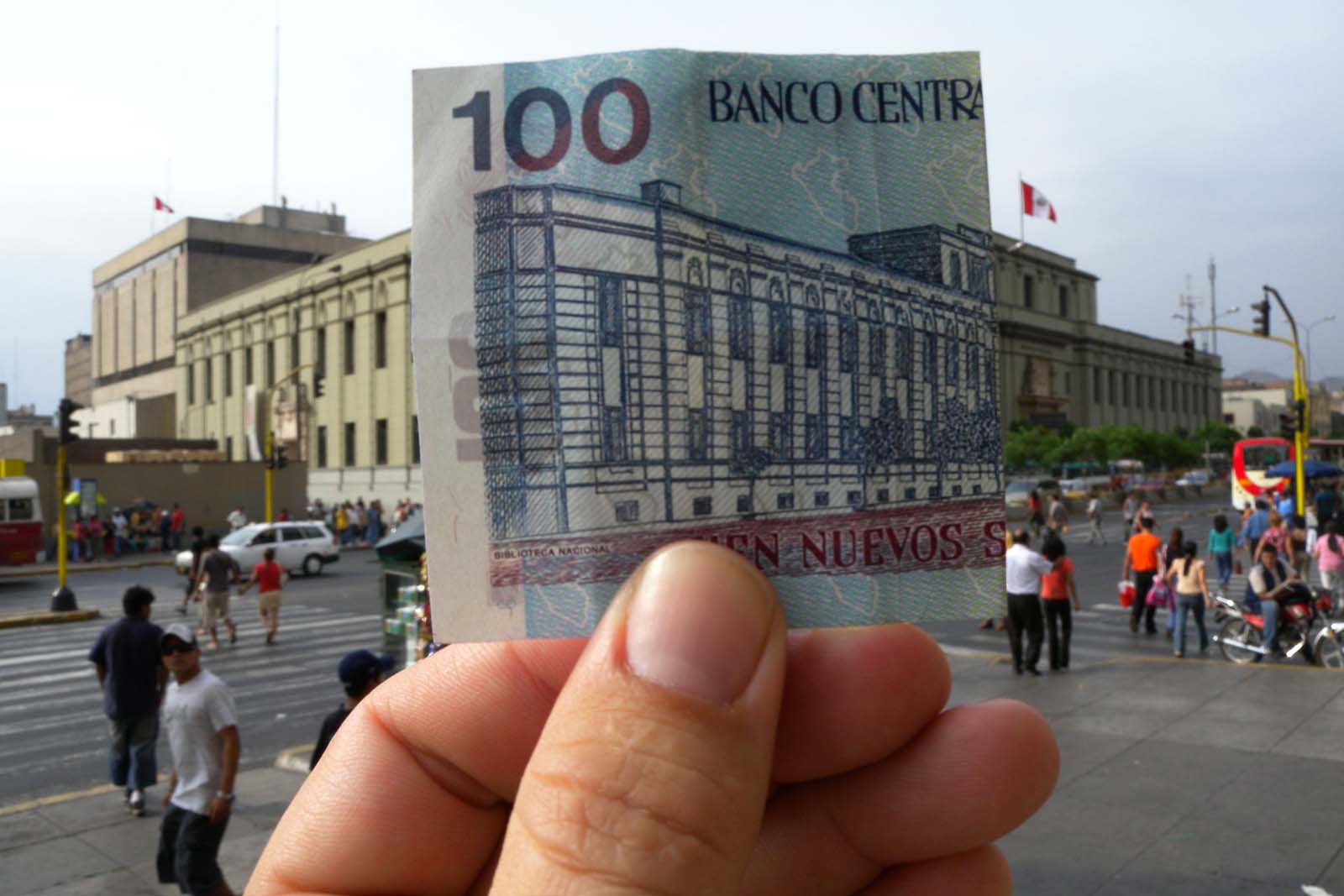
| 100 Soles | Pedro Paulet (Pioneer of aerospace aviation) | Spoonbill Hummingbird |
| 200 Soles | Tilsa Tsuchiya (Award-winning Peruvian painter and engraver) | Cock of the rock and the Beautiful Flower of Abanquina |
Commemorative currency in Peru
In addition to regular money, Peru issues a commemorative currency that celebrates historical events, significant figures, and cultural heritage. Collectors highly value these coins, which can be great souvenirs for visitors. Check every commemorative coin in the Central Reserve Bank of Peru's coins site.
How is currency from Peru used in daily life?
The sol is widely used across Peru. While the country is becoming increasingly digital in terms of payments, cash is still the preferred method in local markets, public transportation, and small shops. Lower denomination bills and coins are commonly used for smaller purchases, while higher-value bills are more typical for large transactions or in more formal commercial establishments.

Where to exchange money in Peru?
Exchanging money in Peru is pretty straightforward, especially in tourist areas and city centers, where you'll find plenty of exchange houses. However, refrain from exchanging money on the street, as it's not safe to handle cash in crowded places.
ATMs are also a convenient option, as most of them offer withdrawals in US dollars and soles. However, exchange rates can vary, and international banks often charge a fee per transaction.
Pro Tip » Exchange houses accept various currencies, but if you're carrying British pounds, it's best to exchange them in Lima since it can be challenging to do so elsewhere.
Tips for using money in Peru
If you plan to visit Peru, here are some valuable tips:
Currency exchange: To avoid issues with counterfeit bills, it's recommended to exchange money at authorized exchange houses or banks. Airports also offer exchange services, though at less favorable rates.
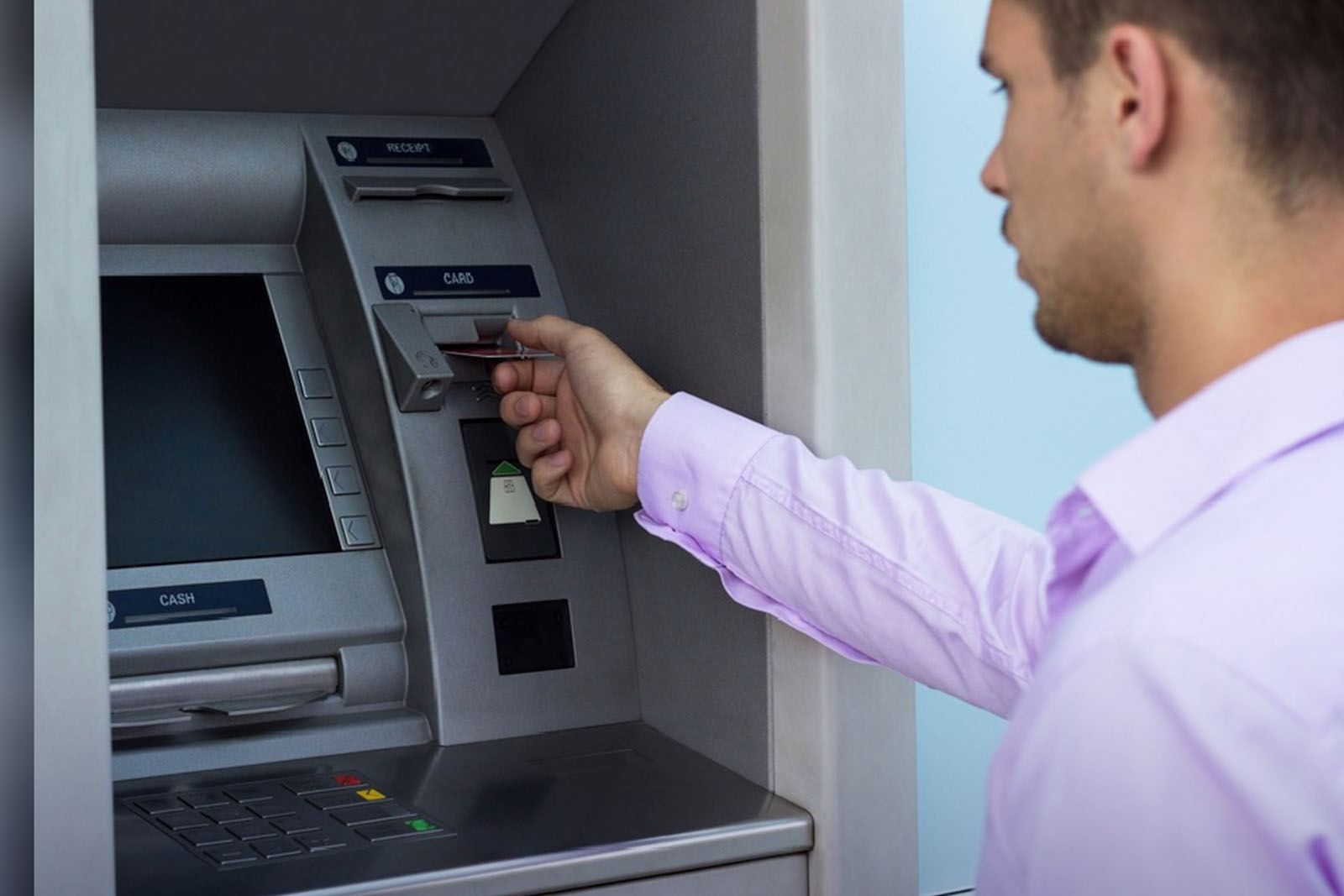
ATMs: ATMs are available in almost every city, and they allow you to withdraw soles directly from your bank account. However, be aware of the fees your bank may charge.
Credit/debit cards: These are widely accepted at most tourist establishments, hotels, and restaurants, but it's always handy to have some cash, especially in rural areas.
Be cautious with damaged currency
When planning your trip to Peru, it's essential to know that many places will only accept bills that are in good condition. To avoid issues when making payments, try not to accept torn, heavily worn, or taped-up bills.
Damaged US dollars are also not accepted in Peru. Merchants will reject foreign bills that are dirty or damaged, so it's best to carry clean bills, both in soles and dollars. If you end up with damaged bills, you can exchange them for free at the Central Reserve Bank (BCR) or the Banco de la Nación in any city.
How to spot counterfeit Peruvian money
Whether handling soles or dollars, be vigilant about counterfeit bills, which can look very similar to real ones. However, key differences exist in texture, colors, and design. Always check the money you receive, whether in a store or an exchange house.
Peruvian soles come in denominations of 10, 20, 50, 100, and 200 soles, with the 200 soles note being the least common and sometimes not accepted.
To identify a counterfeit bill, compare its texture with that of an authentic one. Check for details like watermarks, hidden figures that only appear when held up to the light, and, most importantly, the security strip, which should change color depending on the light and angle. While it's a common issue, it doesn't mean it will happen to you. If you notice anything unusual, don't hesitate to ask for a different bill.
Currency and digitalization in Peru
With the advancement of technology, Peru has begun adopting digital payment methods like e-wallets and mobile apps. While cash is still widely used, more Peruvians and tourists are opting for digital payments, making transactions easier in cities and tourist areas.
Tipping in Peru
While using credit cards is recommended in Peru, it's also helpful to carry some cash, especially for tipping. Tipping is less common in Peru, so having local currency on hand can be convenient. You can't always add a tip to your bill, so keep that in mind. Generally, about 10% of the service cost is left as a tip.

Can you pay with credit cards in Peru?
Yes, you can! Many places even allow you to pay in US dollars or soles. Just be aware that fees might apply. If you're using your credit card, check the amount on the POS before confirming the purchase.
Extra Tip » Carry a copy of your card in case of an emergency. For many travelers, using credit cards instead of cash is more convenient for international trips.
What about the US dollar in Peru?
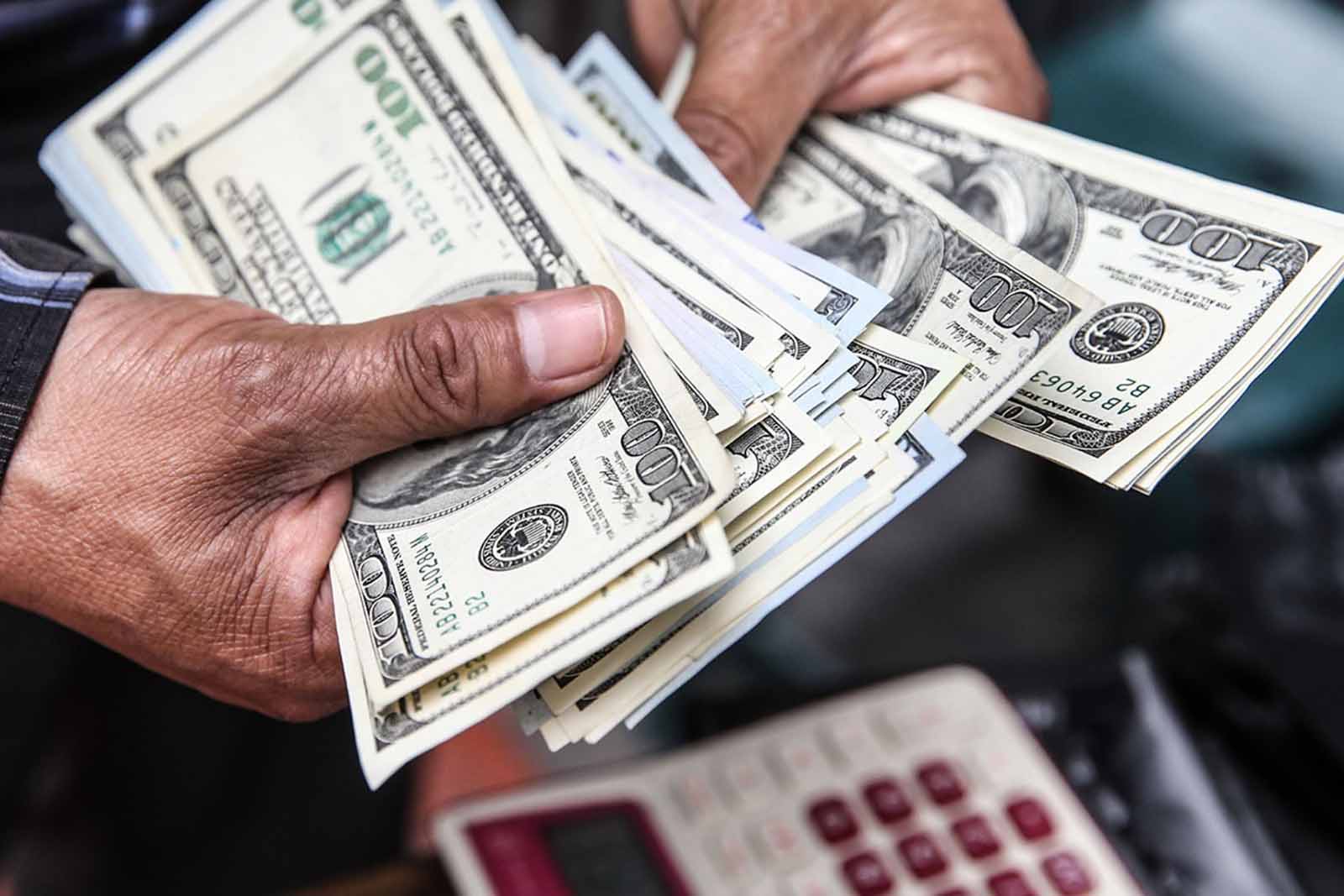
The US dollar is accepted in some parts of Peru, especially in tourist areas and larger businesses. However, it's advisable to use soles to avoid confusion with exchange rates. Many prices are listed in soles, so paying in dollars might result in an unfavorable exchange or a change in soles.
How much do you need to travel to Peru?
Transportation:
- Taxi (short trip within the city): S/ 10 - S/ 20
- City bus: S/ 1 - S/ 3
- Interprovincial bus (e.g., Lima to Cusco): S/ 100 - S/ 200
- Flight (Lima to Cusco): S/ 200 - S/ 600
Accommodation:
- Hostel (per night): S/ 30 - S/ 70
- Budget hotel (per night): S/ 100 - S/ 200
- Mid-range hotel (per night): S/ 200 - S/ 400
- Luxury hotel (per night): S/ 500 - S/ 1000+
Meals:
- Daily menu at a local restaurant: S/ 10 - S/ 20
- Dinner at a mid-range restaurant: S/ 50 - S/ 100 per person
- Dinner at a luxury restaurant: S/ 150 - S/ 300 per person
- Coffee or juice at a café: S/ 8 - S/ 15
- Bottle of water (1 liter): S/ 2 - S/ 5
Tourist entries and activities:
- Entrance to Machu Picchu (citadel only): S/ 152
- Entrance to Machu Picchu + Huayna Picchu Mountain: S/ 200
- Guided tour of Machu Picchu (group): S/ 100 - S/ 150
- Cusco Tourist Ticket (16 archaeological sites): S/ 130
- Entrance to Humantay Lake (trek): S/ 10 - S/ 20
- Nazca Lines tour (flyover): S/ 350 - S/ 500
Read More » Machu Picchu tickets
Shopping and souvenirs:
- Handicrafts (textiles, ceramics, etc.): S/ 30 - S/ 100
- Alpaca clothing (sweaters, scarves): S/ 100 - S/ 300
- Peruvian coffee (250g bag): S/ 15 - S/ 30
- Artisan chocolate (100g bar): S/ 10 - S/ 20
Tipping:
- Restaurants: 10% of the service cost
- Tour guides: S/ 20 - S/ 50 per day
- Hotel porters: S/ 5 - S/ 10 per bag
The impact of the currency for Peru on the economy
The money used in Peru has remained relatively stable compared to others in the region, contributing to Peru's economic stability over the past few decades. This stability has attracted foreign investments and sustained economic growth, reflecting the population's confidence in their currency.
Currency of Peru Facts
What is the official currency of Peru?
Peru's official currency is the Sol (S/), though it’s commonly just called "sol."
Is it better to bring dollars or soles to Peru?
Once in Peru, it's advisable to bring dollars and exchange them for soles. Dollars are widely accepted and easy to exchange in most cities.
Are credit cards accepted in Peru?
Yes, credit cards are accepted at most businesses, restaurants, and hotels in major cities. However, it's helpful to carry cash for smaller purchases and tips.
Is it safe to use ATMs in Peru?
Yes, it's generally safe, but for added security, use ATMs located inside banks or shopping centers. Always check that the ATM doesn’t have any unusual devices attached.
Can I pay in dollars in Peru?
Some tourist spots and hotels do accept dollars, but most transactions are done in soles. If you pay in dollars, you'll likely receive your change in soles.
What is the exchange rate for the dollar to sol?
The exchange rate fluctuates but is generally around S/ 3 to S/ 4 per dollar. Check the current rate before exchanging money.
Should I tip in soles or dollars?
It's preferable to tip in soles. The usual amount is 10% in restaurants.
Can I use foreign debit cards in Peru?
Yes, you can use international debit cards at most ATMs and businesses, as long as they're enabled for international transactions.
The currency in Peru South America: A symbol of identity
The money in Peru, the sol, is not just a means of exchange but a reflection of the country's rich history and culture. From its colorful banknotes to its symbolic coins, the sol is a cornerstone of daily life in Peru. Whether you're planning a trip or just curious about this fascinating country, understanding its currency is a key step. Are you ready to explore Peru with soles in your pocket?


Add new comment