



If hiking the Inca Trail is on your bucket list, and you're gearing up for this challenge, you'll need to get ready for a few surprises along the way. Think unpredictable weather and a mix of high and low altitudes that can really throw your body for a loop. Time and availability also play a crucial role. So, what's the best way to prep for one of the best-rated hikes in the world?
The list can be long, but based on our experience, there are absolute "key" essentials to consider, whether you're a seasoned pro or a beginner. Ready to nail this adventure? Here are our top tips for hiking the Inca Trail!
1. Learn about Inca Trail regulations
We begin for the most important tips for hiking the Inca Trail. Access to this trail is carefully controlled by the Peruvian government to protect the route from overcrowding and erosion.
- Guides required: You cannot hike the Inca Trail on your own. You must book with a licensed tour operator.
- Limited permits: Only 500 permits are available each day, including around 200 hikers and 300 support staff such as guides, porters, and cooks.
- Book early: Permits for the high season, from May to October, often sell out six months or more in advance.
February closure: The Inca Trail closes every February for maintenance. - Closure in February: The Inca Trail closes every February for maintenance.
- Important documents (insurance, passport, and agenda). Your passport will be checked against your permit at several checkpoints along the route.
2. Check the Inca Trail 4 days Itinerary
Although there are different variations of the Inca Trail, the classic 4-day trek is the most popular and in-demand. The classic 2-day version also includes it. Below is the itinerary:
| Day | Distance & Elevation | Main Highlights |
| Day 1 | 11–14 km; about 350–550 m elevation gain | A gentle first day starting at KM 82, with views of the Patallacta/Llactapata ruins. |
| Day 2 | 12 km; about 1,200 m elevation gain | The hardest day, with a steep climb to Warmiwañusca, also known as Dead Woman’s Pass, at 4,215 m. |
| Day 3 | 13–16 km; about 1,000 m descent | The longest day, mostly downhill through cloud forest, visiting Sayacmarca and Wiñay Wayna. |
| Day 4 | 5 km; about 170 m elevation gain | An early start to reach Inti Punku, the Sun Gate, for the first views of Machu Picchu. |
3. Discover Inca Trail options and Alternatives
Find out which Inca Trail to choose. There are several different Inca Trail routes to choose from. They range from the classic, popular, and most sought-after 4-day Inca Trail to shorter versions. There are even alternative routes like the 4 days Salkantay trek or the Lares trek, which connect you to Machu Picchu via a train journey on the penultimate day.
- The Classic 4-day Inca Trail Tour is undoubtedly the best option because it ranks among the top ten treks in the world. Live a four-day experience walking where the Incas did and visiting the heritage ancient sites of this interesting civilization.
- Short Inca Trail (1–2 days): This route starts at KM 104 and takes you to Wiñay Wayna and the Sun Gate, without the tougher high-altitude passes of the classic trail.
- Ultimate Inca Trail Tour 5 days: See the Inca sites and hidden landscapes known by only a few. It is available every day with a minimum of two visitors.
- Salkantay Trek (5–7 days): A longer and more challenging option that reaches 4,630 m. It does not require an Inca Trail permit and is known for its glaciers, mountain views, and high-altitude landscapes.
- Lares Trek (3–5 days): A more relaxed and cultural route that passes through traditional Andean villages, making it a great choice for travelers interested in local life and scenery.
4. Acclimate and Prevent the Altitude Sickness
Soroche or altitude sickness can stop you from completing the Inca Trail. You won't feel anything if you are one of the lucky few, but others may feel really bad. Before you embark on your journey, your body must adapt to the altitude. Here are the most common signs of Soroche and how you can treat them:
- Headaches
- Dizziness
- Nausea
- Lack of oxygen
If you have heart or breathing issues, you should always consult with your doctor first. Follow these steps to avoid and prevent altitude sickness properly:
- Give your body time to adapt: Stay at least from two to three days in Cusco before hiking the Inca Trail. It is highly recommended to acclimate your body to the altitude and your lungs to the thin air
- Take a break: Try not to spend too much energy on your first day. A gentle City Tour Cusco is the perfect way to get started.
- Medical advice: Talk with your doctor before the trip about altitude sickness medication, such as Acetazolamide/Diamox, and check that your vaccines, including Typhoid and Hepatitis A, are up to date.
- Consider Diamox: It can be purchased without a prescription in Peru. We recommend taking it at night or in the early morning before your activities. Other options are Sorojchi Pills and Altivital.
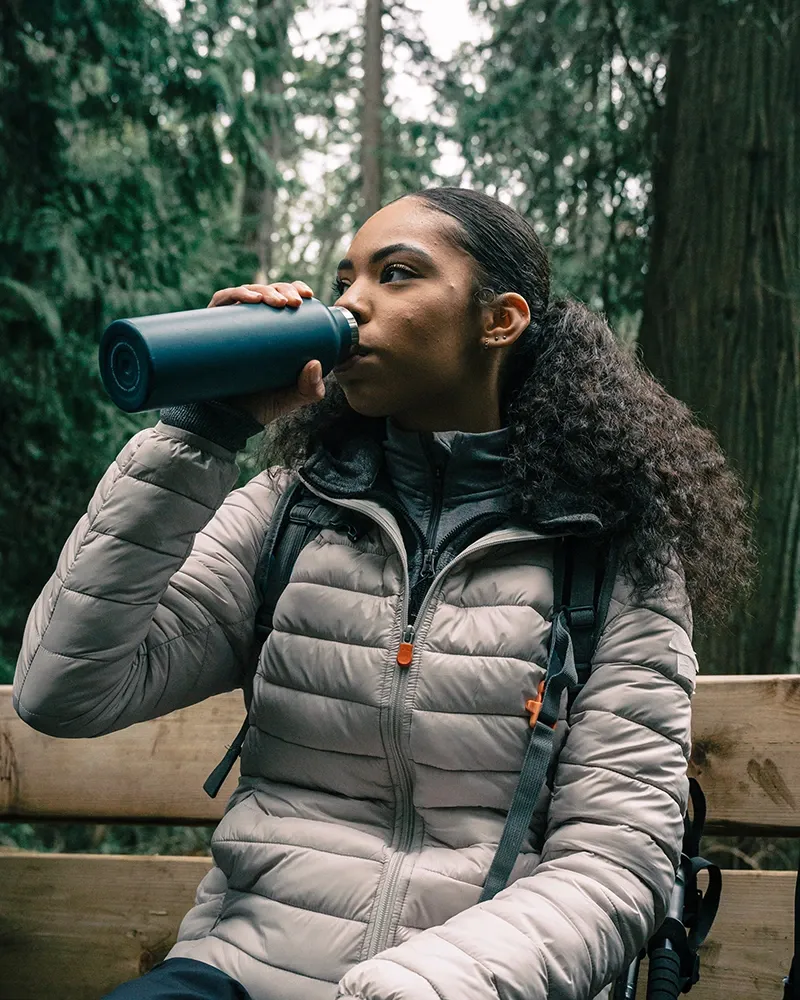
- Drinking Coca tea: Drink plenty of water and coca leaf tea. The Andean locals have historically utilized it for its anti-inflammatory properties that can help reduce the symptoms.
- Chewing Coca leaves: Like you would gum; the idea is to suck out their bitter flavor. But be careful, don't swallow them. When you feel they no longer have any flavor or the leaves are no longer as firm, spit them out.
 |  |
5. Train and Prepare physically before going on the hike
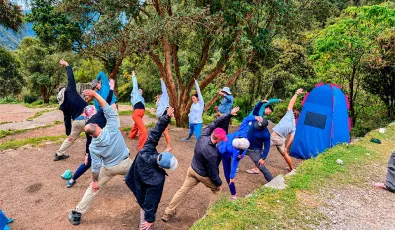
Among the best tips for hiking Inca Trail, this is the most important. The Inca Trail is a challenging hike, spawning almost 42 kilometers or 26 miles long. We're talking about the famous 4-day classic Inca Trail, but this does not exclude the 5-day version, or even the 1-day version. You'll go through some serious ups and downs that'll wow you with breathtaking views but also give your legs a workout. Here's the lowdown on getting your body ready for the challenge. The following advice should be practice 3 or 4 months before the trekking.
- Exercise focusing on cardiovascular endurance, leg strength, breathing to improve endurance. You can practice specifically on stairs and steep inclines.The Inca Trail hike has more than 10,000 stone steps. To prepare, train with weighted walks, lunges, and step-down exercises, especially for the steep downhill sections that can be tough on your knees.
- Consume a well-balanced diet.
- Maintain a positive mindset at all times.
- Drink plenty of water before and during your hike to stay hydrated.
- Get enough sleep to keep your mind sharp.
- You can rent hiking poles to reduce the strain on your knees.
Since you will be at high altitudes of above 4,000 meters (13,123 feet), it is also recommended that you carry out some short preparation walks before arriving in Peru. Take a look at this training schedule for hiking the Inca Trail.
6. Bring only the essentials to the Inca Trail
If you forget to pack batteries for your camera, you might miss capturing important moments. It's crucial to pack all the essentials, but at the same time, you don't want to carry too much weight while hiking. The tour operators usually bring camping gear, meals, porters, guides, and even the Inca Trail permits. Porters carry these things from campsite to campsite in a duffel bag in addition to your sleeping bag, sleeping mat, pajamas, toiletries, and any large jacket you wish to bring.
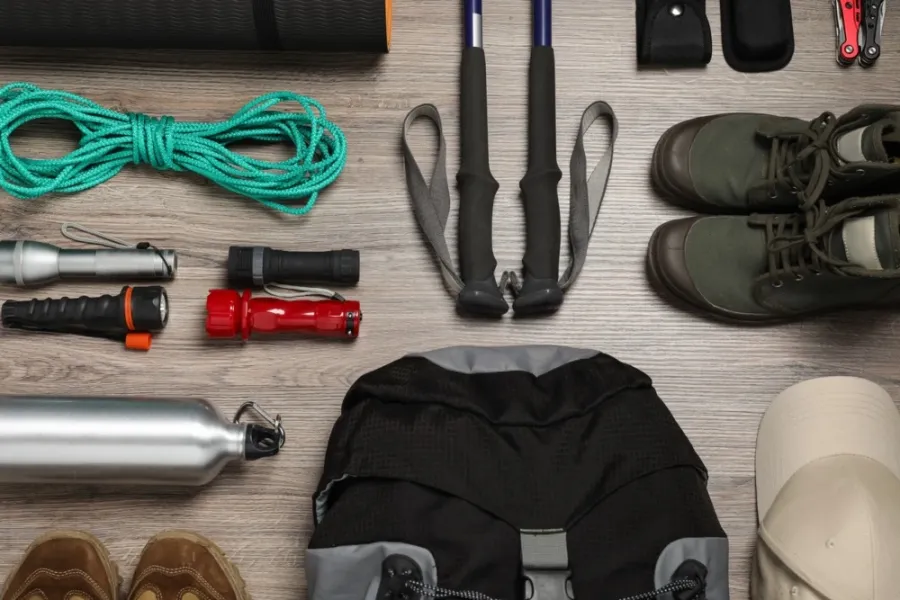
Keep your heavy luggage in your hotel storage or travel agency office; most offer it for free. You can carry a 30-40 liter daypack with the essential items to use during the day trek. The goal is to enjoy a fantastic time, so it's best to pack only what you need. Here are the absolute essentials:
- Bring comfortable, well-worn trekking boots.
- Bring light sandals or flip-flops for camp so your feet can rest after hiking.
- Gloves and sunglasses.
- Raincoat for rain.
- Rain ponchos are especially useful on the trail.
- Portable chargers for electronic devices.
- Dress in layers.
- Pack quick-dry base layers.
- A warm fleece or down jacket.
- Thermal underwear for chilly nights.
- Personal toiletries. Many toilets on the trail are basic squat toilets and may not have supplies.
- Medicines for headaches, stomach aches, and colds.
- Good quality backpack (light and small).
- A reusable water bottle of at least 2 liters, as disposable plastic bottles are not allowed.
- Trekking poles with rubber tips.
- Camera and extra batteries.
- Head flashlight.
- Snacks.
- Extra money for souvenirs.
- Air mattress.
Check out our Ultimate Inca Trail Packing List for a complete guide on what to pack for the Inca Trail.
Remember that...
You must do the Inca Trail through travel agencies authorized by the Peruvian government; you cannot do it on your own or alone.
7. Inca Trail on-trail strategy
- Pace: Walk at a slow, steady rhythm, even if you feel strong. Dead Woman’s Pass on Day 2 is the highest and most challenging section at 4,215 m. Moving too quickly here can cause fatigue or increase the risk of altitude sickness.
- Food: Try to eat regularly, even if the altitude affects your appetite. Bring high-energy snacks such as nuts or protein bars to give you extra fuel between meals.
- Porter etiquette: Always let porters pass safely. Step to the mountain side of the trail, not the cliff side, to avoid accidents. It is also helpful to carry small bills in soles for tipping porters and chefs on the final night.
- Connectivity: Do not expect phone signal or electricity during the trek. Bring a high-capacity power bank to keep your devices charged.
8. Choose an authorized travel agency
If you're wondering if you can go hiking the Inca Trail to Machu Picchu without a guide, the answer is no.
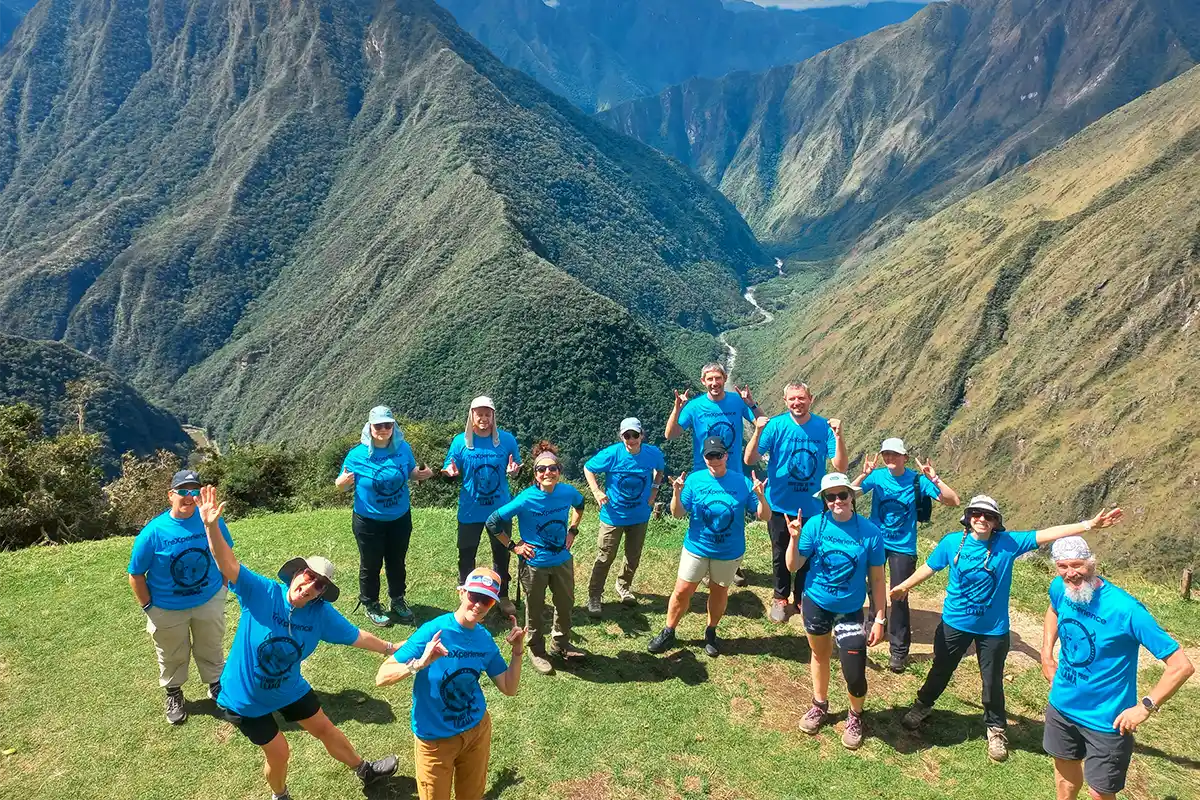
The Inca Trail is only available through a licensed travel agency. Because of its popularity in South America, they must take safety precautions and be able to provide fast assistance in the event of an accident.
That's why we recommend you look for a licensed agency that complies with all regulations and ensures your safety.
9. Book in advance and choose your preferred season
Remember that the Inca Trail is highly in demand, so book at least 4 to 5 months ahead of time. There are just 500 spots available per day, with only 200 reserved for tourists.
When is the best time to hike the Inca Trail?
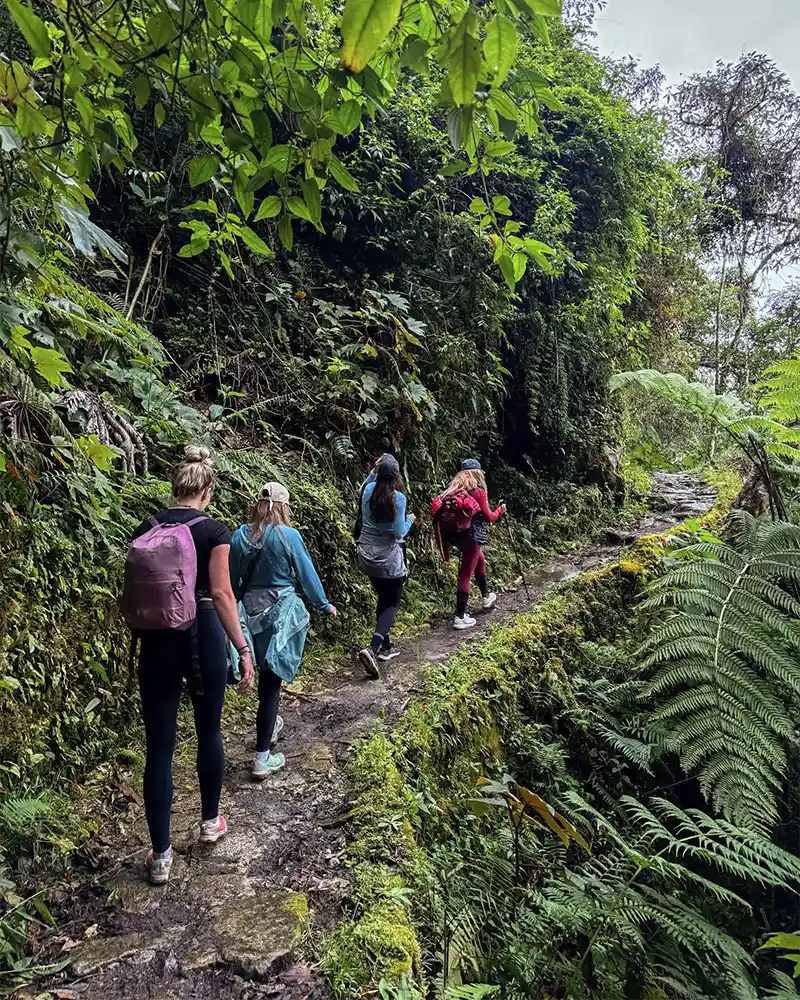
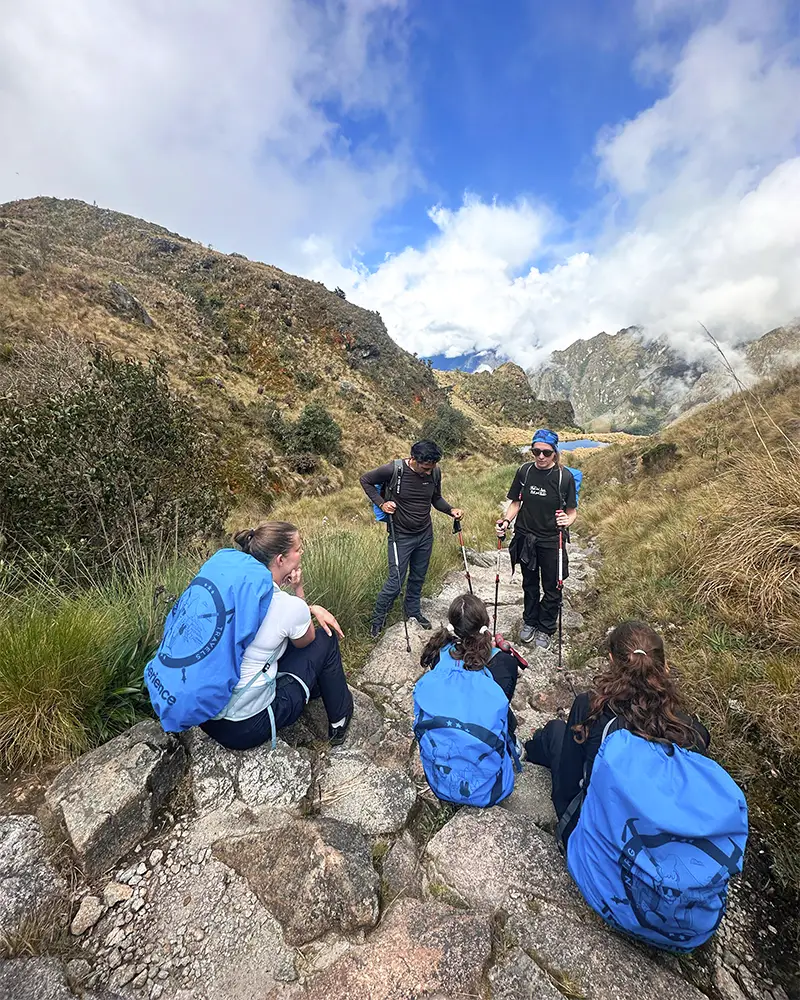
The sun shines from May to September (the highest tourist season), whereas October to April (the low tourist season) is rainy and watery. We recommend you book the Inca Trail during the intermediate seasons, immediately before or after the high season. We're talking about April, May, September, October, and occasionally November because the weather is less crowded and favorable.
 |  |
Take note
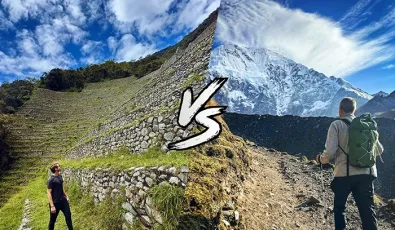
Another tip for walking the Inca Trail is to know the difference between hiking and trekking.
10. Get expert advice from our travelers
What better way to learn from those who have conquered the trail? Emily Rose took our Inca Trail in the past 2023 and was absolutely fascinated. Yet, she had to prepare for the trip like most travelers. Check out her 26 tips for the Inca Trail to find other specific and handy tips to know before you embark on the trip.
Final suggestions - Tips for Hiking the Inca Trail
Carry only what is essential and adjust to the altitude at least two days before the trip. Remember to choose an authorized agency and to book in advance. Now it's time to take advantage of these tips for hiking the Inca Trail to bring out the best of one of South America's most popular routes. See you on the road!

FAQs - Tips for hiking the Inca Trail
Which Machu Picchu circuit is visited after hiking the Inca Trail?
After completing the Inca Trail, you will enter Machu Picchu through a circuit assigned according to your ticket and availability. Before booking, confirm with your tour operator which route is included, whether it allows the classic photo, and how much time you will have inside the citadel.
What should I check during the briefing before starting the Inca Trail?
During the pre-trek briefing, check the departure time, luggage weight limit, expected weather, required documents, meeting point, included camping equipment, and what should go in your daypack. It is also the best time to ask about toilets, meals, walking pace, and what to do if you feel unwell on the trail.
How much cash should I bring for the Inca Trail?
Bring Peruvian soles in small bills for tips, snacks before or after the trek, toilets near the Machu Picchu entrance, drinks in Aguas Calientes, or personal purchases. The amount depends on the type of tour operator you book with and your travel style, but avoid carrying only large bills.
Can children or older adults hike the Inca Trail?
Yes, but it depends on physical condition, previous hiking experience, and medical advice. For children and older adults, it is best to choose a tour operator with strong logistical support, a well-prepared team, a flexible pace, and attentive guides. It is also worth checking whether the travel agency has a recommended minimum age for hiking the Inca Trail.
Is it better to hike the Inca Trail in 4 or 5 days?
The 4-day Inca Trail is the classic and most popular option. The 5-day version usually feels more relaxed, with more time to rest, enjoy the archaeological sites, and walk without rushing. If you are looking for a slower and more comfortable experience, the 5-day option is worth considering.
What are the toilets like on the Inca Trail?
Toilets on the Inca Trail are basic and vary depending on the campsite. Bring toilet paper, hand sanitizer, a bag for your waste, and a headlamp for nighttime use. Being prepared makes the experience more comfortable, especially on cold or rainy days.

Add new comment