



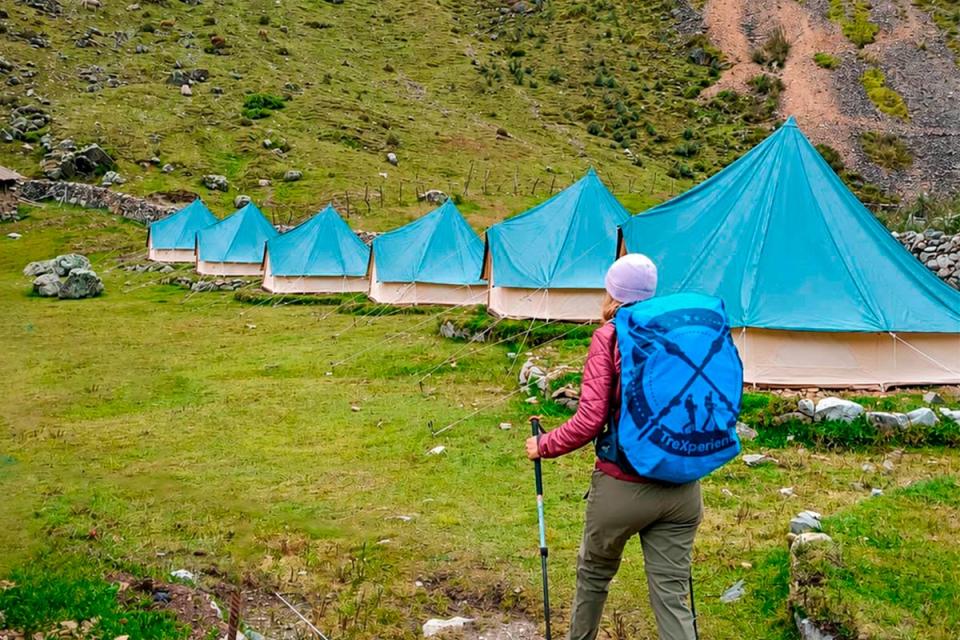
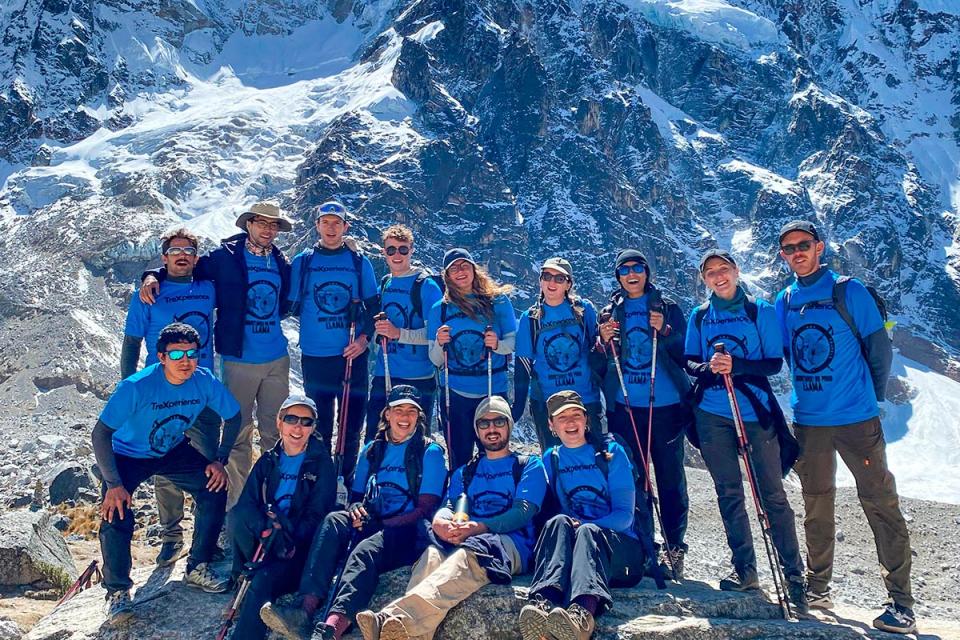
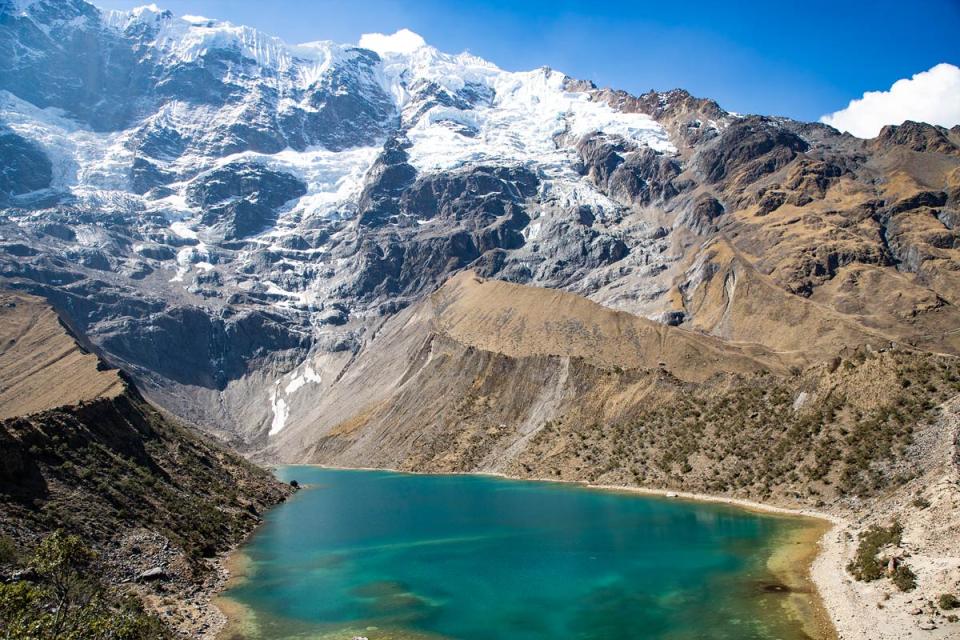
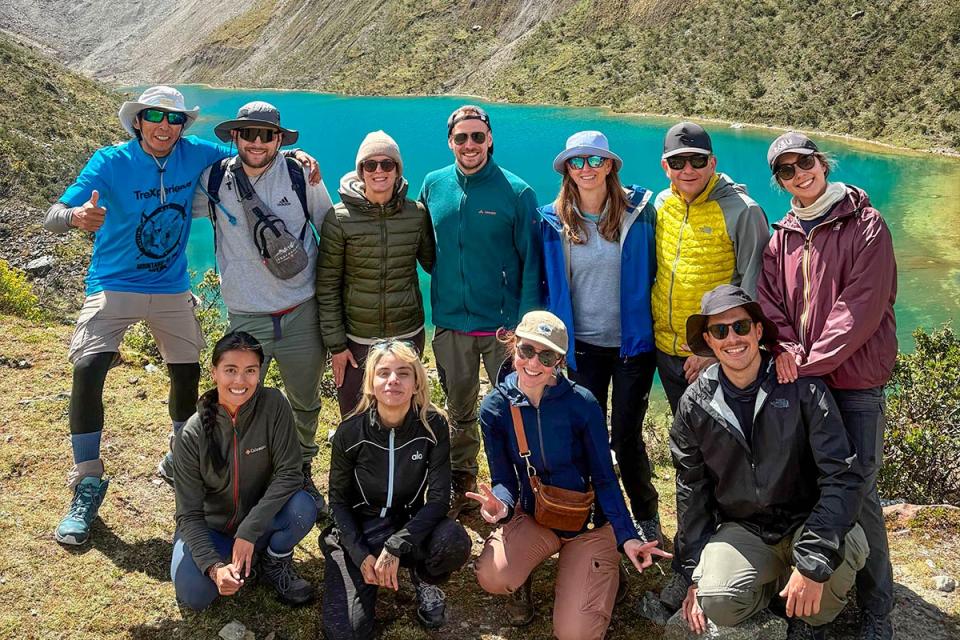
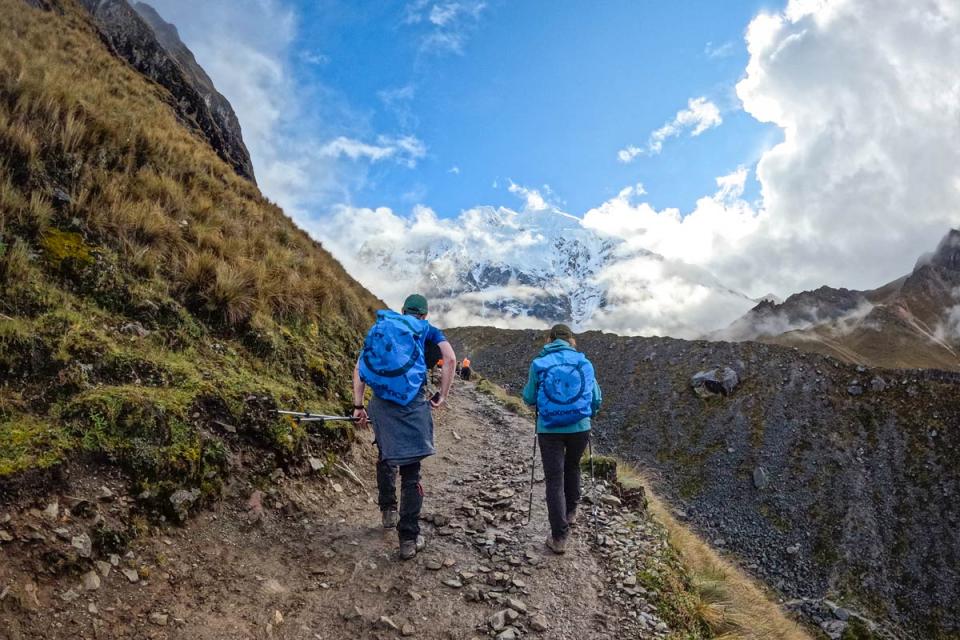
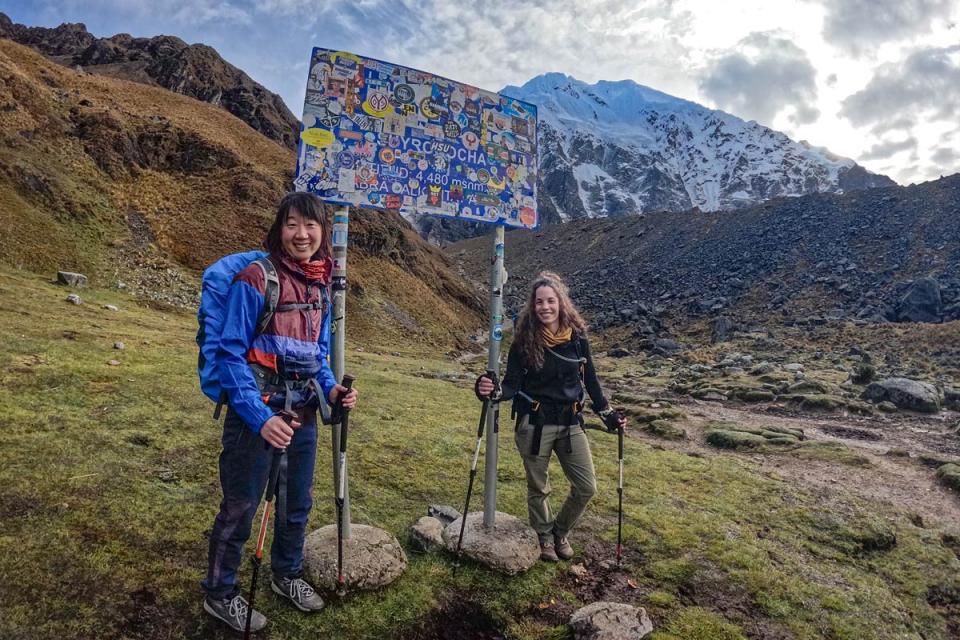
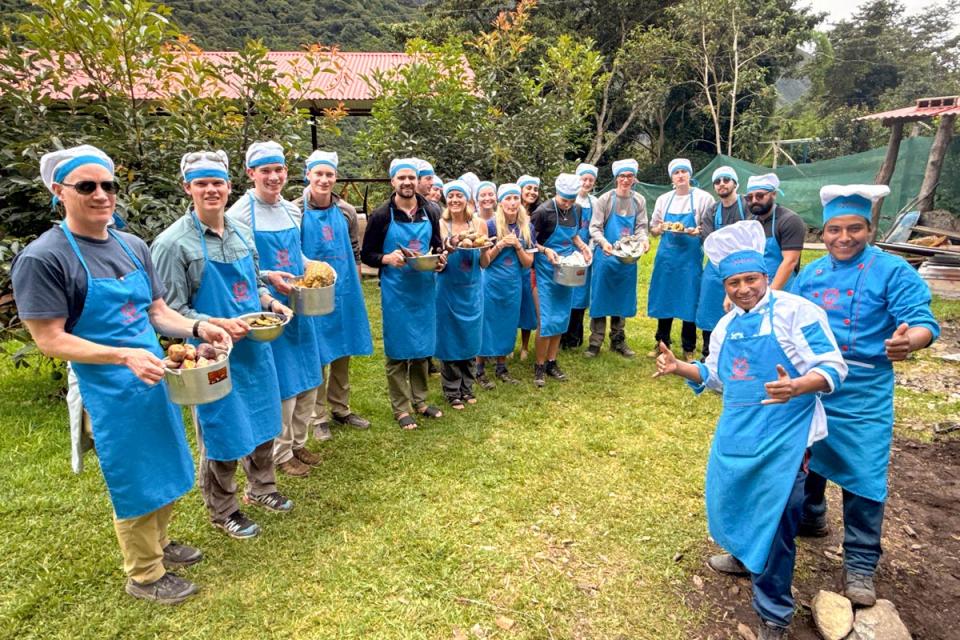
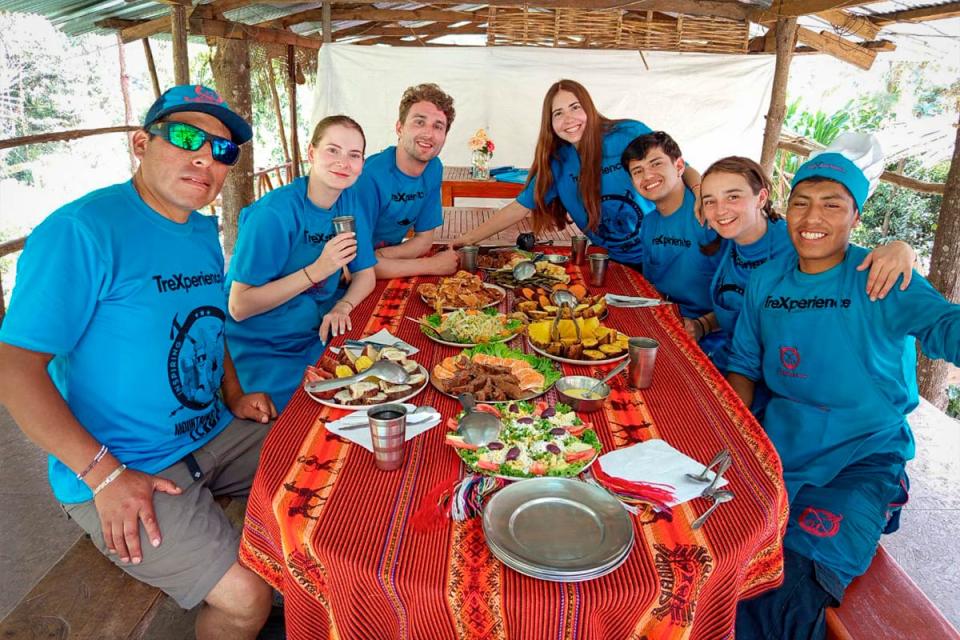
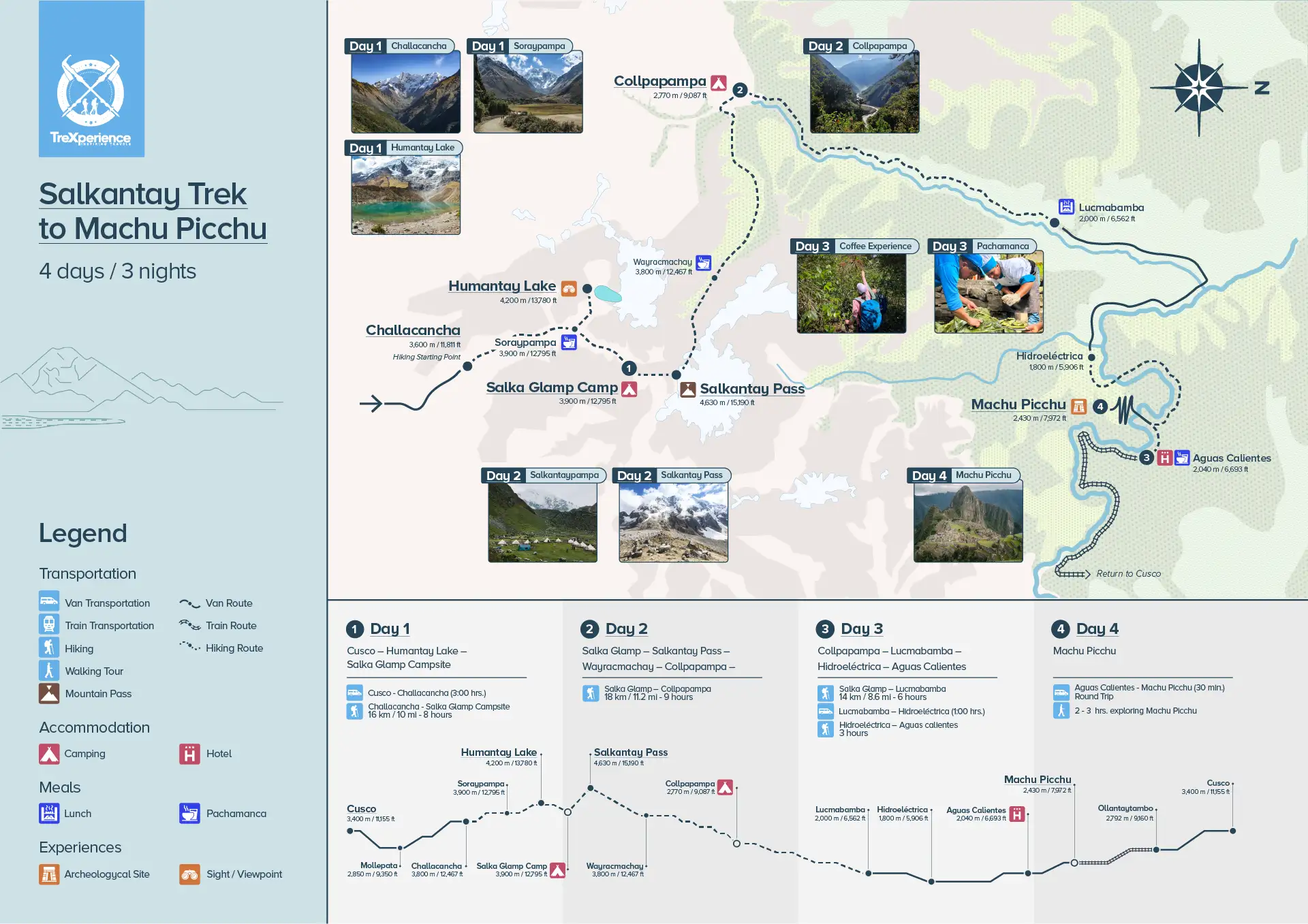
In four days you walk through four different worlds: the turquoise water of Humantay Lake, the Salkantay Pass at 4,630 m, the coffee farms of the cloud forest, and finally Machu Picchu. Your first night is at our own Salka Glamp Campsite, at the foot of the mountain itself — bell tents beneath Salkantay, dinner by our trekking chef, and a campfire with hot drinks, popcorn, and a story about the mountain before you cross it.
You wake up already in the high Andes, hours ahead of the day-trip groups, with coffee or coca tea brought to your tent. Along the way you'll bury a Pachamanca lunch under hot stones with your own hands, follow coffee from the plant to your cup with a local family, and finish on the panoramic Vistadome train. A 100% Peruvian team of guides, chefs, and horsemen walks with you the whole way — this trail is demanding, and you never face it alone.
 Tour Type Group Tour
 Duration 4 Days 3 Nights
 Activities Hiking, Adventure
 Average Group Size 12 persons
 Difficulty Challenging
 Accommodation Camping, Hotel
 Tour Language English, Spanish
 Hiking Distance 48 km / 30 miles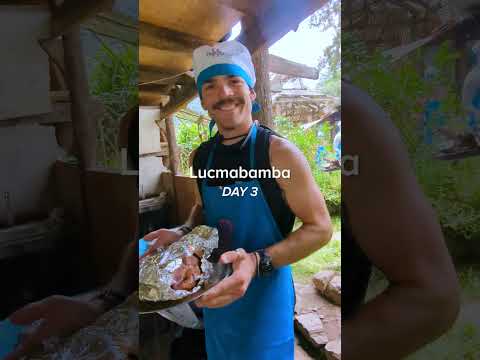
Overview: 4-Day Salkantay Trek to Machu Picchu
The 4-Day Salkantay Trek to Machu Picchu is made for travelers who want the full Andes in less time — and a trek that feels like a story, not just a route. Each day is a different world: glacier lakes, the highest pass, cloud-forest coffee country, and finally Machu Picchu.
Hike from the turquoise water of Humantay Lake over the Salkantay Pass at 4,630 m, then descend into the warm cloud forest on your way to Machu Picchu — with a small group, local guides, and fresh meals cooked on the trail by our trekking chefs.
Your first night is at our own Salka Glamp Campsite, at the foot of Salkantay Mountain: bell tents, dinner by the team, and a campfire with hot drinks, popcorn, and a story about the mountain before you cross it.
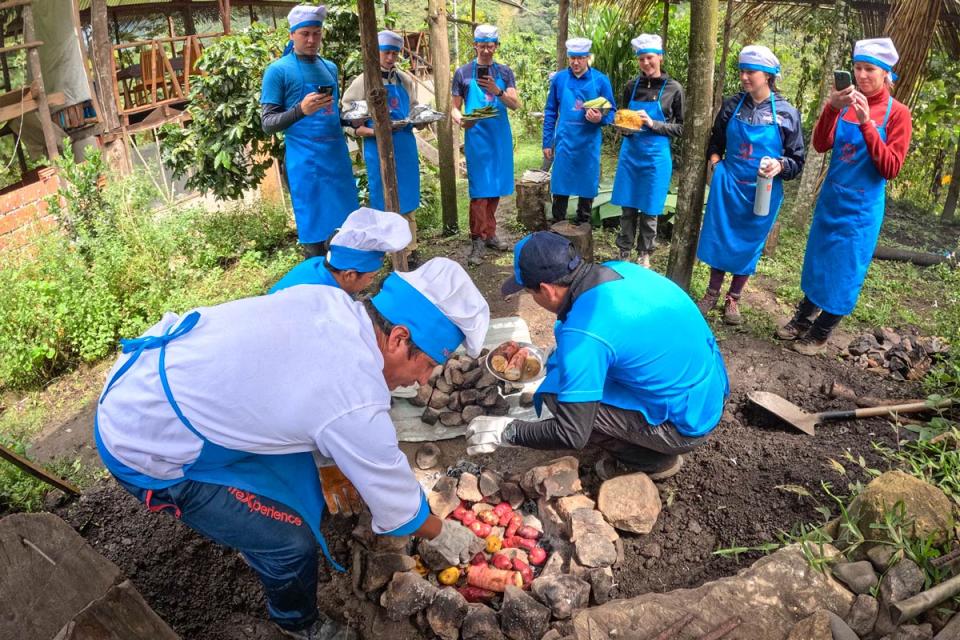
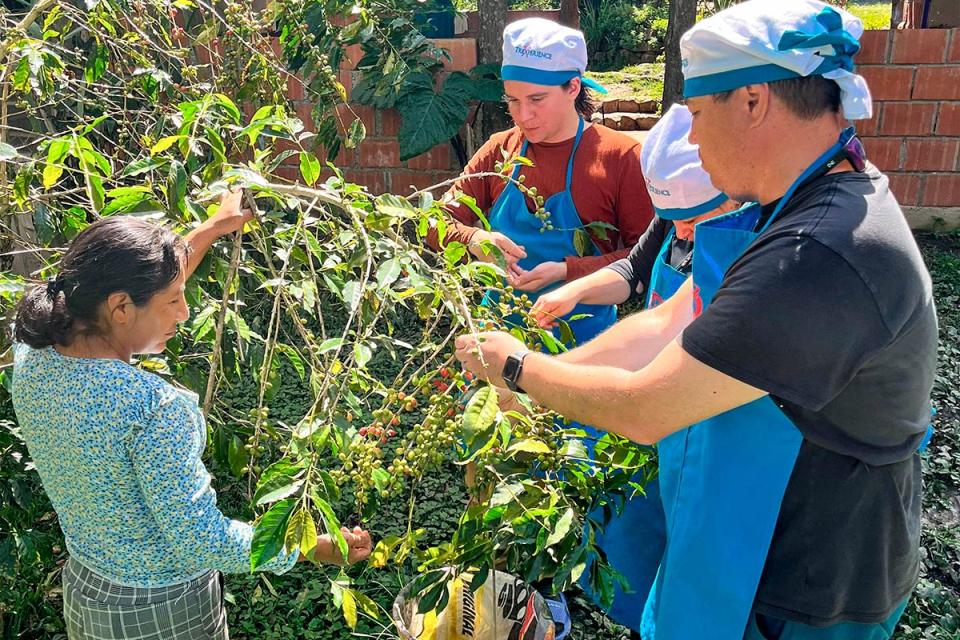
On the way down, you'll season and bury a traditional Pachamanca barbecue under hot stones with your own hands — and while it cooks beneath the earth, follow coffee from the plant to your cup at a local coffee farm in the cloud forest.
Salkantay Trek Highlights
- Humantay Lake: Hike to one of the most beautiful turquoise lakes in the Andes, surrounded by snow-capped peaks.
- Salka Glamp: Sleep in bell tents at the foot of Salkantay Mountain, and end the night around a campfire with a story about the mountain.
- Salkantay Pass: Cross the highest point of the trek at 4,630 m / 15,190 ft, where you can join a small coca-leaf offering to the mountain — or simply take it all in.
- Pachamanca and coffee experience: Help bury a hot-stone Pachamanca with your own hands, then follow cloud-forest coffee from cherry to cup while it cooks.
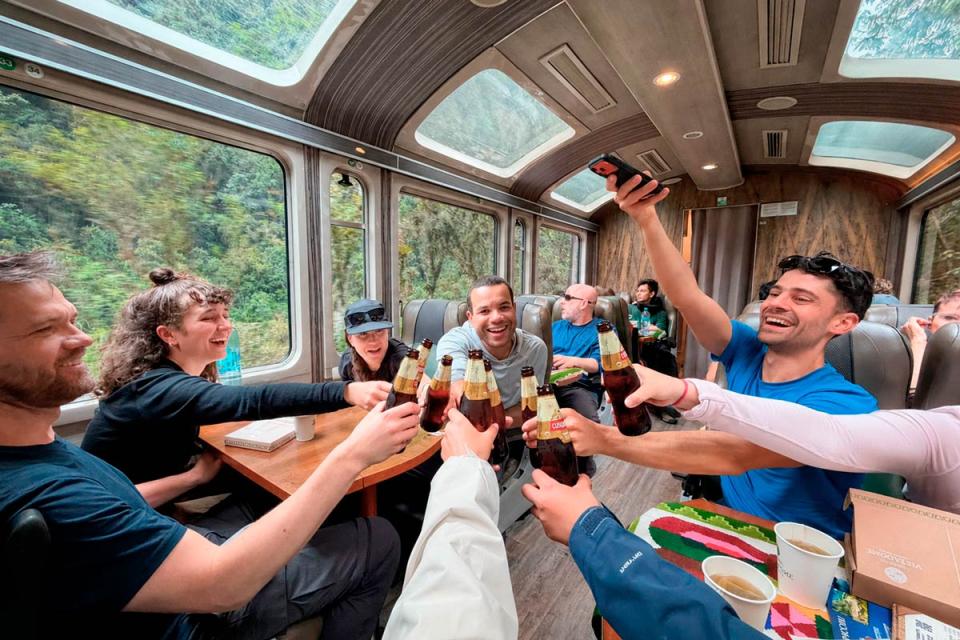
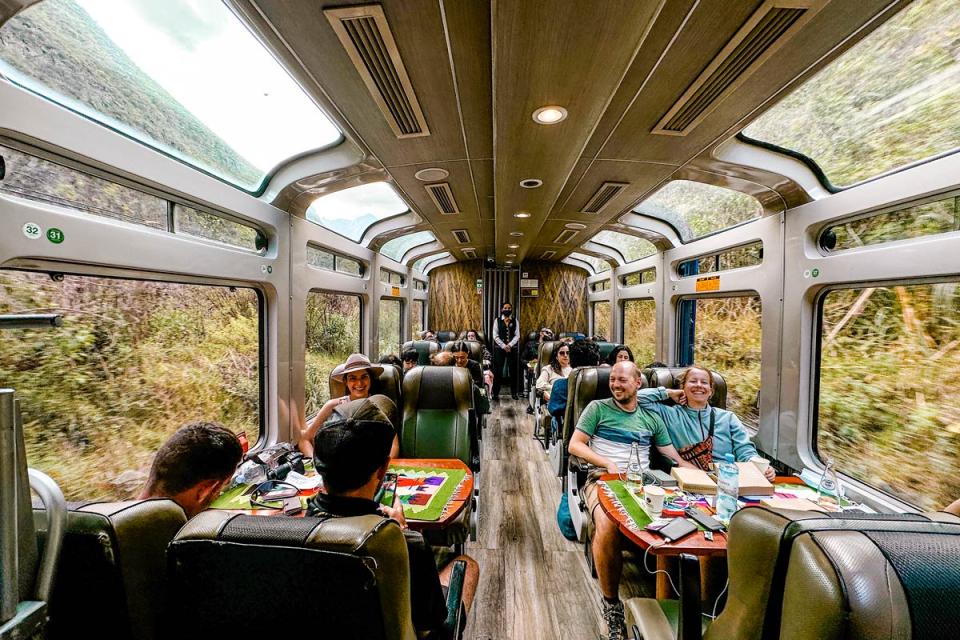
- Vistadome or 360° Train: Return from Machu Picchu on a panoramic train with wide windows and beautiful views.
4-Day Salkantay Trek at a Glance
Day 1: Enter the High Andes
Cusco – Humantay Lake – Salka Glamp Campsite (16 km, 8 hrs): Hotel pickup, then hike to Humantay Lake and enjoy a fresh picnic-style lunch by our trekking chef. Continue to Salka Glamp in Salkantaypampa for dinner and a campfire below Salkantay Mountain.
Day 2: Rise with Salkantay
Salka Glamp – Salkantay Pass – Collpapampa (18 km, 9 hrs): Wake up with coffee or coca tea at your tent, already at the foot of the mountain. Cross the Salkantay Pass at 4,630 m, then descend into the cloud forest and rest in Andean huts at a locally owned campsite.
Day 3: From Mountain to Cloud Forest
Collpapampa – Hidroeléctrica – Aguas Calientes (14 km, 6 hrs): Season and bury your Pachamanca lunch under hot stones, then follow coffee from the plant to your own cup while it cooks. Uncover the meal together, then continue to Aguas Calientes for a hotel night.
Day 4: Discover Machu Picchu
Machu Picchu – Panoramic Train – Cusco: Enter Machu Picchu early with your guide, explore the citadel before the busiest hours, and return on the Vistadome or 360° panoramic train to Ollantaytambo, with our transfer back to Cusco.
- Machu Picchu entry with Circuit 2 is included by default. If Circuit 2 is sold out for your date, we'll secure the best available alternative: Circuit 1 or Circuit 3. We'll confirm your final circuit as soon as tickets are issued.
Included
- Briefing one day before tour departure, where you meet your guide.
- Hotel pickup and drop-off.
- All transportation during the tour.
- Professional bilingual tour guide in English and Spanish.
- Return on the panoramic Vistadome Train or 360° Train, plus your transfer from Ollantaytambo station.
- Entry tickets to the Salkantay Trek.
- Machu Picchu entrance ticket.
- Cargo mules to carry camping equipment and the approved duffel weight.
- Experienced trekking chef to prepare fresh meals on the trail.
- 1 night at Salka Glamp Campsite, our glamping camp at the foot of Salkantay Mountain, with campfire evening (Day 1).
- 1 night in Andean huts at a locally owned campsite in Collpapampa (Day 2).
- 1 night in a 3-star hotel in Aguas Calientes.
- All meals on the trail, except last-day lunch. Dietary needs are accommodated.
- Water and daily snacks.
- Pachamanca barbecue, cooking experience, and local coffee experience.
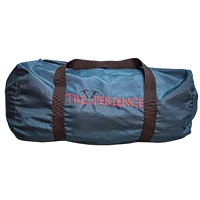
- Duffle bag for up to 7 kg / 15 lb of personal items.
- First-aid kit, satellite phones, and oxygen supply carried by your guide.
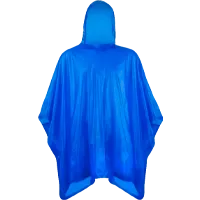
- Pillow, sleeping pad, rain poncho, and hand towels.
Not Included
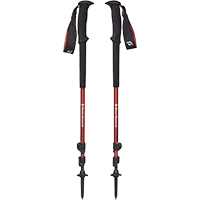
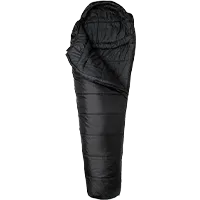
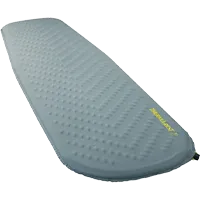
- Sleeping bag, air mattress, and trekking poles (available to rent from us).
- Last-day lunch in Aguas Calientes.
- Huayna Picchu or Machu Picchu Mountain entrances (optional).
- Travel insurance (highly recommended).
Machu Picchu Circuit Included
- Circuit 2: The most requested route to visit Machu Picchu, with a broad walk through the archaeological complex and the classic viewpoints.
If Circuit 2 tickets are sold out, we will secure the best available option, which may be Circuit 1 or Circuit 3. Book early, especially for peak months — Machu Picchu circuits and schedules are limited. Learn more about Machu Picchu tickets and circuits.
Extra Hikes After the Machu Picchu Tour
- Huayna Picchu Mountain – US$75 per person. The most famous mountain, approximately 2 hours round trip.
- Machu Picchu Mountain – US$75 per person. The highest mountain, approximately 3 hours round trip.
You can only hike one of these mountains, and it is done after the guided tour in Machu Picchu. Advance booking is required for both hikes.
The Salkantay Trek, The TreXperience Way
The trail is shared. Your journey is personal.
TreXperience was built from the trail up. Our co-founder, Juan Coronel, started on the Inca Trail as a porter, became a trekking chef, and then a professional guide. He knows what it feels like to carry a load at 4,000 meters, what a hot meal means after nine hours of walking, and how much it matters that your tent is up before you reach camp. That is why on Salkantay your camp is ready when you arrive, your chef cooks like the meal is the destination, our muleteers are treated as the professionals they are — and why there is always a fire, a hot drink, and a story at the end of Day 1.
Every traveler comes to Salkantay for a different reason: a challenge, a celebration, the mountains, or time with someone who matters. Our guides take the time to know yours — and by Day 4, this shared trail becomes your own story.
Upgrade Your Salkantay
Want the same four worlds with a higher level of comfort? The Luxury Salkantay Trek 4 Days follows this same route with private service and upgraded accommodation.
Machu Picchu tickets and the best departure dates are limited and assigned first come, first served. Check what is open before you plan the rest of your trip.
Full Itinerary - Salkantay Trek 4 Days to Machu Picchu
Day 1: Cusco – Humantay Lake – Salka Glamp (16km, 8hrs)
Your Salkantay Trek 4 Days begins with an early pickup from your hotel in Cusco at 4:30 a.m. — most people sleep on the drive. We can collect you from any hotel near the historic center, then drive about 2 hours to Mollepata for a hearty breakfast at a local restaurant.
After breakfast, we continue 1 more hour to Challacancha (3,600 meters / 11,811 feet), the trailhead, where your guide gives you time to get ready and warm up before the first steps toward Machu Picchu. The first section is a 3-hour walk to the famous Humantay Lake (4,200 m / 13,779 ft) — watch for Andean geese, vizcachas, and the peaks opening up around you.
At Humantay Lake, there is no rush. Take time by the turquoise water, breathe, and look back at the path that brought you here — only this morning, all of this was still ahead of you. Then descend to Soraypampa, where our trekking chef serves a fresh picnic-style lunch made with local products.
After lunch, a 2-hour hike brings you to Salkantaypampa and our own Salka Glamp Campsite (3,900 m / 12,795 ft), one of the closest campsites to Salkantay Mountain — while most groups sleep further down the valley, you spend the night at the foot of the mountain you'll cross tomorrow. Settle into your bell tent, warm up with coffee and tea time, and enjoy dinner by our trekking team. Then the fire is lit: hot drinks, popcorn, marshmallows, and a story about Salkantay and the people who live in its shadow — the best possible way to meet the mountain before you climb it.
- Hiking Distance: 16 km / 10 mi
- Duration: 7–8 hours
- Campsite Altitude: 3,900 m / 12,795 ft
- Highest Altitude: 4,200 m / 13,779 ft
- Meals: Breakfast, snacks, lunch, tea time, dinner
- Accommodation: Salka Glamp Campsite
- Difficulty: Moderate
Day 2: Salka Glamp — Salkantay Pass – Collpapampa (18km, 9hrs)
The second day of the Salkantay Trek to Machu Picchu is the most challenging — and the one you will talk about for years. It starts gently: hot coffee or coca tea brought to your tent, and Salkantay filling the sky when you step outside. After breakfast by our trekking chef, the 2-hour climb to the Salkantay Pass (4,630 m / 15,190 ft) begins.
Here is the truth about this climb: there may be a moment when you feel tired and wonder why you chose this. That is normal, and you will not face it alone. Your guide sets a steady rhythm the whole group can hold, checks on everyone by name, and there is no prize for arriving first. One step at a time is exactly how everyone gets there.
At the pass, take it in: glacial walls, dramatic ridgelines, and a lake at the foot of Salkantay Mountain. In the Andes, we do not conquer Salkantay — we cross it with respect. Our guides make a small offering of coca leaves to the mountain, and you are welcome to take part or simply watch. There is time for photos, rest, and letting the moment land.
From the pass, a 3-hour descent leads to lunch at Wayracmachay (3,800 m / 12,467 ft), where the team is waiting with a fresh meal — and where the world starts to change around you. In the afternoon, descend another 3 hours as the air softens and everything turns green: you left glaciers this morning, and by evening you are in the cloud forest. We arrive at Collpapampa (2,770 m / 9,087 ft), a quiet village of greenery and river sounds, where you sleep in Andean huts at a locally owned campsite — a real bed of a night after the longest day of the trek.
- Hiking Distance: 18 km / 11.2 mi
- Duration: 9 hours
- Campsite Altitude: 2,770 m / 9,087 ft
- Highest Altitude: 4,630 m / 15,190 ft
- Meals: Breakfast, snacks, lunch, tea time, dinner
- Accommodation: Andean huts
- Difficulty: Challenging
Day 3: Collpapampa – Hidroeléctrica – Aguas Calientes (14km, 6hrs)
The climbing is behind you — today is the day of coffee, food, and the people of the valley. After a hearty breakfast, hike about 3 hours down to Lucmabamba (2,000 m / 6,561 ft), where coffee plantations, banana trees, and warm valley air make it hard to believe you woke up near a glacier yesterday.
In Lucmabamba, lunch is a ceremony. You'll help prepare a traditional Pachamanca — Peru's ancient underground barbecue — seasoning the meat, vegetables, and Andean herbs with your own hands and helping cover the hot-stone oven with earth, guided by our chef.
And while your lunch cooks beneath the ground, you follow coffee from the plant to your cup with a local coffee-growing family: walk their organic farm, and depending on the season, pick the cherries, roast and grind the beans, and brew a cup that was on the branch an hour earlier. Then everyone gathers as the team uncovers the Pachamanca, and you sit down to the meal you made together.
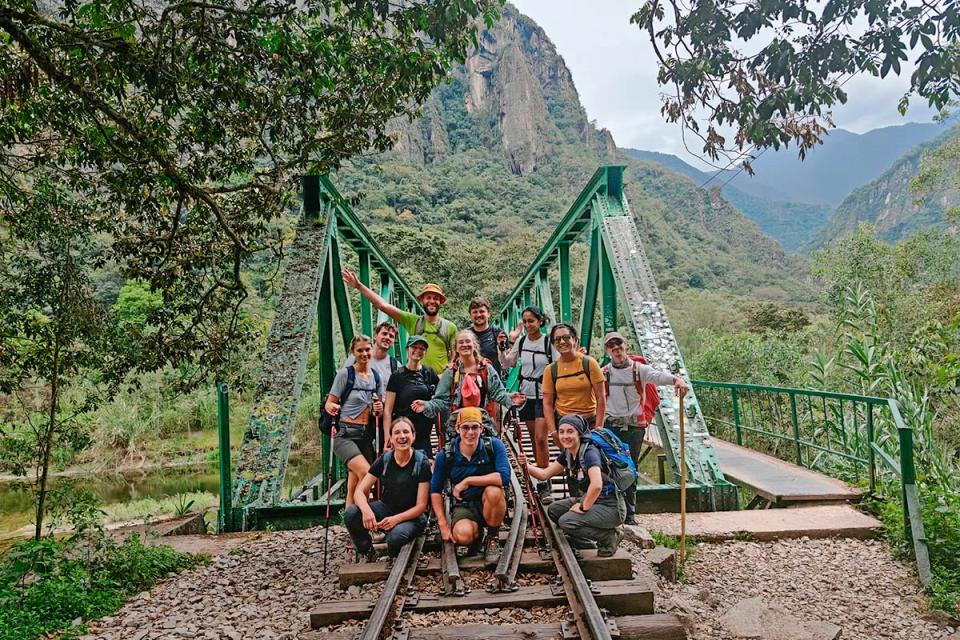
In the afternoon, we drive one hour to Hidroeléctrica and walk the final 3 hours along the railway — flat, green, and easy on tired legs — into Aguas Calientes by around 5:00 p.m. Dinner at a local restaurant, a hot shower, and a hotel bed: tomorrow, Machu Picchu.
- Hiking Distance: 14 km / 8.6 mi
- Duration: 6 hours
- Campsite Altitude: 2,000 m / 6,561 ft
- Highest Altitude: 2,770 m / 9,087 ft
- Meals: Breakfast, lunch, dinner
- Accommodation: Hotel in Aguas Calientes
- Difficulty: Moderate
Day 4: Discover Machu Picchu — Return to Cusco
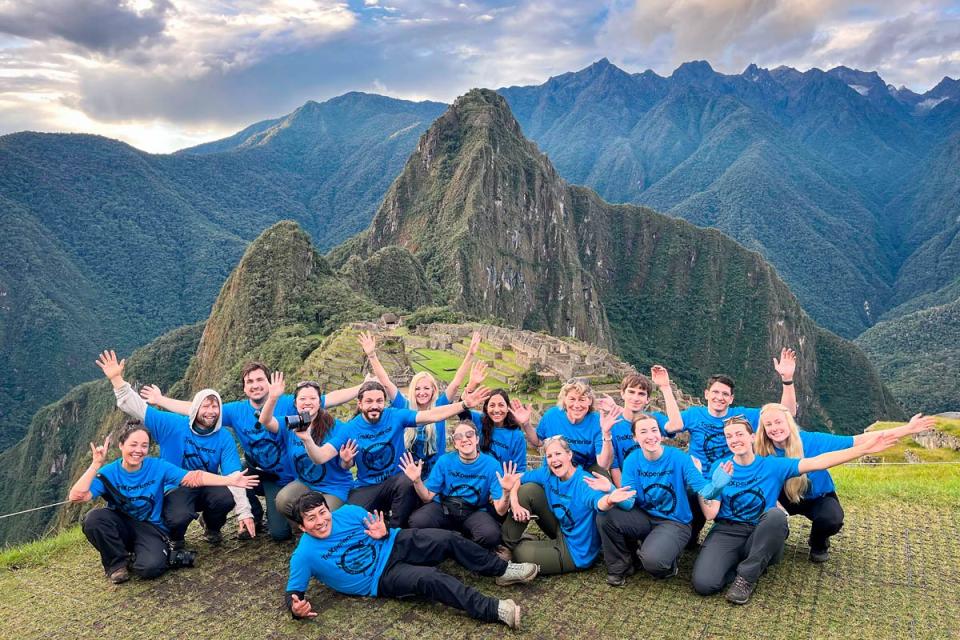
Today, the reason you came. Around 5:30 a.m., we join the bus line for one of the first rides up to the citadel. As the morning light reaches the mountains, we enter Machu Picchu and walk to the upper terraces for the classic view of the ancient city — with Humantay, the pass, and the cloud forest all behind you now. You did not just visit Machu Picchu. You walked here.
Once inside, your guide leads a 2 to 3-hour exploration through the main areas of Machu Picchu — its history, architecture, and sacred spaces — shaped around what your group is most curious about. If booked in advance, you can also climb Huayna Picchu or Machu Picchu Mountain after the tour for even wider views.
In Machu Picchu, we include Circuit 2 by default when available. If Circuit 2 is sold out, we'll secure the best available option, which may be Circuit 3 or Circuit 1. Book early — tickets, circuits, and schedules are limited and assigned on a first-come, first-served basis.
When you're ready, take the bus down to Aguas Calientes for lunch on your own, then board the panoramic Vistadome Train back up the Urubamba valley to Ollantaytambo, where our team meets you at the station and drives you to your hotel in Cusco — four worlds behind you, and one story that's yours to tell. Arrival in Cusco is usually in the evening.
- Tour Duration: 2–3 hours in Machu Picchu
- Machu Picchu Altitude: 2,430 m / 7,972 ft
- Meals: Breakfast at the hotel
- Difficulty: Easy
Salkantay Trek 4 Days Price and Booking
Our small-group departures average 12 to 16 travelers, so you get a personal Salkantay Trek 4 Days to Machu Picchu experience at the group rate. If you would rather set your own dates and pace, a private Salkantay Trek gives you your own guide, chef, and trekking team from the first briefing to the train home. Traveling with family or friends? Contact us for a quote based on your group size and dates.
Every price below includes your Machu Picchu entrance ticket, the night at Salka Glamp with its campfire evening, the Andean huts, your hotel in Aguas Calientes, all meals on the trail, the Pachamanca and coffee experiences, cargo mules for your duffel, and the panoramic Vistadome or 360° train back.
Small-Group Tour Prices
| Traveler Type | Price Per Person |
|---|---|
| Adults | From US$598 |
| Children and students | From US$568 |
Private Salkantay Trek Prices
Your own guide, your own chef, your own pace — linger at Humantay Lake, take the pass as slowly as you need, and share the campfire with only your own people. And because Salkantay needs no trail permit, a private departure can often be arranged on shorter notice than the Inca Trail.
| Number of Participants | Price Per Person |
|---|---|
| 1 participant | US$1,900 |
| 2 participants | US$1,180 |
| 3 participants | US$980 |
| 4 participants | US$850 |
| 5 participants | US$790 |
| 6 participants | US$740 |
| 7 participants | US$690 |
| 8 participants | US$650 |
| 9+ participants | Contact us for a special rate |
Traveling with a group of eight? A private departure costs US$52 more per person than joining a group — your own guide, chef, muleteers, and a campfire that belongs only to you. For families and groups of friends, it is usually the better choice.
Booking and Payment
- Deposit: US$200 per person. This secures your departure date, your Machu Picchu entrance ticket, and your circuit — the parts of this trek that sell out first. The balance can be paid online or at our office in Cusco by credit card, PayPal, or wire transfer. Contact us if you need another payment option.
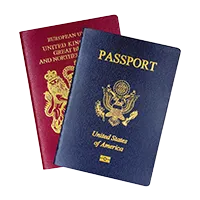
- Your Machu Picchu ticket is issued with your details and checked against your passport at the entrance, so for each traveler we need the full name exactly as it appears on the passport (no nicknames), passport number, date of birth, passport expiration date, and nationality. Send these as early as you can — the sooner we have them, the sooner your tickets are confirmed.
Student and Child Discount
US$30 off per person. This discount applies to all travelers under 17 and to students under 25 with a valid university ID. This valid university ID must be presented in original, physical form at our offices upon your arrival in Cusco. The ID must show:
- The student's name, photo, and university name.
- A valid expiration date. Expired IDs are not accepted.
- ISIC cards are not accepted.
The child discount is applied automatically. Students should send a photo of their university ID when booking; if the ID does not qualify, the adult rate applies.
Salkantay needs no trail permit, but Machu Picchu tickets and circuits are limited and assigned first come, first served — and the best departure dates fill early. Check what is open before you plan the rest of your trip.
Packing List - Salkantay Trek to Machu Picchu 4-Day
The 4-day Salkantay Trek crosses four worlds, and your bag has to work in all of them: near-freezing nights at Salka Glamp, wind and sun at the pass, then heat, humidity, and mosquitoes in the cloud forest. That is why this packing list looks contradictory — a down jacket and insect repellent on the same trip — and why every item on it earns its place.
The good news: you carry very little of it yourself. We give you a 7 kg / 15 lb duffel bag, carried by our cargo mules between camps, and everything else stays safely in Cusco — at your hotel or in our free storage.
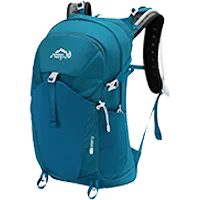
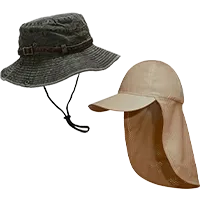
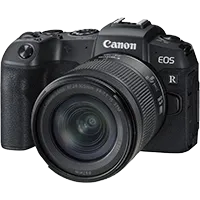
On the trail, you only carry a daypack with your day's essentials: water, rain jacket, a warm layer, sunscreen, snacks, camera, and your original passport, which is checked at Machu Picchu.
Essentials
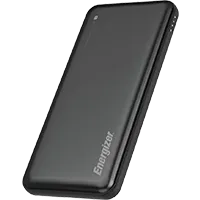
On the Salkantay Trek there are no shops, and phone signal disappears for most of the route. What you bring on Day 1 is what you have for four days — and the three things worth spending money on are your boots, your rain protection, and a daypack that fits well.





What to Wear?
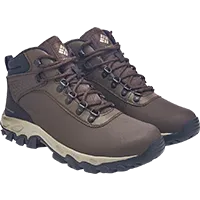
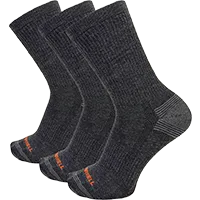
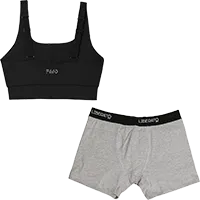
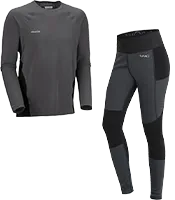
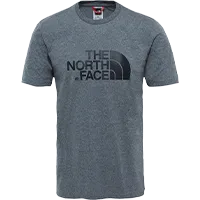
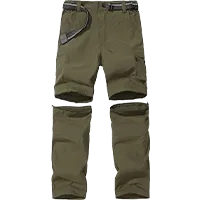
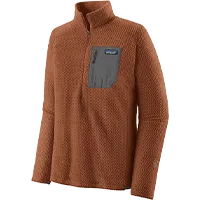
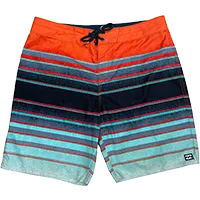
On Salkantay, layering is not a tip — it is the whole system. You may start the morning at the foot of a glacier in a down jacket and end the afternoon in a t-shirt among banana trees. Wear light, breathable layers you can add or peel off as the worlds change, and keep the warm one within reach on Days 1 and 2.
Here's what we recommend wearing:

What to Pack in the Daypack?
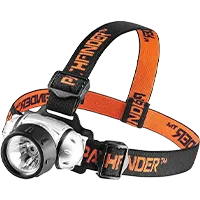
This bag is on your back for six to nine hours a day, so keep it light and choose one that fits well. We suggest a 25–35 liter backpack with a rain cover.
It also goes into Machu Picchu with you on Day 4. The entrance limit is based on the bag's dimensions rather than its stated capacity — a compact pack passes without questions, staff at the gate make the final call, and there are lockers at the entrance if you need one.



What to Pack in the Duffel Bag?
The duffel is for everything you will not need during the day, carried between camps by our muleteers and cargo mules. The limit is 7 kg / 15 lb, and here is the part most travelers get wrong: your sleeping bag and air mattress go inside the duffel and count toward those 7 kg. Together they usually weigh about 3 kg, which leaves you roughly 4 kg for clothes and personal items — so pack for four days, not four weeks.
The weight limit also protects the animals and the muleteers who work with them. Keeping every duffel within the limit is part of how we look after the team that makes your trek possible.
You will receive your duffel bag at the pre-trek briefing, held at our office in central Cusco the evening before departure. If you need it earlier to pack, email us and pick it up in advance.
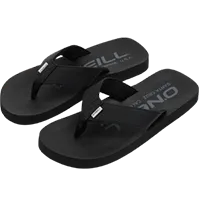
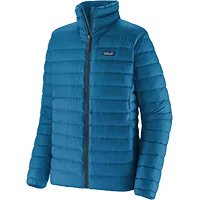

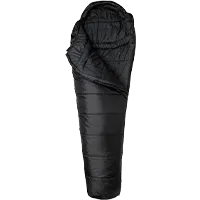
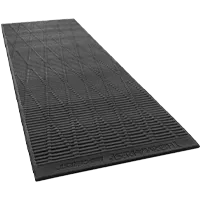
What We Provide
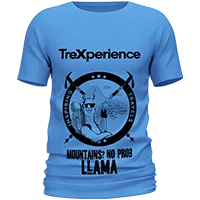
These items come with your trek, so you do not need to buy or carry them:
What Can You Rent from TreXperience?
If you would rather not fly to Peru with bulky camping gear, you can rent these items from us for a small extra cost — just tell us when you book or at the briefing. A rented sleeping bag is also the easiest way to stay warm at Salka Glamp, since ours are chosen for the cold nights at 3,900 meters.
Still not sure about something? Bring it to the pre-trek briefing — your guide will look at your gear and tell you honestly what you need and what you can leave behind.
Check out our full guide: Salkantay Trek packing list
Travel Information - Salkantay Trek 4 Days
This is your "before you go" reference for the 4-Day Salkantay Trek: the mountain, the route, altitudes, weather, camps, meals, tickets, and how the trek is run — everything we brief our own travelers on. Still deciding whether Salkantay is right for you, or comparing it with the Inca Trail? Those answers live in the FAQs below. For the full deep-dive, read our complete Salkantay Trek guide.
Salkantay Mountain, the sacred Apu
Salkantay Mountain (6,271 m / 20,574 ft) is one of the great peaks of the Cusco region and, in Andean tradition, an "Apu", a sacred mountain spirit that watches over the valleys below it. On Day 2 you walk beneath its glaciers and cross the Salkantay Pass, the highest and most powerful stretch of the route.
In the Andes, mountains like this are not conquered; they are crossed with respect. At the pass, our guides make a small offering of coca leaves to the Apu, you are welcome to take part or simply watch.
Humantay Lake
Humantay Lake is the great highlight of Day 1: a turquoise glacier lake at 4,200 m, sitting below Humantay Mountain near Soraypampa, in the district of Mollepata. Its color changes with the light and the season, deep turquoise on bright days, steel blue under cloud, and either way, it is the moment your camera comes out and stays out.
Distance, altitude profile, and difficulty
You hike about 48 km / 30 miles over four days, and the route drops through four worlds, which is why the numbers matter more than the total:
- Highest point: Salkantay Pass — 4,630 m / 15,190 ft (Day 2)
- First camp: Salka Glamp, Salkantaypampa — 3,900 m / 12,795 ft
- Second camp: Collpapampa — 2,770 m / 9,087 ft
- Lowest point: Aguas Calientes — about 2,040 m / 6,692 ft
Days 1 and 2 carry the altitude and the long hours; Day 2, over the pass, is the one that earns the trek its moderate to challenging rating. Day 3 descends into the cloud forest with the coffee and Pachamanca experiences, and Day 4 is the guided visit to Machu Picchu. You do not need to be an athlete — you need solid fitness, broken-in boots, proper acclimatization, and the patience to walk at your own pace. There is no prize for reaching the pass first, and your guide holds a rhythm the whole group can keep.
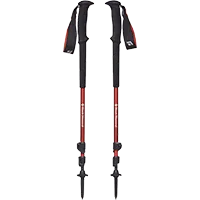
Trekking poles are strongly recommended, especially for the long descent after the pass. Arrive in Cusco at least 2 days before the trek to acclimatize — it changes how Day 2 feels more than any training plan. For symptoms and prevention, review the CDC high-altitude travel advice.
Weather and the best months to hike
You will probably meet every kind of weather on this trek, sometimes in one day: cold mornings and near-freezing nights at the high camps, strong sun at altitude, then warm, humid air once you drop into the cloud forest. Rain is possible in any month, even the dry season. Layers, sun protection, and a rain jacket in your daypack are non-negotiable.
The drier season runs roughly April to October, with better chances of clear mountain views and firmer trails. May and September are a sweet spot of stable weather and fewer people. The wetter months are greener and quieter, but trails can be muddy and the peaks may hide in cloud. The trek is beautiful in different ways all year, the key is packing right and hiking with a team that reads the mountain daily.
For month-by-month detail, read our Salkantay Trek weather guide.
Campsites and accommodation: Salka Glamp, Andean huts, and hotel
- Night 1 — Salka Glamp Campsite (3,900 m), our own camp in Salkantaypampa at the foot of Salkantay Mountain: bell tents, tea time, dinner by the trekking team, and a campfire with hot drinks and a story about the mountain before you cross it.
- Night 2 — Andean huts at a locally owned campsite in Collpapampa, in the warmer cloud forest, a real roof and a quiet night after the longest hiking day.
- Night 3 — 3-star hotel in Aguas Calientes, with a hot shower before your early Machu Picchu morning.
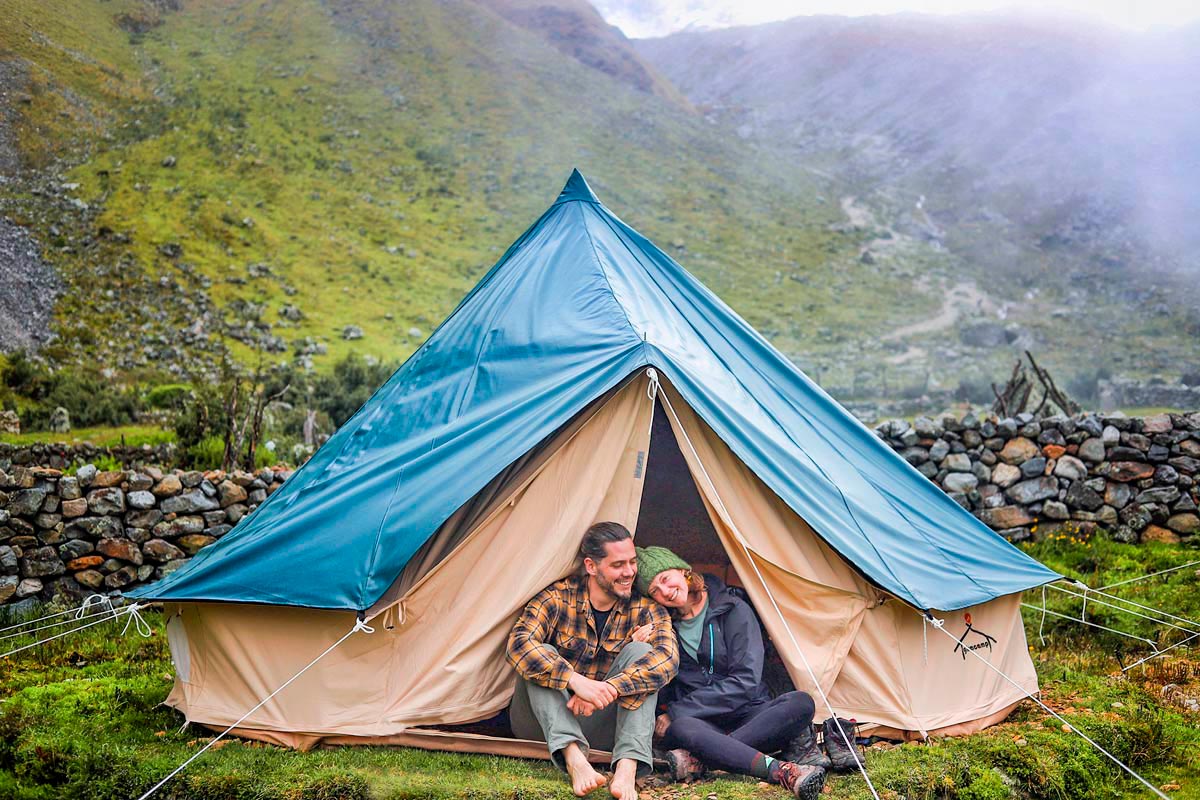
Every camp is set up by our team before you arrive, so your only jobs are resting, eating, and looking at the mountain. Prefer more privacy? A personal tent or a hotel upgrade in Aguas Calientes is available for an additional cost, ask when you book.
Meals, drinking water, and special diets
Our trekking chef cooks breakfast, lunch, dinner, snacks, and tea time on the trail, fresh meals, served hot, in the middle of the mountains. Lunch on the last day in Aguas Calientes is the only meal on your own.
Vegetarian, vegan, gluten-free and other dietary needs are no problem, at no extra charge. Tell us when you book and remind your guide at the briefing; allergies should be in writing, because the shopping for your departure happens before you leave Cusco.
Drinking water and daily snacks are provided along the route, bring a reusable bottle or bladder holding at least 2 liters and refill when your guide says. Single-use plastic bottles have no place on this trail.
The Pachamanca and coffee experience (Day 3)
In Lucmabamba, lunch is a ceremony. You'll help prepare a traditional Pachamanca, Peru's ancient underground barbecue, seasoning meat, vegetables, and Andean herbs, and helping cover the hot-stone oven with earth, guided by our chef.
And while your lunch cooks beneath the ground, you follow coffee from the plant to your cup with a local coffee-growing family: walk their farm and, depending on the season, pick the cherries, roast and grind the beans, and brew a cup that was on the branch an hour earlier. Then everyone gathers as the team uncovers the Pachamanca, and you sit down to the meal you made together.
Machu Picchu tickets and circuits
Your Machu Picchu entrance ticket is included. We include Circuit 2 by default when available, because it offers one of the most complete visits to the citadel. If Circuit 2 is sold out for your date, we secure the best available alternative, Circuit 1 or Circuit 3, and confirm your final circuit as soon as tickets are issued.
Tickets are limited and assigned by route and time slot, first come, first served, which is the single best reason to book your dates early. For official information, see the official Machu Picchu circuits or the Tu Boleto platform.
Return by panoramic train
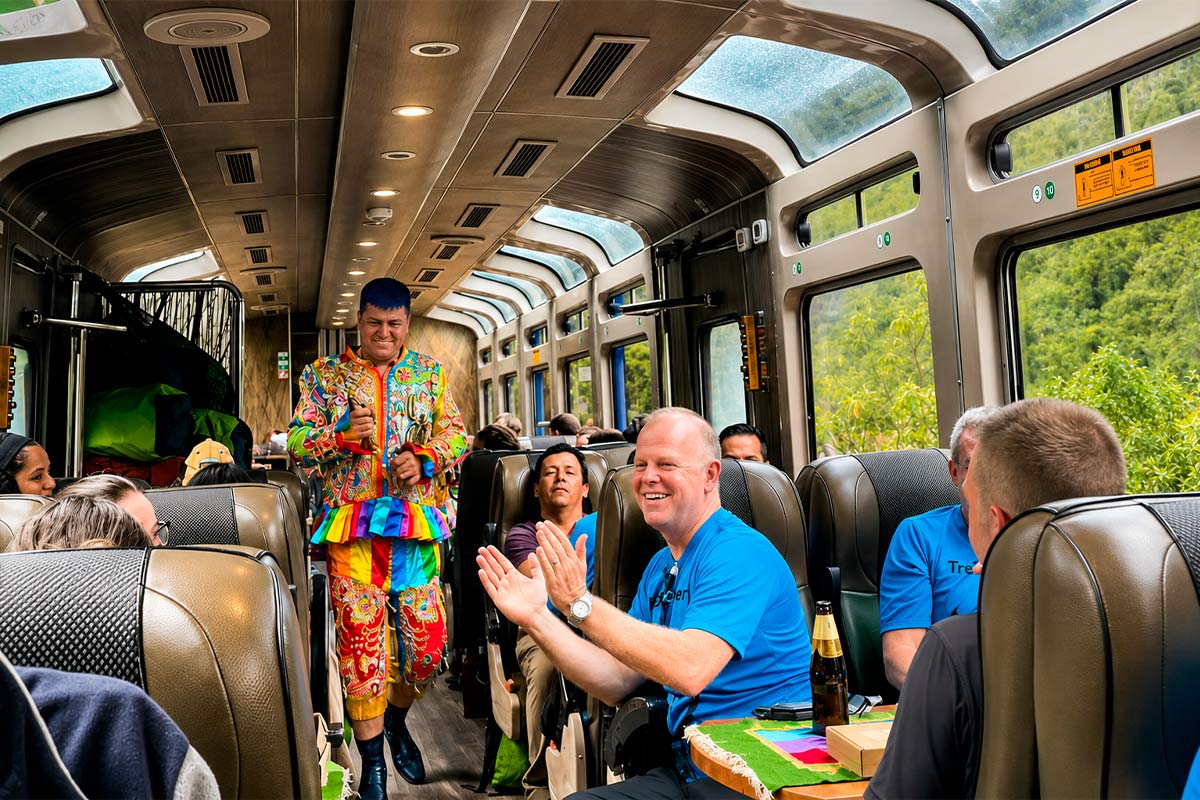
After Machu Picchu, you board the Vistadome or 360° train in Aguas Calientes — wide panoramic windows, the Urubamba river alongside, up the valley to Ollantaytambo. Our team meets you at the station and drives you back to your hotel in Cusco. It is the gentlest possible ending to four days on your feet.
Responsible travel: our team, the animals, and the Sanctuary
TreXperience is a 100% Peruvian, Cusco-based operator, and the people who make this trek possible, guides, chefs, muleteers, drivers, and local staff, work under fair pay and safe conditions. The second night's campsite in Collpapampa is locally owned, so part of what you spend stays in the valley you walk through.
The cargo mules that carry the camp are looked after too: loads are limited, your 7 kg duffel cap exists partly for them, and the muleteers who work with the animals are treated as the professionals they are.
Machu Picchu sits inside the Historic Sanctuary of Machu Picchu, a protected area, so pack out what you pack in, stay on the trail, and leave the route better than the last group did.
Salkantay Trek 4 Days - FAQs
These are the questions travelers ask us right before they book — answered the way we answer them in our Cusco office. For reference details like altitudes, weather, camps, and meals, see the Travel Information section above.
Salkantay Trek or Inca Trail; which one should I choose?
Both are great treks that end at Machu Picchu. The difference is what the four days feel like.
Choose the Classic Inca Trail if walking the original Inca stone road and entering through the Sun Gate is the dream — it is the only route that arrives that way, and it needs a permit that sells out months ahead. Choose Salkantay if the mountains themselves are the point: a higher pass (4,630 m vs 4,215 m), four completely different worlds in four days, wilder scenery with fewer rules — and no trail permit, so you can book much closer to your travel dates.
Salkantay is also the more comfortable camp experience: bell tents and a campfire at Salka Glamp, Andean huts in the cloud forest, and a hotel night before Machu Picchu. Our full comparison: Inca Trail vs Salkantay Trek.
Should I do the Salkantay Trek in 4 or 5 days?
The 4-day version, this page, gives you the full route and every highlight: Humantay Lake, the pass, the campfire, the Pachamanca and coffee day, and Machu Picchu. It is the right choice if your Peru itinerary is tight.
The Salkantay Trek 5 Days follows the same route at the same pace, then adds one more chapter: the climb to Llactapata, an Inca site facing Machu Picchu across the valley, where you camp with the citadel in view before your final descent. Same trek, one extra day, one more world — choose it if you have the time and want to see Machu Picchu from a viewpoint most visitors never reach.
How hard is the Salkantay Trek 4 Days — can I really make it over the pass?
Honest answer: Day 2 is hard, and most reasonably fit first-timers make it. The trek is moderate to challenging, about 48 km over four days, with Day 2 the test: 18 km and around 9 hours, crossing the pass at 4,630 m. There is nothing technical, no climbing, no exposure, just a long, steady uphill in thin air, then a long way down.
What gets people over the pass is not speed. Your guide sets a rhythm the whole group can hold, checks on everyone by name, and there is no prize for arriving first. One step at a time is exactly how everyone gets there — and you never face it alone.
To prepare: regular hill walks or stairs with a daypack in the months before, broken-in boots, trekking poles for the descent, and — more important than any training — at least 2 days in Cusco to acclimatize before you start.
Can I get altitude sickness on the Salkantay Trek?
It is possible on any trek this high, and preparation makes most of the difference: spend 2–3 days in Cusco first, drink plenty of water, eat light at the start, go easy on alcohol, and walk at your own pace. Headache and shortness of breath on Day 2 are common and usually pass with rest and fluids.
Your guide monitors the group throughout and carries a first-aid kit, emergency oxygen, and a satellite phone on every departure. If you have a heart or lung condition, are pregnant, or take regular medication, talk to your doctor before booking and tell us what we should know.
What happens if someone cannot continue the trek?
This is the question people are most nervous to ask, so here is the straight answer: you will not be left to manage it alone. Most problems — tiredness, altitude symptoms, an upset stomach — are handled on the trail with rest, fluids, oxygen, and a slower pace.
If someone truly cannot go on, your guide arranges the safest way out. Unlike more remote routes, the Salkantay Trail touches road access at several points after the pass, and your guide stays in contact with our Cusco office by satellite phone throughout. This is also exactly what travel insurance is for, which is why we recommend it so strongly.
What if it rains on my trek — or on the day of the pass?
We hike. Rain is part of the Andes, the trail is walked year-round, and honestly, Salkantay wrapped in moving cloud is its own kind of unforgettable. Your rain jacket lives in your daypack, the camp and your duffel stay dry, and hot meals keep coming whatever the sky does.
What we never do is gamble with genuinely unsafe conditions. Our guides read the mountain every day, safety decisions are theirs to make, and in the rare cases when authorities or conditions require a change, we contact you and rearrange. No one can promise you a clear morning at the pass — anyone who does is promising you someone else's photo.
How far in advance should I book the Salkantay Trek?
Salkantay needs no trail permit, which makes it far more flexible than the Inca Trail. What does sell out: Machu Picchu tickets and circuits, the panoramic train, and space at Salka Glamp on peak dates.
For May to September, book 2 to 3 months ahead to get Circuit 2 and your preferred date. Outside peak months, a few weeks is often enough, and last-minute departures are frequently possible — ask us.
How much does the Salkantay Trek 4 Days cost?
Our small-group departures start from US$598 per adult and US$568 for children and students. That price includes your Machu Picchu ticket, the night at Salka Glamp with its campfire, the Andean huts, the hotel in Aguas Calientes, all meals on the trail, the Pachamanca and coffee experiences, cargo mules for your duffel, and the panoramic train back, the full breakdown and private-tour prices are in the Price section above.
Are Machu Picchu tickets included, and which circuit will I have?
Yes — your Machu Picchu entrance is included, with Circuit 2 by default when available. If Circuit 2 is sold out for your date, we secure the best available alternative, Circuit 1 or Circuit 3, and confirm your final circuit as soon as tickets are issued. Details and official links are in the Travel Information section above.
Can I add Huayna Picchu or Machu Picchu Mountain?
Yes — after the guided tour on Day 4, you can climb Huayna Picchu Mountain or Machu Picchu Mountain for US$75 per person. You can only do one, the climb adds about 2–3 hours to your day, and tickets are very limited — book it with your reservation, not later.
Can I do the Salkantay Trek as a private tour?
Yes. A private departure gives you your own guide, chef, and trekking team, your own start date, and your own pace — and because there is no trail permit, it can often be arranged on shorter notice than an Inca Trail private. For groups of eight, private costs just US$52 more per person than joining a group. Full private prices are in the Price section above.
Can I hike the Salkantay Trek without a guide?
Parts of the route can technically be walked independently, but we do not recommend it for most travelers, and not because we sell treks. The route is remote, the weather turns fast, altitude problems are easier to miss when nobody is watching for them, and the logistics — camps, food, transfers, Machu Picchu tickets, the certified guide the citadel requires — take real local coordination.
A guided trek means someone carries the oxygen and the satellite phone, someone knows where you are, and the mountain gets to be the challenge — not the planning.
What makes this Salkantay Trek different from other companies?
The specifics, not the adjectives. Your first night is at our own Salka Glamp, at the foot of the mountain itself, and it ends around a campfire with hot drinks and a story about Salkantay before you cross it. You wake up with coffee or coca tea at your tent. At the pass, our guides make a coca-leaf offering to the Apu that you can join or simply watch. On Day 3 you bury your own Pachamanca under hot stones and follow coffee from the plant to your cup while it cooks — and your second night's campsite is locally owned, so part of what you spend stays in the valley.
Behind it: a 100% Peruvian team, groups that average 12 travelers, and a company founded by someone who started on these trails as a porter. The trek is the same mountain everyone sells. The four days around it are not.