



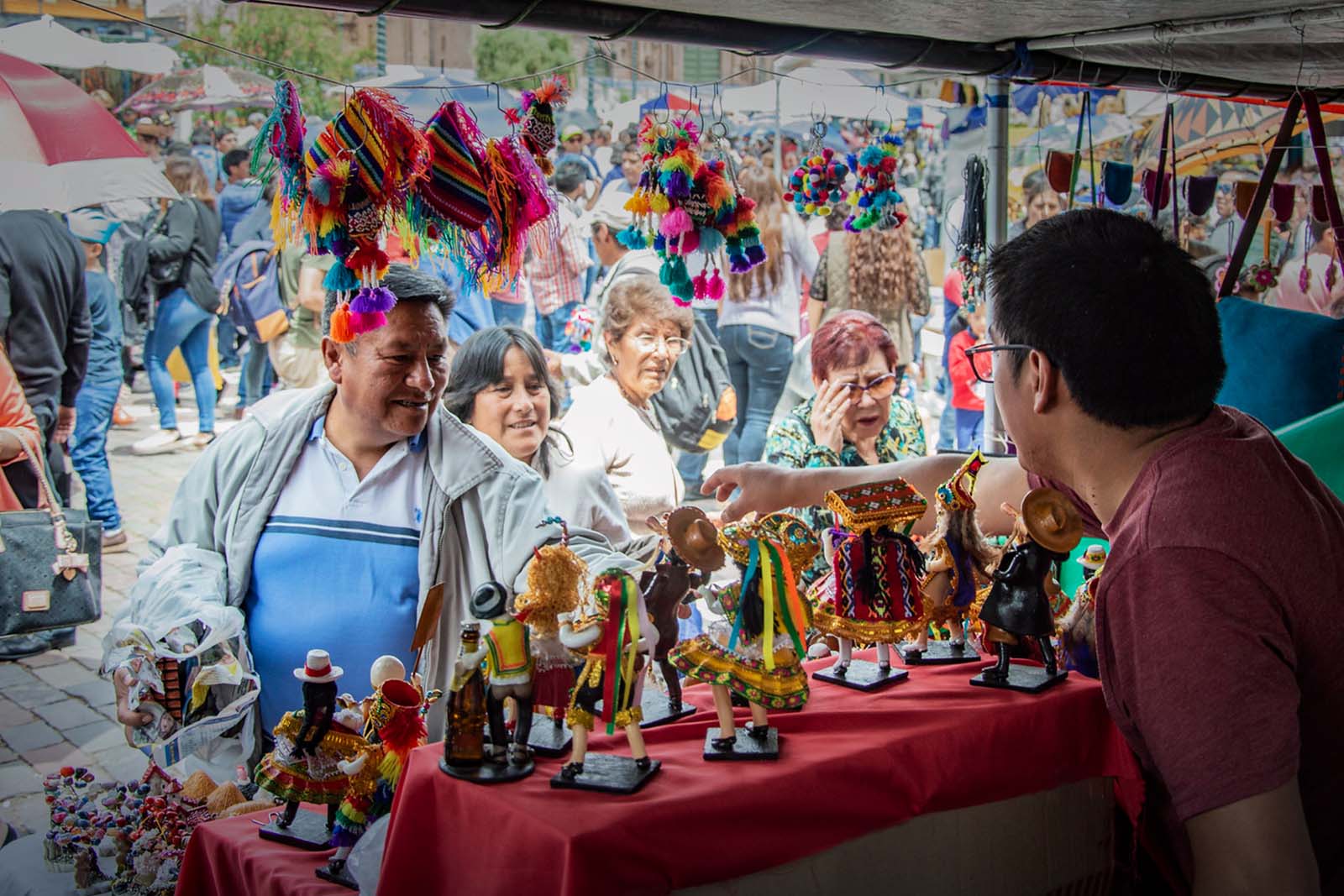
Every December 22, 23, and 24, Cusco’s Plaza de Armas turns into a huge open-air Christmas market: Santurantikuy. This traditional fair brings together hundreds of artisans and artists from the city and nearby communities, who come to offer Baby Jesus figurines, saints, retablos, textiles, ornaments, and everything you need to create your Nativity scene at home.
It is an event where faith, art, and living culture come together. Discover its origins, Cusco’s artisan traditions, what you can find at the fair, how to get there, essential tips, and other places worth visiting in Cusco during these festive days.
The History of Santurantikuy
During the evangelization of the Americas, the Nativity of Baby Jesus became a recurring and essential scene, taking root in the collective imagination, as well as in architecture and art.
Although the exact origins of Santurantikuy are not clear, it is believed to have begun in the 16th century. The oldest written account of Santurantikuy dates back to 1834, by Father José M. Blanco, who describes how Cusco families gathered near the atrium of the Cusco Cathedral to buy figures crafted by artisans in order to set up their own Nativity scenes at home.
Over time, this tradition became firmly established and eventually took on its current name, a blend of Spanish (santos) and Quechua (rantikuy), meaning “sale of saints.” Because of its cultural and historical importance, the fair was declared National Cultural Heritage in 2009 by the Ministry of Culture of Peru.
Cusco's Artisan Tradition
Cusco's handicrafts are very distinctive; they emerged practically at the same time as the renowned Cusco School of Painting in the 16th century. Their creators, known as imagineros, played a crucial role for the Church, creating images of Christ, the Virgin Mary, and the saints. Their immense production even surpassed that of the painters, filling countless churches across the continent and causing many works to be lost in anonymity.
Over time, the work of the imagineros evolved into artisan crafts, with their tradition passed down for years from masters to apprentices. Today, three representative lineages stand out for their distinctive styles: the Mendívil family, the Olave family, and the Mérida family, all based in the artisan district of San Blas. You can find some of their pieces at Santurantikuy.
 |  |
Location and celebration dates
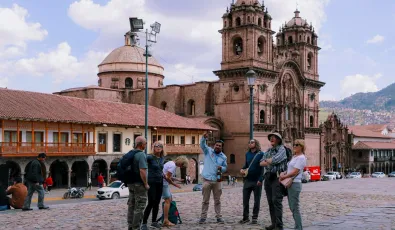
Santurantikuy takes place in Cusco’s Main Square every year on December 22, 23, and 24. Cusco artisans, sculptors, and imagineros gather here to showcase their creations at this unique Christmas fair, which enchants hundreds of locals and visitors from around the world.
How to get to the Plaza de Armas
From Alejandro Velasco Astete International Airport (Cusco):
- Taxi: The fastest and most comfortable option is to take a taxi directly from the airport. The ride takes about 15 to 20 minutes.
- Public buses (combis): A budget-friendly option, but crowded and less direct. From the airport, ask for public buses heading toward Avenida El Sol and get off near the stop called Almagro (about one block from the Main Square).
From other parts of Cusco:
- On foot: If you are in Cusco’s historic center, the Plaza de Armas is just a short walk from almost anywhere in the downtown area.
- Taxi: You can take a taxi from anywhere in Cusco. It is a convenient and generally inexpensive option.
What to expect at Santurantikuy
There is so much to see, discover, buy, and enjoy. Santurantikuy is a must-visit when you are in Cusco during the Christmas season. You’ll be amazed by the variety of products and the creativity of the artisans, potters, sculptors, silversmiths, tinsmiths, and other artists gathered for this major event.
Niño Manuelito
As part of the Christmas decorations, you can buy different representations of the legendary Niño Manuelito in various styles, especially the famous Niño de la Espina.
The clothing and accessories that artisans design to dress the Baby Jesus are truly eye-catching. These include small garments and outfits with Cusco-inspired themes, portraying the Baby Jesus as another native of this Andean region.
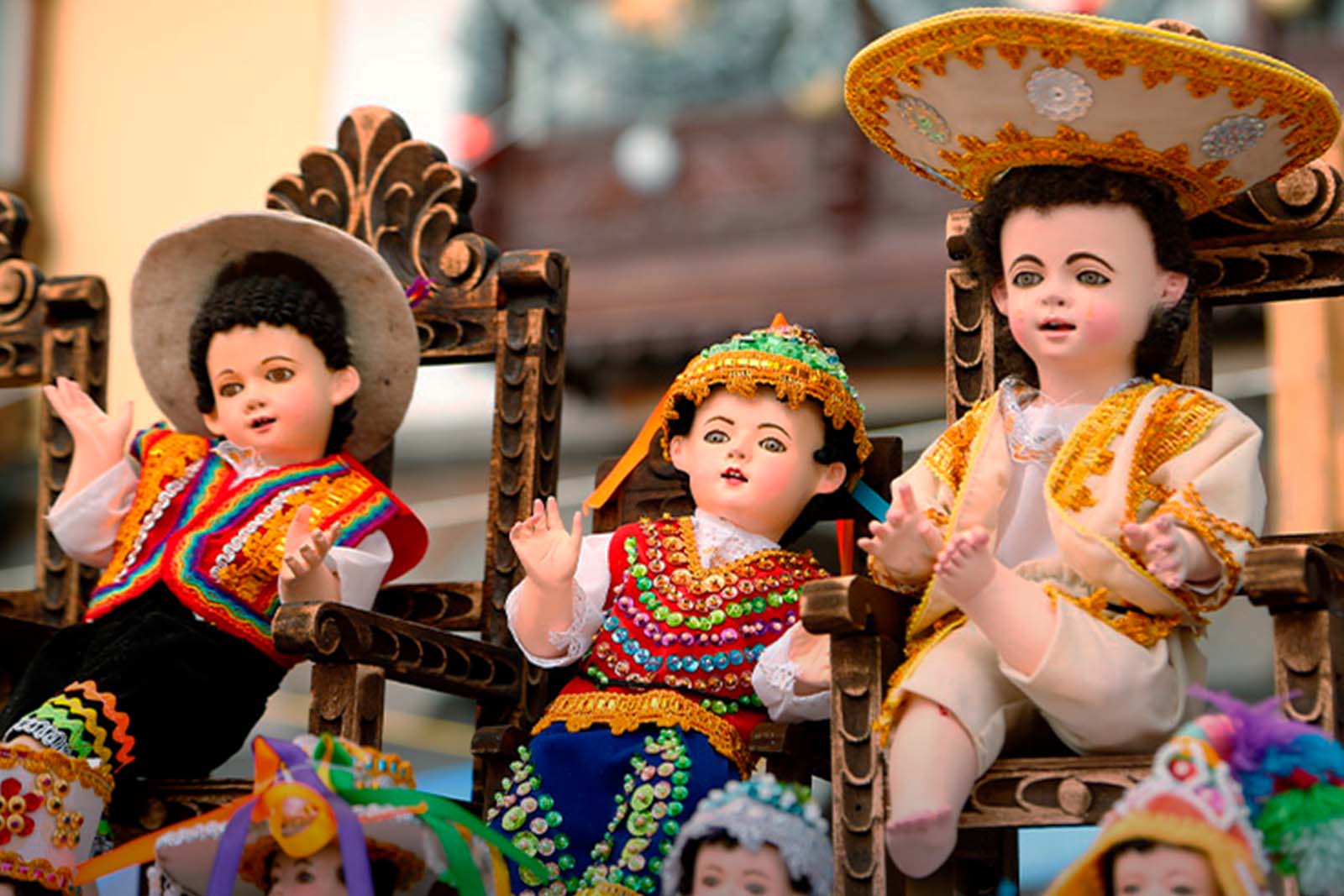
The most striking are the outfits inspired by traditional costumes and dances such as Contradanza del Cusco, Ccapac Chuncho, Doctorcitos, Qorilazo, Saqras, Danzaq, Terala, among others, which give the figures a warm, folkloric character.
 |  |
 |  |
Religious figures
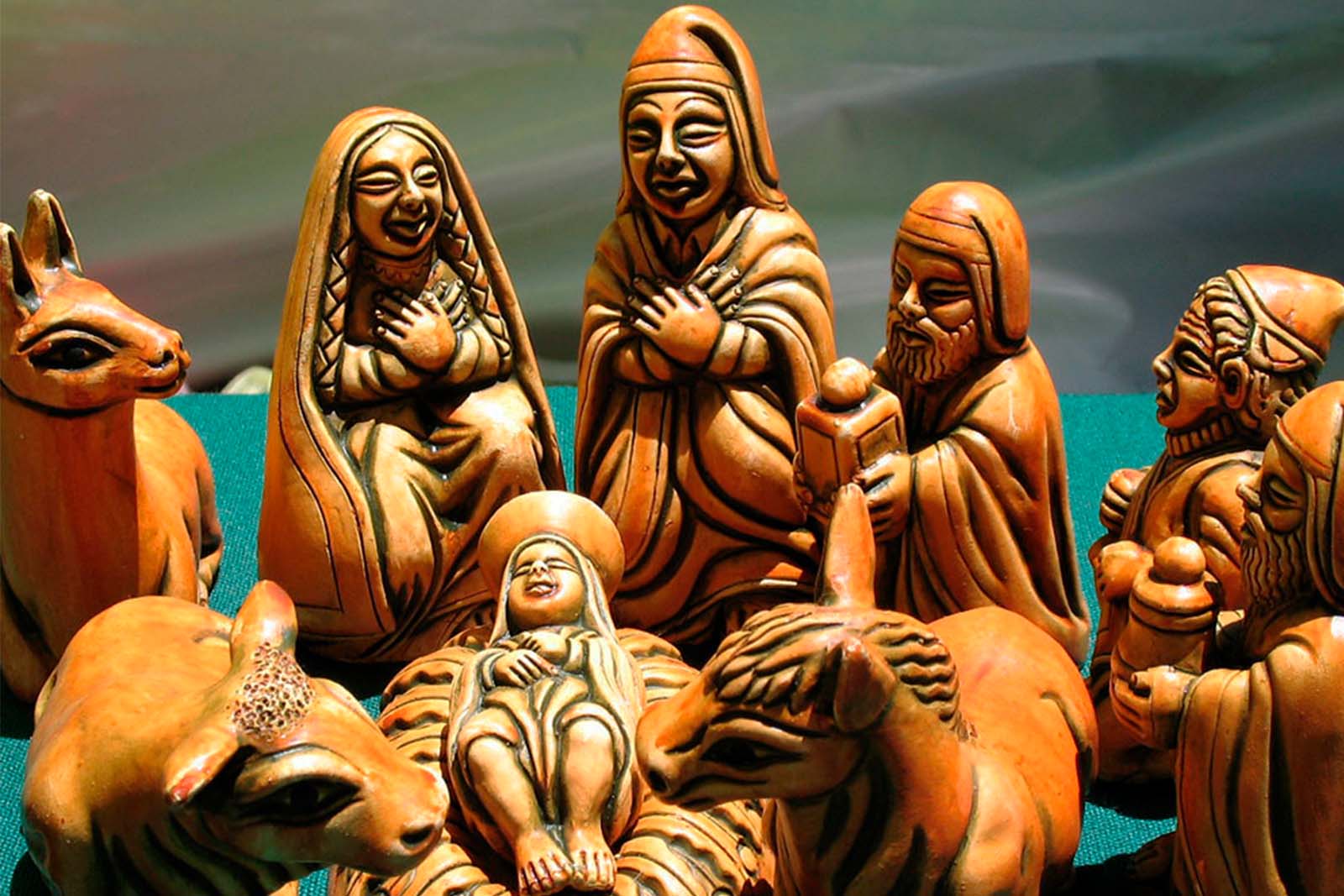
At Santurantikuy you’ll find everything you need to set up your Nativity scene: figures of Saint Joseph, the Virgin Mary, Baby Jesus, the cow, and the donkey – all essential pieces for creating a manger at home.
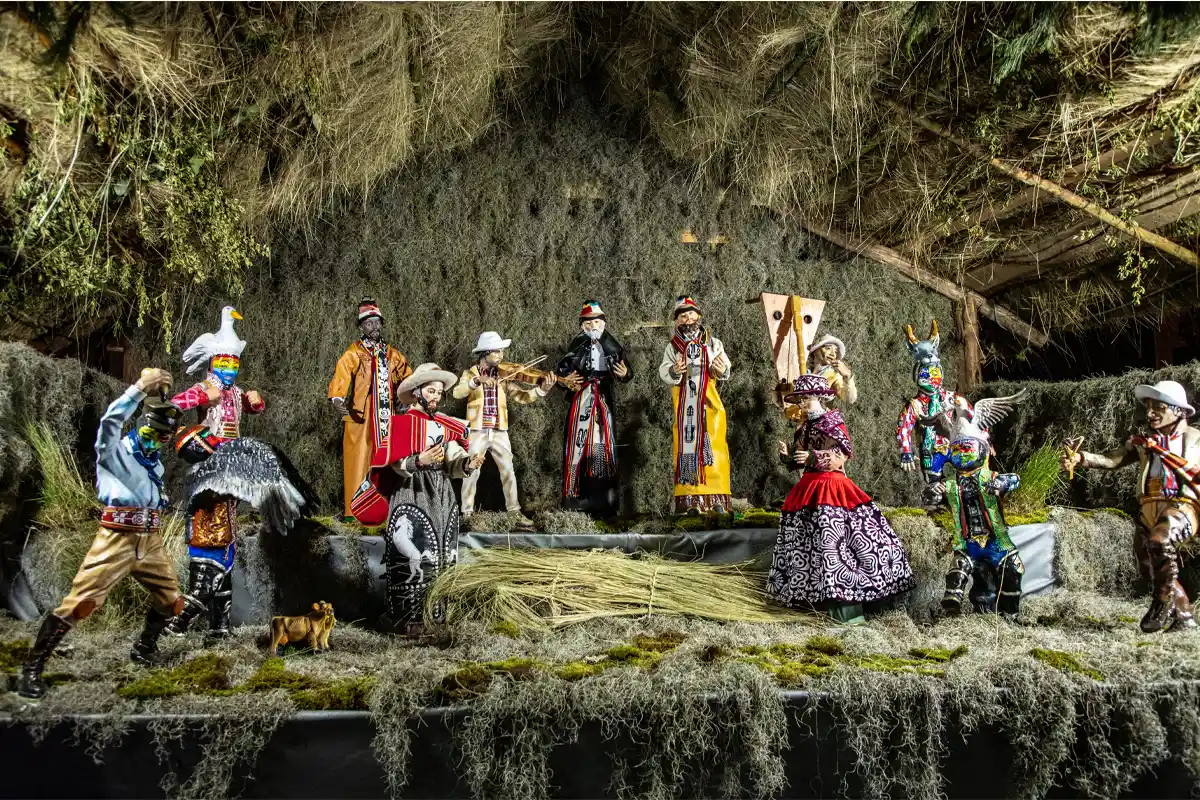
Artisans showcase their creations as sculptures in different sizes, Andean retablos, and paintings in various formats. These religious Nativity figures are combined with local elements such as cultural expressions, traditional outfits, everyday Andean scenes, and a strong regional identity, creating Nativity representations where Andean tradition and Christianity come together.
Christmas decorations
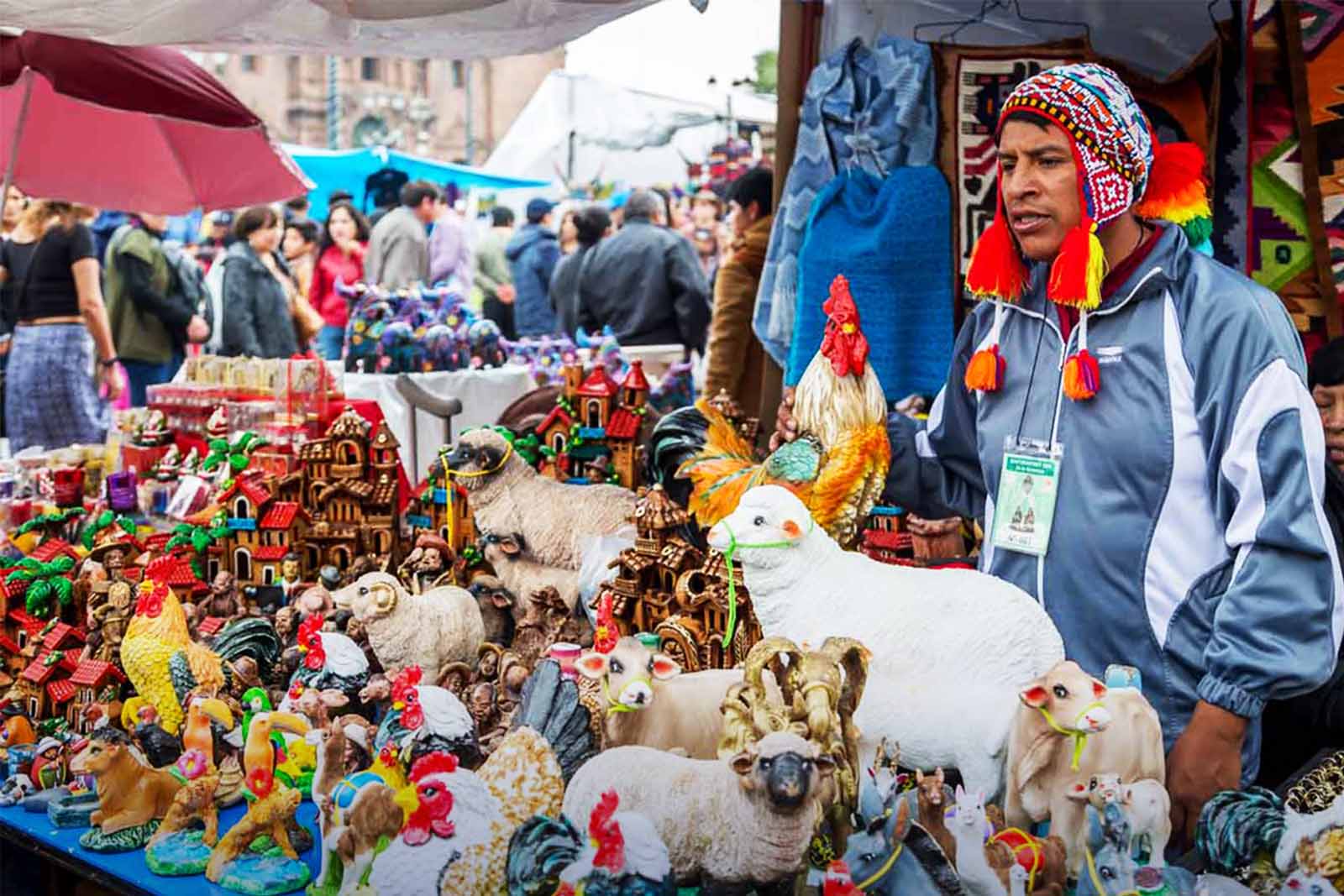
If you want to buy more pieces for your Nativity scene or decorations to brighten up your home, you will find everything you need in different materials, designs, and artistic styles.
There are colorful miniatures of houses, bridges, ponds, and extra characters such as shepherds, llamas, and other finely crafted details. You’ll also find colored papers and natural elements to complete the landscape of Bethlehem.
Once you visit this traditional fair, it’s almost impossible not to take home a souvenir or a gift for your family and friends.
 |  |
A celebration of art and culture
Over the years, Santurantikuy has become the perfect showcase for local artists from Cusco. During these days, professionals, students from the National University of Fine Arts of Cusco, apprentices, self-taught creators, and descendants of families with a long artistic tradition all come together here.
Andean handicrafts
Santurantikuy offers a great variety of Andean handicrafts: leatherwork, silver pieces worthy of the region’s tradition, intricate reliefs, and many types of finely crafted wooden creations. Whatever you decide to buy, Santurantikuy puts within your reach quality pieces with different finishes and styles, for all tastes and at good prices.
Clothing and textiles
You can buy unique clothing and many original garments, from blouses and T-shirts with Amazonian or Andean-inspired designs to truly artistic fashion pieces.
You’ll also find backpacks, handbacks, decorative pillows and unusual handwoven chullos (Andean hats) with cat ears, llama ears, and even magical beings inspired by the beliefs of their designers.

Local cuisine, music, and dance
During Santurantikuy you can enjoy typical Cusqueñan food and drinks. The large number of visitors encourages nearby traditional and tourist restaurants to open their doors and offer a wide variety of traditional dishes.
To complete this colorful art fair, you can also enjoy Cusco’s traditional music and dances. These shows are often part of lunch and dinner experiences in restaurants in the historic center, but the main reference point is the Centro Qosqo de Arte Nativo. Tickets are sold in person and must be purchased at least two hours before the show.
CENTRO QOSQO DE ARTE NATIVO
- Location: Av. El Sol 872, Cusco – Peru
- Show time: 19:00 – 20:15
Read more » Peruvian food
Essential tips for visiting Cusco during Santurantikuy
- Wear comfortable clothes and walking shoes.
- Bring a rain poncho or waterproof jacket in case it rains.
- Carry a backpack and keep your belongings secure.
- Wear your backpack on the front when the area is very crowded.
- Don’t rush to buy; take your time to look around and compare.
- If you’re in a group, agree on a meeting point from the beginning.
- Bring cash in Peruvian soles.
Other places to visit in Cusco during Christmas
The Santurantikuy fair is the main attraction of Christmas in Cusco, but there are other places you should not miss when you visit the city during the festive season.
Churches and museums
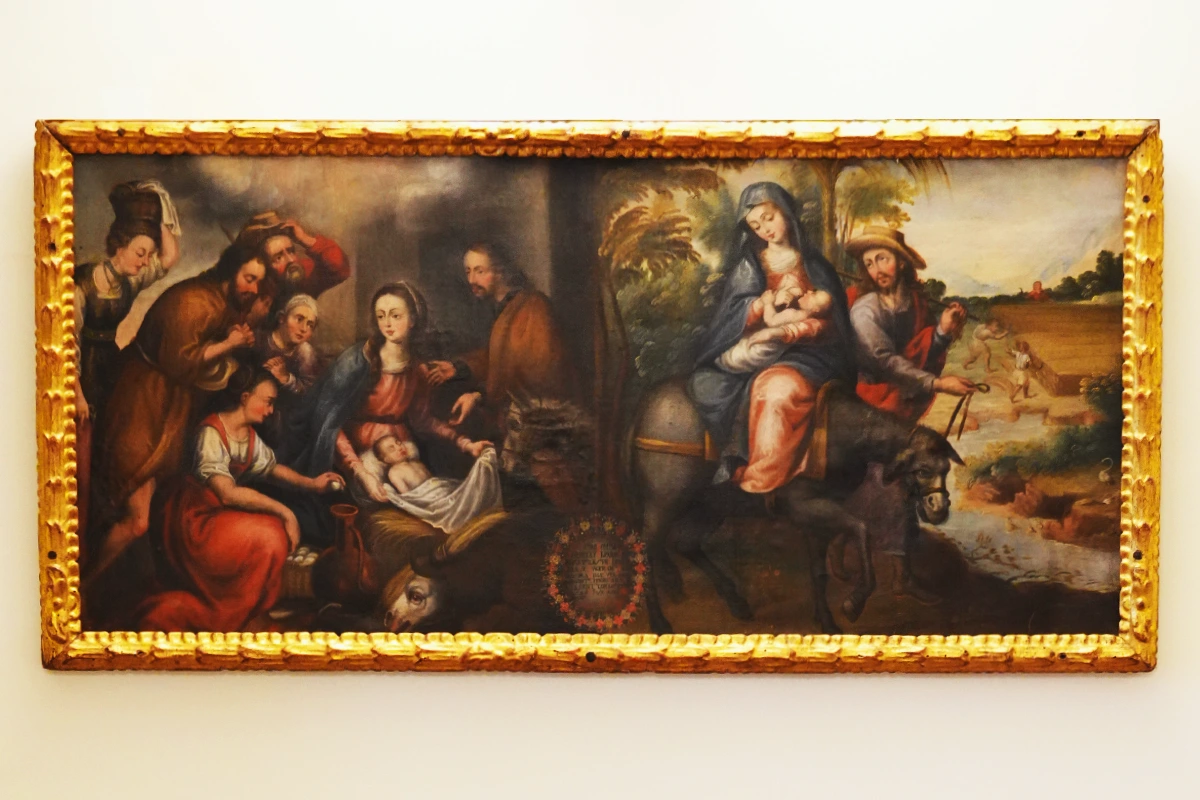
To complete your day, it’s ideal to visit other cultural attractions in the city, such as its museums and churches, which house works of art that tell and depict the life of Jesus from his birth, along with other masterpieces.
Church of the Society of Jesus
It is located right on the Plaza de Armas. The Church of the Society of Jesus is a Jesuit church built on the site of the former Amarucancha palace. It has a single nave, with the main altar standing out at the back, carved in a hybrid style from cedar wood and completely covered in gold leaf.
The altar is 21 meters high and 12 meters wide, and at its center you can see the image of the Virgin of the Immaculate Conception. Just above it, there is a painting representing the Transfiguration of Jesus.
Museum of Religious Art
The Museum of Religious Art is located on Hatun Rumiyoc Street, the same street where you will find the famous Twelve-Angled Stone. It is only about 300 meters from Cusco’s Plaza de Armas.
In the past, it was the palace of Inca Roca. Today, it treasures an important collection of colonial relics, including paintings, sculptures, carvings, retablos, religious furniture, and more. Some of the most famous and valuable pieces are the paintings The Virgin of the Milk and Christ Crucified.
Read more » Best museums in Cusco
Squares and streets of Cusco
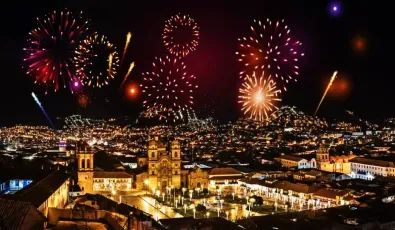
During Christmas in Cusco, the squares and streets fill with colors, lights, and Christmas decorations. The historic center of Cusco comes alive with people doing their Christmas shopping and strolling calmly through the city.
San Blas Square
San Blas is a famous Cusco neighborhood located just a few blocks from the Plaza de Armas. Known as the artisans’ quarter, it was traditionally the home of local artists and today has numerous workshops and galleries belonging to renowned Cusqueñan artists. Here you can admire their work and, if you wish, buy a piece you like.
At the end of Cuesta de San Blas, you will reach San Blas Square, a pleasant place to take a break. Some of its highlights are the gallery of the artisan lineage Hilario Mendívil and Family, and the San Blas Temple.
The San Blas Temple is one of the colonial architectural gems of this neighborhood. The church was built over a huaca, or sacred Inca site. Inside, the beautifully carved pulpit made of Andean cedar by an anonymous artist is especially remarkable.
Christmas trees
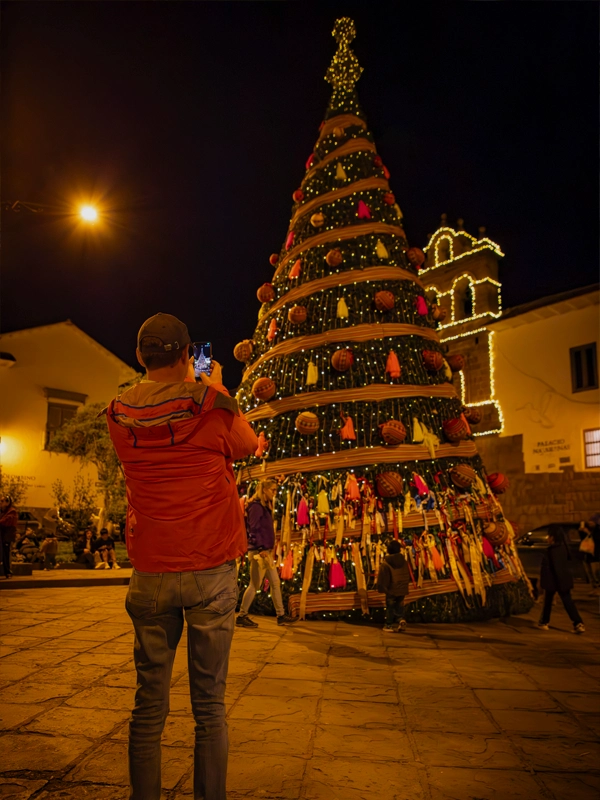
During the three days of Santurantikuy, the squares of the historic center display huge Christmas trees and Andean-themed decorations in many different shapes, outdoing themselves year after year and offering a colorful, festive show for everyone. Many squares even set up their own Nativity scenes, sometimes life-size, recreating the birth of Baby Jesus in a unique way.
 |  |
Make the most of your time in Cusco and visit Santurantikuy to turn your travel itinerary into a diverse, complete experience that brings together living Andean culture with Peru’s impressive monumental and natural attractions. We can help you and organize your tailor-made Cusco tour.
Santurantikuy FAQs
What materials do artisans use to create Santurantikuy crafts?
At Santurantikuy, you’ll find pieces mainly made from ceramic and clay for Nativity sets, as well as carved wood, leather, traditional silverwork, and textiles woven from alpaca and sheep’s wool. Artisans also use fabrics, paint and colored paper. This mix of materials gives every figure, altarpiece, and decoration its own personality and story.
How does Santurantikuy contribute to the preservation of Andean traditions?
Santurantikuy keeps alive the legacy of Cusco’s traditional image-makers and artisan families, such as the workshops of San Blas, who pass down their techniques from generation to generation. The fair is a living space where Nativity sets, altarpieces, textiles, and religious pieces are still created with Andean iconography, blending Christian symbols with elements of the local worldview.
Its recognition as Cultural Heritage of the Nation also brings institutional support and visibility, encouraging more artisans to preserve their crafts and unique styles.
When is the least crowded time to experience Santurantikuy?
In general, the quietest hours are in the morning. If you prefer a calmer atmosphere to stroll around and take photos, it’s best to visit early on December 22 or 23, when many locals are still working and there are fewer visitors. On December 24, especially from midday into the night, the Plaza de Armas becomes much more crowded, so it’s better to avoid those hours if you don’t enjoy large crowds.
How can I support the local artisans at Santurantikuy?
The most direct way to support them is to buy their products in a conscious and respectful way, giving priority to stalls where the artisan personally explains how each piece was made. Paying a fair price and avoiding aggressive bargaining helps make their work sustainable.
You can also ask about the origin of the pieces, choose items that are signed or carry the workshop’s seal, and share their stories on social media, mentioning the artisan or collective by name. That way, you not only take home an authentic souvenir, but also help ensure their art has a future.
How do santurantikuy market vendors typically price their products?
In most cases, prices are based on the cost of materials (for example, silver, fine wool, or special paints), the time invested, and the complexity of the design. Unique pieces that are fully handmade and highly detailed such as altarpieces, images of the Niño Manuelito, or carved wooden sculptures, are usually more expensive than miniatures produced in larger quantities.
The reputation of the workshop or artisan family also plays a role: well-known lineages may value their work more highly. Some vendors leave a small margin for negotiation, but many set their prices with fair payment in mind, especially at such an important fair as Santurantikuy.


Add new comment