


The rainbow mountains in Peru are known for the natural bands of color that stretch across their slopes. Three of the best-known are found in Cusco: Vinicunca, Palcoyo, and Pallay Punchu. Although they share similar colors, each has its own landscape and hiking trails.
In this blog, we'll cover where each mountain is located, how to get there, how long the hikes take, and what you should know before deciding which one to visit.
Where Are the Rainbow Mountains in Peru Located?
All three mountains are located south of Cusco, but in different provinces. Vinicunca lies in the Vilcanota mountain range, near the snow-capped Ausangate Mountain, and can be reached via Cusipata or Pitumarca. Palcoyo is in the Checacupe district of Canchis Province, while Pallay Punchu is near Layo, in Canas Province, close to Langui-Layo Lake.
All three can be visited on a day trip from Cusco. However, travel times and hiking distances vary depending on which mountain you choose and the route you take.
Why Are These Mountains So Colorful?
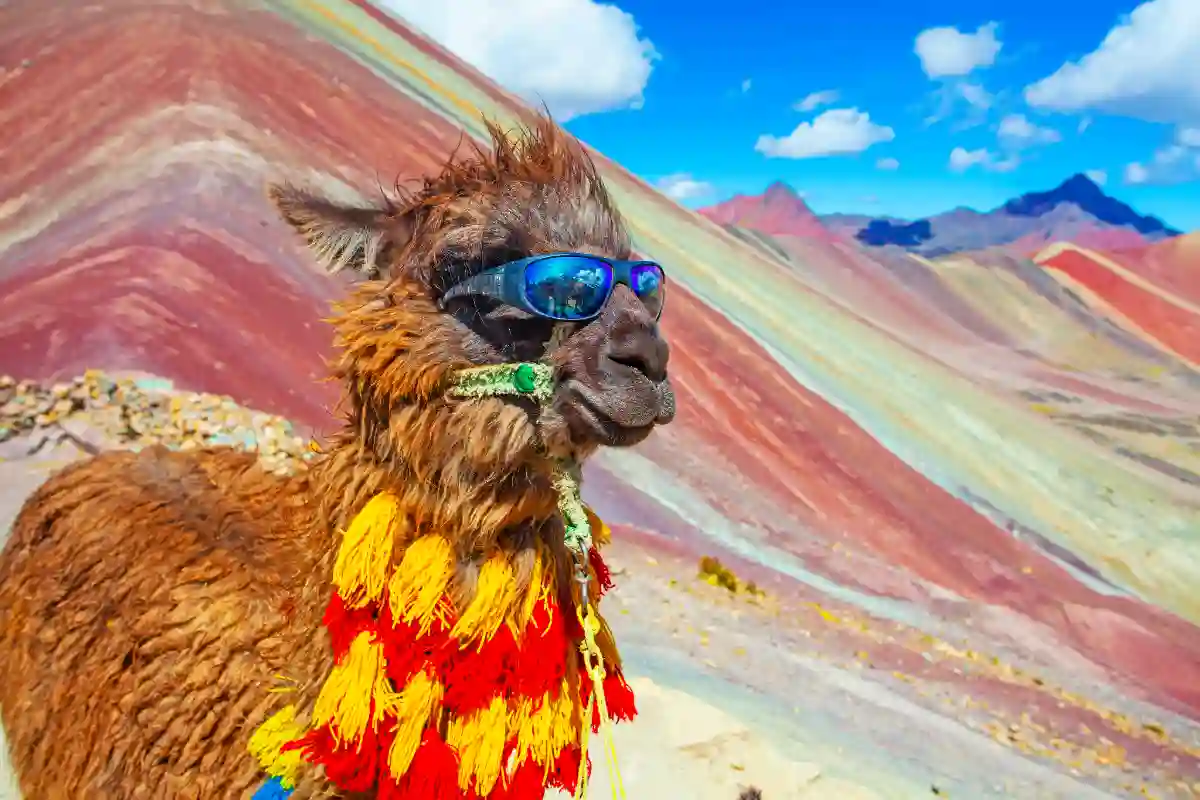
The colors of these mountains formed over millions of years. First, layers of sediment containing different minerals built up and gradually hardened into rock. Later, movements in the Earth's crust pushed these layers upward as the Andes formed. Over time, erosion caused by wind and water exposed the colorful bands we see on the mountainsides today.
The different shades come from the minerals found in each layer of rock. Reddish tones are mainly linked to iron, while yellow shades can come from minerals such as limonite. The greens, whites, and purples result from other combinations of minerals and sediments. Moisture in the ground and sunlight can also make the colors appear brighter or more muted.
Vinicunca or the Seven-Color Mountain
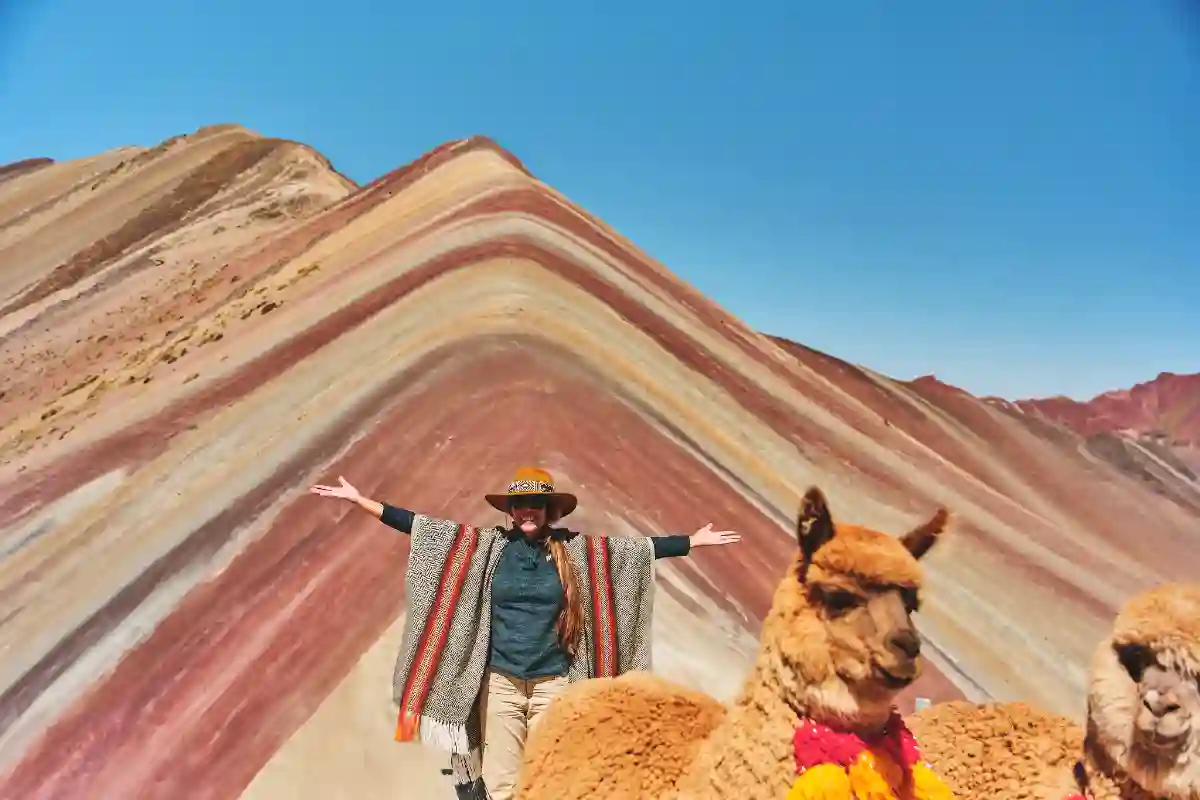
Vinicunca is the best-known rainbow mountain in Cusco. Its slopes are covered in bands of red, yellow, green, and pink that can be seen from the main viewpoint. The hike takes you through one of the most recognizable landscapes in the Vilcanota mountain range.
Where Is Vinicunca and How Do You Get There?
Vinicunca is located in the Vilcanota mountain range, southeast of Cusco. You can reach it through Cusipata, in Quispicanchi Province, or Pitumarca, in Canchis Province. The drive from Cusco takes about 3 to 4 hours, depending on the route and road conditions. There are two main routes to Vinicunca:
- Via Cusipata: From Cusco, follow the road toward Sicuani and take the turnoff to Cusipata. Continue through Chillihuani to Llaqto, where the approximately 3 km hike to the mountain begins.
- Via Pitumarca: Travel through Checacupe and Pitumarca to Cayllahuire, in the rural community of Pampachiri. From here, you can continue on foot or take a locally operated ATV for part of the journey.
Elevation, Hiking Time, and Difficulty
Vinicunca sits at around 16,522 ft (5,036 m) above sea level, although some viewpoints in the area rise above 17,060 ft (5,200 m). The trail has gradual uphill sections, followed by a steeper climb as you approach the main viewpoint.
| Detail | Information |
| Elevation | 16,522 ft (5,036 m) |
| Distance | 1.9 miles (3 km) one way via Cusipata |
| Hiking time uphill | Approximately 1 hour and 45 minutes |
| Round-trip hiking time | 3 to 4 hours |
| Difficulty | Moderate to challenging |
The biggest challenge is the high altitude, which can make even the gentler sections feel tiring. That's why it's best to spend at least one or two days in Cusco to acclimatize before starting the hike.
What to See During Your Visit
Besides Vinicunca's colorful slopes, you'll also see some of the landscapes that make this part of the Andes so special:
- Ausangate Mountain: One of Peru's highest snow-capped peaks, visible from the higher sections of the trail on clear days.
- High Andean landscapes: Wide stretches of ichu grassland, mountains, and grazing areas where you can often spot llamas and alpacas.
- Red Valley: A nearby area known for its reddish slopes. You can add it to your hike if weather conditions allow.
Entrance Fees and Visiting Hours
Access to Vinicunca is managed by local communities. According to the entrance fees listed by Peru's Ministry of Foreign Trade and Tourism (Mincetur) in June 2026, the prices are as follows:
| Visitor Type | Entrance Fee |
| Foreign adults | S/ 30 |
| Peruvian adults | S/ 15 |
| Foreign children | S/ 15 |
| Peruvian children | S/ 7.50 |
Listed visiting hours: Daily, from 6:00 am to 5:00 pm.
Entrance fees must be paid in Peruvian soles and are not covered by the Cusco Tourist Ticket. Visiting the Red Valley also requires an additional fee. Since prices and visiting hours may change depending on local community regulations or weather conditions, it's best to confirm them before your trip.
Palcoyo and Its Rainbow Mountains
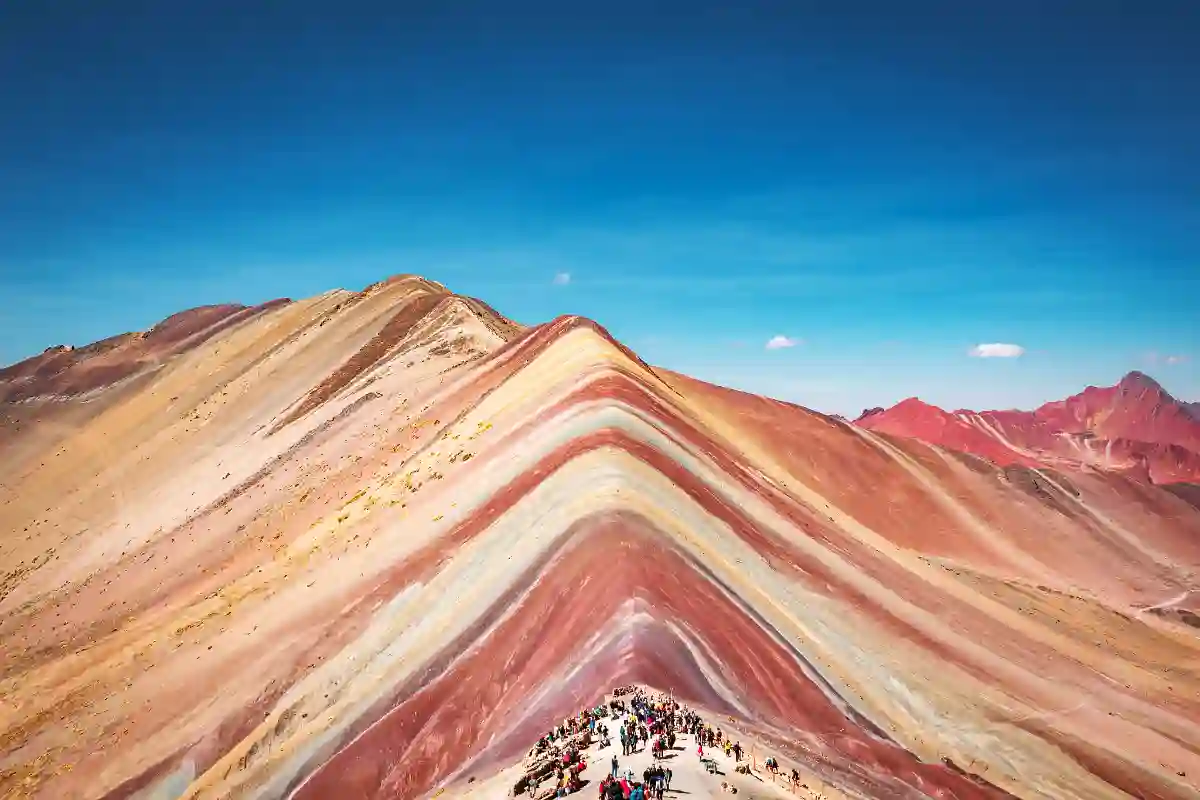
Palcoyo is a great alternative to Vinicunca for those who prefer a shorter hike. Its main attraction is a group of three colorful mountains that you can admire from different viewpoints along the trail. The area is also home to a stone forest and offers wide views of the Vilcanota mountain range.
Where Is Palcoyo and How Do You Get There?
Palcoyo is located in the Checacupe district of Canchis Province, about 90 miles (145 km) southeast of Cusco. The drive from the city takes approximately 3.5 to 4 hours.
To get there, follow the Cusco–Sicuani highway to Checacupe. From there, take a turnoff onto an unpaved road that leads to the Palcoyo parking area, where the hike begins. You can also take public transportation to Checacupe and hire a local driver for the final stretch. Just make sure to arrange your return trip in advance.
Elevation, Hiking Time, and Difficulty
Palcoyo's viewpoints sit at around 16,076 ft (4,900 m) above sea level. Most of the trail has gentle slopes, although the climb to the Stone Forest is a little steeper and requires more effort.
| Detail | Information |
| Elevation | Approximately 16,076 ft (4,900 m) |
| Distance | 1.9 miles (3 km) round trip |
| Hiking time uphill | 45 minutes to 1 hour |
| Round-trip hiking time | 1.5 to 2 hours |
| Difficulty | Easy to moderate |
Although the trail isn't technically difficult, the high altitude can make you feel tired or short of breath. It's best to spend at least two days in Cusco to acclimatize before the hike and take your time along the trail.
What to See During Your Visit
Palcoyo has several attractions to see along the hiking trail and on the drive to the mountain:
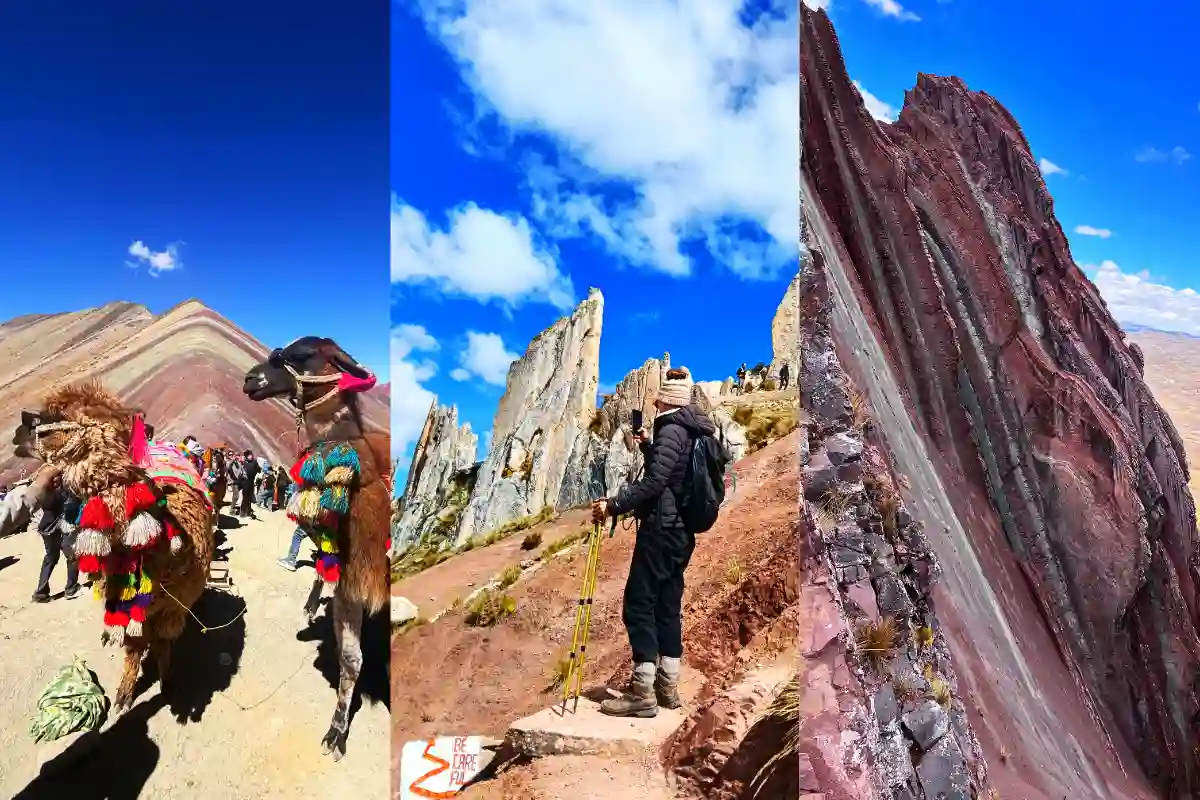
The three rainbow mountains: These mountains have bands of red, yellow, green, and ochre. Along the trail, different viewpoints offer a closer look at their shapes and colors.
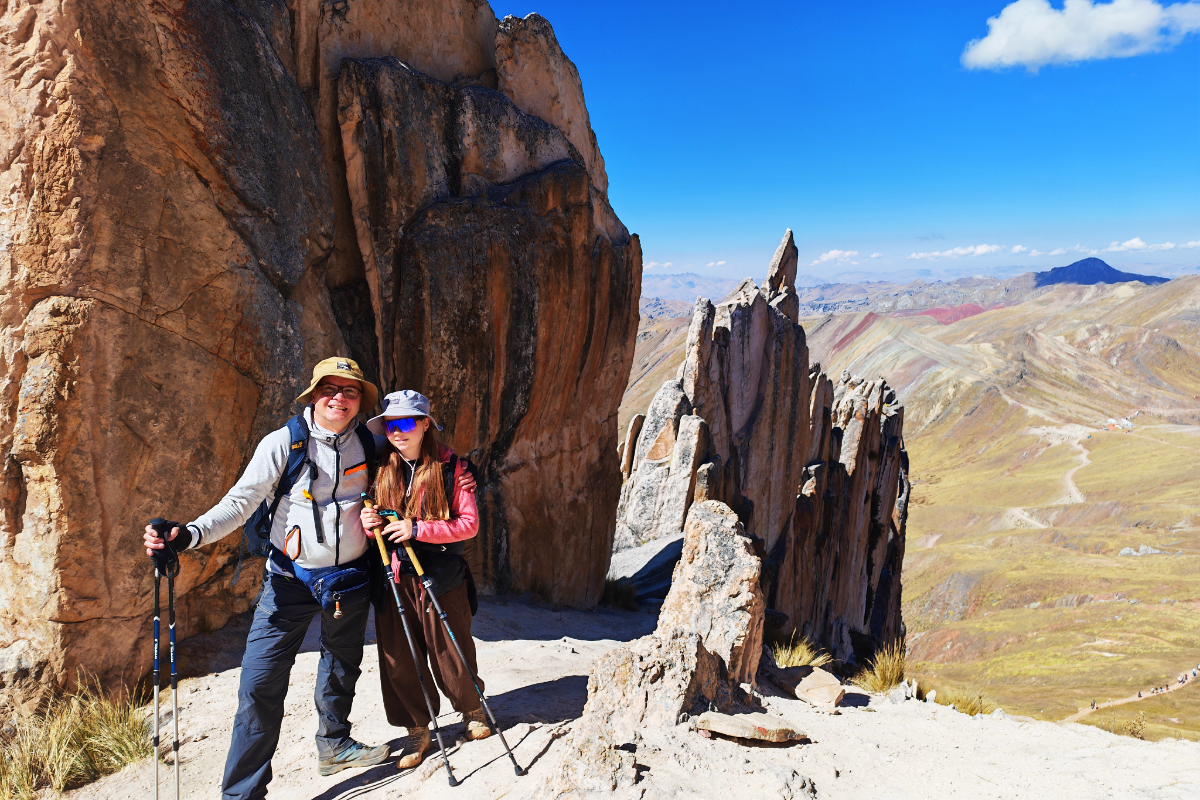
- Stone Forest: A group of tall, pointed rock formations shaped by erosion over time. It's located at the highest part of the trail.
- Ausangate Mountain: On clear days, you can see this snow-capped peak in the distance, along with other mountains in the Vilcanota range.
- High Andean landscapes: Wide stretches of ichu grassland where you can often spot llamas and alpacas grazing.
- Red River (Puka Mayu): Located along the access road, this river is known for its reddish water, which is especially noticeable during the rainy season.
Entrance Fees and Visiting Hours
Access to Palcoyo is managed by the local community of the same name. According to prices reported by tour operators in 2026, the estimated entrance fees are:
| Visitor Type | Estimated Entrance Fee |
| Foreign adults | S/ 20 |
| Peruvian adults | S/ 15 |
Visiting hours: Daily, from 6:00 am to 4:00 pm, according to Peru's Ministry of Foreign Trade and Tourism (Mincetur).
Entrance fees must be paid in cash, in Peruvian soles, at the entrance checkpoint. They are not included in the Cusco Tourist Ticket. Since the local community may change the fees, it's best to confirm the current prices before your visit.
Pallay Punchu and Its Striking Rock Formations
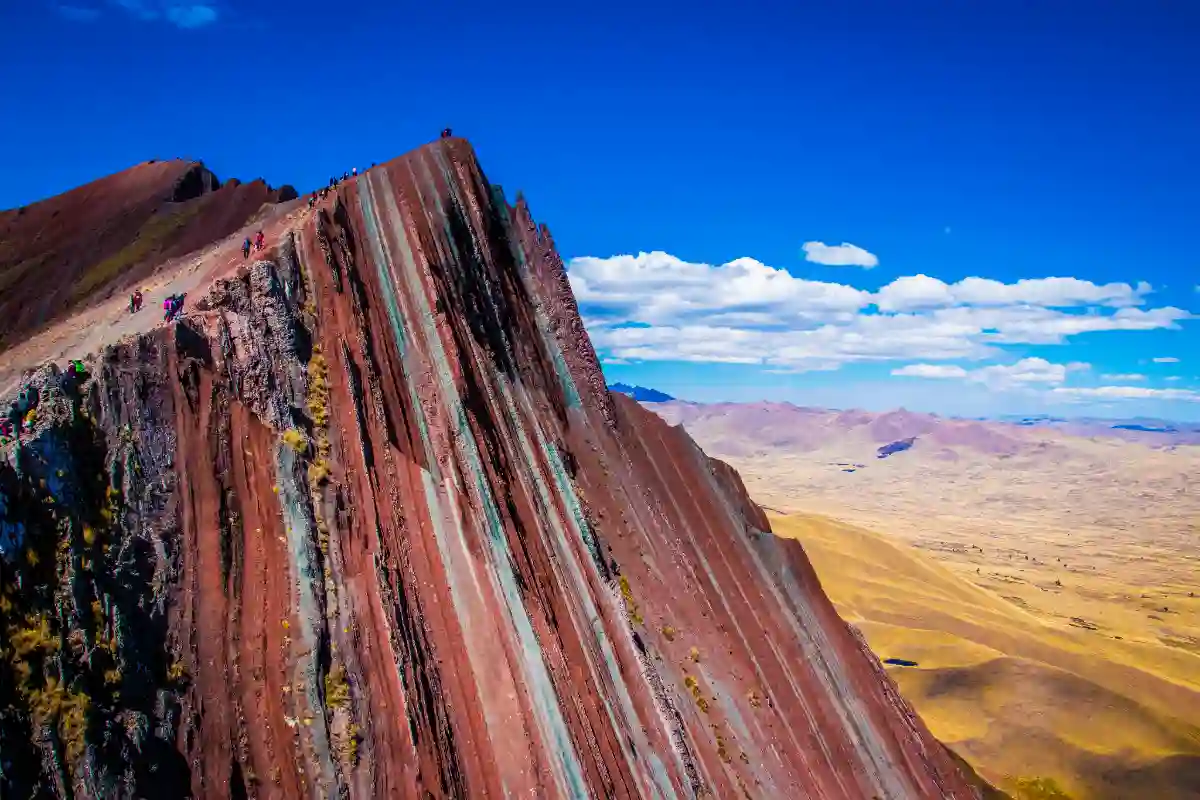
Pallay Punchu is known for its sharp, jagged ridges and bands of red, ochre, and green. Its name comes from Quechua: pallay refers to the patterns found in traditional Andean textiles, while punchu means poncho. Because of its unusual rock formations, the name can be understood as "patterned poncho." It's also known as the Sharp Mountain of Colors.
Where Is Pallay Punchu and How Do You Get There?
Pallay Punchu is located south of Cusco, between the districts of Layo in Canas Province and Marangani in Canchis Province. It's about 118 miles (190 km) from Cusco, and the drive to the trailhead takes approximately 4 hours.
The most commonly used route passes through Sicuani and continues toward Layo. From there, a dirt road leads to the Kuntur Sayana parking area, where the hike begins. You can also take a bus from Cusco to Sicuani and hire local transportation for the remaining journey.
Elevation, Hiking Time, and Difficulty
Pallay Punchu reaches an elevation of approximately 15,912 ft (4,850 m) on the Layo side. The hike includes steep climbs and sections of uneven terrain, especially as you get closer to the rock formations.
| Detail | Information |
| Elevation | 15,719 to 15,912 ft (4,791 to 4,850 m), depending on the area |
| Distance | Up to 1.9 miles (3 km) one way via Kuntur Sayana |
| Hiking time uphill | 45 minutes to 1 hour and 30 minutes |
| Round-trip hiking time | 1.5 to 3 hours, depending on the route |
| Difficulty | Moderate to challenging |
The main challenges are the high altitude and steep slopes. It's best to spend at least two days in Cusco to acclimatize before the hike and wear hiking shoes with good grip. Stay away from the edges of the ridges, as the ground can be unstable in some areas.
What to See During Your Visit
Besides its unusual rock formations, Pallay Punchu has several natural attractions worth seeing:
- Colorful ridges: From the viewpoints, you can see narrow peaks and layers of rock that form the mountain's steep, jagged ridges.
- Langui-Layo Lake: A large, high-altitude lake surrounded by mountains and grazing areas, visible from the viewpoints.
- Apu Taqllo: A nearby mountain massif that forms part of Pallay Punchu's landscape and holds cultural significance for local communities.
- High Andean flora and fauna: Along the trail, you can see stretches of ichu grassland, as well as llamas and alpacas.
Entrance Fees and Visiting Hours
Access to Pallay Punchu is managed by local communities. The estimated entrance fee is S/ 10 per person for both Peruvian and foreign visitors.
| Detail | Information |
| General admission | Approximately S/ 10 |
| Visiting hours via Layo | 7:00 am to 5:00 pm |
| Recommended months | April to November |
Entrance fees must be paid in Peruvian soles and are not included in the Cusco Tourist Ticket. The listed visiting hours are based on tourism records for the Layo route and may change depending on access conditions. It's best to confirm the current fees before your visit and plan to arrive in the morning, when visibility is usually better.
Which Rainbow Mountain Should You Visit?
The main difference between these mountains isn't just their colors, but also the hiking experience. At Vinicunca, the hike leads to a main viewpoint overlooking the mountain. At Palcoyo, the trail takes you past several colorful mountains, while Pallay Punchu involves a steeper climb toward its jagged rock formations.
| Mountain | Main Attractions | Difficulty | Best For |
| Vinicunca | Rainbow Mountain, panoramic viewpoint, Ausangate Mountain, and the Red Valley as an optional addition. | Moderate to challenging | Travelers who want to visit Peru's most famous Rainbow Mountain and don't mind a more demanding hike. |
| Palcoyo | Three rainbow mountains, Stone Forest, Red River along the access road, and views of Ausangate. | Easy to moderate | Travelers who prefer a shorter hike with gentle slopes and several attractions along the way |
| Pallay Punchu | Colorful rocky ridges, views of Langui-Layo Lake, and the surrounding Apu Taqllo landscape. | Moderate to challenging | Travelers looking for unusual rock formations, less crowded trails, and a hike with steeper slopes. |
What Is the Best Time to Visit the Rainbow Mountains?
The dry season, from April to October, generally offers the best conditions for visiting Cusco's rainbow mountains.
- Dry season (April to October): Rain is less frequent, trails are usually in better condition, and clearer skies make it easier to appreciate the mountains' colors.
- Rainy season (November to March): Rainfall increases, and fog, hail, or snow can reduce visibility and make hiking more difficult.
Vinicunca and Palcoyo welcome visitors year-round, while the listed visiting season for Pallay Punchu via Layo runs from April to November. If you plan to visit Pallay Punchu outside this period, it's best to check access conditions in advance.
What to Pack for the Hike
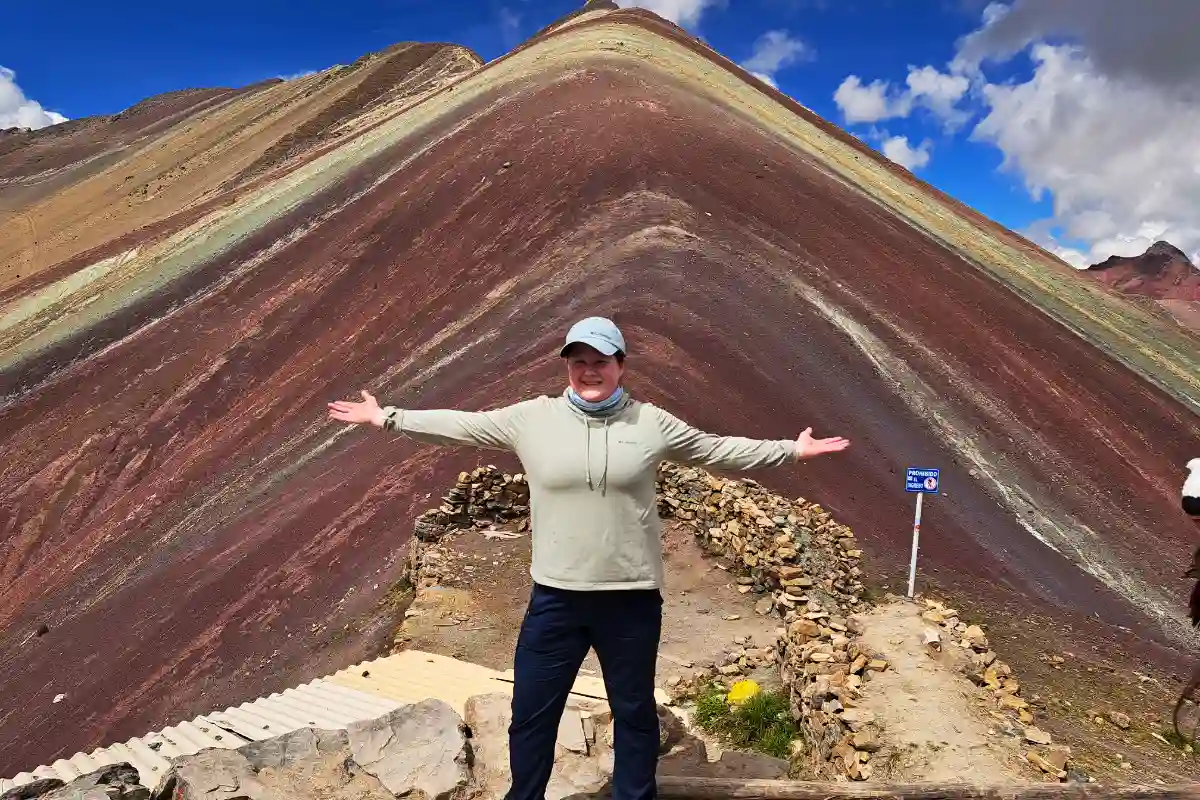
Bring a small daypack with everything you need for the hike and the changing mountain weather.
- Warm layers to protect you from the cold.
- Hiking shoes with good grip.
- Sunscreen, sunglasses, and a sun hat.
- A waterproof jacket or rain poncho.
- Plenty of water and light snacks.
- A warm hat and gloves for cold temperatures.
- Trekking poles for extra stability.
- Your ID and cash in Peruvian soles.
- Personal medications and basic toiletries.
Tips for Visiting the Rainbow Mountains
- Spend at least two days in Cusco to acclimatize before your hike.
- Start early to make the most of the morning and enjoy better visibility.
- Hike at your own pace and take breaks whenever you need them.
- Check the weather forecast before heading out.
- Confirm the entrance fees and trail conditions before your visit.
- Stay away from the edges of ridges and areas with unstable ground.
- Respect wildlife, take your trash with you, and follow the guidelines set by local communities.
Frequently Asked Questions About the Rainbow Mountains in Peru
Do the Colors Look the Same in Person as They Do in Photos?
Not always. The colors are natural, but their intensity depends on the lighting, weather, and moisture in the ground. Some photos are also edited with filters or increased saturation, making the colors look brighter than they do in person.
Can You Visit Two Rainbow Mountains in One Day?
It's possible with private transportation and a well-planned itinerary, but it's not recommended. The mountains are far apart, and traveling between them takes several hours. It's better to set aside a full day for each one.
Can Children Visit the Rainbow Mountains?
It depends on their age, health, and experience hiking at high altitudes. Palcoyo has a shorter trail, but it's still located at a very high elevation. It's best to check with a pediatrician before planning the trip, especially if you're traveling with young children.
Do You Need to Book a Tour in Advance?
You don't have to book a tour, as you can also visit the mountains on your own. However, booking ahead makes it easier to arrange transportation and a guide, especially during the peak tourist season from May to September.
Can You Visit the Rainbow Mountains Year-Round?
Vinicunca and Palcoyo are open to visitors throughout the year. For Pallay Punchu, official tourism records for the Layo route list April to November as the visiting season, although some tour operators offer trips during other months. In any case, rain, snow, or poor road conditions can affect access to the mountains.


Wish to visit Peru
Wish to visit Peru
Peru is beautiful Country!
Whenever you are ready to travel, contact us, and we will help you to organize an amazing trip to Peru and Machu Picchu.
Add new comment