





Planning flights in Peru can feel confusing at first, different altitudes, seasonal schedules, and routes that don’t always run every day. This guide makes it simple by breaking down Peru’s main airports (like Lima (LIM) and Cusco (CUZ)) and the most useful regional gateways (Arequipa (AQP), Juliaca/Puno (JUL), Iquitos (IQT), and Puerto Maldonado (PEM)).
You’ll find practical tips on airports, routes, baggage rules, seasonal schedules, peak travel dates, and how to plan connections. Plus a look at the future Chinchero Airport and how it could change travel to Cusco. Use it to build a flight plan that fits your itinerary, avoids stress, and helps you spend more time exploring Peru.
Overview of air travel in Peru
As you may know, Peru spans coastlines, jungles, and mountains that make flying a time-saving necessity, especially if you’re interested in visiting the whole territory: the country’s gastronomic capital of Lima, the remote biodiversity regions of the Amazon, and high-altitude andean towns like Cusco and Puno.
In 2026, Peru's airport infrastructure is continuing to improve, with new terminals and better passenger experiences on the horizon. While Lima remains the central hub for international flights with airlines like Spirit, Delta, and United Airlines; regional airports are increasingly modern and well-managed, with various domestic flights to travel across the country.

Peru's Major airports
Jorge Chávez International (LIM)
Located in Callao, just outside Lima, Jorge Chávez International Airport (LIM) is the busiest and largest airport in Peru, and the main entry point for most international visitors.
The airport has completed a major expansion, including a brand-new terminal and runway. This has significantly improved passenger flow, reduced congestion, and modernized the entire travel experience.
The new terminal also features expanded check-in and baggage areas, upgraded security systems, and more dining and retail options, so you can enjoy smooth connections, fast processing, and comfort whether arriving or in transit.
Transport into the airport in Lima Peru has also improved, with better signage, official taxi services, and shuttle connections. If you’re heading straight to another city, we recommend at least a 2.5-hour buffer between flights.

Alejandro Velasco Astete (CUZ)
This airport in Cusco Peru is the second busiest in the country and the main gateway to Machu Picchu. Located at 3,310 meters (10,860 ft) above sea level, Alejandro Velasco Astete Airport operates with domestic and international flights, mostly during the high season (May to September).
For international flights, Alejandro Velasco Astete operates with these airlines:
- Avianca
- LATAM
- JetSMART
- Delta
- Copa Airlines
If you’re traveling from the US, you may need to make one or more stops in Colombia, El Salvador, or Lima, depending on your itinerary.
According to the Skytrax rating, Alejandro Velasco Astete International Airport is certified as a 2-Star Regional Airport for facilities, comfort, cleanliness, shopping, food and beverages, staff service and security.

Rodríguez Ballón (AQP)
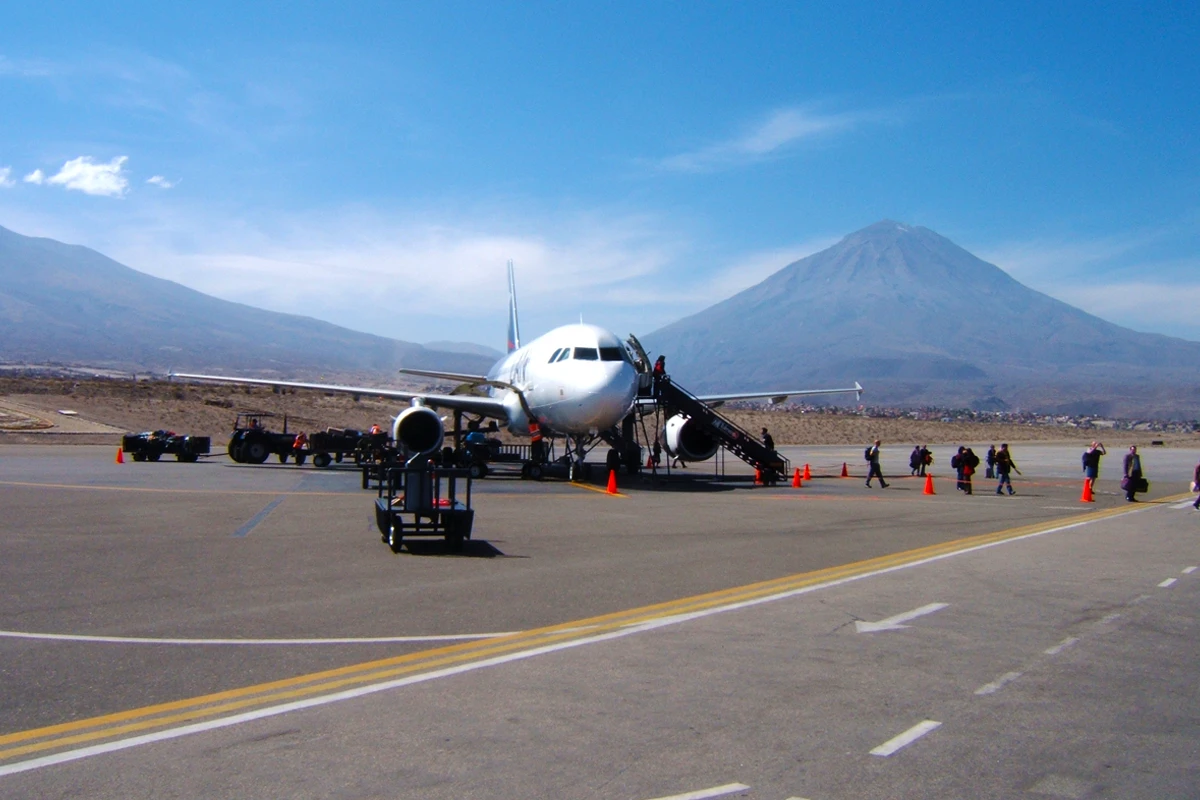
Located in the southern city of Arequipa, Rodríguez Ballón International Airport offers scenic views of the surrounding volcanoes, including Misti, Chachani and Pichu Pichu. It serves as a vital hub for both domestic flights primarily to Lima and Cusco and some limited international routes, particularly to Chile.
While it doesn’t have the volume of Lima or Cusco, AQP is known for its efficiency and minimal wait times. It features basic facilities including ATMs, snack bars, and small souvenir shops. Besides, with its altitude at 2,335 meters (7,661 ft), most travelers won’t experience altitude sickness here, making it a great acclimatization stop before heading to higher regions.
The airport is about a 20-minute drive from the city center, and taxis are readily available. Thanks to recent infrastructure improvements and its strategic location, it's becoming a preferred entry point for travelers seeking a quieter experience.
Once in Arequipa you can visit the Colca Canyon, and explore the “White City”, famous for its unique white ignimbrite stone architecture.
Inca Manco Cápac International (JUL)
The Inca Manco Cápac International Airport (JUL) is located in the Juliaca city about 5 km from the city center of Puno. It works as a practical hub for travelers continuing to Titicaca Lake, Uros Floating Islands, Sillustani, or onward through the Altiplano.
The airport in Puno Peru (JUL) is one of Peru’s highest airports, sitting at about 3,826 m (12,552 ft) above sea level. Despite the “international” label, this is one of the international airports in Peru where scheduled service is primarily domestic, mainly connecting Lima and Cusco.
Francisco Secada Vignetta (IQT)
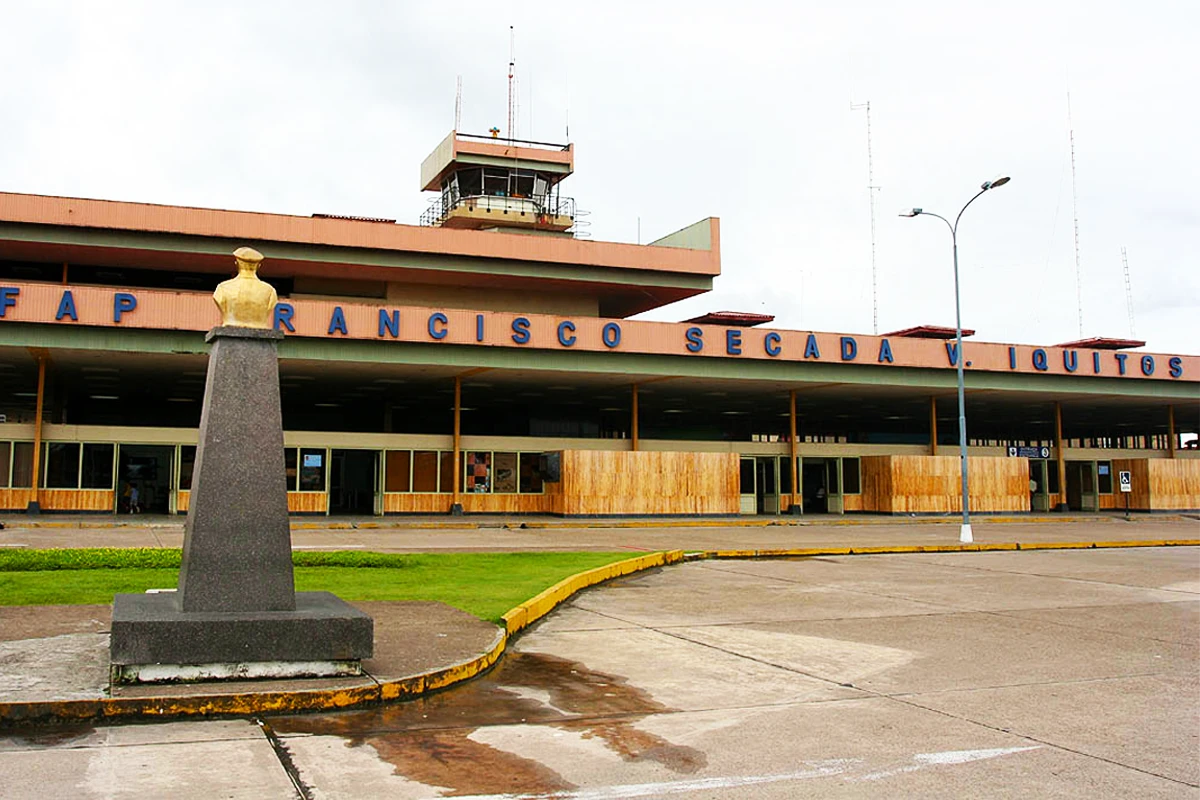
Serving the jungle city of Iquitos, Francisco Secada Vignetta Airport is the largest airport in the Loreto region and the only way to reach Iquitos by air, as there are no roads connecting the city to the rest of Peru. This makes it a crucial hub for nature-loving travelers, eco-tourists, and researchers into the rainforest.
Despite its remote location, the airport is functional and recently received upgrades to improve passenger flow and comfort. It offers basic amenities like cafés, and a VIP lounge. This way, IQT’s laid-back pace reflects the relaxed energy of the Amazon.
In this airport, flights from Iquitos mainly connect to Lima, with occasional service to Tarapoto and Pucallpa, with recognized airlines like LATAM, Sky Airline, and Star Peru. On arrival, mototaxis or tuk tuk are the primary form of transport into the city, though most jungle lodges offer pick-up service if arranged in advance.
Given the tropical climate, pack light breathable clothes and plan for delays during heavy rainstorms, especially in the afternoons. We also recommend scheduling flights in the morning and confirming logistics with your accommodation.
Padre Aldamiz International (PEM)
Located in Puerto Maldonado, in Peru’s Madre de Dios region, Padre Aldamiz International Airport (PEM). It’s a small, easy-to-navigate airport, which makes arrivals and departures feel straightforward compared to Peru’s bigger hubs. From here is the easiest way to get to the natural protected area of Tambopata.
Most flights are domestic, with regular connections to Lima and Cusco, so It’s a convenient add-on if you’re including the Amazon in your tour package.Scheduled direct services are typically operated by LATAM and Sky Airline.
The airport is located about 7 km / 4.35 miles from the city center, and transport is usually simple, taxis are common, and many jungle lodges can arrange pick-up if requested in advance.

Domestic airports and Regional hubs
Beyond the major international terminals, Peru has more than 20 domestic airports that serve as lifelines to many cities, rural and remote areas. These regional airports are critical for fast, efficient travel.
- Chiclayo – José A. Quiñones (CIX)
Main attractions: Royal Tombs of Sipán Museum, Túcume, Pómac Forest, Pimentel Beach. - Trujillo – Carlos Martínez de Pinillos (TRU)
Main attractions: Chan Chan, Huacas del Sol y de la Luna, Huanchaco, El Brujo (nearby). - Piura – Guillermo Concha Ibérico (PIU)
Main attractions: Northern beaches (Máncora/Vichayito/Punta Sal route), Catacaos, northern Peruvian cuisine. - Tumbes – Pedro Canga Rodríguez (TBP)
Main attractions: Tumbes Mangroves, Punta Sal, Zorritos, beach and nature tourism. - Cajamarca – Armando Revoredo Iglesias (CJA)
Main attractions: Baños del Inca, Cumbemayo, the historic center, rural routes and viewpoints. - Jauja / Junín – Francisco Carlé (JAU)
Main attractions: Mantaro Valley, Laguna de Paca, handicrafts and traditional villages (route to Huancayo). - Ayacucho – Alfredo Mendívil Duarte (AYP)
Main attractions: Colonial old town and churches, artisan workshops, Wari sites, cultural routes. - Apurímac – Andahuaylas Airport (ANS)
Main attractions: Laguna Pacucha, viewpoints, Pampachiri Stone Forest (route), rural tourism. - Amazonas – Chachapoyas Airport (CHH)
Main attractions: Kuélap, Gocta Waterfall, Karajía Sarcophagi, nature and culture routes. - Áncash – Comandante FAP Germán Arias Graziani (ATA)
Main attractions: Huascarán National Park, Laguna 69, Santa Cruz trek, lakes and mountain scenery. - Tarapoto – Guillermo del Castillo Paredes (TPP)
Main attractions: Ahuashiyacu Waterfall, Laguna Azul, Lamas (culture), high jungle routes. - Yurimaguas / Loreto – Moisés Benzaquen Rengifo (YMS)
Main attractions: Gateway to the Upper Amazon, river travel, nature, and local communities. - Pucallpa / Ucayali – David Abensur Rengifo (PCL)
Main attractions: Laguna Yarinacocha, Shipibo-Konibo culture, the Ucayali River, jungle tourism.
Regional airlines like Star Peru sometimes offer seasonal routes, which can be great for reaching off-the-beaten-path destinations, but book early, since seats fill up fast during holiday or festival seasons.
Future New Airport of Chinchero in Cusco
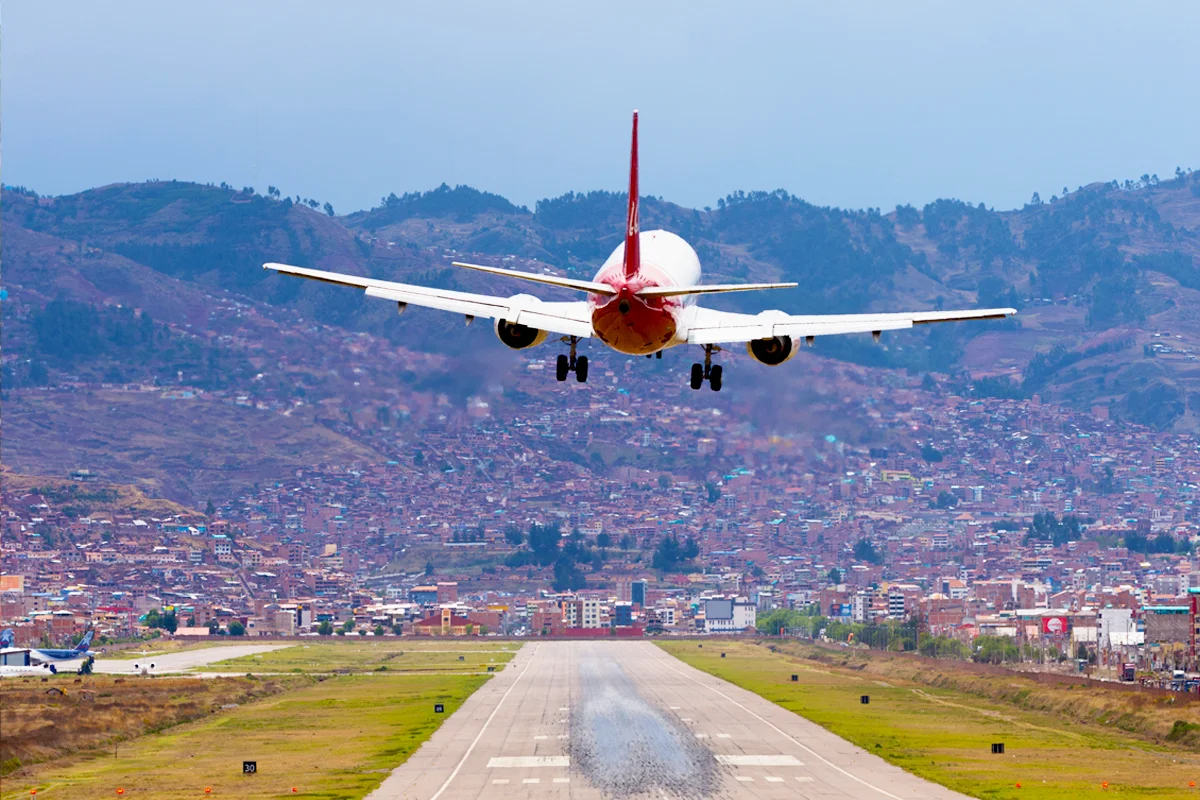
Looking ahead, Cusco will also have the future Chinchero International Airport in the Sacred Valley (near Chinchero, Anta and Urubamba). The project is designed to expand airport capacity for the region and reduce pressure on the current Alejandro Velasco Astete Airport (CUZ).
Recent reporting points to operations starting around late 2027 or early 2028, although the timeline has shifted multiple times. In its early years, the airport will focus on domestic flights and short-haul international routes within South America (regional hubs).
What’s the future of Cusco’s current airport (CUZ)?
CUZ will continue operating while Chinchero International Airport is under construction. Once Chinchero opens, it’s expected to become the main airport, handling most flights of and becoming one of the major airport in Peru.
Recently, Peru’s Congress approved Bill No. 6989/2023-CR, which supports the creation of a Metropolitan Park across the entire area of the current airport. This project aims to improve the city’s urban layout by creating a major green space within Cusco city.
This project will bring together a variety of spaces for the people of Cusco and its visitors, from areas for conferences and cultural events to a large natural parkland planted with native species like pisonay, chachacomo, and queuña, among others.

Airport tips for first-time visitors
- Arrive early: For domestic flights, arrive 2 hours in advance. For internationals, 3 hours is the safest.
- Stay informed: Use apps like FlightAware or each airline’s app for live updates.
- Pack snacks: Airport food is improving, but it’s often overpriced and limited.
- Don’t lose your luggage tag: You’ll need to show it to exit the baggage claim area.
- Use official transport: Avoid unlicensed taxis. Opt for airport shuttles, official taxi counters, or pre-booked rides.

Booking flights and baggage advice
- When flying domestically, double-check baggage policies. Budget airlines often offer cheap fares, but strict limits; even on carry-ons. Always confirm what’s included before you book.
- Use comparison tools like Google Flights or Kayak for best deals. Some routes don’t operate daily, or may run only at limited times, especially flights to jungle or highland destinations. It's best to check the latest schedules on the airline’s official website.
- Consider booking multi-city tickets if you plan to visit several regions. LATAM, Sky Airline, and JetSMART all allow flexible booking options within Peru.
Peruvian Travel Calendar: Peak Dates
Keep the following travel calendar in mind to avoid the busiest travel periods in Peru: national holidays and regional holidays. If you’re planning to travel during these dates, we strongly recommend booking early:
| Peak Dates | Description |
| Dec 20 - Jan 05 | Christmas and New Year (All Peru) |
| January 05 | Anniversary Day (Iquitos) |
| January 18 | Anniversary Day (Lima) |
| Jan - Feb (movable) | Virgin of Candelaria (Puno) |
| Feb - Mar (movable) | Amazonian Carnival (Iquitos) |
| Mar 29 - Apr 05 | Holy week (All Peru) |
| May 01 | Labor Day (All Peru) |
| All June | Jubilee Month (Cusco) |
| Jun 04 | Corpus Christi (Cusco) |
| Jun 07 | Battle of Arica and flag Days (All Peru) |
| Jun 24 | Inti Raymi (Cusco), St. John (Pto. Maldonado and Loreto) |
| Jun 29 | St.Peter & St Paul (All Peru) |
| Jul 10 | Anniversary Day (Pto. Maldonado) |
| Jul 23 - Jun 29 | Air Force Day & Peru Independence Day (All Peru) |
| All August | Jubilee Month (Arequipa) |
| Aug 06 | Battle of Junin (All Peru) |
| Aug 30 | Santa Rosa de Lima (All Peru) |
| Oct 08 | Battle of Angamos (All Peru) |
| Oct 18 | Señor de los Milagros (Lima) |
| Nov 01 | All Saints’ Day (All Peru) |
| Nov 04 | Anniversary Day (Puno) |
| Dec 08 | Immaculate Conception (All Peru) |
| Dec 08 | Battle of Ayacucho(All Peru) |
Note: If a public holiday falls on a Friday or Monday, it will very likely be treated as a long weekend, including the Saturday and Sunday before or after. These long weekends are in high demand, and prices often increase significantly.
Timing and transfers
If you’re connecting in Lima to another destination, avoid tight layovers, delays and schedule changes are unlikely but not impossible. Most airports also offer a left-luggage service, so you can store your bags and move around more comfortably.
And if your layover is long enough, use that extra time to explore the city or enjoy a the peruvian food at a near restaurant. It’s an easy way to check a few things off your travel list and experience new places and flavors along the way.

Altitude concerns
Altitude is also a real factor when flying into the Peruvian Andes region, such as: Cusco or Puno. If you’re arriving from sea level, plan logical connections so you have time to adjust and manage symptoms like dizziness, fatigue, or nausea. These are usually easy to handle with rest, light movement, staying hydrated, and (for many travelers) a warm cup of coca tea.
Finally, for longer itineraries like a Peru package tour, consider a route that ascends gradually, some routes can be:
- Lima → Cusco→ Puno
- Lima → Arequipa→ Cusco→ Puno
- Lima → Arequipa→ Cusco→ Pto. Maldonado
Read More » Peru Trip Packages
FAQs about airports in Peru
What is the main international airport in Peru?
Jorge Chávez International Airport (LIM) in Lima is the primary gateway for international travelers and the largest airport in Peru. From this airport many domestic flights departure to the most important cities of Peru.
Are there direct flights to Cusco?
Yes, Cusco has direct flights from Lima and other major cities like Arequipa. Internationally, most travelers reach Cusco via Lima. Direct international flights to Cusco are limited and seasonal, with some connections available through Bogotá, Colombia or La Paz, Bolivia.
How early should I arrive at Peruvian airports?
For domestic flights, arrive at least 2 hours early. For international departures, plan for 3 hours, especially in Lima, where lines and security checks can take longer during peak travel periods.
Can I fly to Machu Picchu?
Not directly. There is no airport at Machu Picchu or Aguas Calientes town. The closest airport is Cusco (CUZ). From Cusco, most travelers continue by train or by trek (Inca Trail) to reach Machu Picchu.
Are Peru’s regional airports safe and reliable?
Yes. While smaller, regional airports in Peru are generally safe and well-managed. Delays may occur due to weather, so plan accordingly. If you have a connection, avoid tight schedules and keep a buffer timer.
How do I get from Peru’s main airport to the city center using public transport?
Public transport options do exist, but they can be confusing if it’s your first time in Lima. Many travelers prefer authorized airport transport, such as official taxis or shuttle buses, for a smoother arrival and departure.
In Lima, there’s also a dedicated airport shuttle service called AeroDirecto, along with other shuttle options. These buses are budget-friendly, run on set routes with specific stops, and can take you to tourist areas like Miraflores for less than a taxi.
How much does a taxi cost from Jorge Chávez Airport to the city center?
Taxi prices vary by destination, time of day, traffic, and service type. As a rough guide, airport-to-city rides are usually priced as a fixed fare by official providers rather than by meter.
For the safest experience, use authorized taxis from the official counters or pre-booked services, and confirm the price before you depart. Consider a range of 40–70 PEN (12–21 USD) by taxi and around 20 PEN (6 USD) by buses departing from the same airport.
Why are some domestic flights in Peru more expensive than international ones?
Peru’s domestic routes often have limited seats and fewer daily frequencies, especially to the Andes and Amazon. Prices can rise quickly on popular dates, and taxes/fees may be included differently than on international promos. Booking early, being flexible with times, and checking multiple airlines usually helps.



Add new comment