



The Lares Trek and the Inca Trail are two of the best-known route options to reach Machu Picchu. Both options come with stunning scenery, rich history, and a real chance to experience Peruvian culture in the heart of the Andes.
So which route is right for you? It mostly comes down to what you enjoy, what you want to see, and how comfortable you are with the physical effort. In this article, we’ll compare them in detail to help you choose and have an amazing trip.
Inca Trail or Lares trek: Quick comparison
Both trails are perfect for trekkers looking for an Andean challenge during their trip.
Inca Trail
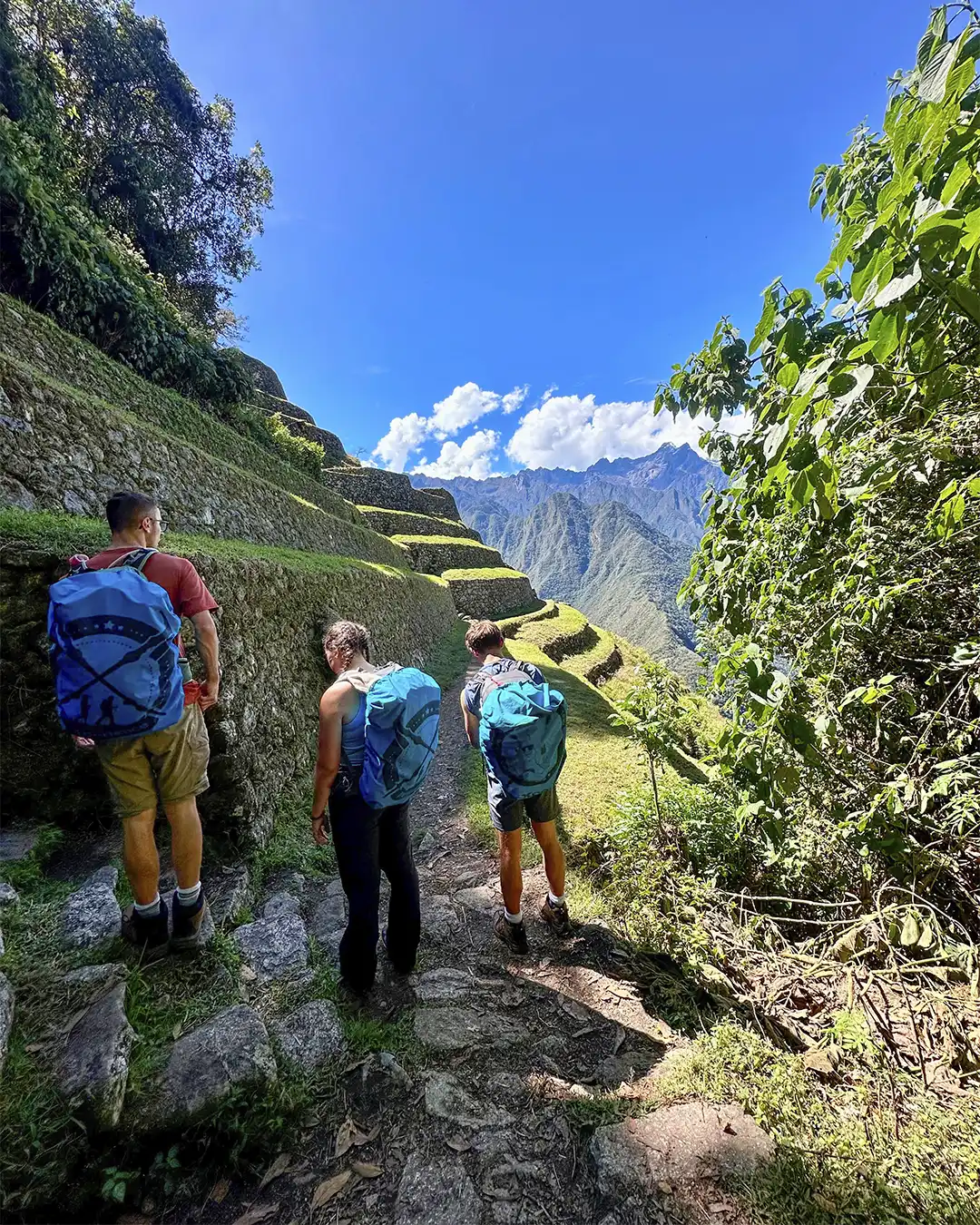
On one hand, the Inca Trail is the most famous and traditional route, known for its iconic archaeological sites along the way, including Wiñay Wayna and Intipata. It covers approximately 43 kilometers over 4 days and culminates at the Sun Gate overlooking Machu Picchu. This route offers a mix of natural beauty and rich historical significance, but it can be crowded, especially during peak seasons.
Lares Trek
On the other hand, the Lares Trek is a less crowded alternative that focuses more on cultural immersion and scenic landscapes rather than archaeological ruins. The route passes through the Lares valley, where remote and charming Andean villages like Lares and the Huacahuasi are. These Quechua people have lived in the valley for centuries without western cultural influence or intervention, by growing potatoes and other root vegetables, as well as raising sheep, alpacas, and llamas.
Around 20 years ago, there are not roads that connected the Quechua villages located in the valley. Therefore, the local people developed paths that allowed them to travel on foot or horseback from one community to another. Once the development and modernization arrived in the valley in the form of roads (around 10 years ago), the paths were still in use by older community members and hikers.
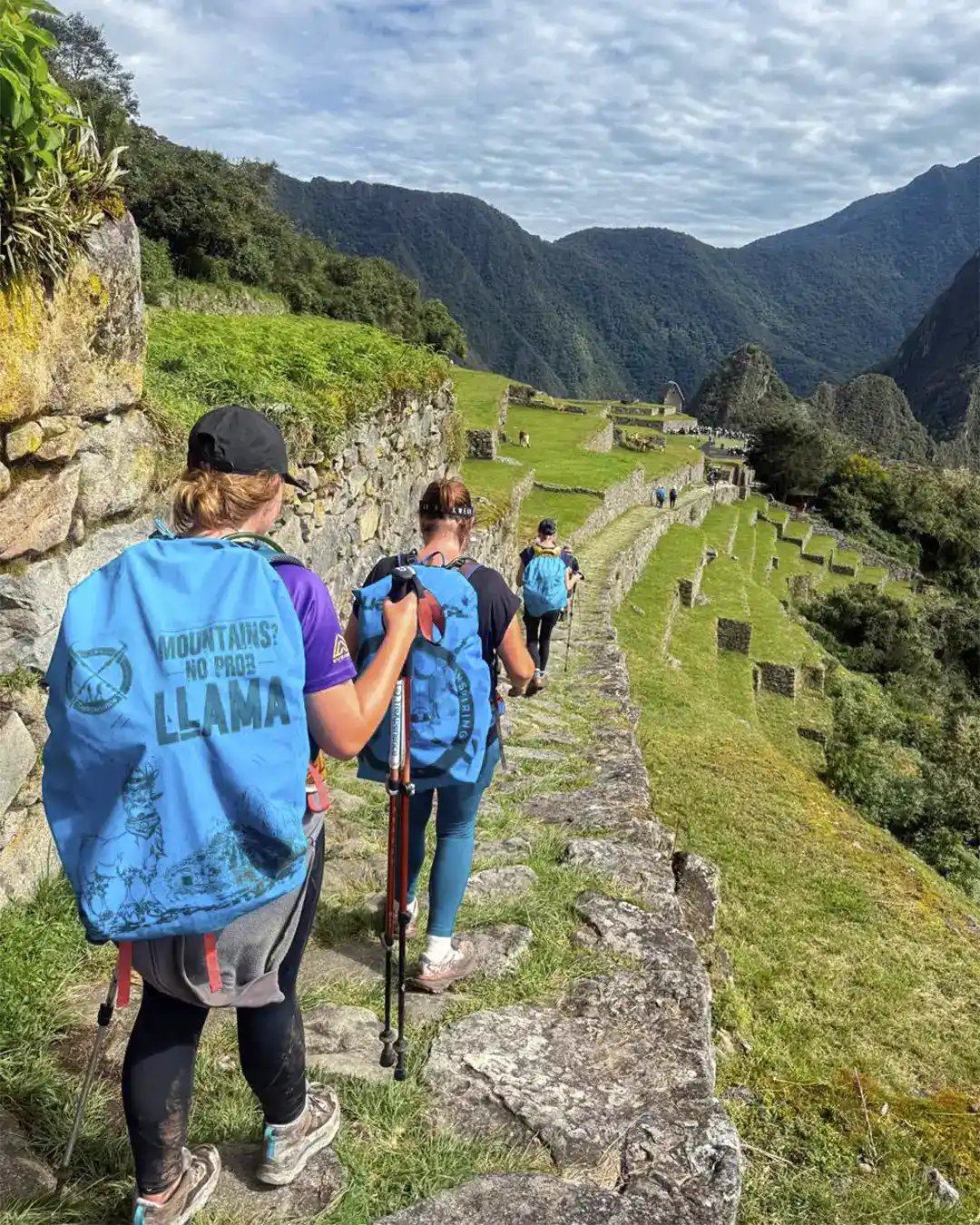 | 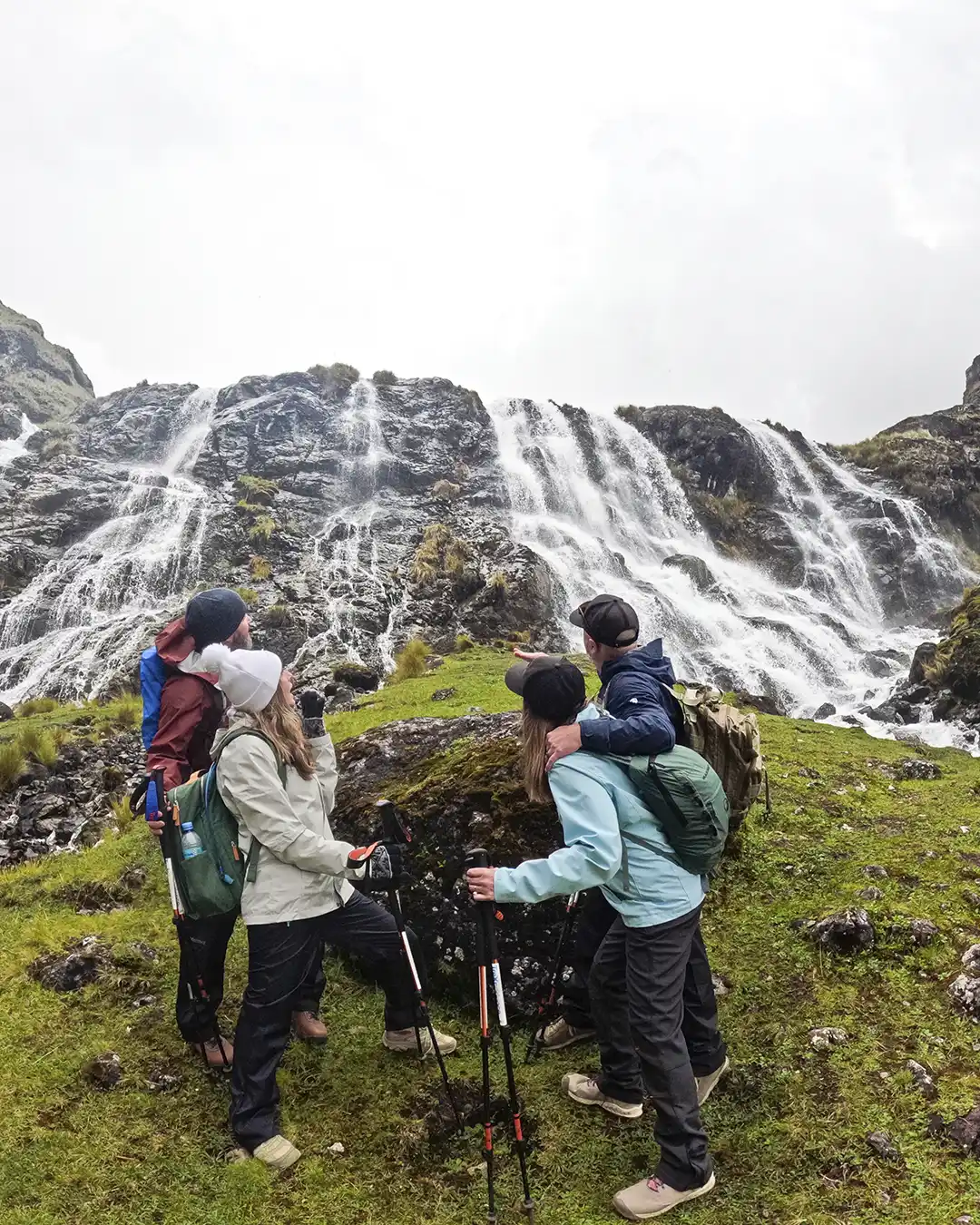 |
In this way, in the Lares valley, the trekkers can experience traditional Quechua culture and interact with original local communities. This trek is typically completed in 3 to 4 days and is considered challenging, with beautiful mountain views, Lares hot springs, and diverse ecosystems.
In this guide, we compare the Lares Trek vs Inca Trail with a focus on distance, terrain, altitude, culture, logistics, permits, and sustainability, so you can make the right choice.
Here’s a quick recap:
Inca Trail | Lares Trek | |
| Highlights | The classic, original trek to Machu Picchu | Usually, less busy than the Inca Trail |
| The only route where you hike all the way to Machu Picchu’s entrance on foot | A very scenic hike with waterfalls and mountain lakes | |
| Incredible Andean views and misty cloud forests | Great for seeing local villages and getting a feel for traditional life | |
| Multiple Inca ruins to explore along the trail | Challenging (But with the right preparation, it's manageable), with one major high point: CondorPass at 4,750 m | |
| Several options besides the classic 4-day Inca Trail, such as the 2-day Short Inca Trail, or even the 5-day Inca Trail | The route is open 12 months a year and does not require an entrance fee | |
| Tourist facilities such as restrooms are available at campsites | Besides the classic Lares trek to Machu Picchu, there are other options that combine Lares and Inca Trail; the Lares Trek & Short Inca Trail 5 days. | |
| Lowlights | It can feel crowded because it’s so popular | The trek doesn’t finish at Machu Picchu itself. At the end of the trek, you take a train from Ollantaytambo to Aguas Calientes, where you spend a night. The next day, you'll visit Machu Picchu |
| The route is well set up, so it doesn’t feel like a true wilderness trek | ||
| It can be expensive | ||
| The route is regulated by the Peruvian Ministry of Culture, allowing only 500 tickets per day. Of these, only 200 tickets are for trekkers, with the remaining 300 distributed among tour guides and porters | ||
| The Inca Trail is closed every February due to rain and maintenance of tourist services, trails, and archaeological sites | ||
Differences between Lares Trek and Inca Trail
A. Distance and duration
The Classic Inca Trail covers approximately 42 km (26 miles) over 4 days, with a fixed itinerary regulated by Peru’s Ministry of Culture. Each day follows a clearly defined schedule, from campsite locations to daily hiking distances. Because of this structure, the experience is predictable, but also less flexible.
The Lares Trek, on the other hand, varies between 33 and 40 km, depending on the route chosen, and typically takes 3 to 4 days before connecting to Machu Picchu by train from the Sacred Valley. This flexibility allows you to adapt the pace, add Lares hot springs visits, or shorten days if weather or energy levels demand it.
B. Route and terrain
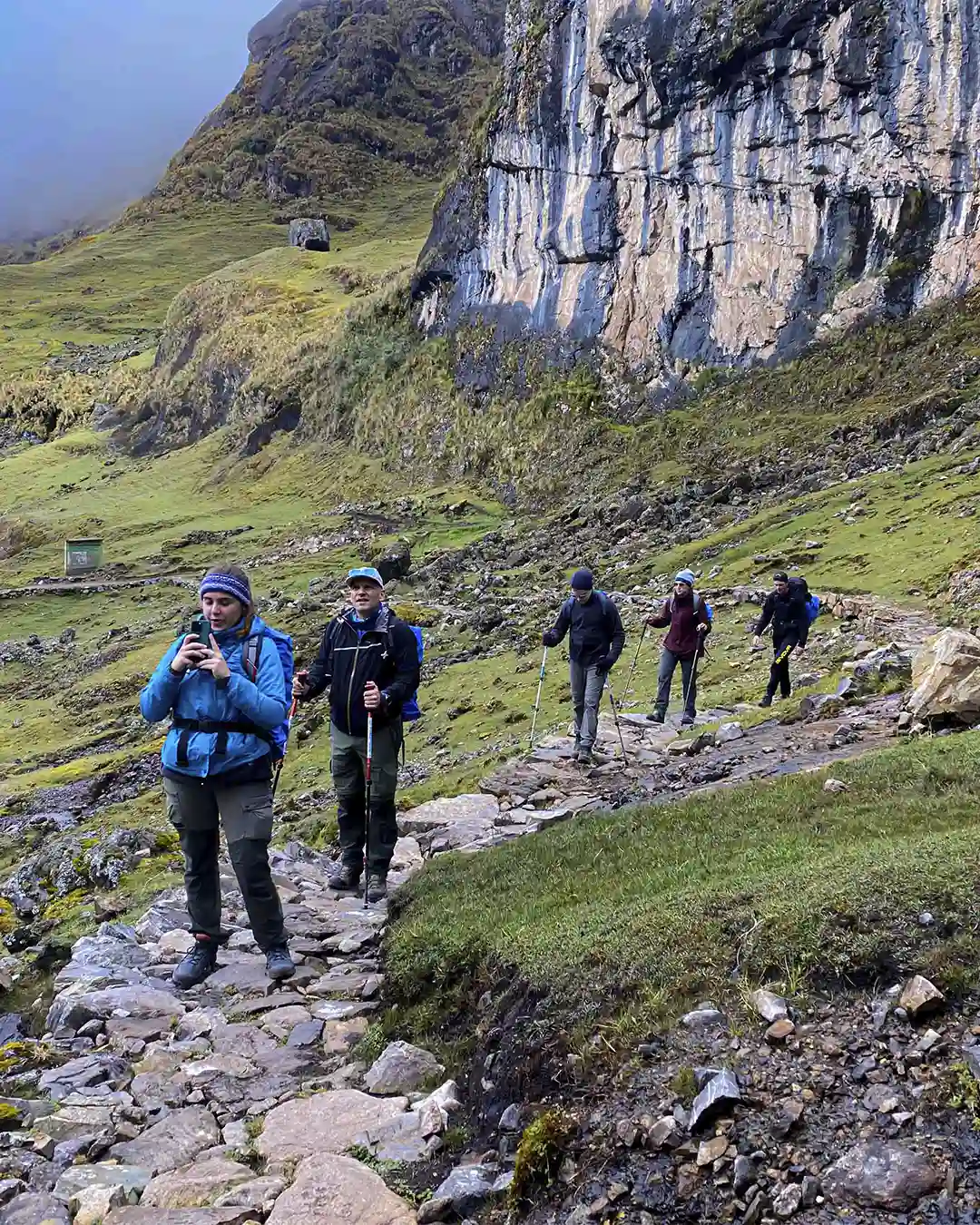
The Inca Trail follows original stone paths built by the Incas, complete with staircases, tunnels, and paved sections. While incredibly atmospheric, these stone steps (especially when wet) can be tough on knees and ankles. The trail alternates between cloud forests, high mountain passes, and archaeological complexes.
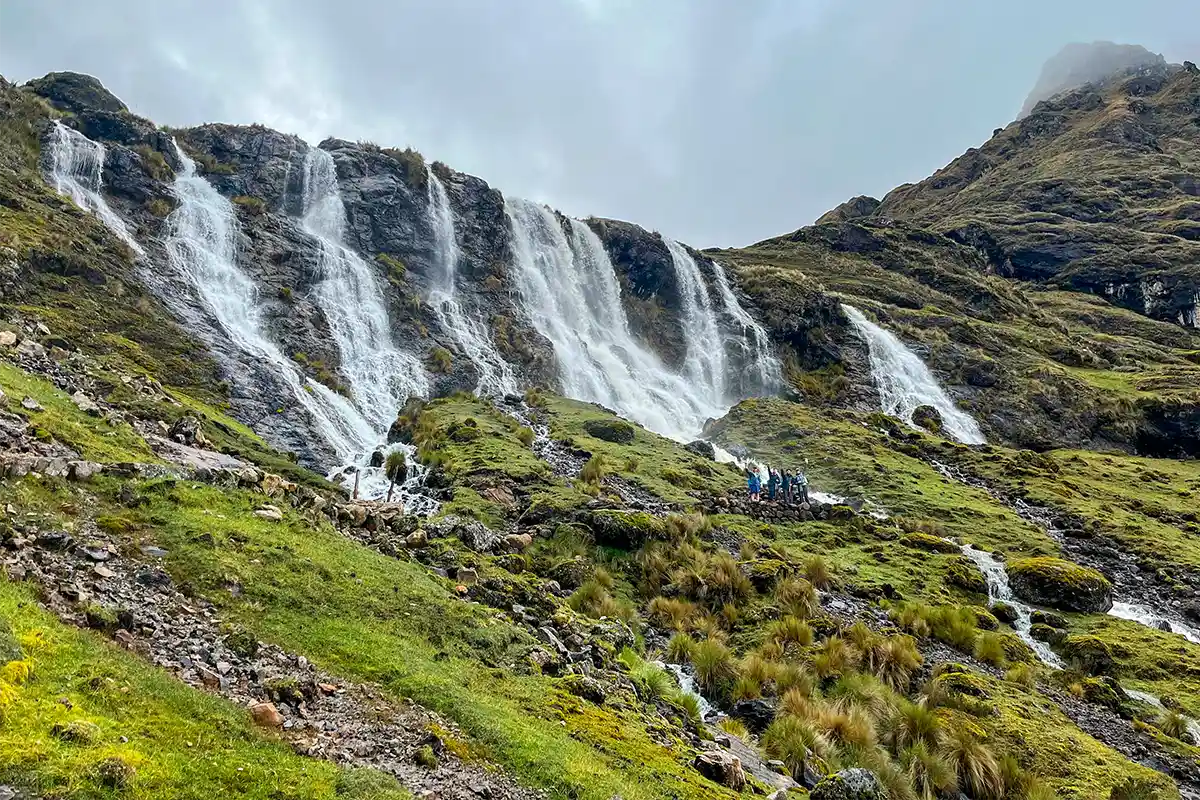
In contrast, the Lares Trek is more rugged and natural. You’ll hike through high‑altitude valleys, glacial lakes, and remote mountain passes, often on dirt paths used by local communities. Besides, there are fewer stairs and more open landscapes that make the trek feel wilder and less engineered, with dramatic views but fewer “constructed” trail features.
C. Altitude profile
Though altitude is a major factor in both treks, it affects trekkers differently. The Inca Trail’s highest point, Dead Woman’s Pass (Warmiwañusca), reaches 4,215 m (13,829 ft). The ascent is steep but gradual, and most itineraries allow for progressive acclimatization if you spend time in Cusco beforehand.
On the other hand, the Lares Trail often climbs higher, with passes ranging from 4,400 to 4,600 m (14,435–15,091 ft) depending on the route. Because of this, the Lares Trek feels more physically demanding in terms of altitude, even if daily distances are shorter. According to the National Library of Medicine, oxygen levels at these elevations drop to nearly 60% of sea‑level concentration, making acclimatization essential.
D. Ruins vs villages
The Inca Trail route is the only trek that allows visitors to pass directly through a series of well-preserved Inca archaeological sites, many of which are inaccessible by other means. Highlights include:
- Llactapata: A vast agricultural and ceremonial site.
- Runkurakay: A circular lookout and rest stop used by Inca messengers.
- Sayacmarca: A maze-like fortress overlooking the cloud forest.
- Wiñay Wayna: A stunning complex of terraces and ceremonial fountains near Machu Picchu.
By contrast, the Lares Trek features very few archaeological sites, but what it lacks in ruins, it makes up for in authentic, day-to-day cultural interaction. The trail passes directly through remote Quechua villages such as Huacahuasi, Cuncani, and Cancha Cancha, where traditional clothing, potato farming, and alpaca herding remain central to life.
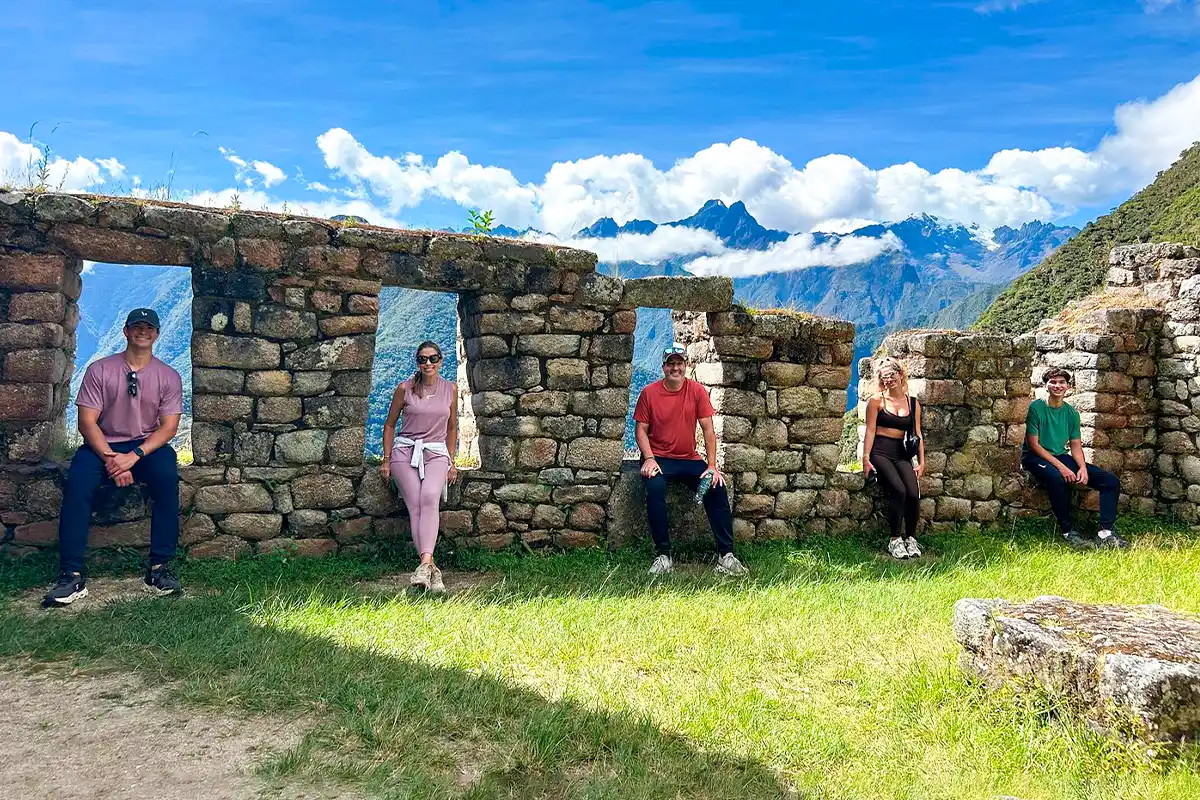
100% Quechua
Unlike the Inca Trail, which is closed off to permanent human inhabitation, the Lares Valley is home to native communities that have preserved pre-Hispanic traditions, the Quechua language, and ancestral farming techniques.
E. Cultural interaction and local communities
Along the Lares routes, tourists often walk directly through Quechua‑speaking communities, see alpaca herders at work, children walking to school, and families farming potatoes at elevations most travelers never experience. Some itineraries include visits to traditional hot springs that locals have used for generations.
The Inca Trail, while culturally rich in history, offers less interaction with modern communities due to its protected status. Campsites and services are tightly regulated, and contact is mostly limited to guides and porters.
F. Permit requirements and booking process
Only 500 Inca Trail permits are issued per day, including hikers, guides, and porters. These permits often sell out 4–6 months in advance, especially for the dry season (May–September). Once sold out, there is no legal way to hike the trail independently or at the last minute. The system exists to protect the trail and comply with UNESCO conservation guidelines.
Conversely, the Lares Trek does not require permits. You can often book your trip to Lares with short notice, adjust start dates, or modify routes based on weather and group preferences.
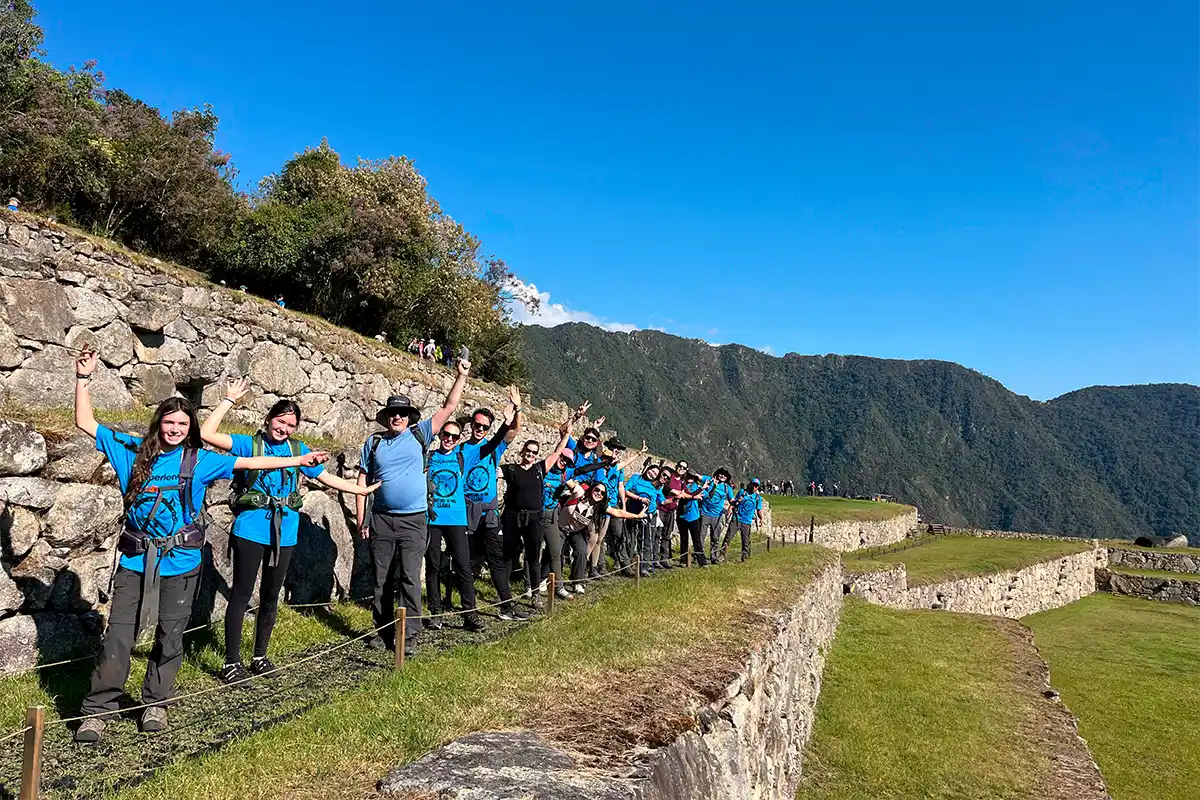
If you’re traveling May–Sept, book the Inca Trail months ahead. If you’re last-minute, Lares is usually easier.
G. Logistics and trail support
Inca Trail porters and guides are mandatory and heavily regulated. Porter weight limits, campsite assignments, and staffing ratios are enforced by the Ministry of Culture to ensure consistency.
On the Lares Trek, guides are still highly recommended, especially due to altitude and navigation, but support teams are more flexible. Besides, muleteers and pack animals replace porters in many sections, which is better suited to the terrain and allows for more comfortable camps.
H. Accommodations and meals
The Inca Trail uses designated campsites with basic facilities. Meals are prepared by trekking chefs, and menus are surprisingly varied.
In contrast, the Lares Trek often features more remote campsites and occasionally community lodges where meals tend to be simpler but deeply connected to local ingredients.
I. Difficulty levels and fitness requirements
The Inca Trail tests endurance through repetition and terrain complexity. It spans four consecutive days of hiking, including long ascents and descents on original Inca staircases. One of the most taxing elements is the cumulative fatigue from trekking 10–14 km daily, sleeping in campsites, and climbing and descending thousands of stone steps. However, because the altitude gain is more progressive, and the trail passes through multiple ecosystems, acclimatization is more manageable when arriving early to Cusco (3,399 m).
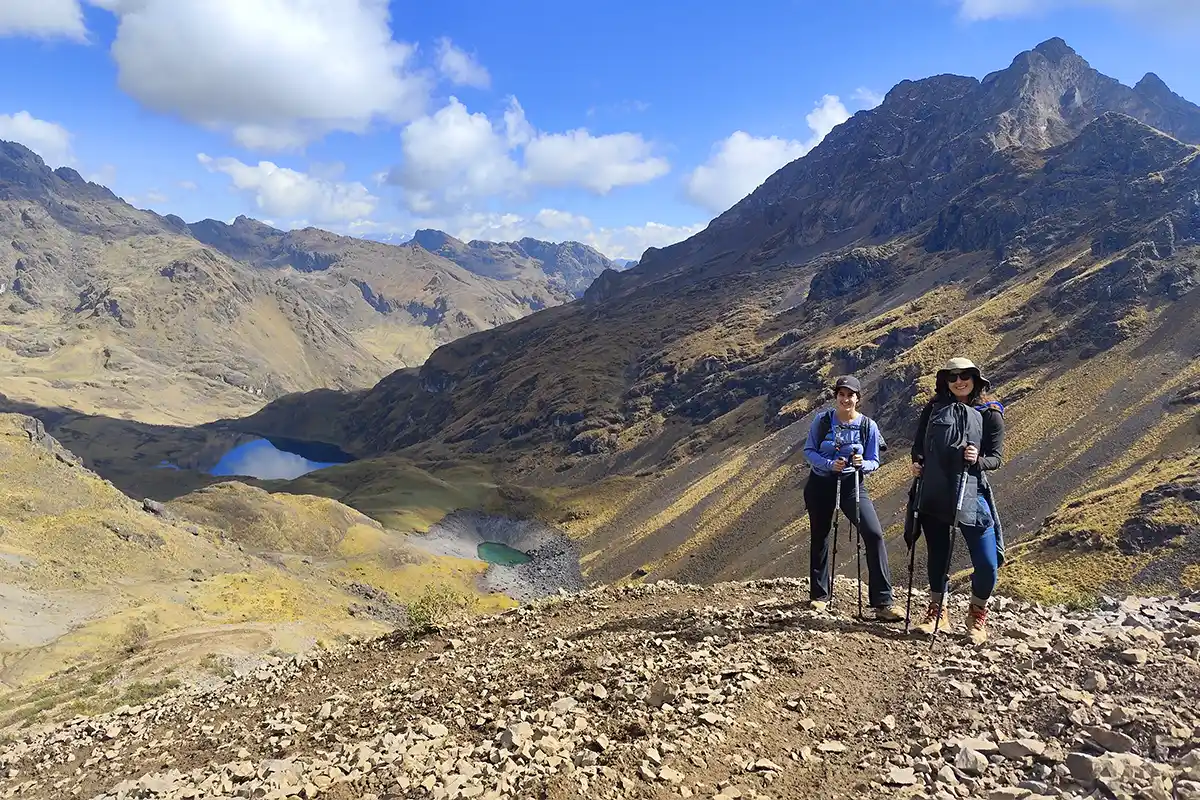
Lares requires more preparation
On the Lares Trek, you’ll feel the altitude more intensely. Even fit travelers can struggle without 2–3 days of acclimatization in Cusco or the Sacred Valley before starting.
The Lares route, by contrast, involves higher maximum altitudes, often above 4,400–4,600 m, depending on the route. This puts hikers at greater risk for acute mountain sickness (AMS), especially if they haven't spent sufficient time acclimating beforehand. While the daily distances may be shorter (6–10 km per day), the trail includes steep mountain passes, thinner air, and more exposure to the elements.
In both treks, training beforehand improves comfort and safety. A high altitude trekking plan should include:
- Cardiovascular training (hiking, stairs, incline walking)
- Strength work (legs, core stability)
- Practice with your pack and boots
- Simulated altitude training, if available
J. Environmental impact and sustainability
The Inca Trail, due to its global popularity, operates under strict government oversight to control erosion, litter, and overtourism in sensitive archaeological areas. Thus, permits fund trail maintenance, ranger stations, toilets, waste management, purchase of supplies from local people, and archaeological restoration, making it a more sustainable choice compared to unregulated trails.
However, the flip side of this success is traffic congestion, especially in peak season. Popular campsites can feel crowded.
The Lares Trek, by contrast, doesn’t require permits and is used by tourists year-round. This gives you the chance to spread tourism income more equitably. When trekked responsibly through ethical Peru tour operators, Lares treks can directly support:
- Local muleteers and their families
- Rural women’s weaving cooperatives
- Village schools and clinics
- Community-run campsites and lodges
| Category | Inca Trail | Lares Trek |
| Route | Historic Inca pathway ending at Machu Picchu’s Sun Gate | Remote cultural trek ending in train transfer to Machu Picchu |
| Distance and duration | ~42 km over 4 days | 33–40 km over 3–4 days (flexible routes) |
| Highest altitude | 4,215 m (Dead Woman’s Pass) | 4,750 m (varies by route) |
| Physical difficulty | Moderate to high (daily long distances, stairs) | High (shorter days but steeper and higher-altitude passes) |
| Altitude challenge | Gradual ascent, better acclimatization built in | Sudden elevation requires acclimatization before trekking |
| Archaeological sites | Multiple Inca ruins along trail (e.g., Wiñay Wayna, Sayacmarca) | Few or none during trek; focus is cultural immersion |
| Cultural experience | Minimal community interaction during trek | High contact with Quechua communities, weaving villages, local markets |
| Permit requirements | Yes (strict quotas; book 4–6 months in advance) | No permit required; can often book last minute |
| Crowds | High (especially May–September) | Low (even in peak season) |
| Accommodation | Fixed campsites, tents provided | Community camps, lodges, or wilderness camps (depends on route) |
| Entry to Machu Picchu | On foot via Sun Gate at sunrise | By train from Ollantaytambo + bus to citadel |
| Environmental management | Permit system supports archaeological conservation | Community-based tourism spreads benefits, supports local economies |
| Best For | History lovers, classic bucket-list hikers, structured itineraries | Culture seekers, acclimatized hikers, flexible and immersive experiences |
Who should choose the Inca Trail?
If walking the “classic” Inca Trail is a must for you, and no alternative trek will feel the same, then this is the ideal route to pick. Just book far ahead, because the Inca Trail permits are limited and often sell out months in advance.
It’s also the only trek that truly ends at Machu Picchu. Arriving at the ruins through the Sun Gate after four tough days is a one-of-a-kind moment, and if that’s how you want your first view of Machu Picchu, this is the only option.
The rest of the treks finish in Ollantaytambo, where the trekkers must take a train to Aguas Calientes and visit Machu Picchu the next day.
That said, expect crowds. It’s the busiest trek in the south of Peru, with many tourist groups on the trail and full campsites. You’ll also find places to buy snacks and drinks, so it doesn’t feel like a remote wilderness trip. The route is tightly controlled, too, with checkpoints and document checks, which can make it feel less “wild” and spontaneous. If you’re looking for quiet, untouched Andes, the Inca Trail may not be the best fit.
Below, we present our selection.

Inca Trail Hike to Machu Picchu 4 Days
The Classic Inca Trail to Machu Picchu is one of the most famous treks in South America. In four days, you walk the historic route from KM 82 along ancient stone paths, through cloud forest and high mountain passes. Along the way you visit sites like Llactapata, Runkurakay, Sayacmarca, Phuyupatamarca, Intipata, and Wiñay Wayna, then reach Machu Picchu at sunrise through the Sun Gate (Inti Punku).
You hike in a small group with bilingual guides who share the story behind every ruin. Expect steady uphill sections, big views, wild orchids, and the special feeling of arriving at Machu Picchu on foot. It’s a mix of nature, culture, and physical effort, one of the most memorable ways to reach this World Wonder.
Usually, in a tour, everything is arranged: Inca Trail permits, a personal porter, quality camping equipment, buffet-style meals, satellite phones, portable toilets, and the train back to Cusco. Departures run daily, and the local teams are treated fairly so you can travel responsibly and without stress.
Book early, since Inca Trail permits are limited.
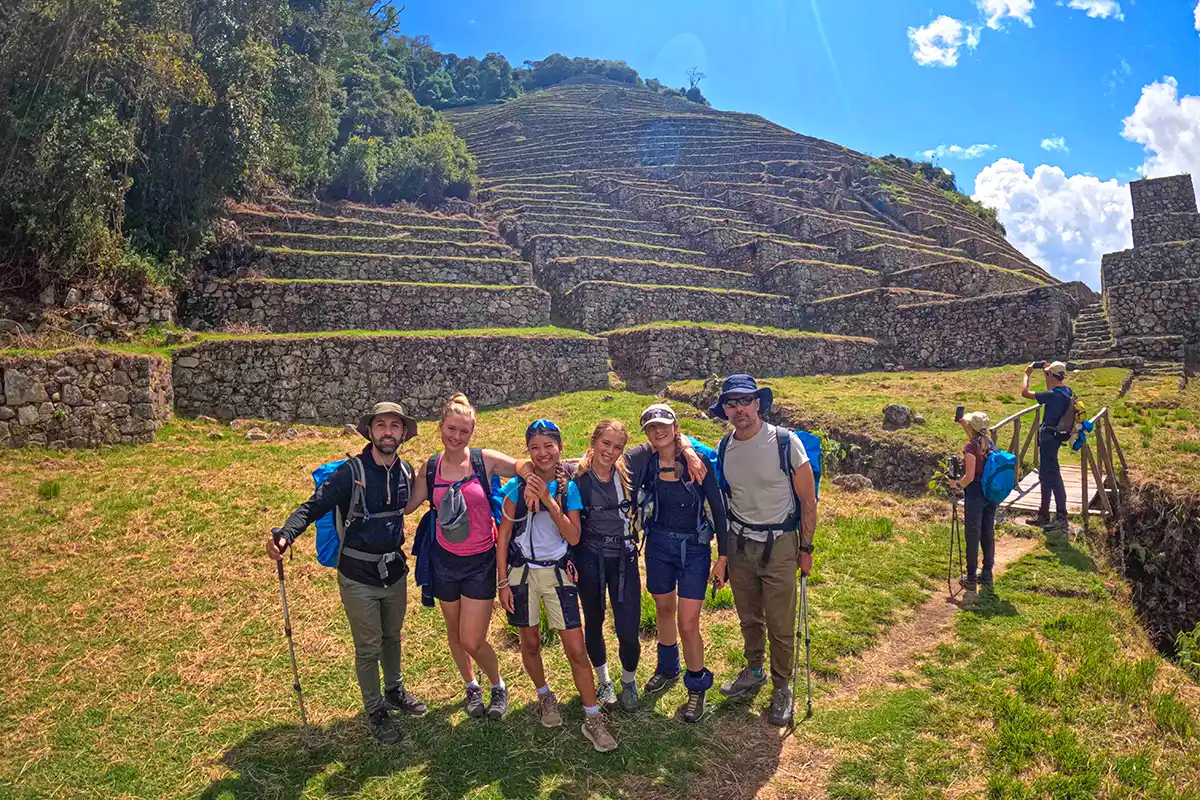
The Inca Trail is a regulated route. You cannot do the trek on your own or go alone. You must always hire a travel agency authorized by the Peruvian government. They are the ones who will provide you with your Inca Trail permits, as well as camping logistics, guides, and tickets to Machu Picchu.
Who should choose the Lares trek?
If you want a trek from the Sacred Valley of the Incas, and it’s not important to arrive at Machu Picchu on foot, the Lares trek can feel more genuine and rewarding for you. It’s a good choice for travelers with less time, since it’s shorter than some alternatives. Typically, you camp for two nights, take a train from Ollantaytambo and spend the third night in a hotel in Aguas Calientes, visit Machu Picchu on day four, and then return to Cusco.
Lares is usually more demanding than the Inca Trail. However, what makes it special is the cultural side: the route passes through traditional Andean villages where daily life hasn’t changed much over the years. You can meet local families and sometimes see or buy traditional crafts like weaving.
Because fewer people choose Lares, it tends to be quieter and feels more off-the-beaten-tourist-path. You’ll hike along less-traveled trails with a more natural atmosphere, while still staying within reach of basic support and nearby Andean communities.
Our suggestion for you is below.
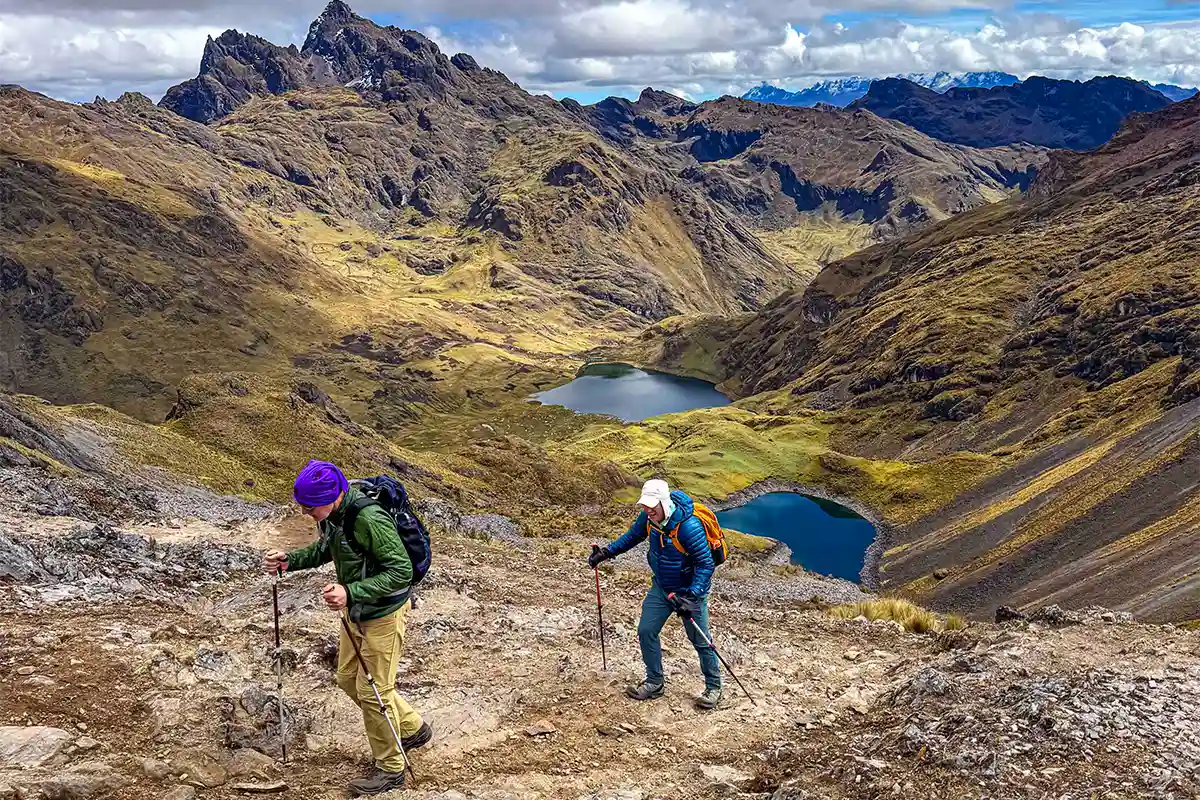
You can do the tour on your own, but since the trails are not well marked, we recommend going in a group with an expert guide (through a travel agency). They will take care of all the necessary logistics: tents, meals, entrance tickets to Machu Picchu, trains, among other things.
Lares Trek to Machu Picchu 4 Days
The 4-day Lares Trek takes you off the main tourist routes into quiet parts of the Andes, where you can meet people of traditional Andean communities and enjoy the Andes mountains away from the crowds. Along the way, you’ll learn about local life and customs, hike alongside llamas and alpacas, and even stop by a village school. The trip ends in Ollantaytambo, where you will take a train heading to Aguas Calientes, to visit Machu Picchu the next day.
The first day, you'll travel from Cusco to see the Puya de Raimondi and relax in the Lares hot springs. Then, hike about 10 km (around 4 hours) to camp by the Blue Lagoon with waterfalls and grazing llamas and alpacas. The second day is a tougher day, about 16 km (around 7 hours), climbing to Condor Pass (4,750 m) for huge mountain views, plus visits to turquoise lakes and time in the Canchacancha community.
The 3 day, you'll hike about 12 km (around 4 hours) down into the Sacred Valley, enjoy a picnic lunch, visit Maras salt mines and Ollantaytambo, then take a train to Aguas Calientes for a night in a 3‑star hotel. On the last day, you'll explore Machu Picchu with a guided Circuit 2 visit (about 2–3 hours). Then, you'll return on the train to Cusco in the afternoon.
Lares trek and Short Inca Trail 5 days: The best of both worlds
If you are interested in both experiences and don't want to choose one over the other, or if you don't have much time. The 5-day Lares Trek + Short Inca Trail combines a quiet mountain hike full of nature and local culture with the classic Short Inca Trail entry on foot to Machu Picchu. You’ll pass Puya de Raimondi plants, Lares hot springs, clear Andean lakes, glaciers, waterfalls, and traditional villages, then start at KM 104 and hike past Chachabamba and Wiñay Wayna.
On the afternoon of Day 4, you reach Machu Picchu through the Sun Gate for your first calm view of the citadel. The next day, you return for sunrise and a memorable guided tour.
Learn more about the Lares Trek and Short Inca Trail 5-day experience
 |  |
FAQs about Lares Trek vs Inca Trail
Which trek is less crowded?
The Lares Trek is significantly less crowded due to the lack of permits and lower overall traffic.
Is the Lares Trek easier than the Inca Trail?
Not necessarily. Lares has higher altitude passes, while the Inca Trail has longer days and more stairs. Difficulty depends on fitness and acclimatization.
Do both treks go to Machu Picchu?
Yes. The Inca Trail ends directly at Machu Picchu, while Lares connects via Ollantaytambo and train.
Can I book the Lares Trek at the last minute?
Yes, in most cases. This is one of Lares’ biggest advantages.
Which trek is better for local culture?
The Lares Trek offers deeper interaction with living Andean communities.
Is Lares trek worth it if I don’t care about ruins?
Yes, Lares is about mountain scenery, quiet trails, and Quechua communities, not ruins.
Can I combine Lares + Short Inca Trail?
Yes. There is a trip that combines Lares with the Short Inca Trail (KM 104) and enters Machu Picchu via the Sun Gate.
Is Lares good in the rainy season?
Yes, but expect mud and cloudy views. Good gear and a flexible itinerary help.
Do I need a guide for Lares?
Not required, but highly recommended for navigation, altitude safety, logistics, and respectful community visits.
Which is better for kids / families, the Inca Trail or the Lares Trek?
Often, the Short Inca Trail is best. The Classic Inca Trail has many stairs and camping; Lares can be higher.

Add new comment