



Located in Madre de Dios, the Tambopata National Reserve is one of the most important conservation zones in the Peruvian Amazon. Its forests, rivers, and oxbow lakes shelter a remarkable variety of species and offer opportunities for hiking, boat trips, and wildlife watching.
What Is Tambopata National Reserve?
This protected natural area lies in southern Peru’s Amazon region. It was created to conserve valuable Amazonian ecosystems, including humid forests, rivers, oxbow lakes, aguaje palm swamps, and feeding grounds for many species.
Beyond its environmental value, the reserve plays an important role in scientific research, including work at Tambopata Research Center, and in nature tourism. Its proximity to Puerto Maldonado allows many travelers to enter the Amazon in an organized way, with guided routes and specialized services.
Quick Facts About Tambopata
| Data | Information |
| Official name | Tambopata National Reserve |
| Location | Madre de Dios, Peruvian Amazon |
| Gateway city | Puerto Maldonado |
| Area | 274,690 hectares |
| Approximate elevation | 200 to 400 m.a.s.l. |
| Best time to travel | May to October |
| Recommended stay | 3 to 4 days |
| Access | Road and river travel |
Natural Importance of Tambopata
The Tambopata reserve is important because it protects one of the most biologically rich areas of the Peruvian Amazon. Its forests, rivers, and oxbow lakes preserve essential habitats for birds, mammals, reptiles, amphibians, fish, and insects.
These ecosystems help maintain the reserve’s natural balance. Many species depend on them for food, breeding, and movement through the forest.
Biodiversity in Tambopata
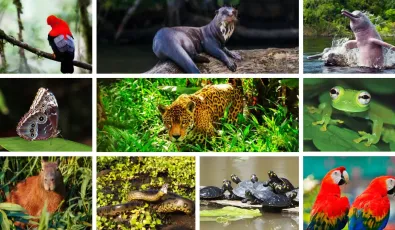
This is one of the most biodiverse areas of the Peruvian Amazon. Many plant and animal species have been recorded in its forests, rivers, and oxbow lakes, showing its great importance for conservation.
- Plants: more than 1,200 recorded species.
- Birds: around 648 species, including macaws, parrots, toucans, hoatzins, and birds of prey.
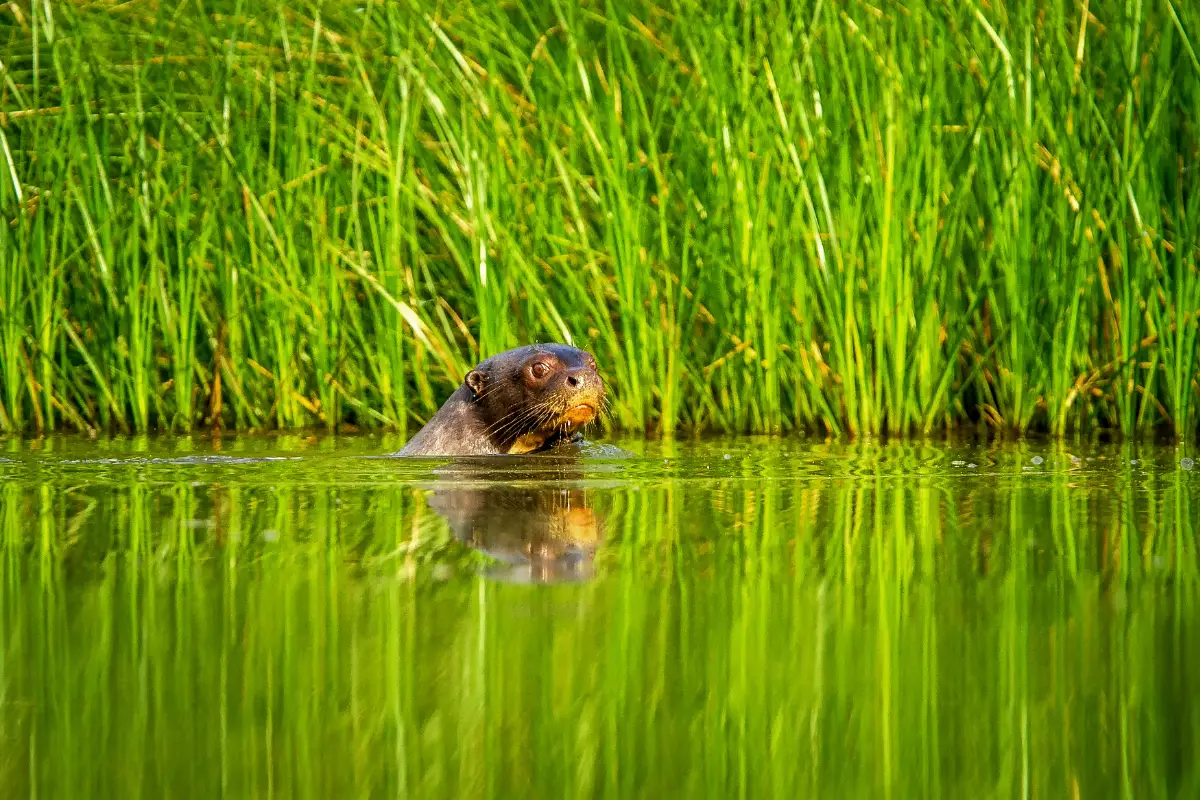
- Mammals: close to 108 species, including monkeys, capybaras, peccaries, sloths, giant river otters, and Amazonian wild cats.
- Fish: approximately 323 species found in rivers, oxbow lakes, and streams.
- Amphibians: around 93 species, mainly frogs and other animals associated with wet habitats.
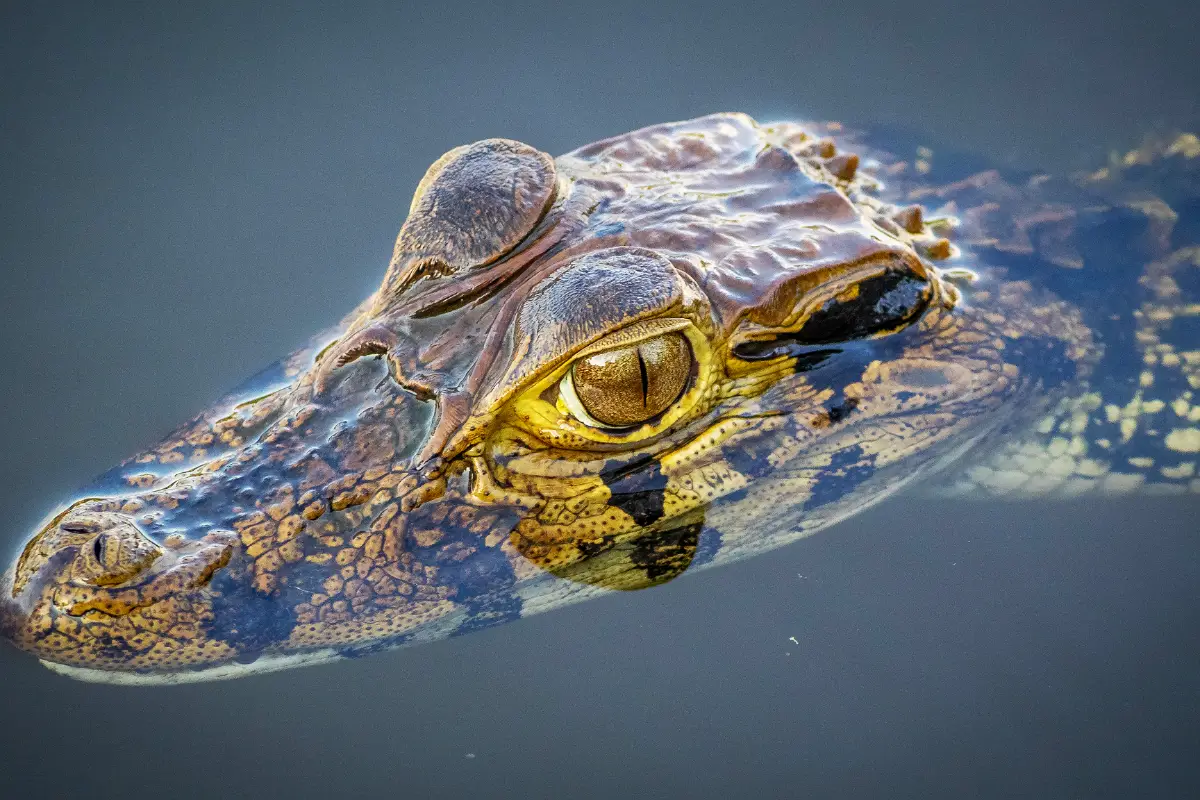
- Reptiles: close to 103 species, including caimans, turtles, boas, and anacondas.
- Day-flying butterflies: around 112 recorded species.
These figures show why the area is considered essential for protecting the wildlife and Amazonian ecosystems of Madre de Dios.
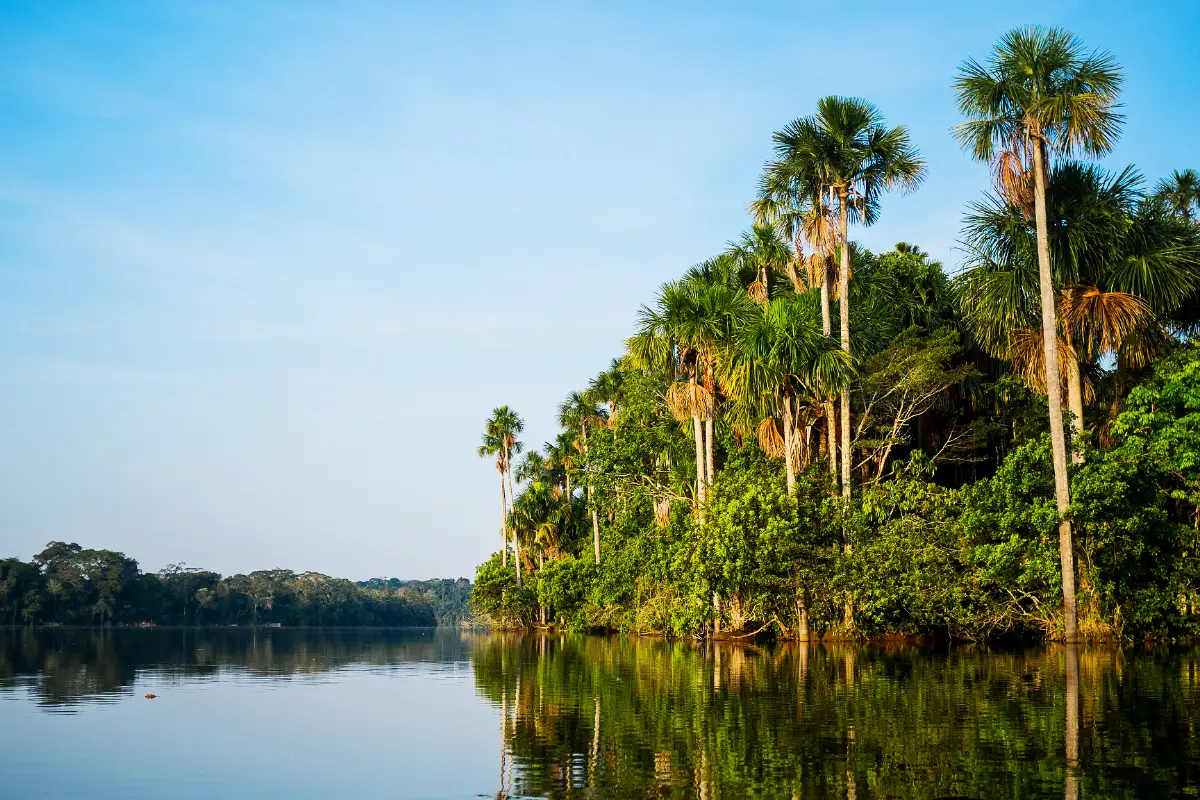
Tambopata National Reserve Peru: Location and Access
This protected area is in Madre de Dios, in southern Peru’s Amazon region. Puerto Maldonado is its main tourist gateway and the departure point for most transfers to lodges, rivers, trails, and visitor areas.
Its location also makes it easy to combine an Amazon experience with other destinations in southern Peru, such as Cusco, the Sacred Valley, and Machu Picchu.
How to Get to the Reserve
To reach the Tambopata area, you first need to travel to Puerto Maldonado. From there, transfers to lodges or visitor sites usually combine road travel and river navigation, depending on the location of your accommodation or booked tour.
How to Get There from Lima
The fastest way to travel from Lima is to take a flight to Puerto Maldonado. The flight takes approximately 1 hour and 30 minutes. From the airport, you will continue to your lodge or boarding point according to your booked tour.
How to Get There from Cusco
From Cusco, you can reach Puerto Maldonado by direct flight or by road. Flying is the most practical option. The overland journey takes several hours and is less suitable when you have limited time.
Transfer from Puerto Maldonado to the Rainforest
When you arrive in Puerto Maldonado, the tour operator will usually pick you up at the airport, bus terminal, or designated office. From there, the transfer continues to your lodge or boarding point, depending on your booked itinerary.
River Transfers and Approximate Travel Times
From Puerto Maldonado, many transfers continue by boat along the Madre de Dios River or the main waterway through the protected area. Travel time depends on the lodge’s location, river levels, and the itinerary you have booked.
Opening Hours and Entrance Fees
Visitors must pay an entrance fee based on their visitor type and the length of their stay. Access is only permitted with a guide or tour operator authorized by SERNANP, so Tambopata National Reserve tours must be booked through approved providers.
Visitor hours: Monday to Sunday, from 5:00 a.m. to 7:00 p.m.
| Visitor category | 1 day | 2 to 3 days | 4 to 30 days |
| General / foreign visitor | S/ 30.00 | S/ 60.00 | S/ 150.00 |
| Peruvian adult | S/ 15.00 | S/ 30.00 | S/ 75.00 |
| Peruvian child | S/ 8.00 | S/ 15.00 | S/ 35.00 |
| Local adult | S/ 8.00 | S/ 15.00 | S/ 35.00 |
| Local child | S/ 8.00 | S/ 15.00 | S/ 35.00 |
Important: The child rate applies to visitors ages 5 to 16.
- Children under 5 enter free of charge.
- Local residents must show a Peruvian national ID card (DNI) to receive the local rate.
- Fees may change, so it is best to check the official SERNANP platform before your trip.
Best Time to Visit Tambopata
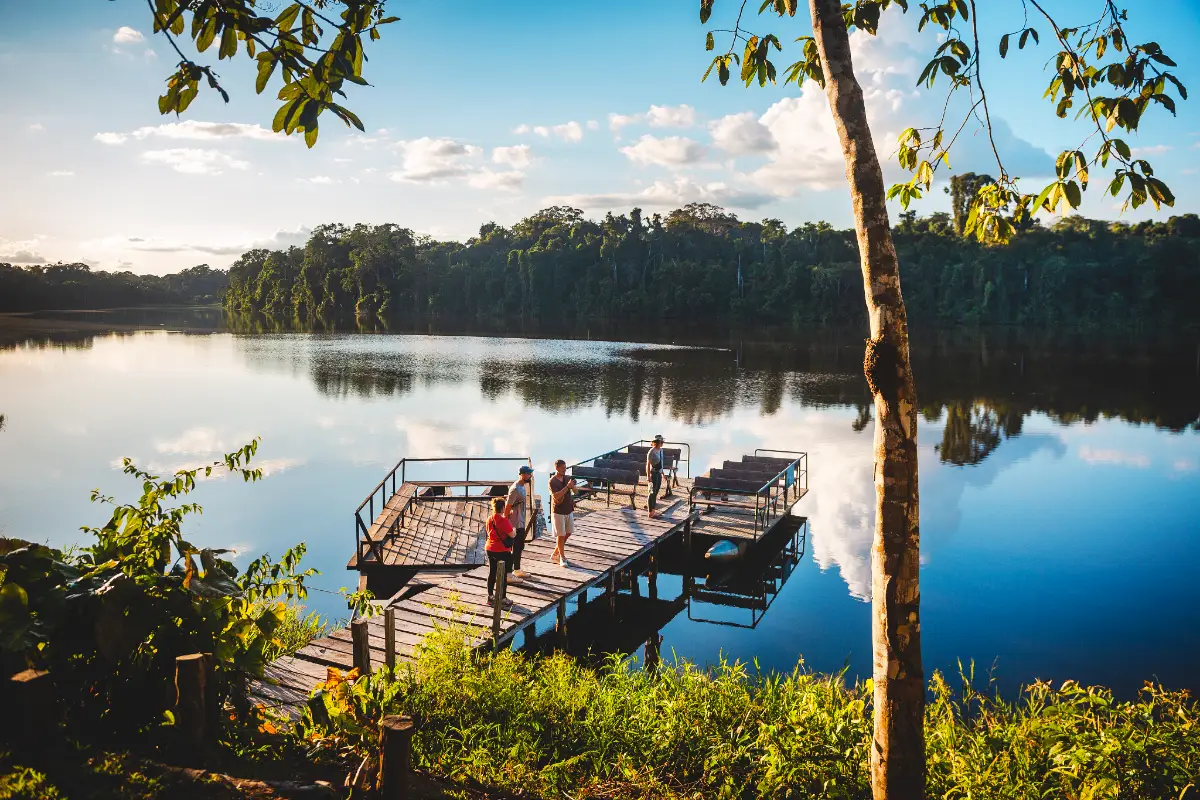
You can visit year-round, but the dry season is usually more comfortable for most travelers. The Amazon climate is warm and humid in every season, so you should always be prepared for rain.
Dry Season
The dry season runs approximately from May to October. During these months, there is less rainfall, trails are more accessible, and river excursions, hikes, and wildlife-watching activities are usually easier to enjoy.
This period is recommended for travelers who prefer less muddy trails, more reliable transfers, and better conditions for hiking, boating, and photography.
Rainy Season
The rainy season mainly runs from November to April. Rainfall is more frequent during these months, paths may be wetter, and some transfers can take longer.
Even so, this season has its advantages: the forest looks greener, rivers carry more water, and the rainforest feels more active. Bring waterproof clothing, suitable footwear, and some flexibility with your tour schedule.
What to See in Tambopata National Reserve
The protected area brings together some of the Peruvian Amazon’s most distinctive places, including oxbow lakes, rivers, clay licks, and elevated viewpoints. These settings let you appreciate different landscapes in Madre de Dios and improve your chances of seeing wildlife.
Lago Sandoval Tambopata
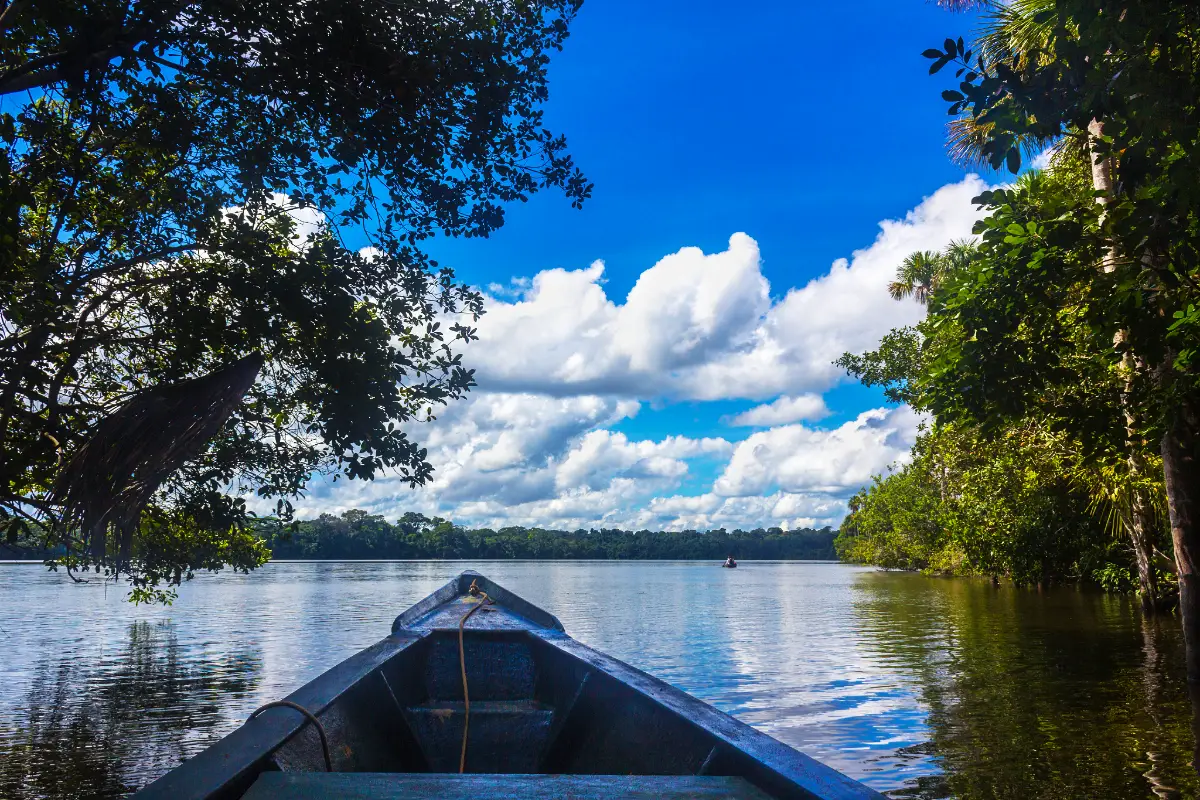
Sandoval Lake is one of the area’s signature attractions. The trip usually begins with a boat transfer from Puerto Maldonado, followed by a walk along rainforest trails to the lake. From there, visitors travel by canoe to look for birds, monkeys, caimans, and, with luck, giant river otters.
According to SERNANP, Sandoval Lake is about 30 minutes from Puerto Maldonado by river and has a permanent population of giant river otters, an observation tower, an interpretation center, and an accessible trail.
Macaw Clay Lick
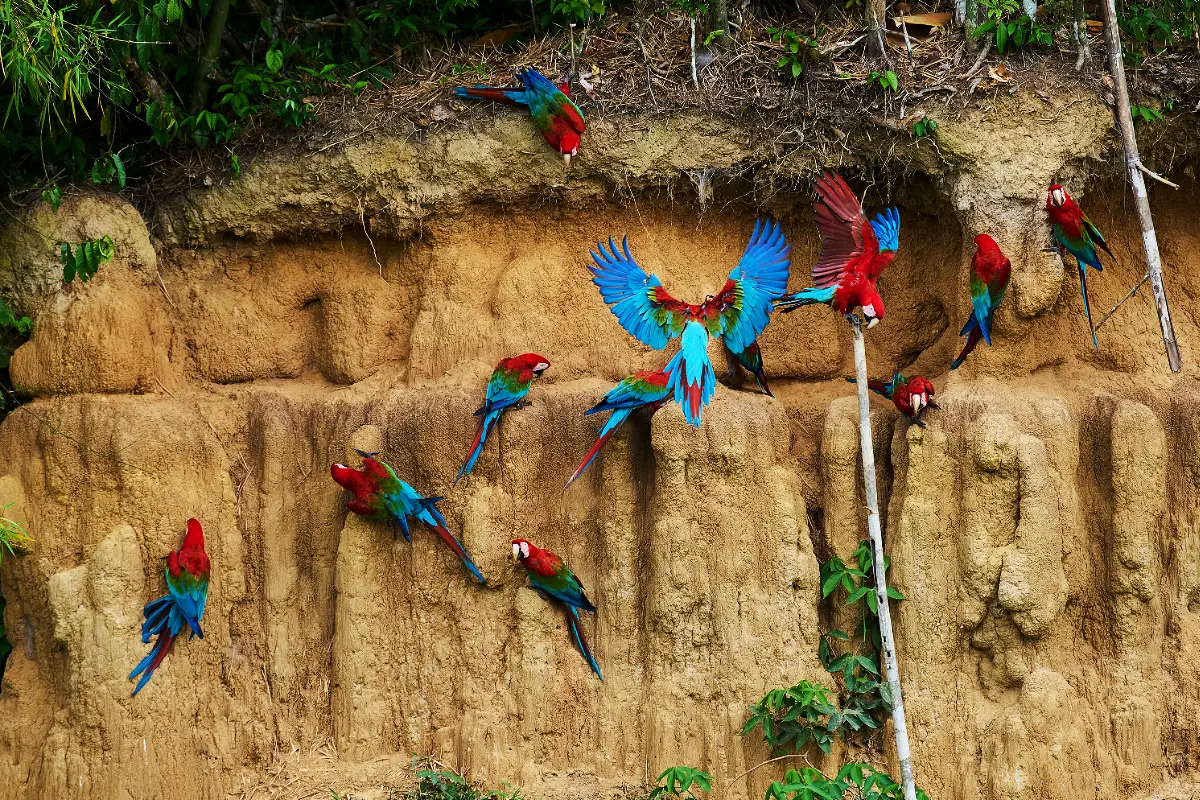
Macaw clay licks are places where these birds gather to eat mineral-rich clay. This natural behavior makes it possible to see macaws, parrots, and other Amazonian birds in groups, especially during the early morning.
It is one of the area’s most memorable experiences, particularly for travelers interested in photography, birdwatching, and wildlife.
Tambopata river
This river is one of the main natural access and travel routes in the area. Its waters connect lodges, trails, clay licks, and wildlife-watching sites.
During boat trips, you can see rainforest scenery, birds along the banks, and, in some cases, caimans or other animals near the water. The river is also an essential part of the Amazon experience because many transfers are made by boat.
Observation Towers and Suspension Bridges
Observation towers and canopy walkways let you see the rainforest from a different perspective. From higher parts of the forest, you can look across the treetops, listen to birds, and enjoy broader views of the Amazon landscape.
This activity is ideal for understanding the height and density of the tropical forest, while also providing good opportunities for photography and birdwatching.
Local Communities Near the Reserve
Local and Indigenous communities live around the protected area and maintain a close relationship with the Amazon’s forests, rivers, and natural resources. They are an important part of the region, and many of their practices are connected to plant knowledge, fishing, farming, handicrafts, and responsible use of the environment.
Some tourism experiences offer respectful visits to these communities when local people are directly involved in organizing them. Rather than simply observing a community, this type of experience helps visitors understand how Amazonian life, conservation, and responsible tourism can work together in Madre de Dios.
Cocococha, Sachavacayoc, and Condenado Lakes
In addition to Sandoval Lake, the area has other important oxbow lakes, including Cocococha, Sachavacayoc, and Condenado. These Amazonian lakes are surrounded by tropical forest, palm trees, and wetlands that provide shelter for birds, caimans, fish, and other rainforest species.
Visiting them lets you discover less crowded landscapes and experience the Amazon in a quieter setting. Depending on your route and chosen lodge, some of these lakes may be included in trips through the local river basin.
How Many Days Should You Stay?
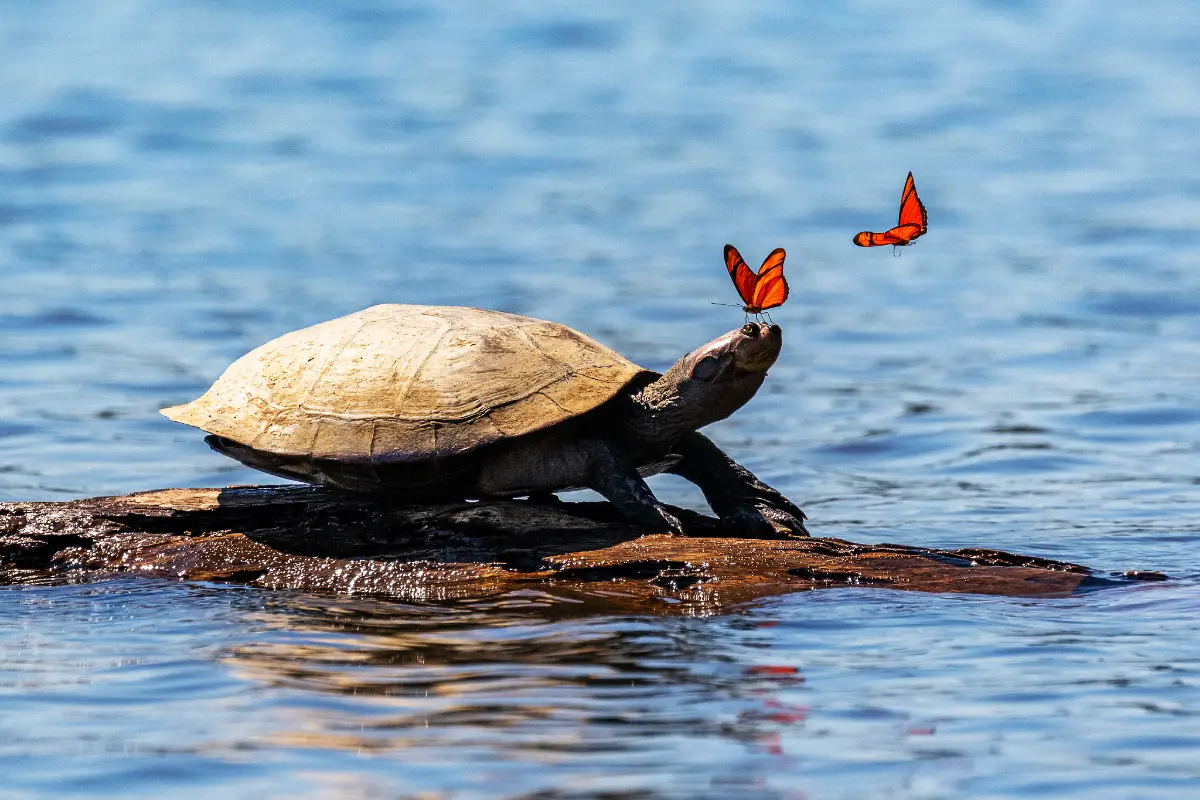
The ideal length of stay depends on the time you have, your travel pace, and the kind of rainforest experience you want. For a first visit, 3 or 4 days is usually the best choice because it gives you time for the main activities without making the itinerary feel rushed.
- 3 days: This is the most practical and balanced option for a first visit. It can include rainforest walks, boat rides, wildlife watching, nighttime activities, and enough time to enjoy the lodge without relying on an overly tight schedule.
- 4 days: This is a better option for a more complete experience. It gives you more time to visit natural areas at a relaxed pace, repeat wildlife outings, and improve your chances of seeing animals, since sightings depend greatly on the weather, time of day, and how quiet the group is.
You can also include this rainforest destination in a longer Peru itinerary. The 11-Day Peru Tour combines Cusco, the Inca Trail, Machu Picchu, and the Amazon. The 20-Day Peru Tour adds more destinations around Peru before ending with a rainforest experience.
Where Should You Stay?
You can stay in Puerto Maldonado or choose a rainforest lodge. The best option depends on your arrival time, budget, preferred comfort level, and the activities you want to do during your trip.
Staying in Puerto Maldonado
Puerto Maldonado is a good choice when you need to spend a night before or after your tour. The city has hotels, restaurants, banks, and basic services, but visiting the surrounding natural areas usually requires an additional transfer to the river, lodges, or entrance points.
Staying at a Rainforest Lodge
Staying at a Tambopata ecolodge places you closer to the forest. These properties are usually surrounded by nature, reduce daily travel from the city, and offer a fuller experience of the rainforest’s sounds, schedules, and natural rhythms.
What to Consider Before Booking
Before booking a Tambopata lodge, check its location, transfer time from Puerto Maldonado, included activities, pickup and return times, and whether the service includes meals, a guide, and transportation.
Also consider the comfort level you need. When traveling with children or older adults, or when you have limited time, choose accommodation with well-organized transfers and activities suited to the group’s pace.
Wildlife in the Tambopata National Reserve
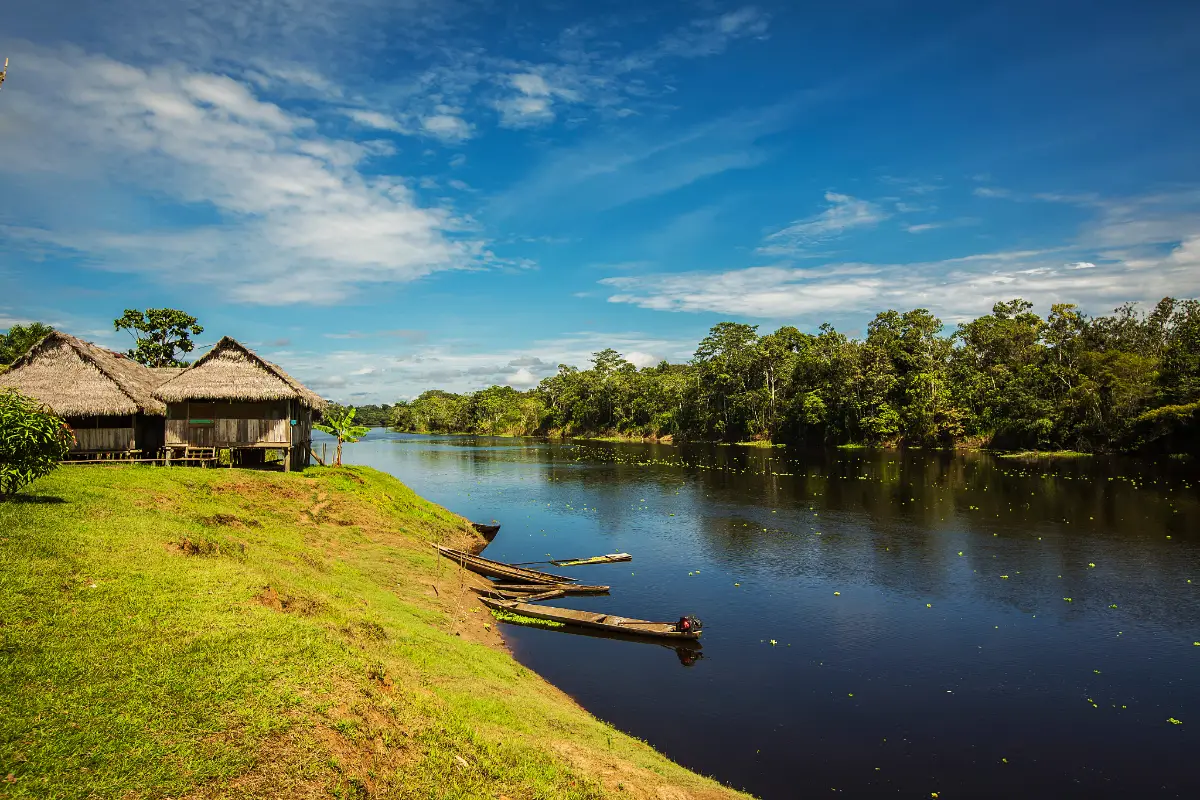
This protected area is known for its remarkable variety of Amazonian wildlife. Birds, mammals, reptiles, amphibians, fish, and insects live in its forests, rivers, oxbow lakes, and clay licks. Some species are commonly seen on guided outings, while others, such as jaguars and harpy eagles, are much harder to spot.
| Wildlife group | Representative species | Chance of sighting | Where they may be seen |
| Amazonian birds | Macaws, parrots, toucans, and hoatzins | Higher | Clay licks, riverbanks, tall trees, and open forest areas |
| Common mammals | Monkeys, capybaras, peccaries, and sloths | Moderate | Trails, riverbanks, areas around lodges, and forest zones |
| Reptiles | Caimans, turtles, boas, and anacondas | Moderate to low | Rivers, oxbow lakes, streams, and wetlands |
| Aquatic animals | Giant river otters and Amazonian fish | Moderate | Sandoval Lake, oxbow lakes, and rivers |
| Amphibians and insects | Frogs, butterflies, beetles, ants, and spiders | Higher | Night walks, leaves, tree trunks, and wet areas |
| Amazonian wild cats | Jaguar, puma, ocelot, and margay | Lower | Deep forest areas and places far from tourist routes |
| Birds of prey | Harpy eagle and other large raptors | Lower | Tall forests and areas with little human disturbance |
Plant Life and Tambopata Landscapes
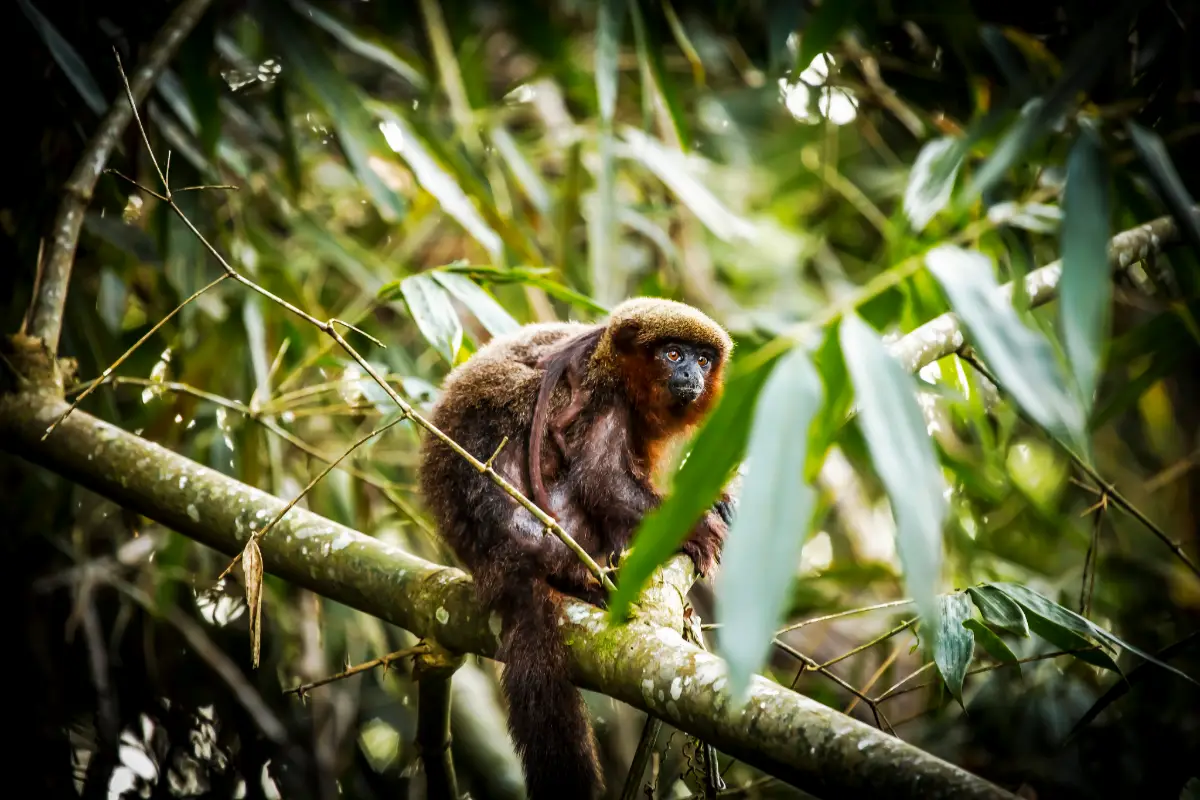
The area’s plant life includes tropical forests, giant trees, palms, medicinal plants, vines, ferns, and vegetation adapted to the Amazon’s warm, humid climate. These environments provide shelter, food, and breeding grounds for many wild species.
The most representative features include:
- Humid tropical forest: This is the main ecosystem, with dense vegetation, tall trees, and remarkable biodiversity.
- Giant trees: These form part of the Amazon landscape and can be seen during walks through primary forest.
- Palm trees and aguaje swamps: These grow in wet or seasonally flooded areas near oxbow lakes, streams, and low-lying parts of the rainforest.
- Medicinal plants: Amazonian communities traditionally use some species, and guides often discuss their uses during walks.
- Aquatic landscapes: Rivers, oxbow lakes, and wetlands surrounded by tropical vegetation, including the main river and Sandoval Lake.
- Clay licks: Natural areas associated with Amazonian soil, where birds and other animals eat mineral-rich clay.
What Can You Do in Tambopata?
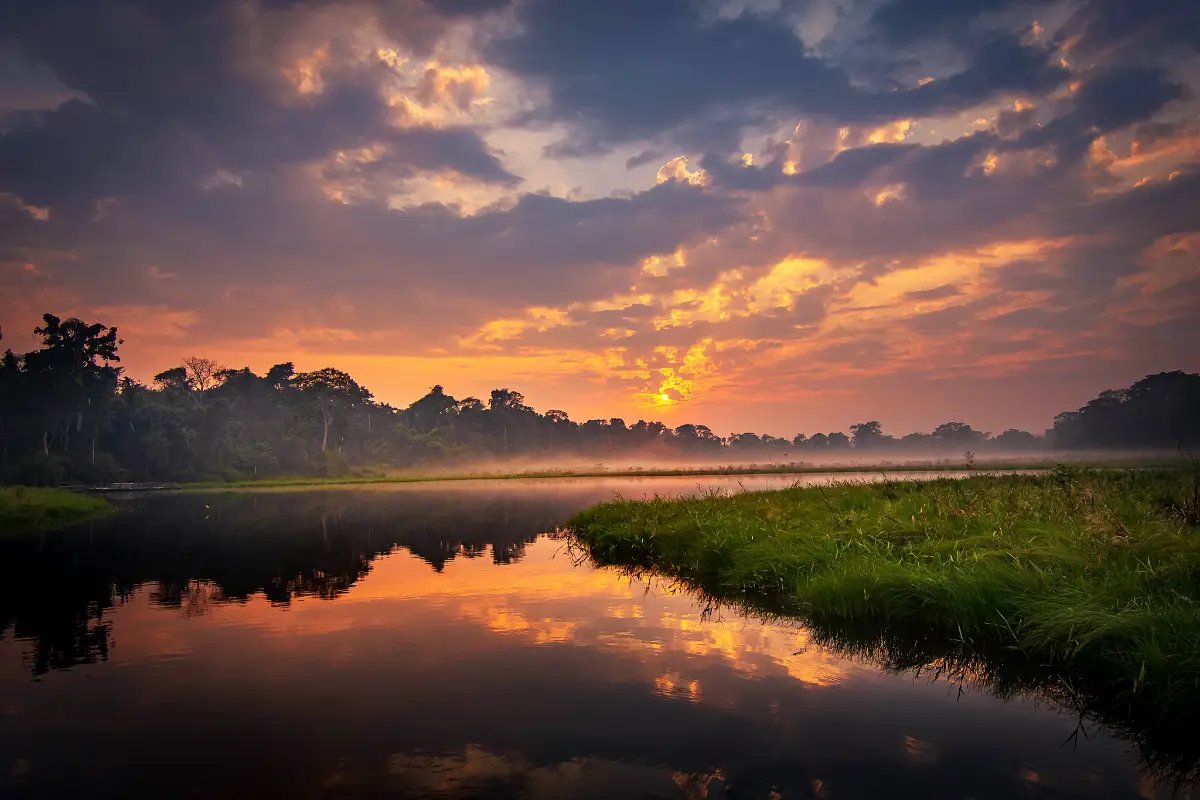
The area offers activities centered on nature and wildlife watching. Most excursions are guided because they depend on the weather, the times when animals are most active, and trail or river conditions.
River Boat Trips
Boat trips are an important part of the rainforest experience. Many routes to lodges, clay licks, or visitor sites follow the main local waterway or the Madre de Dios River.
Along the way, you may see rainforest scenery, birds, and, in some cases, caimans near the water.
Daytime Rainforest Walks
Daytime walks follow trails surrounded by trees, palms, vines, and tropical plants. These outings are usually relaxed and educational, making them ideal for learning more about the Amazon forest and noticing details that are easy to miss at first glance.
Night Walks
Night walks reveal a different side of the rainforest. After dark, many species become more active, especially insects, frogs, spiders, small reptiles, and other animals adapted to darkness. This activity is done with a flashlight and a specialist guide.
Birdwatching
This is an outstanding destination for birdwatching. Macaws, parrots, toucans, and many other Amazonian species can be seen in its forests, along rivers, and at clay licks.
The early morning is usually the best time for this activity because birds are more active and the weather is cooler.
Visiting Clay Licks
Clay licks are natural places where birds and some mammals eat mineral-rich clay. They are especially known for macaws and parrots, particularly around sunrise. A visit requires silence and patience because sightings depend on the weather, season, and animal activity.
Nature and Wildlife Photography
The area is ideal for nature photography, especially in the morning and late afternoon, when the light is best for landscapes and wildlife. When photographing animals, keep your distance, avoid direct flash, and always follow your guide’s instructions.
Kayaking or Gentle Canoeing
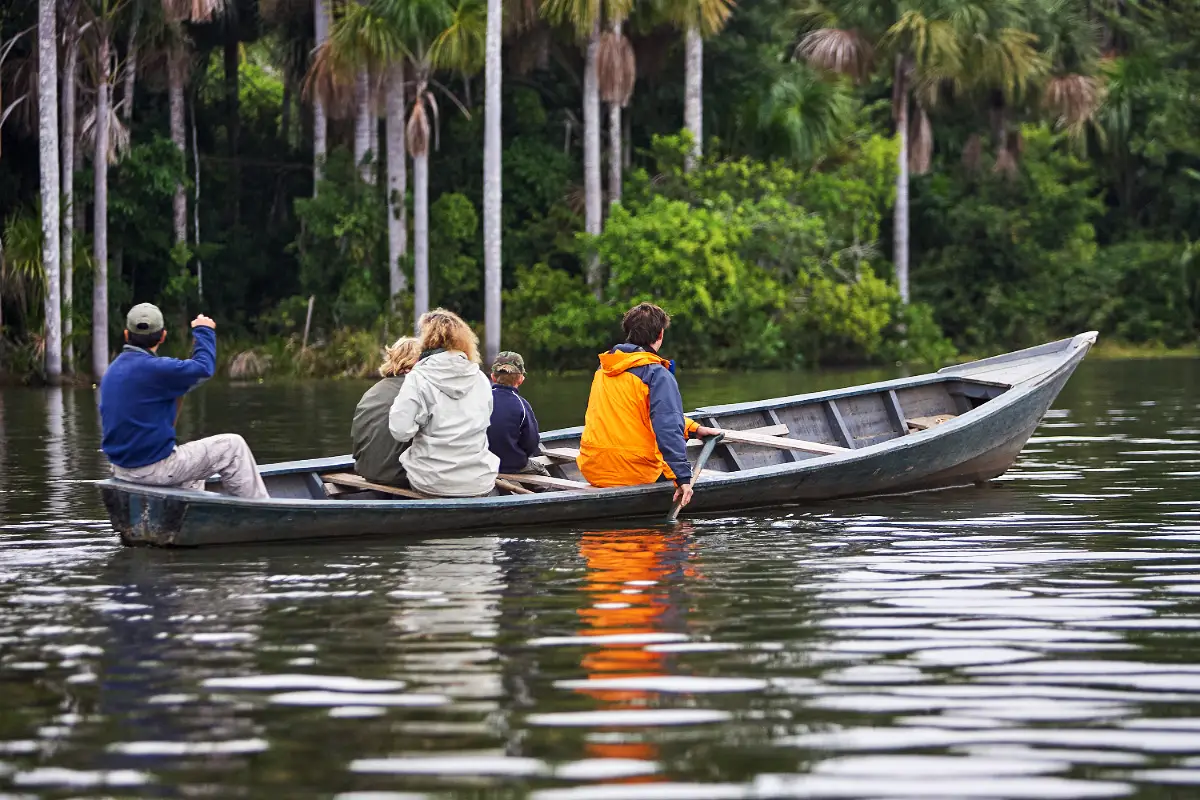
Kayaking or gentle canoeing is available in some areas when river conditions are safe. This activity lets you travel along calm stretches of water, see the Amazon landscape from another perspective, and enjoy the surroundings without doing anything too strenuous.
It is generally done with a guide in authorized areas, so follow the operator’s instructions and use the required safety equipment.
Tambopata or Manu: Which Should You Choose?
The reserve and Manu are two of Peru’s most important Amazon destinations, but they offer different experiences. The best choice depends on how much time you have, the level of comfort you want, and how immersive you want your rainforest experience to be.
| Aspect | Tambopata | Manu |
| Location | Madre de Dios, with the main access through Puerto Maldonado | Between Cusco and Madre de Dios, usually accessed from Cusco |
| Accessibility | Easier and faster to visit | More remote, with longer transfers |
| Recommended stay | 3 to 4 days | 5 days or more |
| Type of experience | Rainforest, lodges, rivers, oxbow lakes, clay licks, and guided walks | Cloud forest, upper rainforest, lowland rainforest, and longer routes |
| Best for | Travelers with limited time, families, and first-time visitors to the Amazon | Travelers with more time who are interested in biodiversity and deeper experiences |
| Travel level | More practical and comfortable | More demanding because of the distance and logistics |
| Best option if comfort matters | Tambopata | Manu may be more basic on some routes |
| Best option for a first visit | Tambopata | Manu is better for a second trip or a longer expedition |
Overall, the reserve is a better choice when you have only a few days and want a more accessible Amazon experience from Puerto Maldonado. Manu is better when you have more time and want a more remote, extensive route focused on biodiversity.
What to Pack to Tambopata
- Lightweight long-sleeved shirts
- Comfortable trousers
- Waterproof jacket or rain poncho
- Hiking shoes or comfortable boots
- Insect repellent
- Sunscreen
- Cap or sun hat
- Sunglasses
- Flashlight or headlamp
- Binoculars
- Camera
- Reusable water bottle
- Cash
- ID card or passport
Tips for a Responsible Visit
- Do not feed animals: This can change their natural behavior and harm their health.
- Keep your distance from wildlife: Watch without touching, chasing, or making excessive noise.
- Use authorized trails only: This protects vegetation and reduces risks.
- Follow your guide’s instructions: Guides know the routes, schedules, and rules for the area.
- Avoid single-use plastics: Carry a reusable bottle and reduce waste.
- Do not remove natural items: Plants, seeds, stones, and natural remains all play a role in the ecosystem.
- Respect the quiet of the rainforest: Speaking softly improves the experience and helps you see wildlife.
- Choose responsible services: Give priority to operators that follow conservation rules.
Important health note: Travelers are advised to receive the yellow fever vaccine at least 10 days before visiting the area. It is not a requirement for entering Peru, but it is an important precaution for rainforest regions such as Madre de Dios. You should also ask a doctor about hepatitis A, hepatitis B, typhoid, and mosquito-bite prevention.
Frequently Asked Questions about the Tambopata National Reserve
Is it safe to visit the reserve?
As an Amazon destination, safety depends on following your guide’s instructions, respecting the area’s rules, and choosing a registered tour operator.
Is the reserve suitable for children?
Yes, it can be suitable for children when you choose a comfortable lodge and age-appropriate activities. Before booking, check the transfer times, the length of the walks, and the accommodation’s facilities and services.
Is there cell service or internet access?
Puerto Maldonado generally has cell service and internet access, but connections at rainforest lodges may be limited or intermittent. Some properties offer Wi-Fi in specific areas.
Can you pay by card, or is it better to carry cash?
Puerto Maldonado has ATMs, and some businesses accept cards. For the rainforest, it is better to carry some cash in Peruvian soles for small expenses, tips, or local purchases.
Can you visit the reserve after Machu Picchu?
Yes. The most practical option is to return to Cusco after Machu Picchu and travel from there to Puerto Maldonado, the gateway to the rainforest. Ideally, allow an additional 3 or 4 days for this part of the trip.

Add new comment