



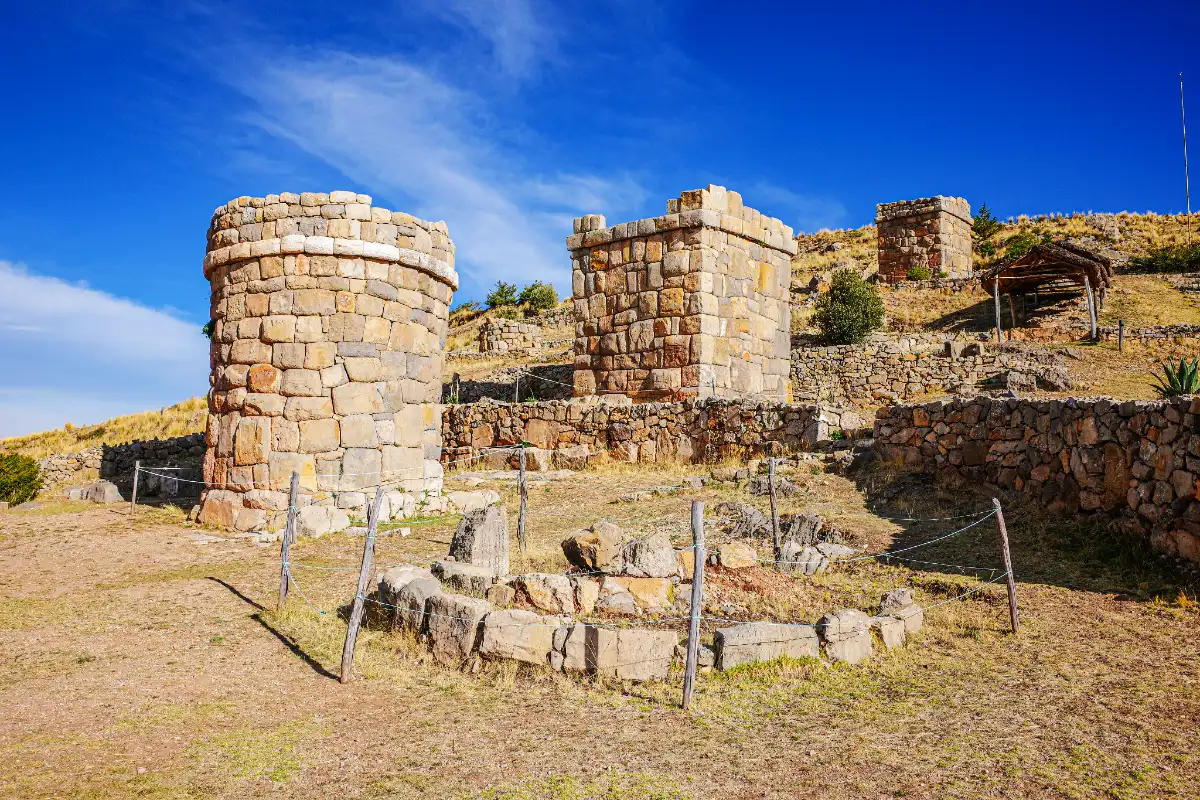
The Chullpas of Sillustani are one of the most remarkable archaeological complexes in Puno. These impressive funerary towers rise on the Lake Umayo peninsula and stand out for their size, location, and the sophisticated techniques used to build them.
What are Sillustani Chullpas?
The Chullpas of Sillustani are ancient stone burial towers built by the Qolla or Colla culture and other Aymara-speaking societies that once lived across the Andean Altiplano of Peru.
Where are the Sillustani Tombs located?
The Sillustani Tombs are located in the district of Atuncolla, in the province and department of Puno, southern Peru, within the Lake Titicaca basin on the Umayo Lake peninsula.
Sillustani Altitude
The Sillustani Archaeological site stands at approximately 3,902 m / 12,802 ft above sea level, slightly higher than the city of Puno.
What Does Sillustani Mean?
The name Sillustani is linked to Quechua and Aymara words:
- Sillu means fingernail
- Llustani means to stick, adhere, or slip
It is sometimes translated as “slide of fingernails,” possibly referring to the smooth, precisely fitted stones of the structures. The origin and meaning of the term are better understood within the Quechua and Aymara linguistic traditions of the region.
Sillustani at a Glance
- Location: Atuncolla, Puno, Peru
- Distance from Puno: About 34 km
- Distance from Juliaca: About 28 km
- Altitude: ~ 3,902 m / 12,802 ft
- Opening hours: Tue–Sun, 8:30 a.m. to 5:30 p.m.
- Entrance fee: 15 soles / US$ 4. Cash payment only.
- Walking difficulty: Moderate, mainly due to the altitude and uphill sections
- Best way to visit: By private transport, taxi, or half-day tour from Puno
- Best time of day: Afternoon for softer light and sunset views
- Best time to visit: May to September for drier weather and clearer conditions
How to Get to Sillustani, Peru?
The Sillustani Archaeological Complex lies between Juliaca and Puno, about 28 km from Juliaca and 34 km from Puno City. The easiest way to reach Sillustani is by car or on a half-day tour from Puno. If you are planning to go by your own follow the next steps:
Sillustani from Puno
Take the Puno–Juliaca Highway and turn off toward the village of Atuncolla. The drive takes about 45 minutes.
Sillustani from Juliaca
Take the Juliaca–Puno Highway, turn off toward Caracoto, and continue along the Juliaca–Sillustani road until you reach the village of Atuncolla. The drive takes about 35 minutes.
From Atuncolla, the final section takes less than 15 minutes by road, followed by a short 500 m walk to the archaeological complex.
If you are arriving in Juliaca, you can also visit Sillustani on the way to Puno. This option works best for travelers arriving on an early afternoon flight, ideally before 3:30 p.m. Take extra care with the altitude, especially if you are traveling from a lower-altitude city such as Lima.
What Is a Sillustani Tour Like?
The Sillustani Archaeological site can be visited independently or on a tour from Puno. Shared tours typically cost between 55 soles and 150 soles per person, or around US$ 15 to 40, depending on the operator and services included.
The Classic Sillustani Tour usually starts around 2:00 p.m. and lasts approximately 3 to 4 hours. You will have about 1 hour to 1 hour and 30 minutes to explore the archaeological site at your own pace, enjoy the surrounding landscape and take landscape and cultural photographs.
Afternoon tours offer the chance to enjoy a beautiful sunset at Sillustani, with Umayo Island, also known as Mesa Isla, in the distance, appearing almost mythical against the landscape. Morning tours are also available, but they are offered as a private service.
Sillustani Entrance Fees and Opening Hours
| Details | |
| Opening hours | Tuesday to Sunday, 8:30 a.m. to 5:30 p.m. |
| General admission | 15 soles or US$ 4 |
| University students | 5 soles or US$ 1.50 |
| Children | 2 soles or <1 dollar |
| Atuncolla residents | Free with valid identification |
What Were the Sillustani Chullpas Used For?
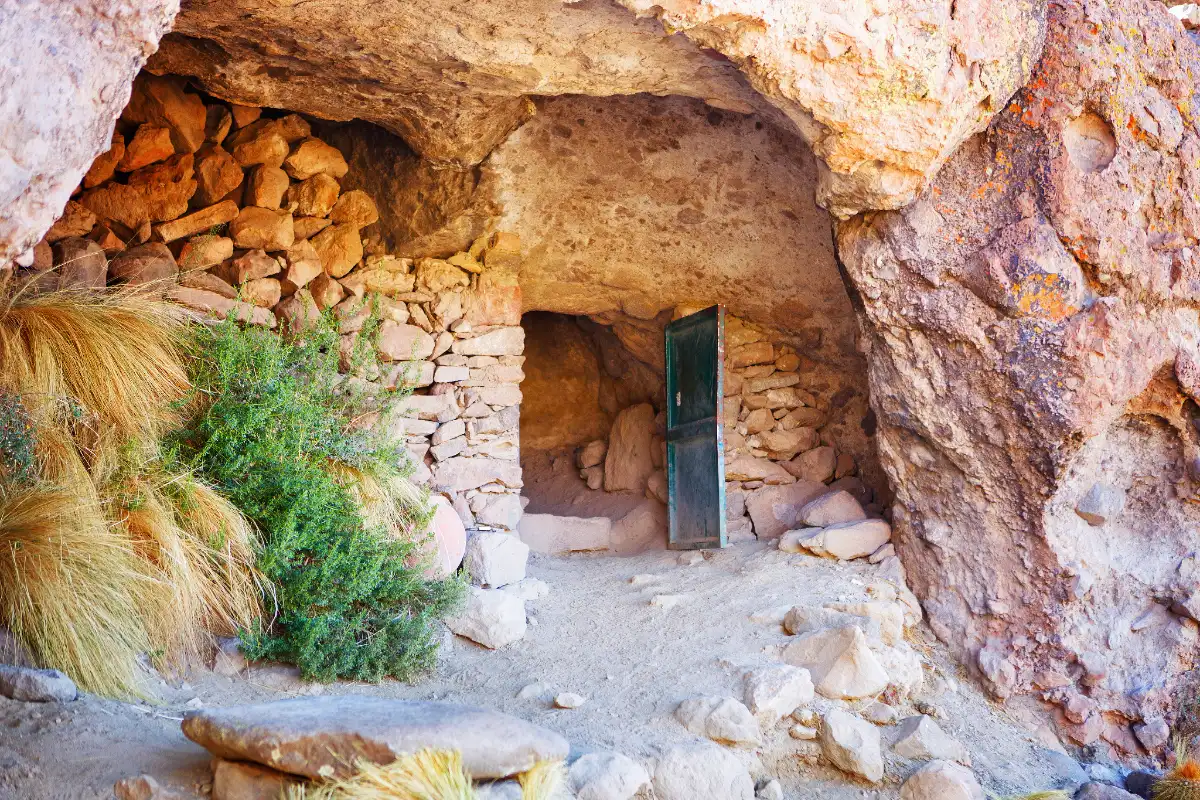
The chulpas, or chullpas, served as funerary spaces or mausoleums where the remains of the deceased were placed. Some research suggests that these burial towers were collective royal tombs. However, their purpose went beyond simply functioning as tombs.
Who Was Buried in the Chullpas?
The largest chullpas of Sillustani were likely reserved for elite and high-ranking authorities from the societies that ruled the region. Their size, finish, and location reflect differences in social status and hierarchy within Andean societies.
Sillustani Chullpas and Andean Cosmology
The mummified bodies found inside the Chullpas of Sillustani were often placed in a fetal position, possibly symbolizing rebirth. Some interpretations also connect the shape of the chullpas with the womb and the idea of returning to the origin of life.
The small entrances of many Chullpas face east, toward the rising sun, which can be seen as a symbol of the sun’s daily rebirth. This orientation is believed to reflect the close connection between life, death, and renewal in Andean cosmology.
Read later | Day of the Dead and the Meaning of Death in Peruvian Culture
What Does Chullpa Mean?
In the Aymara language, the term has been interpreted as meaning “grave” or “large basket where the dead were placed.” This differs from the Aymara expression amaya uta, meaning “house of the soul,” a term associated with above-ground funerary structures.
Main Chullpas of Sillustani
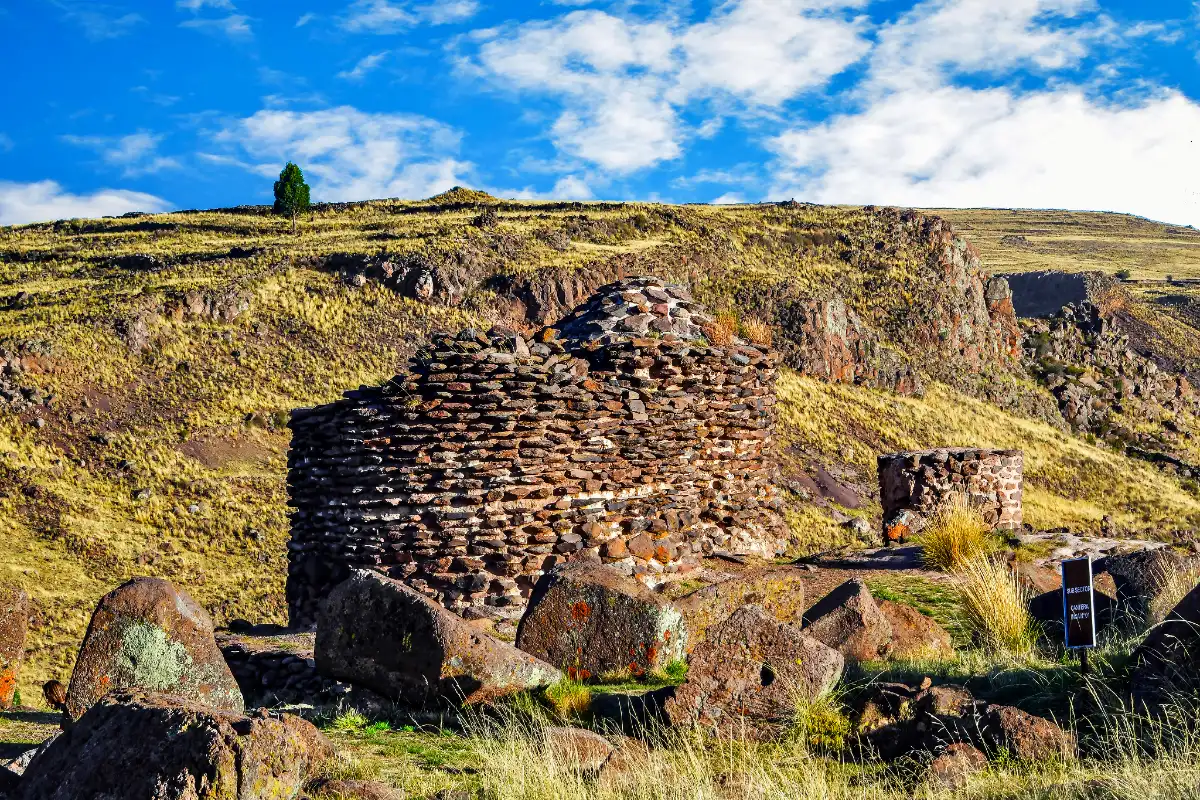
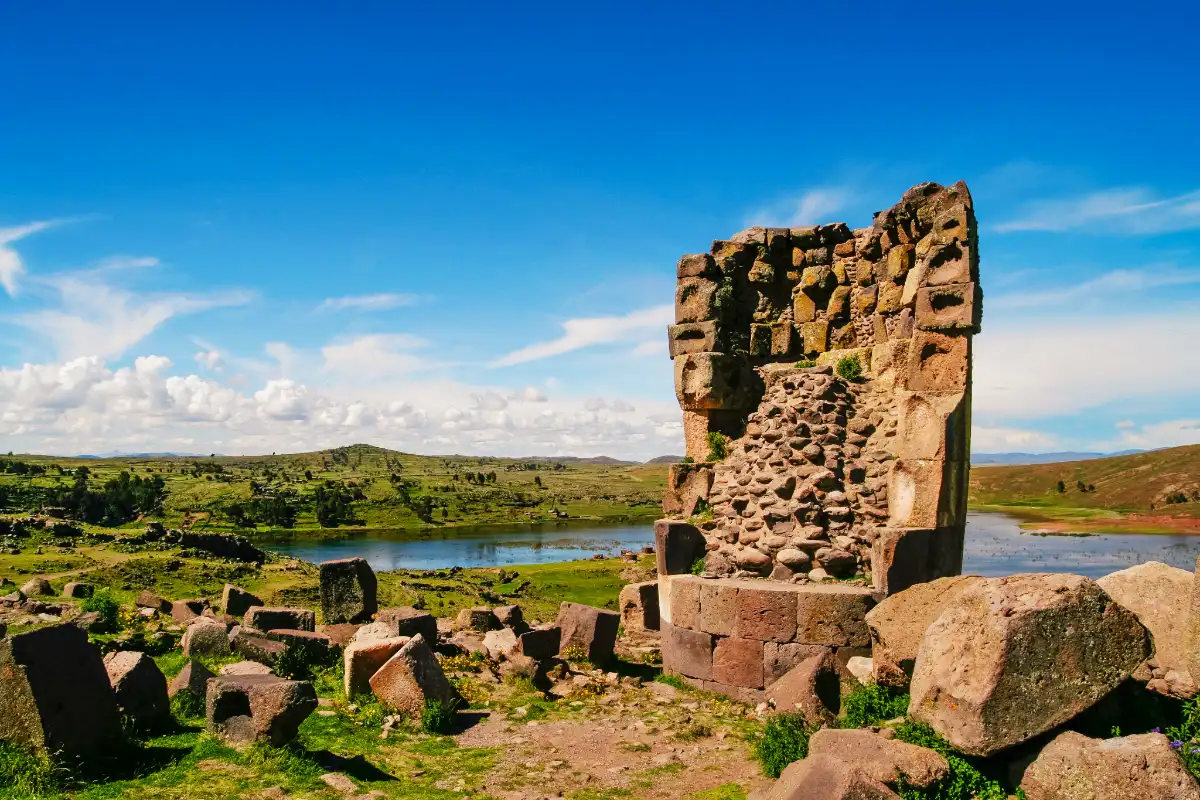
Among the many funerary towers at Sillustani, several stand out for their size, architectural details, and state of preservation. The best known is the Lizard Chullpa, along with unfinished towers, worked stone blocks, and structures affected by looting over time.
The Lizard Chullpa
The Lizard Chullpa is one of the most representative structures at Sillustani. It reaches approximately 12 meters in height and measures 7.17 meters in diameter at its base. Its name comes from the figure of a lizard carved into one of its stone blocks.
This carving is one of the structure's most distinctive details and shows that some chullpas also incorporated representations of animals into their decoration.
Unfinished chullpas
Several chullpas at Sillustani were never completed. Some preserve only sections of their walls, while others reveal different stages of the construction process.
These unfinished structures are particularly valuable because they allow visitors and researchers to understand how the towers were gradually built before the final stonework and finishing details were completed.
What to See at Sillustani
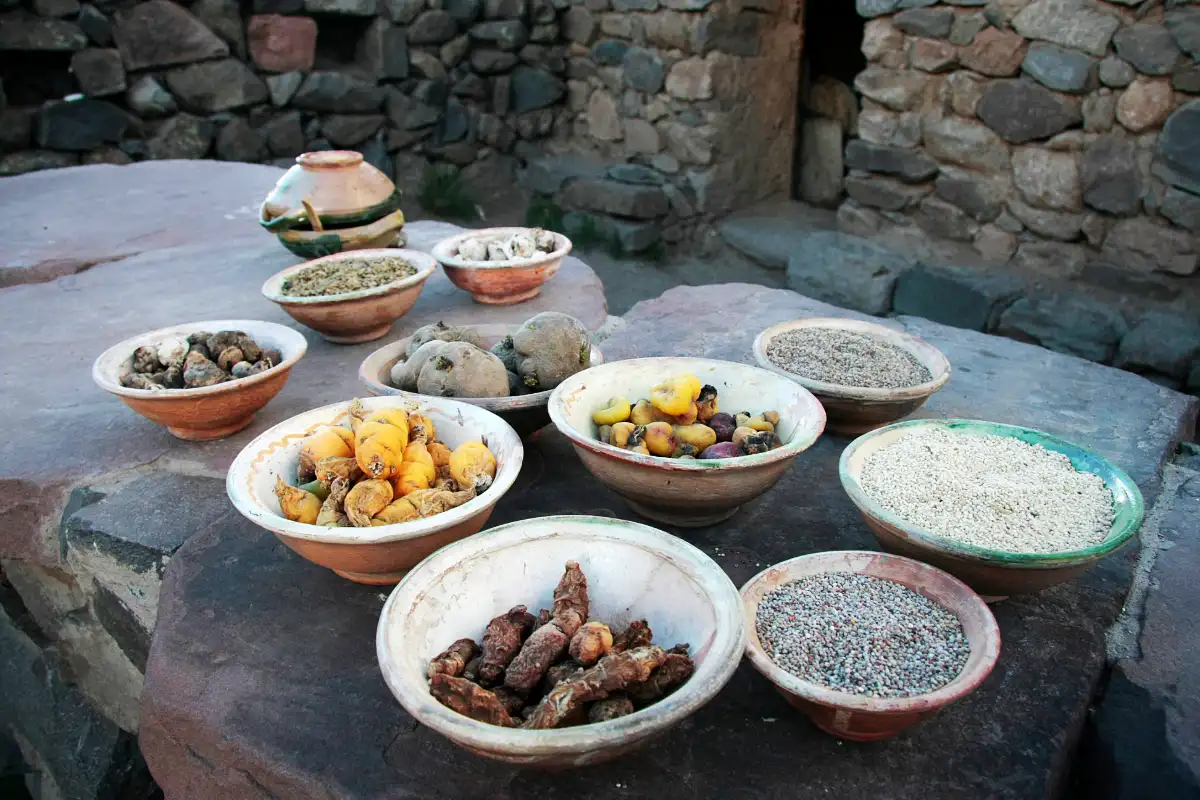
Beyond its famous chullpas, the complex preserves a variety of archaeological structures and remains spread across the peninsula. These include ceremonial spaces, monoliths, terraces, stone carvings, and evidence connected to the construction of this pre-Hispanic necropolis
Intiwatanas and Ceremonial Spaces
Sillustani also preserves solar circles, or intiwatanas, linked to ceremonial activities beyond the chullpas. The area includes the Inca Bath, suggesting that the complex combined funerary and ritual spaces.
Monoliths and Huacas
Sillustani also preserves monoliths identified as huacas, sacred stone elements linked to Andean ceremonial practices. Their presence suggests that Sillustani may also have served as a place of pilgrimage and ceremonial activity.
Terraces and Stairways
The slopes of Sillustani contain archaeological terraces and remains of corrals that formed part of the complex. Archaeological material can still be seen on the surface of some terraces. Their arrangement gives the hillside a distinctive bell-shaped profile, similar to other terraced mountains in the surrounding area.
Quilcas or Stone Engravings
Quilcas are markings or representations carved on stone surfaces. At Sillustani, they appear on chullpa walls, foundations, stone blocks, and natural rocks. Some are linked directly to monumental structures, while others were carved into reused stone blocks or exposed rock surfaces.
Quarries and Evidence of Construction
Across Sillustani, visitors can see stone blocks in different stages of preparation and areas where building material was extracted. Unfinished stones reveal how the blocks were cut, transported, and prepared for the construction of the chullpas.
Lake Umayo and the Sillustani Landscape
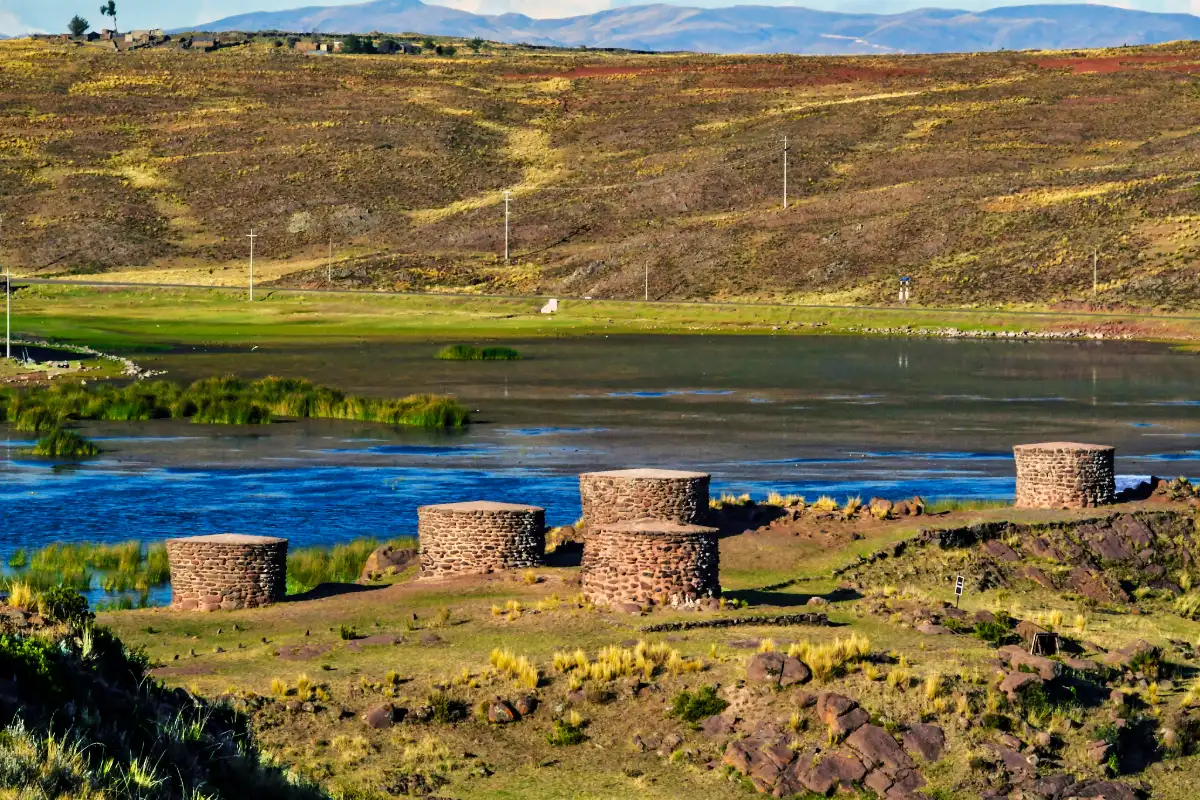
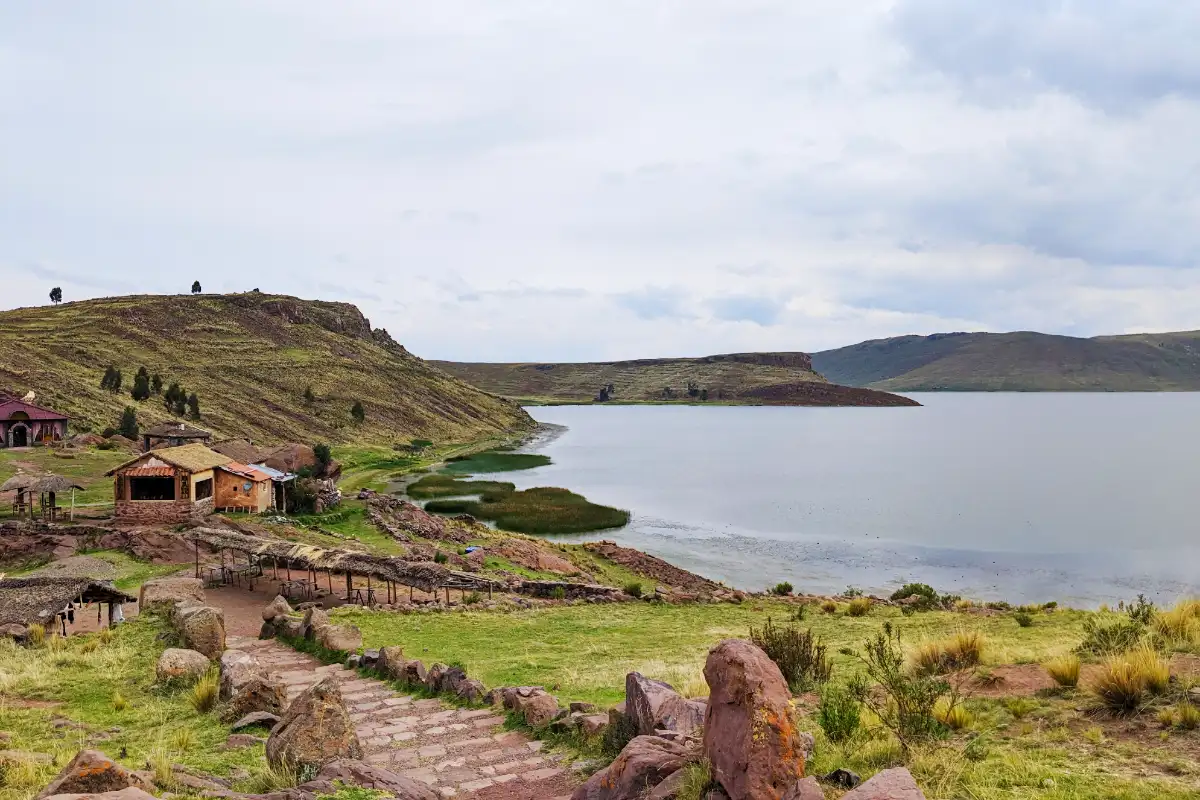
Lake Umayo surrounds much of the Sillustani peninsula and is one of the site’s most impressive natural features.
From the higher parts of the complex, visitors can enjoy panoramic views of the lake, surrounding highland landscapes, and Umayo Island or Mesa Island. The combination of chullpas, water, and open scenery makes Sillustani as striking for its natural setting as for its archaeology.
Keep reading | Essential Things to Do in Puno
Best Time to Visit the Chullpas of Sillustani
Sillustani can be visited throughout the year, although the scenery and weather conditions change noticeably with the seasons.
- Dry season, from May to September: Rainfall is less frequent, trails are usually in better condition, and clear days are more common. Mornings and evenings can be quite cold.
- Transition months, April, October, and November: The weather is more changeable, with clear days mixed with occasional rain. These months can be pleasant for traveling and generally receive fewer visitors than the peak dry season.
- Rainy season, from December to March: Rainfall is more frequent and the surrounding landscape becomes noticeably greener. Bring waterproof clothing and be prepared for sudden changes in weather.
Tips for Visiting Sillustani
- Take some time to explore the surroundings of Lake Umayo and look for the wetland's native flora and fauna, especially highland birds and vegetation.
- If you want to better understand the site's history and architectural details, exploring Sillustani with a guide can make the visit much more rewarding.
- Carry some cash for small purchases, handicrafts, drinks, or food available near the archaeological complex.
- Acclimatize before your visit and walk at a comfortable pace, as Sillustani is located at a high altitude.
- Wear layers, bring a windproof or waterproof jacket, and use comfortable footwear suitable for walking around the complex.
- Use sunscreen, wear a hat and sunglasses, and carry water because solar radiation can be strong during the day.
- Set aside a few minutes for photographs around Lake Umayo, where you can enjoy wide views of the landscape and the chullpas.
- Small restaurants and food stalls can be found near Sillustani, although Puno offers a much wider range of dining options.
- Respect marked areas and avoid climbing on the chullpas or touching carvings and archaeological remains.
History of Sillustani
Sillustani has a history that began long before the construction of the large funerary towers that define the site today. The area surrounding Lake Umayo was occupied by different societies of the Andean highlands over several historical periods.
The complex became particularly important during the rise of the Qolla and continued to be used after the region came under Inca rule. These different periods left behind evidence that now helps archaeologists reconstruct part of Sillustani's history.
The First Settlements in the Area
The area around Sillustani was inhabited long before the construction of the great chullpas. Archaeological research has identified evidence from several different periods, showing that this part of the Puno highlands experienced a long history of human occupation.
Materials linked to the influence of Tiwanaku, one of the most important civilizations of the pre-Hispanic Andes, have also been discovered. However, the main chullpas that characterize Sillustani today belong to later periods.
The Colla or Qolla Culture
After the decline of Tiwanaku, the Qolla became one of the most important political groups in the highlands. Their territory extended across much of the northern Lake Titicaca region, with Hatuncolla, near Sillustani, serving as one of their main centers.
During this period, Sillustani gained particular funerary and ceremonial importance. The Qolla built numerous chullpas and developed a tradition that continued even after the region was incorporated into the Inca Empire.
Sillustani During the Inca Empire
During the 15th century, the expansion of the Inca Empire reached Qolla territory, and the region became part of Collasuyo, the southeastern division of Tawantinsuyo. Sillustani continued to hold important funerary and ceremonial significance under Inca rule.
During this period, new structures were built and the complex continued to develop. As a result, Sillustani today preserves evidence of both Qolla traditions and the later Inca presence.
Sillustani After the Arrival of the Spanish
Following the arrival of the Spanish in the 16th century, Andean religious and funerary traditions began to change, and Sillustani gradually lost the ceremonial role it had maintained for centuries.
Over time, the complex was no longer used for its original purpose. Centuries later, travelers, archaeologists, and researchers began documenting its structures and studying its importance within the pre-Hispanic history of Puno.
The Sillustani Treasure
The Sillustani Treasure is one of the most important archaeological discoveries made within the complex. The collection includes objects made from gold, silver, and copper, as well as pieces of Spondylus shell, lapis lazuli, bone, and ceramics.
A total of 1,280 objects were recorded, including 501 gold pieces. The characteristics of the objects and their association with ceramic materials allowed researchers to connect the discovery with the Qolla society of the Late Intermediate Period.
The 1971 Discovery
The treasure was discovered on November 3, 1971, during work carried out at the Sillustani Archaeological Complex, approximately 22 meters from the Lizard Chullpa. The variety and quality of the objects made this discovery an important source of information for studying Qolla society.
Architecture of the Chullpas of Sillustani
The architecture of the Chullpas of Sillustani is notable for the wide variety of shapes, dimensions, and finishes found throughout the complex. Some structures display relatively simple stonework, while others were built with carefully cut and precisely fitted blocks.
These differences reflect various construction periods and architectural traditions. Techniques associated with the Qolla can be identified alongside others that were introduced, developed, or refined during the Inca period.
Shape and Structure of the Chullpas
The Chullpas of Sillustani may have circular, square, or rectangular foundations, although the large circular towers are the best known. Some widen slightly toward the top, so their diameter is smaller at the base than near the upper section.
Inside, corbelled or false-vault systems were used to close the funerary chambers. The towers also feature small entrance openings, while the exterior of the more elaborate structures includes finely worked stone blocks, cornices, and, in some cases, carved animal figures.
Construction Techniques and Stonework
The most elaborate chullpas were built using carefully cut, polished, or cushioned stone blocks fitted together with such precision that mortar was unnecessary.
Other structures were built with irregular masonry joined with mud mortar. To close the funerary chambers, builders used a false-vault technique, gradually bringing the stones inward until the upper section was completely covered.
Types of Chullpas at Sillustani
Three main types of chullpas can be identified at Sillustani according to the materials, finishes, and construction techniques used:
- Cut-stone chullpas: Built with polished or cushioned stone blocks, with circular or quadrangular foundations and no mortar.
- Irregular masonry chullpas: Constructed with less carefully worked stones joined together with mud.
- Coated chullpas: Structures covered with layers of mud or kaolinite.

Differences Between Colla and Inca Chullpas
| Feature | Colla or Qolla Chullpas | Inca Chullpas |
Stone finish | More irregular and less carefully worked stones | Carefully cut and polished stone blocks |
| Construction technique | Masonry joined with mud mortar | More refined stonework with precisely fitted blocks |
| Overall finish | More rustic and simple | More uniform and elaborate |
| Period | Highland regional kingdoms | Inca presence in the region |
| Presence at Sillustani | Represents the local Qolla tradition | Includes techniques and styles influenced by the Incas |
Both architectural traditions existed together at Sillustani, so some structures may combine characteristics of each style, making it difficult to draw an absolute distinction between them.
If Sillustani is part of your Peru itinerary, take time to explore the site slowly and appreciate the history, landscape, and Andean traditions that surround it.
Frequently Asked Questions About the Chullpas of Sillustani
Are there restrooms at the Sillustani Archaeological Complex?
Yes. Basic restroom facilities are available near the entrance to the complex and are convenient to use before or after your visit.
Is there parking near the entrance to Sillustani?
Yes. The complex has a parking area for private vehicles and tourist transportation close to the entrance.
Is Sillustani accessible for people with reduced mobility?
No. Sillustani is not fully accessible for visitors with reduced mobility. The complex has uneven terrain, stone-paved paths, and several stairs, which can make the visit difficult for wheelchair users or travelers with limited mobility.
Can I buy my entrance ticket when I arrive?
Yes. Sillustani has a ticket office at the entrance where visitors can purchase admission to the archaeological complex. The Sillustani entrance ticket is currently not included in any Puno tourist ticket.
Can I pay by card, or should I bring cash?
No, credit and debit cards are not accepted. Since Sillustani is located in a rural area, electronic payments are generally unavailable. Bring Peruvian soles in cash, preferably in small bills and coins.
How difficult is the Sillustani tour?
The walk is moderately demanding, mainly because of the altitude and uphill sections can make the walk feel more challenging. Take your time and rest whenever needed.
Should You Visit Sillustani After Arriving in Juliaca?
If you plan to visit Sillustani after arriving in Juliaca, take extra care, especially if you are coming from a low-altitude city such as Lima. Altitude sickness can appear quickly and may cause discomfort during your visit. Sillustani is located at nearly 4,000 m / 13,123 ft above sea level.
Is there cell phone coverage or internet access at Sillustani?
Coverage can be unreliable because of the complex's location. It is a good idea to download maps or any information you may need before leaving Puno.
Are drones allowed at the archaeological complex?
No. Drones should not be flown without prior authorization.


Add new comment