


By the time we returned to Cusco, the soles of our boots had turned pink. A light rain had softened the soil in the Red Valley, and we had carried a little of it back with us.
Our three-day trek through Ausangate and Rainbow Mountain had taken us across high-altitude grasslands and rocky mountain passes. Glacial lakes and countless pools of water appeared in the folds of the landscape.
We had slept beneath the imposing gaze of Apu Ausangate, still visible long after the valleys had fallen into darkness. The wind made us lower our heads, and the scenery made us lift them again.
It all began in Cusco, with a journey south and a stop for some bread.
Day 1: The Road to Ausangate
Bread and Coffee in Oropesa
We left the hotel early, still half asleep in the morning cold. The streets of Cusco were beginning to fill with people heading to work, and the quiet we had found outside the hotel gradually gave way to the bustle of the city.
We took the road towards Cusco's South Valley. Before long, our guide suggested stopping in the town of Oropesa to try its traditional bread.
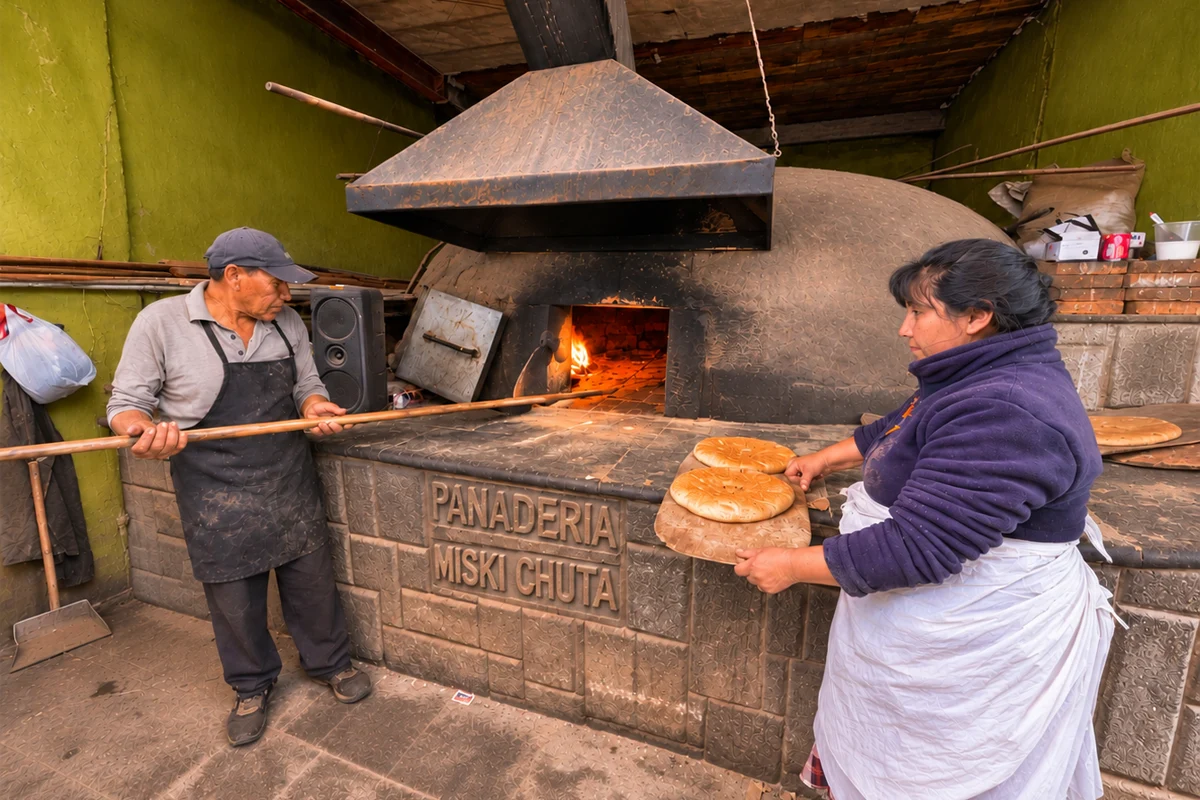
The chuta bread was enormous. Round, slightly sweet and soft inside, with floral decorations and sweet raisins scattered across its surface, it looked like too much even for a group of hungry hikers. Then our guide explained that it was made for sharing. Its size suddenly made sense. We broke it into pieces while the owners brought us complimentary coffee.
The bakers invited us inside to see their clay ovens. Firewood burned within them, and the smell of freshly baked bread filled the room. There were dense wheat loaves, braided breads and others with open patterns, known as rejillas. The chutas came in different sizes and designs, though they all seemed made to bring several people together around a table.
We learned a little about the baking traditions of the town, known as the "Bread Capital of Peru," and its spring water, which is said to give the bread some of its distinctive flavor. We listened with coffee in our hands, occasionally reaching for another piece.
The mountains were waiting for us. Even so, it was hard to leave a bakery that had welcomed us so warmly.
Driving Through Cusco's South Valley
We continued through villages lining the road and others scattered farther away among the fields. Morning light shone across the wide waters of Huacarpay Lake. Birds moved along the edges of the wetland, where reeds grew close to the shore.
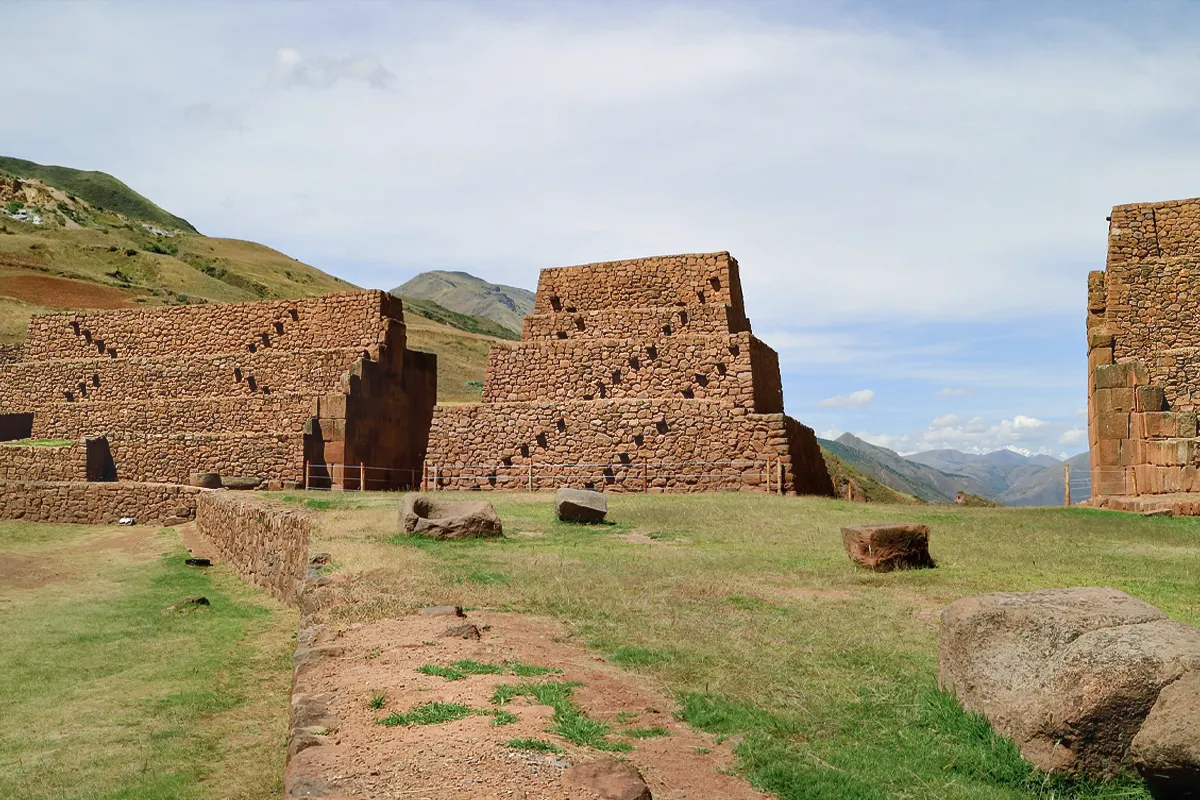
Near the sign for Pikillacta Archaeological Park, a magnificent pyramid-like stone structure caught our attention. We had barely finished admiring the lake when its unexpected silhouette drew our eyes away from the water. It was Rumicolca, an archaeological remnant of the Wari, an ancient culture that preceded the Incas.
Then came Urcos. First we noticed a small church on a hillside, followed by the lake and houses gathered beside it. High above the town, a white statue of Christ overlooked the scene.
We turned onto the road heading east, towards the Amazon rainforest and the Brazilian border, and began to climb. The Vilcanota Valley fell away beneath us, its river shining between the slopes. Each bend revealed another stretch of its course. The fields and villages we had just passed grew smaller against the vast landscape.
Higher up, the climb became gentler. Adobe houses appeared beside cultivated fields, known locally as chacras, separated by long stretches of open land. The villages followed a familiar pattern: a square, a church and houses with red-tiled roofs. Behind them, green hills rose in overlapping layers until they seemed to meet the sky.
Our First Close Look at Ausangate
As we admired the lovely villages along the road, we felt the presence of the great snow-covered Ausangate. At first, we could see the entire mountain through the window. Its white summit rose behind the nearby hills and stayed with us as we travelled. Over the next few days, we would get so close that taking it all in at once would no longer be possible.
We stopped for breakfast in Tinki, where we met the team who would accompany us. There was our lead guide and two assistant guides, the cooks and their helpers, and the horsemen with their horses. We organised our belongings, packed what we needed into our daypacks and handed over the rest to be carried ahead.
Beginning the Ausangate Trek
Before setting off, we made a small offering of coca leaves to Pachamama, Mother Earth, and asked permission to enter Ausangate's domain. Our guides spoke about the Apu, the sacred snow-capped mountain we had seen throughout the journey and even from Cusco a few days earlier.
They explained its deep importance in the traditions and beliefs of Cusco's Andean communities, and its connection to the Andean worldview and Inca heritage.
The Hike to Upis
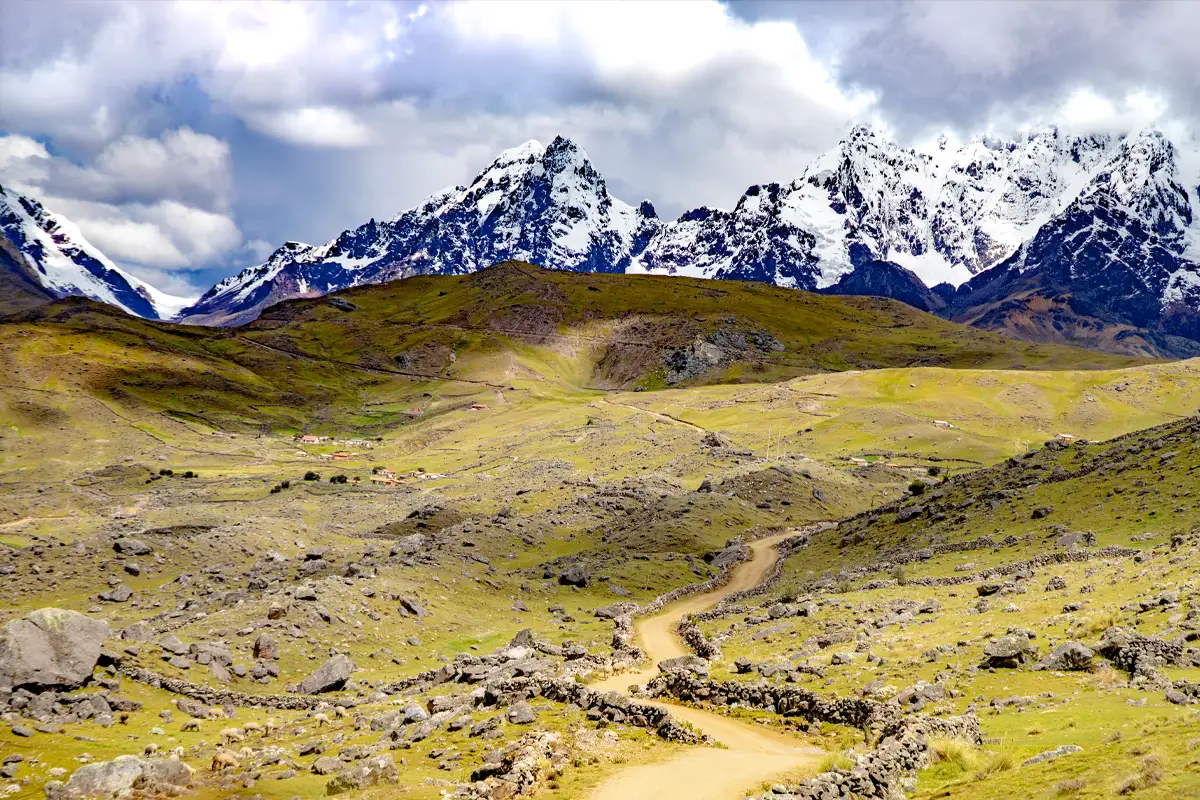
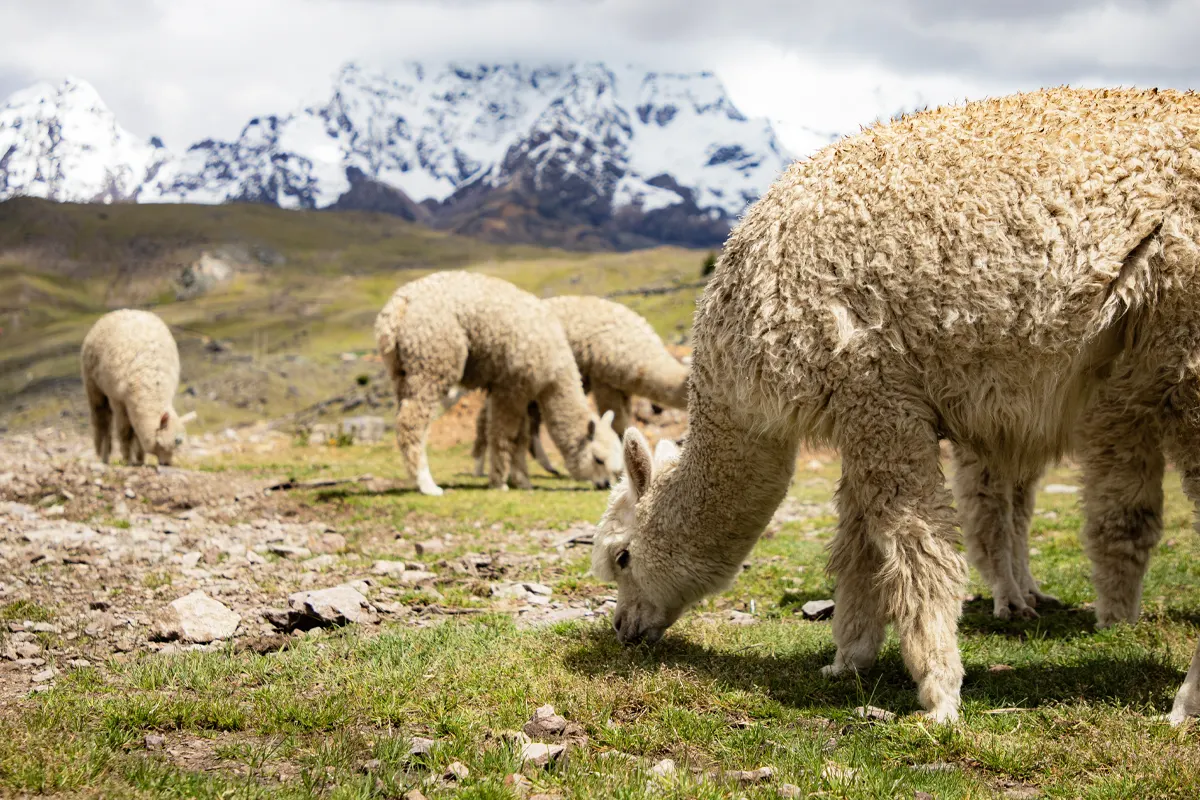
The first stretch of the trek gave us time to find our rhythm. The trail climbed gently through green and brown grasslands, small cultivated plots and rocks scattered across the hillsides. Llamas and alpacas lifted their heads as we passed, their white, brown and black coats standing out against the grass.
The mountain seemed to grow with every step. We kept looking from the summit to the ground, watching where we placed our feet. Little by little, the distance stopped being something we saw through a window and became something we could feel in our legs.
The cooks had gone ahead to prepare lunch. Finding them there, with a meal ready in the middle of that landscape, was a welcome relief. We ate, rested for a while and continued towards the community of Upis, with much of the afternoon still ahead.
Upis Hot Springs
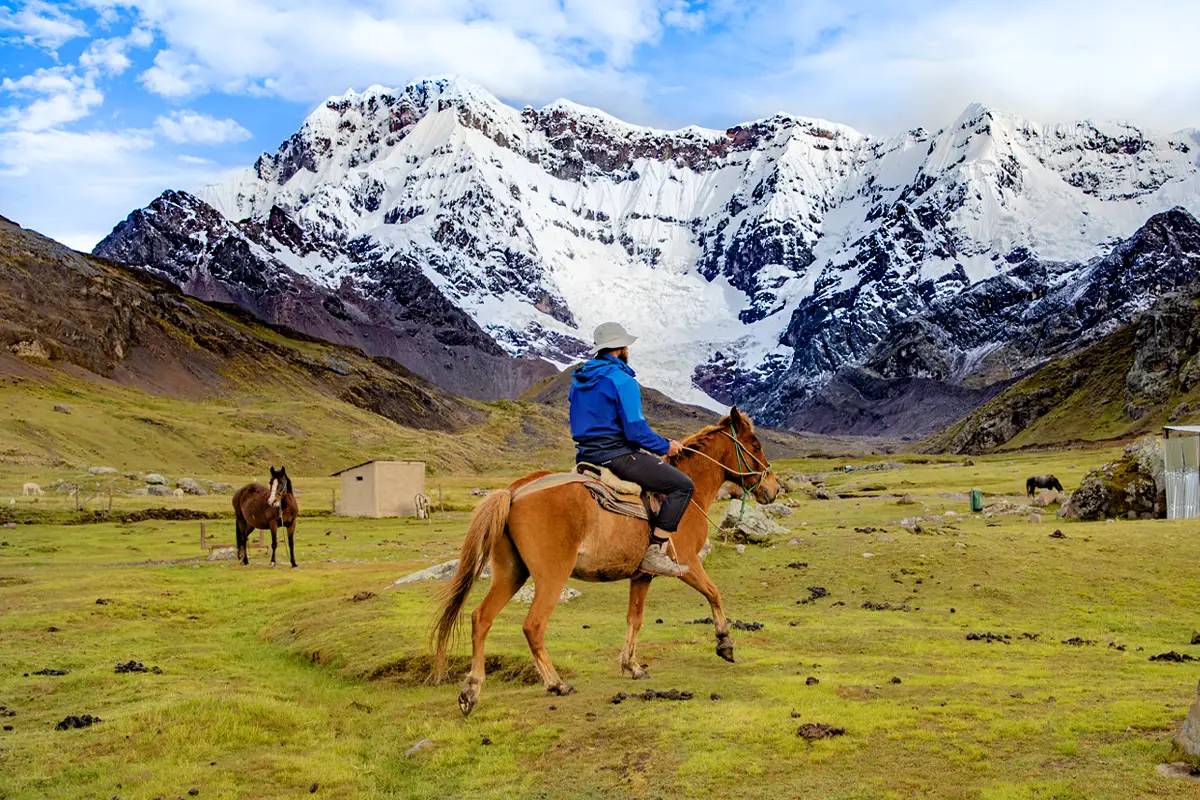
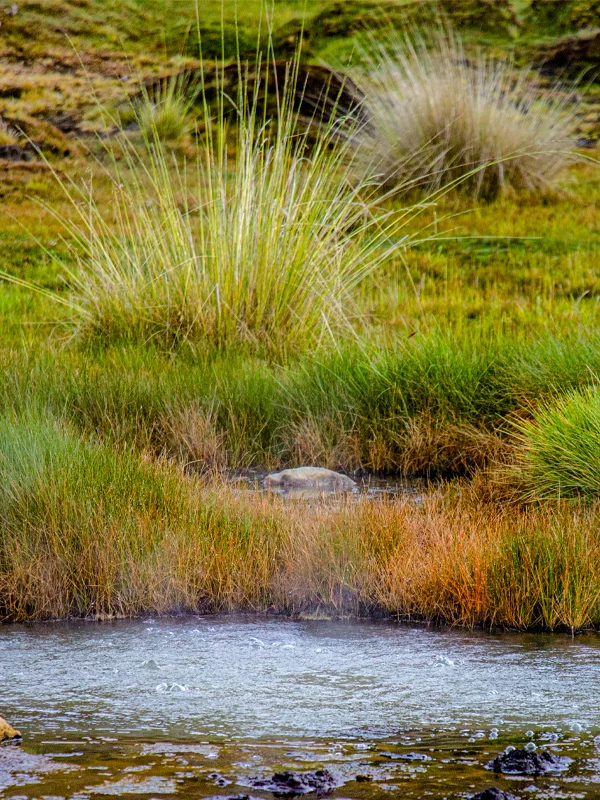
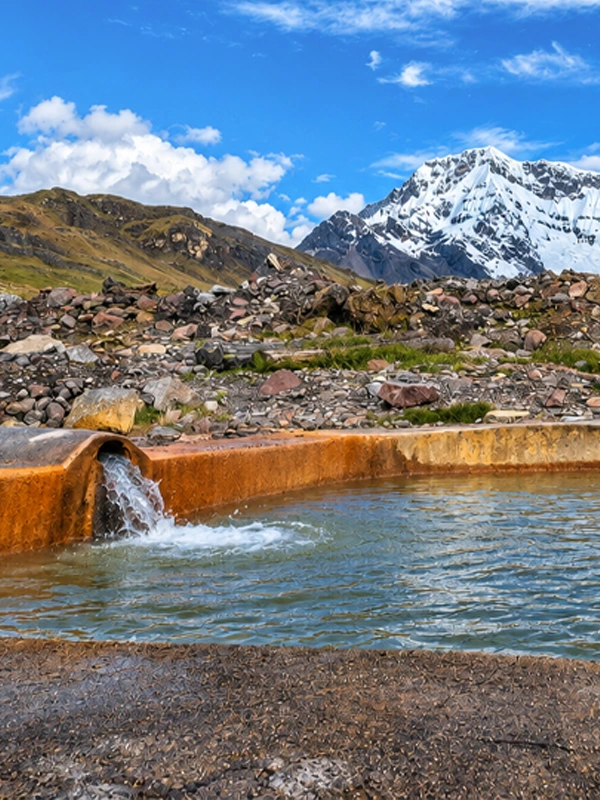
The community lay very close to snow-capped Ausangate. Near our campsite were brownish mineral pools, with plants growing along their edges. We used our free time to soak in the Upis hot springs and let the warmth ease our muscles after the hike.
Later, we went horseback riding beneath a sky beginning to turn golden. The northeastern face of Ausangate caught the last evening light, and the cold returned as the sun went down.
Dinner brought us together again. We cupped warm mugs in our hands beneath a sky full of stars. Around us, the land disappeared into darkness, but the snow remained bright enough for us to make out the mountain.
When it was time to sleep, we could still see Ausangate. It seemed to be looking back at us.
 |  |
Day 2: Lakes and Mountain Passes Beneath Ausangate
Morning at Upis Lake
Our second day began with a hot drink brought to our tent. Coca tea or coffee, and a few quiet minutes to watch the first light of dawn before getting ready.
A light mist covered the grasslands. Llamas and alpacas were already moving across the slopes, and the wind swept through camp. Above them, Ausangate slowly emerged as the soft clouds around it drifted apart in the morning sky.
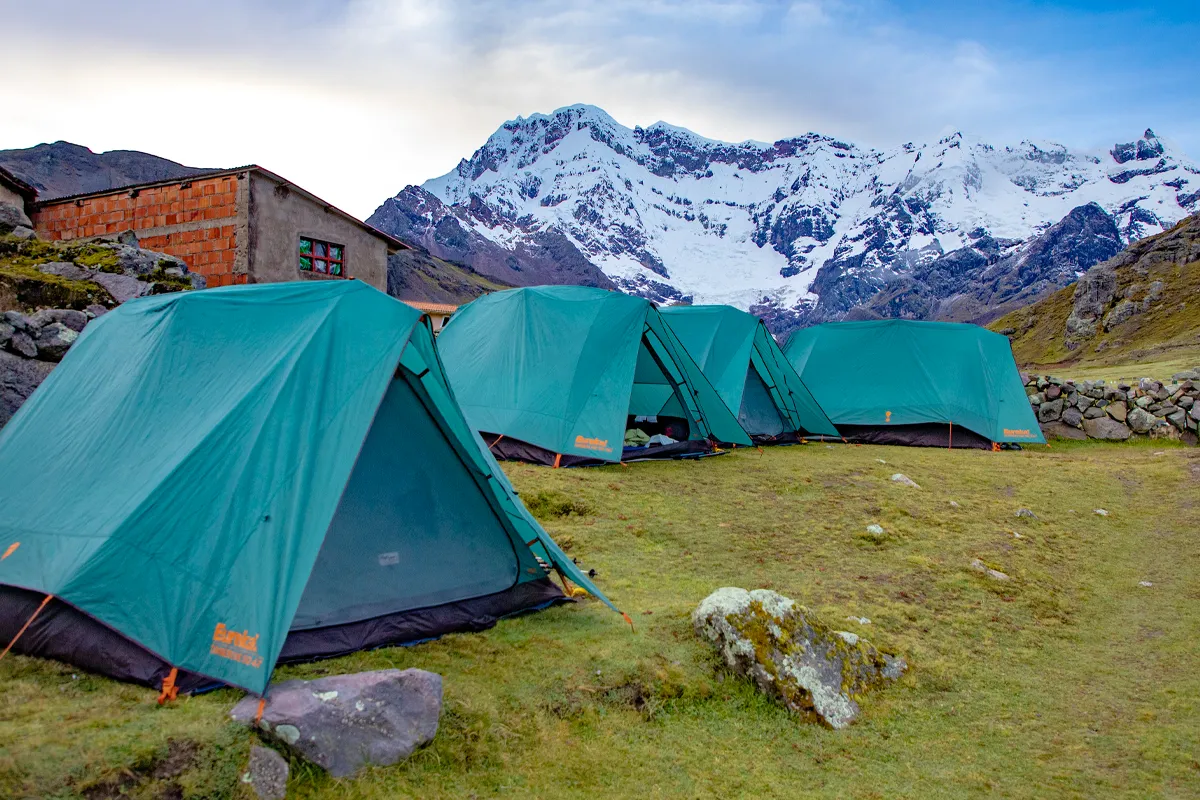
We enjoyed a hearty breakfast, collected our trail snacks and adjusted our backpacks. After some warm-up exercises and another small offering to the mountain, we began the climb towards Upis Lake.
Thin streams of glacial meltwater glistened on the slopes. Following them with our eyes, we could trace the water flowing down from the ice and coming together to form a river.
The Incredible Upis Lake
After about an hour of walking, the lake appeared beyond a rocky shore. Its broad turquoise surface held hints of green and blue. Huge boulders rested along its edges, and an observation tower offered another angle from which to admire it. We tried to take in the whole lake before our eyes returned to the ice feeding it, flowing down from Ausangate itself.
There were insects too, far more than we expected to find at such an altitude (4,549 m). Even here, so close to the glacier, life made itself known above the water.
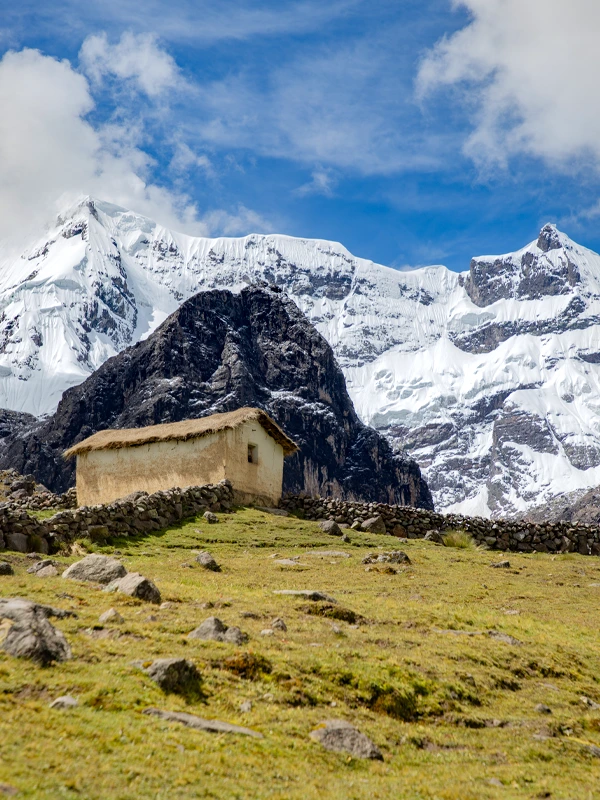
We rested by the shore and shared another moment with coca leaves before continuing. The trail grew steeper and rockier. Small pools appeared among the stones, and now and then we spotted a shepherd's house, standing apart from the larger communities. Animals grazed wherever mountain water kept the ground green.
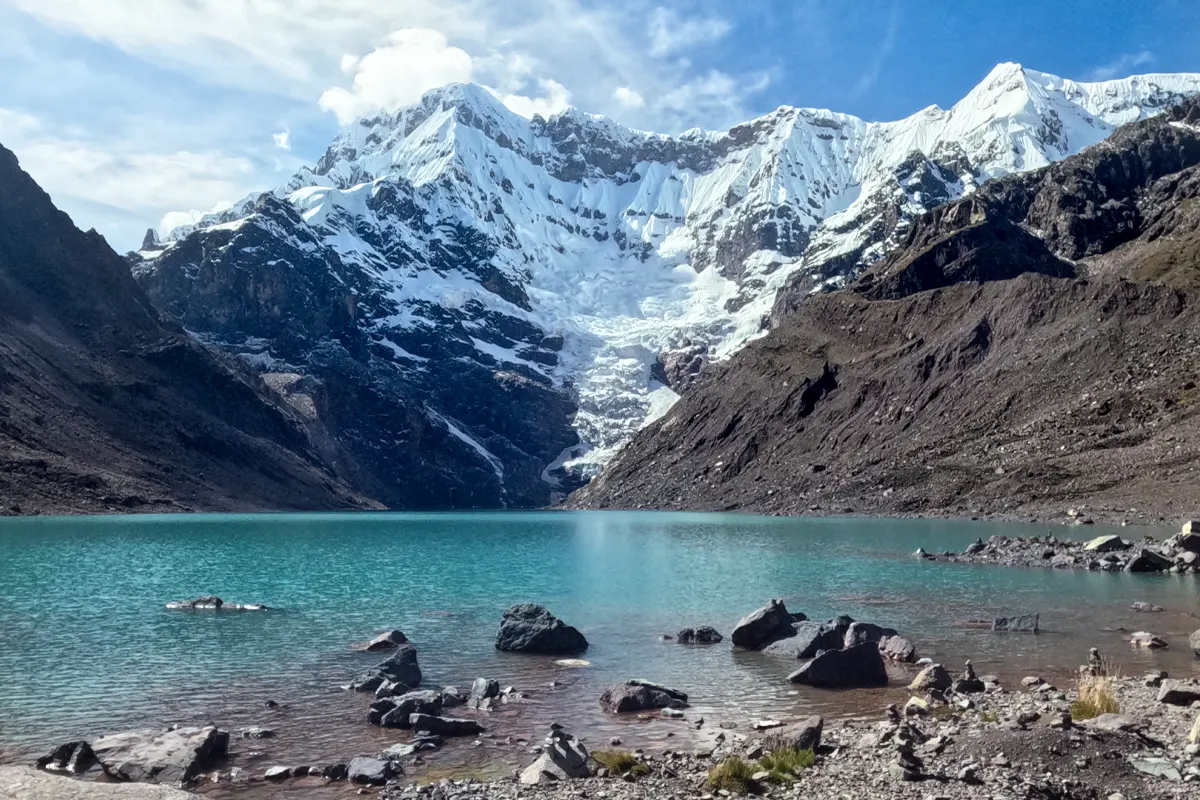
The Wind at Arapa Pass
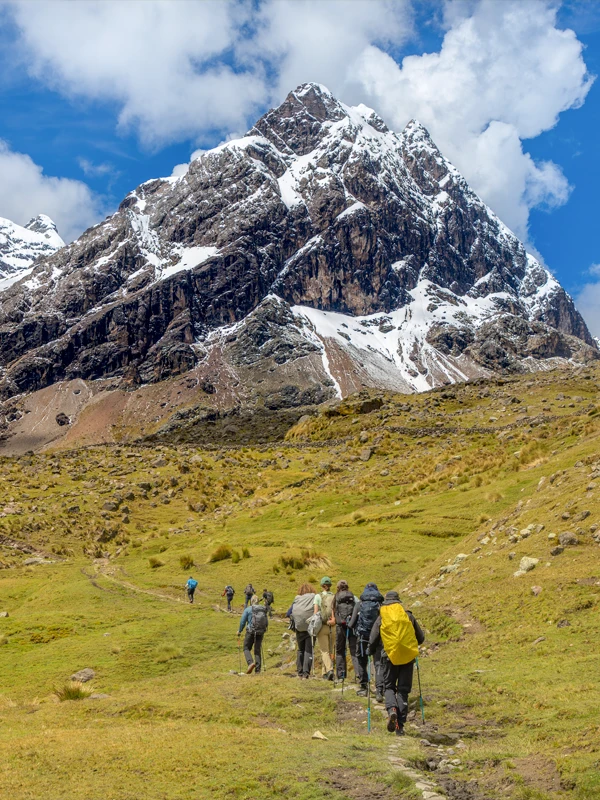
We continued towards Arapa Pass, at 4,872 m above sea level. The higher we climbed, the larger the rocks became and the thinner the vegetation grew. Near the pass, grassy hills gave way to a flat, stony plain, where small rocks had weathered years of wind erosion.
At the mountain pass, the wind tugged at our clothes. We stopped and looked up.
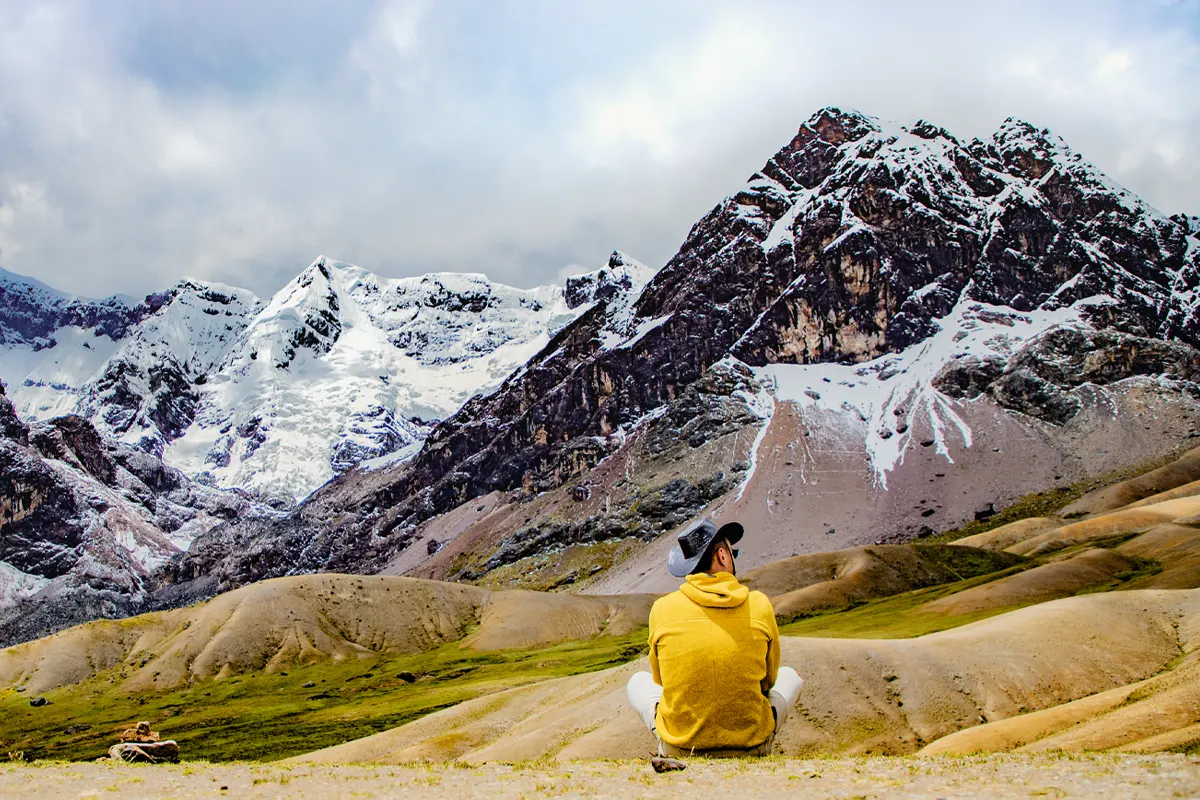
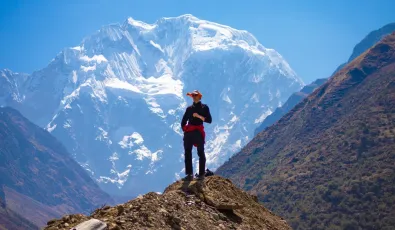
Ausangate filled so much of our view that we could no longer take it in without turning our heads. Our eyes followed the rock upwards to the snow, then higher still. The mountain that once fitted inside a car window now made us lift our gaze farther and farther.
Being so close was overwhelming. We could see the mountain clearly, yet it was still difficult to grasp its size.
 |  |
Descending from Arapa Pass
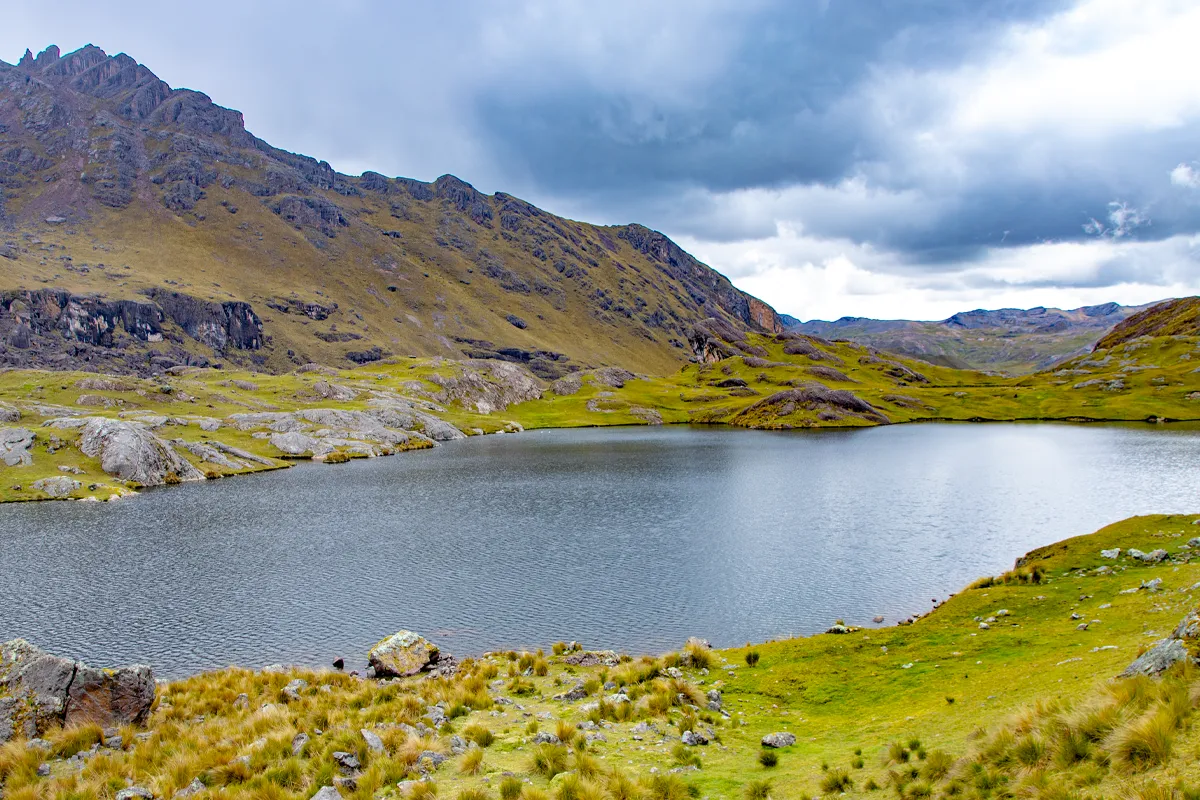
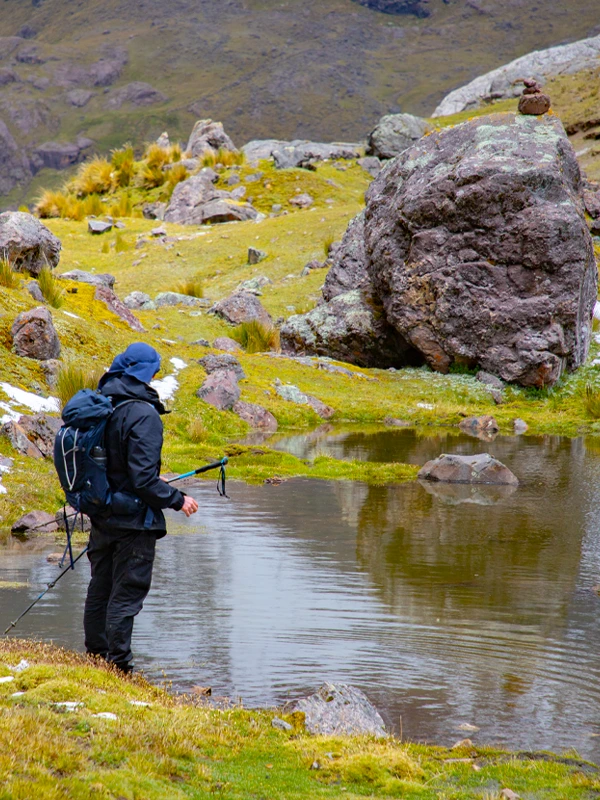
We began descending past small lakes and pools. One caught our attention with its unusually dark green water, almost black in places. We were wondering how deep it might be when a light drizzle began to fall.
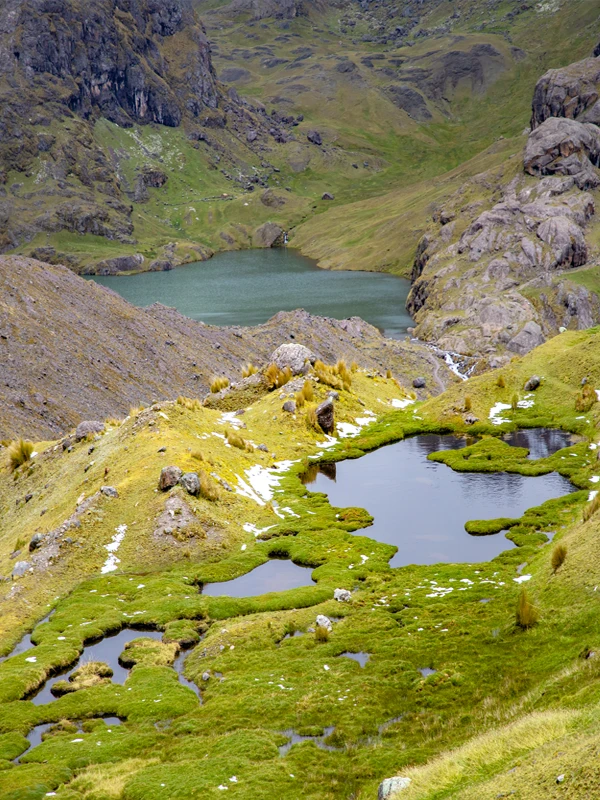
The rain blurred the distant hillsides. The colours faded, and the lake looked darker still. We continued above a valley crossed by countless streams, stretching like roots towards the lower ground. We could see and hear them before finding their source: a large lake hidden beyond the mountain.
 |  |
Among the Pucacocha Lakes
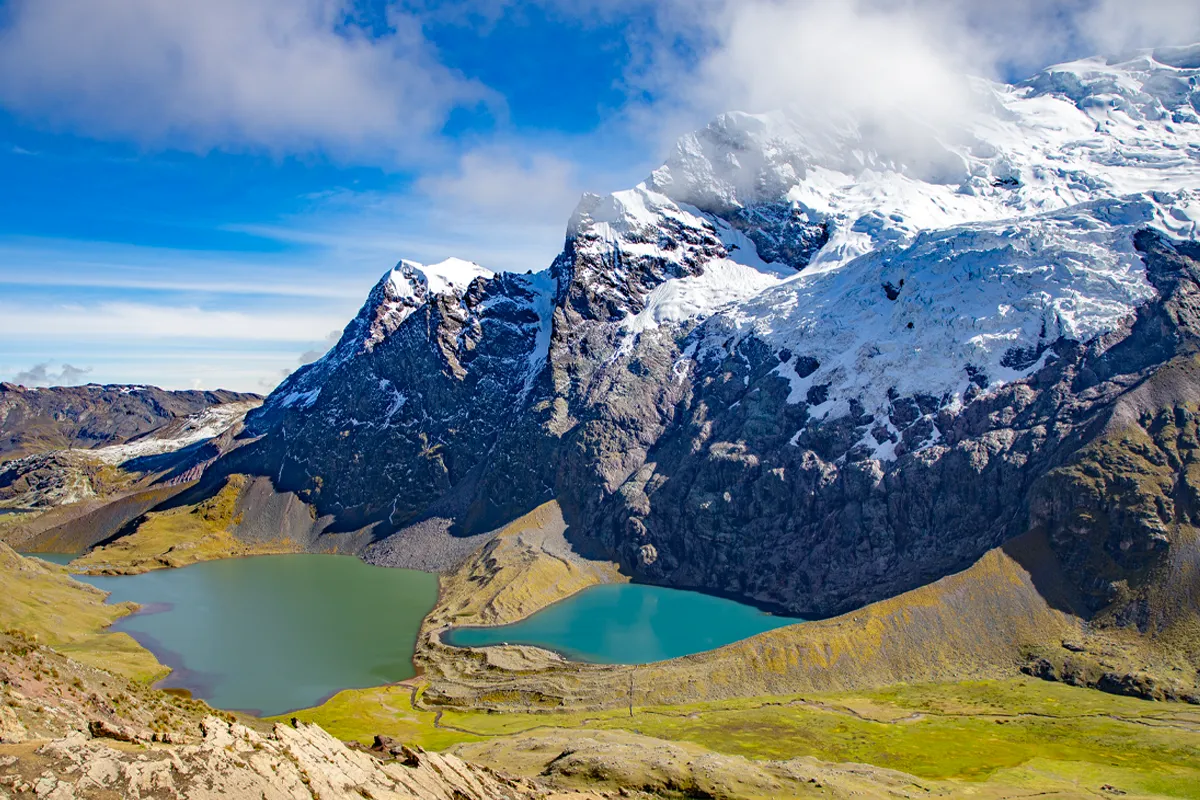
The trail led us through a rocky passage where the walls narrowed beside the water. Farther on, the Pucacocha lakes spread out at the foot of Ausangate.
It was impossible to take in all their colours at once. One surface was emerald green; another, turquoise. Beyond them lay a pale blue lake. The water changed shade with our position and the light falling across it.
Hatun Pucacocha and Huchuy Pucacocha, the large lake and the small one, rested in the folds of the valley beneath Apu Ausangate. Ducks and Andean geese gathered along their shores. Streams threaded through the grass between the stones, and everywhere we looked, something was moving.
Above them rose the glacier, white with shades of blue. As the light grew stronger, the snow became so bright that we had to look away. Our eyes dropped to the lakes, only to return to the ice a moment later.
For a while, we stood still, watching birds along the water beneath that immense wall of ice.
The cooks had found a nearby spot to prepare lunch. We joined them without taking our eyes off the lakes. By then, we understood better how much work went into every rest stop. While we paused to admire the scenery, the team carried supplies ahead and made sure a meal was waiting when we arrived.
We ate without rushing. Another mountain pass still lay ahead that afternoon.
Climbing to Apacheta Pass
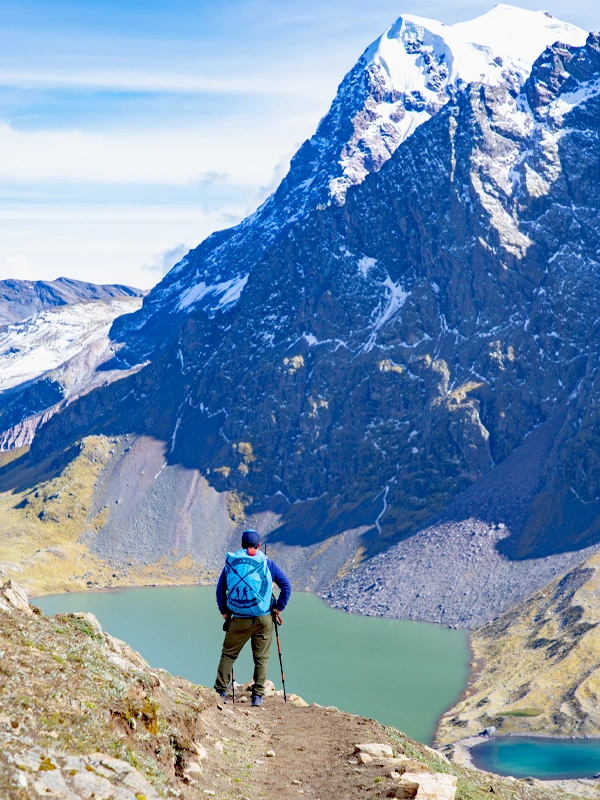
As we climbed, the Pucacocha lakes stretched out below us. From higher up, we could see shorelines and shapes that had been hidden while we walked beside the water.
Rock formations rose along the slope, some narrow and upright, others gathered in great blocks. Higher up, close to the glacier, another lake appeared. Its pale blue water shone far above the others, almost like liquid silver or lead.
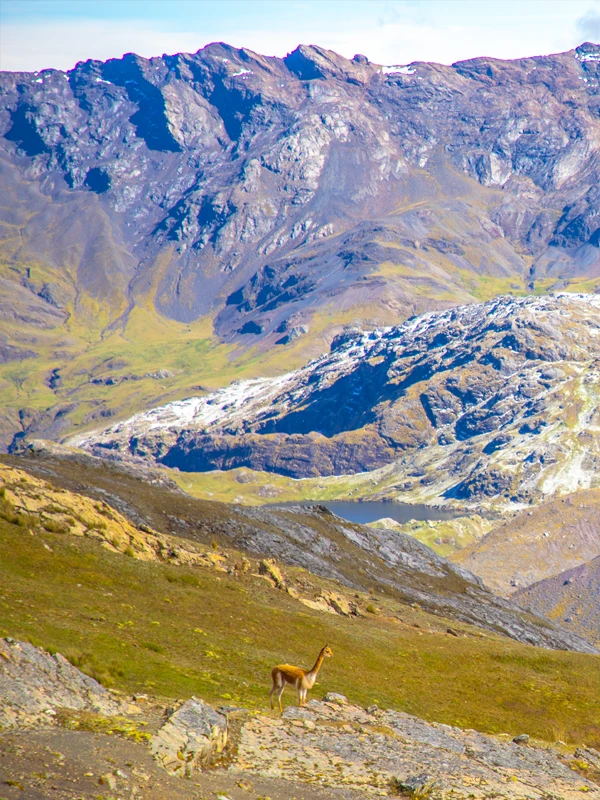
We were gazing at it in amazement when we noticed that some wild vicuñas had also stopped, seemingly captivated by the view.
They stood motionless among the rocks and grass, their slender shapes clear against the open ground. For a moment, they seemed unaware of us. Then they sensed our presence and ran off at remarkable speed. We watched them disappear into the distance before continuing uphill.
 |  |
The Voice of the Great Apu
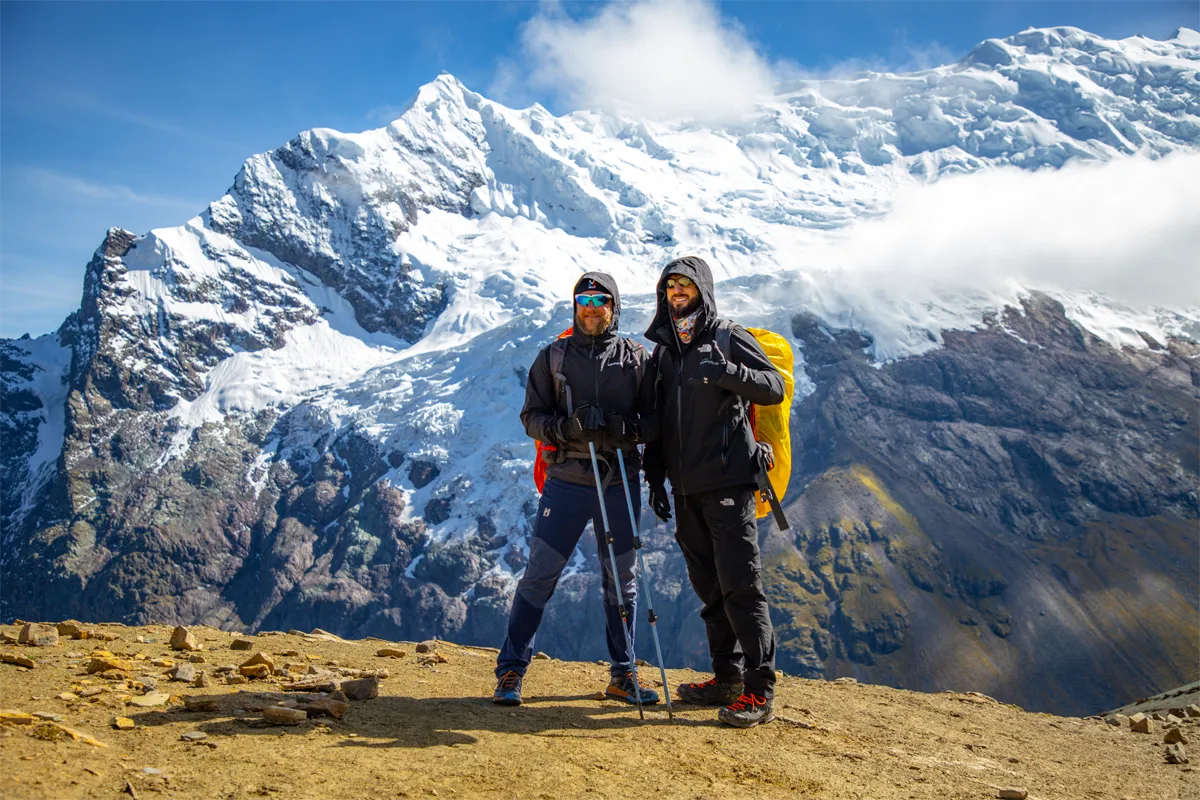
At the top of Apacheta Pass, over 4,900 m above sea level, the wind reached us from both sides. Cold air came down from Ausangate, while a softer breeze rose behind us from the Ananta Valley. When we turned around, we could feel the difference against our faces.
The summit was clearer now, though the glare from the ice still made us squint. Suddenly, a deep crash echoed down from high on the Apu. The ancient ice seemed to be speaking to us in a powerful rumble that left us both amazed and afraid. Like the vicuñas we had seen earlier, we stood still, trying to understand the sound.
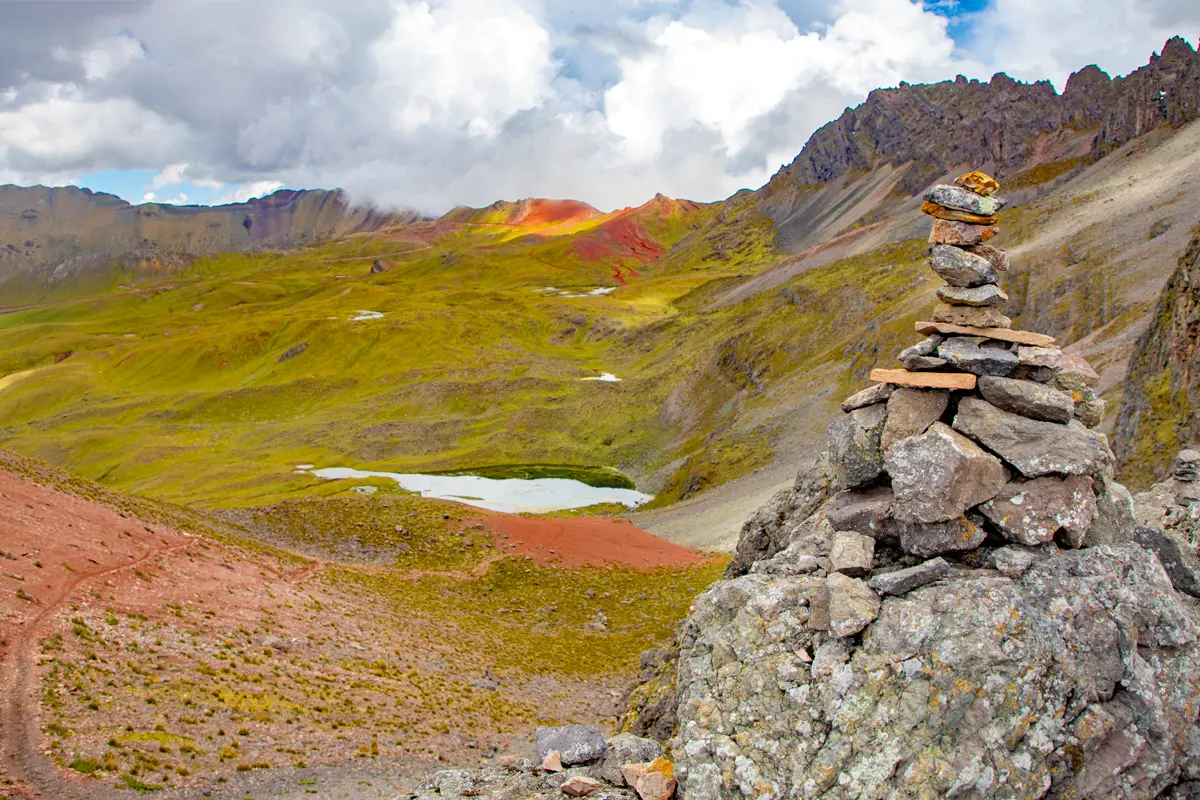
Around the pass stood apachetas, small piles of stones. After sharing offerings with our guides, we paid closer attention to these signs of respect. With the wind around us and so much ice overhead, we wanted to stay a little longer before moving on.
Descending into the Ananta Valley
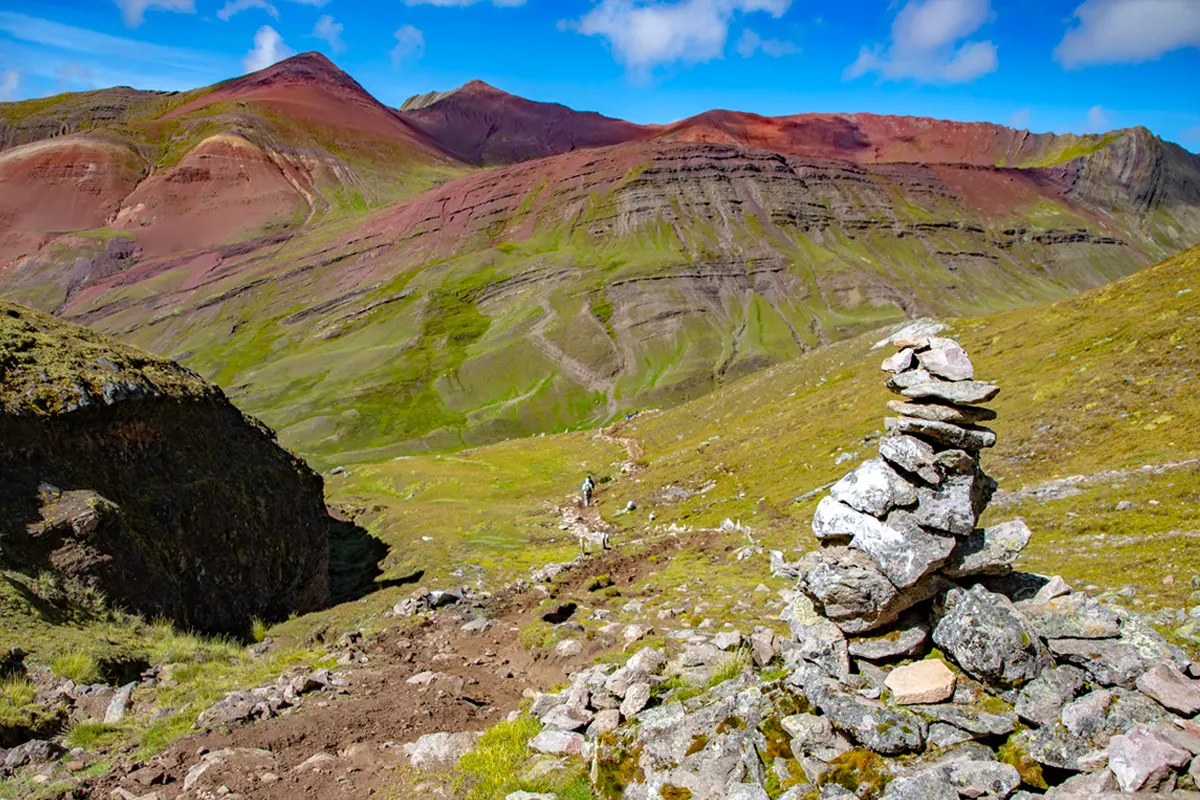
The descent brought a gradual change as the air grew warmer. Red began to appear among the brown and green hills, first in narrow stripes and then across larger stretches of the upper slopes.
Small lakes dotted the valley. Llamas and alpacas grazed near the shepherds' homes, and the grass-covered ground felt welcoming after so much bare rock exposed to the wind.
Our campsite was waiting in Ananta, beneath the slopes of Apu Takusiri. We settled into our tents, had dinner and only then felt the full weight of the day's walk.
The stars returned that night. Ausangate still rose in the distance beyond the valley, but we rested in the shelter of the hills, among grasslands and red mountains. The next morning, we would continue towards Rainbow Mountain.
Day 3: Rainbow Mountain and the Red Valley
Climbing to Warmisaya Pass
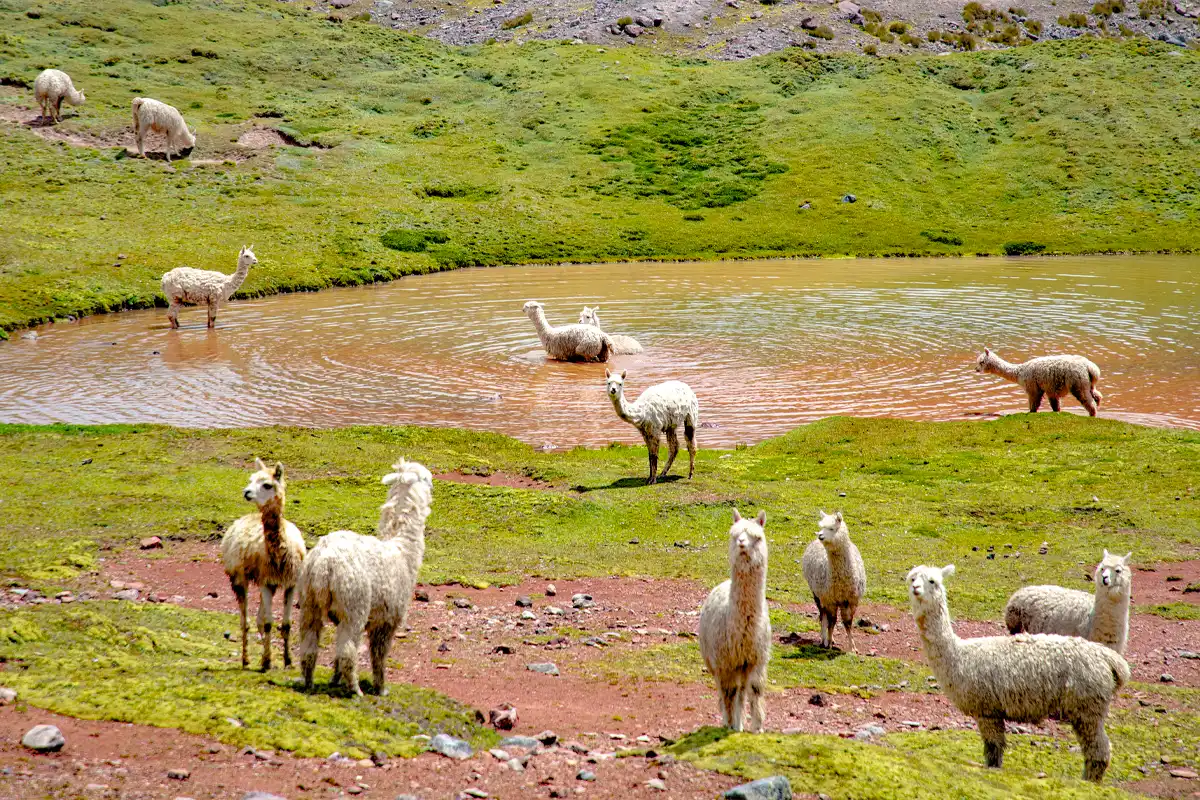
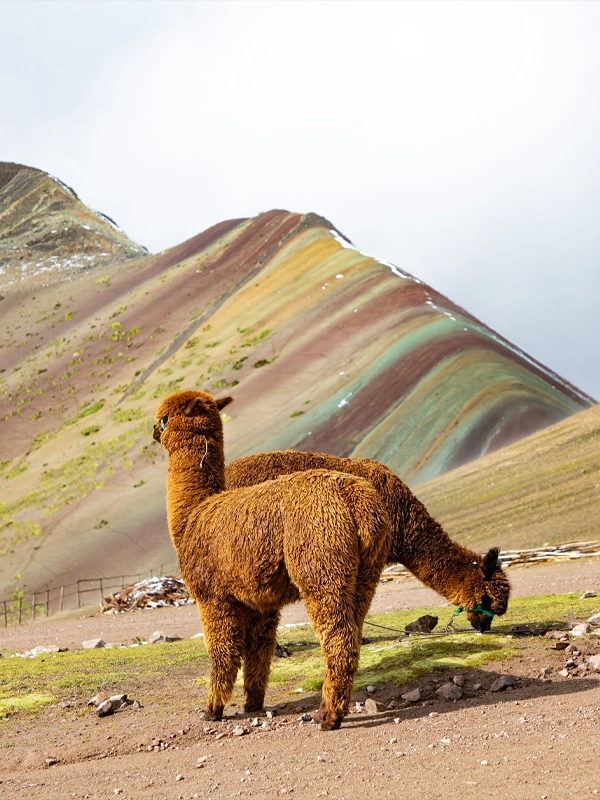
Llamas and alpacas were among our first visitors that morning. They wandered up to the tents, inspecting the strange shapes that had appeared in their grasslands. As we slowly woke up, we watched their silhouettes and the remarkable patterns and colours of their coats. Meanwhile, the kitchen team brought us hot drinks.
Over breakfast, we talked about what remained of our Ausangate trek. Rainbow Mountain was getting closer. First, we had to cross Warmisaya Pass, our final mountain pass, although Rainbow Mountain itself also forms a pass along the route.
We began walking through the valley alongside a herd of alpacas and their sheepdog, all heading in the same direction. For a while, it felt as though we had a large escort. Then they turned towards some seasonal lakes, a lovely spot where they gathered to feed, run and rest. It was a wonderful surprise before the climb. We watched them splash and move through the water until the trail led us higher.
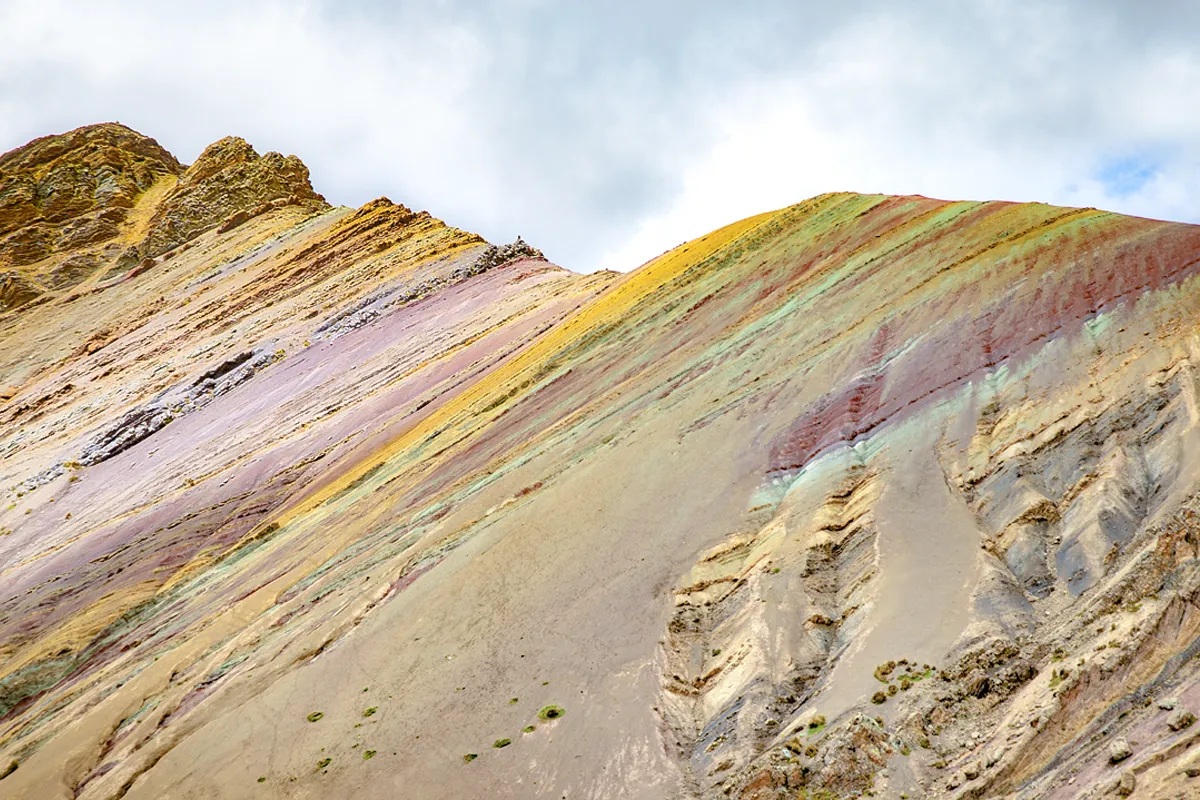
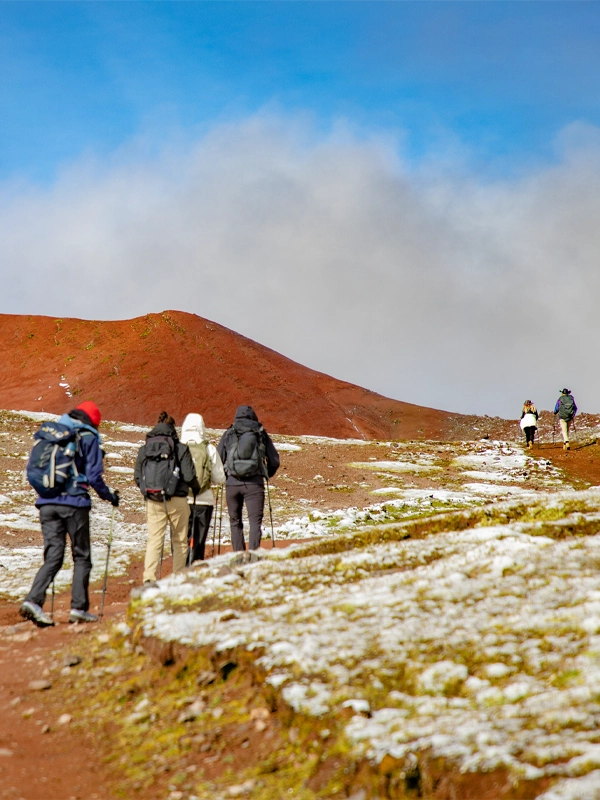
More and more colours appeared along the slopes. Reddish bands crossed green hillsides. Nearby ridges showed ochre and soft orange tones, while cooler shades lingered in the distance. These little rainbows of three or four colours gave us something to admire on the climb and hinted at what was still ahead.
Warmisaya Pass
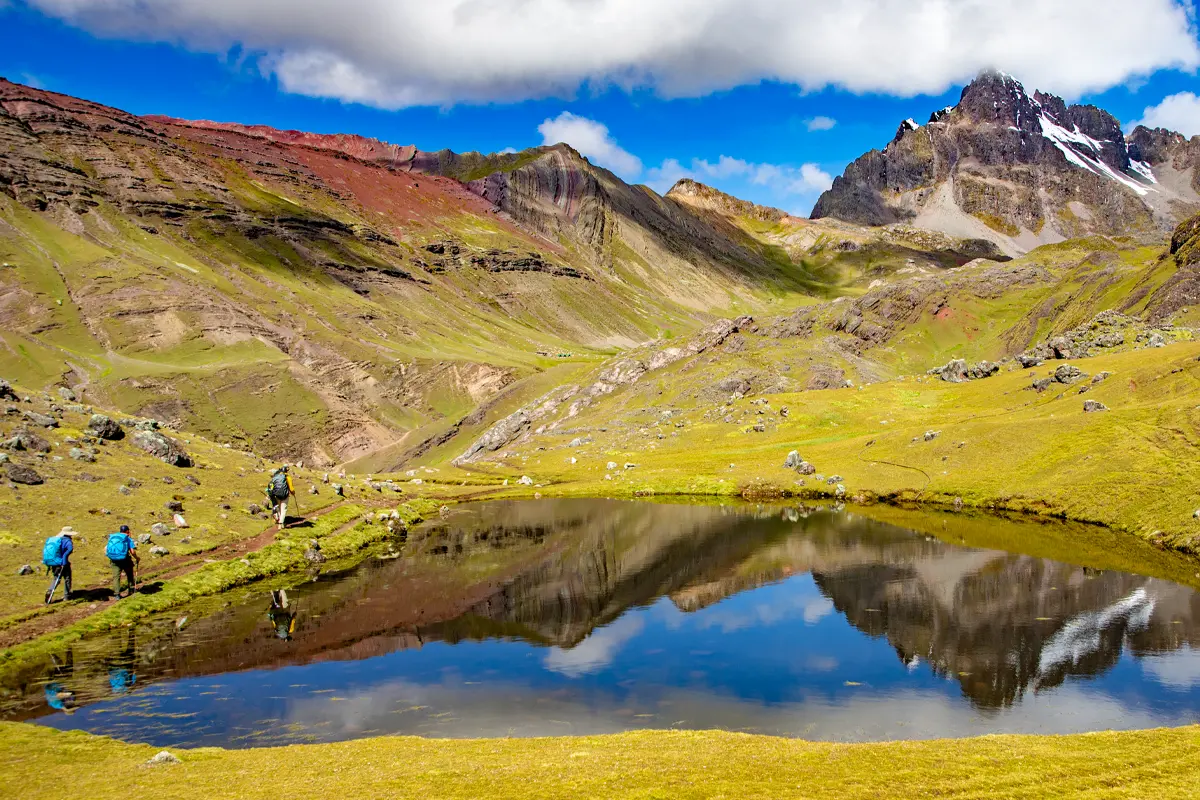
At Warmisaya Pass, 4,976 m above sea level, the view opened up once again. Ausangate rose behind the peaks we had left behind, and lakes that had been hidden among the hills came into sight. We descended towards one of them, its water green, dark and still beneath snow-covered summits.
We stopped to rest on the shore. After the wind at the pass, it felt good to look out over such calm water. Farther along, small pools lined the trail, and birds scattered at the sound of our footsteps.
The red on the hillsides grew more intense. We had spent much of the morning admiring multicoloured mountains when, almost without warning, Vinicunca came into view.
Suddenly, its striped slopes were right in front of us.
 |  |
Face to Face with Rainbow Mountain
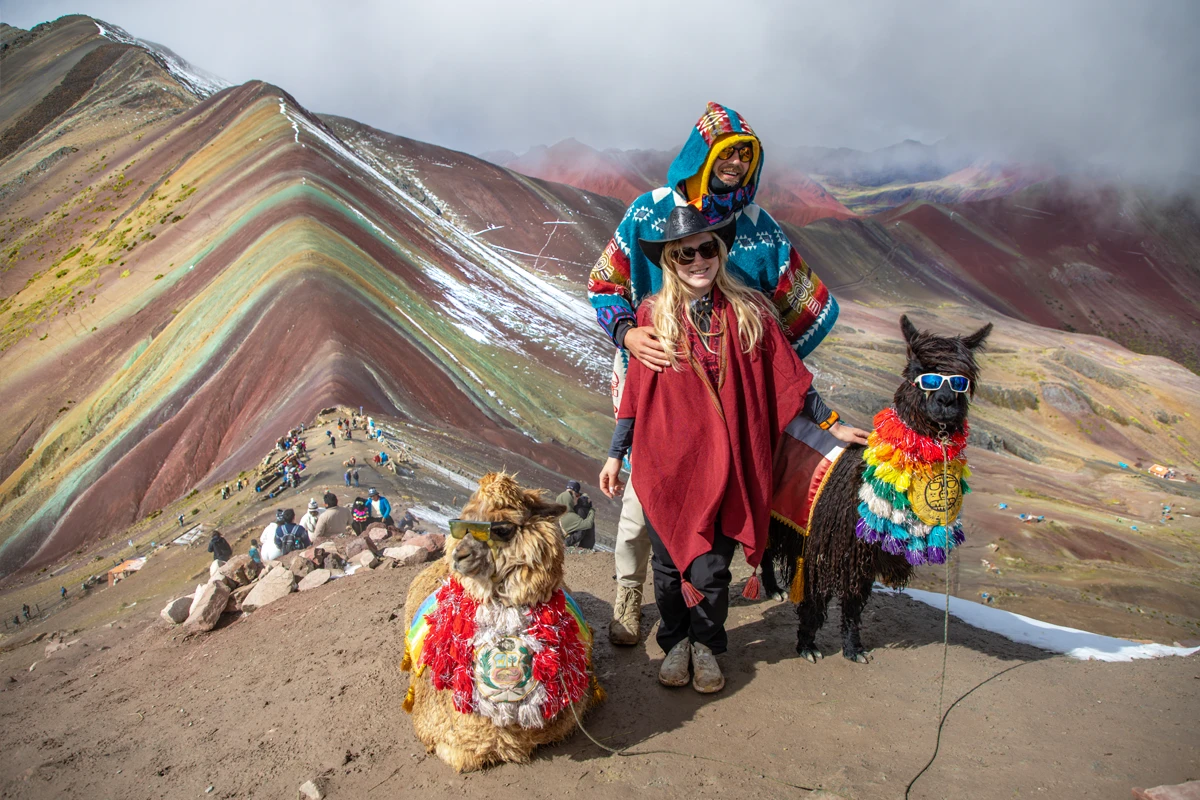
Morning light fell across Rainbow Mountain, also known as Vinicunca. Its coloured bands ran side by side at an angle, following the shape of the ridge.
We had spent three days walking towards this view, yet the encounter still felt sudden. The surrounding mountains had shown us so many shades of red and green that Vinicunca seemed to rise naturally among them. We recognised it as we drew closer.
Leaving camp early meant we reached the viewpoints while there were still few other visitors that morning. We had time to admire the mountain, move to another spot and look again.
Now we saw those colours with memories of the lakes, grasslands and mountain passes we had crossed. Ausangate was still part of the view. Our eyes traced the land, and we remembered how much effort it had taken to cross it on foot.
We spent a long time admiring the mountain before continuing towards the Red Valley.
Red Earth on Our Boots
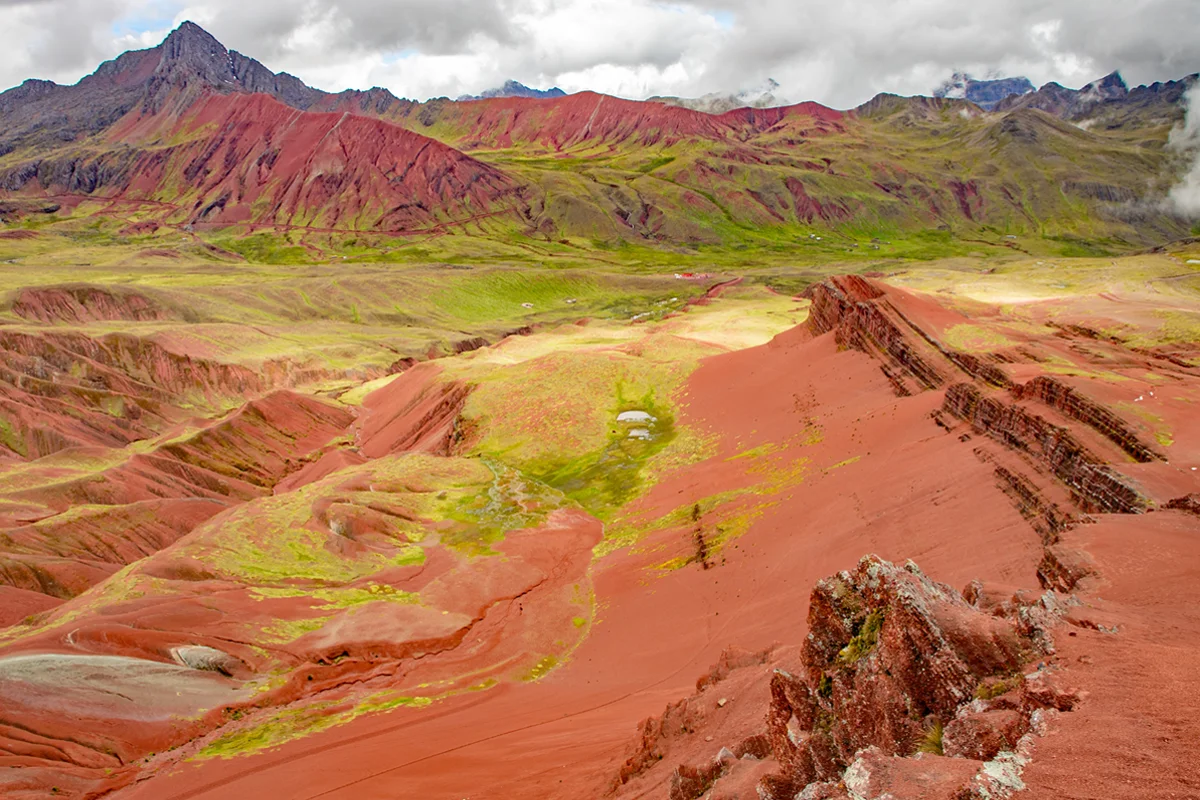
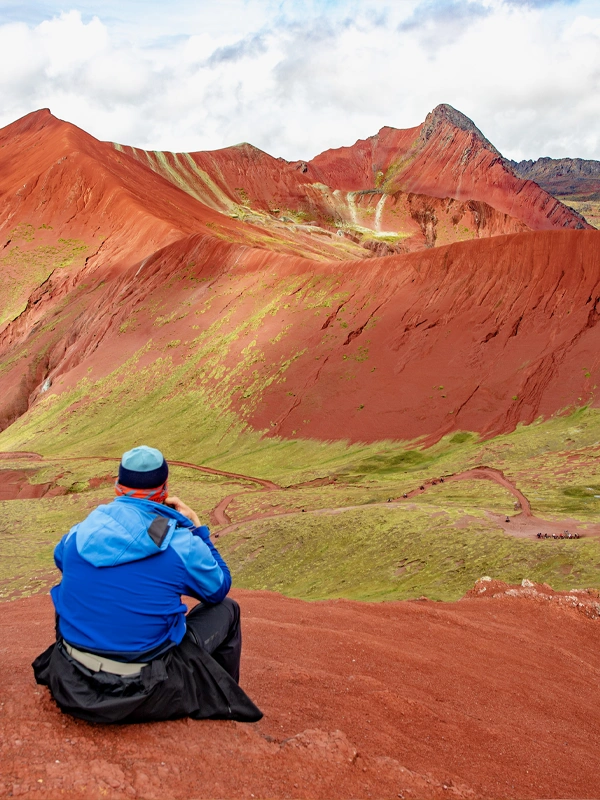
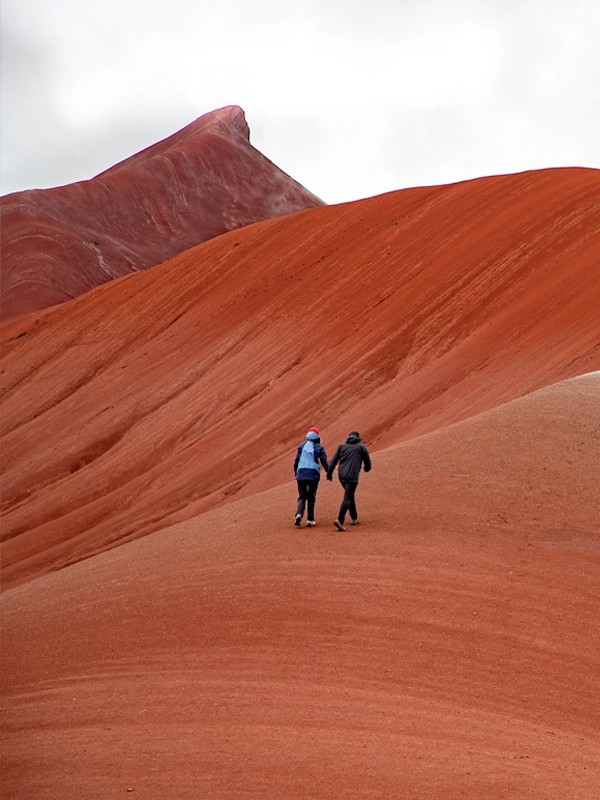
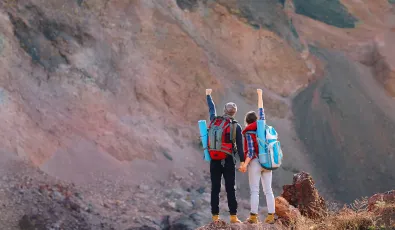
The Red Valley stretched far beyond what we had imagined. Slopes and summits rose one behind another, with patches of green grass scattered over the bare earth. Different shades of red continued into the distance, deepening wherever shadows fell.
Snow still lingered on the distant peaks. Birds crossed the sky, and llamas grazed where grass grew. We followed the trail between those hills until a light rain surprised us, along with a few wild vicuñas running freely nearby.
The water darkened the ground. Dust turned into damp earth, and when we looked down, the soles of our boots had turned pink.
It was such a small detail against the vastness of the landscape, yet it made us feel as though we had stepped onto some mysterious, distant planet. That strange feeling stayed with us as we walked on.
 |  |
A Break for Alpaca Chicharrón
On our way back towards Rainbow Mountain, we passed more visitors and local people selling provisions. One freshly prepared Peruvian dish caught our attention: alpaca chicharrón. The meat was golden and crisp on the outside, tender inside, and served with a fresh onion and mint salad.
After the cold and a whole morning of hiking, it tasted especially good.
Returning to Cusco
We looked back at Rainbow Mountain one last time before beginning the descent. Farther along, one final lunch prepared by our kitchen team awaited us, followed by the return to Cusco. We had reached our goal, but looking back, we realised this adventure had been about much more than reaching a destination.
Every step had been worth it. The pauses to catch our breath, the meals we shared, the nights beneath the stars and the landscapes that surprised us along the way. We also remembered the warmth of our camping team, who welcomed us at the end of each day, and the care of our guides, who always looked out for us. They had all been an essential part of an experience we still remember.
Above all, we carried a deep sense of gratitude towards Apu Ausangate, who had allowed us to walk through his domain and witness some of its wonders. As we moved away, he remained there, immense and silent, his summit eternally white, as though he were still watching over us.
We said goodbye to those mountains with a little sadness. Already, we missed the cold morning wind, the stillness of the lakes and the nights when the sky had seemed so close. We climbed into the vehicle with tired legs and hearts full of memories.
And as Ausangate slowly faded into the distance, a little of the Red Valley still clung to our boots.
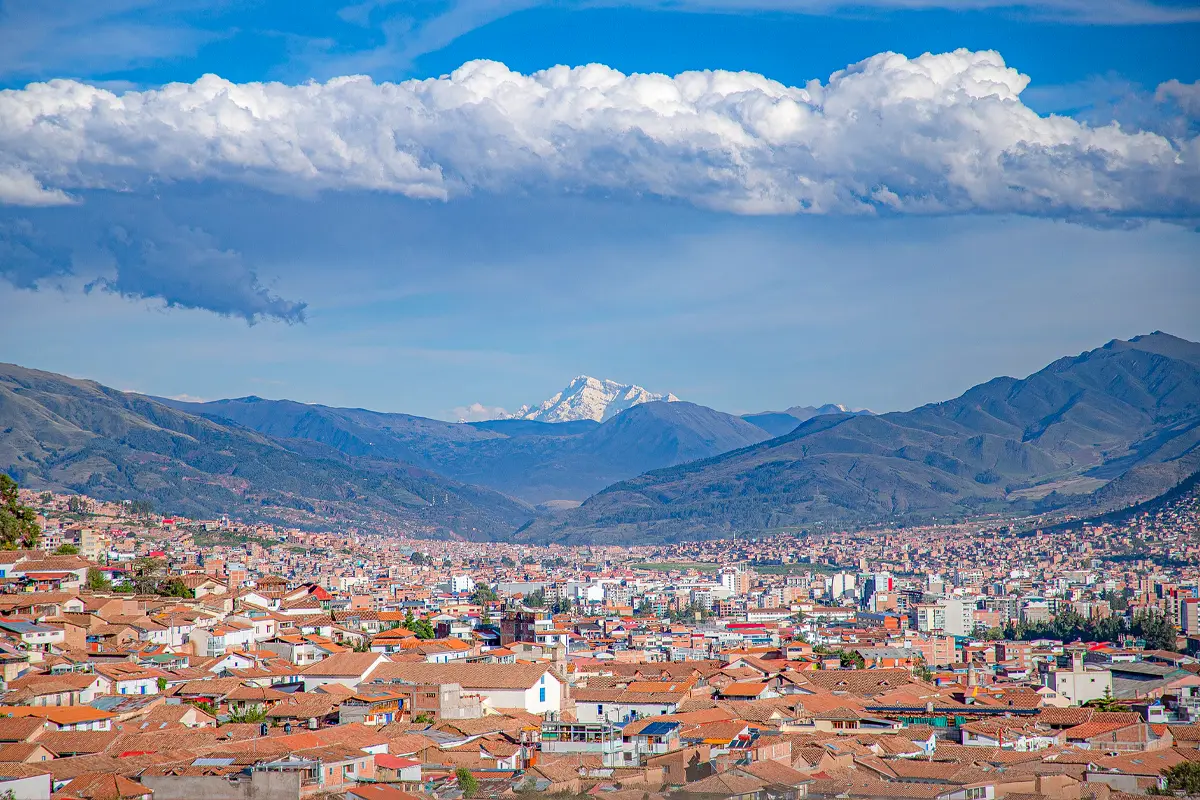
Our journey came to an end, but the mountains are still there, waiting for those willing to discover them one step at a time. Perhaps the next story from Ausangate will be yours.


Add new comment