



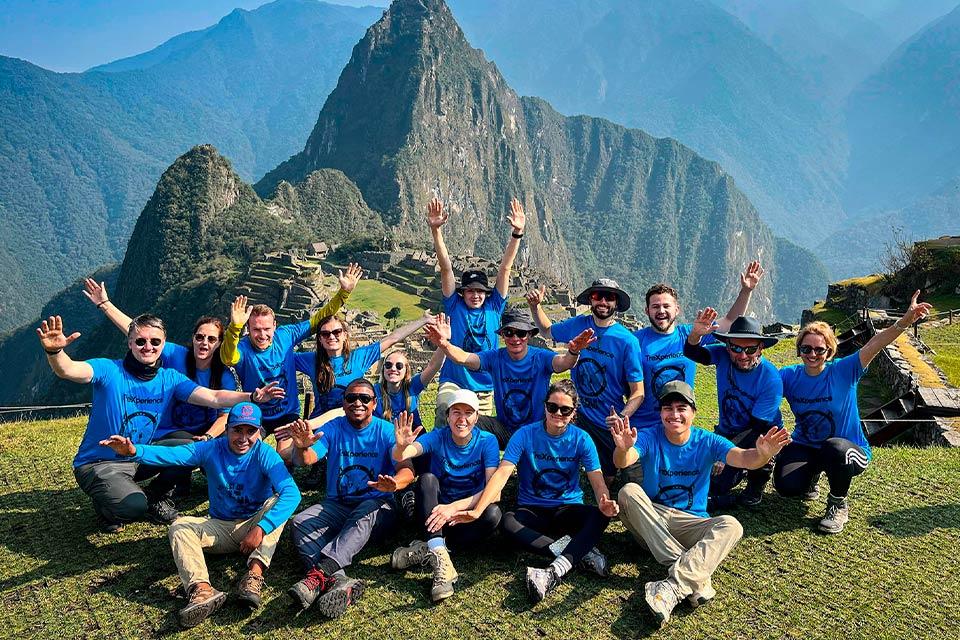
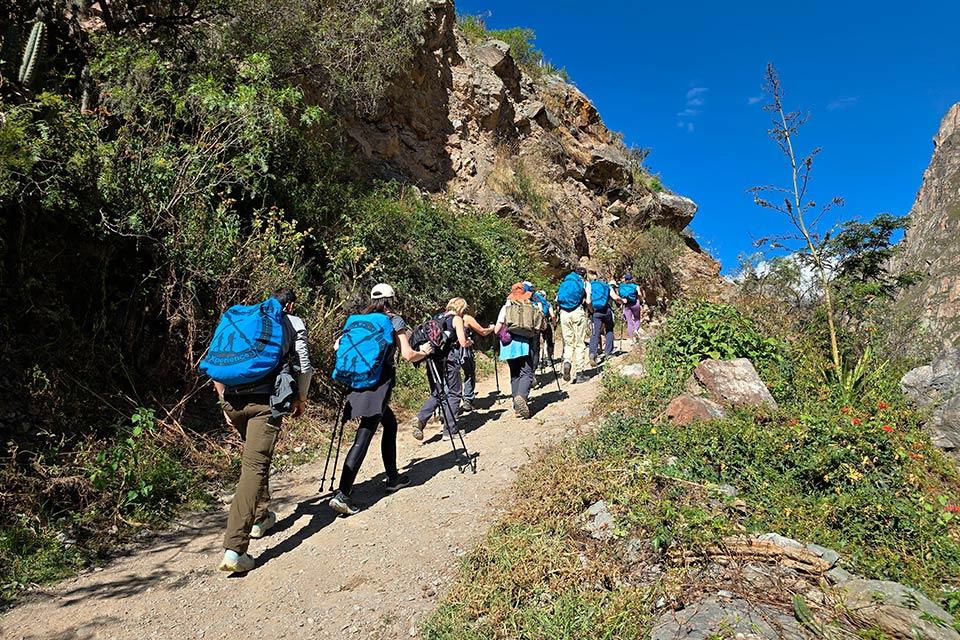
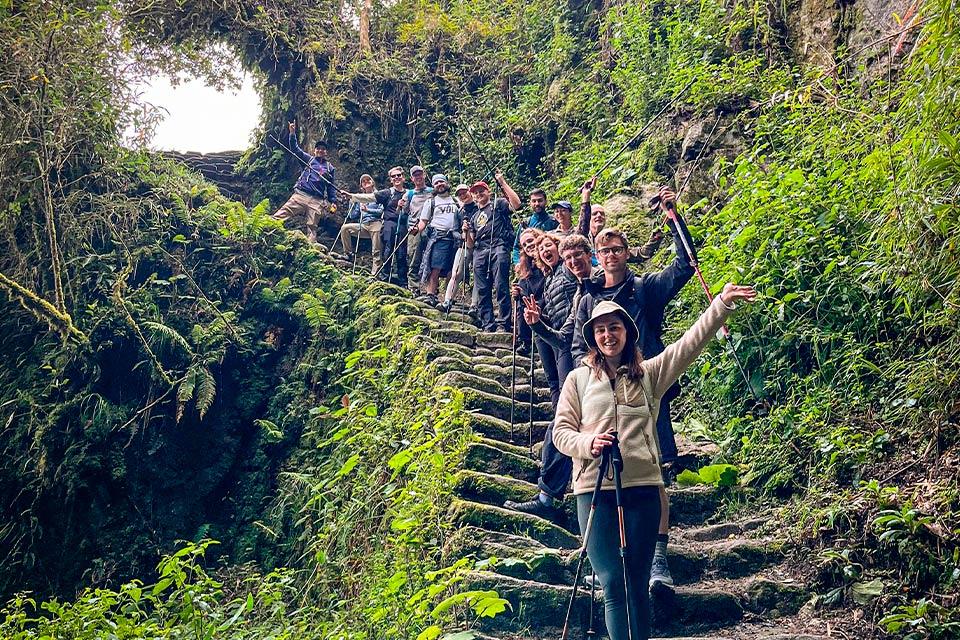
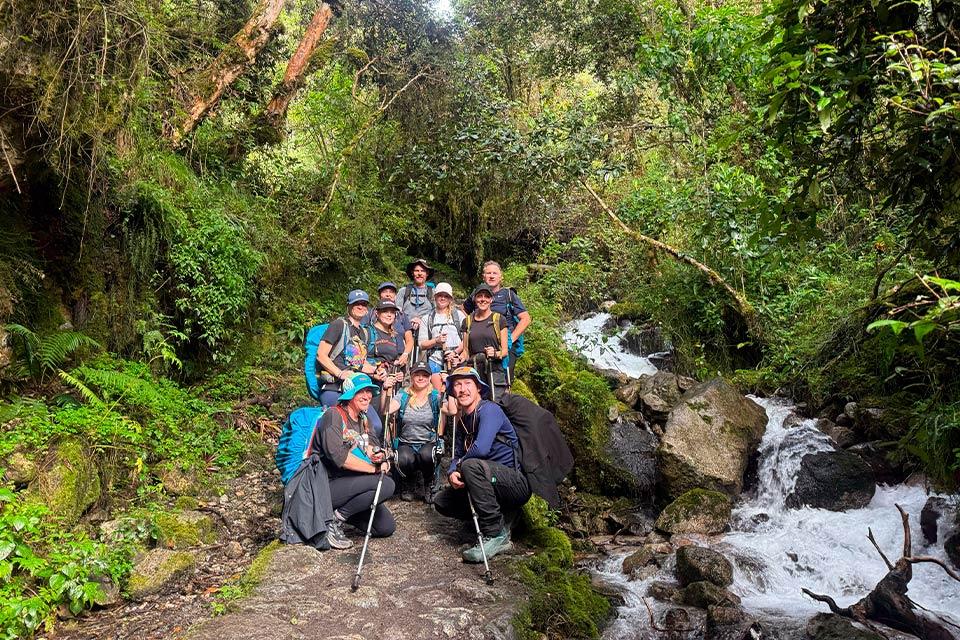
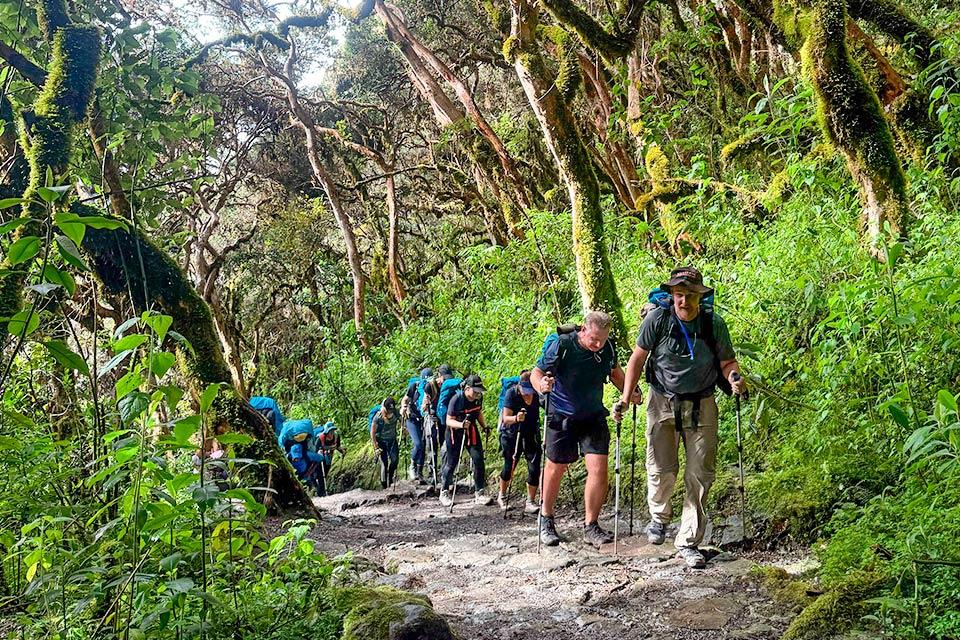
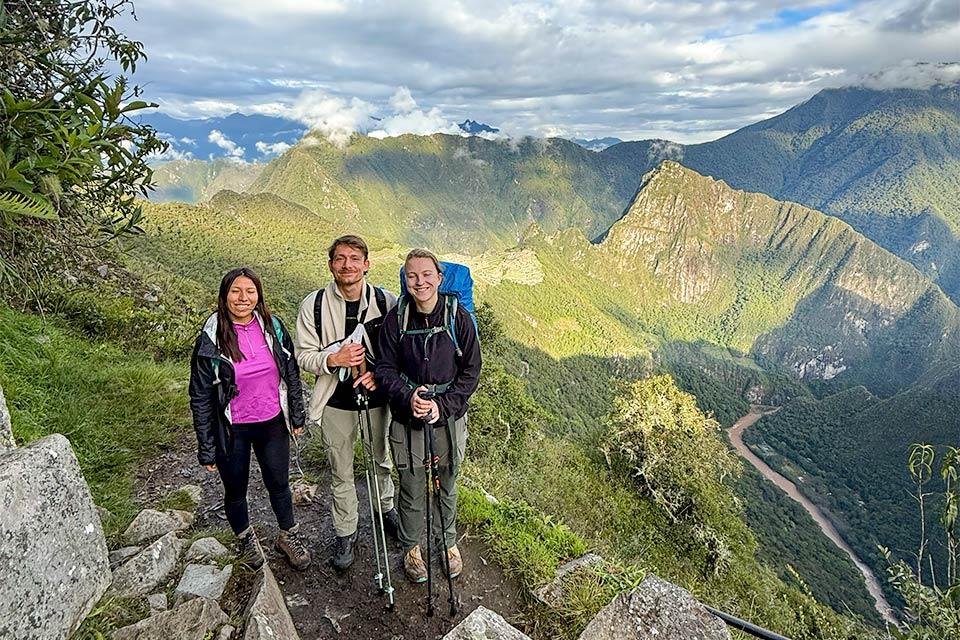
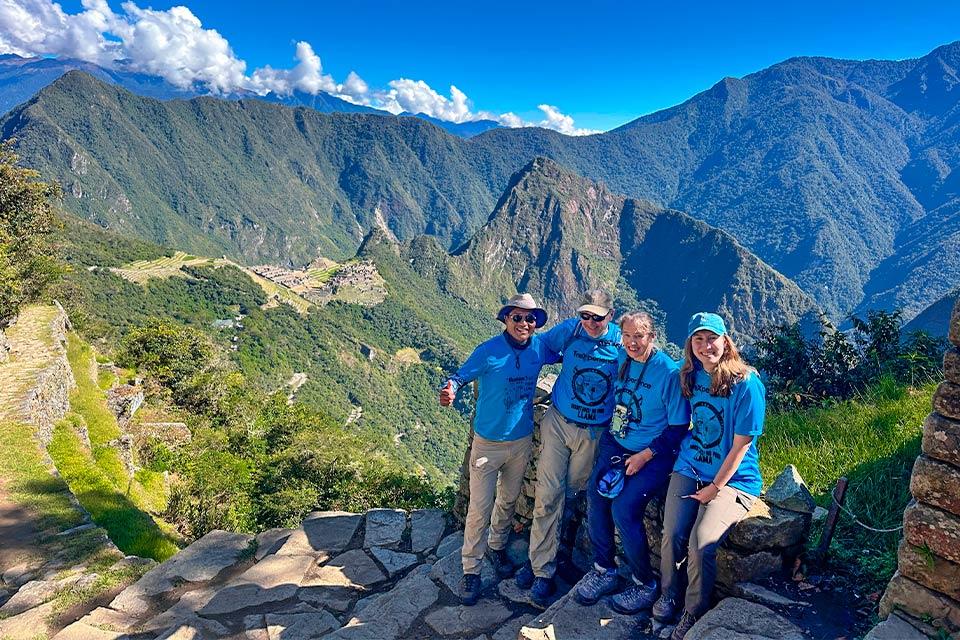
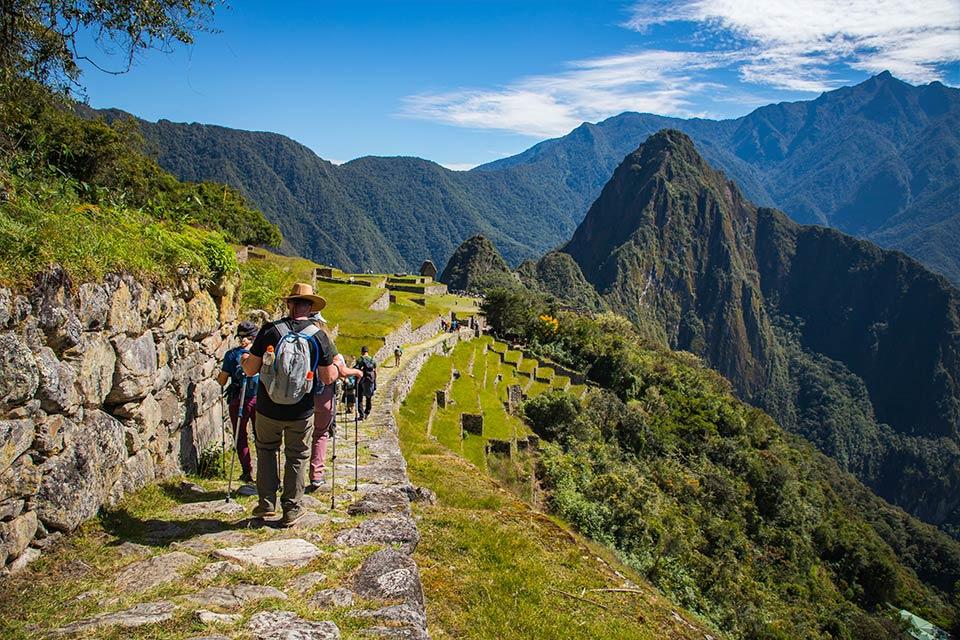
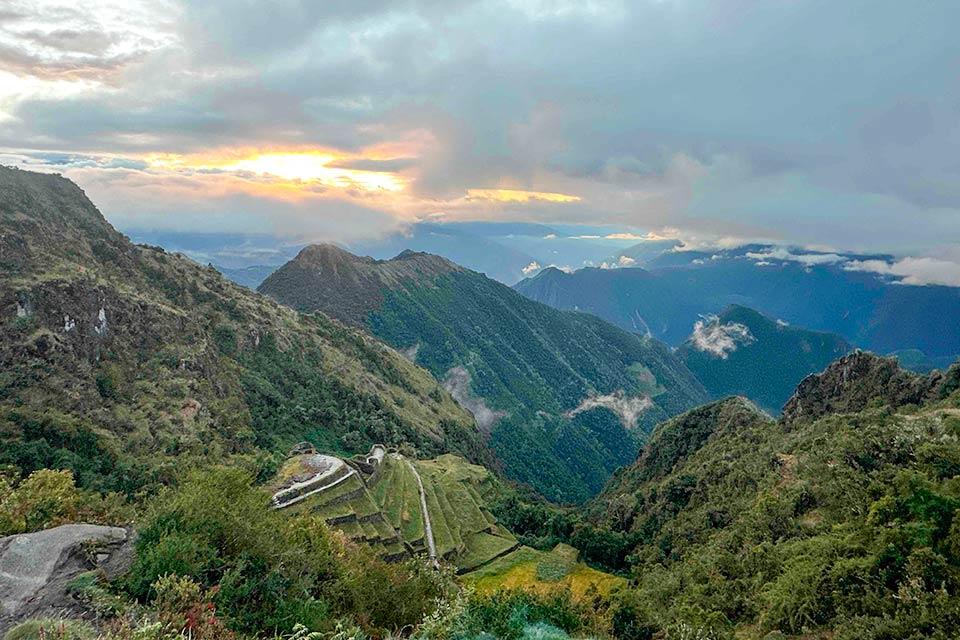
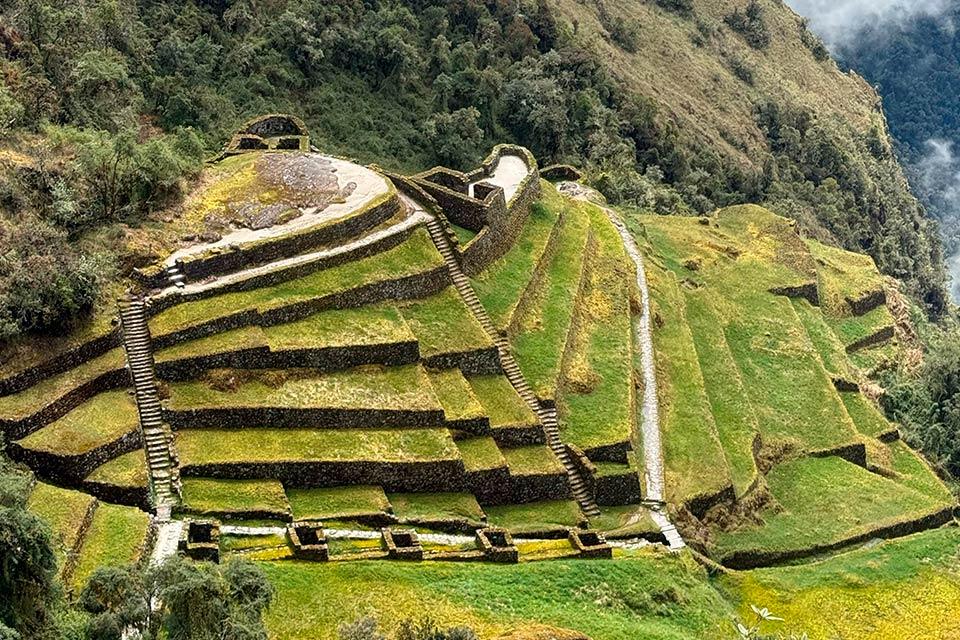

Follow the Classic Inca Trail to Machu Picchu on an unforgettable 4-day journey along ancient stone paths, through high mountain passes, cloud forests, and remarkable Inca sites. Feel the excitement of arriving at Machu Picchu through the Sun Gate, where your first breathtaking view of the ancient citadel becomes a moment you will remember forever.
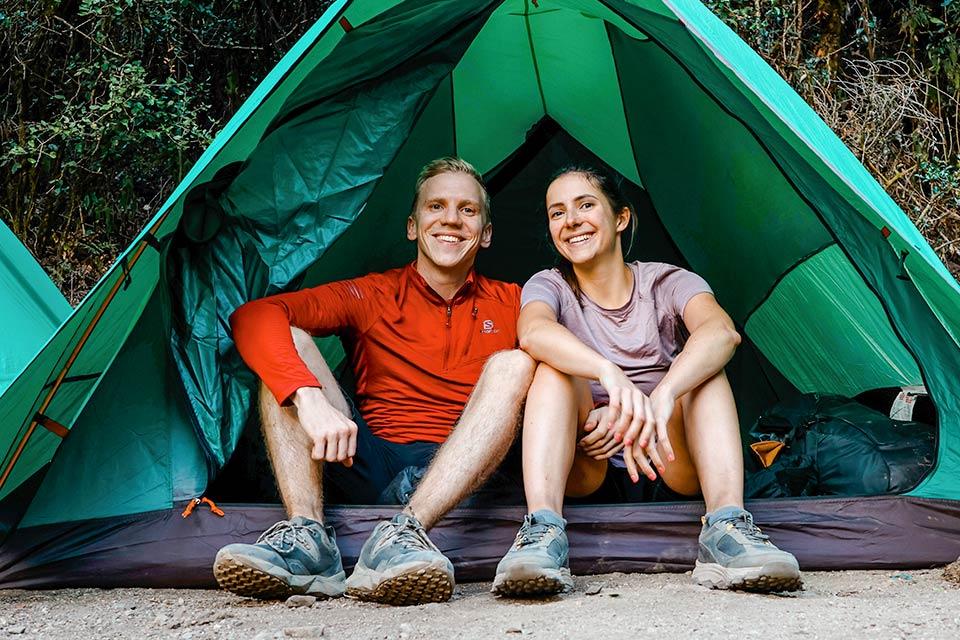
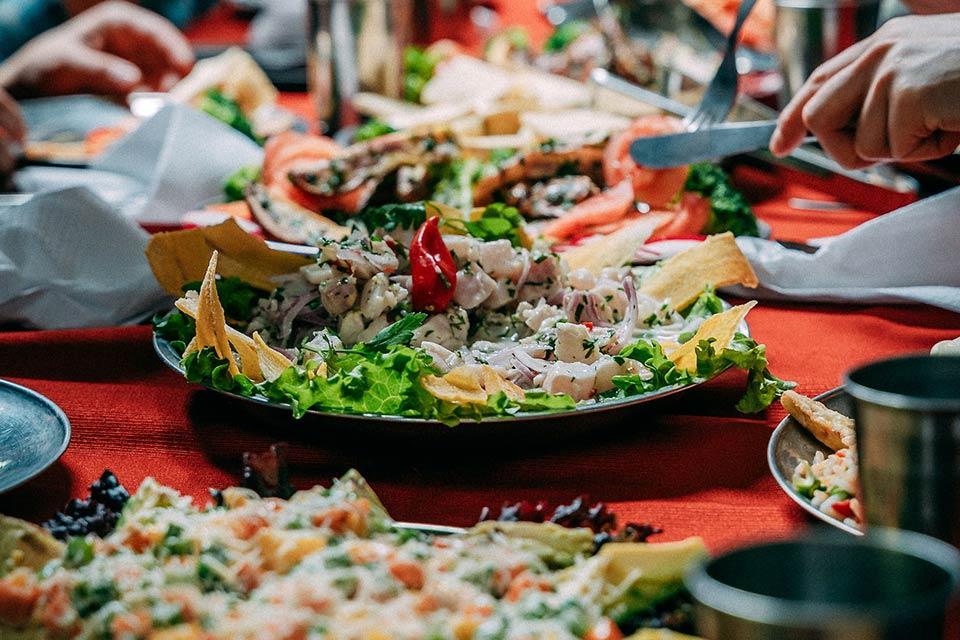
Enjoy an exclusive and authentic camping experience with quality gear, private portable toilets, and a personal porter. Wake up in the Andes with a hot cup of coffee and enjoy delicious Peruvian meals prepared by expert trekking chefs using fresh local ingredients. After exploring Machu Picchu, relax on your return journey aboard the panoramic Vistadome train.
 Tour Type Small Group Tour
 Duration 4 Days / 3 Nights
 Activities Trekking, Camping
 Average Group Size 12 persons
 Difficulty Moderate to Challenging
 Accommodation Camping
 Tour Language English, Spanish
 Hiking Distance 42 km / 26 miles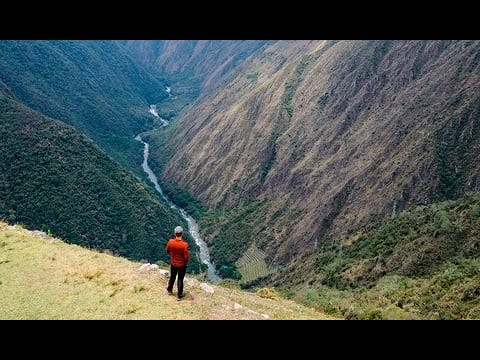
Classic Inca Trail to Machu Picchu 4 Days 3 Nights Overview
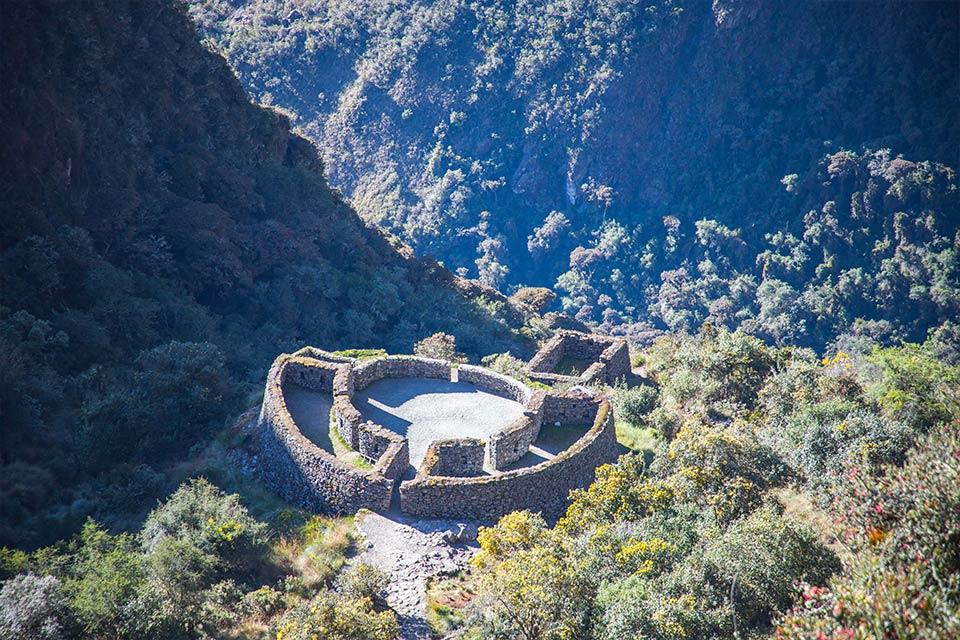
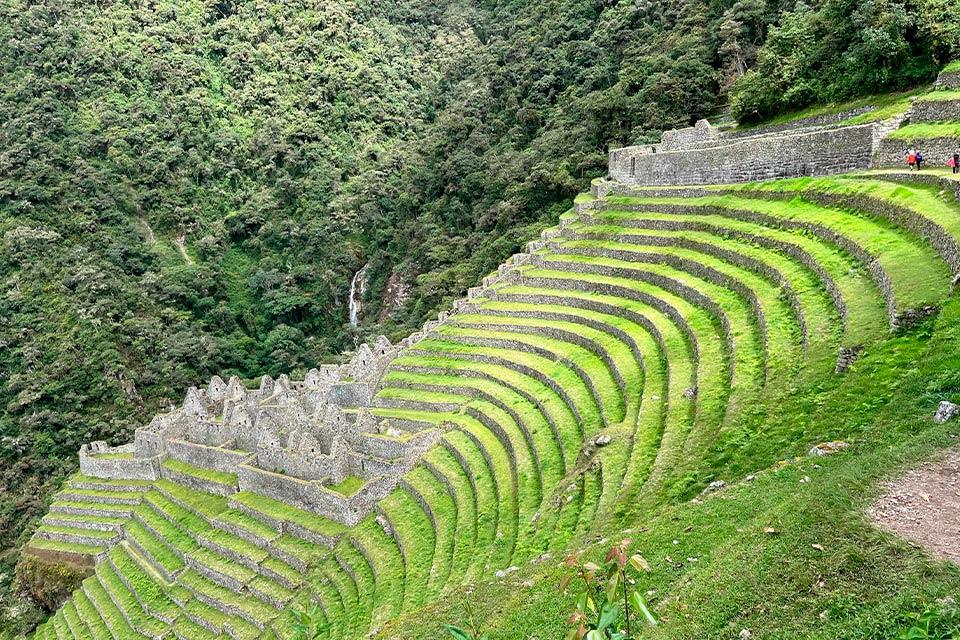
The Classic Inca Trail to Machu Picchu is a 42-km / 26-mile journey along the ancient route once used by the Incas. The trek begins at Km 82 in the Sacred Valley and passes remarkable archaeological sites such as Llactapata, Runkurakay, Sayacmarca, Phuyupatamarca, Intipata, and Wiñay Wayna before reaching Machu Picchu on foot.
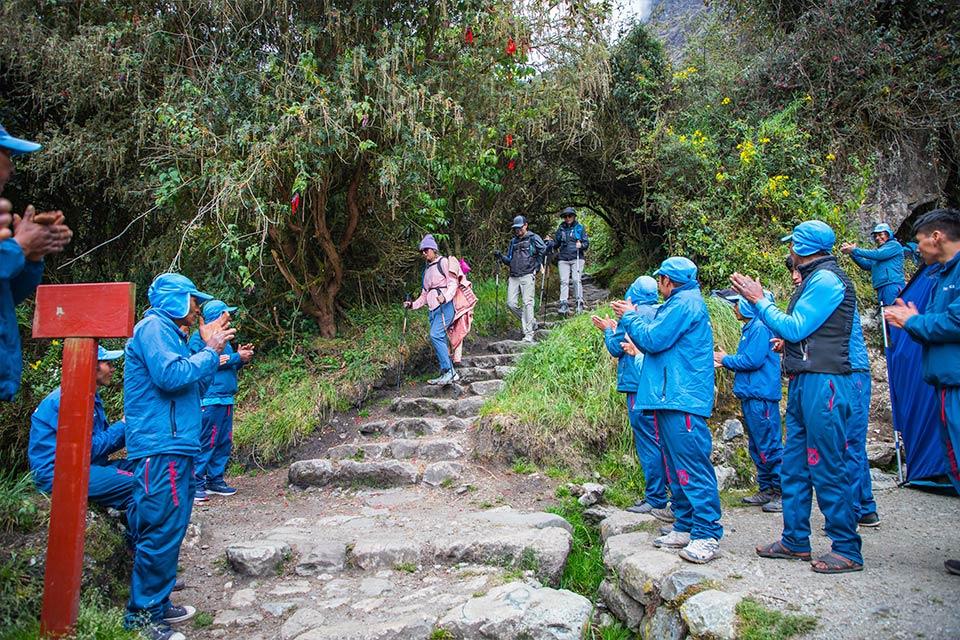
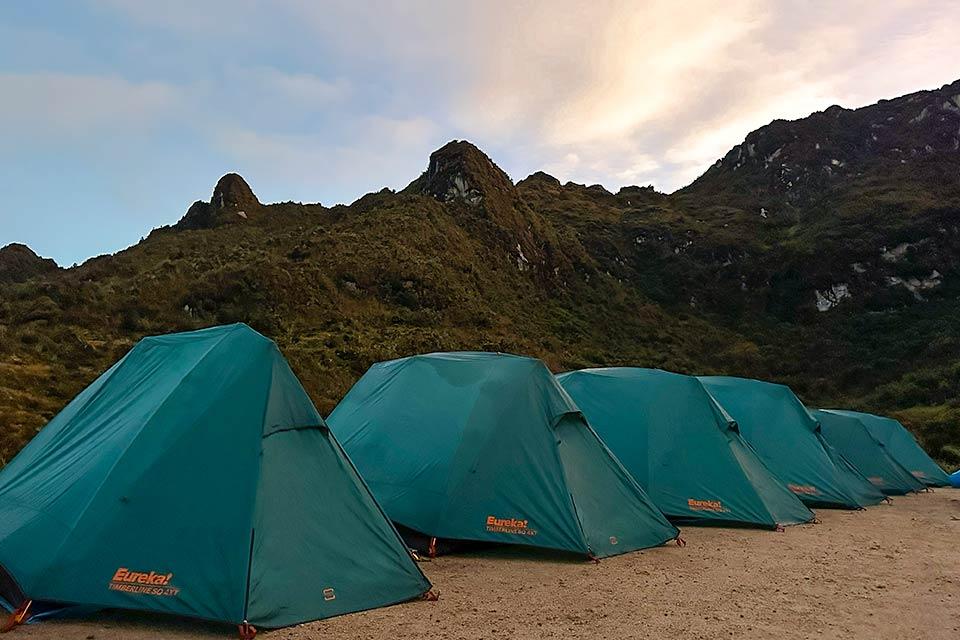
Along the way, you will spend three memorable nights camping in the Andes. You will sleep in comfortable tents while our porters carry the camping equipment, kitchen supplies, and food needed for the journey. Each day, our experienced trekking chefs prepare fresh, warm, and delicious meals, including breakfast, lunch, and dinner, using quality local ingredients.
On the morning of the fourth day, you will continue to the Sun Gate and see Machu Picchu appear below in the early morning light. Few journeys compare to entering this UNESCO World Heritage Site on foot after days of hiking ancient paths, exploring hidden Inca sites, enjoying excellent food, and sharing the trail with expert guides and a dedicated trekking team.
Tour Highlights:
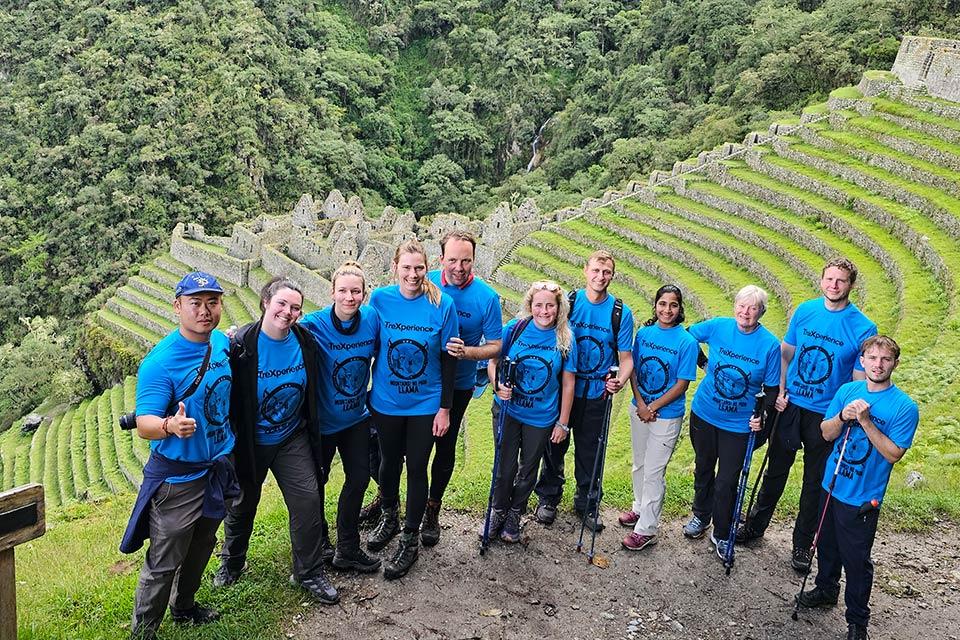
- Premium small-group tour: Enjoy a more personal trek with expert local team.
- 100% Peruvian local operator: Travel with a Cusco-based team that knows the Inca Trail from the inside.
- Hike lighter: A personal porter carries up to 7 kg / 15 lb, so you can enjoy the trek with less weight.
- Fresh Peruvian food: Enjoy warm, varied meals, snacks, and tea time prepared by our mountain chefs.
- Comfort on the trail: Quality camping gear, spacious tents, private portable toilets, and thoughtful camp service.
- Vistadome train included: Return through the Sacred Valley on a scenic panoramic train after Machu Picchu.
- Responsible trekking: Fair treatment for porters and sustainable practices that help protect the trail and local communities.
Inca Trail Trek at a Glance
Day 1: Trailhead to Ayapata Campsite
Cusco — Km 82 — Patallacta — Ayapata (14 km, 6 hrs): Start with hotel pickup in Cusco and travel to Km 82, the official trailhead of the Inca Trail. Hike past Patallacta and continue to Ayapata, your first campsite at 3,300 meters / 10,826 ft, where comfortable tents, fresh meals, and full camp support will be waiting.
Day 2: Dead Woman's Pass and Runkurakay Pass
Ayapata — Warmiwañusca — Chaquicocha (16 km, 10 hrs): This is the most challenging day of the trek and also one of the most rewarding. Climb to Warmiwañusca, better known as Dead Woman's Pass, the highest point on the Inca Trail, then continue across Runkurakay Pass before descending to camp at Chaquicocha.
Day 3: Cloud Forest, Intipata, and Wiñay Wayna
Chaquicocha — Phuyupatamarca — Wiñaywayna (10 km, 6 hrs): Trek through cloud forest and changing landscapes on one of the most scenic days of the route. Visit the impressive sites of Phuyupatamarca, Intipata, and Wiñay Wayna before reaching your final campsite near Machu Picchu.
Day 4: Sun Gate Arrival and Guided Tour of Machu Picchu
Wiñaywayna — Machu Picchu — Cusco (6 km, 2 hrs): Wake up early and hike to the Sun Gate for your first panoramic view of Machu Picchu. After your guided tour of the citadel, return by bus to Aguas Calientes and continue on the panoramic Vistadome train back to Cusco. Arrive at your hotel at around 7:30 p.m.
- Campsite locations may change depending on availability and the final campsite assignment.
- Inca Trail permits are limited and sell out quickly, especially in high season. Book early to secure your preferred departure date.
Included
- Safety briefing the day before departure with your guide (around 6:00 pm)
- Complimentary luggage storage
- Hotel pickup and drop-off (Cusco or Sacred Valley)
- All transportation during the Inca Trail tour
- Professional bilingual tour guide (English and Spanish)
- Return on the panoramic Vistadome train
- Bus from Machu Picchu to Aguas Calientes
- Entry tickets to the Inca Trail and Machu Picchu
- All camping equipment carried by our porter team
- 1 duffel bag up to 7 kg (15 lb) for your personal belongings
- Experienced chefs and porters with responsible welfare standards
- 3 nights of camping in comfortable top-end tents
- 4-person tents for every 2 trekkers
- All meals prepared with fresh local ingredients
- Drinking water and daily snacks
- Complimentary Inca Trail polo shirt
- First-aid kit, satellite phones, and oxygen supply
- Private portable toilets
- Pillow, sleeping pad, rain poncho, and hand towels
- All taxes included
Not Included
- Sleeping bag, air mattress, or trekking poles (available to rent from us)
- Lunch on the last day after the Machu Picchu tour
- Entry to Huayna Picchu or Machu Picchu Mountain (optional)
- Travel insurance (highly recommended)
Machu Picchu Circuits Included
- Circuit 1: Enter Machu Picchu through the Sun Gate and enjoy your first unforgettable view of the citadel. Continue to the upper viewpoints for wide panoramic views and the classic Machu Picchu photo.
- Circuit 3: Re-enter the central area with your guide and visit important places such as the Temple of the Sun, Royal Palace, water fountains, Inca warehouses, Temple of the Condor, and Water Mirrors.
Together, Circuit 1 and Circuit 3 offer one of the most complete Machu Picchu experiences, combining the famous panoramic viewpoints with the main urban area of the citadel. Learn more in our Machu Picchu Circuits guide.
Optional Hikes After the Machu Picchu Tour
- Huayna Picchu Mountain - $75 per person (2-hour round-trip).
- Machu Picchu Mountain - $75 per person (3-hour round trip, available only if you stay an extra day in Machu Picchu Pueblo).
You can only hike one of these mountains, and both options take place after the guided tour of Machu Picchu. Advance booking is required because availability is very limited.
Why Book with TreXperience?
- 100% Peruvian Local Operator: Book directly with a Cusco-based company that knows the Inca Trail, Machu Picchu, and the Andes from the inside.
- Fair Treatment for Porters: We follow responsible porter welfare standards and operate the trail with respect for our team.
- Sustainable Tourism: Responsible services designed to reduce environmental impact and support local communities.
- Panoramic Train Included: Return on the panoramic Vistadome train for a more comfortable final day.
- Want more? Upgrade to the Private Inca Trail 4 days for a more exclusive experience.
Full Itinerary of the 4-Day Inca Trail to Machu Picchu
Day 1: Cusco — Km 82 — Hatunchaca — Ayapata
Our trekking team will pick you up from your hotel in Cusco (historic center hotels only) at 4:30 a.m. If you are staying in the Sacred Valley, such as Urubamba or Ollantaytambo, pickup will be slightly later, after 6:30 a.m. We then drive to Km 82, also known as Piscacucho, the official starting point of the Classic Inca Trail. On the way, we’ll stop in Ollantaytambo for breakfast and any last-minute items you may need for the trek.
We expect to arrive at the Km 82 trailhead by 8:00 a.m., where you’ll meet our excellent local team of chefs and porters. As a 100% Peruvian local tour operator, we work with a carefully selected trekking team and follow responsible porter welfare standards throughout the route. After a short briefing, we’ll head to the checkpoint, present your passport at the main entrance, and begin your 4-day trek to Machu Picchu.
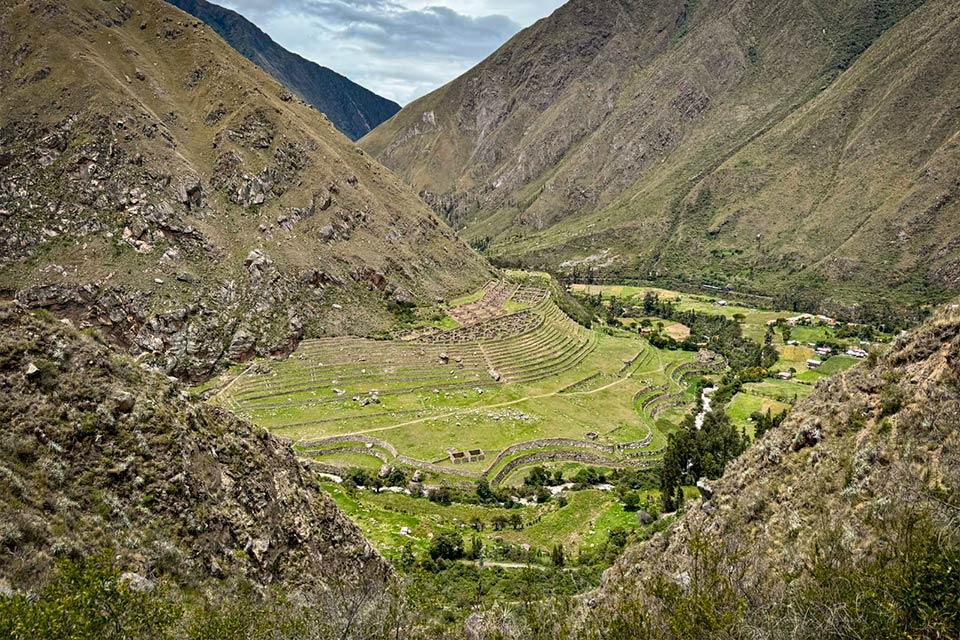
The first day of the Inca Trail is a gentle introduction to the route, with around 3 hours of hiking past small villages and beautiful scenery until we reach the Llactapata Inca site. Here, you can visit the Inca complex of Willkaraqay and enjoy wide views over Patallacta from the lookout point. We then continue for about 1 hour to Hatunchaca, where our trekking team will be waiting with a freshly prepared lunch made with local ingredients.
After lunch, we continue for around 2 hours to Ayapata, where we’ll camp for the night. We usually arrive at about 5:00 p.m., with your tents already set up and ready for you. Once you’ve settled in, there’s time to relax, enjoy hot drinks, and take in the mountain views. Before dinner, we’ll serve tea time with popcorn, coffee, and cookies, followed by a warm Peruvian meal and a comfortable night in camp.
- Hiking Distance: 14 km / 8.7 mi
- Duration: 6 Hours
- Campsite Altitude: 3,300 m / 10,826 ft
- Highest Altitude: 3,300 m / 10,826 ft
- Meals: Breakfast, snacks, lunch, tea time, dinner
- Difficulty: Moderate
Day 2: Ayapata — Dead Woman’s Pass — Chaquicocha
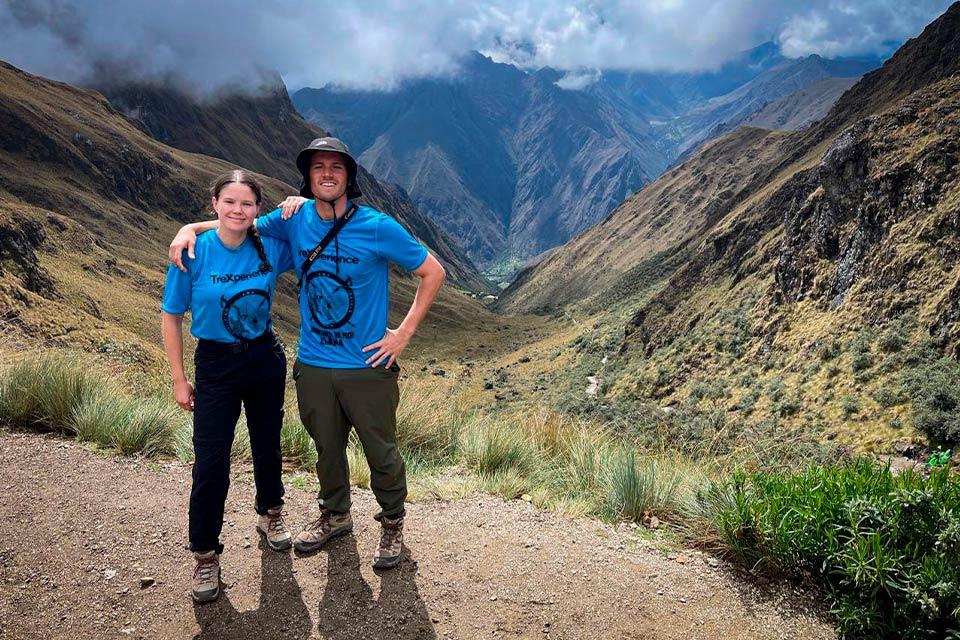
Today is the most challenging day of the 4-day hike to Machu Picchu, and also one of the most rewarding. We’ll start early by bringing a hot cup of freshly brewed coffee or coca tea to your tent. After breakfast, we begin a steady 4-hour hike to Dead Woman’s Pass (4,215 m / 13,829 ft), the highest point on the Inca Trail. At the summit, we’ll stop to rest, take in the views, and enjoy this special moment while your guide shares local traditions and performs a traditional offering to the mountain spirits, the Apus. We then descend for about 2 hours into the Pacaymayo Alto Valley, where a well-earned lunch will be waiting.
After lunch, the second pass feels more manageable: a 2-hour hike to Runkuraqay Pass (4,000 m / 13,123 ft), followed by another 2 hours downhill to our second campsite. Along the way, you’ll explore three important Inca sites: Runkuraqay, Sayacmarca, and Conchamarca. Tonight’s campsite is Chaquicocha (“Dry Lake,” 3,600 m / 11,811 ft), a beautiful setting with sunset views over the Vilcabamba mountain range. On clear nights, the sky is perfect for stargazing before dinner and rest.
- Hiking Distance: 16 km / 10 mi
- Duration: 10 Hours
- Campsite Altitude: 3,600 m / 11,811 ft
- Highest Altitude: 4,215 m / 13,829 ft
- Meals: Breakfast, snacks, lunch, tea time, dinner
- Difficulty: Challenging
Day 3: Chaquicocha — Intipata — Wiñaywayna
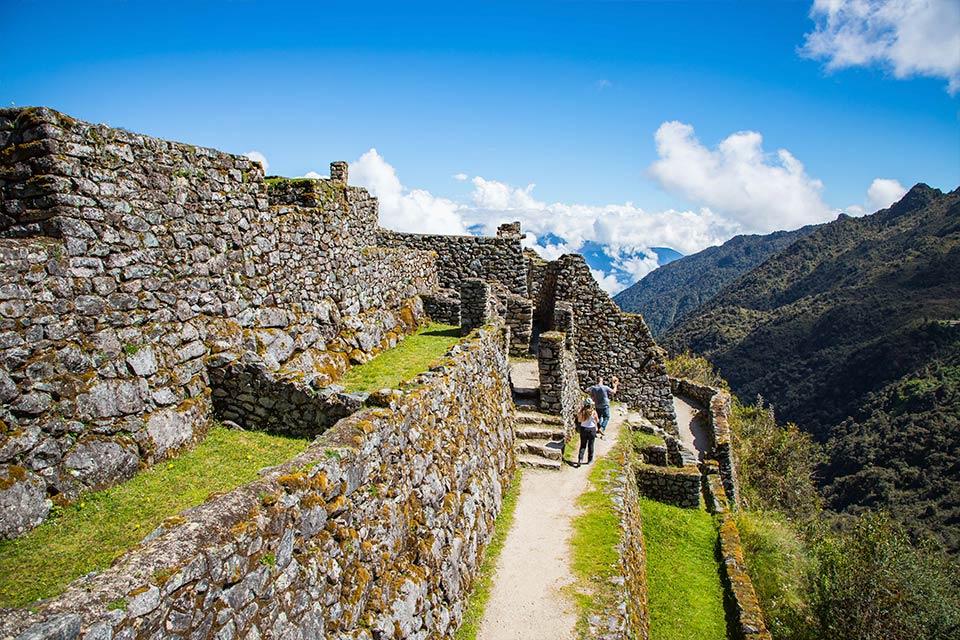
With the hardest part of the trek now behind you, today feels more relaxed and scenic. The route to our final campsite takes around 5 hours and passes through some of the most beautiful sections of the Inca Trail. You’ll walk through changing ecosystems, cross atmospheric cloud forest, and enjoy panoramic views of Salkantay Mountain, one of the highest peaks in the Cusco region. Along the way, we’ll visit two remarkable Inca sites: Phuyupatamarca (City in the Clouds), with sweeping views over the Urubamba Valley, and Intipata (Terraces of the Sun).
At Intipata, you’ll have time to pause and enjoy the surroundings before we continue to camp, arriving at approximately 1:00 p.m. for lunch. The afternoon is yours to rest, enjoy the campsite, spot llamas nearby, or take a refreshing shower. Later, we’ll visit the Inca site of Wiñaywayna, where your guide will bring its history to life before we return to camp for tea time, dinner, and a special farewell moment with the trekking team.
- Hiking Distance: 10 km / 6.2 mi
- Duration: 5 Hours
- Campsite Altitude: 2,600 m / 8,530 ft
- Highest Altitude: 3,600 m / 11,811 ft
- Meals: Breakfast, snack, lunch, tea time, dinner
- Difficulty: Moderate
Day 4: Sun Gate — Machu Picchu — Cusco
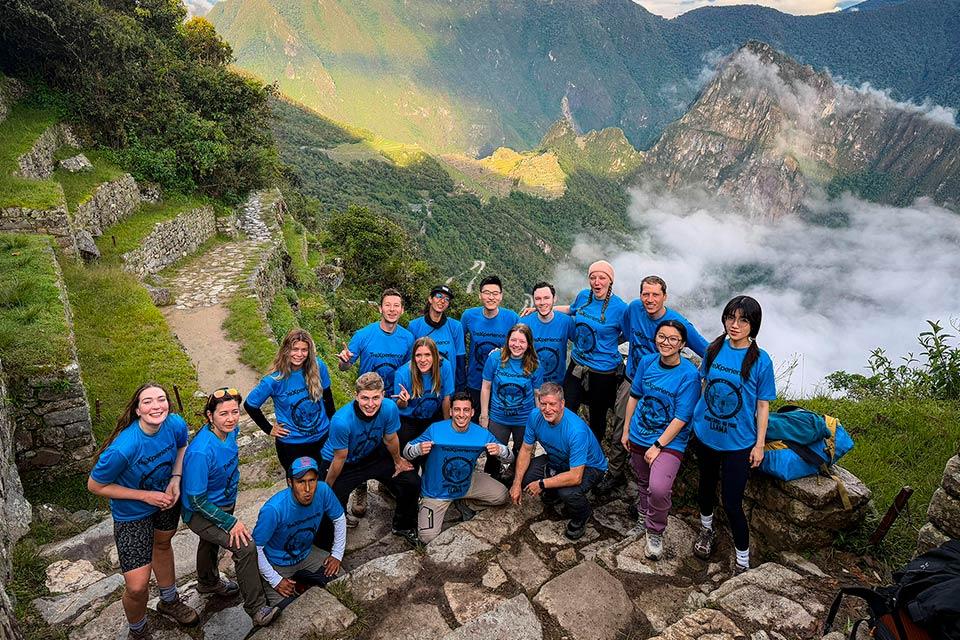
On the final day of the Classic Inca Trail, we’ll rise very early for the most anticipated moment of the trek: your arrival at Machu Picchu. We’ll head straight to the checkpoint and wait for it to open at 5:30 a.m. As the sky begins to brighten, we’ll hike for about 1 hour to the Sun Gate (Intipunku), where the first panoramic view of Machu Picchu comes into sight. On a clear morning, this is one of the most iconic views of the entire route.
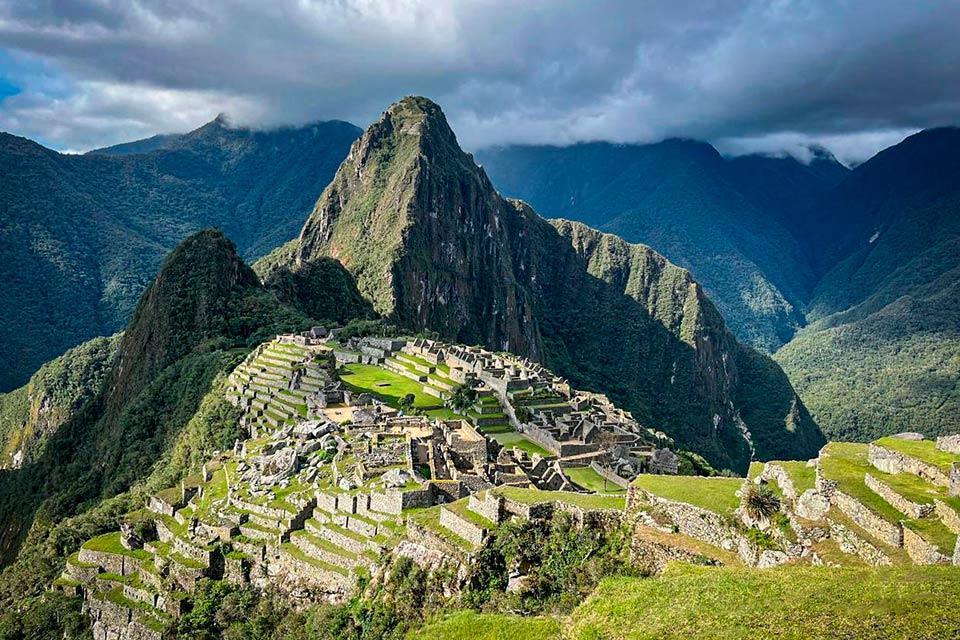
After taking in the views from the Sun Gate, we’ll continue on a gentle 1-hour descent toward Machu Picchu, following the scenic upper section of Circuit 1, the best spot for classic panoramic photos of the citadel. After enjoying these views, we continue down to the main entrance, where you’ll find restrooms, a coffee bar, and the official checkpoint.
Once inside, we’ll explore Machu Picchu through Circuit 3, visiting some of its most important temples, palaces, water fountains, and ceremonial spaces with one of our expert guides. If you’d like an extra challenge, you can also hike Huayna Picchu Mountain (tickets must be booked well in advance). After the guided tour, you’ll take the bus down to Aguas Calientes for lunch before boarding the panoramic Vistadome train. A member of the team will meet you on arrival and take you safely back to your hotel in Cusco or the Sacred Valley. The approximate arrival time back in Cusco is 7:30 p.m.
- Hiking Distance: 6 km / 3.7 mi
- Hiking Duration: 2-3 Hours
- Highest Altitude: 2,720 m / 8,923 ft
- Meals: Breakfast, snacks
- Difficulty: Easy to Moderate
Classic Inca Trail Price and Booking
Join one of our premium small-group departures for a more personal Classic Inca Trail to Machu Picchu experience, or choose a private Inca Trail tour for extra flexibility and a more exclusive service. If you are traveling with family or friends, contact us for a customized quote based on your group size and travel preferences.
Group Tour:
| Travelers | Per Person |
|---|---|
| Adults | From US$820 |
| Children and students | From US$790 |
Private Tour:
| Travelers | Per Person |
|---|---|
| 1 participant | US$ 2400 |
| 2 participants | US$ 1498 |
| 3 participants | US$ 1260 |
| 4 participants | US$ 1150 |
| 5 participants | US$ 950 |
| 6 participants | US$ 900 |
| 7 participants | US$ 870 |
| 8 participants | US$ 850 |
| 9+ participants | Contact us for a special rate |
Booking and Payment
- Deposit: US$300 per person to secure your booking. The remaining balance can be paid online or at our office in Cusco by credit card, PayPal, or wire transfer. Contact us if you need an alternative payment option.
- For each traveler, we require the full name exactly as shown on the passport (no nicknames), passport number, date of birth, passport expiration date, and nationality.
Student and Child Discount
- US$30 off
This discount applies to all travelers under 17 and students under 25 with a valid university ID. To qualify, the ID must include:
- The student’s name, photo, and university name
- A valid expiration date (expired IDs will not be accepted)
- ISIC cards are not accepted
The child discount is applied automatically. Students must send a copy of their university ID when booking; if the ID is not accepted, the adult rate will apply.
Packing List for the 4-Day Inca Trail
You may be traveling through Peru with one or two larger pieces of luggage, but for the trek itself, you only need the essentials. Packing smart will make the trail more comfortable, help you hike with less weight, and support responsible porter welfare standards on the Inca Trail.
Plan to carry up to 5 kg (11 lb) in your daypack and up to 7 kg (15 lb) in your duffle bag. The rest of your belongings can stay safely at your hotel in Cusco or in the TreXperience storerooms.
TreXperience Includes
- 1 duffle bag up to 7 kg (15 lb) for your personal belongings. TreXperience porters will carry it from camp to camp, but you won’t have access to it during the day. Anything you may need while hiking should go in your daypack.
For the items you’ll need on the trail, we recommend carrying no more than 5 kg in your daypack. You’ll carry it throughout the day, so it should hold only your daily essentials: water, snacks, extra layers, sunscreen, and personal items.
Essentials
On the Inca Trail, you’ll be far from shops and often without cellphone signal. Bringing the right gear will make the experience smoother, safer, and more comfortable. These essentials are important for every hiker, and we strongly recommend good-quality equipment for this classic 4-day trek to Machu Picchu.






What to Wear?
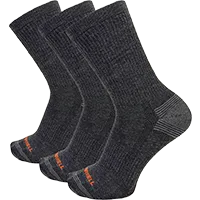
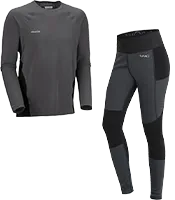
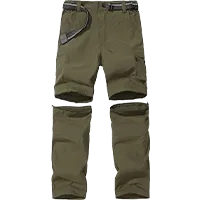
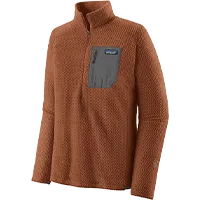
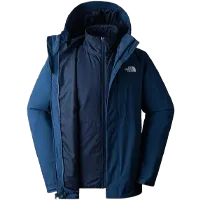
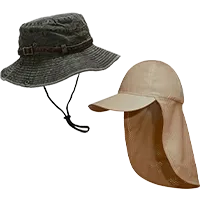
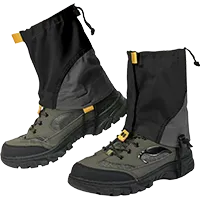
For the Inca Trail, layering is the best approach. Temperatures can change quickly as you move through different ecological zones, from warmer valleys to colder mountain passes. Wear light, breathable layers that are easy to add or remove as conditions change throughout the day.
Here’s what we recommend wearing:



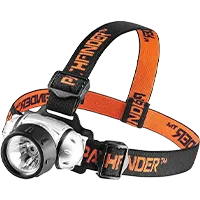
What to put in the Daypack?
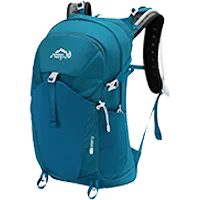
Below is a list of what to carry in your backpack. You’ll use it every day on the trail, so choose one that is lightweight, comfortable, and durable.
We recommend a 25- to 35-liter backpack with a rain cover. Large backpacks are not allowed in Machu Picchu; if needed, you must leave them in the lockers. This rule is based on size, not capacity, so if yours is slightly larger but not bulky, it should be fine.







What to put in the Duffle Bag?
TreXperience will provide you with a duffle bag for the items you won’t need during the day. Our porters will carry it throughout the trek. It should weigh a maximum of 7 kg (15 lb), including your sleeping bag and air mattress if you bring or rent them. Together, these usually weigh about 3 kg in total (around 2 kg for the sleeping bag and 1 kg for the air pad).
During the safety briefing, duffle bags will be available at our office the day before the trek. If you need yours earlier, you can request it by email and pick it up in advance from our centrally located office in Cusco.


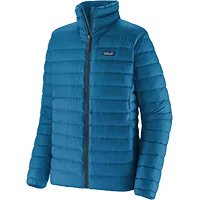


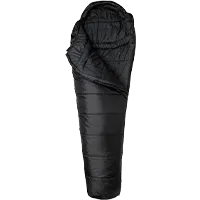
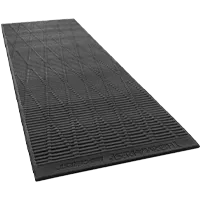
What We Provide
TreXperience provides the following items for the Inca Trail to help you enjoy a safer, more comfortable, and better-organized trekking experience.
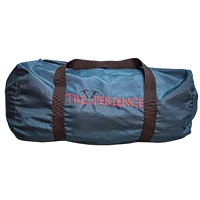




What can you rent with TreXperience?
If you prefer to travel lighter or need a few extra items, you can rent the following camping equipment from us at an additional cost. This is a practical option if you want to avoid carrying bulky gear during your trip to Peru.
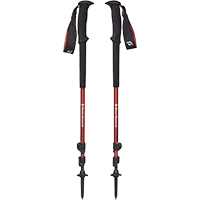
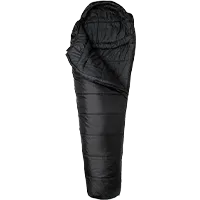
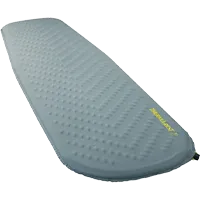
See our complete guide on the blog: Packing List for the Inca Trail.
Travel Information for the 4-Day Inca Trail
Use this section to prepare for the trek with confidence. It covers altitude acclimatization, permits, passport requirements, trail conditions, porter-supported logistics, camps, weather, connectivity, and the rules for visiting Machu Picchu. Review it before booking your flights and again before your pre-trek briefing.
Inca Trail map, distance, and altitude profile
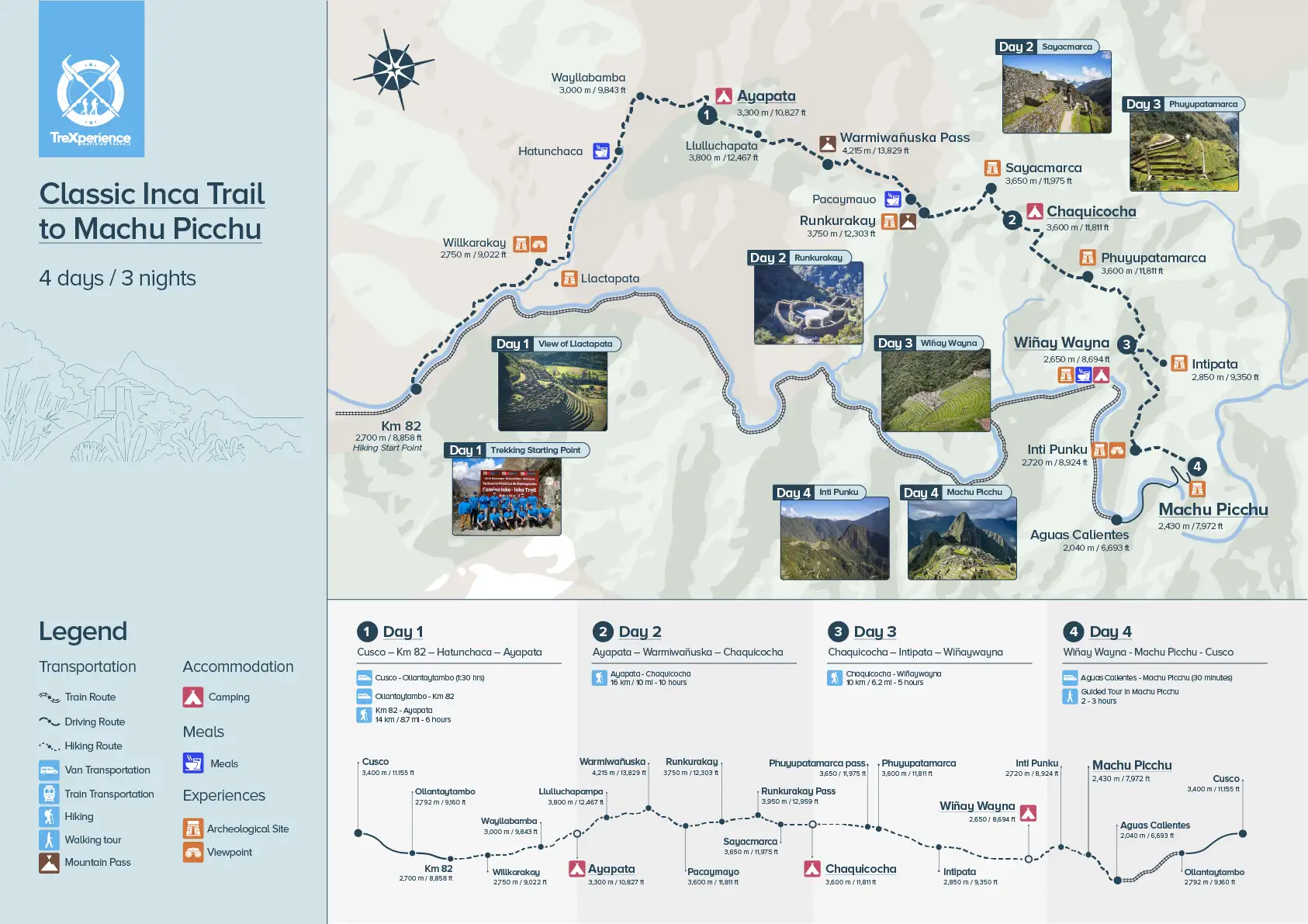
The map below shows how the route changes from the trailhead at Km 82 to Dead Woman’s Pass, the highest point of the trek, before descending through the cloud forest toward the Sun Gate and Machu Picchu. The trail forms part of the wider Inca road tradition known as the Qhapaq Ñan, or Andean Road System.
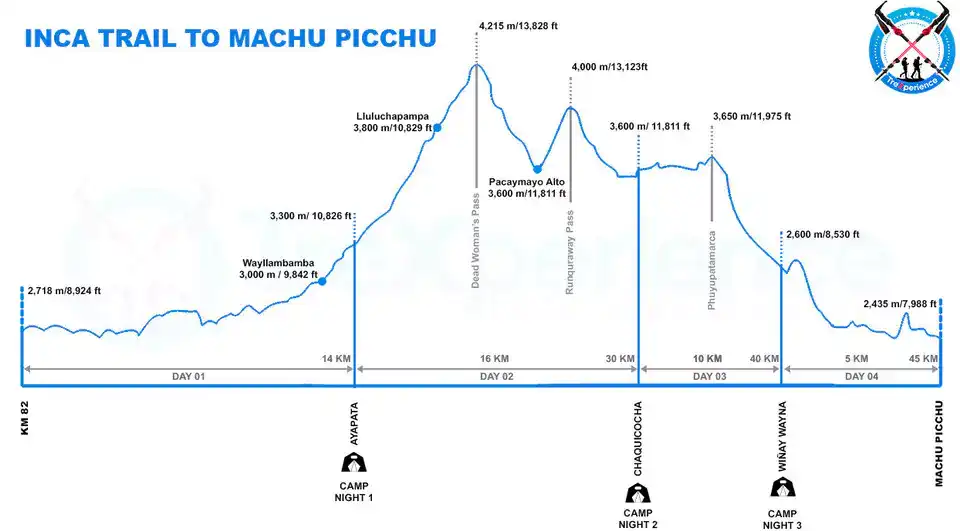
The Classic Inca Trail covers approximately 42 kilometers / 26 miles and reaches 4,215 meters / 13,829 feet at Dead Woman’s Pass. The route includes long climbs, uneven stone paths, and extended descents, so the elevation profile is just as important as the total distance.
Arriving early and acclimatizing in Cusco
We strongly recommend arriving in Cusco at least 2 full days before the trek. Altitude affects everyone differently, including active and experienced hikers, and those extra days can make the first part of the trail much more comfortable.
Keep your first days relaxed, drink plenty of water, eat light meals, sleep well, and avoid excess alcohol or intense exercise. Light sightseeing, such as a Cusco City Tour, is usually a better choice than a demanding high-altitude hike immediately after arriving.
Another option is to stay in Ollantaytambo or another part of the Sacred Valley, which is lower than Cusco and closer to the Km 82 trailhead. Our Sacred Valley guide explains the main towns and places to stay.
For medical guidance on symptoms, prevention, and pre-existing conditions, review the CDC’s official high-altitude travel advice.
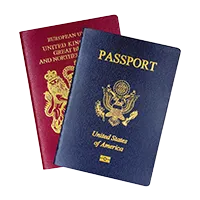
Passport and document requirements
You must bring the original passport used for your reservation. The information on your Inca Trail permit and Machu Picchu admission must match the document presented at the checkpoints.
Enter your complete legal name, nationality, date of birth, and passport details exactly as they appear in your passport. Do not use nicknames or leave out a family name. Inca Trail permits are personal and cannot be transferred to another traveler.
If you renew your passport after booking, send us clear copies of both the old and new passports as early as possible so the passport number can be updated. Travelers receiving a student discount must also carry the original valid student ID used for the reservation.
Weather and the best months to hike
The drier season normally runs from April to October, with more stable trail conditions and a better chance of clear mountain views. The wetter season runs from November to March, when the scenery is greener but rain, mist, and slippery sections are more common.
Every season has advantages, and mountain weather can change quickly at any time of year. It is normal to experience sunshine, wind, cold mornings, cloud, and occasional rain during the same trek. Our guide to the best time to visit Machu Picchu provides a month-by-month overview.
The Inca Trail is closed throughout February for conservation and maintenance. Before traveling, you can also review the official Machu Picchu weather forecast.
Inca Trail permits and when to book
The Classic Inca Trail requires a government-issued permit and can only be completed with an authorized Inca Trail company. Independent trekking is not permitted.
The daily capacity is limited to 500 people in total, including travelers, guides, chefs, porters, and other support staff. This means that the number of spaces available to travelers is much lower than 500.
Popular dates, particularly between May and September, can sell out several months in advance. Booking early gives you the best chance of securing your preferred departure. Our complete Inca Trail guide provides additional planning advice.
Your departure is confirmed only after the permit has been successfully secured in the official system. Permits are date-specific, personal, non-transferable, and subject to the booking conditions provided before payment.
Trail conditions, stone steps, and trekking poles
The Inca Trail is not a technical climb, but it is physically demanding. Much of the route follows original stone paths with steep climbs, long stairways, uneven surfaces, and extended downhill sections that can be harder on the knees than expected.
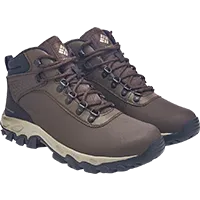
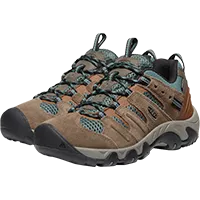
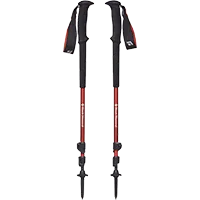
The stones can become slippery after rain, especially in the cloud forest. Hiking boots with good grip and properly adjusted trekking poles with rubber tips can provide additional stability on descents.
Horses and mules are not used on the Classic Inca Trail. Travelers must complete the route on foot, while the porter team carries the tents, food, cooking equipment, and other camp supplies.
Porters, duffel bags, and what you carry
TreXperience provides each traveler with a duffel bag for up to 7 kg / 15 lb of personal belongings. This weight includes your sleeping bag and air mattress when you bring or rent them.
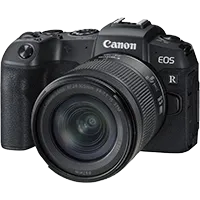
Your personal porter carries the duffel bag between camps, so you will not have access to it while hiking during the day. Pack your daytime essentials in a comfortable daypack, including your passport, water, rain jacket, warm layers, sunscreen, medication, camera, and valuables.
The porter team also transports the tents, food, cooking equipment, dining equipment, and other supplies required for the three-night camping experience.
Camps, bathrooms, and personal hygiene
You will spend three nights camping in mountain tents. There are no hotels or permanent lodges along the Classic Inca Trail. Our team carries the camp equipment, sets up the tents, and moves everything to the next campsite each day.
Official campsite assignments are controlled along the route and may change according to availability and local regulations. The final camp locations will be confirmed as part of the operational planning for your departure.
Public bathroom facilities are available at some camps and checkpoints, but they are basic and their condition can vary. TreXperience also carries private portable toilets for greater privacy and comfort during the trek.
Shower facilities are very limited and, when available, are usually basic and cold. Bring toilet paper, hand sanitizer, biodegradable wet wipes, and a small personal towel.
Meals, snacks, and drinking water
Our trekking chefs prepare fresh breakfasts, lunches, dinners, snacks, and tea during the trek according to the published itinerary. Meals are served warm and include a variety of Peruvian and international dishes made with fresh local ingredients.
Drinking water is provided during the trek. Bring a reusable bottle or hydration bladder and follow your guide’s instructions about when to refill it. Disposable plastic bottles should be avoided whenever possible.
Lunch after the Machu Picchu tour on the final day is not included. You will have time to purchase lunch in Aguas Calientes before boarding the return train.
Physical preparation before the trek
The most useful preparation is trail-specific training. Before traveling, practice walking uphill, climbing stairs, completing long descents, and carrying a daypack for several hours.
Regular hill walks, longer weekend hikes, and basic leg exercises such as squats, step-ups, and lunges can help. Pay particular attention to downhill training, as the stone descents place repeated pressure on the knees and legs.
Good fitness does not prevent altitude sickness, so physical training must be combined with proper acclimatization. Avoid scheduling demanding high-altitude activities immediately before the Inca Trail unless you are already well acclimatized.
Phone signal, Wi-Fi, and charging devices
The Inca Trail passes through remote mountain areas, so phone signal is weak or unavailable on most of the route. There is no dependable Wi-Fi or access to electrical outlets at the camps.
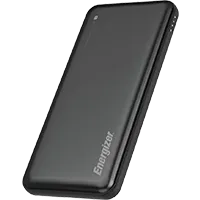
Bring a fully charged power bank, keep your phone in airplane mode when possible, and carry spare camera batteries if needed. Let family or friends know that you may be offline for most of the four days.
For operational communication and emergencies, TreXperience carries satellite phones during the trek.
Entering and visiting Machu Picchu after the trek
You must present the same original passport used for your reservation. Bags larger than 40 × 35 × 20 cm / 16 × 14 × 8 inches are not allowed inside the citadel, and food, tripods, selfie sticks, drones, and several other restricted items must remain outside.
On the final morning, you will approach Machu Picchu through the Sun Gate and continue to the upper panoramic viewpoints. The planned visit then includes a separate guided entry through Circuit 3, allowing you to explore important areas of the lower urban and royal sectors.
Together, these entries provide both panoramic views and a closer look at the archaeological complex. However, the exact route, sequence, and access points may be adjusted if the Ministry of Culture changes its regulations or ticket assignments.
Standard visits follow controlled, one-way routes. Follow your guide’s instructions, remain on the assigned circuit, and use the restroom before each entry. Any second entry depends on the separate admission arranged as part of your tour.
Before traveling, review our Machu Picchu circuits guide and the government’s official circuits and routes.
Frequently Asked Questions About the 4-Day Inca Trail
These are the questions travelers most often ask before hiking the Classic Inca Trail to Machu Picchu. The answers cover fitness, safety, meals, insurance, group pace, luggage, travel planning, and the practical details that can affect your experience.
Can solo travelers join the 4-day Inca Trail?
Yes. Solo travelers can join a shared small-group departure without needing to organize their own group. Departures remain subject to permit availability and minimum operational requirements.
The group experience is one of the most enjoyable parts of the Inca Trail. You will hike, eat, and camp with travelers from different countries while still having time to walk at your own pace and enjoy the scenery.
What if I walk more slowly than the rest of the group?
That is completely normal. Hikers naturally spread out according to their pace, particularly during the longer climbs. The goal is to maintain a steady and comfortable rhythm rather than walk as quickly as possible.
The guide team supports different hiking speeds and uses planned meeting points to bring the group together. However, every traveler must be prepared to complete each day’s route and reach the checkpoints and camps within the required operating times.
Tell your guide if you are struggling, feeling unwell, or need additional support. It is always better to communicate early than to continue in silence.
Is the 4-day Inca Trail suitable for first-time trekkers?
Yes. Many travelers complete the Classic Inca Trail as their first multi-day trek. You do not need technical climbing experience, but you should arrive with realistic expectations and proper preparation.
This is a moderate-to-challenging trek with high altitude, long stone stairways, steep descents, early mornings, three nights of camping, and several hours of hiking each day.
First-time trekkers generally do well when they train in advance, acclimatize properly, pack suitable clothing, and remain patient with their pace.
Is the Inca Trail safe, and what happens in an emergency?
The Inca Trail is generally safe for properly prepared travelers, but it takes place in a remote mountain environment. The main risks include altitude sickness, fatigue, changing weather, dehydration, slippery stones, and injuries on steep descents.
TreXperience guides are trained in first aid and emergency response. The team carries a first-aid kit, emergency oxygen, and satellite communication equipment.
If a traveler becomes ill or cannot continue, the guide will assess the situation and arrange the safest available response. Evacuation options depend on your location, the weather, and the seriousness of the condition, which is why suitable travel insurance is strongly recommended.
What happens if my flight to Cusco is delayed?
Contact us immediately if your arrival is delayed. Inca Trail permits are issued for a specific traveler and start date, and the group cannot normally delay its departure because one passenger has not arrived.
Permits cannot be transferred to another person, and changing the departure date may not be possible once they have been issued. For this reason, plan to arrive in Cusco at least two full days before the trek rather than flying in at the last minute.
Can you accommodate vegetarian, vegan, gluten-free, or special meals?
Yes. We can accommodate many vegetarian, vegan, gluten-free, lactose-free, and other dietary requirements when they are reported during booking.
Tell us about every food allergy or restriction as early as possible and repeat the information during the pre-trek briefing. This allows the chef and logistics team to plan suitable ingredients before departure.
Travelers with severe or life-threatening allergies should contact us before booking. Meals are prepared in a remote camp kitchen, so a completely allergen-free environment or zero cross-contamination cannot be guaranteed.
Do I need travel insurance for the Inca Trail?
Travel insurance is strongly recommended. Choose a policy that covers trekking at elevations of at least 4,215 meters / 13,829 feet, as some standard policies exclude activities above a certain altitude.
Your policy should ideally include emergency medical treatment, evacuation, hospitalization, trip cancellation, trip interruption, delayed travel, missed connections, and personal belongings.
Read the policy conditions carefully and confirm that multi-day trekking in Peru is covered before purchasing it.
How much extra money should I bring?
A practical amount is approximately 400 to 600 Peruvian soles, depending on your personal spending and whether you plan to leave tips.
Cash can be useful for your final lunch in Aguas Calientes, drinks, small purchases, optional expenses, and tips. Most services on the trail are already included, and there are very few places to spend money before reaching Machu Picchu Pueblo.
Bring Peruvian soles in small denominations. Do not depend entirely on cards or mobile payments.
Are tips expected for the guides, chefs, and porters?
Tips are voluntary and are never included as a mandatory payment. Many travelers choose to tip at the end of the trek when they feel the team has provided excellent service.
Your guide can explain the usual method of collecting and distributing tips so the group can make an informed decision. The final amount should always depend on your satisfaction and personal budget.
Is the 4-day Inca Trail suitable for children or older travelers?
Age alone does not determine whether someone can complete the trek. Fitness, hiking experience, knee strength, comfort with camping, recovery time, and previous experience at altitude are more important.
Families, older travelers, and anyone with a medical condition should discuss the trek with a doctor and provide relevant information before departure.
Travelers who prefer a shorter experience can consider the Short Inca Trail 2 Days. Those who want to complete the full route with a more exclusive service can consider the Luxury Inca Trail 4 Days.
Do I need to attend the pre-trek briefing?
Yes. The briefing is an important part of the tour and is normally held at approximately 6:00 p.m. on the day before departure.
During the meeting, the guide reviews the itinerary, pickup time, trail conditions, weather, camp arrangements, duffel bag allowance, rented equipment, passport requirements, and return logistics.
It is also your final opportunity to confirm dietary requirements, medical concerns, and personal arrangements. If you cannot attend in person, contact us in advance so an alternative online briefing or call can be arranged.
What happens to my main suitcase during the trek?
Your main suitcase does not travel on the Inca Trail. You can normally leave it at your hotel in Cusco or use the complimentary luggage storage arranged by TreXperience.
Take only your daypack and the provided duffel bag, which has a maximum allowance of 7 kg / 15 lb. Confirm where your main luggage will be stored and collected during the pre-trek briefing.
Should I book a flight or bus out of Cusco on the night I return?
No. The return journey includes the Machu Picchu visit, bus transportation, train travel through the Sacred Valley, and a road transfer back to Cusco. Delays can occur at any stage.
The safest option is to spend one more night in Cusco or the Sacred Valley and continue your journey the following day. This also gives you time to rest properly after completing the trek.