



Salkantay Trek weather changes quickly because the route climbs from cold high-Andean camps near the Salkantay Pass down into warmer cloud forest on the way to Machu Picchu. In general, April to June and September to October offer the best mix of clear skies, drier trails, and good hiking conditions. July and August are usually drier but colder and busier, while January to March is greener, wetter, and muddier. That means the best month for you depends on what matters most: clear views, fewer crowds, greener scenery, or easier trail conditions.
In this guide, you’ll find Salkantay Trek weather by month, what conditions feel like at different altitudes, what to pack, and how to choose the best time to hike.
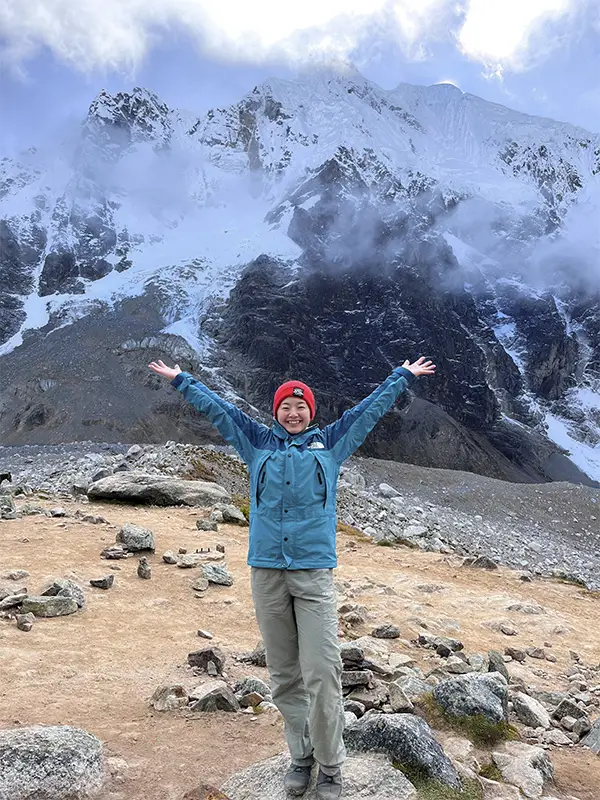 | 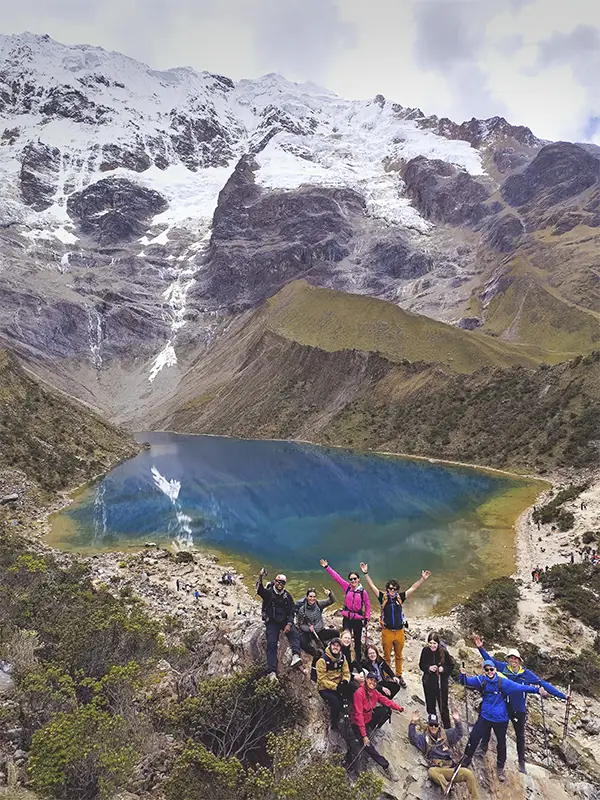 |
Best Time to Hike the Salkantay Trek
The best time to hike Salkantay Trek are the months of May, September, and October. Since these provide of clear skies, dried paths, the landscapes still offer greenery and the number of visitors is not as high as in the months of July and August. In other words, these months joins the most good conditions factors to trek the Salkantay mountain.
| Best overall months | May, September, and October |
| Best for green scenery | April and early November |
| Best for driest trails | June to August |
| Wettest months | January and February |
| Coldest nights | June to August |
| Inca Trail closure | The Inca Trail closes in February, but the Salkantay route generally remains open |
| Salkantay permit | No special route permit is usually required |
Salkantay’s climate and terrain
The Salkantay Trek runs roughly 60–70 km from the Andes to the jungle fringe, culminating in Machu Picchu. At higher elevations such as the Salkantay Pass (4,630 m / 15,190 ft) and Soraypampa, temperatures during the day typically reach around 15°C (59°F), but nights can be very cold, often dropping below freezing. These areas may experience rain or even snow.
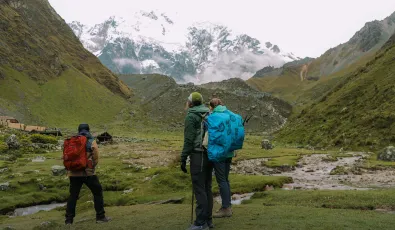
As you descend into the lower jungle zones like Lucmabamba and Aguas Calientes, the climate becomes warmer and more humid. Daytime temperatures in these areas range from 20 to 28°C (68 to 82°F), with cooler nights around 10 to 15°C (50 to 59°F). Rain can occur occasionally even during the dry season. This means you can experience multiple microclimates in one trek:
- Alpine tundra near the pass
- Cold glacial valleys
- Cloud forest with mist and rain
- Subtropical jungle
Even in peak dry season, morning frost can turn into midday sun and afternoon wind.
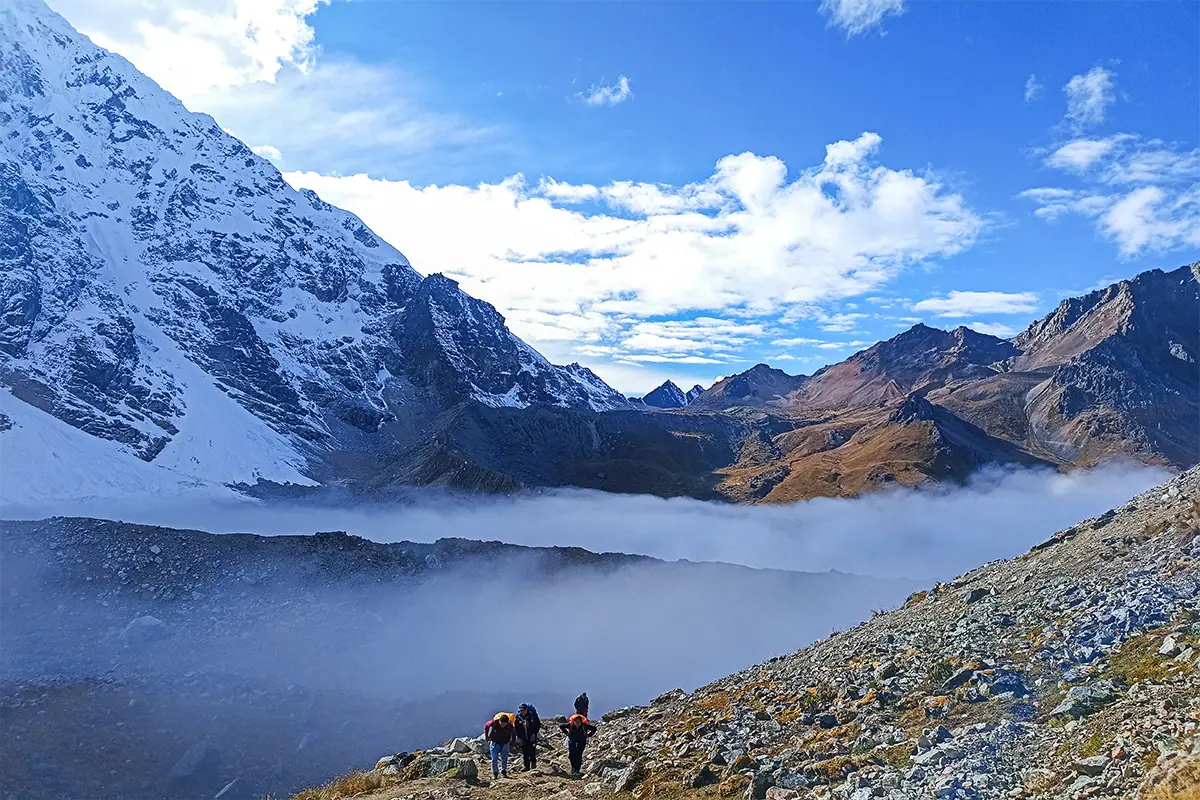
Sunscreen is a must >>>
According to Peru’s National Meteorology and Hydrology Service SENAMHI, high-altitude regions in Cusco experience strong High-altitude UV during the day and extreme temperature drops after sunset. So pack SPF 50+, sunglasses, and a sun hat even in the dry season
Salkantay weather by month
The weather on the Salkantay Trek varies significantly due to the diverse altitudes encountered along the route. Unlike the Classic Inca Trail, the Salkantay route to Machu Picchu crosses dramatically different ecosystems, from glacial high-Andean passes above 4,600 m to humid cloud forest near the edge of the Amazon. That means the weather can shift from freezing alpine wind to tropical humidity in a matter of hours.
Month by month overview
This Salkantay trek weather forecast follows the rainy-season pattern SENAMHI notes for Cusco and the same broad monthly advice repeated across the ranking guides.
| Month | What to expect | Crowd level | Best for |
| January | Rainy, lush, muddy, cloudier views | Low | Green scenery and quieter trails |
| February | Wettest month, slippery sections, low visibility | Low | Travelers who do not mind rain |
| March | Still wet, usually improving later in the month | Low | Late wet-season travel |
| April | Greener trails, improving weather, some showers | Medium-low | Shoulder season balance |
| May | Clearer skies, good trail conditions, cold nights begin | Medium | One of the best overall months |
| June | Very dry, great views, freezing nights possible | High | Clear skies and stable weather |
| July | Very dry, busiest period, coldest nights | High | Reliable dry conditions |
| August | Dry, clear, windy, still cold at night | High | Firm trails and good visibility |
| September | Dry to mostly dry, clearer mornings, fewer crowds than peak | Medium | Best overall balance |
| October | Good shoulder month, warmer feel, showers increase later | Medium-low | Fewer crowds with good views |
| November | Mixed conditions, greener return, rain becomes more likely | Low-medium | Quieter trekking |
| December | Rain returns, warmer lower sections, cloudier afternoons | Low-medium | Lower crowd months |

Monthly weather guide for the Salkantay Trek
January to March: Wettest months
January, February, and March are the wettest months in the Cusco region. SENAMHI data shows that precipitation peaks during this period, especially in February. Rain is frequent, often arriving in heavy afternoon downpours.
Regarding the Salkantay pass weather, snow is possible, and cloud cover often hides glacier views. Trails can become muddy and slippery, particularly during steep descents. However, the trade-off is dramatic green landscapes, powerful waterfalls, and fewer trekkers.
It’s important to note that while the Inca Trail closes in February for maintenance, the Salkantay Trek remains open year-round. That makes it a popular alternative for wet-season travelers.
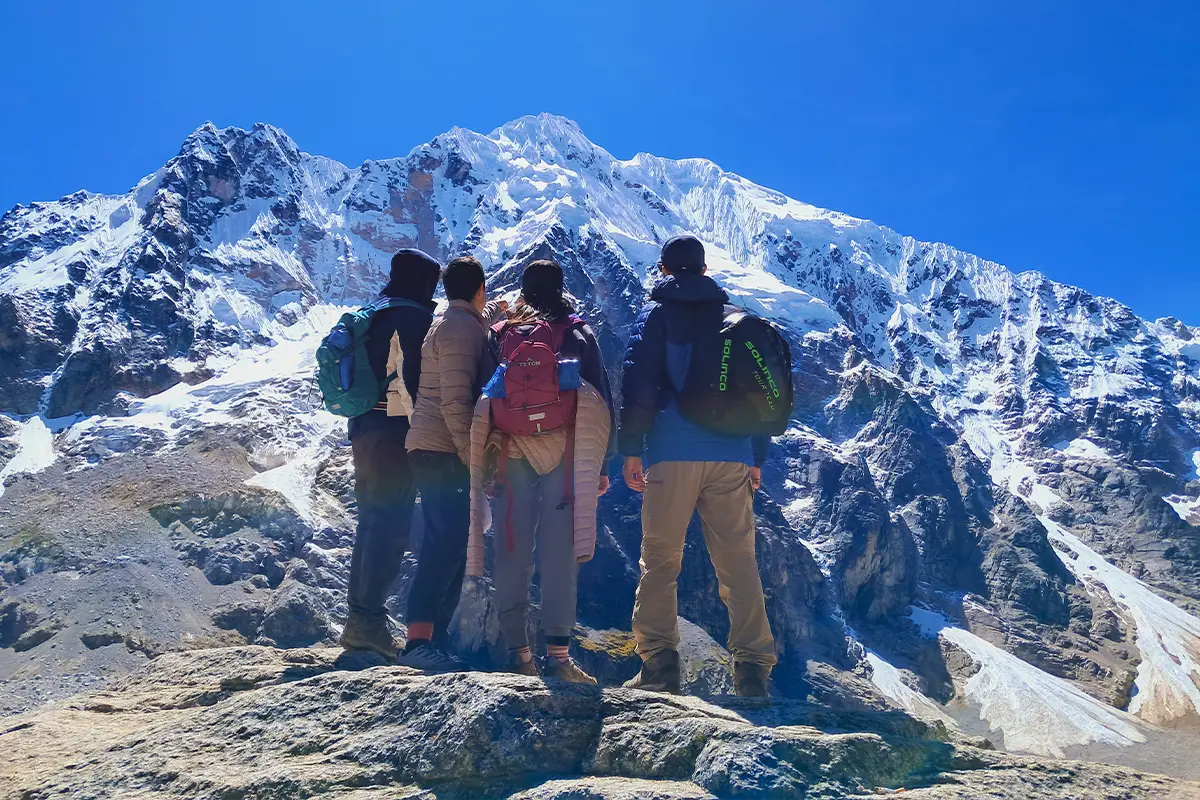
Wake up early>>>
Rain rarely falls all day. Most showers are concentrated in afternoons, meaning early starts help avoid the worst conditions.
April to June: Transition season
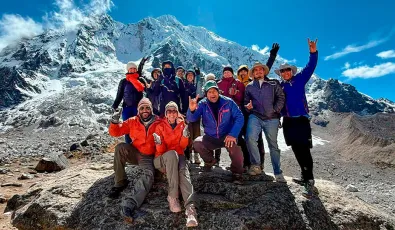
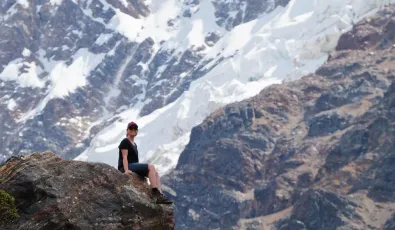
April marks the beginning of the Salkantay dry season. During these months, rain decreases significantly, and skies become clearer, especially in May and June. Besides, daytime hiking conditions improve, and visibility of Mount Salkantay (6,271 m / 20,574 ft) becomes spectacular.
However, nights remain cold. At high camps like Soraypampa (around 3,900 m), temperatures can drop below 0 °C (32 °F). According to climate averages for Cusco’s highlands, diurnal temperature variation can exceed 15–20 °C between day and night.
This period is often considered one of the best times to hike Salkantay: stable weather, green landscapes lingering from the rainy season, and fewer crowds than July and August.
July to September: Peak season
July and August are the driest months and coincide with Peru’s high tourist season. Skies are typically clear, and rainfall is minimal. This makes for stunning sunrise views at the Salkantay Pass.
However, these months are also the coldest at night. Frost is common at higher camps, and temperatures can fall to -5 °C (23 °F) or lower. Strong winds can increase the “feels like” cold significantly.
Daytime temperatures are pleasant for hiking, usually between 15–20 °C (59–68 °F) in the highlands and warmer at lower elevations.
If you hike in July to September, you can usually expect:
- Busier trails
- Higher demand for tours, trains, and Machu Picch tickets
- More stable but colder weather
Finally, July and August are ideal for dry conditions but require strong cold-weather preparation.
October to December: End of dry season
While October and November offer a mix of dry mornings and occasional afternoon showers, December signals the gradual return of the Salkantay rainy season.
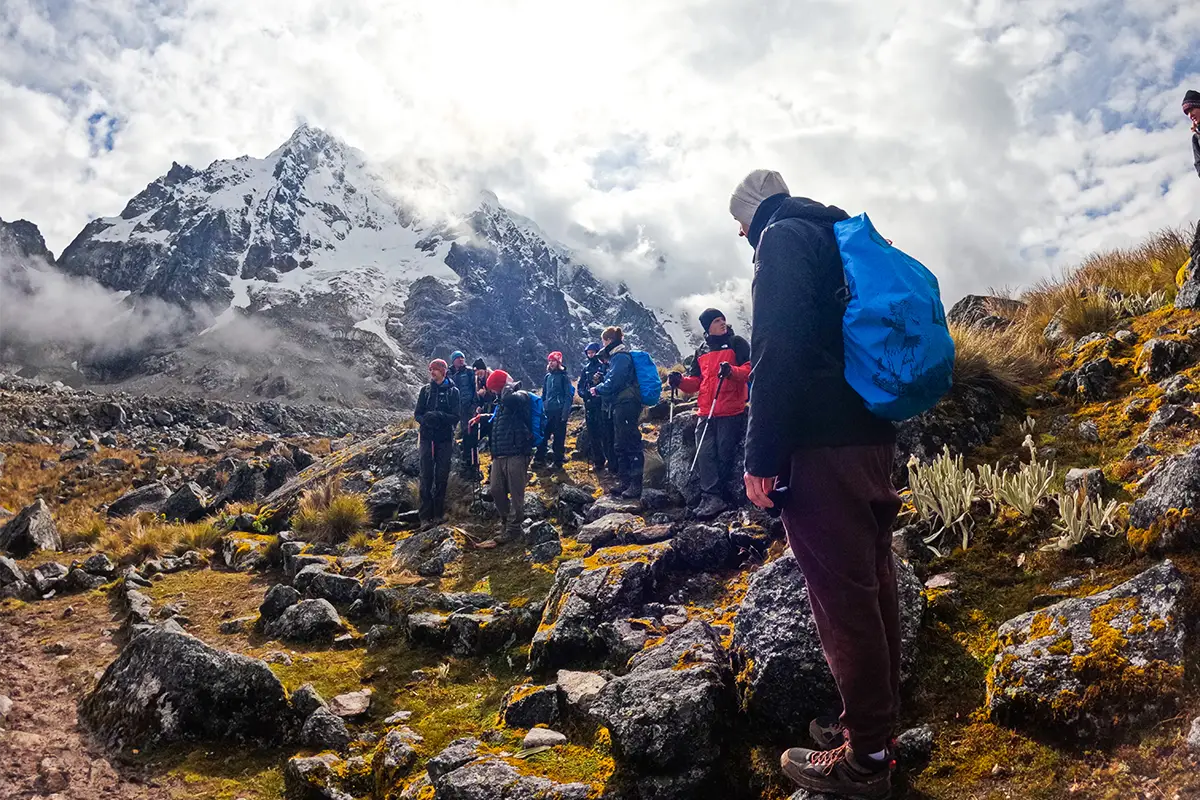
Thus, this period feels transitional, with fewer crowds than peak season, slightly warmer nights than July, and landscapes beginning to turn green again. However, the Salkantay trek weather becomes less predictable, especially in late November and December.
If you’re planning to take a Salkantay Trek to Machu Picchu or even a Humantay lake tour during this time, be prepared for both sun exposure and sudden rain, since UV radiation at high altitude remains intense.
To wrap up:
| Season | Pros | Cons |
| Jan - Mar | Lush landscapes, fewer crowds | Muddy trails, frequent rain |
| Apr - Jun | Balanced weather, clear views | Cold Nights |

What to Pack for the Salkantay Weather
You may be preparing your Salkantay Trek packing list, so here are a few recommendations from experienced travelers.
Packing list for the wettest months (Jan–Mar)
- Waterproof jacket (high-quality, breathable)
- Rain pants
- Backpack rain cover
- Quick-dry trekking clothes
- Waterproof hiking boots
- Extra socks
- Trekking poles for muddy sections
- Dry bags for electronics
Avoid cotton, since moisture retention increases hypothermia risk in cold high-altitude conditions.
Packing list for Salkantay’s transition season (Apr–Jun)
- Insulated jacket (down or synthetic)
- Thermal base layers
- Hat and gloves
- Lightweight waterproof shell
- UV sunglasses
- SPF 50+ sunscreen
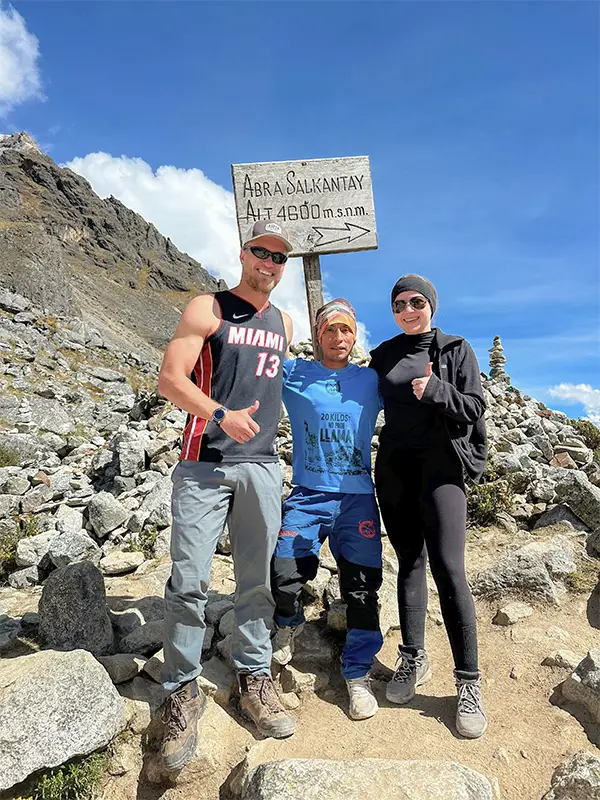
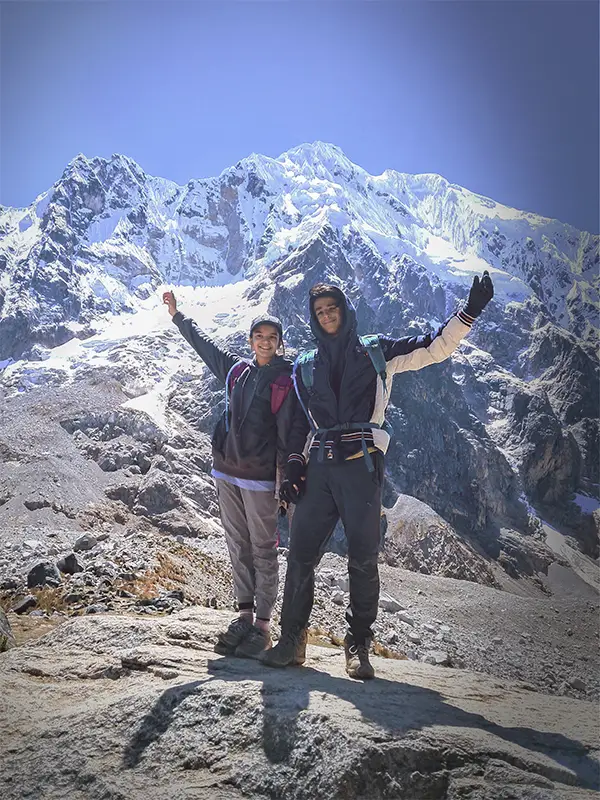
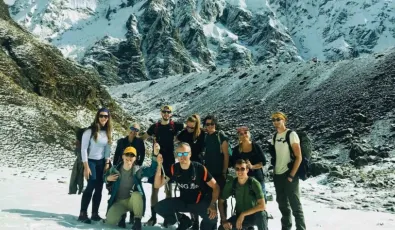
During this season, you may experience cold nights combined with a strong daytime sun. Therefore, layering is essential.
 |  |
Packing list for Salkantay’s peak season (Jul–Sep)
- Heavy insulated jacket
- Thermal sleeping layer
- Buff or neck gaiter
- Warm beanie
- High-quality gloves
- Lip balm with SPF
Despite dry skies, freezing nighttime temperatures demand serious warmth protection.
Packing list for Oct–Dec
- Mid-weight insulated jacket
- Light rain jacket
- Trekking poles
- Breathable hiking pants
- Sun hat
- Extra hydration system
Keep in mind that, during this season, conditions vary week to week, so pack with flexibility.

Tips for dealing with Salkantay altitude and sudden changes
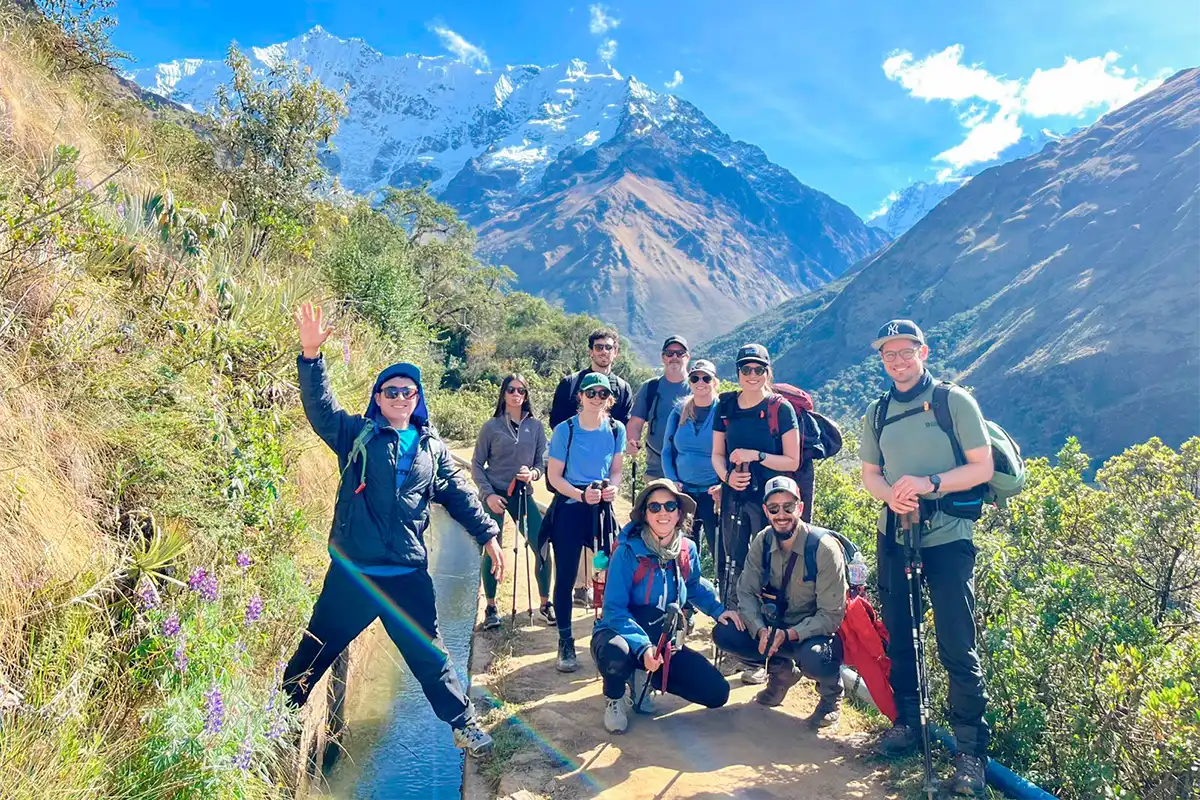
Altitude and weather are deeply connected on Salkantay. Sudden storms can roll in quickly at 4,600 m.a.s.l, and temperature drops can be dramatic after sunset.
To manage both:
- Allow time to acclimatize by spending 1 to 2 days in Cusco before the trek: Spending a day or two at a moderate altitude, such as in Cusco, before beginning the trek.
- Listen to your body: Ascend gradually during the trek itself. If you feel symptoms of altitude sickness like headaches, dizziness, tiredness or nausea, slow down, rest, and stay hydrated. Drinking plenty of water and avoiding alcohol or heavy meals can help your body adjust more smoothly. If symptoms become severe or worsen quickly, descend and get medical help.
- Choose layered clothing: This is essential for managing sudden temperature shifts, as the Salkantay trek weather can change rapidly from warm sun to cold winds or rain the same day. Layered clothing matters, bring waterproof and windproof outer layers, along with thermal garments for colder moments, especially at higher elevations.
- Protect yourself from the sun: Pack sunscreen, sunglasses, and a hat, since UV exposure increases with altitude.
- Maintain a moderate pace: Communicate with your trekking guides about how you feel.
Take note:
Take a look to our Salkantay Trek difficulty and altitude guide blog, where we further develop the difficulty and altitude of the Salkantay trek.
FAQs about Salkantay Trek weather
Do you need a permit for the Salkantay Trek?
No special government permit is usually required for the Salkantay route itself. Unlike the Inca Trail, it is generally open year-round, although you still need to plan Machu Picchu entry and other logistics in advance.
How cold does it get on the trek?
Temperatures at high camps near 4,000 m frequently drop below freezing, especially during dry season. In July and August, nights can reach -5°C (23°F) or lower, with frost common at sunrise. Wind at Salkantay Pass makes it feel even colder.
Is there snow on the Salkantay Pass?
Yes, snow is possible year-round at 4,630 m, especially during the rainy season from January to March. In dry months, frost is more common than heavy snowfall, though brief snow flurries can still occur.
What gear do I need for the rainy season?
A fully waterproof jacket, rain pants, and backpack cover, as well as waterproof boots with strong grip and trekking poles to improve stability. Besides, make sure to pack quick-dry layers and spare clothes.
Can I hike Salkantay in the wet season?
Yes, the Salkantay Trek remains open year-round, even when the Inca Trail closes in February. Although you can expect afternoon showers, muddy sections, and less predictable visibility at high passes, with proper waterproof gear and flexible expectations, it can still be an excellent experience.

Add new comment