



The Paracas culture was one of the most significant societies on the southern coast of ancient Peru. It developed many centuries before the Incas and is renowned for its exquisite textiles, intricate burial practices, pottery, and documented skull surgeries found in human remains. The legacy of the Paracas culture enhances our understanding of the development of pre-Hispanic societies in southern Peru.
Key facts about the Paracas culture
| Fact | Paracas culture |
| Approximate period | 800 BC to 200 AD |
| Origins | More than 2,800 years ago |
| Approximate duration | Around 1,000 years, according to the traditional chronology |
| Location | Peru’s southern coast, in the current Ica region |
| Main valleys | Chincha, Pisco, Ica, and Nazca |
| Archaeological discovery by | Julio C. Tello, 1925 |
| Best known for | Textiles and embroidered mantles |
| Notable practices | Burial bundles, skull surgery, and intentional head shaping |
| Main archaeological sites | Cerro Colorado, Wari Kayan, and Cabeza Larga |
| Related cultures | Chavín, Topará, and Nazca |
What was the Paracas culture?
The Paracas culture was a pre-Hispanic society formed by communities along the southern Andean coast. Rather than being a centralized empire, it comprised various groups connected through ceremonial practices, craft production, and trade networks. This resulted in a society with significant social and cultural complexity.
Where was the Paracas culture located?
The Paracas civilization developed along the southern coast of Peru, primarily in the Ica region. Its influence extended across the Chincha, Pisco, Ica, and Nazca valleys. One of the most notable areas associated with this culture is the Paracas Peninsula, located in the province of Pisco, where significant discoveries have been made at sites such as Cerro Colorado, Wari Kayan, and Cabeza Larga.
Who discovered the Paracas culture?
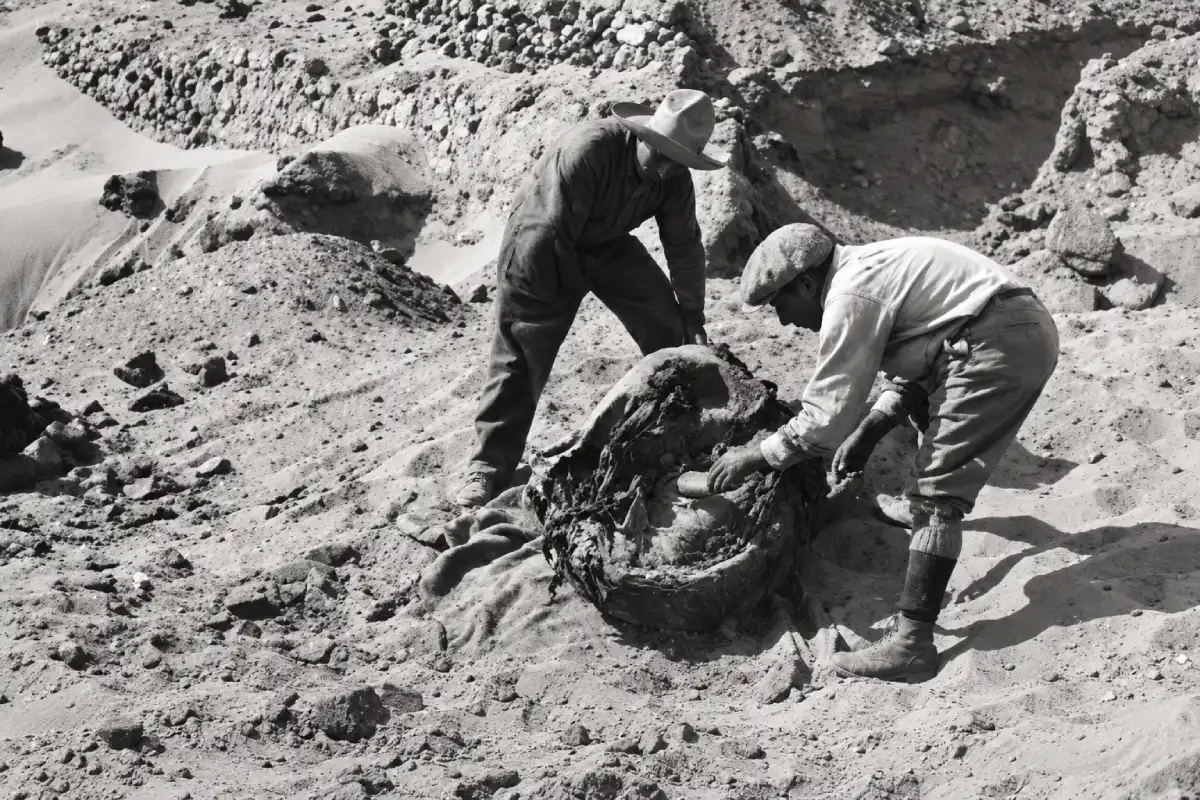
The archaeological discovery of the Paracas culture is credited to Peruvian archaeologist Julio C. Tello, who started his investigations of burial sites at Arena Blanca and Cerro Colorado in 1925.
Toribio Mejía Xesspe, who collaborated with Tello, also played a significant role in documenting and studying the archaeological remains of the Paracas culture.
Paracas textiles
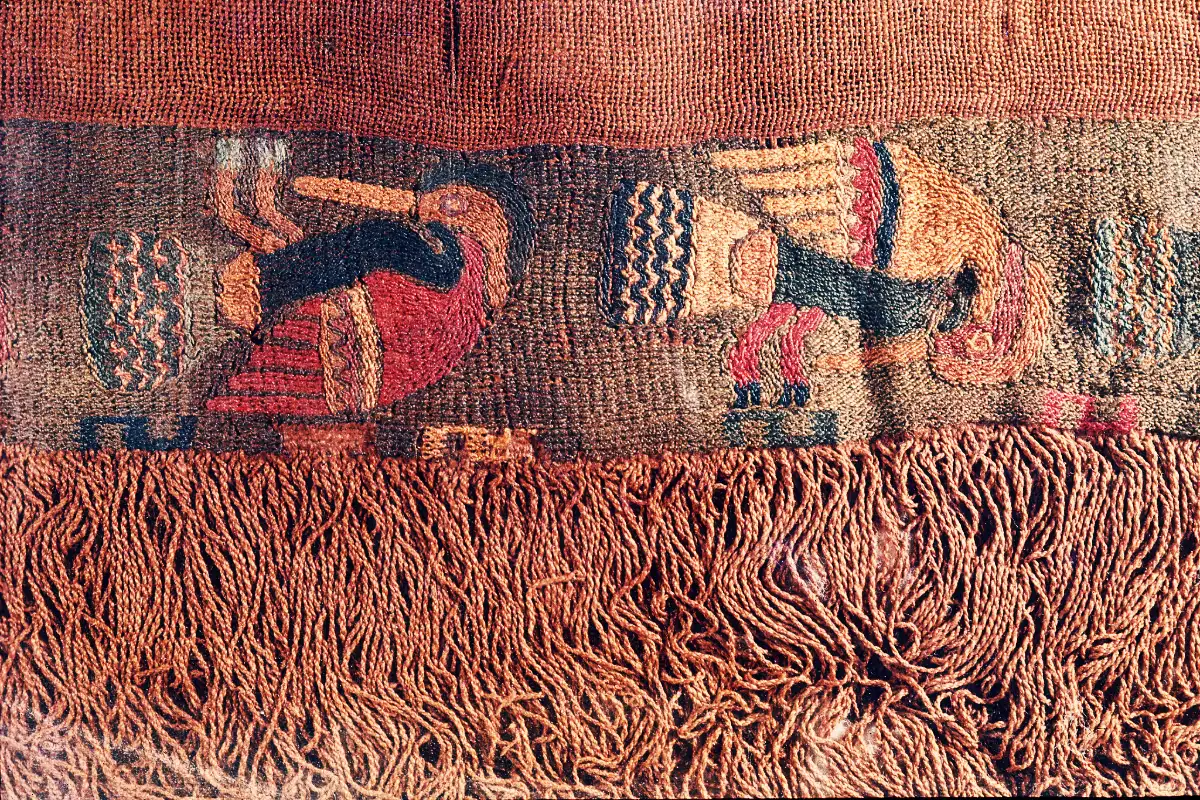
Textile making was one of the most significant forms of Paracas art. The surviving pieces demonstrate a high level of technical skill and showcase a diverse range of fibers, colors, and designs. These textiles were used as clothing and also played an important role in ceremonies and burials.
Materials and weaving techniques
Paracas weavers mainly used cotton and camelid fiber. Cotton often formed the base of a textile, while fibers from Andean camelids were used to make finer, dyed threads.
Their weaving techniques included plain weave, tapestry, brocade, double cloth, interlacing, and embroidery. In many later pieces, a cotton base was adorned with intricate embroidery made from camelid fibers.
Textile colors and imagery
Paracas textiles combined reds, yellows, greens, blues, and browns created with different natural dyes. Dyeing techniques varied depending on the fiber and the desired color.
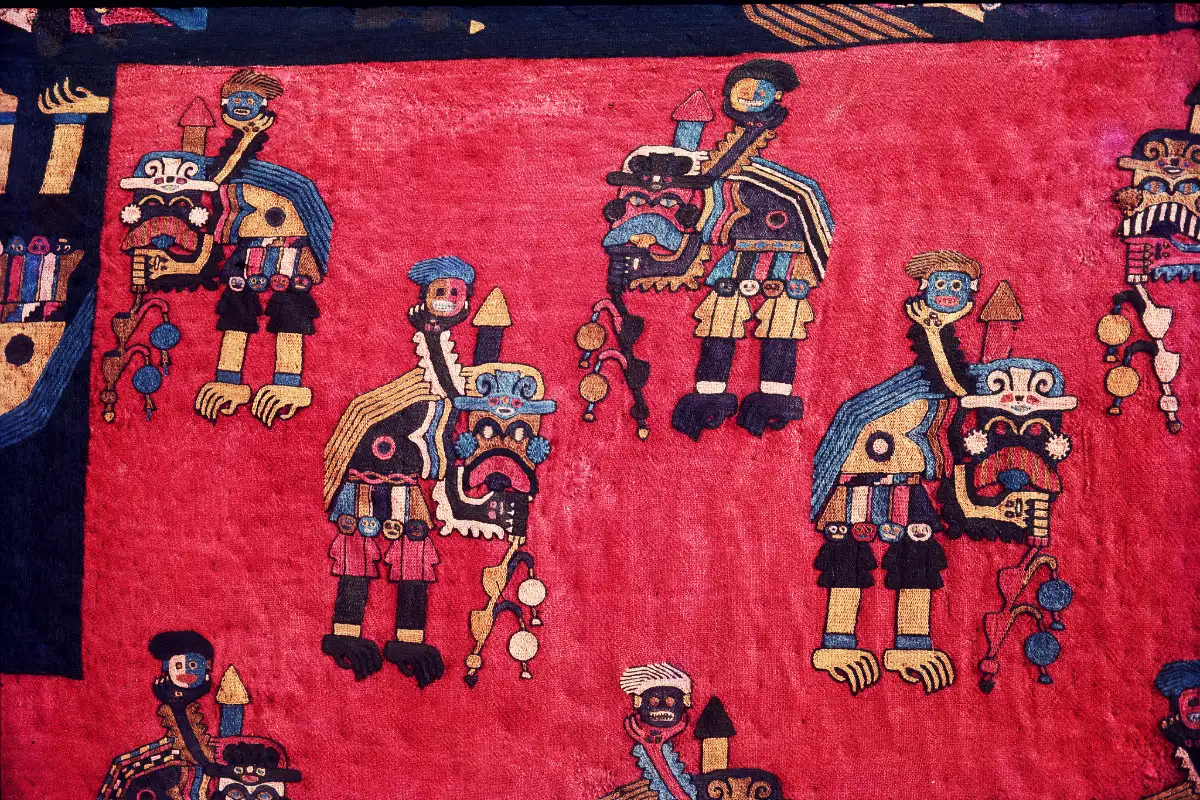
Their imagery includes people, birds, felines, snakes, plants, and hybrid beings. Some designs use geometric patterns, while others show figures with headdresses, clothing, weapons, or human heads. Over time, embroidery styles with more curved, figurative designs also emerged, including the style known as Block Color.
What did Paracas designs represent?
The exact meaning of Paracas designs is unknown, but their repetition suggests connections with identity, ceremonies, and religious beliefs. Some scholars connect them to themes of fertility, power, transformation, and renewal, implying they served a purpose beyond mere decoration.
Mantles and burial textiles
Many surviving textiles have been discovered in burial grounds excavated at Cerro Colorado, Arena Blanca, and Wari Kayan. Some burial bundles at Wari Kayan contained over 120 textile pieces, which included mantles, clothing, and other fabrics placed around the deceased.
The garments found include mantles, tunics, short skirts, loincloths, and turbans. The most elaborate pieces feature intricate embroidery and a variety of color combinations. The quality of these textiles helps researchers identify differences in status and identity among the individuals buried at these sites.
Paracas pottery
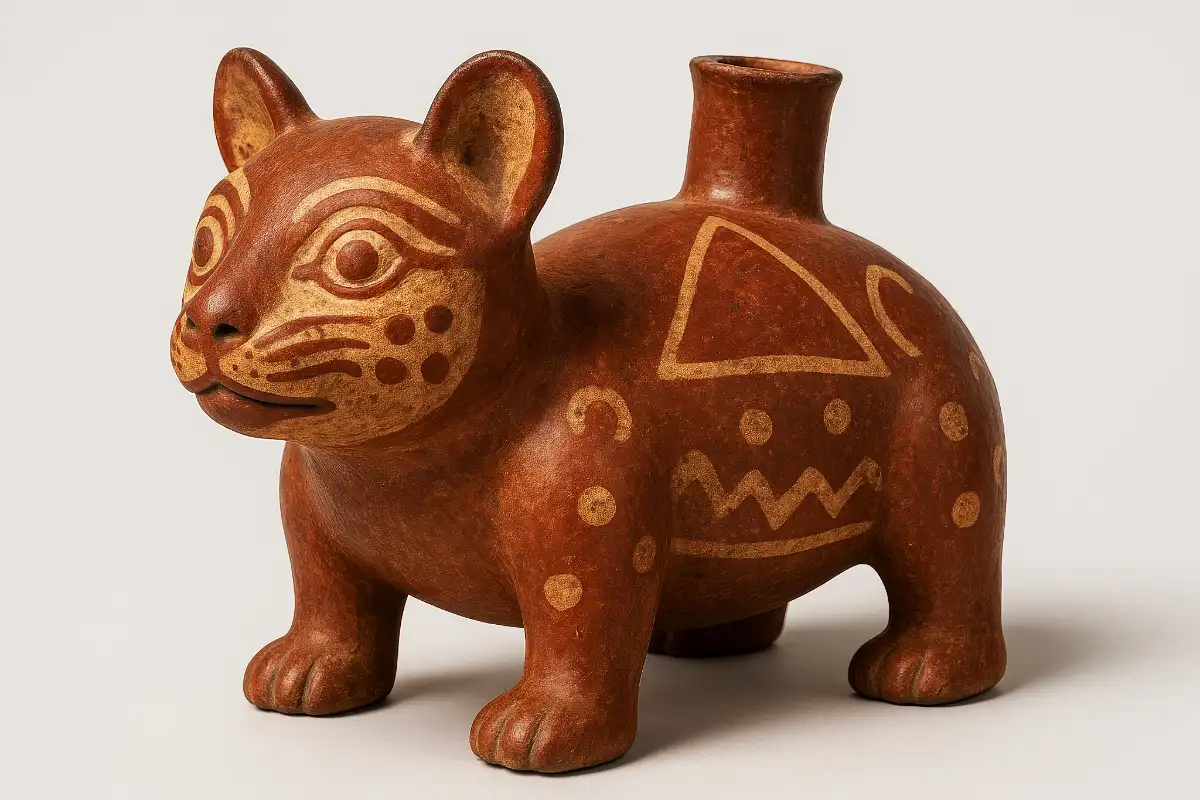
Paracas pottery changed considerably over the centuries and provides important clues about cultural changes and different periods of development. The shapes, decorative techniques, and styles of the pottery varied between the early and late periods, meaning there is no single, definitive style of Paracas pottery.
Characteristics of Paracas pottery
Paracas pottery is known for its incised decoration and use of several colors. Lines carved into the clay outlined figures that could later be filled with pigments, creating strong contrasts against generally dark surfaces.
The pottery also changed over time. Pieces associated with Paracas Cavernas feature extensive incised decoration, while later collections linked to Necropolis and Topará show new techniques, such as positive and negative painting and slip coatings applied before firing.
How the pottery was made and decorated
Vessels were handmade from coils of clay, which were then smoothed and shaped. For more complex pieces, such as bottles with two spouts connected by a bridge handle, different parts could be made separately and joined together before firing.
In early pottery, designs were carved into the clay before it was fired, and pigments were added afterward. Over time, potters began using techniques that involved applying color before firing, which helped the pigments bond more securely to the surface.
Shapes, colors, and designs
The most distinctive form of pottery was the double-spout bottle with a bridge handle. In addition to these, potters created bowls, various other bottles, and sculpted vessels. Some pieces even produced sounds as liquid flowed through them.
The colors used included red, yellow, white, black, green, and blue, often divided by incised lines. Common designs featured geometric shapes, birds, felines, snakes, and hybrid creatures. Stylized felines were particularly prevalent in the early periods and exhibited visual connections to traditions such as Chavín and Cupisnique.
Skull surgery and intentional head shaping
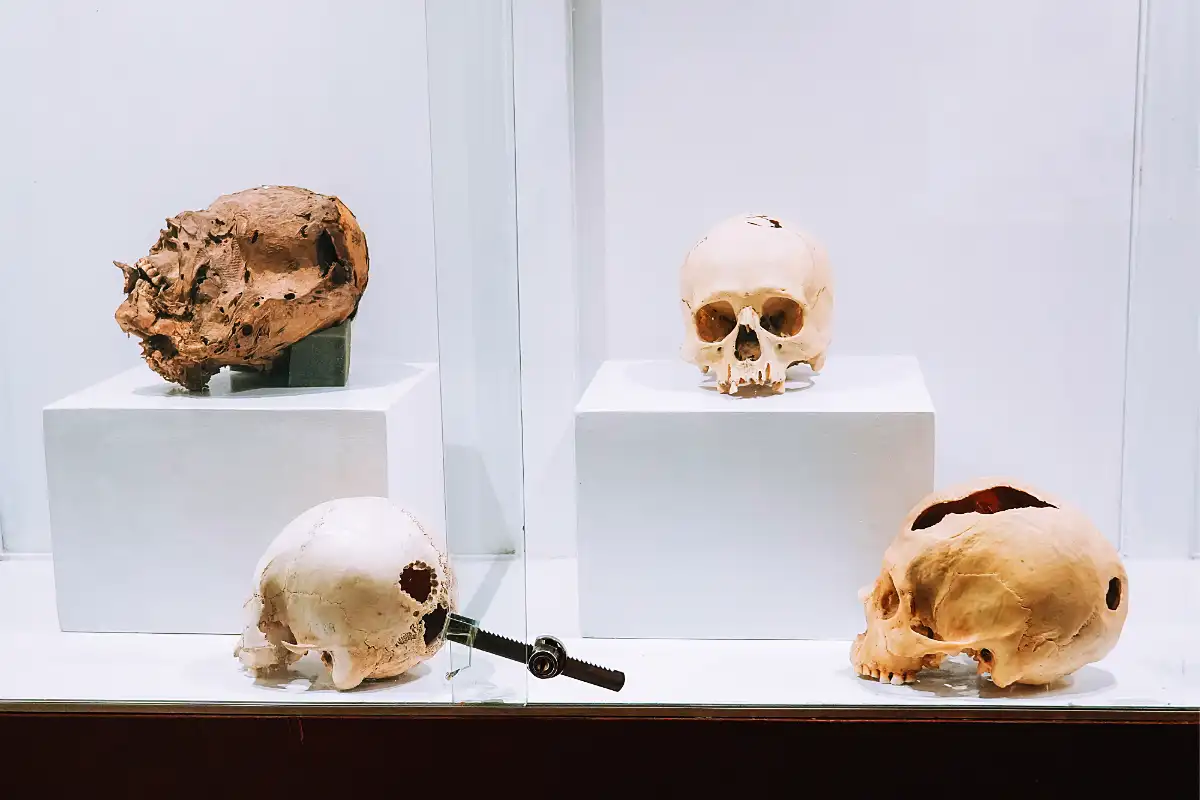
Paracas skulls discovered in archaeological sites reveal evidence of two distinct practices that are sometimes confused. Trepanation involved the intentional removal of a section of skull bone, while intentional head shaping gradually altered the skull’s form throughout a person’s growth. Both practices offer valuable insights into the medical and cultural traditions of this society.
Cranial trepanation
Trepanation involved making an opening in the skull, usually by scraping the bone with stone or metal tools. Some cases are associated with injuries caused by blows to the head, suggesting that the procedure may have had a medical purpose.
Several Paracas skulls show signs of healing, indicating that some individuals survived the process. In addition, thin plates made from gold, gourd, or shell have been discovered alongside these cases, although their exact purpose remains unclear.
Paracas elongate skulls and intentional head shaping
Intentional head shaping occurred during the growth of the skull and may have been associated with identity, place of origin, or social status. This practice was distinct from trepanation.
A 2022 study revealed evidence of skull modification in approximately 98% of 159 individuals from the Paracas Cavernas at Cerro Colorado, showing the social significance of this practice.
History of the Paracas culture
The Paracas culture emerged during the first millennium BCE, within the Early Horizon period. Its earliest features exhibit connections with the Chavín culture, but over time, it developed its own distinct characteristics.
Julio C. Tello categorized the development of the Paracas culture into two phases: Paracas Cavernas and Paracas Necropolis. However, contemporary researchers approach this classification with caution due to the connection between the Necropolis phase and the Topará tradition.
Paracas Cavernas
Paracas Cavernas is the name given by Julio C. Tello to the earliest burials discovered at Cerro Colorado. These burials consisted of deep, communal tombs featuring a vertical entrance that led to an underground chamber.
The pottery associated with these burials is notable for its designs, which were carved into the clay before firing. After firing, several colors were added using a post-firing technique. Some of the motifs display stylistic connections to religious traditions that emerged during the Early Horizon, including those of the Chavín culture.
Paracas Necropolis
The Paracas Necropolis primarily refers to the burials discovered at Wari Kayan, where bodies were placed in large burial bundles made from multiple layers of cloth and clothing.
Among the most notable items found are colorful embroidered mantles featuring people, animals, and supernatural beings. The pottery associated with these burials shows strong connections to the Topará tradition, characterized by a greater use of slip coatings and colors applied before firing. Therefore, the Necropolis is no longer viewed merely as a second stage of the Paracas culture.
The transition from Paracas to the Nazca culture
The transition from Paracas to Nazca was gradual. Archaeologists working in Palpa and Nazca have found Paracas and Topará elements alongside early Nazca features, associated with periods known as Proto-Nasca or Initial Nasca.
Dating evidence from Chincha shows that some Paracas centers had already been abandoned before Topará pottery appeared. This points to a process of change, continuity, and interaction among different populations.
Social organization and the Paracas economy
The Paracas society was made up of communities located in various coastal valleys and on the western slopes of the Andes. Over time, some of these communities became more complex and developed connections through economic, ceremonial, and political relationships. Their economy was a mix of farming, utilizing marine resources, and trading among different ecological zones.
Social hierarchy and leaders
Paracas society had clear differences in social status. Elites and leaders with political and ritual responsibilities held the highest positions, while other groups worked in farming, fishing, craft production, and other specialized activities.
These differences are visible in the burials. Some contain fine textiles, carefully made pottery, and numerous objects associated with high status. During the Late Paracas period, the construction of large ceremonial centers also suggests that leaders could organize and direct substantial groups of people.
Farming and water use
Farming was essential to Paracas communities. In this desert environment, crops depended on rivers, springs, and irrigation systems. Canals have been identified in Chincha, while areas such as Collanco and Cutamalla had agricultural terraces connected to irrigation systems.
Documented crops include corn, beans, peanuts, sweet potatoes, cassava, guava, pacay, cotton, and squash. Cotton was especially important as a raw material for textile production.
Fishing and marine resources
Communities near the coast relied on fish and shellfish from the Pacific Ocean to supplement their agricultural produce. Some shells were also used to make ornaments and tools, showing how closely these communities were connected to the marine environment.
Trade with other regions
Paracas communities maintained connections between the coast, intermediate valleys, and the highlands. Obsidian, camelid products, and other highland resources traveled toward the coast, while marine products reached inland regions. Some of this trade may have taken place through llama caravans.
Finds of obsidian and cinnabar show contact with areas such as Huancavelica and Ayacucho. These relationships allowed communities to exchange not only goods but also ideas and artistic styles.
Paracas religion and worldview
What we know about Paracas religion comes mainly from imagery, burials, and ceremonial objects, as this society left no texts directly explaining its beliefs. Archaeological evidence points to a worldview connected with ancestors, death, transformation, and various supernatural beings.
Deities and supernatural beings
We do not know the names of the Paracas gods, and there is not enough evidence to reconstruct their full set of deities. However, textiles and pottery show humanlike figures and supernatural beings that combine human features with those of felines, birds, and snakes.
Some figures carry staffs, weapons, or human heads and wear elaborate headdresses. They are associated with ideas of transformation and supernatural power. This imagery shows Chavín influences, although the Paracas developed their own symbols over time.
Burial bundles and ancestor worship
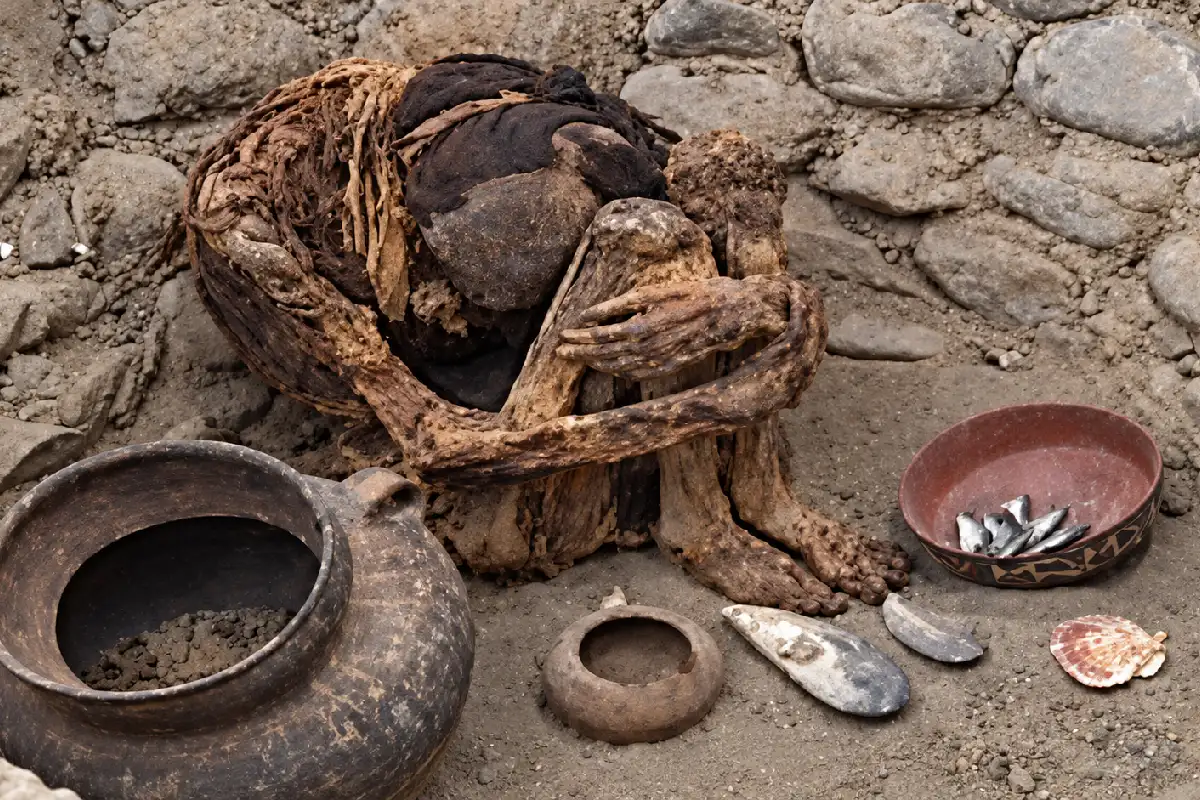
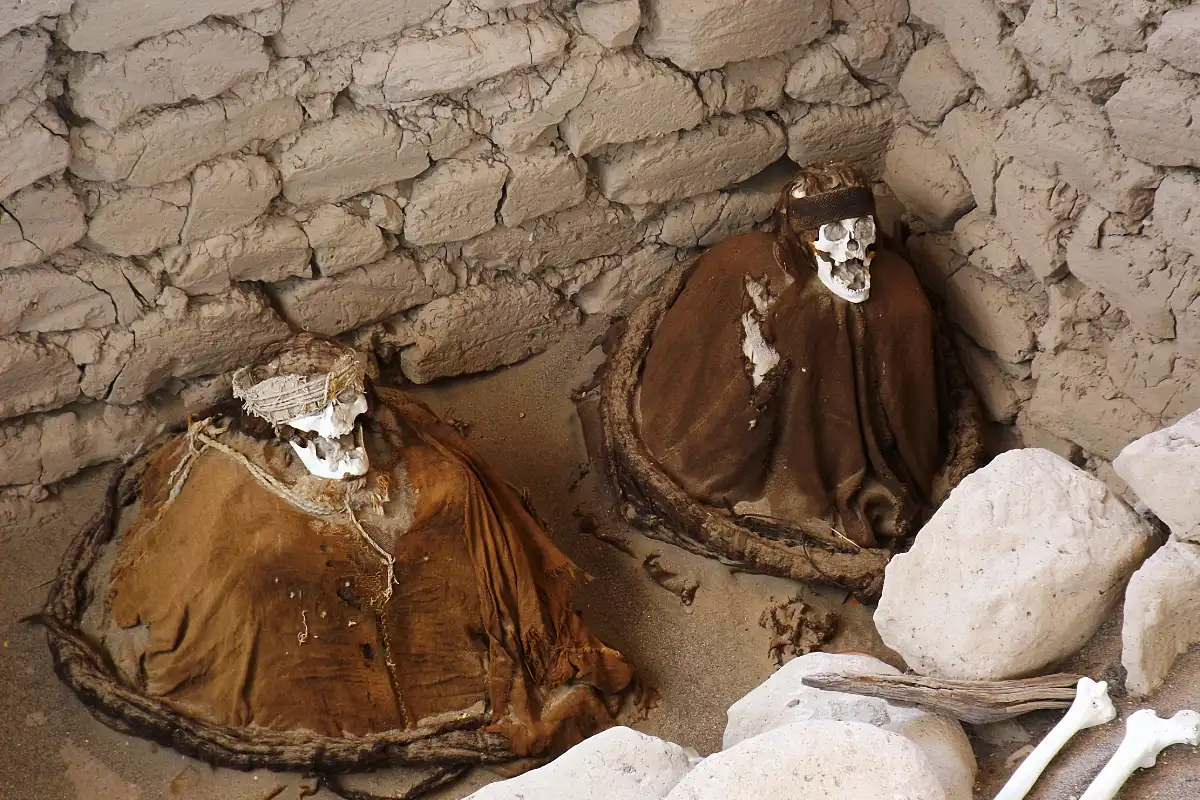
The Paracas civilization created intricate burial bundles for their deceased. In these practices, a body was often positioned in a curled-up position inside a basket and then meticulously wrapped in layers of cloth, clothing, and mantles to form a large bundle. This elaborate preparation required significant effort and a substantial amount of textiles.
Differences between the bundles reflect aspects of social status and identity. Some of the deceased may have become important ancestors within their communities, giving these burials a social and ritual role as well. Some figures carry staffs, weapons, or human heads and wear elaborate headdresses, representing transformation and supernatural power. This imagery reflects Chavín influences, although the Paracas developed their own symbols over time.
Trophy heads and ceremonial rituals
Human heads played a significant role in Paracas imagery. They can be found on textiles and pottery, and archaeologists have also discovered heads that were prepared to be carried or displayed during specific rituals.
The term "trophy head" should be used cautiously, as these heads did not necessarily come from defeated enemies. Researchers have suggested connections to warfare, sacrifice, ancestor worship, and other rituals, although the exact purpose of these heads remains a topic of debate.
Offerings and beliefs about death
Paracas burials often include various items such as food, vessels, clothing, ornaments, pigments, and other personal or ceremonial objects. At Wari Kayan, archaeologists have discovered containers with food remains and small offerings placed between the layers of burial bundles.
These offerings may have served multiple purposes, such as accompanying the deceased, providing symbolic nourishment, or expressing the individual's identity and social status. Their presence in the burials indicates that certain objects retained significant ritual value even after death.
Paracas architecture
Paracas architecture included homes, settlements, platforms, and large ceremonial spaces. Building methods and designs varied by region and period, adapting to the conditions of each area.
Building techniques and materials
The Paracas used locally available materials. Adobe, mud, clay, and plant materials were common in coastal valleys, while stone was also used in highland areas. These materials were used for walls, platforms, structural fill, and plastered surfaces.
Ceremonial centers and settlements
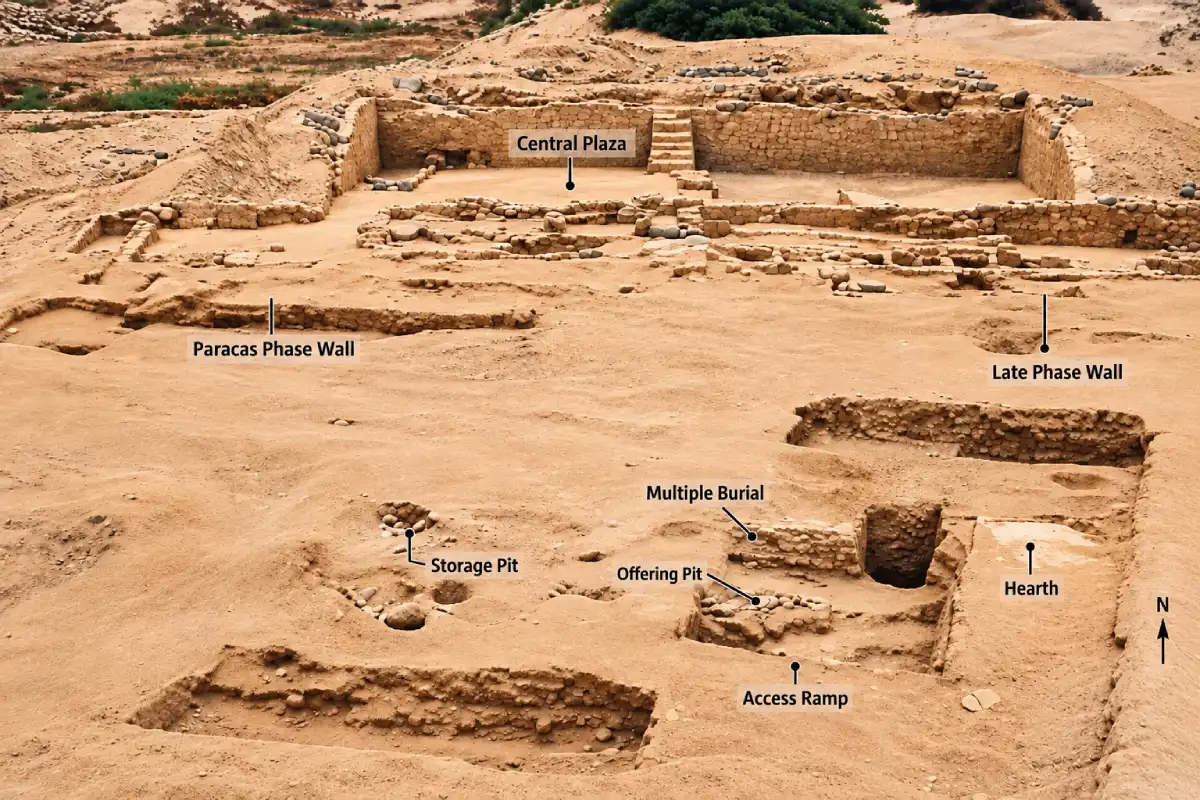
Paracas settlements combined homes with public and ceremonial spaces. In the Ica Valley, archaeologists have identified plazas, platforms, and adobe buildings at sites such as Cerrillos, one of the main centers for public and ceremonial activities.
At Jauranga, in Palpa, excavations uncovered earthen structures from different periods. Stone buildings have also been found in higher-elevation areas.
Ánimas Altas and Ánimas Bajas
Ánimas Altas and Ánimas Bajas were two parts of a large Paracas settlement in the lower Ica Valley. Together, they formed one of the most important monumental complexes associated with Paracas development in the valley, with plazas, public buildings, homes, and areas for production and storage.
At Ánimas Altas, archaeologists also identified pyramid-shaped structures, an elite tomb, and buildings decorated with friezes. These discoveries show the importance of this complex within Paracas territory.
Places to learn about the Paracas culture and explore the area
The main places to learn about the Paracas legacy are concentrated between the Paracas Peninsula and the city of Ica. Museums and archaeological areas allow visitors to see objects recovered during excavations and explore the landscape where this culture developed.
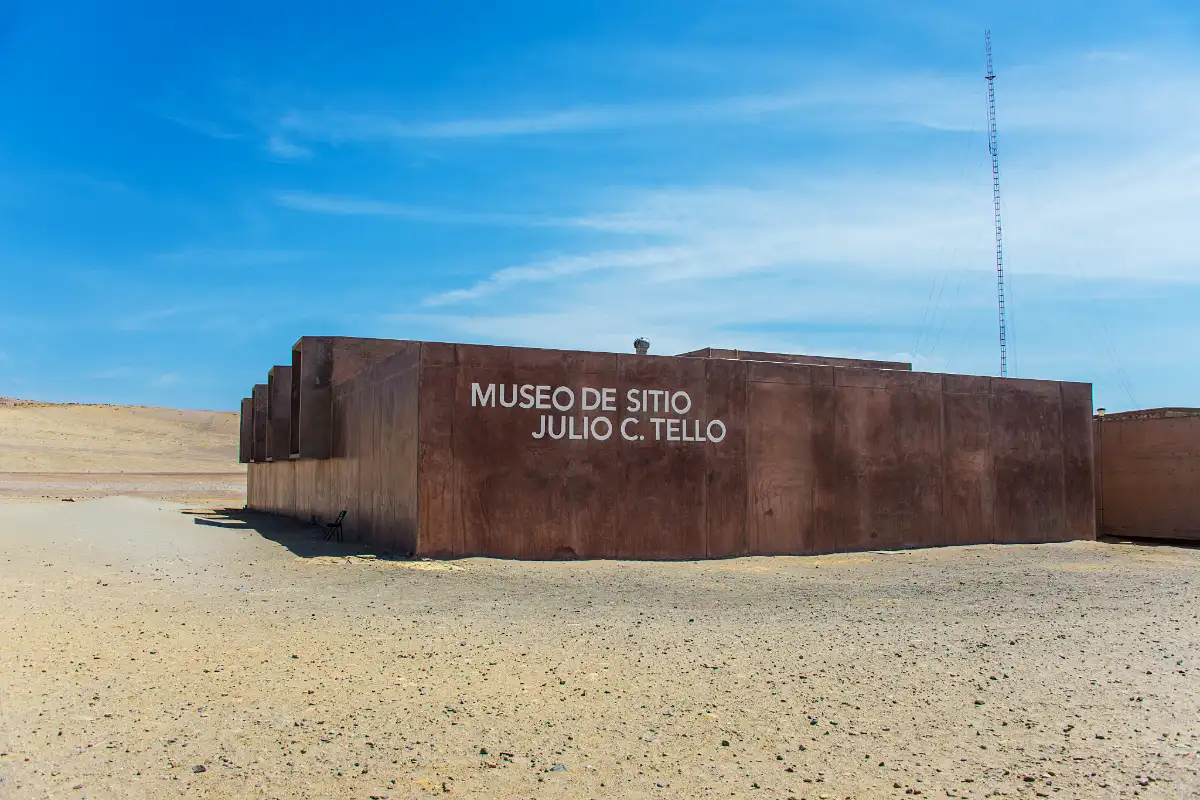
Julio C. Tello Site Museum
Located inside the Paracas National Reserve, the Julio C. Tello Site Museum focuses mainly on the Paracas culture. Its galleries display textiles, pottery, human remains, tools, and other archaeological objects that help explain its history and development.
Its location near sites such as Cerro Colorado and Cabeza Larga helps visitors understand the peninsula’s archaeological context before exploring the reserve.
The Paracas Peninsula and its archaeological sites
The Paracas Peninsula contains key sites such as Cerro Colorado, Wari Kayan, and Cabeza Larga, which are associated with some of the most important discoveries linked to this culture.
The national reserve also protects numerous archaeological sites from different periods. Many are not open to the public, so visitors must stay on authorized routes.
Ica Regional Museum
The Adolfo Bermúdez Jenkins Regional Museum of Ica preserves objects from the Paracas, Nazca, Wari, Ica, Chincha, and Inca cultures, helping visitors understand how societies developed along Peru’s southern coast.
Its bioarchaeology gallery displays mummies, modified skulls, evidence of trepanation, and trophy heads, offering a direct look at the burial practices and body modifications of the region’s ancient societies.
How to visit Paracas
Paracas is in the province of Pisco, in the Ica region, about 250 km south of Lima. Most travelers use the town of El Chaco as a base for visiting the national reserve, the Julio C. Tello Museum, and other attractions on the peninsula.
How to get to Paracas from Lima
From Lima, follow the Panamericana Sur, passing through Cañete and Chincha before taking the turnoff toward Pisco. The drive takes approximately 3.5 to 4 hours. Intercity buses are also available, with a journey time of around 4 hours.
How to get to Paracas from Ica
Paracas is about 75 km from Ica, with a journey time of approximately 1 to 1.5 hours. You can travel along the Panamericana Sur by bus, tourist transport, or private vehicle.
Best time to visit Paracas
Paracas can be visited year-round, although temperatures and wind conditions vary by season.
- December to March: Warmer days, ideal for visiting its museums.
- April to November: Milder temperatures, cool or cloudy mornings, and more wind in the afternoons.
Opening hours, admission fees, and visitor tips
According to official information available as of September 2026, these are the opening hours and admission fees for the main places to visit in Paracas:
| Place | Opening days and hours | Admission fees |
| Julio C. Tello Site Museum |
|
|
| Ica Regional Museum |
|
|
| Paracas National Reserve |
|
|

Frequently asked questions about the Paracas culture
What does the word Paracas mean?
The most commonly accepted interpretation of the name is "rain of sand," which refers to the strong winds that lift sand along this section of Peru's coast. This name was later used to identify the archaeological culture discovered on the peninsula.
What language did the Paracas speak?
We do not know for certain which language Paracas communities spoke. There are no texts that allow researchers to identify their language directly. Theories about their linguistic connections remain hypothetical, and there is not enough agreement to attribute a specific language to them.
Did the Paracas culture have a writing system?
Researchers have not demonstrated that the Paracas used a writing system comparable to those of other ancient civilizations. Some have suggested that certain textile designs may have conveyed information or served as systems of signs, but no Paracas writing system has been deciphered.
Why have Paracas textiles survived so well?
The exceptional preservation of many textiles is mainly due to the extremely dry climate of Peru’s southern coast. The low humidity in the peninsula’s burial grounds allowed fibers, embroidery, and some of their colors to survive for more than two thousand years.
Did the Paracas create geoglyphs before the Nazca people?
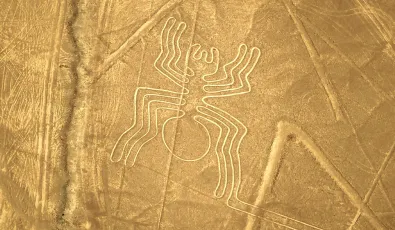
Yes. Archaeological research has identified Paracas geoglyphs that predate the famous Nazca Lines, with some dated to around 750 BCE. Examples have been recorded from Pisco to the Río Grande de Nasca basin, particularly in areas such as Chincha and Palpa.
Did the Paracas work with gold and other metals?
Yes. Gold ornaments and other objects associated with Paracas society have survived, showing that they also practiced metalworking. However, these objects are far less common and less well known than their textiles and pottery, which remain the most representative examples of Paracas craftsmanship.
Where can you see original Paracas textiles?
Original Paracas textiles can be seen at the Julio C. Tello Site Museum in Paracas and in major collections in Lima, including the National Museum of Archaeology, Anthropology and History of Peru and the Larco Museum. These collections preserve mantles, clothing, and other textiles found in ancient burials.

Add new comment