



Did aliens make them? Were they UFO landing strips? There are many theories, but what were they really? The Nazca Lines are a collection of geoglyphs etched into the desert of the Ica region, between Nazca and Palpa, in southwestern Peru. They were created between approximately 500 B.C. and 500 A.D. by the Nazca culture, who removed dark stones from the desert surface to reveal lighter-colored soil, which gives the lines their distinctive hue. The site includes long straight lines, geometric figures, and depictions of animals, plants, and humans. Although their exact purpose is still debated, recent research links them to ritual practices and ceremonial paths.
In this guide, you’ll find a more detailed explanation of their origin, shapes, purpose, and how to visit them on your own without missing a single detail. Let’s get started!
What are the Nazca Lines?
The Nazca Lines, also known as the Nasca Lines by UNESCO and some Peruvian institutions, are a series of geoglyphs; figures drawn on the ground, that cover an area of approximately 500 km² in the Ica Desert, about 420 km southwest of Lima. Many of these geoglyphs can be seen from the air or from elevated viewing platforms. They were created by the pre-Inca Nazca culture between 500 BC and AD 500.
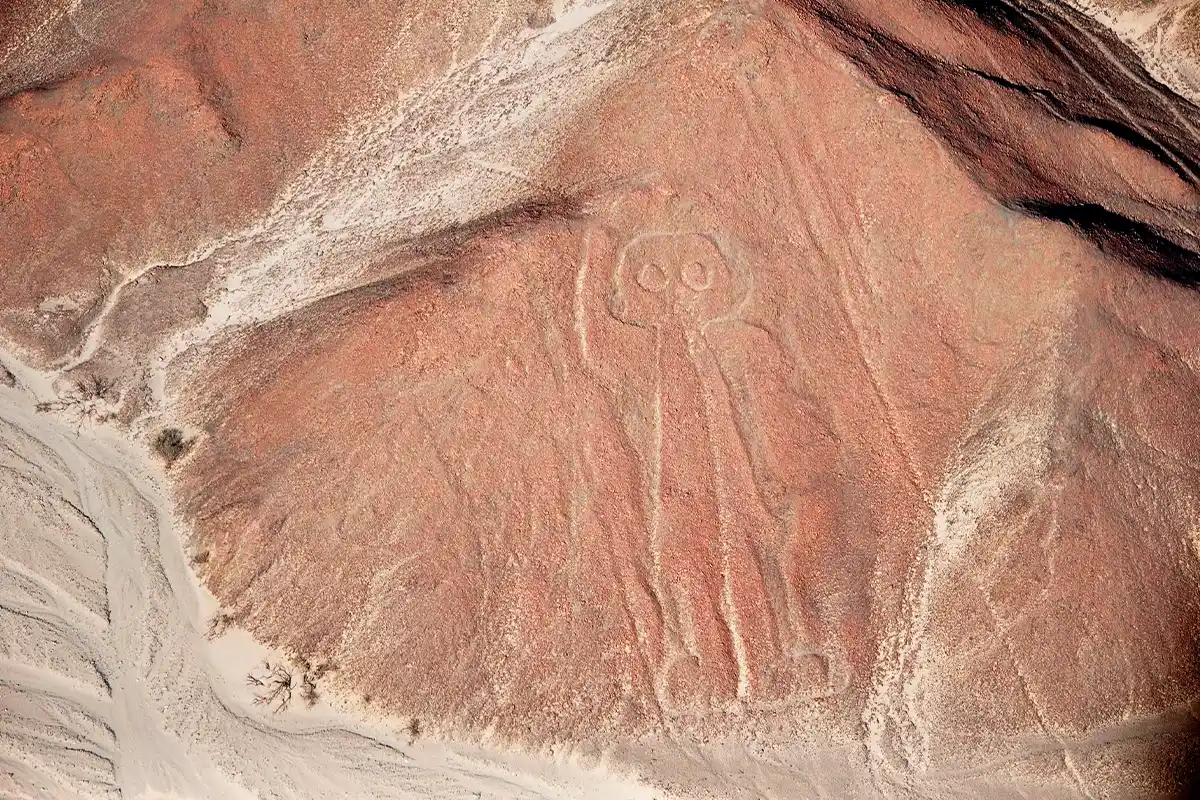
These figures are divided into four main types:
- Straight lines: These are the most common. They range from 40 cm to 2.5 meters wide and can stretch for several kilometers.
- Rectangular or triangular figures: These are believed to have served as gathering places during Nazca religious ceremonies.
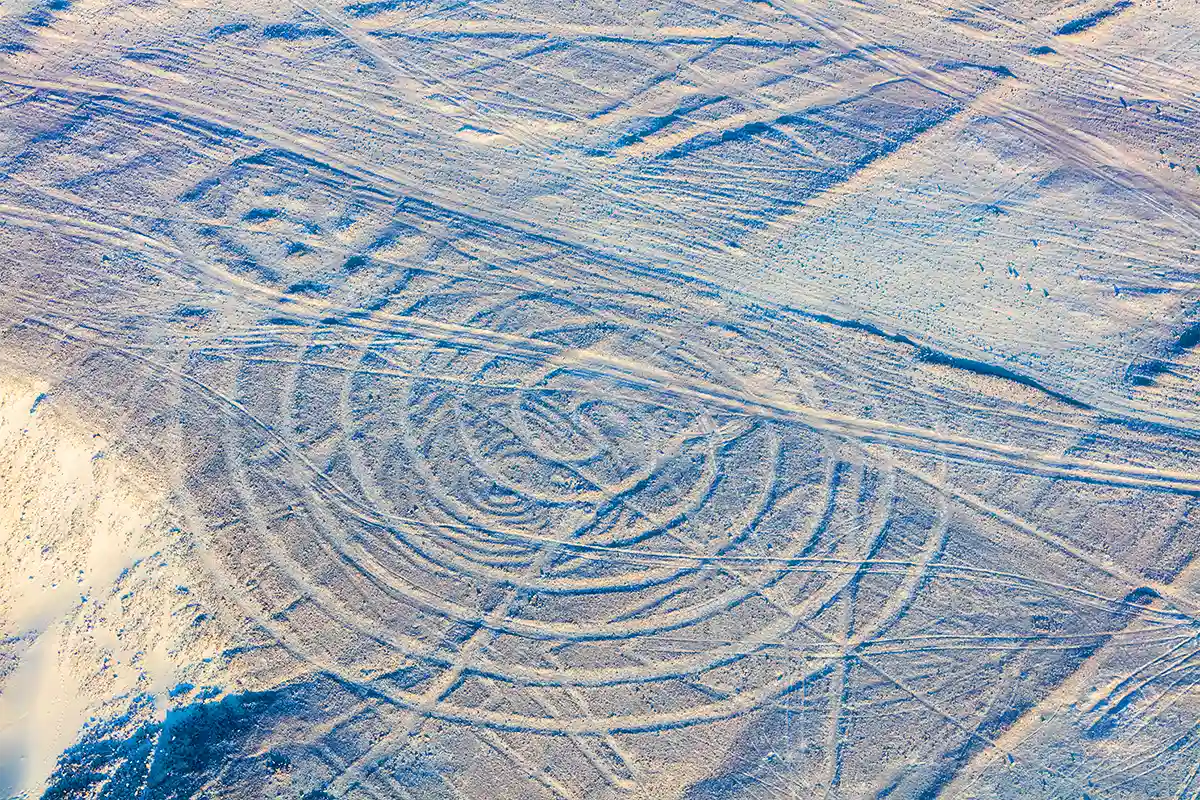
- Geometric shapes: These include zigzag lines and spirals.
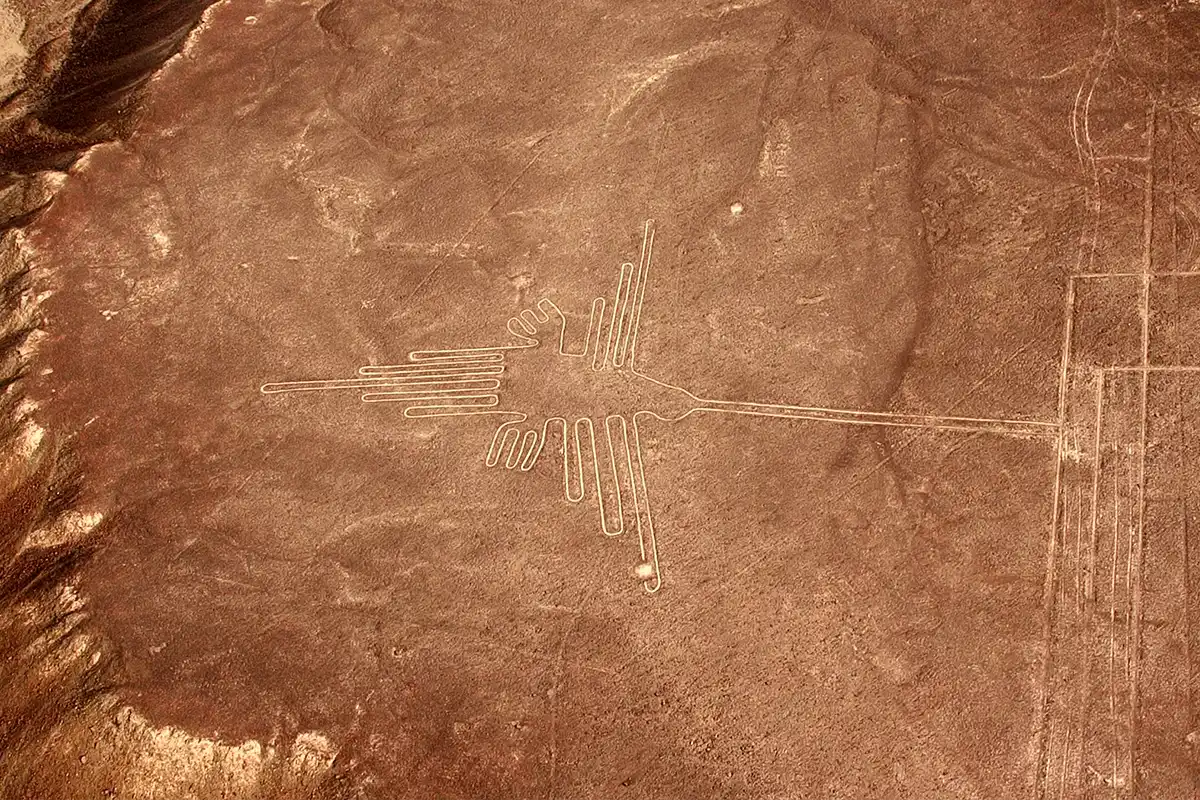
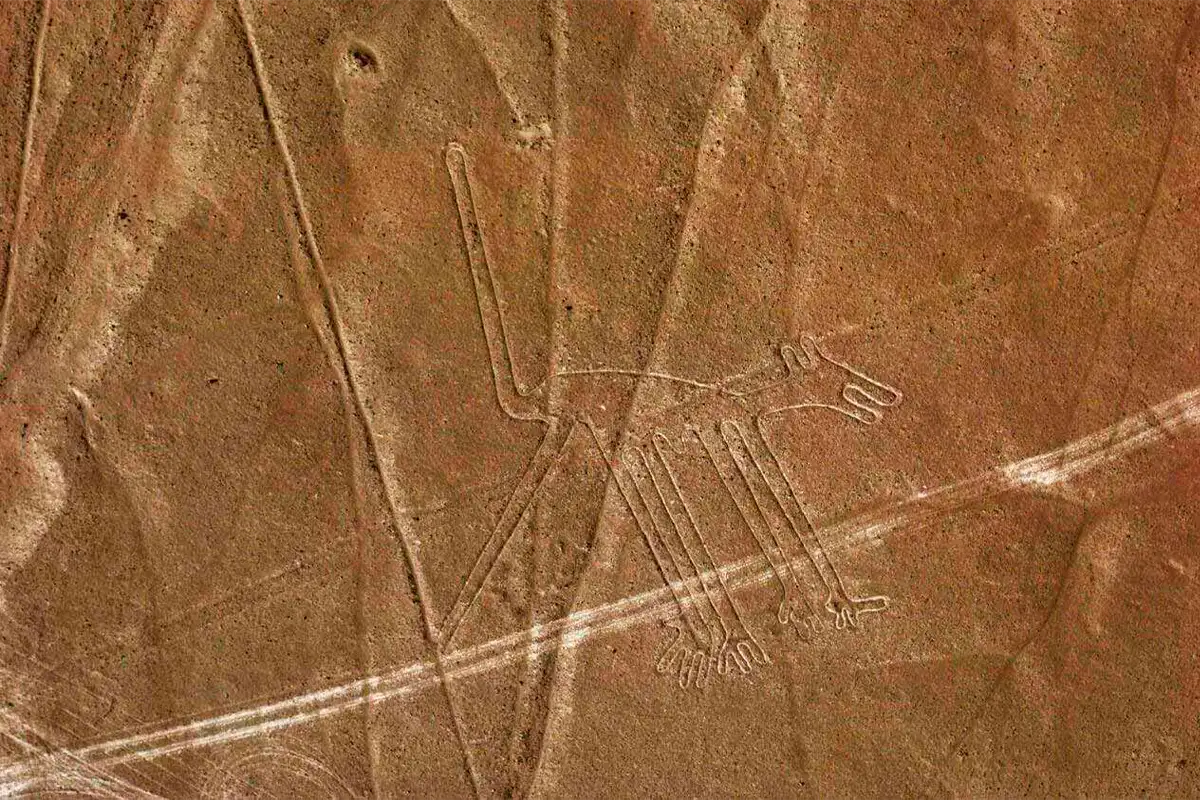
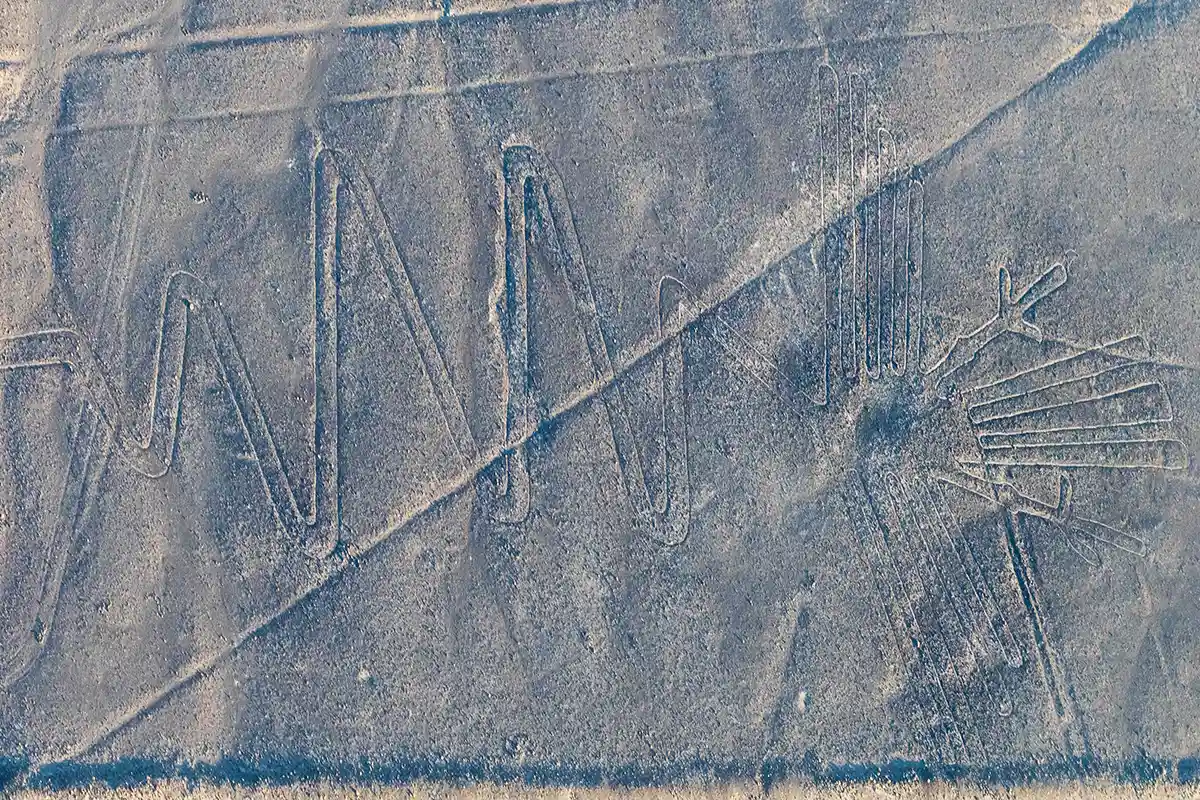
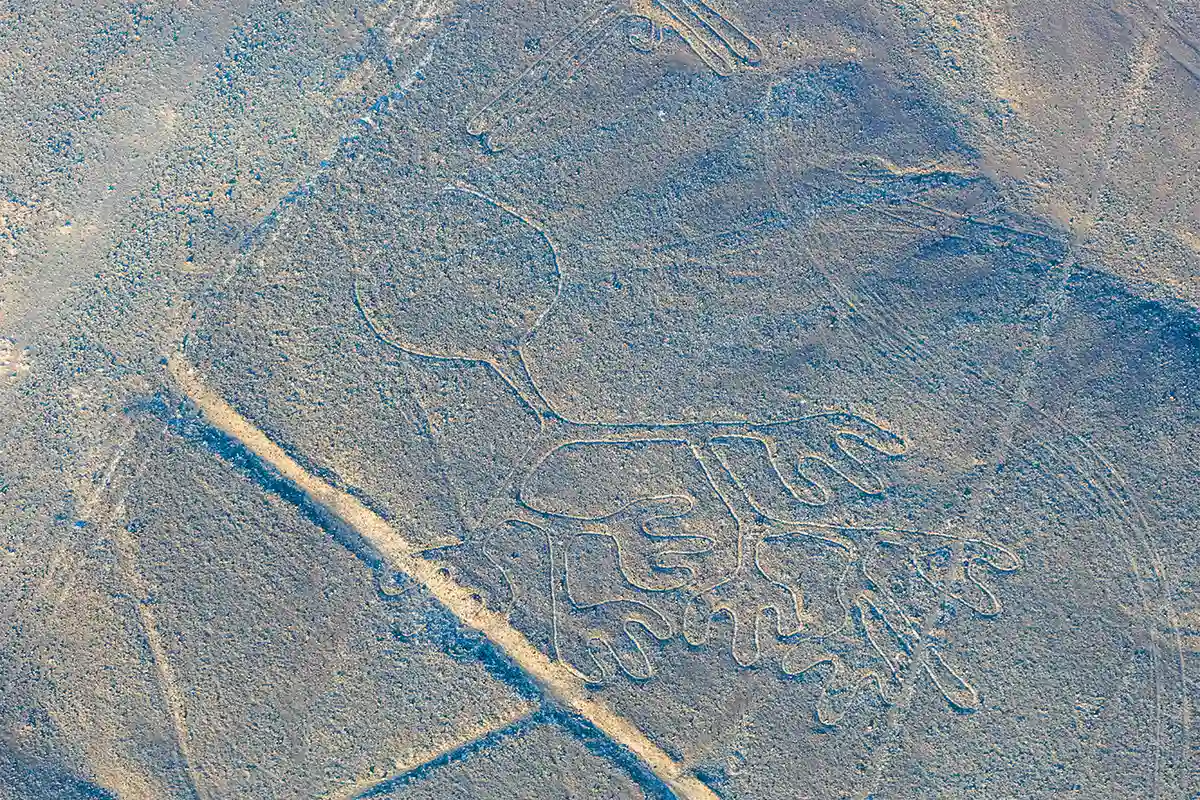
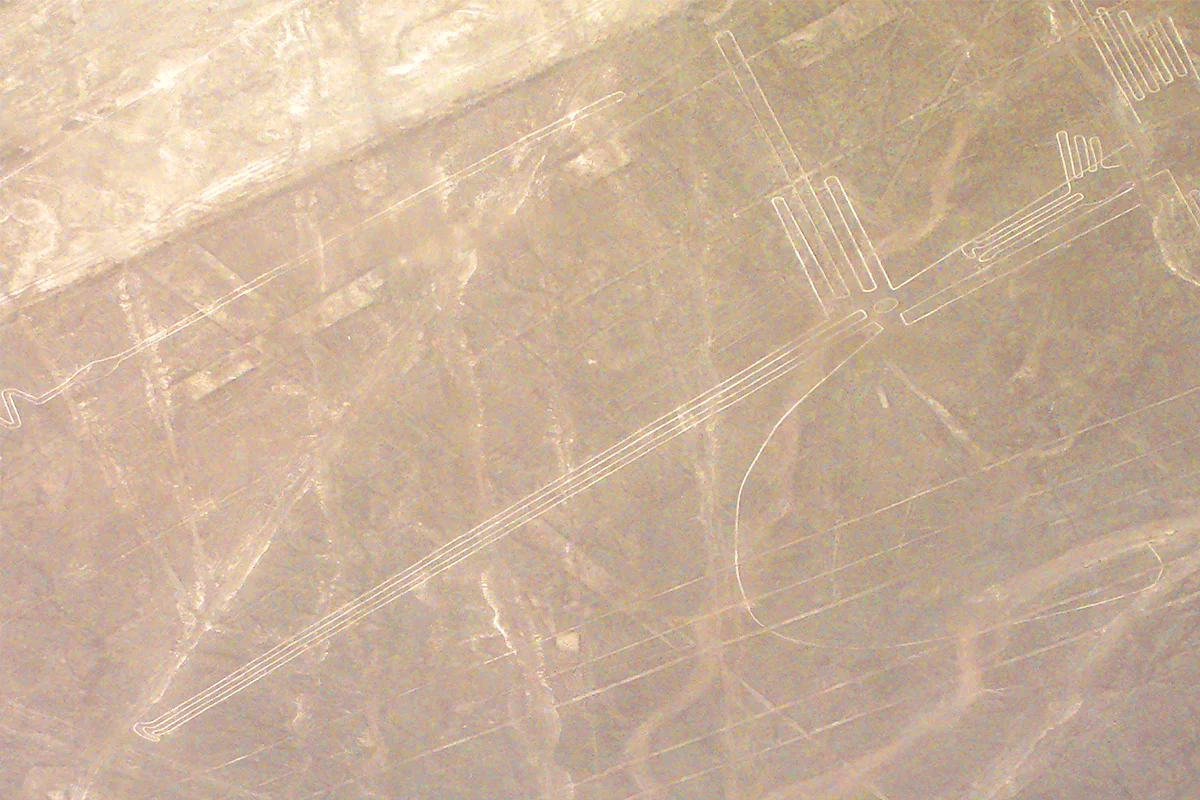
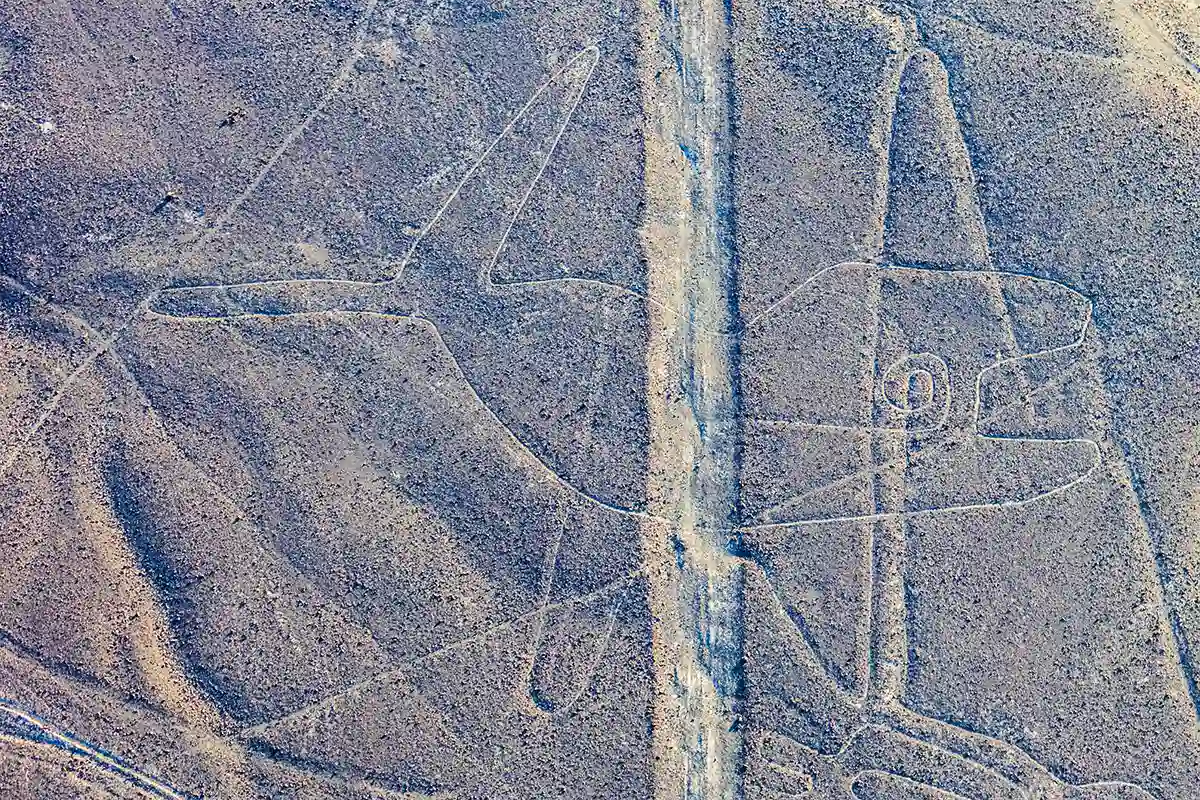
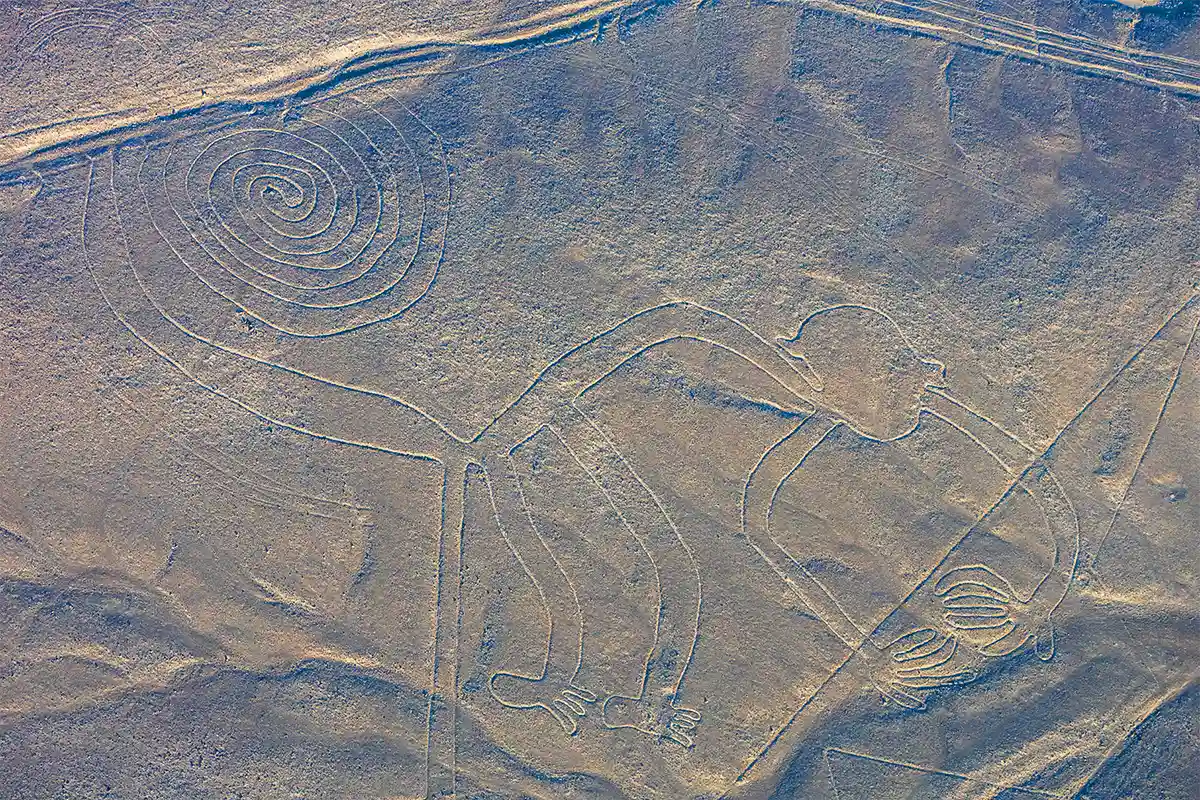
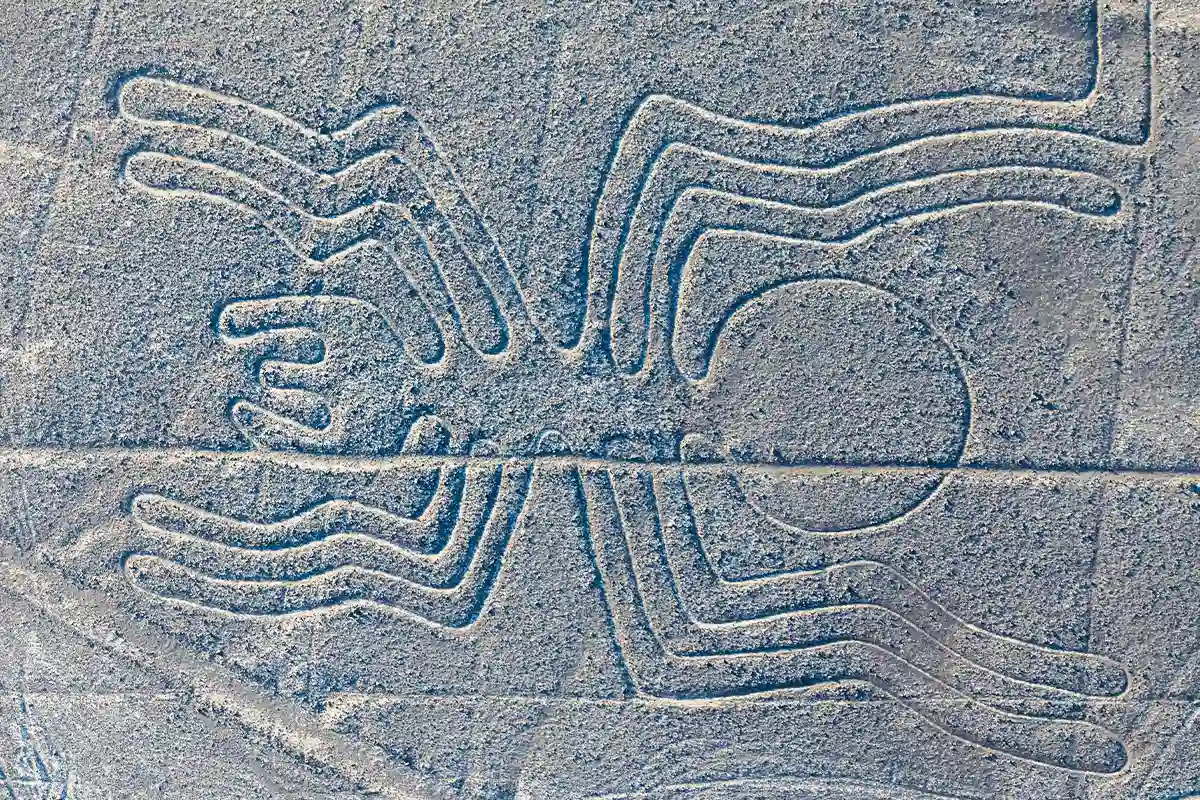
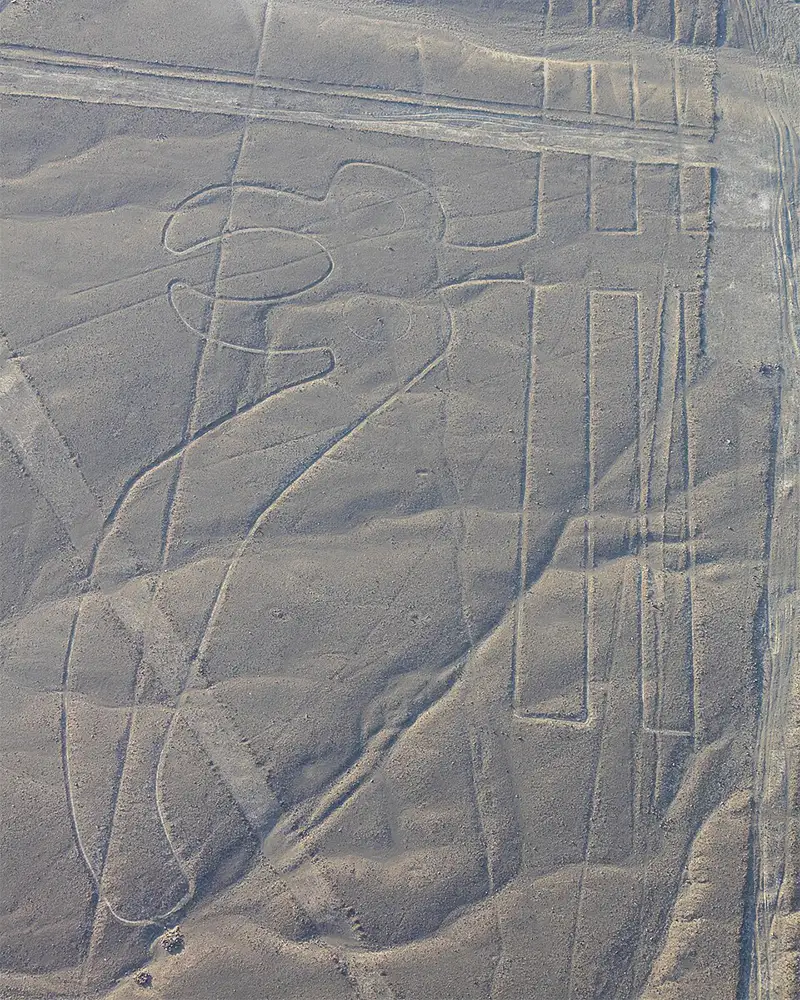
- Figurative geoglyphs: There are just over 30 known examples, mainly featuring animal shapes such as the spider, hummingbird, dog, and monkey. There are also unusual human-like figures, including the one popularly known as "The Astronaut."
History of Nazca Lines
The Nazca geoglyphs were designed and created by the culture of the same name. Across the Nazca and Palpa plains on Peru’s southern coast, its people skillfully traced hundreds of enormous shapes, some reaching up to 275 meters in length, over a period of approximately 1,000 years.
The Nazca Culture
The Nazca culture developed in southern Peru between 200 BC and AD 800. The city of Cahuachi, located southwest of the lines, served as its capital and ceremonial center and contained numerous pyramid-shaped structures. Its people practiced mummification by placing their dead in funerary bundles and allowing the dry climate to naturally dehydrate the bodies. The bundles were later placed in shared burial chambers, where different ceremonial rituals were performed.
This culture was also well known for its pottery. Mythological figures and characters from the Nazca supernatural world were painted on ceremonial vessels and tableware. Some containers were even shaped like these mythical beings, including the "Nazca Killer Whale." Many of the same figures also appear among the geoglyphs.
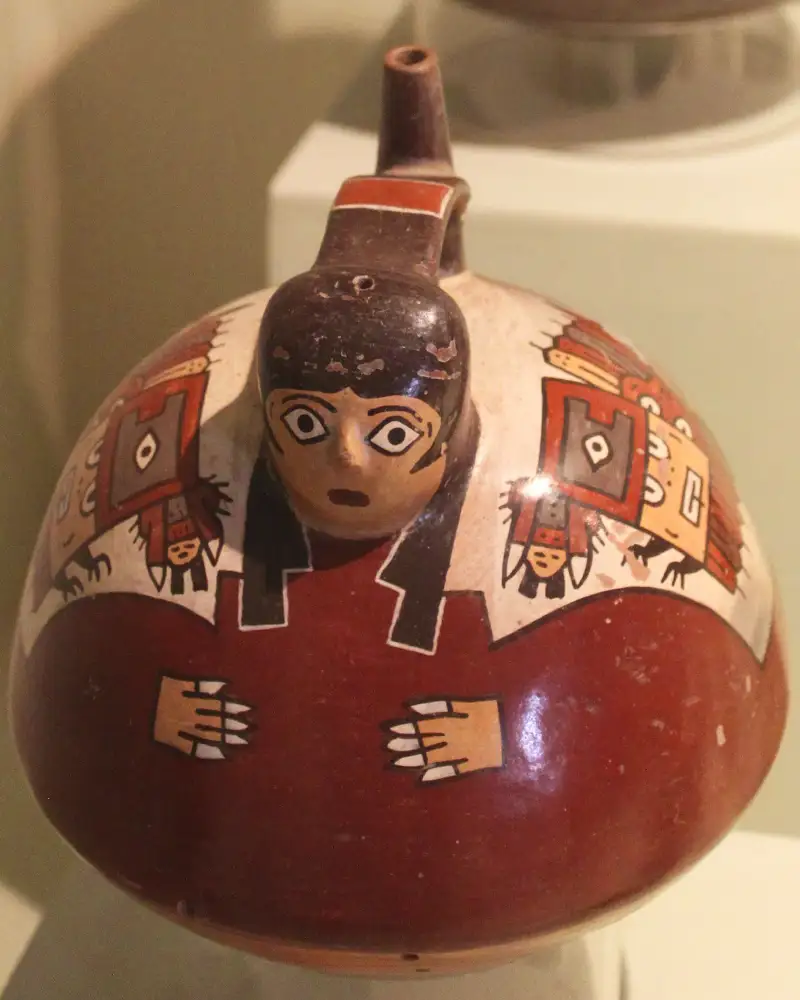 | 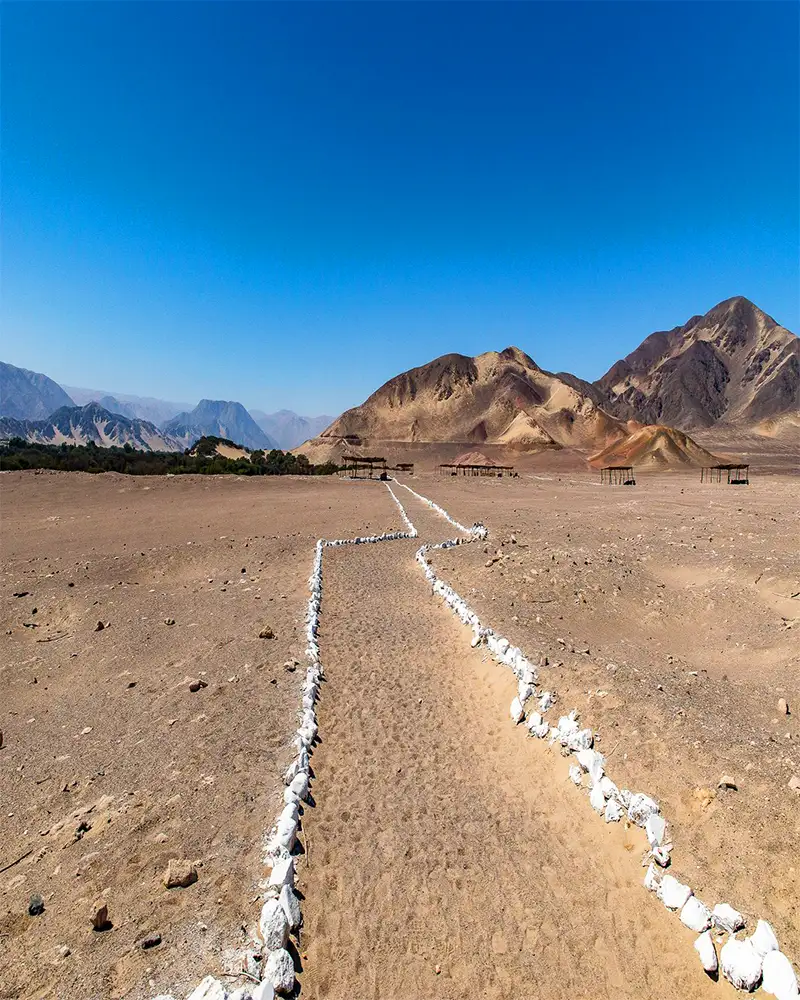 |
The Nazca people were able to settle in one of the driest deserts on Earth and farm the land using advanced underground channels that brought water up from beneath the surface. Maintaining this advanced hydraulic system made it possible to support a large population. Evidence of its effectiveness can still be seen today, as some of these channels continue to supply water to local residents.
It is believed that the culture began to decline after its population grew beyond what the local environment could support. This, combined with the overuse of the huarango tree, the only tree that grew in the area and an important source of wood for daily life, may have accelerated the decline of the culture or forced its inhabitants to migrate elsewhere.
How They Were Made
Several studies have revealed how the Nazca Lines pictures may have been designed and traced. First, Nazca potters drew scaled versions of the figures on ceramics or vessels. These designs were then enlarged and transferred onto the desert plains using grids marked on the ground with stakes and ropes. A designer may have supervised the work from nearby hills.
Once the design had been marked, workers removed the dark, oxidized stones from the upper layer of the desert surface to a depth of between 10 and 30 centimeters, exposing the lighter soil underneath. The removed stones were placed along the edges of the lines to create even greater contrast.
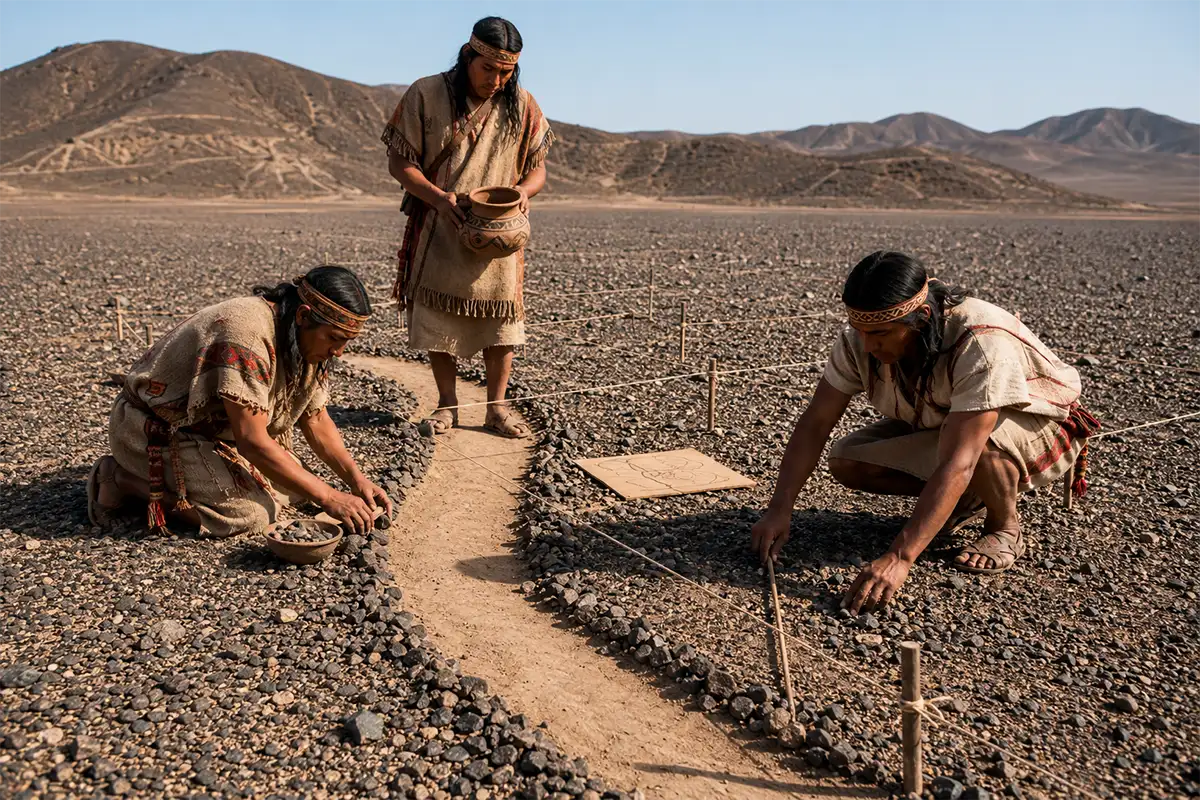
The dark stones absorb heat, creating a layer of warm air that pushes ground-level gusts upward. Together with the lack of rainfall in the area and the stability of the desert surface, this helped preserve the lines until the present day.
Who Discovered the Nazca Lines?
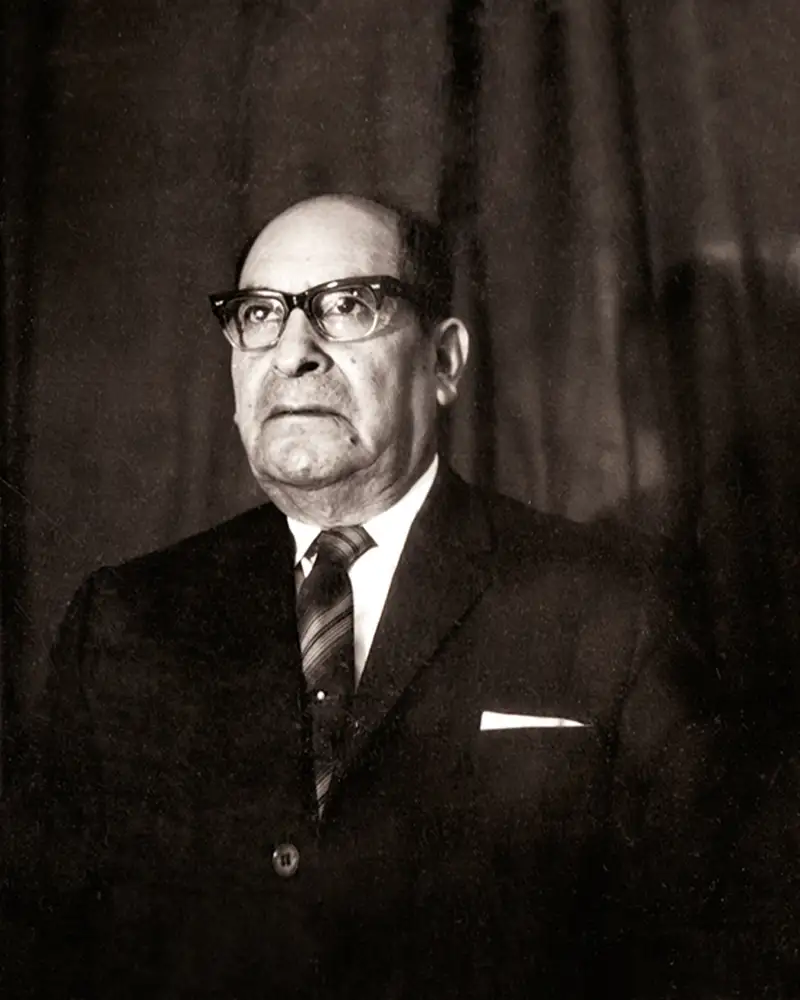
The lines were discovered in 1927 by Peruvian archaeologist Toribio Mejía Xespe while he was walking through nearby hills with Julio C. Tello as part of a research expedition. He carried out an initial study and described them as "Sacred Roads" or ceques.
In the 1930s, with the beginning of commercial aviation, pilots flying over the area were able to see the lines more clearly, bringing them to wider public attention.
In 1939, American anthropologist Paul Kosok conducted a more formal study of the figures and described the entire complex as a giant astronomical calendar.
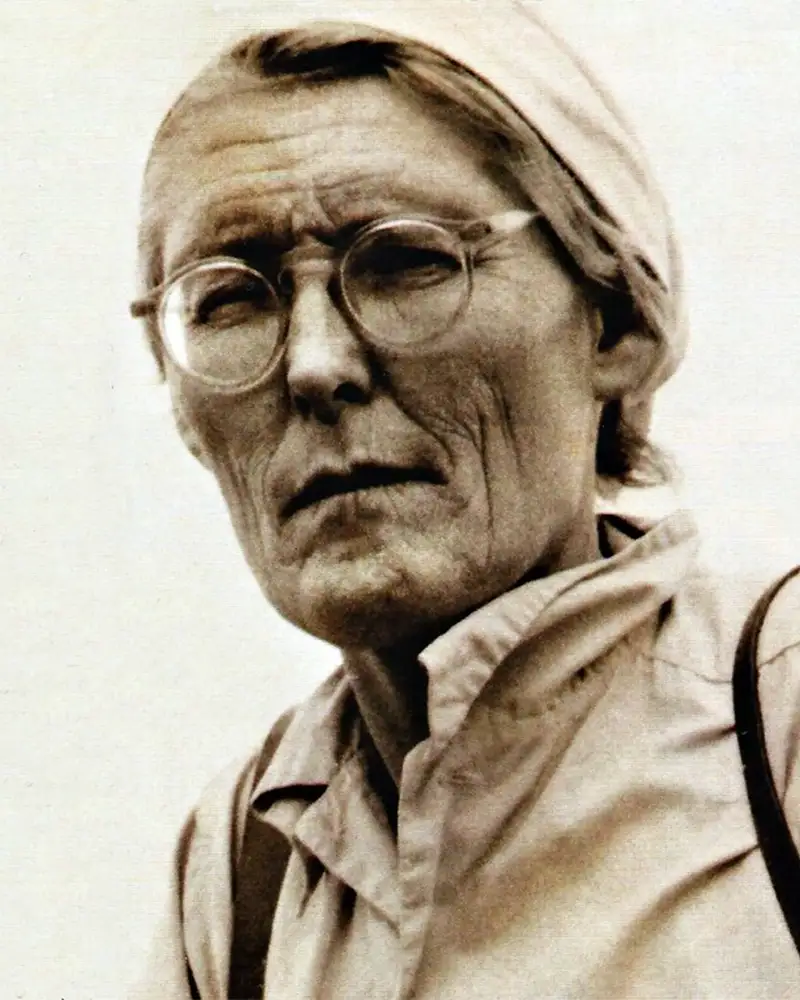
In 1940, María Reiche, a German mathematician and geographer, arrived in Peru after meeting Paul Kosok. She dedicated more than 50 years of her life to cleaning, measuring, studying, and protecting the lines. Thanks to her tireless efforts, the Nazca Lines were declared a UNESCO World Heritage Site in 1994.
Nazca Lines theories
Since the discovery of the Nazca figures, many researchers have tried to explain their possible purpose. Some claim they were alien landing strips, while others suggest they were created with extraterrestrial help. However, four scientific theories are more widely accepted among academics to answer the question What was the purpose of the nazca lines?
 |  |
- Toribio Mejía Xesspe, who first studied the lines, believed they were ceremonial routes. The Peruvian archaeologist suggested that these markings served as paths for processions and religious ceremonies performed by the Nazca people. Recent discoveries of lines leading toward Cahuachi support the idea that some routes may have guided ritual access to the city.
- Another theory suggests that certain figures represented Nazca deities seen during shamanic experiences involving psychedelic substances. Although the geoglyphs appear to be connected to Nazca beliefs and ceremonies, accurately reconstructing the Nazca religion remains difficult for archaeologists.
- One of the most widely studied interpretations connects the Nazca geoglyphs with rituals honoring water and the mountains where it originated. American researcher David Johnson even proposed that the Nazca Lines formed a large map of the Nazca underground water system, with some figures marking water sources beneath the desert. However, there is still no conclusive evidence.
- María Reiche believed that the geoglyphs were connected to astronomical events and calendars. Her ideas were consistent with the research of her friend Paul Kosok, who described the lines as a great book of astronomy. Although these theories were later questioned, they have not been completely dismissed and are still being studied.
Most important Nazca Lines
 |  | 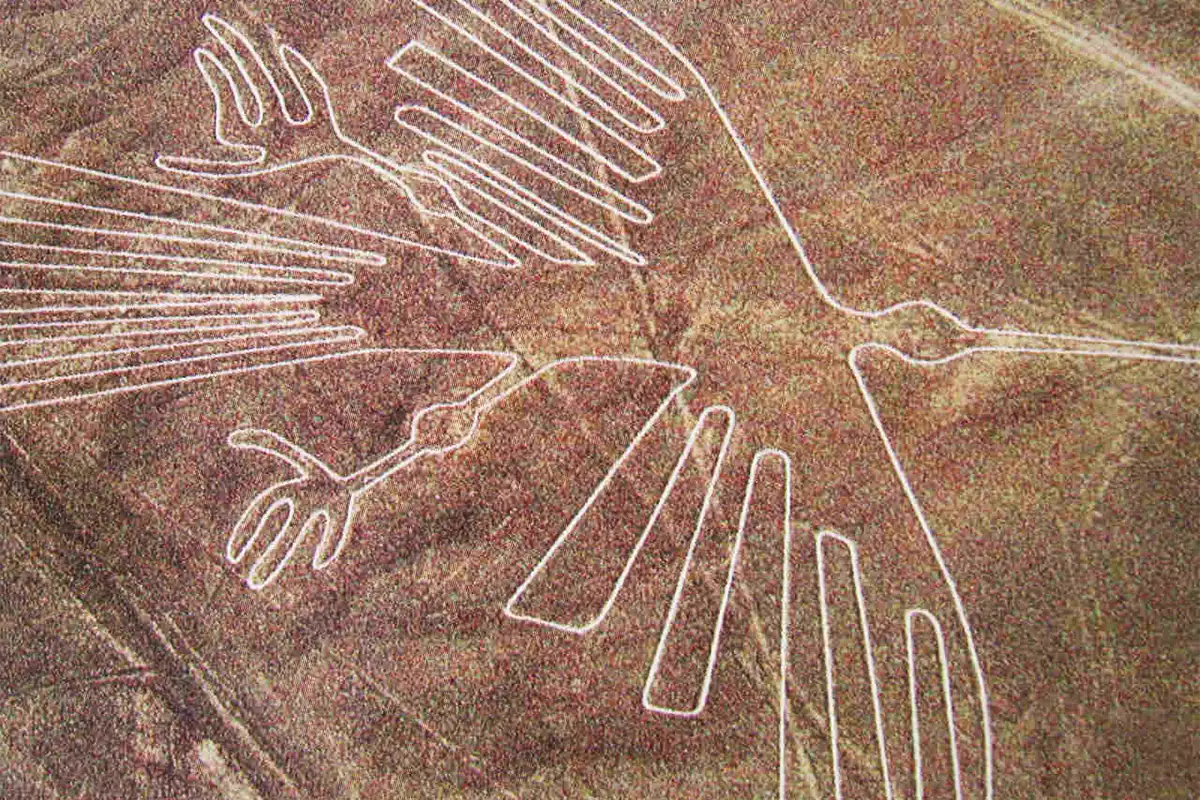 |
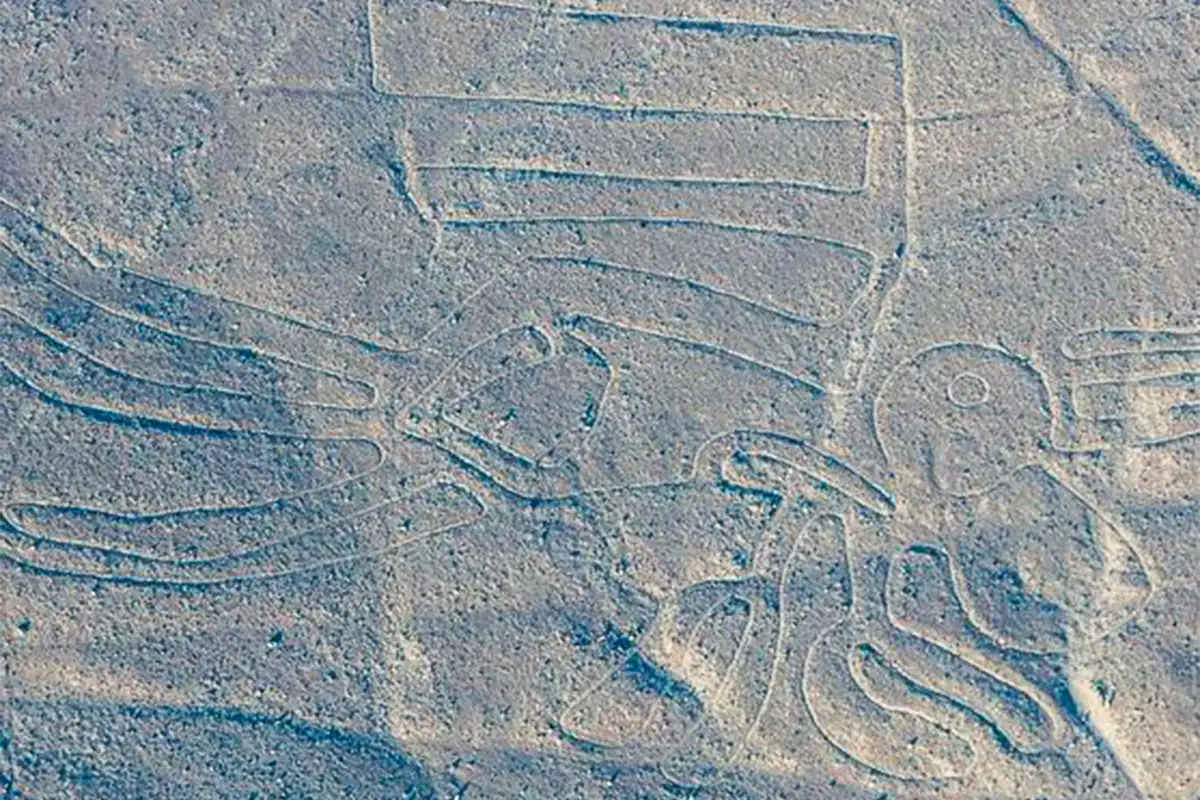 | 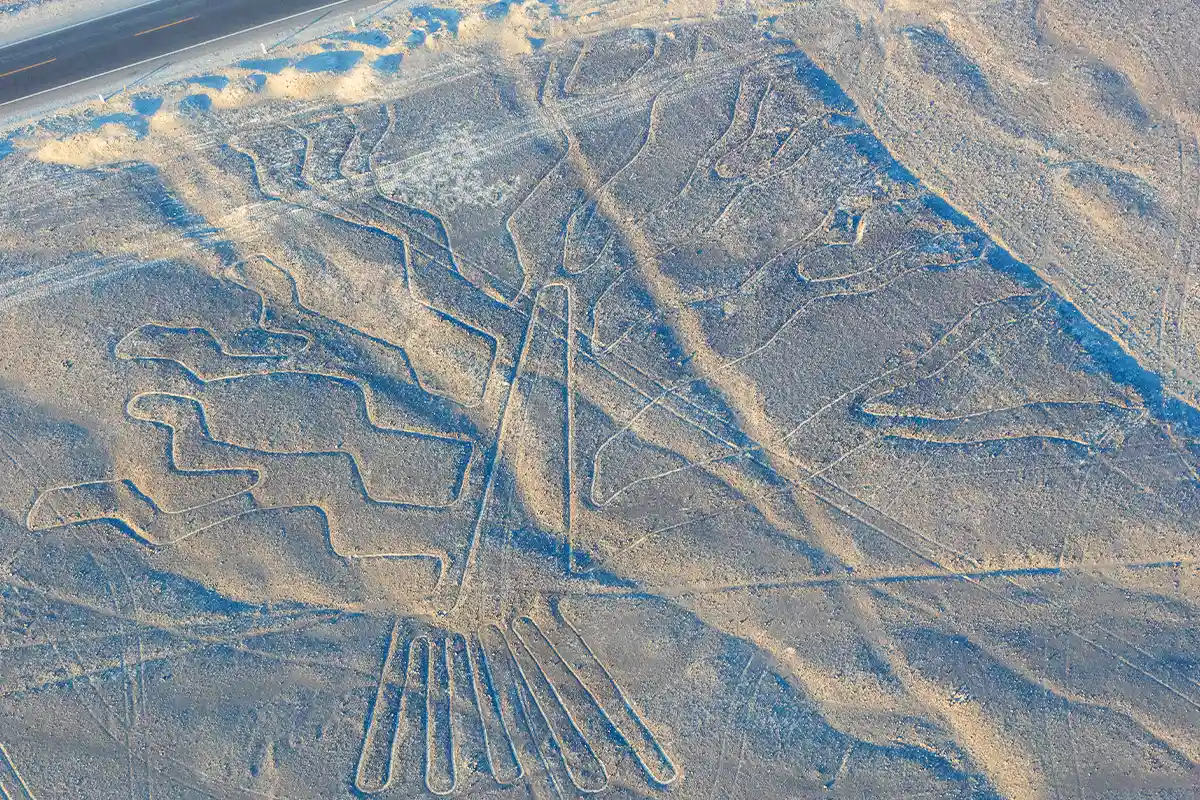 |  |
 |  |  |
 |  |  |
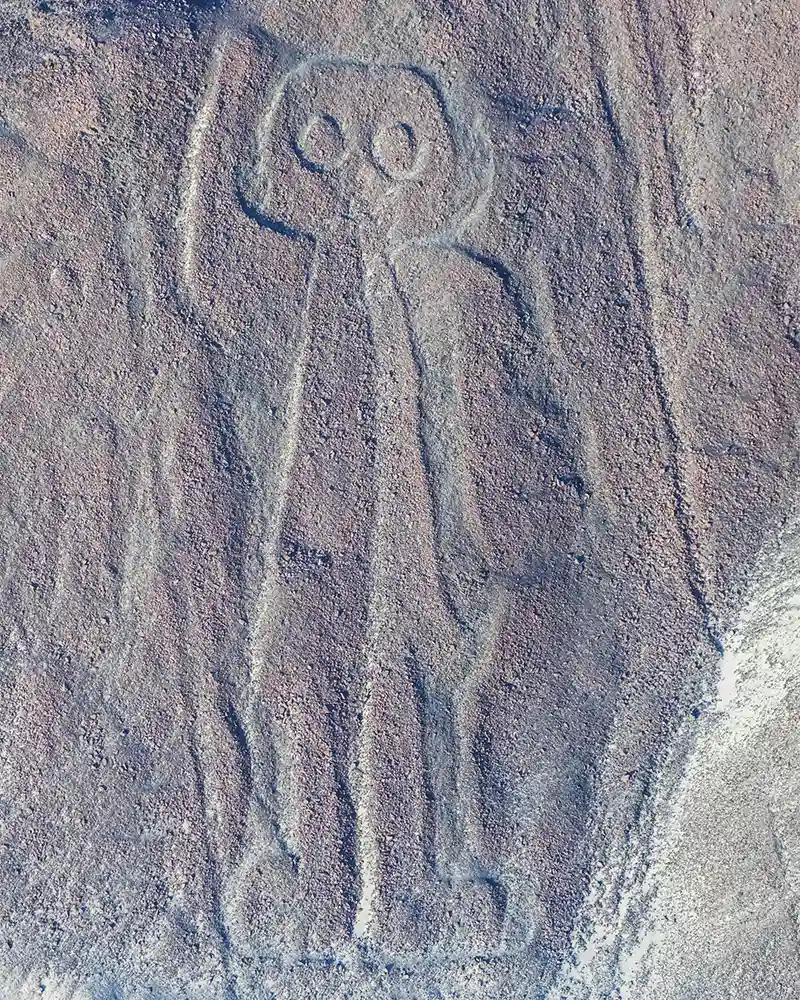 | 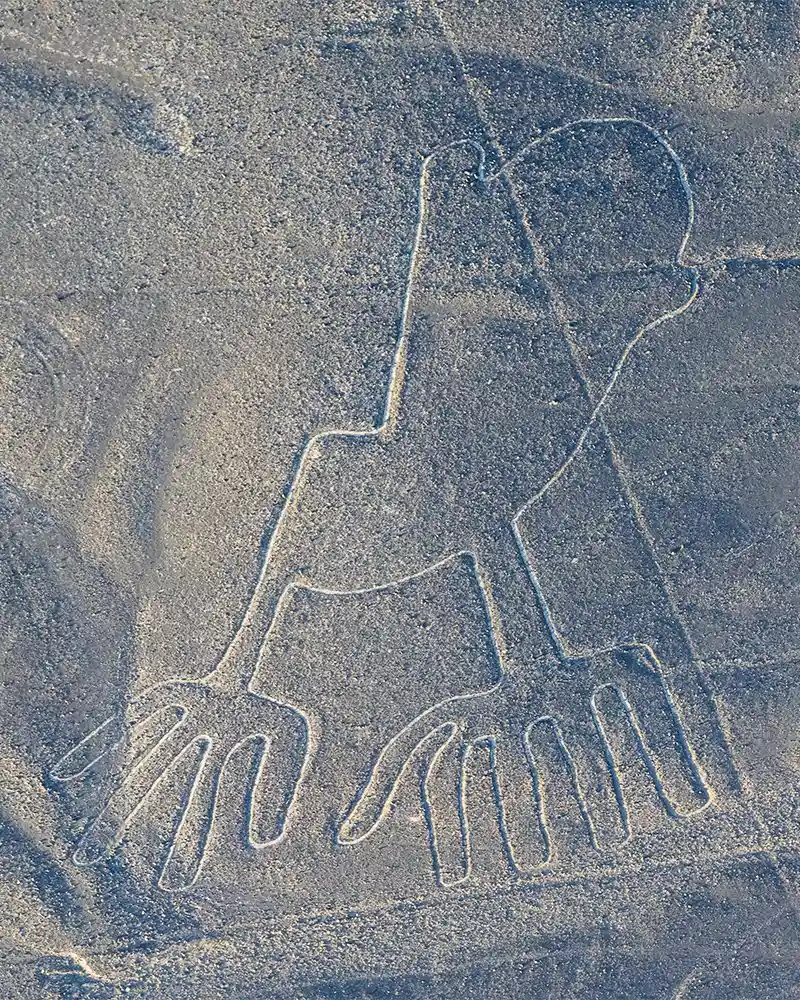 |  |
Recent Discoveries
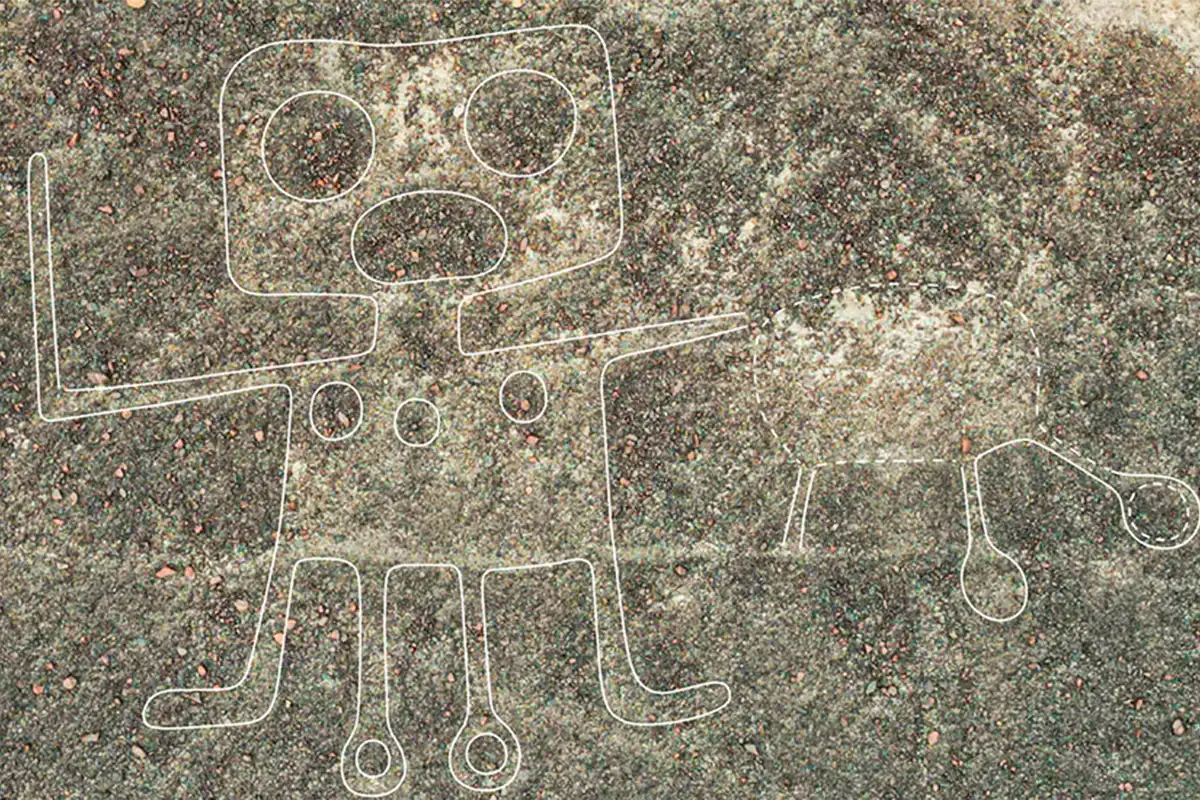
Using advanced technology, Japanese experts have discovered geoglyphs that were previously unknown. More than a hundred have been identified, ranging from familiar shapes such as snakes and monkeys to unusual figures like a humanoid holding a staff, whose meaning remains unknown.
In a statement, Yamagata University, which supported the study, suggested that these newly discovered geoglyphs were created between 100 BC and AD 300. Unfortunately, most of them are in poor condition.
In addition to carrying out extensive fieldwork, the experts used an artificial intelligence model capable of producing high-resolution images to help locate the geoglyphs.
How to observe the Nazca Lines
Scenic Flight (The Best Experience)
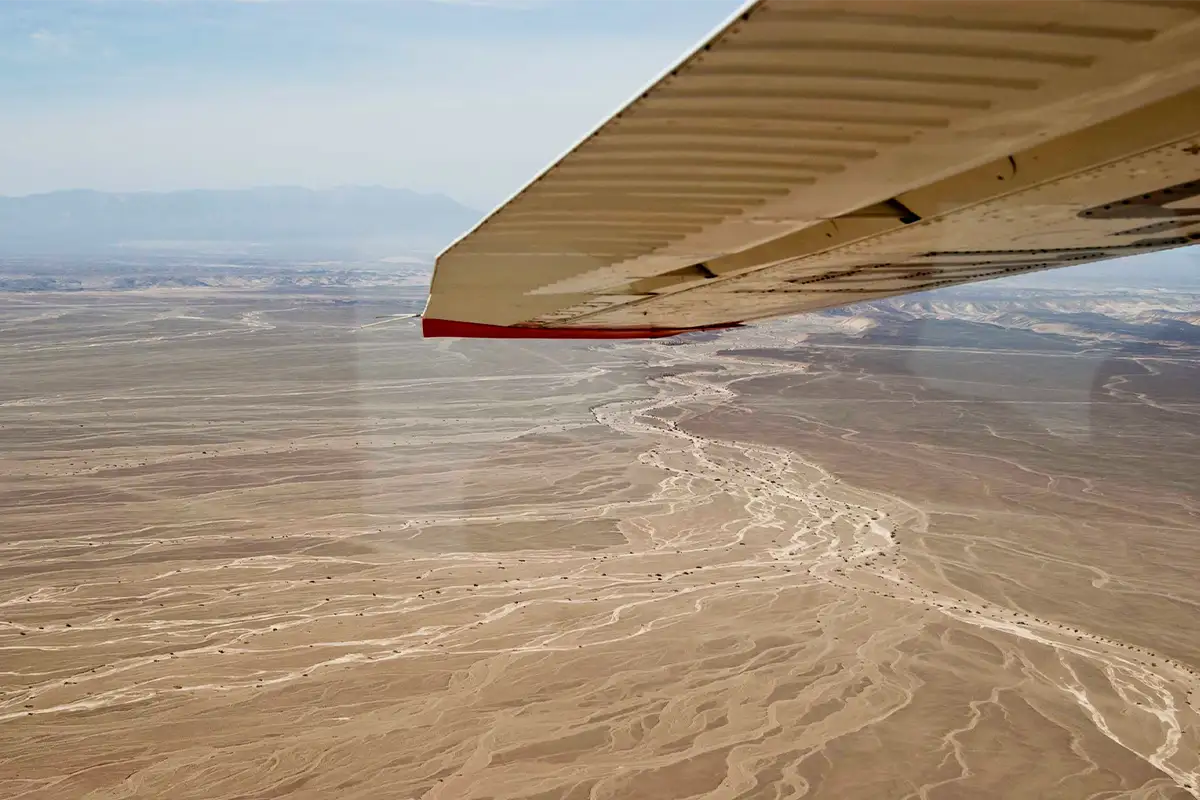
Because the figures are enormous geoglyphs drawn across the desert, the best way to see their complete shapes and details is from the air. Flights depart from the following locations:
- María Reiche Airfield (Nazca): This is the most popular option. The flight lasts between 30 and 35 minutes and passes over 12 to 14 of the main figures, including the hummingbird, monkey, spider, and astronaut. Prices range from US$ 70 to US$ 120 per person.
- Pisco, Paracas, or Ica Airport: This option is ideal if you are traveling directly from Lima or Paracas and have limited time. The flights are longer, lasting approximately 1 hour and 45 minutes from Pisco. The cost is around US$ 150 per person.
Recommendations:
- Book in advance: This is especially important during the high season.
- Preventing motion sickness: The small planes make steep turns in both directions so that every passenger can see and photograph each figure. Try to fly early in the morning and consider taking a motion-sickness tablet such as dimenhydrinate before boarding.
Metal Viewing Tower on the Pan-American Highway (Land-Based Option)
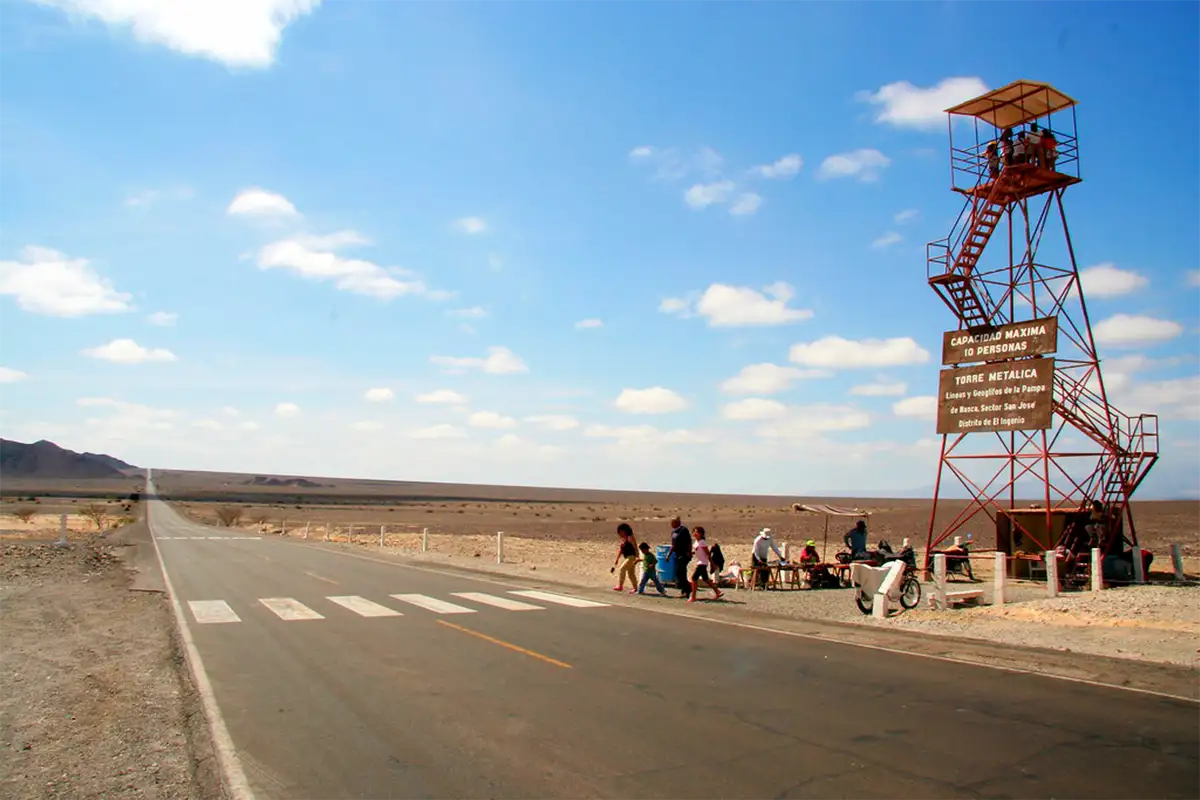
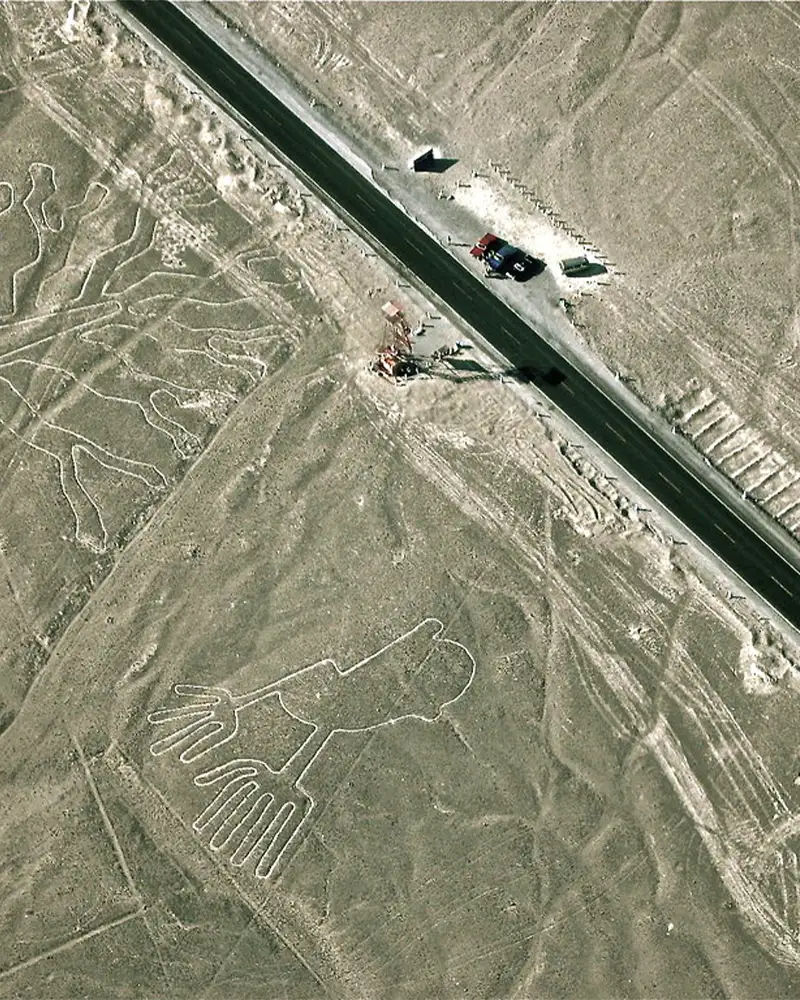
If you prefer not to fly or are traveling on a smaller budget, you can visit the Nazca Lines Viewing Tower. This metal tower stands beside the Southern Pan-American Highway, about 20 kilometers from the city of Nazca.
- What you can see: From the top of the platform, which is about 13 meters high, you can clearly see two main figures: the Hands and the Tree. You can also see part of the Lizard, which was cut by the construction of the highway, along with several straight lines.
- Cost and access: Admission to the tower is affordable, costing approximately 5 soles or US$ 2. You can reach it by taxi, shared taxi, or an intercity bus traveling toward Ica or Nazca.
Natural Hills and Nearby Viewpoints
To make the most of your visit by land, you can also explore several nearby natural viewpoints:
- Palpa Viewpoint (Cerro Sillache): Located in the Palpa area, about 30 minutes north of Nazca, this viewpoint offers views of human-shaped geoglyphs created by the Paracas culture before the Nazca period, including the figure known as the "Paracas Family."
- Surrounding hills and slopes: Along some sections of the highway, you can climb small natural hills and see several trapezoids and geometric lines spread across the desert plain.
How to get to the Nazca Lines
The fascinating mystery surrounding these geoglyphs has made them one of most popular Peru tourist attractions. If you are planning to visit them, here is everything you need to know. There are several ways to reach Nazca, so you can choose the option that works best for you.
Where Are the Nazca Lines Located?
The Nazca Lines are located on the Jumana Pampas in the Ica region of southern Peru. The town of Nazca lies about 420 kilometers south of Lima, at an elevation of 600 meters above sea level.
There are several ways to reach the Nazca Lines, depending on where you are traveling from in Peru. Below are the most common options.
From Lima
1. From Lima by Bus
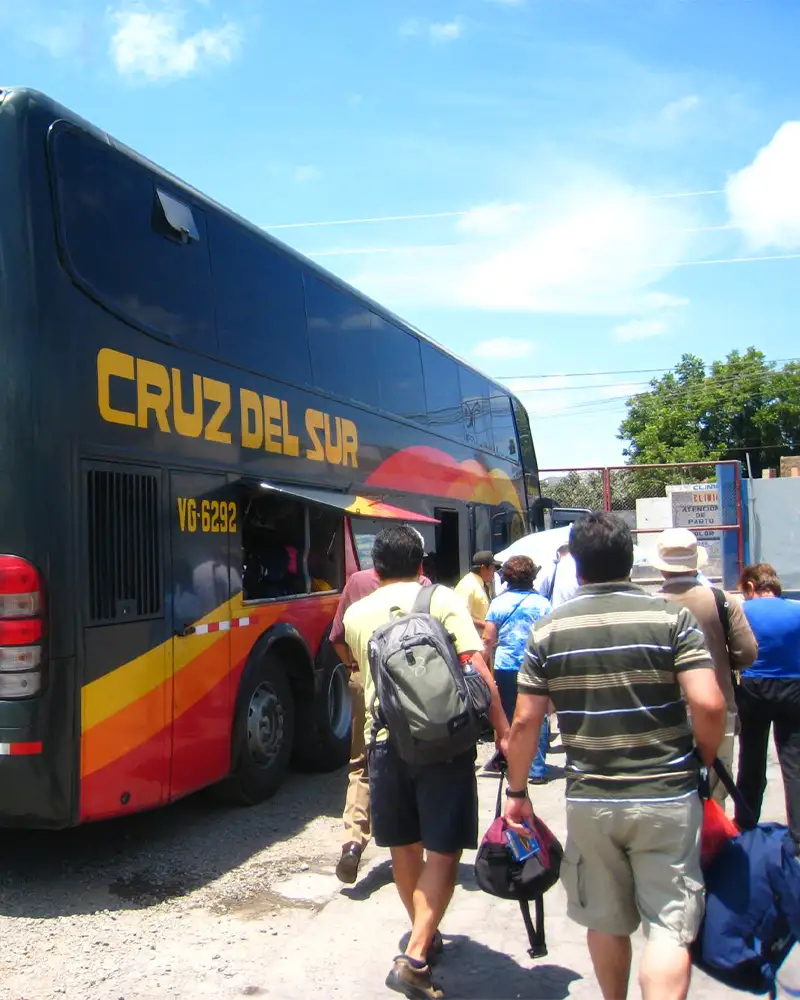
Several intercity bus companies travel from Lima to Nazca. The journey takes between 7 and 8 hours, depending on the number of stops. Most buses leave from the companies' private terminals along Javier Prado Avenue. One-way tickets cost between 110 soles (US$ 33) and 160 soles (US$ 48) per person.
2. From Lima by Car
You can rent a car and drive approximately 440 kilometers along the Southern Pan-American Highway.
3. From Lima by Plane
You can take a commercial flight from Lima to Ica, the closest city to Nazca with airport facilities. A one-way ticket costs around US$ 70 per person, and the flight takes approximately 1 hour. There is only one flight per day.
From Ica, you will need to take an intercity bus to Nazca. Tickets usually cost around 80 soles (US$ 24), and buses leave throughout the day.
 |  |
From Arequipa or Cusco
From Arequipa
A direct bus runs from Arequipa to Nazca. The service departs every 4 hours and operates daily. The 568-kilometer journey takes approximately 9 hours and costs around 100 soles (US$ 30) per person, one way.
You can also rent a car and complete the journey in almost 7 hours.
From Cusco
You can take a bus from the main terminal in Cusco. The 645-kilometer journey takes approximately 15 hours. Tickets cost around 180 soles (US$ 53).
The drive takes approximately 10 hours and 30 minutes.
Best time to visit them
Nazca is located in a coastal desert and has a dry climate throughout the year, but flight conditions and overall comfort vary depending on the season.
April to November (Best Time to Visit)
- Conditions: Clear skies, dry weather, and pleasant temperatures ranging from 20 °C to 28 °C.
- Advantage: Excellent visibility during the flight and a lower chance of cancellations caused by fog or strong winds.
- Best months: May to September usually offer the most stable weather, making them ideal if you are also traveling during the dry season in the Peruvian Andes.
December to March (Coastal Summer)
- Conditions: Very hot weather, with temperatures often reaching 30 °C to 35 °C.
- Disadvantages: There may be more haze or strong winds in the afternoon. In January and February, clouds and occasional light rain along the coast can also delay or cancel early morning flights.
Best Time of Day (Essential for the Flight)
The time of your flight can be just as important as the season:
- Early morning flights (7:00 a.m.–10:00 a.m.): This is usually the best time to fly. There is less wind turbulence, the sun is not too intense, and the morning light creates shadows and contrast that make the geoglyphs easier to see and photograph.
- From 11:00 a.m. onward: The sun shines more directly overhead, reducing the shadows around the lines. Stronger air currents, locally known as paracas winds, may also develop and increase turbulence during the flight.
Tips for Your Visit
- Allow extra time: If you travel between December and March, keep your schedule flexible in case early departures from Nazca Airport are delayed by fog or strong winds.
- Motion sickness: The small planes make sharp turns in both directions so that every passenger can see the figures. Avoid eating a heavy breakfast, and consider taking a motion-sickness tablet such as dimenhydrinate about 30 minutes before takeoff.
- Sun protection: Bring high-SPF sunscreen, sunglasses, a hat, and water for the time you may spend waiting at the airfield.
Take a look
If you want to experience these and other adventures in Peru, we recommend checking out our 7-Day Peru Tour: Lima, Nazca Lines, and Machu Picchu. Combine the best of this Andean country and travel worry-free.
Nearby attractions
During your visit to Nazca, there is much more to see and explore beyond its extraordinary and mysterious lines.
Cahuachi Ceremonial Center
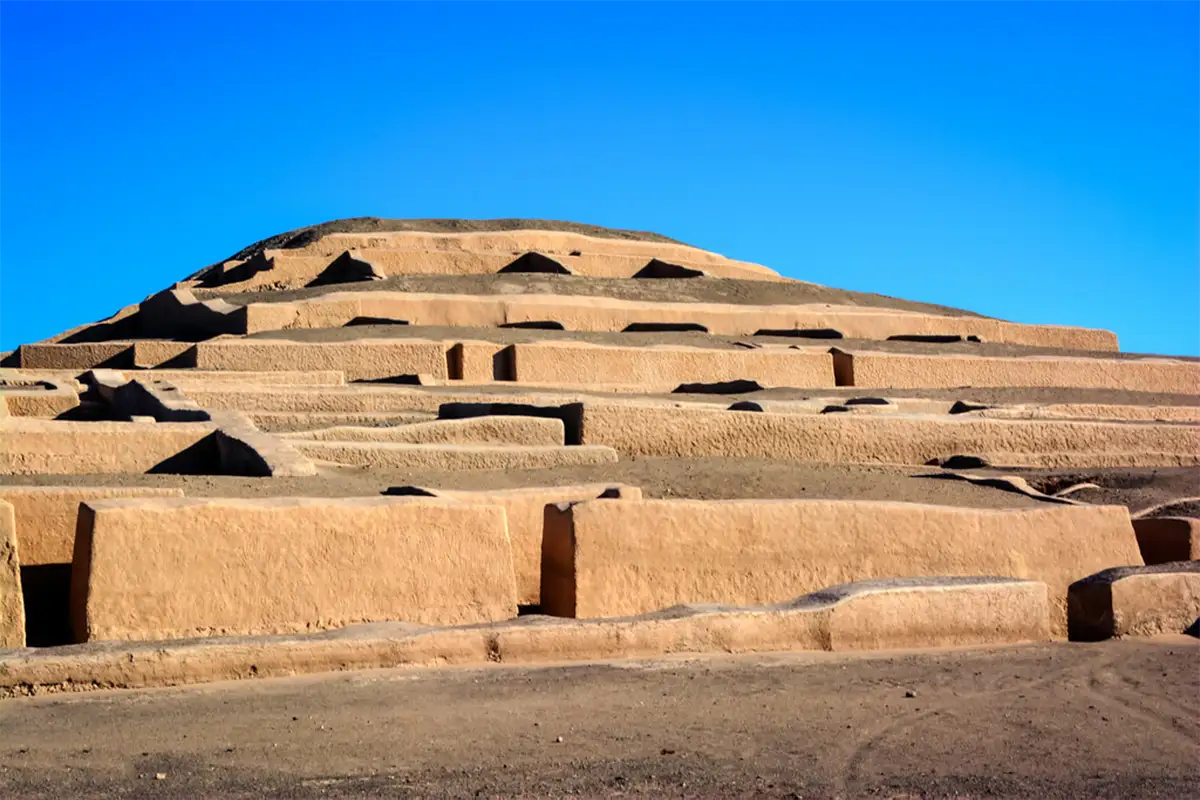
Cahuachi was the religious capital and main ceremonial center of the Nazca culture. Some lines began at this site and formed the famous figures several kilometers away. Located southwest of the Nazca Lines, the complex covers an area of 24 square kilometers. Unlike other archaeological sites, Cahuachi was not permanently inhabited. It was a sacred site where pilgrims from different valleys gathered for rituals, religious ceremonies, mummification, and large offerings to their deities.
The complex included the Great Pyramid, an impressive stepped structure built over a natural hill. It had seven platforms and stood about 28 meters high. Cahuachi also contained dozens of truncated pyramids, plazas, temples, and ceremonial buildings made from adobe and quincha. The Great Temple was another of the site's most important structures.
Its name comes from Quechua and is often translated as "the place where seers live".
 |  |
María Reiche Site Museum
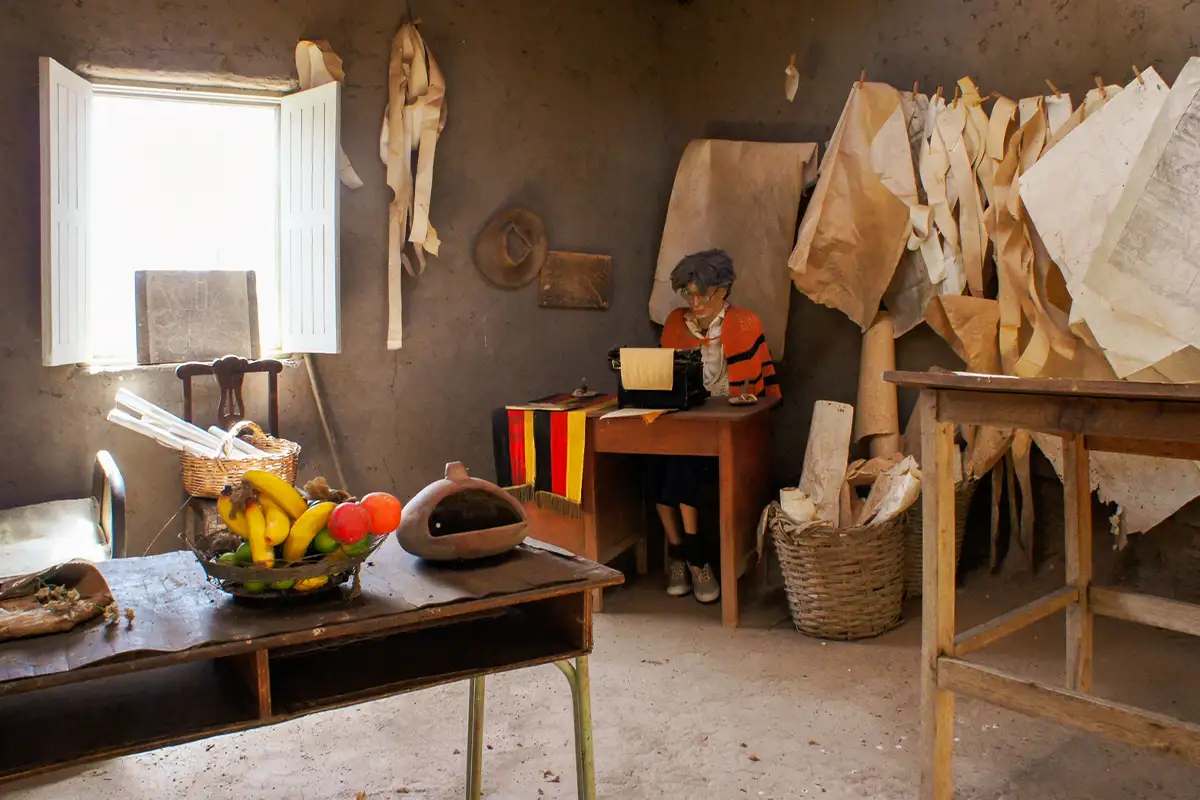
This museum is dedicated to the life, work, and legacy of María Reiche Grosse Neumann, the German-Peruvian mathematician and archaeologist popularly known as the "Lady of the Pampas." She devoted more than 50 years to studying, preserving, and protecting the famous Nazca Lines. The museum is housed in the same home where María Reiche lived and carried out much of her research with her sister Renate. It is located in the heart of the Jumana Pampas.
María and her sister are buried in the garden, close to the lines they cared for so deeply. Inside María's room, you can see her personal belongings, typewriter, notes, journals, and maps of the lines that she drew herself.
- Location: Southern Pan-American Highway PE-1S, about 20–25 minutes by car north of the city of Nazca.
- Regular opening hours: Monday through Saturday from 8:00 a.m. to 5:30 p.m., and Sundays from 8:00 a.m. to 6:00 p.m.
- Admission: 5 soles (US$ 2) for general admission. Children under 5 enter free.
Cantalloc Aqueducts
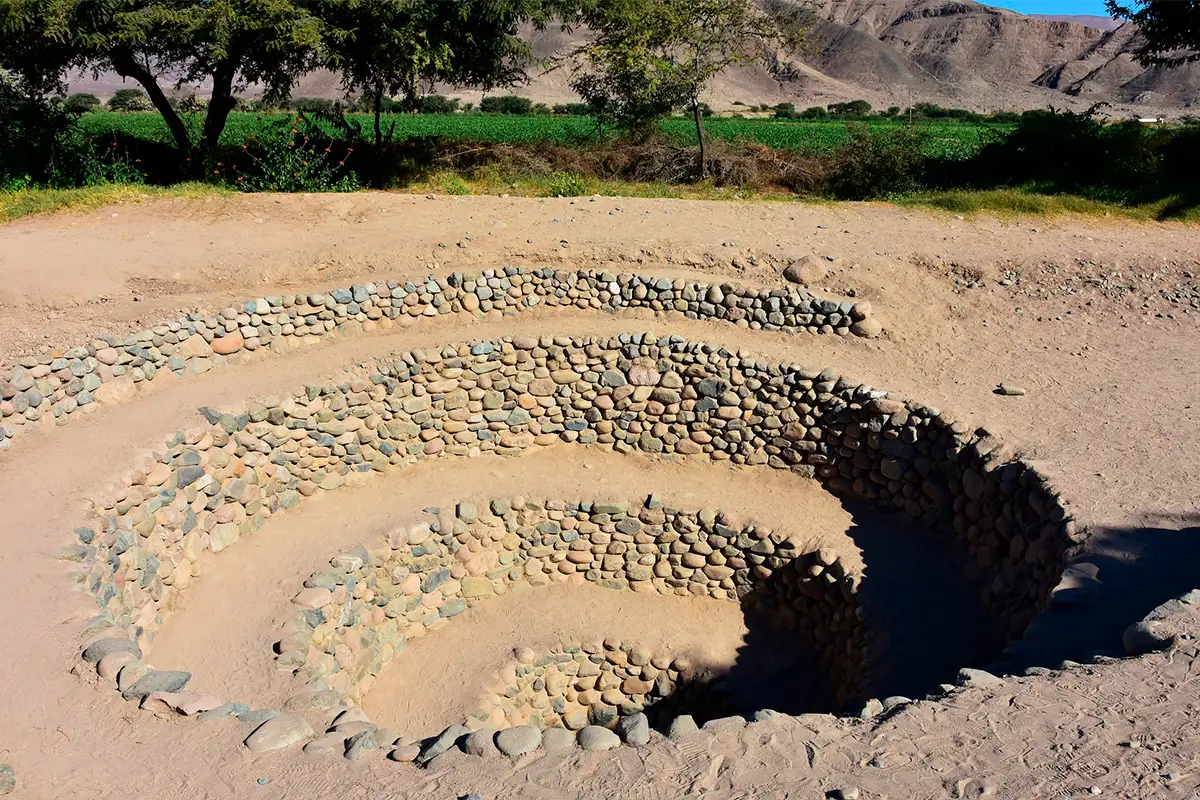
The Cantalloc Aqueducts are a complex underground irrigation system located near Nazca. They are an impressive example of the Nazca culture's advanced hydraulic engineering.
They were built to carry water from underground desert sources to farming areas, allowing local communities to irrigate their fields in this extremely dry region.
One of the most distinctive features of the Cantalloc Aqueducts is their spiral-shaped design. The Nazca built them using wood, stone, and other materials. The spiral openings provided access to the underground water channels and helped prevent sand and other sediment from entering the system.
Chauchilla Cemetery
Chauchilla Cemetery is another popular attraction near Nazca. This archaeological site in the Nazca Desert is known for its large collection of mummies and human remains associated with the Nazca culture.
The cemetery contains underground tombs where the Nazca buried their dead. The Chauchilla mummies are remarkably well preserved because of the desert's dry and arid conditions. This climate has helped protect both the human remains and the objects placed inside the tombs.
Some of the mummies at Chauchilla are accompanied by textiles, pottery, and other burial objects. These discoveries provide valuable information about Nazca culture and its funerary traditions.
Tips for visiting the Nazca Lines
- Stay in the town of Nazca to make the most of your time visiting the lines. If you plan to combine your trip with other attractions, such as Huacachina or the Paracas National Reserve, consider staying in Ica.
- Avoid drinking alcohol the night before your flight.
- Bring a map of the Nazca Lines to help you identify the different figures.
- Listen carefully to the pilot's instructions. They will let you know when the plane is flying over each figure.
- Wear light, comfortable clothing.
- Bring your camera and make sure its batteries are fully charged.
- Stay hydrated.
Conclusion
Now that you know more about the Nazca Lines, their geoglyphs, and the many attractions found throughout this region of Peru, plan your visit well in advance and prepare to be fascinated by their enduring mysteries.
See the lines from the air, connect with the remarkable history of the Nazca civilization, and do not miss the chance to explore this extraordinary place.
Nazca Lines – Frequently Asked Questions
How many days do I need to visit the Nazca Lines?
We recommend spending at least one night in Nazca. This allows you to book an early flight, avoid a rushed trip, and leave some extra time in case of weather delays. With two days, you can also visit Cahuachi, the Cantalloc Aqueducts, Chauchilla Cemetery, and the María Reiche Museum.
Can I visit the Nazca Lines in one day from Lima?
It is possible, but it can be exhausting because the overland journey between Lima and Nazca takes several hours each way. For a more relaxed experience, it is best to stay overnight in Nazca. Another option is to plan a multi-day route that includes Paracas, Huacachina, Ica, and the Nazca Lines.
What documents do I need for a flight over the Nazca Lines?
You will usually need to show your original passport, national ID card, or another valid form of identification before boarding. The details must match the information used for your reservation. Some companies may also ask for a printed or digital copy of your booking confirmation or flight ticket. Check the requirements directly with the operator before going to the airfield.
Are there weight or baggage restrictions on the small planes?
Yes. Flight companies usually ask for each passenger's weight so they can assign seats correctly and keep the aircraft balanced. Some may apply additional conditions depending on the passenger's weight. In most cases, you may only carry a camera, phone, and other small personal items. Larger bags must be left on the ground.
What happens if the flight is canceled because of bad weather?
Flights may be delayed, rescheduled, or canceled when poor visibility, fog, or strong winds make it unsafe to operate. The rules for changing your flight or requesting a refund vary by company. Before paying, ask the operator to provide its cancellation and refund policy in writing.
Can children and older adults visit the Nazca Lines?
Yes, although the conditions depend on the passenger's age, mobility, and the flight operator. Families should confirm whether there is a minimum age and which documents children need. Older adults and travelers with limited mobility should ask about boarding the plane, access to the aircraft, and climbing the viewing towers before booking.

Add new comment