



Also known as "the twin sister city of Machu Picchu” for sharing its beauty and structural harmony with the surrounding landscape, this Inca citadel has been attracting more visitors year after year. Reaching it is an unforgettable experience, comparable only to the famous Inca Trail to Machu Picchu. The Choquequirao trek promises stunning high-Andean landscapes, endemic wildlife, and unique natural environments.
In this guide, we’ll show you how to get to Choquequirao, the duration of the hike, its difficulty, what to bring, the best time to go, and other factors. Join us in this comprehensive guide to hiking to Choquequirao, the other hidden gem of the Incas.
What is the Choquequirao trek?
The Choquequirao Trek is a 4-day hiking route with camping along the way that takes you to the archaeological park of the same name. The trail involves steady climbs and crosses the Apurímac Canyon, passing through beautiful high-Andean landscapes and cloud forests. It is often compared to the Inca Trail because it also features Inca archaeological remains along the route, but without the crowds found on the way to Machu Picchu.
There are longer versions of the trek that extend the experience to 5, 6, and even 7 days. The 6-day option takes hikers from Choquequirao to Machu Picchu with a train connection.
What Was Choquequirao?
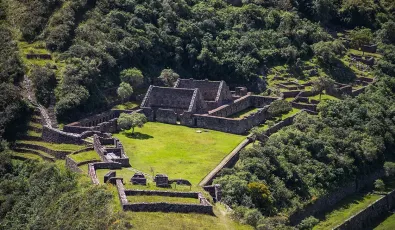
This Inca citadel was an important agricultural production center in the Vilcabamba Valley, where coca was the main crop. Its terraces, set along the mountain slopes of the valley, and its limestone and granite buildings, many of which still stand today, reflect that function. Its location on the slope of Qorihuayrachina Mountain makes it very similar to Machu Picchu.
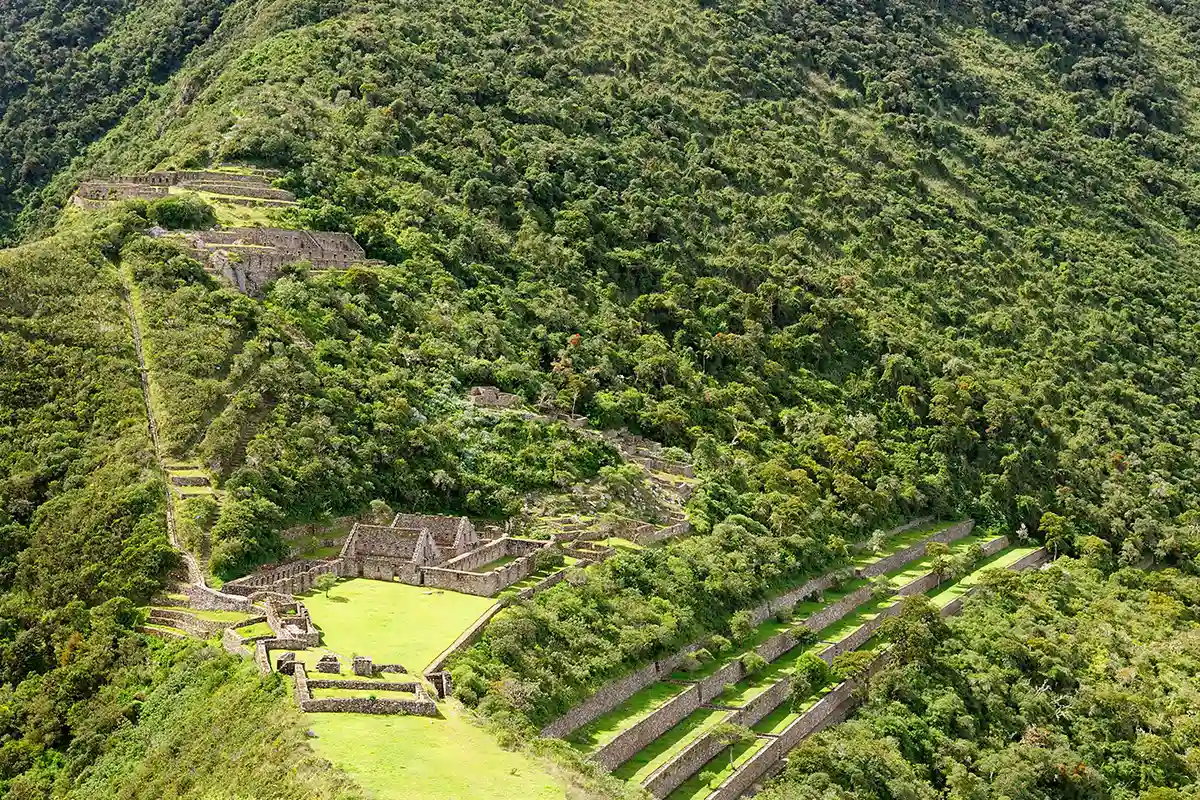
The area was already inhabited by pre-Inca groups such as the Antis, the Pilcozones, and the Killke before it was conquered and reorganized by the Inca Pachacútec and his son Tupac Inca Yupanqui between the 15th and 16th centuries.
Its name means "Cradle of Gold," a reference to the shine of the metamorphic stones (limestone and granite) used to build the complex. It is considered one of the last refuges of the Incas during the Spanish conquest, which adds deeper historical meaning to the visit.
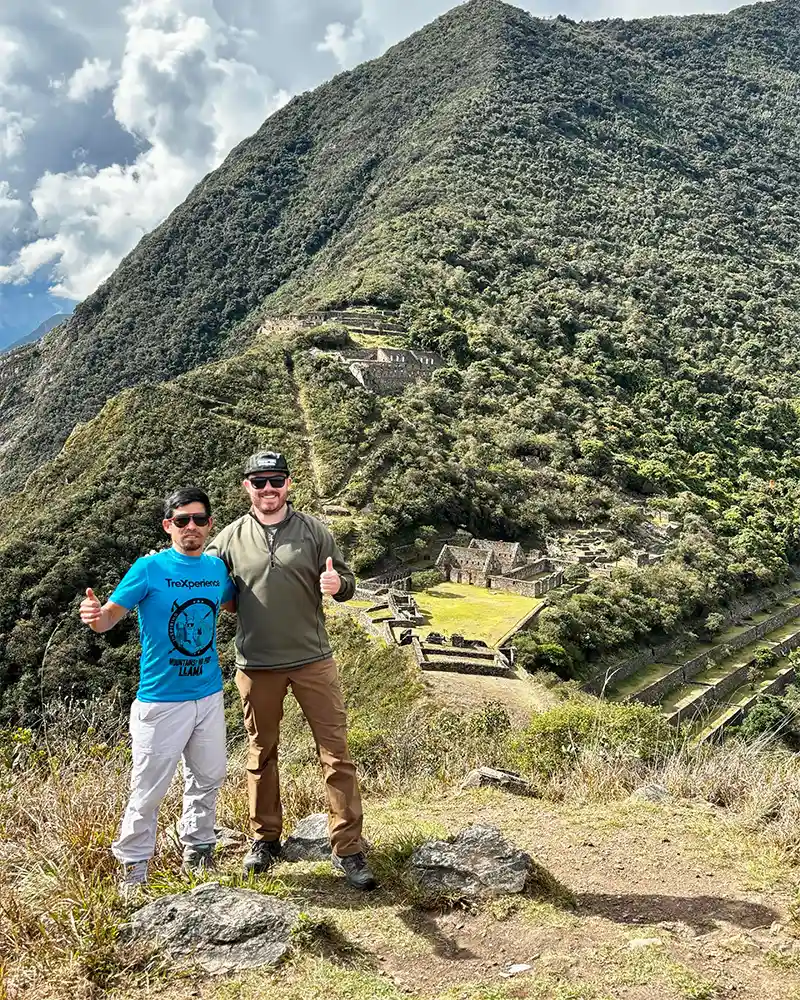
Today, the archaeological site is vast and still only partly explored, with terraces, plazas, temples, and residential areas spread across steep mountain slopes. The only way to reach it is on foot.
Choquequirao ruins are partly unexplored:
Archaeologists have only uncovered 30% of Choquequirao. The remaining terraces, plazas, and pathways remain buried under thick jungle.
Where is Choquequirao located?
The Choquequirao Archaeological Park is located about 3,000 meters above sea level (9,840 feet), in the Alto Salkantay area, in the community of Yanama, Santa Teresa district, La Convención province, in the Cusco region.
- 175 km west of Cusco
- 115 km southwest of Machu Picchu
Its location in the high jungle, much like Machu Picchu, gives it a humid subtropical climate.
How to get to Choquequirao from Cusco
There are several ways to get to Choquequirao from Cusco:
Travel agency
You can book a Choquequirao tours with a tour operator. They will take care of all transportation, logistics, meals, guides, camping equipment, and entrance tickets to the archaeological park. In other words, they will pick you up from your hotel and take you back to the same place at the end of the trek.
On your own
In the past, public transportation from Cusco only went as far as the town of Cachora. From there, hikers had to start the trek to Choquequirao.
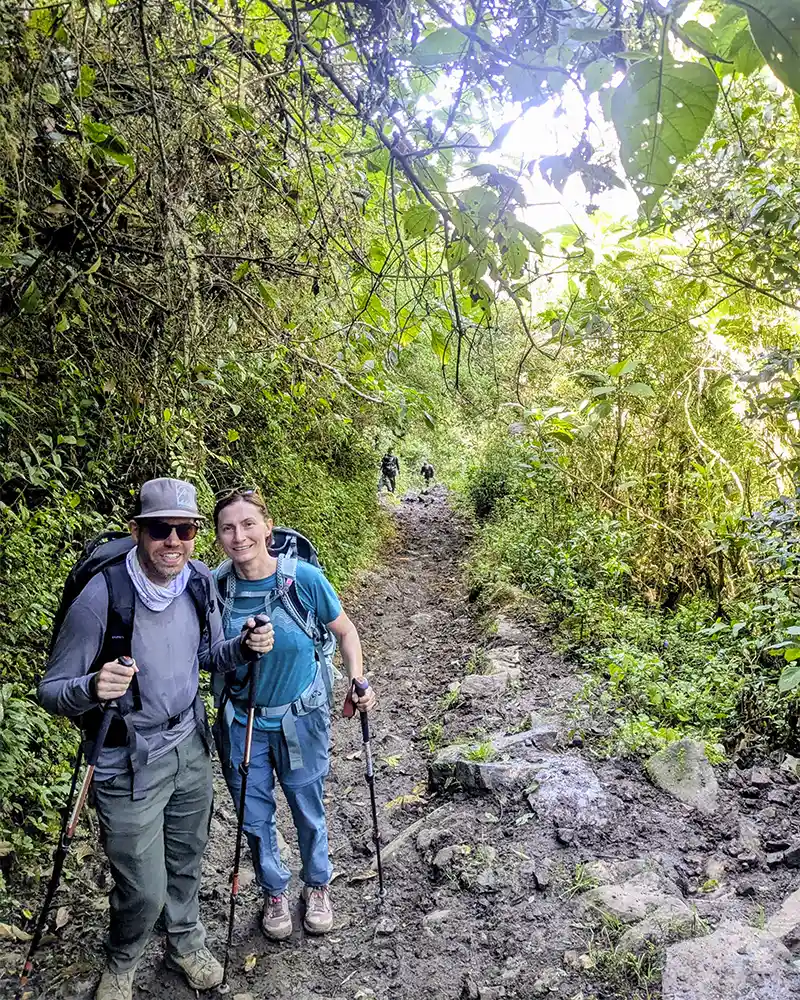
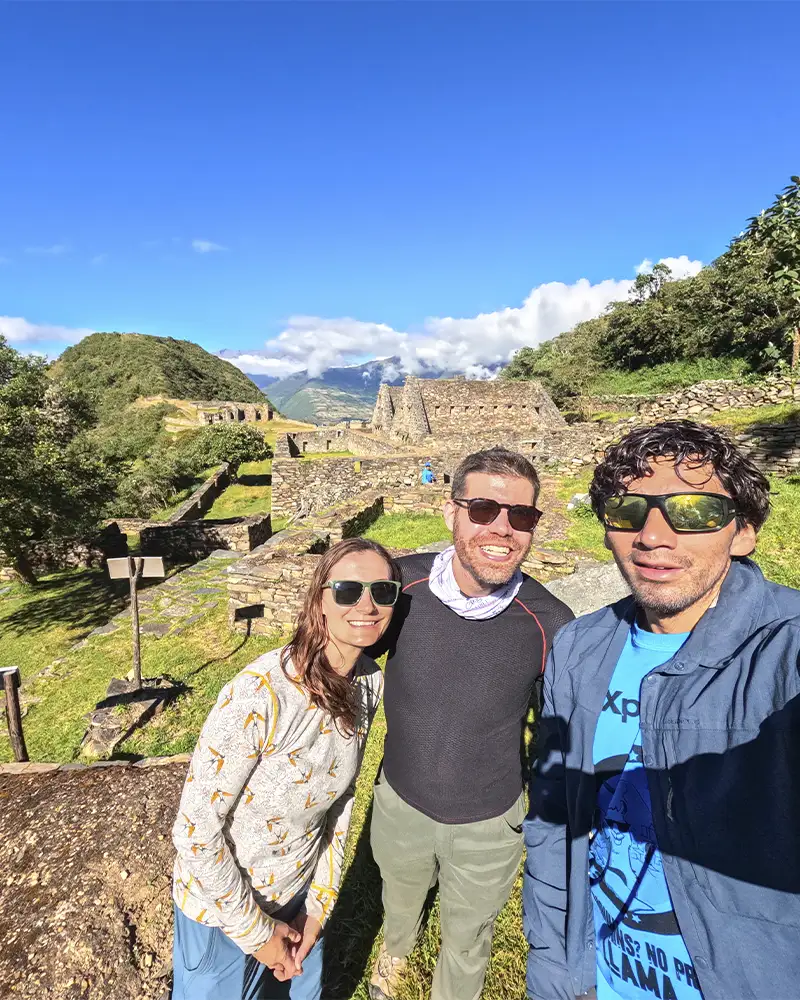
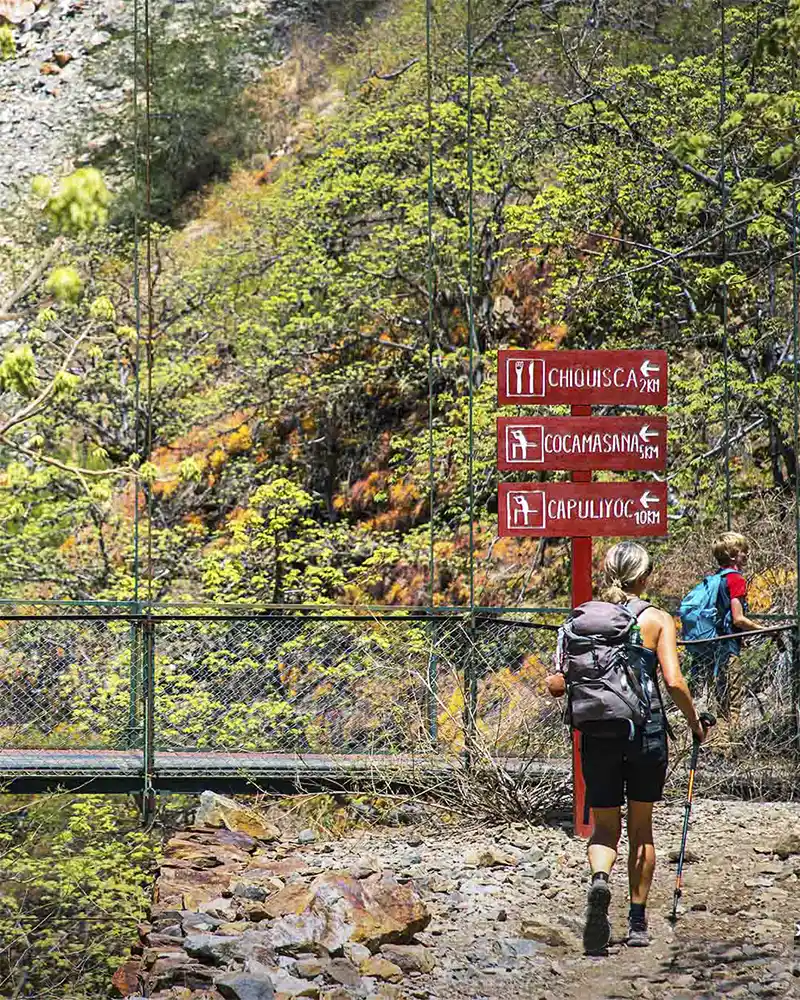
Now, the road has been extended to a village closer to the Inca site, called Capulliyoc. From this point, the Choquequirao Trekking begins, reducing both hiking time and physical effort.
 |  |
- From the Cusco bus terminal, take an interprovincial bus toward Abancay. The price is around US$ 15 per person.
- After 3 to 4 hours of travel, get off at the Cachora turnoff.
- From there, take a shared van that will take you directly to Capulliyoc (1 hour of travel). The price is around US$ 7 per person.
Sometimes, the shared van may make a short stop in the town of Cachora.
Choquequirao Trek itinerary
The most common trek is a multi-day hike of about 60 kilometers (37 miles) round trip, typically taking 4 to 5 days to complete. The Choquequirao trail involves significant elevation changes, steep ascents and descents, and remote terrains, which means it requires a good level of fitness and preparation.
In addition to being less visited than other treks to Machu Picchu, Choquequirao provides encounters with diverse flora and fauna, including orchids, spectacled bears, and Andean condors.
Besides, the experience provides a challenging route with diverse terrain that includes steep climbs, river crossings, and high mountain passes.
Finally, trekking to Choquequirao supports sustainable tourism and local communities in a less-developed area, which helps preserve the cultural and environmental integrity of the region.
Choquequirao Trek 4 days vs 5 days
If you have limited time, the 4-day Choquequirao Trek is a fantastic and popular option for travelers getting started with hiking, as well as independent adventurers and small groups. You will enjoy unique archaeological sites and stunning views of high-Andean mountains before returning to Cusco along the same route. Be prepared for long hiking days over rugged terrain, crossing rivers and passing through different climate zones, from cloud forest to high Andean peaks.
Need more time? The 5-day Choquequirao tour extends the classic 4-day itinerary, giving you a full day to explore Choquequirao at a more relaxed pace and fully enjoy its history and landscapes.
Day | Choquequirao Trek 4 Days | Choquequirao Trek 5 Days |
| Day 1 | Cusco–Capuliyoc (2,950 m). Descend into the Apurímac Canyon, have lunch in Chiquiska (1,950 m), and hike for 2 hours to the campsite in Santa Rosa (2,230 m). 10.8 km, 6 h. | Cusco–Cachora–Capuliyoc (2,950 m). A 6-hour downhill hike to Chikiska (1,950 m), with views of the Apurímac Canyon and cloud forest. Camp in Chikiska. 10 km. |
| Day 2 | Santa Rosa–Marampata–Choquequirao (3,000 m). A steep climb, a visit to sugarcane farms, lunch with a local family in Marampata, and the whole afternoon in Choquequirao; camp near the site (2,866 m). 14 km, 8 h. | Chikiska–Playa Rosalina–Santa Rosa–Marampata (2,940 m). Cross the Apurímac River and make a demanding climb to the panoramic campsite in Marampata. 15 km, 6 h. |
| Day 3 | Sunrise in Choquequirao. Descend to Santa Rosa (2,230 m) for lunch, then continue to the Chiquiska campsite (1,1950 m), passing flowers, birds, and valley views. 16 km, 8 h. | From Marampata, hike about 2 hours to Choquequirao (3,000 m). Enjoy a full day in Choquequirao exploring terraces, plazas, and Inca sectors; return to the same campsite. 7 km, 4 h. |
| Day 4 | Chiquiska–Capuliyoc (2,950 m), a 4-hour uphill hike to Capulliyoc, where you will enjoy a Pachamanca lunch. Then, take transportation to visit Sayhuite and return to Cusco. 8 km; arrival around 6:00 p.m. | Marampata–Playa Rosalina–Coca Masana (2,330 m). Descend for 4 hours through the canyon to Playa Rosalina, then climb for 2 hours to the Coca Masana campsite. A challenging day. 17 km, 7 h. |
| Day 5 | Coca Masana–Capuliyoc (2,950 m). Final 3-hour climb to Capulliyoc, where you will enjoy lunch with Pachamanca. Then, take transportation to visit Sayhuite and return to Cusco, arriving around 5:00 p.m. 6 km. |
Choquequirao to Machu Picchu Trek
The 6 days Choquequirao to Machu Picchu Trek is an exceptional option if you want to combine Choquequirao and its twin sister, Machu Picchu, in one epic adventure. You will descend and climb through deep canyons and lush cloud forests before taking a train to reach the famous wonder of the world.
The Choquequirao to Machu Picchu tour 7 days adds one more day to the 6-day route and is designed for experienced hikers who dream of a complete adventure connecting Choquequirao and Machu Picchu on foot, without rushing. The extra day gives you more time to enjoy both sites at a calm and comfortable pace.
Day | Choquequirao to Machu Picchu Trek 6 Days | Choquequirao to Machu Picchu Trek 7 Days |
| Day 1 | Cusco–Cachora–Capuliyoc (2,950 m). A 6-hour downhill hike to Chikiska (1,950 m), with views of the Apurímac Canyon and cloud forest. Camp in Chikiska. 10 km. | Cusco–Sayhuite–Capuliyoc–Chikiska–Santa Rosa (2,230 m); Visit the Inca site of Sayhuite. Then descend to Chikiska for lunch and climb to Santa Rosa (2,230 m). Maximum altitude: 2,970 m. 12 km. |
| Day 2 | Chikiska–Playa Rosalina–Santa Rosa–Marampata (2,940 m). Cross the Apurímac River and make a demanding climb to the panoramic campsite in Marampata. 15 km, 6 h. | Santa Rosa–Marampata–Choquequirao (3,000 m). Climb in zigzags to Marampata for lunch (2,940 m), then enjoy the whole afternoon at the Inca site of Choquequirao; camp near the ruins. Maximum altitude: 3,000 m. 9 km. |
| Day 3 | From Marampata, hike about 2 hours to Choquequirao (3,000 m). Enjoy a full day in Choquequirao exploring terraces, plazas, and Inca sectors; return to the same campsite. 7 km, 4 h. | Choquequirao–Choquequirao Pass–Pinchiunuyoc–Río Blanco (1,880 m). Guided visit to Choquequirao, then climb to Choquequirao Pass (3,300 m), descend to the Inca site of Pinchiunuyoc, and camp at Río Blanco. 12 km. |
| Day 4 | Marampata–Playa Rosalina–Coca Masana (2,330 m). Descend for 4 hours through the canyon to Playa Rosalina, then climb for 2 hours to the Coca Masana campsite. A challenging day. 17 km, 7 h. | Río Blanco–Maizal–Pajonal (4,150 m). A steep zigzag climb to Maizal (2,891 m) for lunch. Then continue uphill to Pajonal, passing Victoria Mines and beautiful farmland. High-altitude campsite. Maximum altitude: 4,150 m. 13 km. |
| Day 5 | Coca Masana–Capuliyoc–Ollantaytambo–Aguas Calientes (1,888 m). Final climb to Capuliyoc, Pachamanca lunch, transfer to Ollantaytambo, and train to Aguas Calientes. 18 km. | Pajonal–San Juan Pass–Yanama–Lucmabamba (2,100 m). Climb to San Juan Pass (4,210 m) for panoramic views. Then take a short hike to Yanama (3,700 m) for lunch and transfer to the coffee farm in Lucmabamba. 6 km. |
| Day 6 | Aguas Calientes–Machu Picchu–Cusco. Guided tour of Machu Picchu and an optional hike to a nearby mountain, depending on availability; return to Cusco by train. 2–3 h guided visit. | Lucmabamba–Llaqtapata–Hidroeléctrica–Aguas Calientes (1,888 m). Visit organic coffee fields. Then enter an ancient Inca Trail to reach Llaqtapata and enjoy views of Machu Picchu. Descend to Hidroeléctrica for lunch and hike to Aguas Calientes. Maximum altitude: 2,800 m. 14 km. |
| Day 7 | Aguas Calientes–Machu Picchu–Cusco. Early entry to Machu Picchu, guided visit through its most iconic areas, optional hike to Huayna Picchu Mountain, and return train to Cusco. |
Choquequirao Trek difficulty
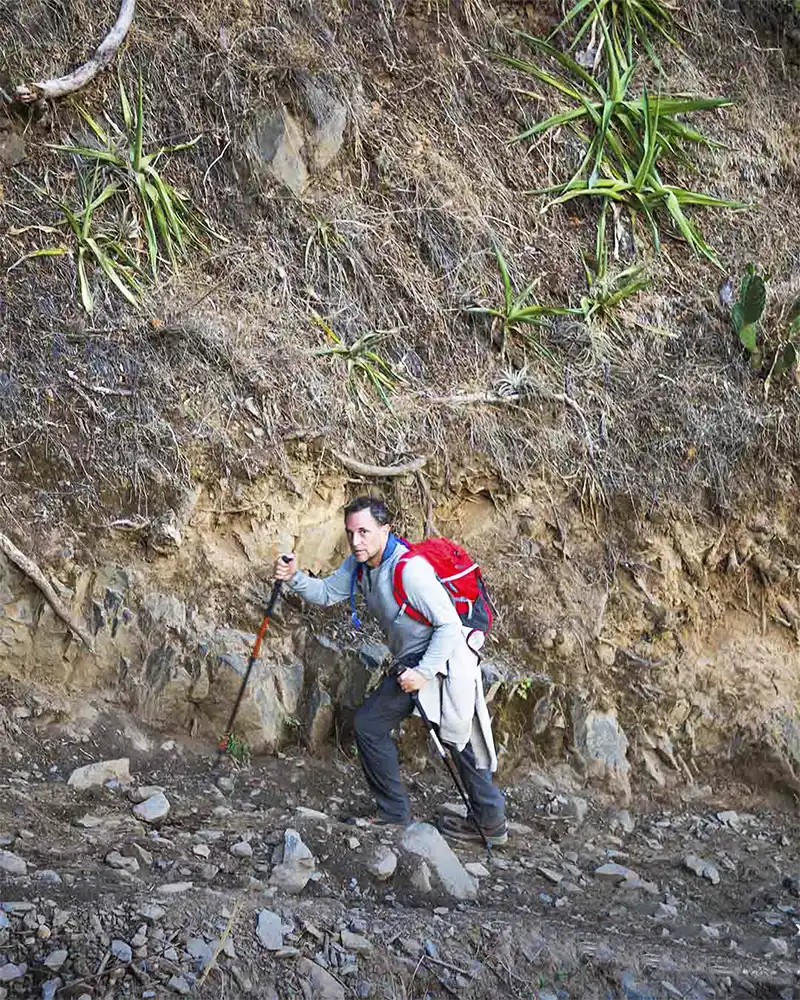
The Choquequirao Trek is a moderate to challenging experience, ideal for seasoned hikers. While you don’t need technical climbing skills, you do need strong legs, endurance, and a mindset ready for multi-day challenges in high-altitude terrain.
To hike Choquequirao, trekkers should be comfortable hiking 6 to 9 hours a day, often with major altitude swings. Campsites are remote, with no porter regulations or paved stairways. For all these reasons, it is important to acclimatize in Cusco before starting the trek. Bring trekking poles, stay well hydrated, and keep a steady pace.
Choose the Choquequirao Trail
This route is perfect for the following types of travelers:
- Experienced hikers or backpackers who have already completed high-altitude or multi-day routes.
- Photographers and archaeology lovers looking for almost exclusive access to little-visited ruins, far from tourist crowds.
- Adventurous travelers looking for a nature-filled trekking alternative to the popular Inca Trail.
- Travelers who value peace, culture, remote Andean landscapes, and the chance to learn directly from local guides.
Think carefully before taking the Choquequirao trek tour
We recommend avoiding the trek, or at least carefully considering how demanding the route is, if you fall into any of the following groups:
- People who are not used to walking at altitudes between 3,000 and 4,600 meters (9,800 to 15,000 feet).
- People with knee problems or limited mobility. Many descents involve more than 1,500 meters of elevation loss in a single day.
- People with limited time. Keep in mind that even the shortest trek (4 days) requires full commitment. Choquequirao cannot be visited in just one day.
 |  |
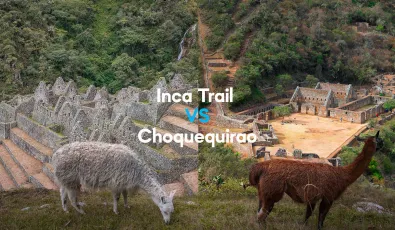
Choquequirao is more demanding than the Inca Trail
The Choquequirao Trek is considered more physically demanding than the Inca Trail, with twice the accumulated elevation gain in some sections. Hikers descend more than 1,500 meters (4,900 feet) to the Apurímac River and then climb back up almost immediately.
Choquequirao altitude and distance
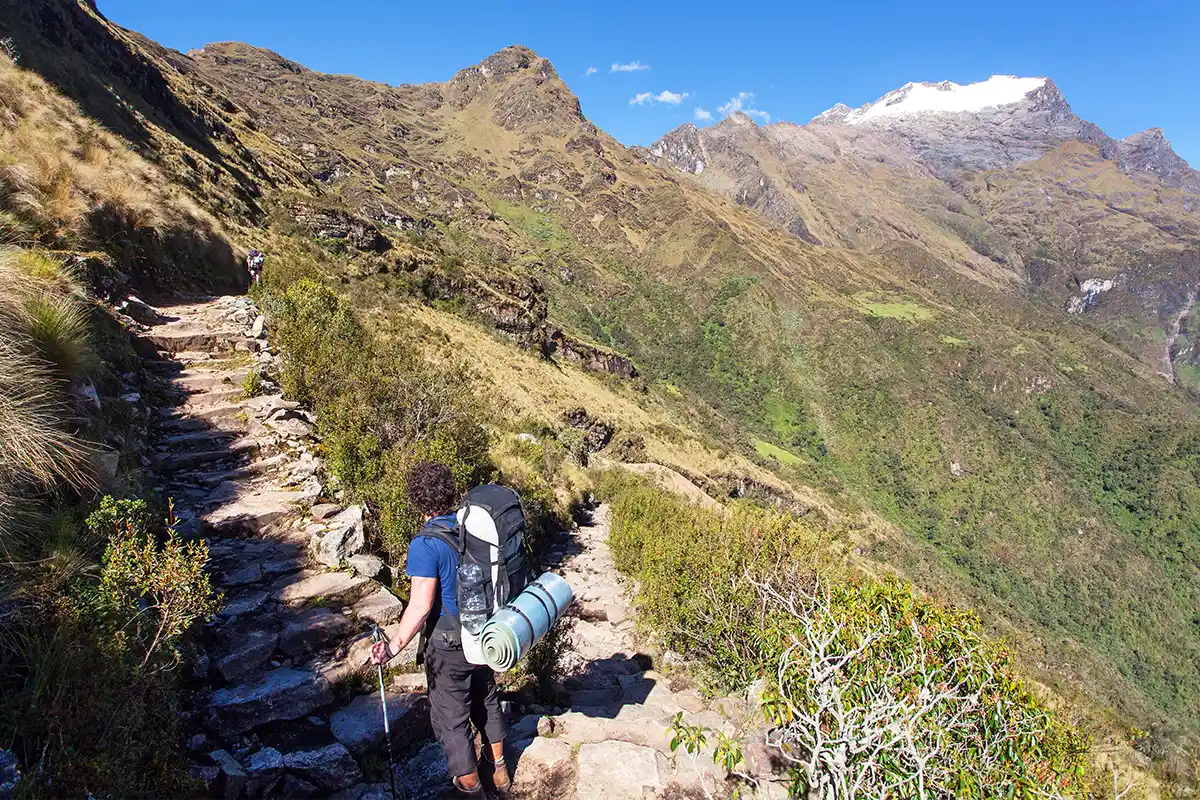
The trek to Choquequirao is demanding not only because of the distance, but also because of the major altitude changes along the route. The classic route starts in Capuliyoc, at about 2,950 m above sea level, and descends through the Apurímac Canyon to lower areas such as Chiquiska and Playa Rosalina, located at 1,950 and 1,550 m above sea level. From there, the trail begins a steady climb toward Santa Rosa, Marampata, and finally Choquequirao, which sits at around 3,000 to 3,050 m above sea level. Some itineraries also continue up to Choquequirao Pass, at 3,300 m above sea level.
The total distance of the trek varies depending on the itinerary, but the classic 4-day and 5-day routes usually cover about 55 km or 35 miles round trip. Although it is not a technical hike, the accumulated elevation gain is significant: in just a few days, you descend to the bottom of the canyon and then climb back up along steep trails, with long sections of both ascent and descent.
Best time to hike Choquequirao
The best time to hike to Choquequirao is during the dry season, from May to September. During these months, the weather is more stable, the skies are clearer, and the trails are dry and firm. In contrast, the rainy season, from October to April, brings wetter terrain and more slippery trails, which increases the difficulty of the hike and the risk of landslides.
Even during the Choquequirao dry season, mountain weather can change quickly, so it is common to start the day with blue skies and end it with fog or light rain.
What to Pack for Choquequirao
If you do the trek on your own, there will be more logistics to think about, since you will have to carry your own gear. If you book a Choquequirao tour through a travel agency, your load will be lighter, as the package usually includes three meals during the trekking days, tents, sleeping mats, guides, trail cooks, porters, and even your entrance tickets to Choquequirao.
In any case, here are the essentials you should definitely bring on your Choquequirao Trek.
What to carry in your daypack
This is the backpack you will carry yourself, and it will be very useful during the hiking days or while you are on the trail. We recommend a small backpack of around 25 to 30 liters.
- High-cut, water-resistant hiking boots with ankle support
- Synthetic socks
- Convertible trekking pants
- Breathable long-sleeve shirts
- Fleece or sweatshirt
- Water-repellent windbreaker
- Insect repellent
- Thermal layers
- Sun protection (hat, sunglasses, sunscreen)
- Canteen or reusable water bottle
- Water purifier
- Energy snacks for long hiking days
Duffel bag (7 kg)
If you book the tour through a travel agency, they will provide a 7 kg duffel bag where you can pack the following items. This bag will be transported by the muleteers from camp to camp, so you will not have access to it during the day.
- Headlamp
- Portable charger
- A change of warm clothes for the campsites (comfortable shoes, joggers, cotton T-shirts, and fleece jackets)
- Sleeping bag for nights at the campsites (included in many tours)
- Sleeping mat or foam mattress (included in many tours)
- Tent
- Trekking poles for steep ascents and descents
Choquequirao Entrance Tickets
Choquequirao entrance tickets should be included in your trekking budget. They are purchased in person at the Capuliyoc checkpoint, the starting point of the hike. Bring cash in Peruvian soles and your ID or passport. If you booked your Choquequirao trek through a travel agency, the ticket is usually included in the package.
Unlike Machu Picchu, Choquequirao does not have a maximum visitor limit, so you do not need to worry about availability.
As a published official reference:
- General admission: S/ 60 or US$ 18
- Students: S/ 30 or US$ 9
- Minors: S/ 25 or US$ 8
It is best to confirm the current rate before traveling.
 |  |
Can you hike Choquequirao independently?
You can do the Choquequirao Trek on your own if you have experience with multi-day hikes, know how to navigate mountain trails, and can organize your own transportation, food, camping gear, entrance tickets, and muleteers if needed. This option gives you more freedom, but it also means carrying more weight and handling any unexpected situations in a remote area.
A guided tour is more comfortable and safer, especially if it is your first time in Cusco or your first experience with this type of trek. The travel agency takes care of the logistics, campsites, meals, guide, muleteers, and entrance tickets. A local guide also helps you better understand the history of Choquequirao. If you want peace of mind and less planning before your Choquequirao hike, a guided tour is the best option.
Choquequirao Trek - FAQs
Is Choquequirao trek open in 2026?
Yes. The Capuliyoc–Cachora route officially reopened on April 15, 2026, after being closed due to heavy rains earlier in the year. For your safety, we recommend planning your visit during the dry season.
How much does the Choquequirao tour cost?
The 4-day tour with TreXperience starts at US$550 per adult. If you go on your own, you will need to budget for the entrance ticket, transportation, food, camping gear, and muleteers.
Is the Choquequirao Trekking harder than the Inca Trail to Machu Picchu?
Yes, if we are talking about reaching the site on foot. Choquequirao requires several days of hiking, with steep climbs and descents, and covers about 55 km, which is more than the 45 km of the Inca Trail.
Is the Choquequirao hike worth it?
Yes. It is well worth it if you are looking for a more remote experience, fewer crowds, and stunning landscapes before reaching an impressive Inca citadel like Choquequirao.

Add new comment