



The Andean New Year is a celebration that marks the renewal of nature and the connection between Andean communities, Pachamama (Mother Earth), and the stars. In simple terms, it represents the beginning of a new Andean cycle. In Peru, this tradition remains alive in highland regions such as Puno and Cusco, where Andean customs continue to be part of everyday life.
The ceremonies include offerings to the earth and expressions of gratitude for everything Mother Earth has provided. This holiday is especially important because it connects Andean spirituality with the agricultural calendar. For many communities, it represents the end of one stage and the beginning of another, filled with hope, fertile land, and the continuation of Andean New Year traditions passed down through generations.
What is Andean New Year?
The Andean New Year is a celebration closely linked to the winter solstice and the beginning of a new agricultural cycle.
For ancient Andean societies, observing the Sun, weather patterns, and the stars was essential for organizing daily life. Knowing when to plant, harvest, prepare the land, or hold ceremonies of gratitude played a vital role in Andean culture.
According to some interpretations of the ancient Andean calendar, the year consisted of a 360-day cycle, with five ceremonial days added to complete the Earth's annual journey around the Sun. This reflects an important idea: time in the Andes was not viewed simply as a sequence of days but as a living cycle shaped by nature, agriculture, and the sacred relationship between humanity and the cosmos.
When is the Andean New Year celebrated?
The Andean New Year is celebrated every June 21. This date coincides with the winter solstice in the Southern Hemisphere, when the longest night and shortest day of the year occur. From that moment onward, daylight gradually begins to increase, symbolizing the Sun’s return.
Meaning of the Andean New Year
The Andean New Year represents a time when the earth rests, regains its strength, and prepares for a new season of fertility. It is also a moment to give thanks for the previous harvest and to ask for abundance in the coming planting season.
In the Andean worldview, life depends on balance between human beings, Pachamama, Tayta Inti (Father Sun), the Apus (sacred mountains), and agricultural crops. This relationship is sustained through the principle of ayni, or reciprocity.
That is why the Andean New Year is an expression of the Andean worldview, where time returns, nature speaks, and the community renews its bond with the forces that sustain life.
The return of the Sun
One of the central concepts of this holiday is Willka Kuti, often understood as the return or turning point of the Sun. During the June solstice, the Sun reaches a key moment in its annual journey, after which daylight gradually begins to increase.
For Andean peoples, the Sun provided warmth, energy, and fertility to the earth. Its return signaled the beginning of a new stage and the moment when Pachamama would once again prepare to bring life and abundance.
The Relationship Between Pachamama and Tayta Inti
The Andean New Year brings together two essential forces within the Andean worldview: Pachamama, or Mother Earth, and Tayta Inti, or Father Sun. Together, they represent complementary energies. Pachamama sustains, nourishes, and gives life, while Tayta Inti provides light, warmth, and energy that allow the earth to become fertile once again.
Tayta Inti was regarded as a sacred celestial force associated with order, life, and the heavens. His light enabled plants to grow, animals to reproduce, and communities to thrive. During the Inca period, the Sun held a central role, and rulers claimed descent from this sacred source.
Pachamama, in contrast, embodies the living earth. She is the nurturing mother who provides food, protection, and receives offerings. For this reason, many Andean communities speak to her, thank her, and ask permission before planting, building, traveling, or using natural resources.
The relationship between these two sacred forces is expressed through ayni. First, gratitude is offered for what has been received; then an offering is made, and only afterward are blessings requested for the coming cycle.
Andean New Year History and Origins
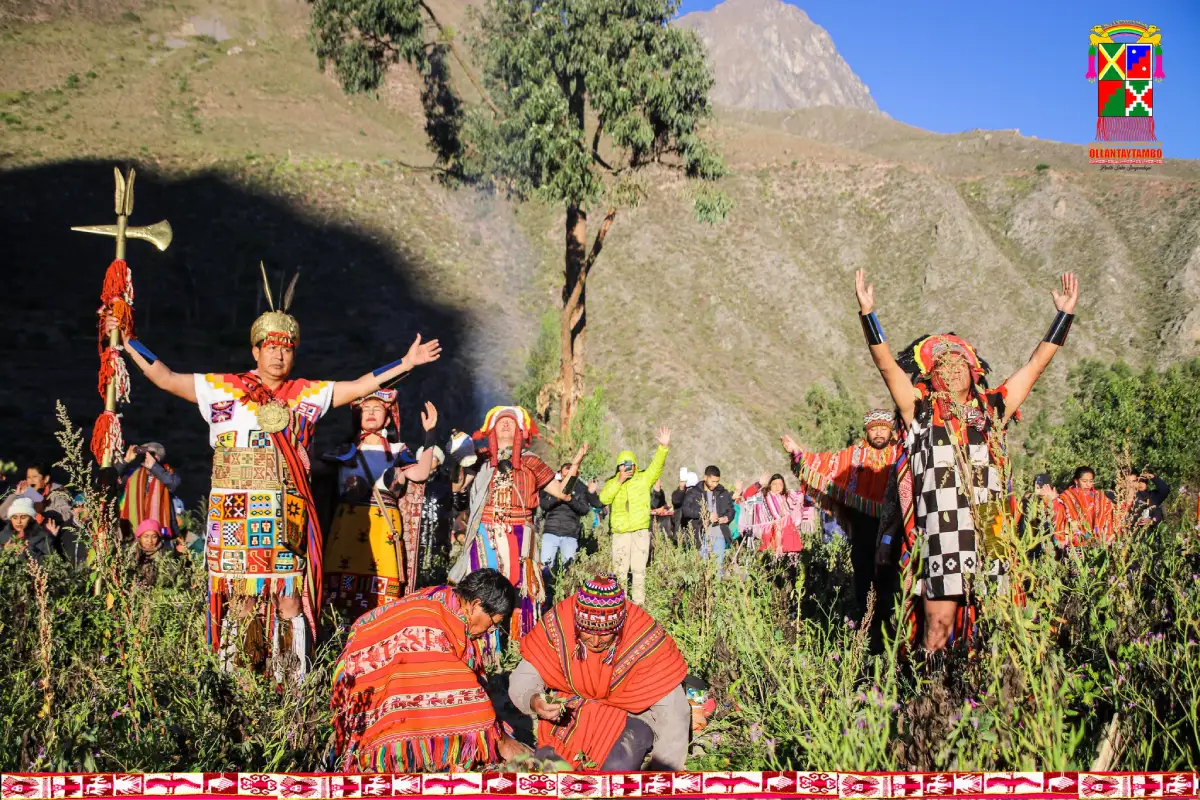
The Andean New Year has its origin in the observation of the sky and in the agricultural calendar of Andean peoples. Before becoming a celebration known to visitors, it was a way of reading nature: following the Sun’s path, recognizing the phases of the Moon, and observing the stars to understand when the earth should rest, be planted, or prepare for a new harvest.
One of the most important centers associated with these traditions was Tiwanaku, located in the Altiplano. Temples and monuments such as Kalasasaya reveal a close relationship with solar and lunar movements, marking key moments in the agricultural and ceremonial year.
Over time, this tradition remained alive across different regions under names such as Mara T'aqa, Machaq Mara, and Willka Kuti. In recent decades, it has experienced a strong revival throughout the Altiplano, spreading among Aymara and Quechua communities in southern Peru, Bolivia, and northern Chile.
In Peru, it is especially celebrated in highland regions such as Puno and Cusco, where it continues to symbolize the return of the Sun, gratitude toward Pachamama, and the beginning of a new cycle of life.
Agricultural calendar and sacred time
The Andean calendar was closely connected to agriculture and the rhythms of nature rather than simply counting days. Ancient Andean farmers observed the Sun, Moon, stars, rainfall, frost, and even animal behavior to determine the right times for planting, harvesting, and holding ceremonies.
June 21, the winter solstice in the Southern Hemisphere, marked one of the most important moments of the year. As the longest night gave way to gradually increasing daylight, it was seen as the symbolic return of the Sun. For this reason, the Andean New Year became a time of gratitude, renewal, and hope.
In the Inca world, the annual solar cycle was known as huata. For many communities, time was measured through harvests and agricultural activities. It was not merely an astronomical calculation but a sacred experience deeply connected to life, the land, and the community.
Is the Andean New Year Aymara or Quechua?
The Andean New Year does not belong exclusively to either the Aymara or Quechua world. It is a shared celebration among various Andean peoples, although each community experiences and names it according to its own language, territory, and history.
Within Aymara traditions, this date is associated with names such as Machaq Mara, Mara T’aqa, and Willka Kuti, all connected to the concept of a new year, the end of one cycle, and the return of the Sun. Across the Altiplano, particularly around Lake Titicaca and Tiwanaku, the holiday maintains a strong connection to solar rituals, Pachamama, and the agricultural calendar.
Rather than asking whether the Andean New Year is Aymara or Quechua, it is more accurate to understand it as a celebration rooted in the broader Andean world. The names may differ, ceremonies may vary, and local traditions may have unique expressions, but the core message remains the same: giving thanks for the cycle that has ended and welcoming the new one with respect and gratitude.
What names does the Andean New Year have?
The Andean New Year is known by different names depending on the language, region, and cultural tradition of each community. It is celebrated by Aymara, Quechua, and other Andean peoples. While the names vary, they all express the same idea: the completion of one cycle and the return of the Sun, marking the beginning of a new period for the earth, agriculture, and community life.
| Name | Etymology | Main Idea |
| Willka Kuti or Willkakuti | “Return of the Sun” or “return of sacred time.” Willka means “sacred Sun,” “grandchild,” or “sacred.” Kuti means “return” or “turning back.” | Andean and Aymara world. It is related to the winter solstice on June 21 and the beginning of a new agricultural stage. It symbolizes the return of solar energy and the start of a new cycle. |
| Machaq Mara | “New year” or “new time.” Machaq means “new,” and Mara means “year” or “time” in Aymara. | Aymara world. It marks the beginning of a new annual cycle and is one of the most common names used among Aymara communities in the Altiplano. |
| Mara T’aqa / Mara Khllta | Separation between one year and another, or the beginning of a new cycle. Mara means “year.” T’aqa means “separation” or “division.” Khllta, Qhillta, or Jallta can refer to an opening or beginning. | Aymara regions of the Altiplano. It highlights the transition between the time that ends and the time that begins. |
| Musuq Wata | “New year.” Musuq means “new,” and Wata, or huata, means “year.” | Quechua world. It represents the renewal of time and the continuity of agricultural, natural, and ceremonial cycles within Quechua tradition. |
How is the Andean New Year celebrated?
The Andean New Year is celebrated with offerings ceremonies to Pachamama, and community gatherings that welcome the andean new year at sunrise. Although each region has its own customs, the main intention is the same: to say goodbye to the cycle that ends, give thanks for what has been received, and ask for balance, health, and abundance for the new period.
In Peru, this celebration is especially strong in Puno, Cusco, and other regions where the connection with the land, the Sun, and the Apus remains an important part of cultural life.
Sunrise ceremonies and the first rays of the Sun
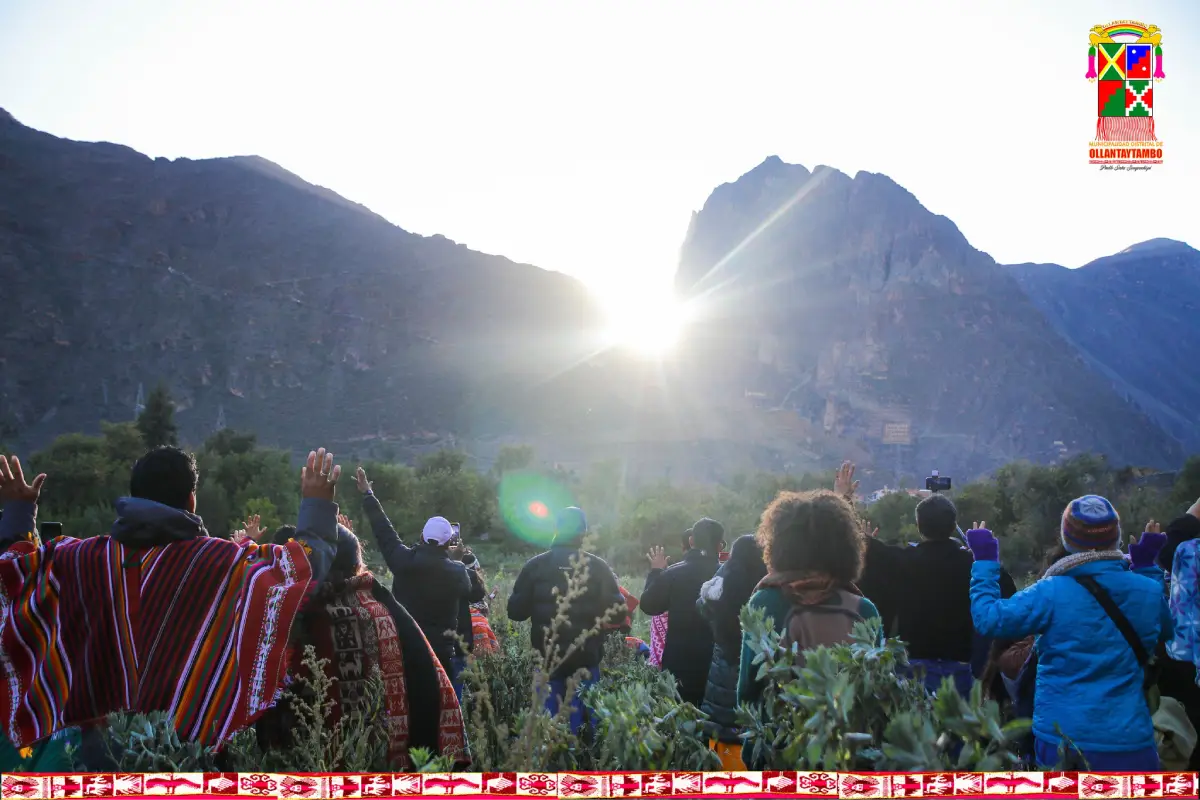
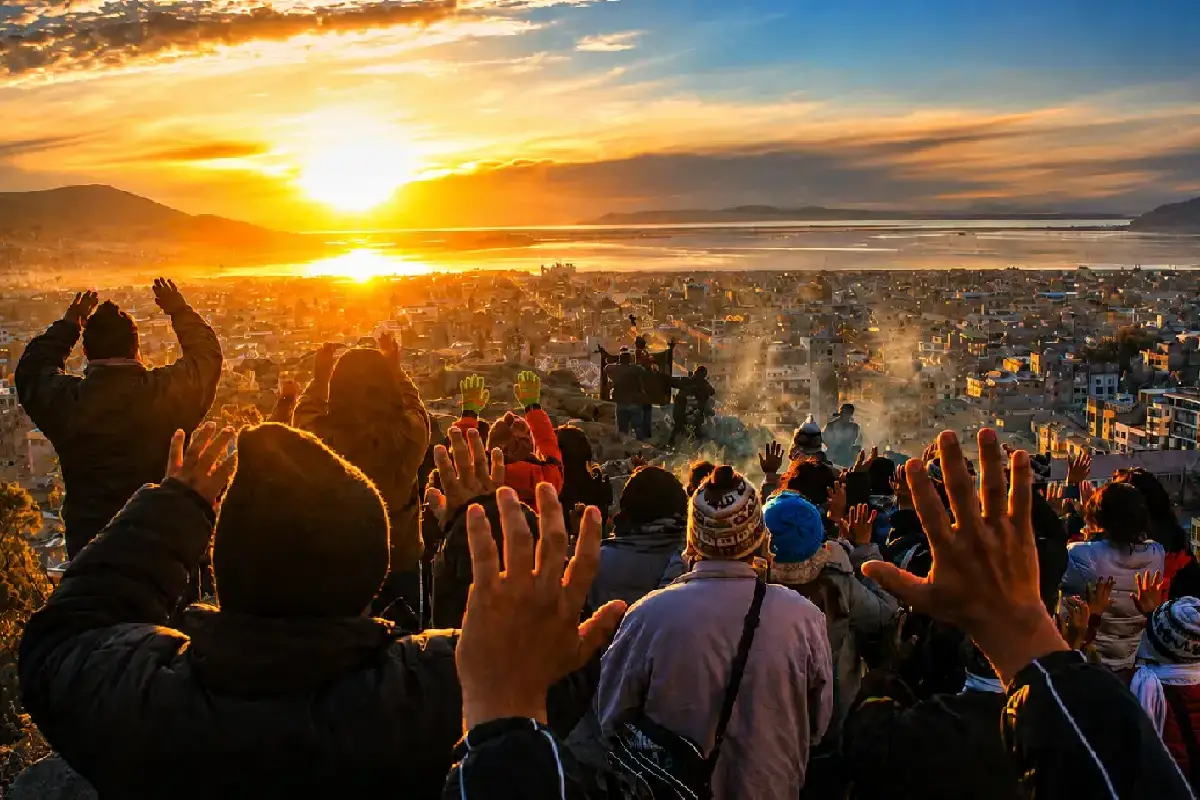
One of the most important moments of the Andean New Year takes place before sunrise.
When the Sun appears on the horizon, participants often raise their hands to receive its energy. The sunrise marks the symbolic return of the Sun after the longest night of the year. For the Andean worldview, receiving that first light means opening oneself to a new stage with respect, gratitude, and hope.
Where is the Andean New Year celebrated in Cusco?
In Cusco, the Andean New Year is connected to sacred spaces, the landscape, ancient solar temples, and the protective mountains that surround the city. Every year, celebrations are usually held in archaeological sites, open plains, viewpoints, traditional neighborhoods, or outdoor spaces where people can receive the sunrise on June 21.
Coricancha, Qenqo, and Sacsayhuaman
Among the most symbolic places in Cusco are Qoricancha, Qenqo, and Sacsayhuaman. Each one holds special value in Andean ritual memory.
- Coricancha was one of the most important religious spaces in Inca Cusco. Its name is commonly linked to the idea of a golden enclosure, and its importance is deeply connected to solar worship.
- Q’enqo also has a strong ritual character. Its name is often translated as “labyrinth,” and the site is associated with ceremonial spaces, channels carved into stone, caves, and passages linked to the inner world of the earth.
- Sacsayhuamán, meanwhile, is one of Cusco’s most important ceremonial settings. The Dirección Desconcentrada de Cultura de Cusco describe it as one of the most important places after the ancient llaqta of Qosqo and connects it with the House of the Sun of Hanan Qosqo.
Protective Apus and the Andean ritual landscape
The Andean New Year in Cusco is also understood through its Apus, the sacred mountains that protect the city and its communities. For this reason, many ceremonies are held facing the mountains or in places where the presence of the landscape can be felt.
Where is the Andean New Year celebrated in Peru?
The Andean New Year is celebrated in different regions of Peru, especially in the highlands. Although each community has its own way of honoring this date, the main meaning remains the same: to welcome the new cycle, give thanks for the past, and ask for balance in the time ahead.
Puno and Lake Titicaca
Puno is one of the places where the Andean New Year has the strongest cultural presence in Peru. Its connection with Lake Titicaca, the Altiplano, and Aymara tradition gives this holiday a deep sense of identity.
In the city of Puno and nearby areas, many ceremonies take place on Huajsapata Hill, Kuntur Wasi, and other ceremonial viewpoints that allow people to watch the sunrise over the Altiplano landscape and Lake Titicaca.
Cusco and Andean sacred spaces
Cusco is also an important place for understanding the Andean New Year. The new cycle can be welcomed in spaces such as Coricancha, Sacsayhuamán, Qenqo, and other sacred Andean sites.
Andean New Year rituals and Celebrations
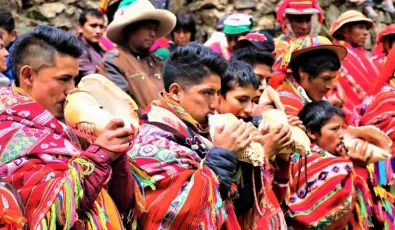
The Andean New Year brings together several ceremonial practices. Some celebrations are more intimate and community-based, while others take place in public spaces with authorities, musicians, dancers, and visitors.
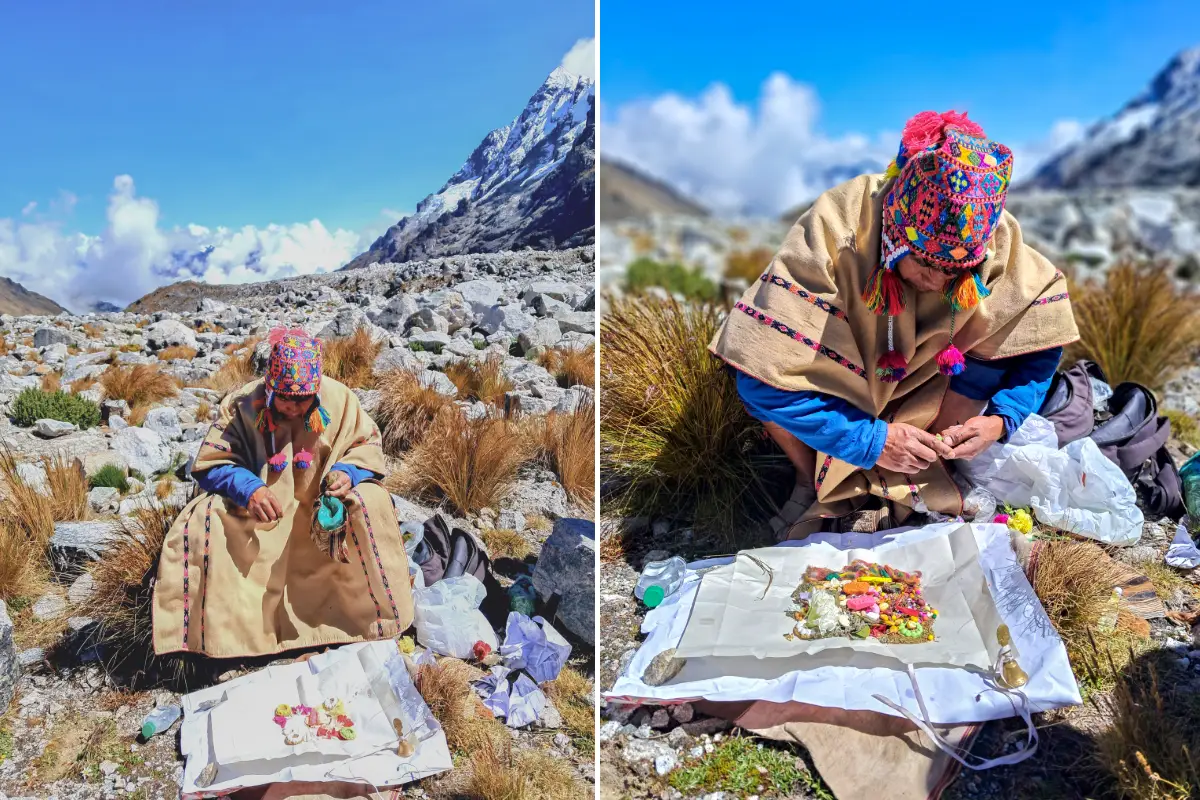
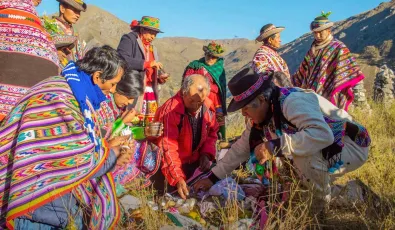
Offering to Pachamama or Haywarikuy
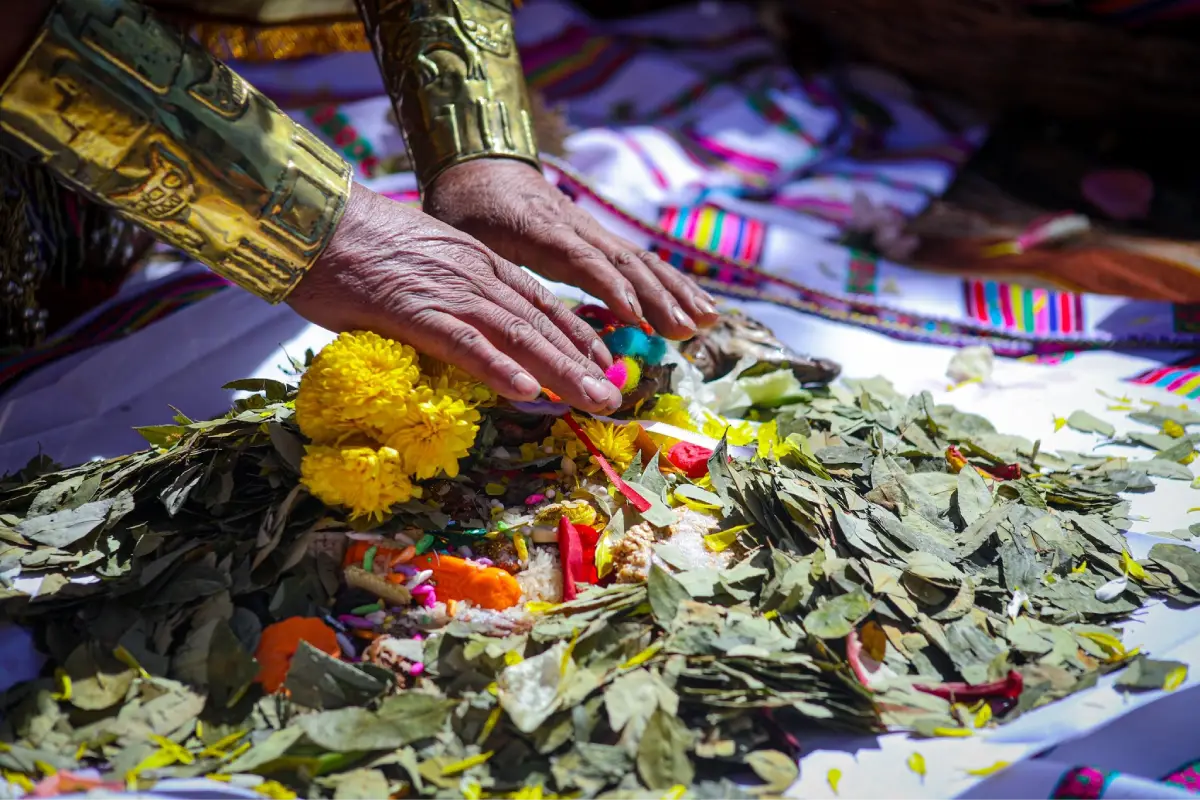
Haywarikuy is an offering ceremony dedicated to Pachamama. Through it, communities thank Mother Earth for the food and blessings she provides.
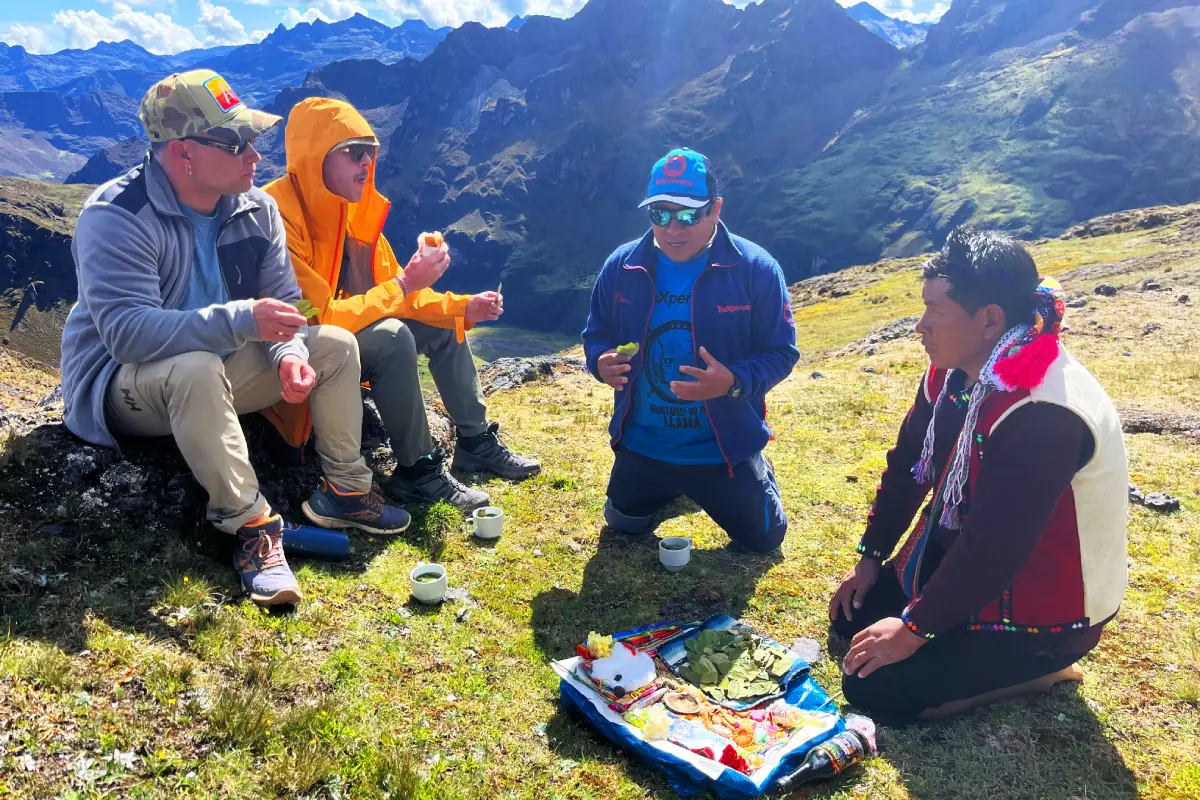
The offering may include coca leaves, flowers, seeds, food, chicha, wine, sweets, colored wool, and other ritual elements. Each item has symbolic value and is offered as a sign of respect and reciprocity.
Before beginning the offering to Pachamama, it is also common to share coca tea among those present as a gesture of welcome, respect, and preparation for the ceremony.
In Andean tradition, people do not ask without first giving thanks. For this reason, the offering to Pachamama expresses the principle of ayni. It is a way to maintain balance between human beings and the forces that sustain life.
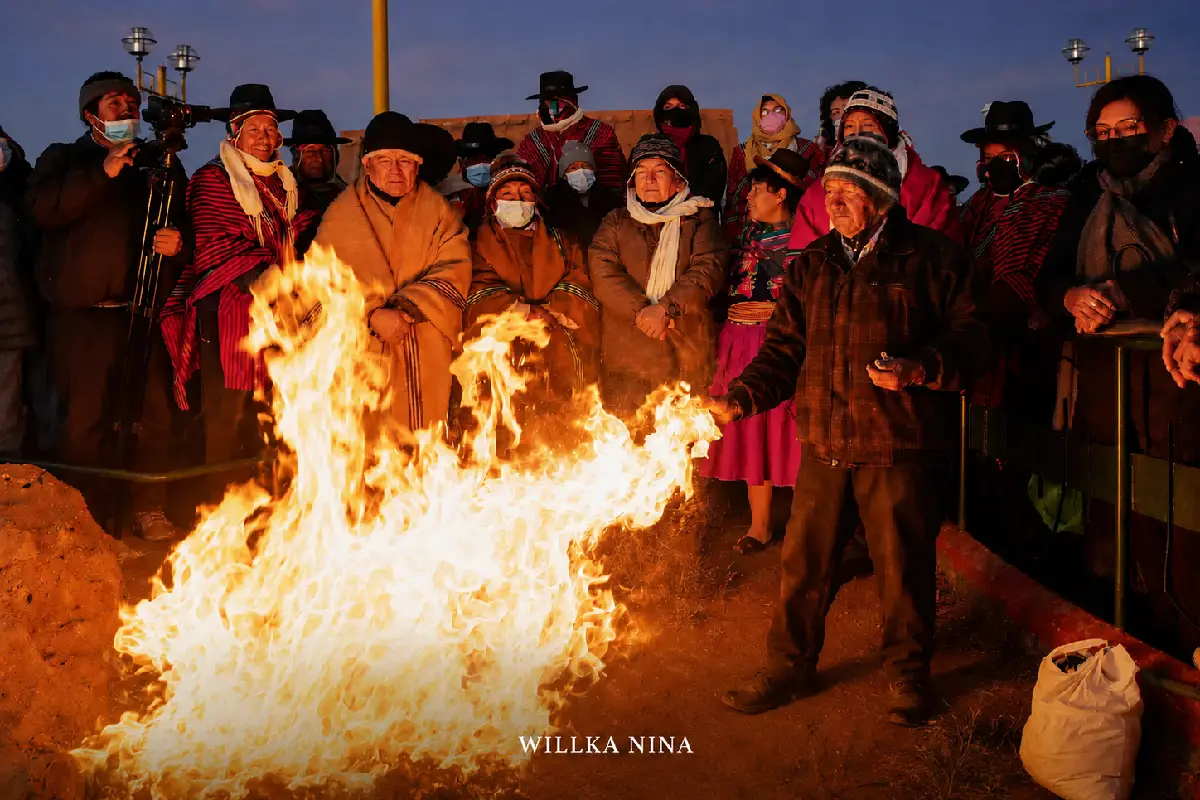
Willka Nina, the Sacred Fire Ritual
Willka Nina can be understood as the sacred fire within certain Andean ceremonies.
Fire accompanies the beginning of the new cycle because it transforms, lights up the night, warms the ritual space, and symbolizes the passage from one stage to another. In some ceremonies, the fire receives part of the offerings prepared for Pachamama, as a way of carrying prayers and gratitude toward the sacred world.
Within the Andean New Year, fire helps mark the closing of the previous cycle and the opening of a new time. Its presence reminds us that renewal comes not only from the Sun rising on the horizon, but also from the energy awakened within the community.
Inti Raymi, the Festival of the Sun
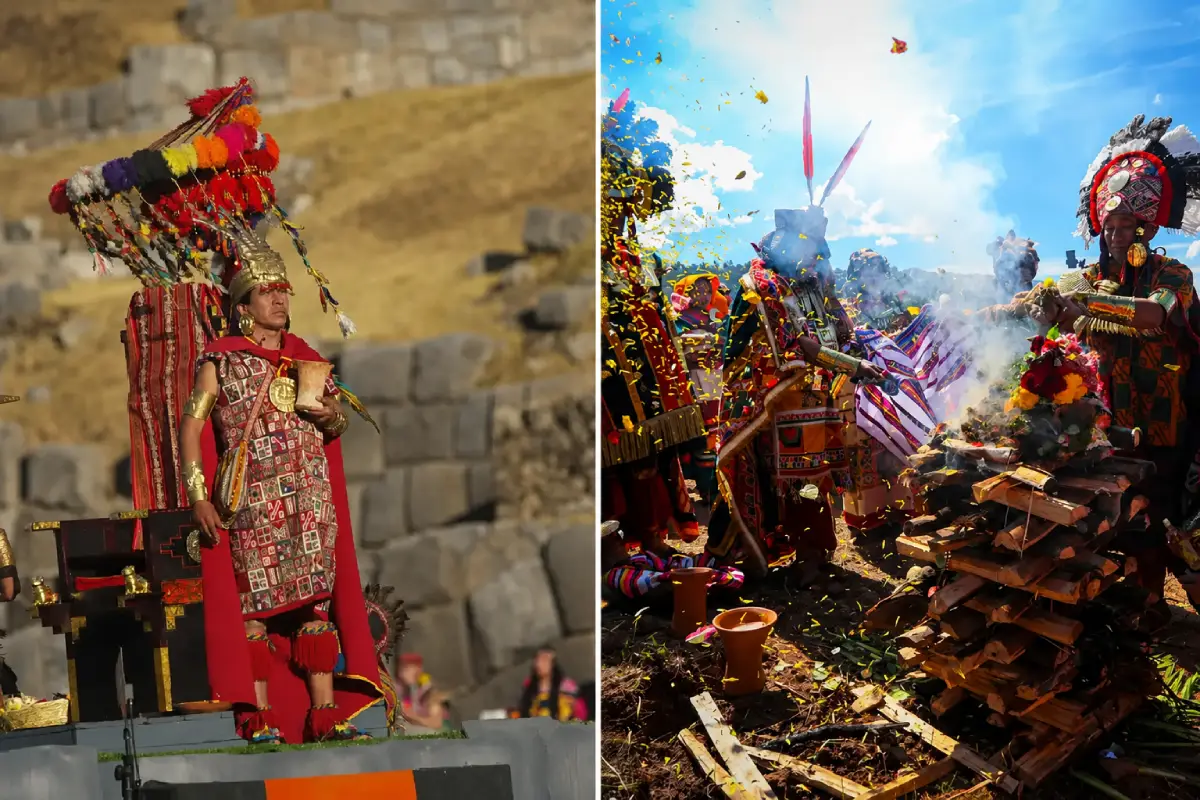
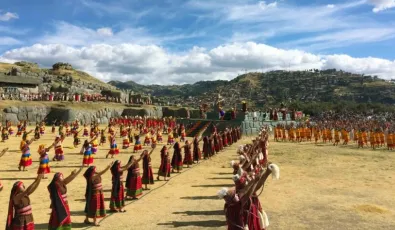
Inti Raymi is one of the most important solar celebrations in the Andean world. In Cusco today, it takes place every June 24, just a few days after the Andean New Year, and is dedicated to the Sun, considered a source of life, fertility, and order.
Although the Andean New Year and Inti Raymi are not exactly the same, they are deeply connected by their closeness to the winter solstice and their link to the return of light. Today, Inti Raymi is staged in symbolic locations such as Coricancha, Cusco’s Main Square, and Sacsayhuaman. This holiday recalls the importance of the Sun in the political, spiritual, and agricultural life of Tawantinsuyu and keeps alive one of Peru’s most representative cultural expressions.
Differences Between the Andean New Year and Inti Raymi
| Aspect | Andean New Year | Inti Raymi |
| Date | June 21, during the winter solstice | June 24 |
| Main idea | The beginning of a new agricultural, spiritual, and community cycle | The Festival of the Sun and the renewal of the bond with Tayta Inti |
| Associated name | Willka Kuti, Machaq Mara, Musuq Wata | Inti Raymi |
| Cultural origin | Andean traditions, especially Aymara and Quechua | Inca tradition linked to solar worship |
| Main moment | Sunrise, when the first rays of the Sun are received | Daytime ceremony with a ritual performance in Cusco |
| Symbolic meaning | The return of the Sun, the closing of one cycle, and the opening of a new one | Gratitude to the Sun as a source of life, order, and fertility |
| Common practices | Offerings to Pachamama, reading the agricultural cycle, and giving thanks | Ceremonies, music, dances, and historical reenactment |
| Main locations | Puno, Cusco, Tiwanaku, and highland Andean communities | Cusco: Coricancha, Plaza de Armas, and Sacsayhuamán |
| Current focus | Spiritual, community-based, and ceremonial | Cultural, touristic, and historical - ritual |
Andean New Year FAQs
Is the Andean New Year a public holiday in Peru?
No, it is not a national public holiday in Peru. However, ceremonies, cultural activities, and community gatherings are held in several Andean regions. In 2024, a proposal to recognize this date was discussed, but it did not become a mandatory national holiday.
What time do Andean New Year ceremonies begin?
They usually begin very early in the morning, before sunrise. The purpose is to wait for and receive the first rays of Tayta Inti.
What elements are used in the Andean New Year ceremony?
Common elements include coca leaves, flowers, seeds, food, traditional drinks, and colored wool. Each item has symbolic value within the offering.
What language is used during the Andean New Year ceremony?
Quechua, Aymara, or Spanish may be used, depending on the region and the people taking part in the ceremony.
What is the relationship between the Andean New Year and Pachamama?
Pachamama is at the heart of the gratitude expressed during this celebration. People thank her for the harvest, life, food, and the fertility of the earth.
Is the Andean New Year the same as Inti Raymi?
No, they are not the same, although they are related.
The Andean New Year is celebrated on June 21, during the winter solstice, and is linked to the beginning of a new cycle.
Inti Raymi is celebrated in Cusco on June 24 and is the great festival dedicated to the Sun, with performances at Coricancha, the Main Square, and Sacsayhuamán. Both dates share solar symbolism, but they have different contexts and ways of being celebrated.

Add new comment