


Long before the Incas, the Tiwanaku culture flourished near Lake Titicaca and became one of the most important civilizations in the Andes. The Tiwanaku people built massive stone temples, developed farming methods suited to the highlands, and left behind a legacy that we can still see today.
The famous Gateway of the Sun, impressive monoliths, and ruins of Puma Punku are all part of that story. Although more than a thousand years have passed since its golden age, Tiwanaku continues to fascinate visitors with its remarkable buildings and the mysteries still hidden beneath the ground.
Tiwanaku Culture Facts and Key Features
Fact | Information |
| Name | Tiahuanaco or Tiwanaku |
| Location | La Paz, Bolivia, near Lake Titicaca |
| Altitude | 12,631 ft (3,850 m) |
| Peak period | AD 500–900 |
| Protected area | 71.5 hectares (175 acres) |
| Main center | City of Tiwanaku |
| World Heritage status | UNESCO World Heritage Site since 2000 |
What Is Tiwanaku Culture?
The Tiwanaku or Tiahuanaco culture was a pre-Inca civilization that emerged in the Andean highlans and reached its peak between AD 500 and 900. Its main city became an important religious and political center, with temples, pyramids, and stone monuments that can still be seen today.
Over time, its influence spread across several parts of the Andes, including southern Peru, northern Chile, and regions of present-day Bolivia, where its capital was located.
Where is Tiwanaku located?
The Tiwanaku archaeological complex is located about 72 km from La Paz, Bolivia, and can be visited year-round. The ancient city stands at approximately 12,631 ft (3,850 m) above sea level, near Lake Titicaca on the Altiplano, also known as the Collao Plateau. This vast Andean highland is considered the world's second-highest major plateau after the Tibetan Plateau.
Who Discovered the Tiwanaku Culture?
No single person is credited with discovering the Tiwanaku culture. Andean communities knew about the ruins of Tiwanaku long before the Spanish arrived.
- In 1553. chronicler Pedro Cieza de León described the massive stone structures in his Chronicle of Peru.
- In the 19th century, travelers and archaeologists begin studying, sketching, and documenting the ancient monuments.
- In the 20th century, archaeological excavations reveal more about Tiwanaku’s history, its people, and its importance in the Andes.
How to Get to Tiwanaku?
There are several ways to reach Tiwanaku from Peru, Chile, and other parts of Bolivia, either by road or by combining a flight with an overland transfer.
How to Get to Tiwanaku from La Paz, Bolivia
To reach Tiwanaku from La Paz, you can follow this route:
- Route: La Paz → El Alto → Tiwanaku → Tiwanaku Archaeological Complex
- Travel time: Approx. 1.5 to 2 hours
- Transportation: Minibus from the area near La Paz's General Cemetery, private transport, or an organized guided tour.
How to Get to Tiwanaku from Puno, Peru
To reach Tiwanaku from Puno, you need to cross the Peru–Bolivia border at Desaguadero.
- Route: Puno → Desaguadero Border Crossing → Tiwanaku → Tiwanaku Archaeological Complex
- Travel time: Around 4 hours of driving, plus time for immigration procedures and transfers.
- Transportation: You can book an organized tour from Puno that includes the border crossing. International buses also operate between Puno and La Paz, but most do not stop in Tiwanaku.
Alternatively, you can take a minibus from Desaguadero, get off near the highway turnoff for Tiwanaku, and continue to the archaeological complex of Tiwanaku on foot or by local transport.
Note: Bolivia is one hour ahead of Peru, so remember to set your watch forward by one hour when crossing the border.
How to Get to Tiwanaku from Arica, Chile
To reach Tiwanaku from Arica, Chile, you can follow this route:
- Route: Arica → Chungara Tambo Quemado Border Crossing → El Alto → La Paz → Tiwanaku Archaeological Complex
- Travel time: Approximately 7.5 hours of driving, plus time for immigration procedures and transfers.
- Transportation: International buses operate between Arica and La Paz. From La Paz, you can take local transportation or join an organized tour to reach the archaeological complex.
How to Get to Tiwanaku by Plane
The closest airport to Tiwanaku is El Alto International Airport (LPB), which serves La Paz, Bolivia. You can fly there from several South American cities, either directly or with a connection. From the airport, you can continue by road to the Tiwanaku archaeological complex.
If you're visiting Cusco as part of a Peru tour package, you can take a direct flight from Alejandro Velasco Astete International Airport (CUZ) to La Paz. The flight takes approximately 1 hour and 15 minutes, making it a convenient option for adding Tiwanaku to your Peru itinerary.
Tiwanaku Entrance Fees and Opening Hours
The Tiwanaku archaeological complex is open daily, with different ticket prices for Bolivian and international visitors.
Ticket type | Information |
International visitors and Peruvians | Bs 100 (US$10 / S/30 PEN soles) |
Bolivian visitors | Bs 15 (US$2 / S/05 PEN soles) |
Bolivian schoolchildren | Bs 5 (less than US$01 / S/2 PEN soles) |
Opening hours | 09:00 a.m. to 04:00 p.m. |
*Bs: Bolivian boliviano (Pesos bolivianos), Bolivia’s official currency.
Please note: Payment is made in cash, so it is a good idea to bring Bolivian currency and check current ticket prices before your visit.
Best Time to Visit Tiwanaku
The best time to visit Tiwanaku is between May and October, when rain is less frequent and the skies are often clearer. However, mornings and nights can still be very cold.
- Dry season (May to October): Generally sunny days, little rain, and cold nights, making it a good time to visit the ruins and take photos of Tiwanaku.
- Rainy season (November to April): Greener landscapes, cloudy skies, and frequent rain, especially between December and March.
Best Things to See in Tiwanaku
The Tiwanaku archaeological complex is the best place to learn about this ancient civilization and was declared a UNESCO World Heritage Site in 2000. During your visit, you can see impressive stone monuments, ancient temples, and remarkable structures, including:
1. Gateway of the Sun
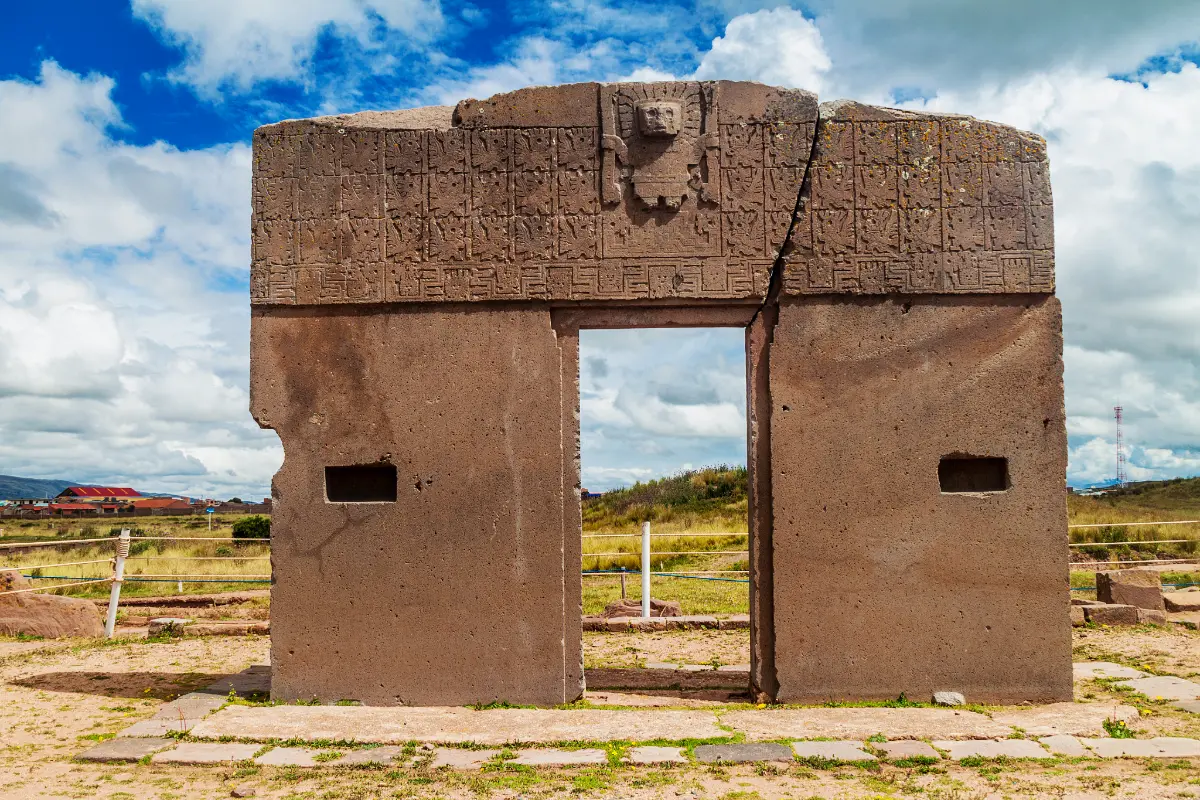
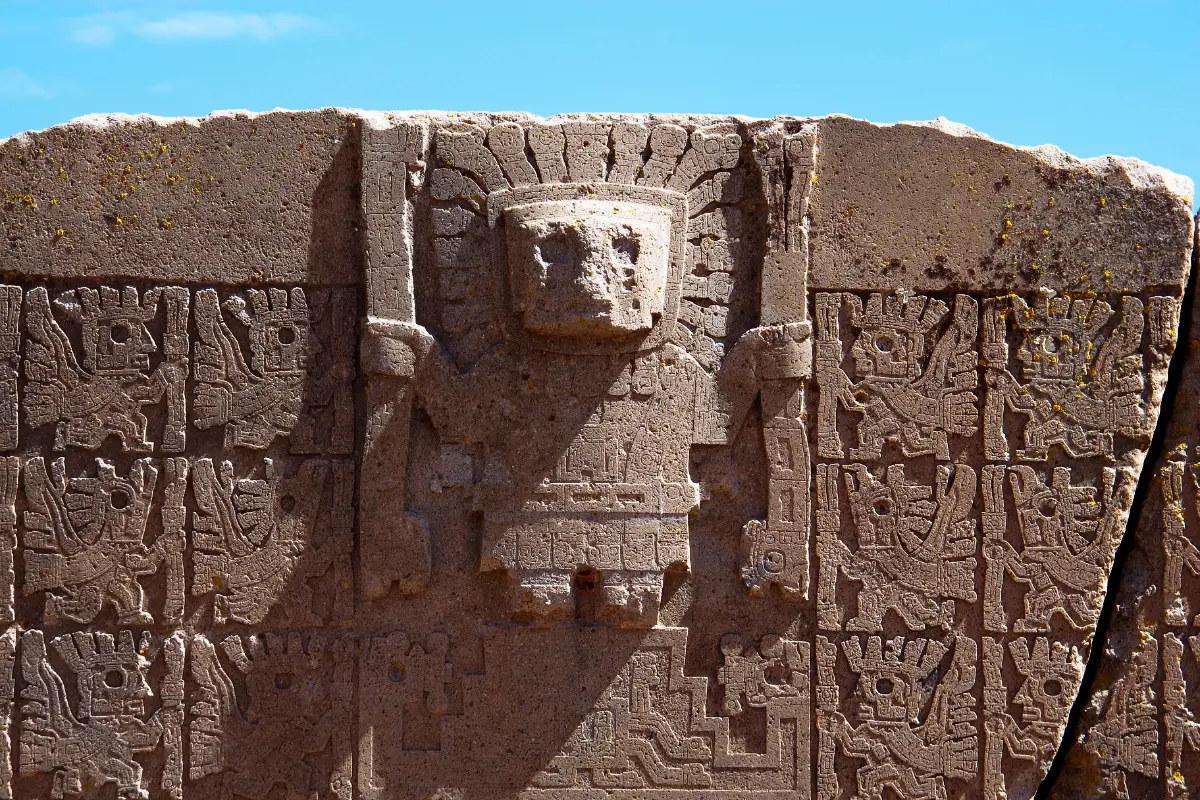
The Gateway of the Sun is one of Tiwanaku's most famous monuments. Carved from a single block of andesite, it stands about 3 m tall and 4 m wide. At the top is the Staff God, surrounded by winged figures and other symbols carved into the stone.
Its decorations have been linked to religious beliefs and the passage of time, although their exact meaning is still being studied. The gateway now stands within the Kalasasaya complex and is one of the main attractions at the archaeological site.
2. Kalasasaya Temple
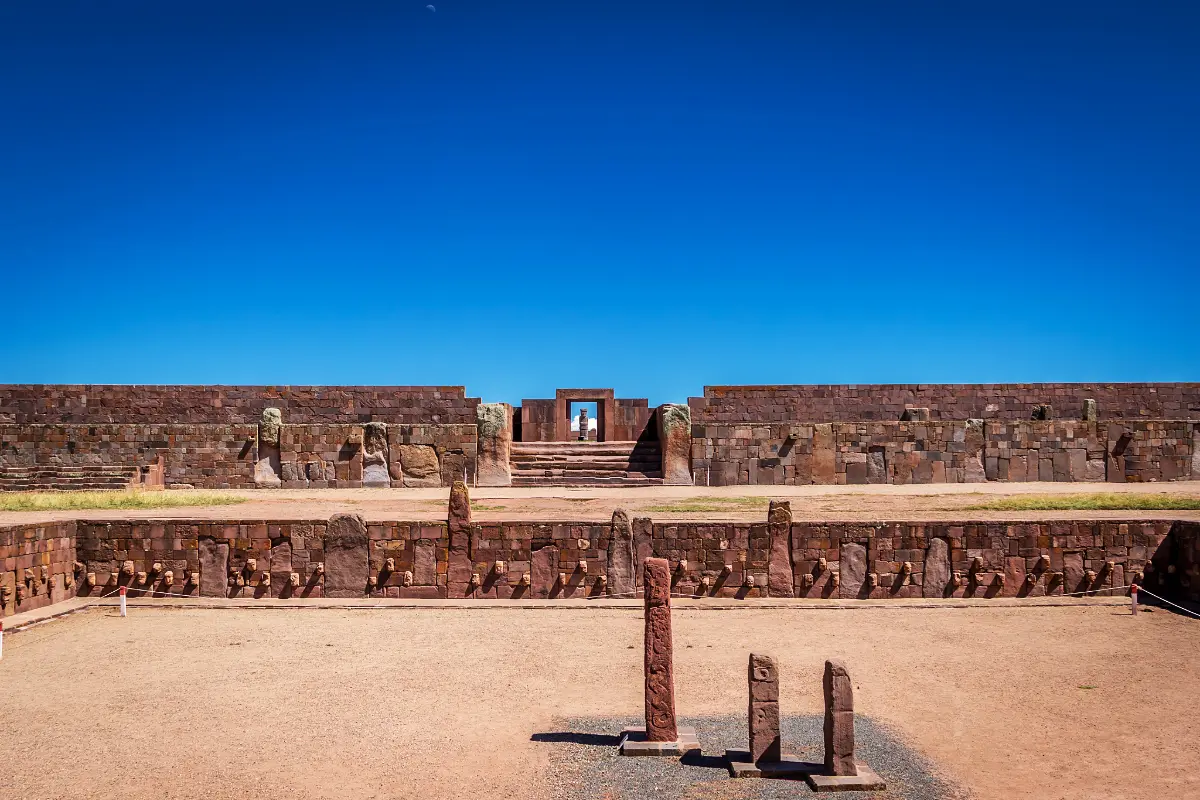
Kalasasaya is a large rectangular ceremonial enclosure surrounded by stone walls and pillars. Its name is often interpreted as “standing stones”, and it contains important sculptures, including the Ponce Monolith.
The layout of its structures has also been linked to observations of the Sun and the changing seasons. For this reason, Kalasasaya is considered one of the most important places for understanding Tiwanaku ceremonial practices.
Ponce Monolith
The Ponce Monolith is a stone sculpture about 3 m tall, discovered in 1957 inside Kalasasaya Temple. Carved from andesite, it shows a standing figure holding ceremonial objects in its hands.
The figure is decorated with animals, geometric symbols, and details of its clothing. It is one of the best-preserved sculptures at Tiwanaku and can still be seen in Kalasasaya.
3. Akapana Pyramid
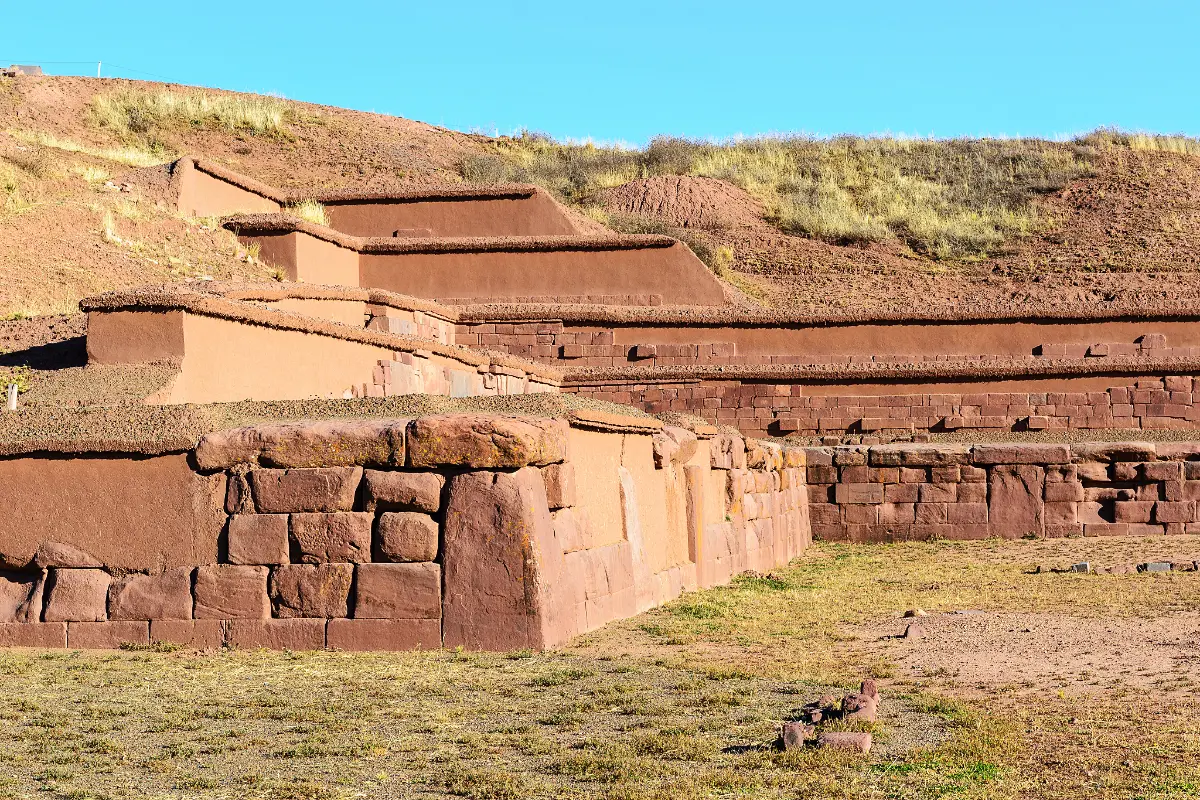
The Akapana Pyramid was one of the largest structures in Tiwanaku. It originally had seven stepped terraces and stood more than 18 m high, with stone walls and a network of channels designed to carry water away.
A ceremonial area stood at the top, while the terraces formed a monumental structure overlooking the surrounding landscape. Only part of the original construction remains today, but its impressive scale is still easy to appreciate.
4. Puma Punku
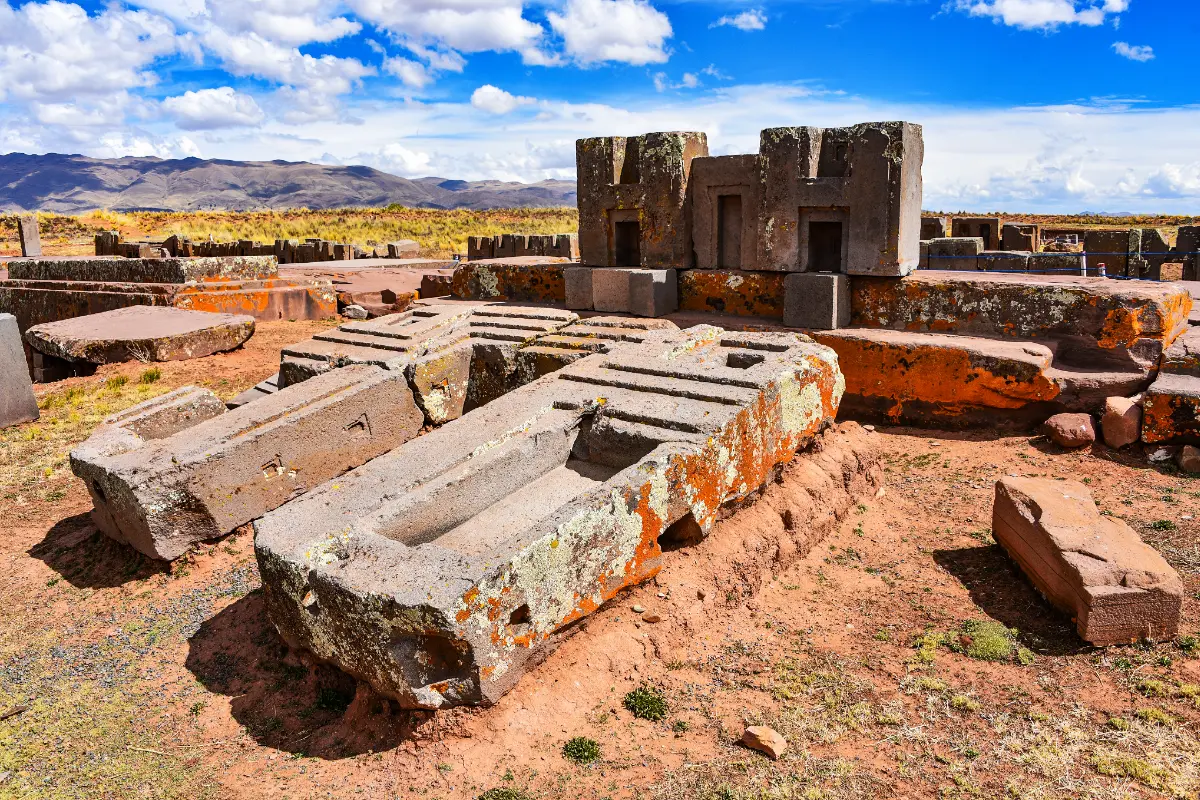
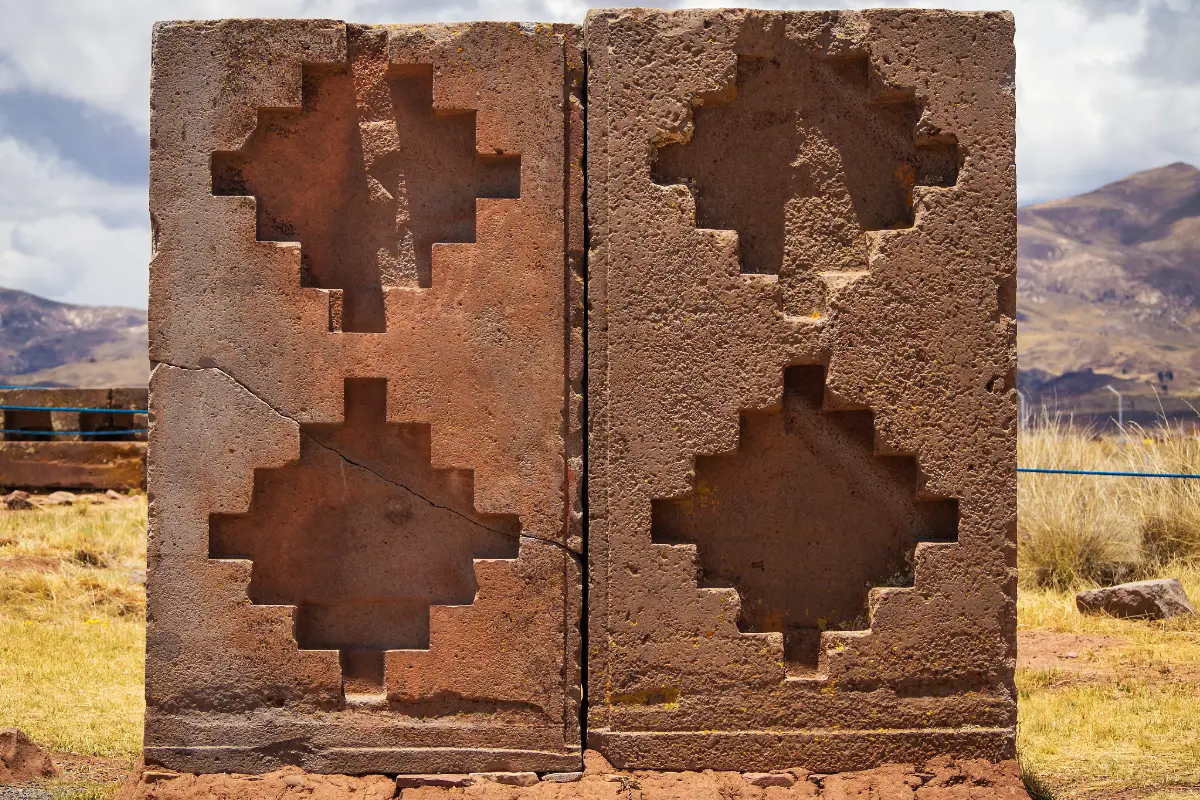
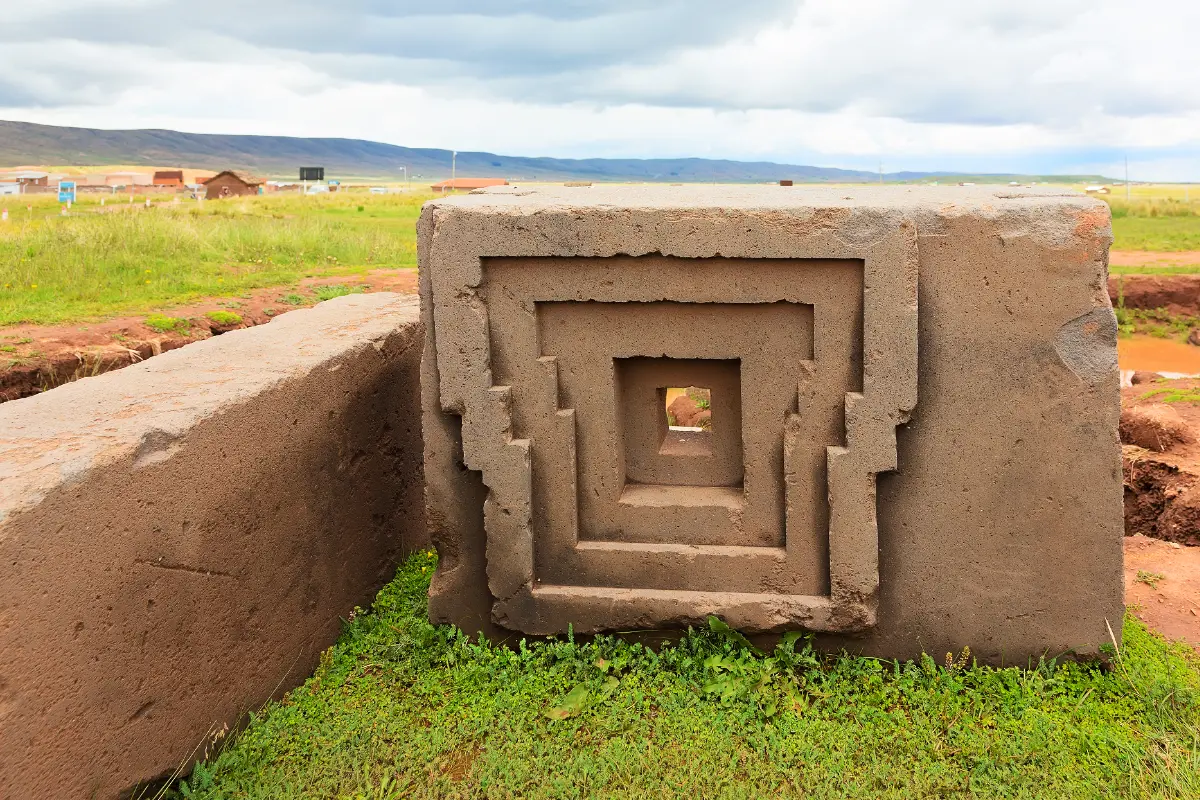
Puma Punku, meaning “Gate of the Puma,” is a ceremonial complex famous for its huge stone blocks and precisely carved surfaces. Some pieces feature straight cuts, grooves, and geometric shapes that show the skill of the people who made them.
The site once included platforms, monumental entrances, and ceremonial areas built from sandstone and andesite. Although much of it lies in ruins, its stone blocks remain among Tiwanaku's most striking features.
5. Semi-Subterranean Temple
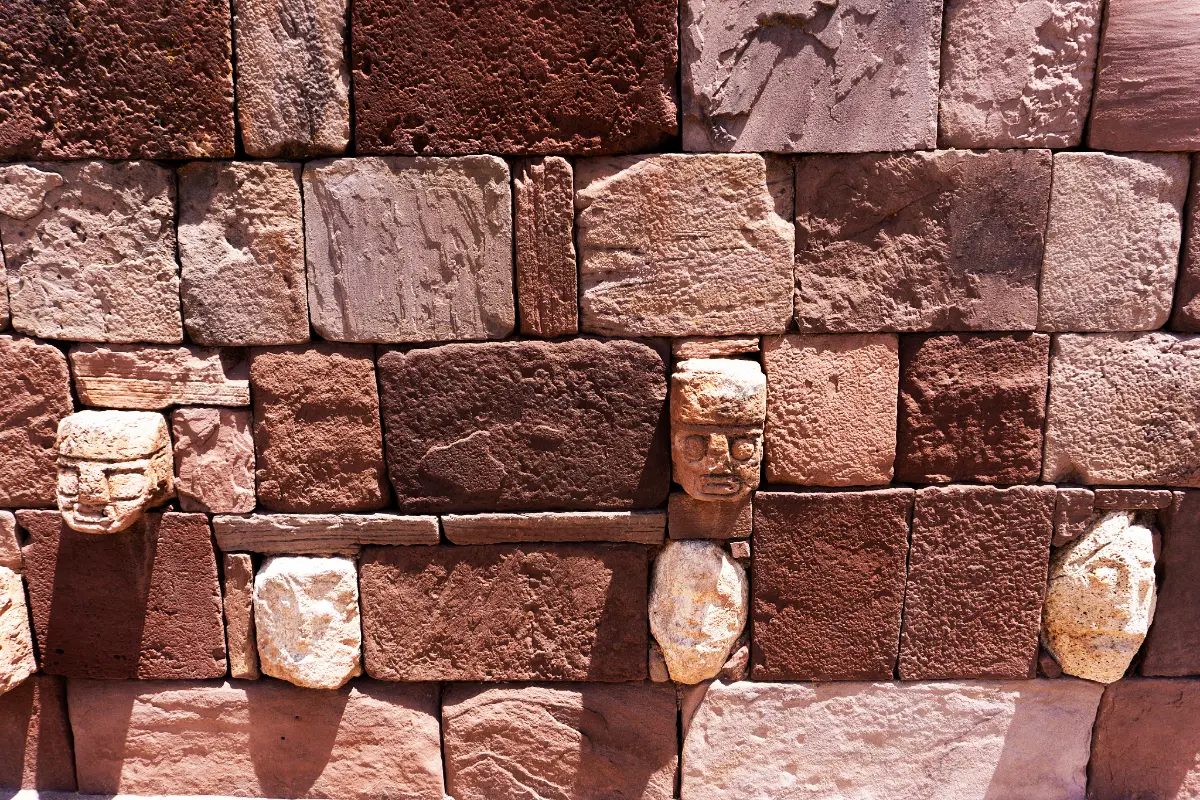
The Semi-Subterranean Temple is an ancient ceremonial enclosure built below ground level. Its walls are made from stone pillars and blocks, with numerous carved human heads showing different faces and expressions.
Several important sculptures were found here, including the Bennett Monolith. The temple was one of the most distinctive religious spaces in the ancient city of Tiwanaku.
More Places to Visit Near Tiwanaku
1. Tiwanaku Ceramic Museum
This museum displays objects found during archaeological excavations, including pottery, ceremonial cups, containers, and other items used by Tiwanaku inhabitants. Its galleries show how the civilization's pottery and artistic styles developed, from their cultural roots to their period of greatest influence.
2. Tiwanaku Lithic Museum
The Lithic Museum houses important stone sculptures, including the impressive Bennett Monolith. You can also see human and animal figures carved from different types of stone, with details that reveal the religious symbols used by the ancient Tiwanaku people.
Bennett Monolith
The Bennett Monolith, also known as Pachamama, is the largest complete sculpture found at Tiwanaku, standing 7.3 m tall. It was discovered in 1932 by archaeologist Wendell Bennett inside the Semi-Subterranean Temple and is now housed in the Tiwanaku Lithic Museum.
Carved from a massive stone block, it depicts a standing human figure with its arms resting across its chest. Religious symbols, animals, and geometric patterns cover its body. Its exact meaning is still being studied.
Tips for Visiting Tiwanaku
Before visiting the Tiwanaku archaeological complex, keep these recommendations in mind to make your trip more comfortable and avoid unnecessary problems.
- Take time to adjust to the altitude: Tiwanaku is 12,631 ft (3,850 m) above sea level, so spending a few days getting used to the elevation before your visit is recommended.
- Bring warm clothing: Mornings can be very cold, even during the dry season, so pack a jacket and comfortable layers.
- Protect yourself from the sun: Use sunscreen, a hat, and sunglasses, as sunlight is strong on the high plateau.
- Wear comfortable shoes: The visit involves dirt paths and uneven ground, so choose footwear with good grip.
- Carry cash: Entrance tickets are paid for in Bolivian currency, and card payments are not available.
- Hire a local guide: You can visit the complex on your own, but a guide can help you better understand the site's history and monuments.
- Respect the archaeological site: Do not climb on structures or touch sculptures, and stay on marked paths to help protect the ruins.
Tiwanaku Culture History: Origins and Expansion
The history of the Tiwanaku culture began with small farming communities that gradually grew into one of the most important civilizations in the Andes. Their development was closely tied to the way they used the highland environment and the connections they built with other communities.
Origins and Early Settlements
Tiwanaku's origins go back several centuries before the Common Era, when small communities began settling near Lake Titicaca. They relied mainly on farming, fishing, and raising llamas and alpacas, making use of the resources available in the area.
As these settlements grew, their inhabitants began building ceremonial spaces, laying the foundations for what would eventually become the citadel of Tiwanaku.
Growth and Territorial Expansion
From the fifth century AD onward, Tiwanaku grew into an important political and religious center. At the same time, its people improved their farming techniques and built relationships with other Andean societies.
Its influence reached the valleys of Moquegua, in present-day Peru, and areas of northern Chile and Bolivia. New settlements appeared in some places, while others maintained trade and cultural exchanges with Tiwanaku.
The Height of the Tiwanaku Civilization
Between AD 500 and 900, Tiwanaku reached its greatest period of development. Large structures such as the Akapana Pyramid, the Kalasasaya Temple, and other ceremonial spaces were built, turning the city into an important center for gatherings and religious worship.
Farming, pottery, and stonework also flourished, while religious symbols spread across different parts of the Andes. Many of the monuments visitors see today date back to this remarkable period.
How was Tiwanaku society organized?
Tiwanaku society combined political and religious leadership with the work of farmers, herders, and skilled craftspeople. Its economy depended mainly on growing crops, raising llamas and alpacas, and exchanging goods with communities across the Andes.
Political Organization and Social Hierarchy
Tiwanaku society combined political and religious leadership with the work of farmers, herders, and skilled craftspeople.
Local communities also kept their own ways of organizing daily life and worked together on farming and community projects. This cooperation helped the city and its surrounding settlements grow.
Farming and Raised-Field Agriculture
The Tiwanaku people mainly grew potatoes, quinoa, oca, and other crops that could withstand the cold. To make better use of the land around Lake Titicaca, they developed raised fields known as sukakollos. These elevated plots were separated by water channels that helped control flooding and protect crops from frost.
This system improved agricultural production in a region where low temperatures made growing food difficult.
Raising Llamas and Alpacas
Llamas and alpacas were essential to Tiwanaku communities. These animals provided meat, wool for weaving, and other resources needed in daily life. They were also well suited to the open grasslands of the high plateau.
Llamas were used to carry goods along long trade routes, helping people stay connected with communities in other regions.
Trade and the Exchange of Goods
The Tiwanaku people maintained a wide trading network connecting the highlands with valleys and coastal areas. Llama caravans carried goods such as potatoes, quinoa, wool, and textiles, which were exchanged for corn, coca leaves, chili peppers, and other products from warmer regions.
These relationships gave communities access to food and materials that could not be produced near Lake Titicaca, while strengthening their ties with other Andean peoples.
Tiwanaku Religion and Worldview
Religion played an important role in Tiwanaku life. The people had a close connection with nature, the mountains, and Lake Titicaca. Their beliefs can be seen in the temples, sculptures, and ceremonies they created to honor sacred beings.
The Staff God
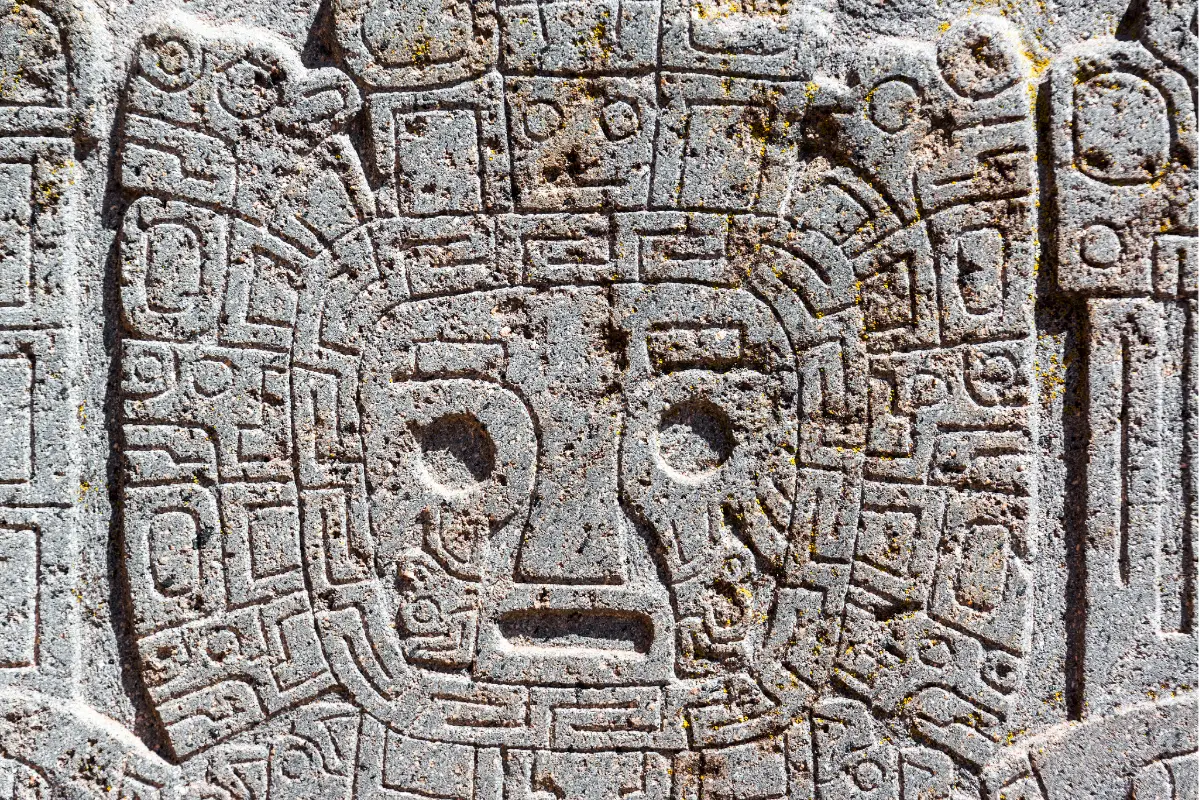
The Staff God is one of the best-known religious figures associated with Tiwanaku gods. On the Gateway of the Sun, the figure faces forward, wearing a headdress surrounded by rays and holding a staff-like object in each hand. Smaller winged figures appear on either side, seemingly moving toward the central figure.
Its exact identity remains a mystery. Although it is often linked to Viracocha, researchers have suggested other interpretations of its meaning and possible role in religious rituals.
Religious Beliefs, Symbols, and Rituals
The Tiwanaku people used images of felines, condors, snakes, and other animals in their sculptures and ceremonial objects. These figures were connected to their beliefs and the forces of nature they considered sacred.
In their temples and ceremonial areas, they made offerings of pottery, food, and valuable objects. Archaeologists have also found evidence of animal sacrifices, especially llamas, as part of certain religious ceremonies.
Tiwanaku Architecture
Tiwanaku architecture is known for its enormous stone structures, temples, and ceremonial platforms. Many were built with carefully shaped stone blocks and can still be seen at the Tiwanaku archaeological site in Bolivia.
Tiwanaku Culture FAQs
Why Did the Tiwanaku Culture Disappear?
The Tiwanaku culture began to decline around the 11th century, when its main city lost population and many communities left their settlements. For a long time, this decline was linked to a severe drought that may have affected crops and food supplies across the highlands.
More recent research, however, suggests that the decline was more complicated. Internal conflicts, political changes, and weakening connections between communities may all have played a part. Although the main urban center was abandoned, some communities continued to preserve Tiwanaku traditions in other regions.
What Is the Legacy of the Tiwanaku Culture?
The legacy of Tiwanaku lives on through its farming knowledge, architecture, and artistic traditions. Its raised-field systems showed how people could make productive use of highland land, while its building techniques and stonework left monuments that still impress visitors with their size and precision.
Its religious symbols, textile patterns, and traditions also contributed to the cultural development of the Andes. Today, the ruins of Tiwanaku, recognized as a UNESCO World Heritage Site in 2000, preserve part of the story of a civilization that flourished long before the Incas.
How do we know Tiwanaku's history if its people left no written records?
Researchers have pieced together Tiwanaku's history through archaeological excavations and the study of its temples, pottery, sculptures, and burial sites. These discoveries help explain how people lived, what they believed, and how they interacted with other Andean communities. Without written texts, questions about the Tiwanaku language also remain difficult to answer with certainty.
Do Tiwanaku's monuments still look the way they originally did?
Not entirely. Many buildings were partly destroyed over the centuries, while others lost stone blocks or were altered during restoration work. Today, original structures and reconstructed sections stand side by side, offering a glimpse of the city's former architecture.
Are traditional ceremonies still held at Tiwanaku?
Yes. Every June 21, people celebrate the Andean, Amazonian, and Chaco New Year, which is associated with the winter solstice and the return of the Sun. Traditional ceremonies, offerings, and cultural activities bring local communities and visitors together on this date.
How much time do you need to visit the archaeological complex?
Allow around 3 to 4 hours to see the main temples, the Gateway of the Sun, Puma Punku, and the Ceramic and Lithic museums. If you are traveling from La Paz, setting aside a full day is the easiest way to enjoy the visit without rushing.
Is Tiwanaku suitable for children and older adults?
Yes, as long as their physical condition and health allow it. The visit does not involve particularly difficult hiking, but the altitude, cold weather, and uneven ground can be uncomfortable. Take your time, rest when needed, and ask a doctor for advice beforehand if anyone has health concerns.
Can you take photos inside the archaeological complex?
Phone photography is allowed in designated areas, although there may be restrictions on cameras and professional equipment. Check the current rules before entering, and remember that flying a drone requires special permission.

Add new comment