



Cusco, the ancient capital of the Inca Empire, is known not only for its impressive archaeological sites, living Andean culture, and ancestral traditions, but also for its modern spaces that blend this heritage with the everyday life of Cusco’s people. That is why the markets in Cusco are one of the most authentic ways to experience the city beyond its squares, churches, and Inca sites.
On any given morning, you can hear locals speaking Quechua, the ancient language of the Incas, while you enjoy a fresh fruit juice from a nearby stall or shop for coffee, chocolate, and alpaca textiles. In this guide, we’ll show you how to visit these markets respectfully, what makes each one special, and why they are well worth your time. Let’s get started!
The best markets in Cusco based on your interests
Markets in Cusco | Best for | What it offers | Distance from Plaza de Armas |
San Pedro Market | First-time visitors and local food | Juices, meals, fruit, and souvenirs | 10 min on foot |
Cascaparo Market | Local feel near San Pedro | Vegetables, meat, juices, and local food | 10–12 min on foot |
San Blas Market | A quiet, artsy neighborhood | Breakfast, juices, food, and crafts | 10–15 min on foot |
Wanchaq Market | Daily life and local prices | Fruit, flowers, meat, cheese, and juices | 15–20 min on foot |
Huancaro Market | Farm-fresh products | Fruit, flowers, meat, cheese, and potatoes | 10–15 min by taxi |
Ttio Market | Urban market and daily life | Vegetables, meat, and local food | 10–15 min by taxi |
Vinocanchón Market | Wholesale and retail shoppers | Fruit, vegetables, meat, and staples | 25–35 min by taxi |
Cusco Handicraft Center | Souvenirs near the city center | Textiles, jewelry, ceramics, and gifts | 15 min on foot |
Pisac Artisan Market | Crafts in the Sacred Valley | Textiles, ceramics, jewelry, and paintings | 50–60 min by car |
Chinchero Market | Andean textiles and living culture | Weavings, crafts, and local products | 45 min by car |
San Pedro Market
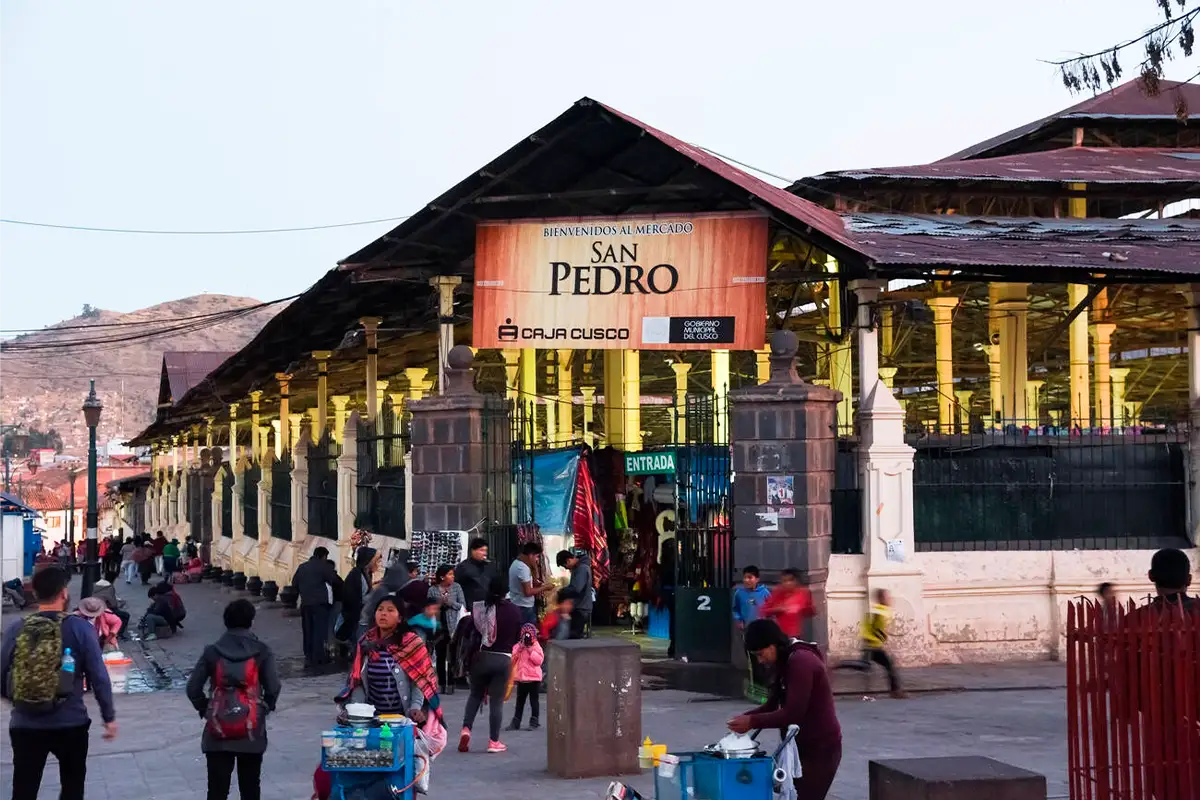
- Location: Calle Cascaparo s/n, next to San Pedro Square, about a 10-minute walk from the Plaza de Armas.
- Best time to go: Between 7:00 and 9:30 a.m., when there are more fresh products and fewer crowds.
In Cusco’s historic center, in front of the church of the same name and five blocks from the Plaza de Armas, you will find San Pedro Market, the most traditional and famous market in Cusco. It feels like a small food city within Cusco itself. Inside, you can find stalls selling vegetables, meat, local spices, flowers, and many other products from the Cusco region, as well as clothing and handicrafts made with llama and alpaca fibers.
The fresh juice section is famous for mixing different fruits with carob syrup, honey, pollen, maca, eggs, milk, and even beer. As you walk past the stalls, the women preparing the juices call out to potential customers in a very warm and playful way: “Come here, darling,” “I have what you need,” or “I’ll make it fresh for you.” It is quite a scene. The meat section can feel overwhelming for some visitors, as it displays offal and animal heads from different kinds of livestock in the open air.
The food area is very varied. You can find everything from traditional Peruvian dishes to one of the market’s best-known simple meals: fried eggs with rice.
Was it built by Gustave Eiffel?
Actually, no. The designer and builder of the Eiffel Tower had nothing to do with this market. It was designed by the engineer Teodoro Elmore in 1905. His proposal was selected and carried out in 1922, and the market was officially opened on June 7, 1925. In addition, Peru’s Ministry of Culture declared San Pedro Market in Cusco a monument that forms part of the Nation’s Cultural Heritage through Vice-Ministerial Resolution No. 331-2024-VMPCIC/MC.
Cascaparo Market
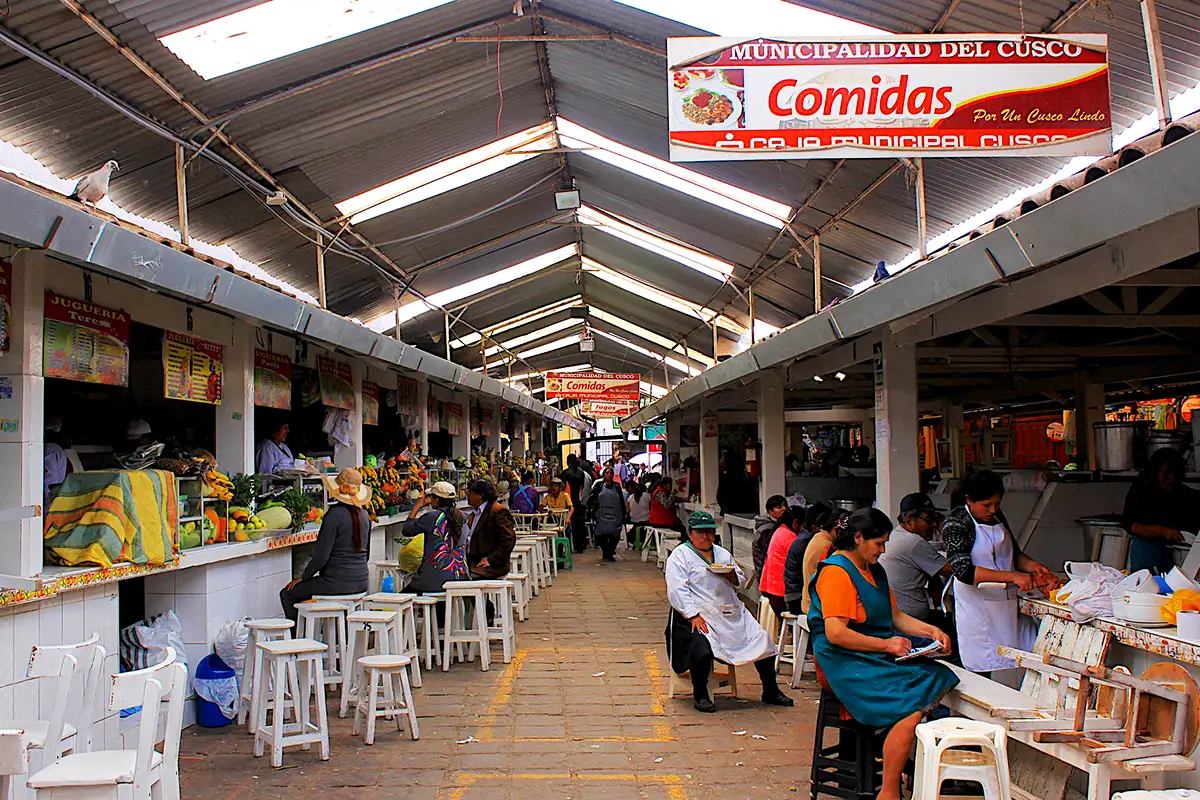
- Location: Calle Cascaparo Chico 700, near San Pedro market and train station.
- Best time to go: In the morning, ideally after visiting San Pedro, when there is still plenty of local shopping activity.
Cascaparo is very close to San Pedro Market, but it has a more local and less “touristy” feel. Here, you will not find a craft section or export-style products such as coffee or chocolate. It is better for seeing local products like vegetables, grains, potatoes, corn, meat, and items used in Andean offerings. It also has its own section for juices and simple local meals.
As you can see, this is not the most convenient market for buying souvenirs or spending a long time. It works better as a short stop to understand how local people shop and, sometimes, hear them speaking Quechua, the ancestral language of the Incas. It is best to ask for permission before taking photos.
San Blas Market
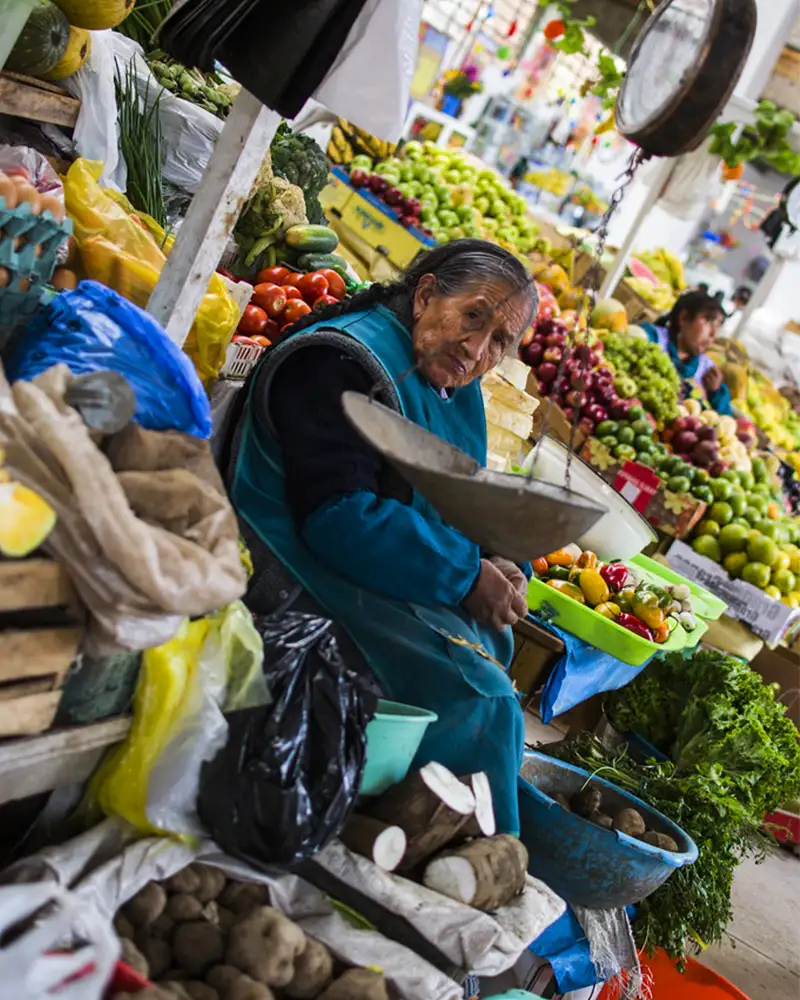 | 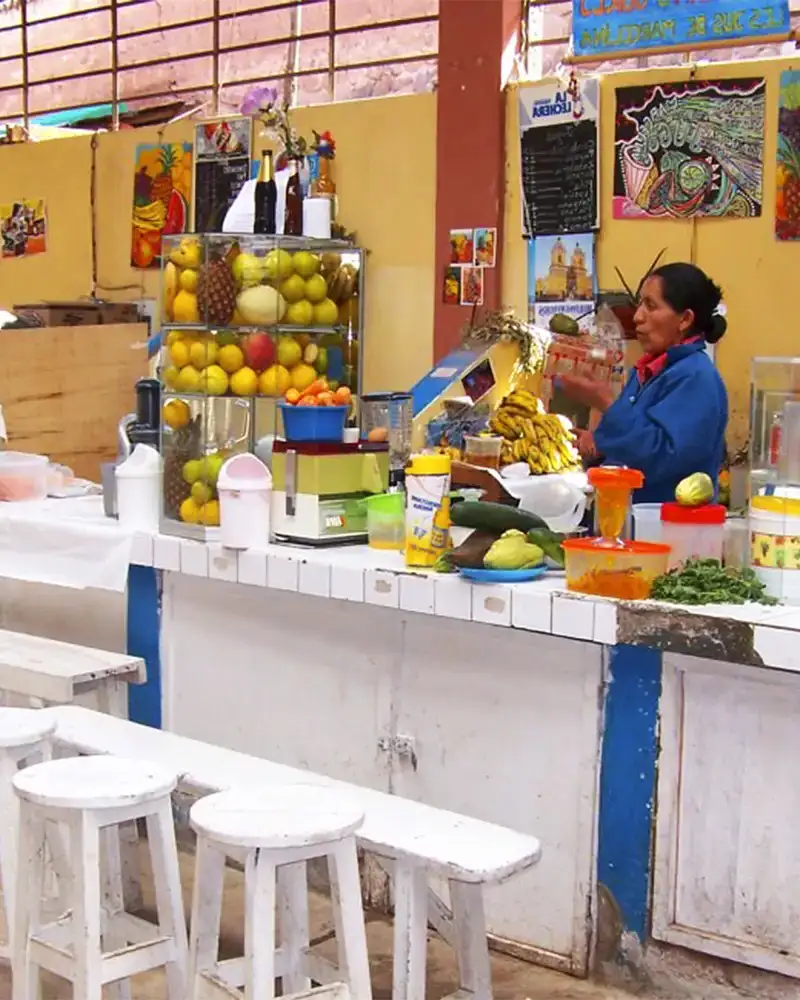 |
- Location: Around Pumapaccha and Chihuampata Avenue, one block from San Blas Chapel.
- Best time to go: Between 8:00 and 10:00 a.m. for breakfast. Go on Friday, Saturday, or Sunday if you want to see more plant and craft stalls.
This market is located one block from San Blas Church, in one of the oldest and most picturesque neighborhoods in the city. San Blas is known as Cusco’s neighborhood of artists and artisans. San Blas Market is a quieter version of a typical Cusco market, with sections for groceries, meat, fish, vegetables, fresh fruit, grains, plants, juices, and local food.
You will probably want to sit down at one of its food stalls, where you can enjoy a tasty chupe or chicken escabeche prepared in the traditional Cusco style, with the flavor of homemade food and at a very good price.
You should also visit the dairy section for its local cheeses, such as Andino or Paria. These yellow cheeses are often served as appetizers in different restaurants around the city. If you go early, you can enjoy a good breakfast with a refreshing fruit juice and a nice cup of coffee.
This market is a good option for travelers staying in San Blas or for those who want to avoid the noise and crowds of San Pedro.
Wanchaq Market
 |  |
- Location: Wanchaq District, near Garcilaso Avenue, about 15 minutes from the Plaza de Armas.
- Best time to go: Between 7:00 and 10:00 a.m., when more people are buying fresh products and there is less foot traffic than at midday.
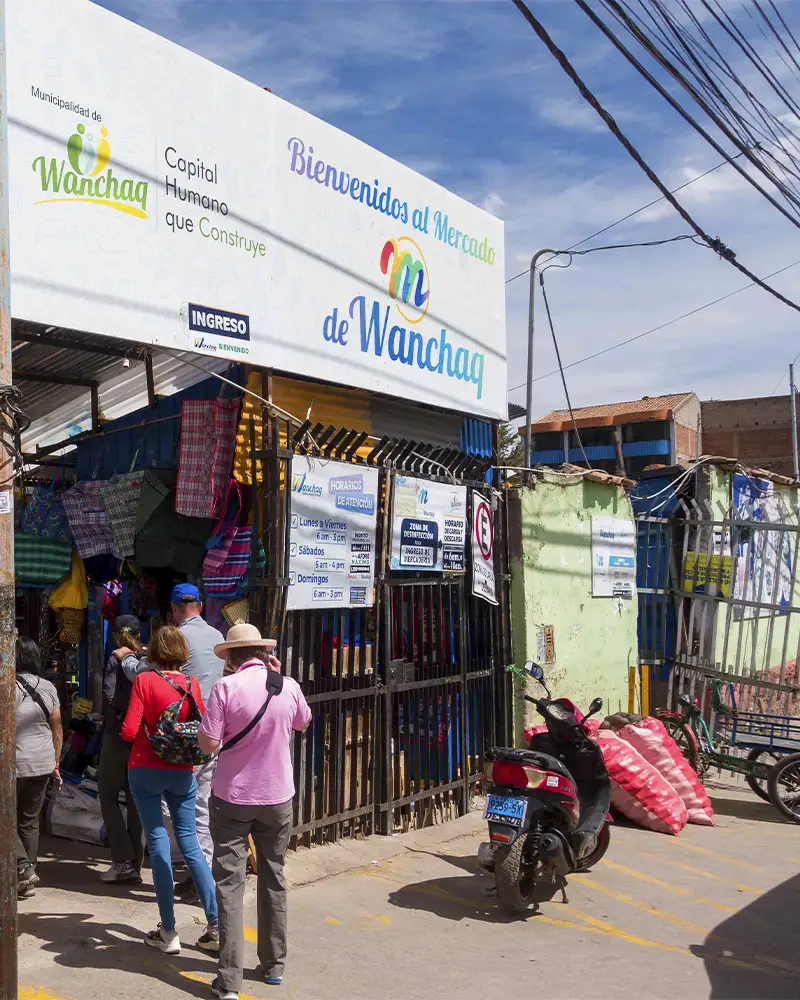
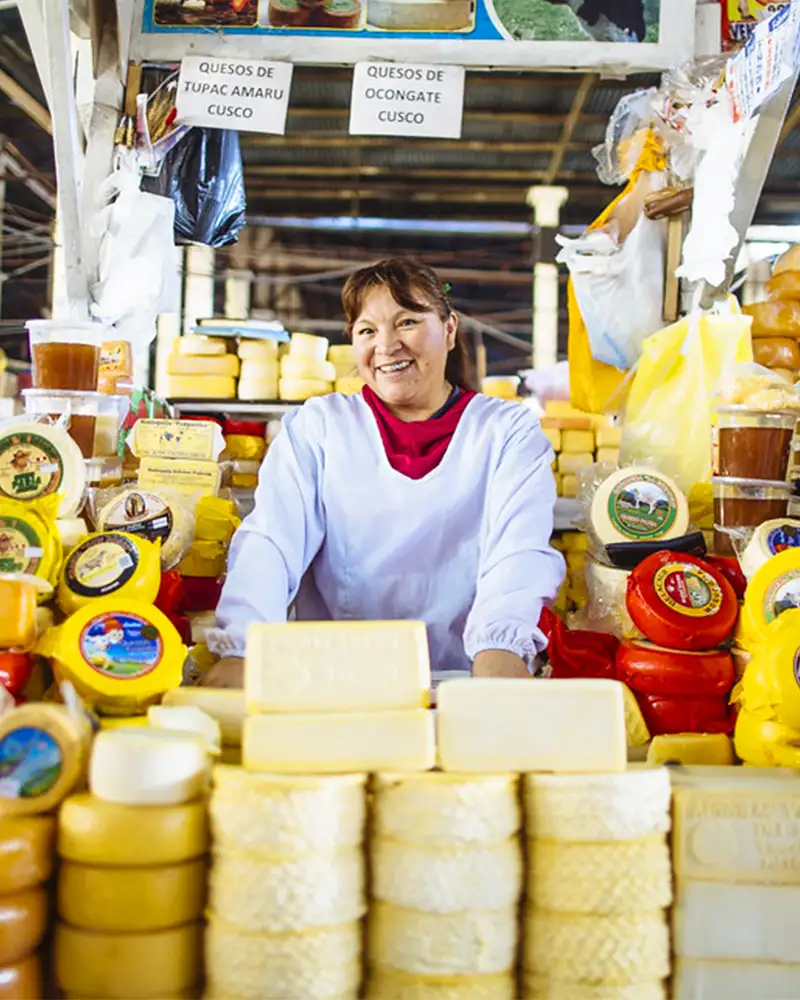
Wanchaq Market is one of the most charming markets in the city. In a very traditional, local setting, you will find original handicrafts from the area, along with a good variety of fresh products, fruits, cheeses, meat, flowers, juices, and Andean herbs such as coca, mint, and muña, grown in nearby valleys. For all these reasons, it feels more local than touristy.
If you want to try some of Peru’s famous food, you can find traditional dishes here with rich, unmistakable aromas. If you have not tried them before, you can enjoy an anticucho or a tamal with a glass of chicha morada.
In the food section, you will find other local dishes such as trout timpu, a very homemade-style stew, oven-roasted guinea pig, escabeche, and lamb head broth. The juices here are made with a wide variety of fruits that you can mix as you like, and they will not disappoint.
For foreign visitors, Wanchaq is worth visiting if you already know San Pedro or if you want to see daily life outside the historic center. Do not expect many stalls aimed at tourists; bring cash and use a few basic Spanish phrases.
Huancaro Market
- Location: Malecón Huancaro, in the Santiago district; the easiest way to get there from the city center is by taxi.
- Best time to go: Early Saturday morning if you want to see local producers; from 7:00 to 10:00 a.m.
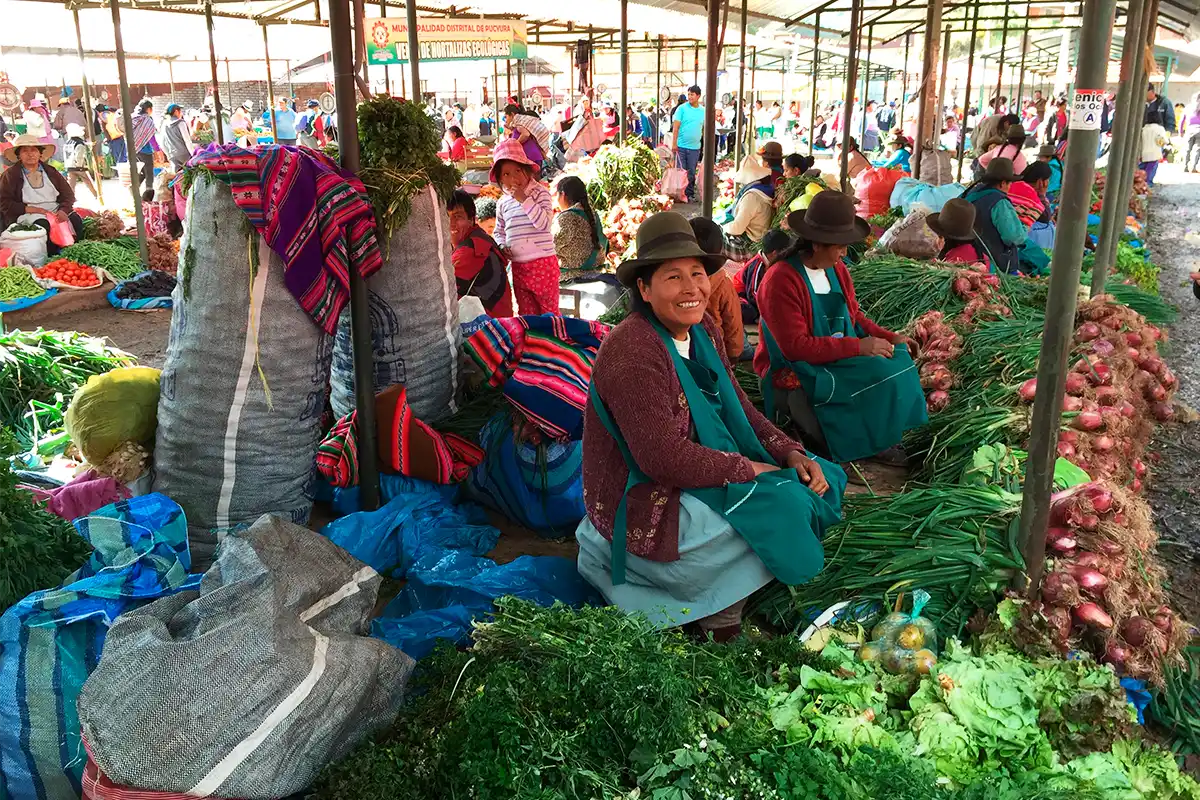
Huancaro Market, also known as the farmers’ market, is especially useful for travelers interested in agricultural products and rural producers. Visiting it is a good way to see how urban and rural daily life meet, away from the main tourist circuit.
It is not an essential stop for a first visit to Cusco, but if you want to hear local Quechua being spoken, it is well worth visiting. You will not find many food stalls or fresh juice stands here, but you will find a wide variety of fresh vegetables and potatoes.
If your goal is to see local producers, Saturday morning is usually the best time to go.
Ttio Market
- Location: Calle Los Sauces 105–141, Ttio neighborhood, Wanchaq district.
- Best time to go: Between 7:00 and 10:00 a.m.
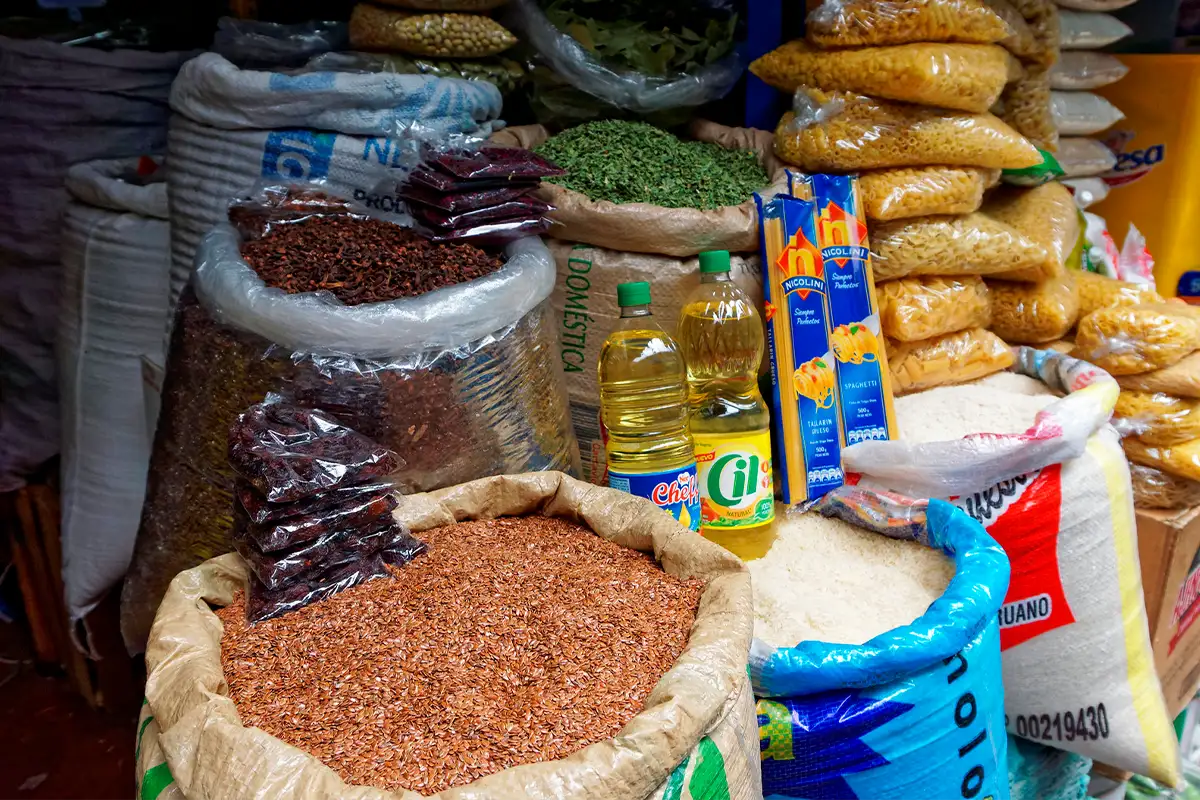
Ttio Market is a neighborhood market, best suited for travelers who already know the city center or are staying in the Ttio area or near Alejandro Velasco Astete Airport. Wanchaq is a middle-class district located south of the city center, about 15 minutes away by taxi. The market has fresh vegetables, meat, shoe repair stands, sewing shops, a local food area, and everyday products. A visit here is a good chance to see daily life in a more residential part of Cusco.
It is not a priority stop if you have little time in Cusco, but it can be interesting for photographers, cooks, or travelers who want to see less touristy areas.
Vinocanchon Market
- Location: Avenida Retamales s/n, San Jerónimo district, near the San Jerónimo Police Station and the Cusco Regional Government.
- Best time to go: Very early, between 6:00 and 9:00 a.m.
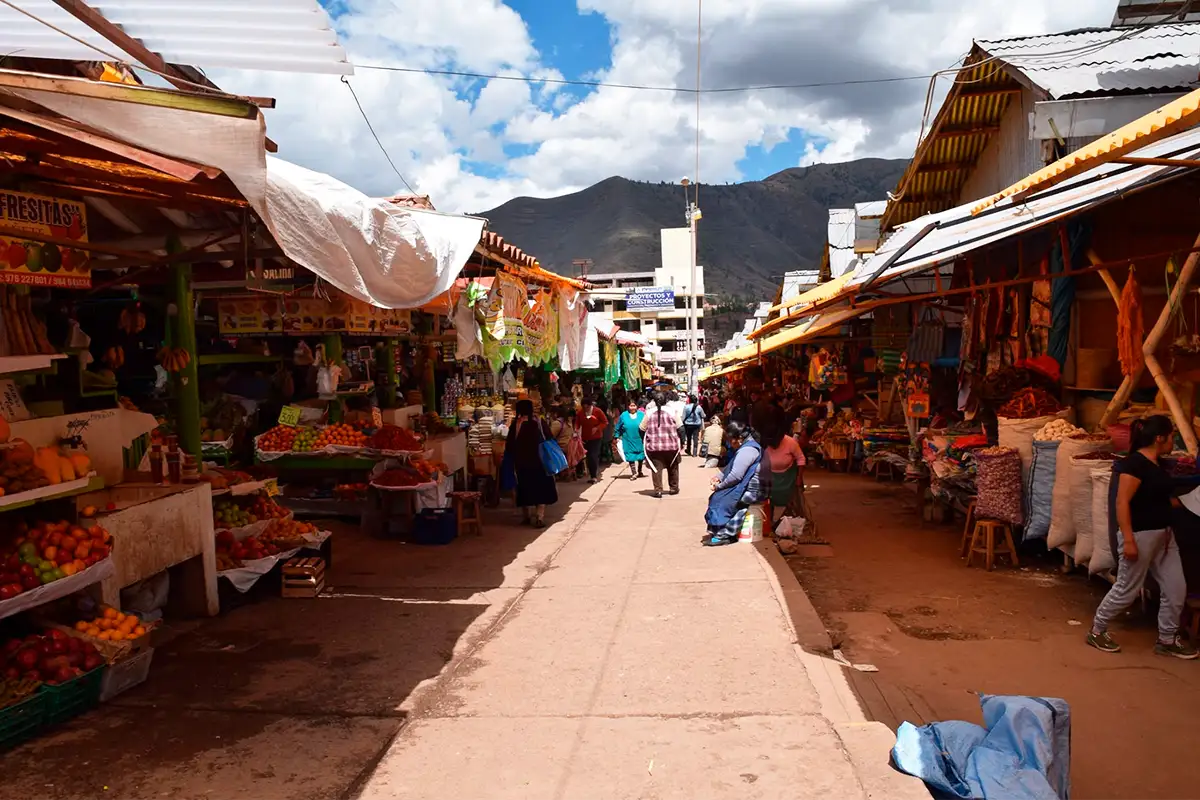
Vinocanchón is the largest wholesale food market in Cusco. Retailers and vendors from other markets buy their supplies here. It is located in the San Jerónimo district, south of Cusco city, making it the farthest market from the tourist area, about 25 to 35 minutes away by taxi. A visit can be useful for cooks, food researchers, or travelers who want to see how food distribution works in Cusco. For a regular visit, it is not the most convenient option because of the distance. It is best to go with a local guide or a trusted taxi and avoid the busiest hours.
Cusco Handicraft Center
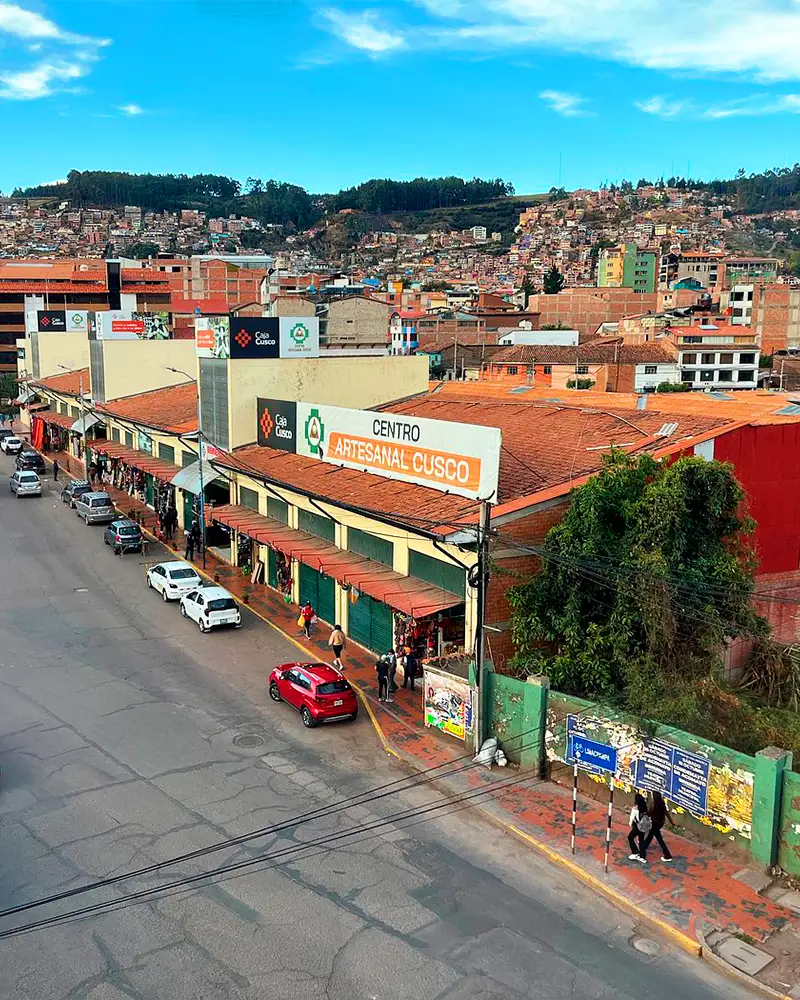 |  |
- Location: Corner of El Sol Avenue and Tullumayo, across from the Paccha area.
- Best time to go: Between 10:00 a.m. and 2:00 p.m., when more stalls are usually open and the light is better for checking colors and finishes.
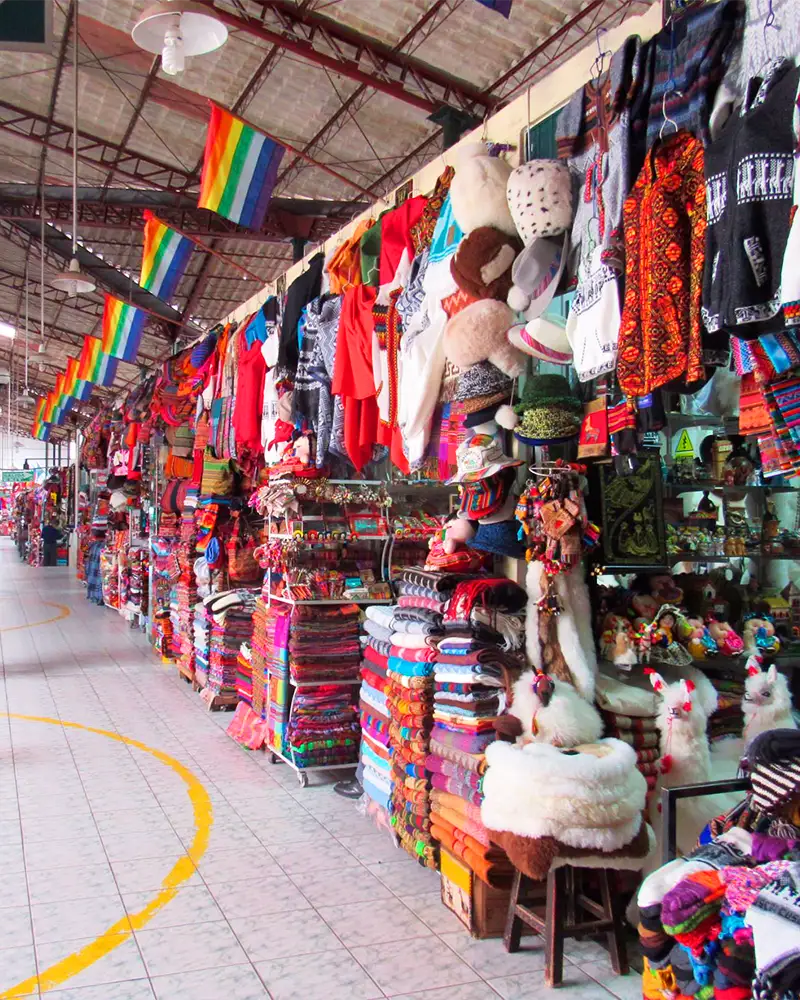
The Cusco Handicraft Center is an easy place to buy souvenirs without going far from the city center. It is located next to Wanchaq train station, at the beginning of Av. El Sol, one of the most important avenues in Cusco. Inside, you will find textiles made with different types of alpaca wool, ceramics, jewelry, paintings, many of them inspired by the “Cusco School” art style, leather bags, and all kinds of Andean-themed gifts. It is more organized than a traditional local market and makes it easy to compare prices between different stalls.
For foreign travelers, the most important thing is to ask about the real material of the garments, check the stitching, and avoid assuming that every textile is made from fine alpaca. Bring soles, although some stalls may also accept other payment methods, such as credit cards.
Pisac Handicraft Market
- Location: Main square of Pisac town and in the surrounding streets (approximately 33 kilometers from the city of Cusco).
- Best time to go: Sunday morning if you want a livelier atmosphere; Tuesday or Thursday if you prefer fewer crowds. The market is open every day from 8:00 a.m. to 5:00 p.m.
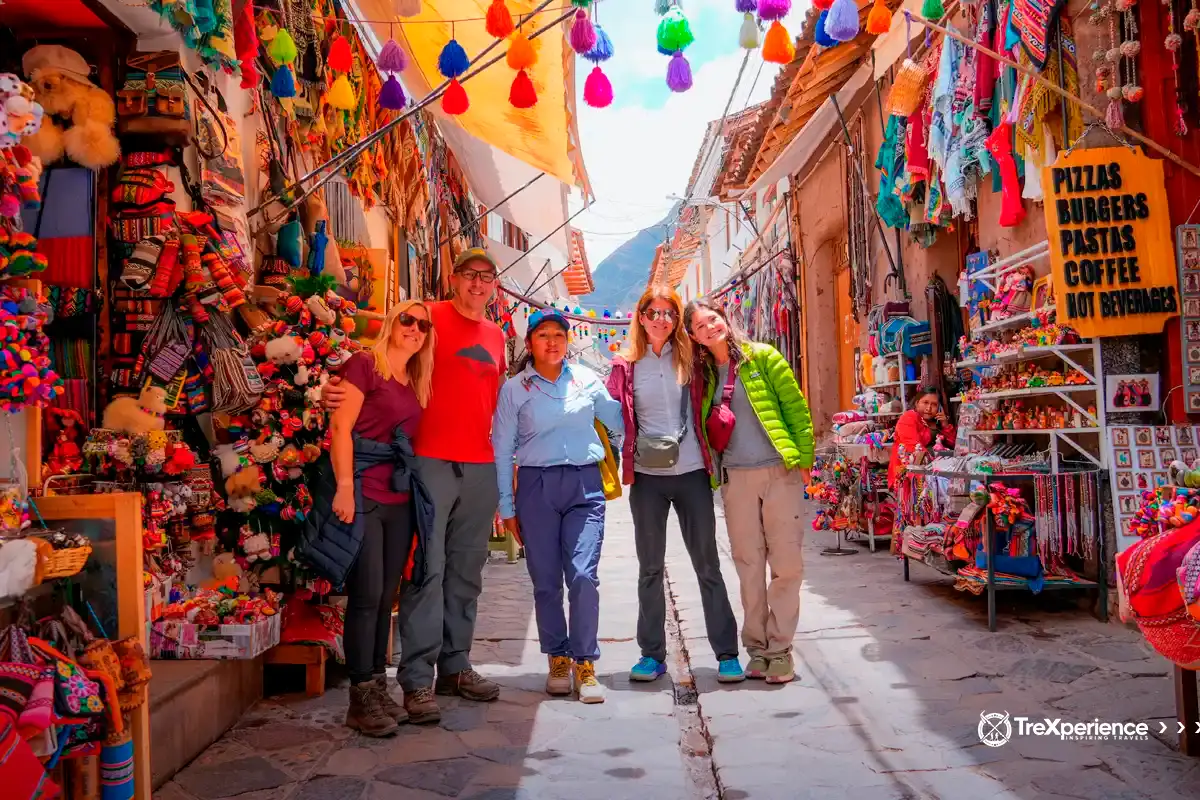
This Pisac market, also known as the handicraft market, is one of the most visited by travelers in the Sacred Valley of the Incas. It is located on one corner of the main square in the town of Pisac. It is so colorful that it often catches the eye of anyone passing by and invites them to explore it in more detail. Here, you will find a wide variety of crafts, from paintings inspired by the “Cusco School” style and Andean themes to finely made silver jewelry with precious stones. You will also see beautiful textiles with detailed finishes made from alpaca fiber.
Its ovens and bakeries are also known for the famous “empanadas,” filled with meat stew, chicken, or cheese.
After enjoying these attractions, you can visit the Botanical Garden and the archaeological site, a great introduction before your trip to Machu Picchu and other places of major historical and cultural interest.
Chinchero Market
- Location: Chinchero town, about 30 km from Cusco, on the Sacred Valley route.
- Best time to go: Sunday morning for the largest market; Tuesday and Thursday are quieter market days.
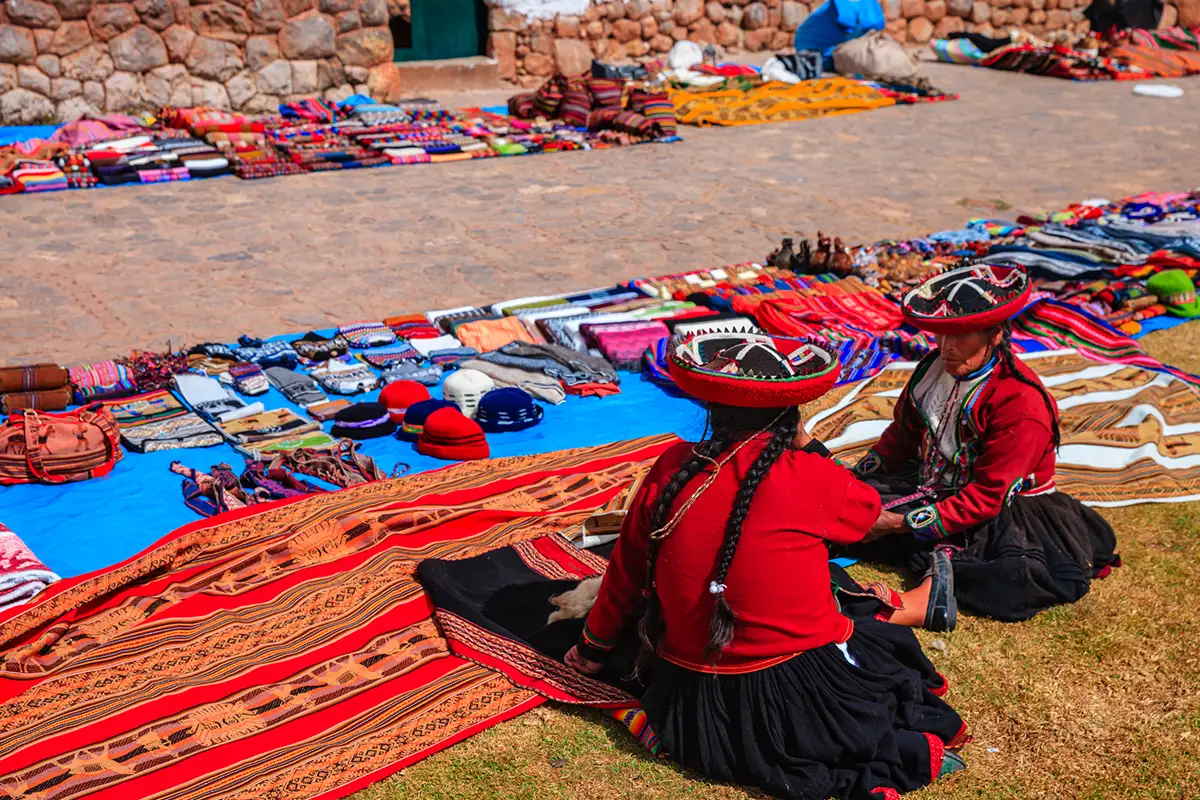
Chinchero Market is a traditional market located in the Sacred Valley. Local agricultural products such as corn, large-kernel corn, potatoes, moraya, and other goods are sold on Sunday mornings, when traders from nearby high Andean communities come down to offer their products. During this time, you may even see barter, an old Andean way of trading where products are exchanged without using cash.
The market also offers handmade textiles and weaving workshops, where visitors can see traditional Inca techniques for making, embroidering, and dyeing garments. It is smaller than Pisac and easy to combine with the archaeological site of the same name, which is just a few meters away, as well as with Maras and Moray. The town sits at a higher altitude than Cusco (3,762 m), so it is best to bring a light jacket and avoid staying too long if you are not yet acclimatized.
It is a good place to understand the work behind Andean textiles, as long as you buy respectfully and avoid pushing prices too low.
Seasonal Markets in Cusco
Fairs are temporary or seasonal markets held in Cusco city or nearby areas for a specific festival or celebration:
Chiriuchu Food Festival
This festival takes place between May and June, during Corpus Christi, in Plaza San Francisco. It is a good chance to try Chiriuchu, a traditional cold dish from Cusco sold at open-air food stalls during the celebration.
T’anta Wawa and All Saints’ Day Festival
On November 1, markets and bakeries fill with t’anta wawas, baby-shaped breads prepared for All Saints’ Day. It is a family celebration linked to remembering loved ones who have passed away and enjoying seasonal food. Children often play at “baptizing” these breads. Horse-shaped breads are also baked for boys.
Santurantikuy Fair
Santurantikuy takes place every December 24 in Cusco’s Plaza de Armas. It brings together artisans who sell nativity scenes, Niño Manuelito figures, ceramics, silver pieces, candles, and religious crafts. It is one of the most important Christmas fairs in Cusco and has been declared part of Peru’s Cultural Heritage.
Saturday Baratillo
This market takes place on Saturdays in the Santiago district. It is a popular market where people sell second-hand items such as clothes, shoes, tools, antiques, furniture, and curious finds. It is best to go early, bring cash, and keep a close eye on your belongings.
Alasitas
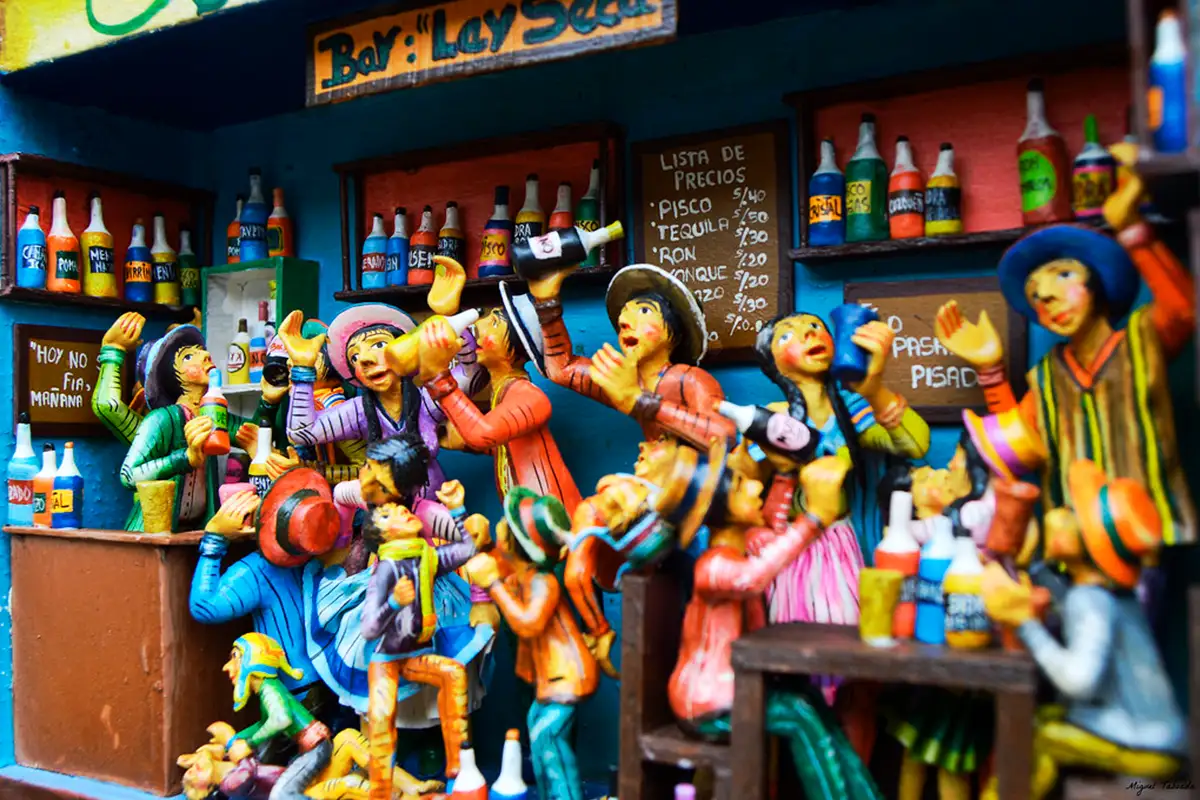
This miniature fair is more closely linked to the highlands of Puno, but the tradition is also found in nearby Andean cities such as Cusco. People buy miniature houses, cars, money, or diplomas as symbols of good wishes. In Cusco, it is best to confirm the date and place with a local before adding it to your route.
Tips for visiting markets in Cusco
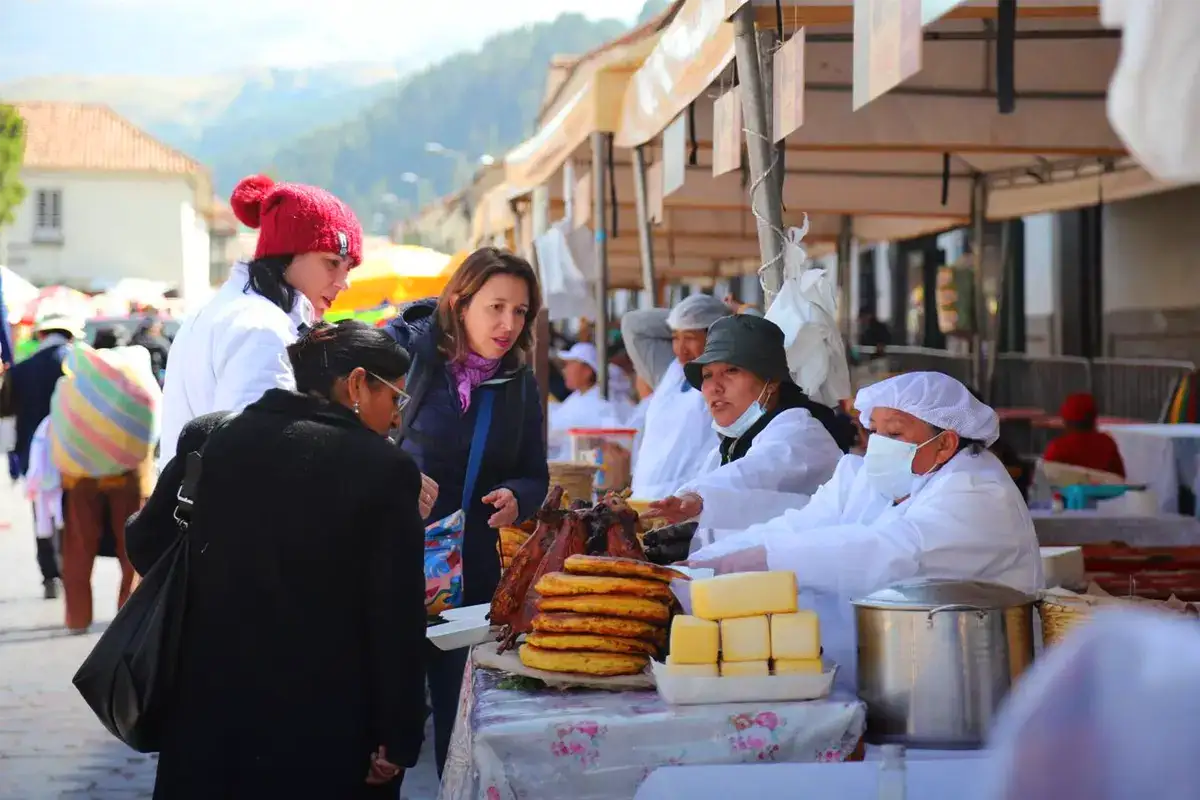
Markets in Cusco are everyday shopping places, not just spots for tourists. To visit them without any trouble, go in the morning, bring cash in Peruvian soles, wear comfortable clothes, and avoid carrying a large backpack. If you plan to eat, choose stalls with steady customer traffic and fresh products in sight.
What to buy
At the markets, you can buy Andean fruits, bread, cheese, coffee, cacao, chocolate, Maras salt, herbs such as muña or coca, textiles, and small souvenirs. For handicrafts, check the finishes, stitching, and materials. Not everything sold as alpaca is fine alpaca, so ask before you pay.
How to pay
It is best to carry soles in small bills and coins. Many stalls do not accept cards, and it can be hard to get change for large bills. In more touristy markets, some vendors may accept dollars, but the exchange rate is not always good. For small purchases, pay in local currency.
How to bargain
Bargaining is common, especially for crafts and souvenirs, but it should be done respectfully. Ask the price, offer a little less, and accept it if the vendor does not want to lower it. Do not bargain for prepared food, juices, or low-cost fresh products. If the price is already fair, pay without insisting.
Safety and etiquette
Keep an eye on your belongings, especially in crowded aisles. Keep your phone in a safe place when you are not using it, and avoid showing too much cash. Before taking photos of people or stalls, ask for permission. A simple “May I take a photo?” goes a long way. It is also a good idea to say hello, say thank you, and buy something if you plan to record video or take many photos.
FAQs - Cusco markets
How much time do I need to visit the markets in Cusco?
It depends on the type of market. For San Pedro Market, plan on 1 to 2 hours if you want to walk around calmly, try a juice, look at handicrafts, and have something to eat. For more local markets like Cascaparo, San Blas, Wanchaq, or Ttio, 30 to 60 minutes is usually enough. If you are going to Pisac or Chinchero, set aside at least half a day, as they are outside the city and are best enjoyed together with their archaeological sites.
Which Cusco market should I visit if I have little time?
If you only have one morning, the most practical option is to visit San Pedro Market and then walk to the Cusco Handicraft Center. San Pedro gives you a quick look at local food, fruits, juices, bread, cheese, and everyday life. The Artisan Center, on the other hand, is more convenient for buying souvenirs without spending too much time comparing markets that are farther away.
Is it a good idea to eat at the markets if I have a sensitive stomach?
Yes, but it is best to choose carefully. Go for well-cooked dishes, avoid raw sauces if you are not used to them, and drink bottled water. It also helps to choose busy stalls, as the food usually moves faster. If you have just arrived in Cusco, start with something light before trying heavier dishes such as lamb head broth, guinea pig, or very seasoned meals.
Are there vegetarian options at Cusco markets?
Yes, although they are not always labeled as “vegetarian.” You can find corn with cheese, bread, cheese empanadas, tamales, fruit, juices, simple soups, native potatoes, quinoa, and some meat-free stews. It is best to ask before ordering, as many soups or main dishes may include chicken broth, meat, or lard even if it is not obvious at first glance.
How can I tell if a garment is really alpaca?
First, ask what material it is made from and do not rely only on the word “alpaca” on the label. Alpaca usually feels soft, warm, and less shiny than synthetic fibers. “Baby alpaca” is finer and usually costs more. If a garment claims to be 100% baby alpaca but the price is very low, it is probably a blend. Also check the stitching, finish, fabric drape, and whether the seller can explain where the product comes from.
Which markets are easier to visit with children or older adults?
For a calmer visit, the Cusco Artisan Center and San Blas Market are usually easier options. San Pedro is interesting, but it can feel crowded, noisy, and narrow in some areas at certain times of day. Markets like Vinocanchón, Huancaro, or Baratillo are more intense and are better for travelers who are comfortable walking, patient, and interested in exploring less touristy areas.


Add new comment