



The Chicha de Jora is one of the oldest traditional drinks in the Andean world and an important part of Peru’s cultural history. In ancient times, jora corn was used to prepare a sacred drink connected to the fertility of the land, the harvests, and ceremonies dedicated to Andean deities.
Here you’ll learn what Chicha de Jora is, where it comes from, how it is traditionally prepared, what role it played in the Inca world, and why it is still one of the most representative drinks of Peruvian culture.
What is Chicha de Jora?
Chicha is a fermented drink made mainly from jora corn, known for its slightly tangy flavor.
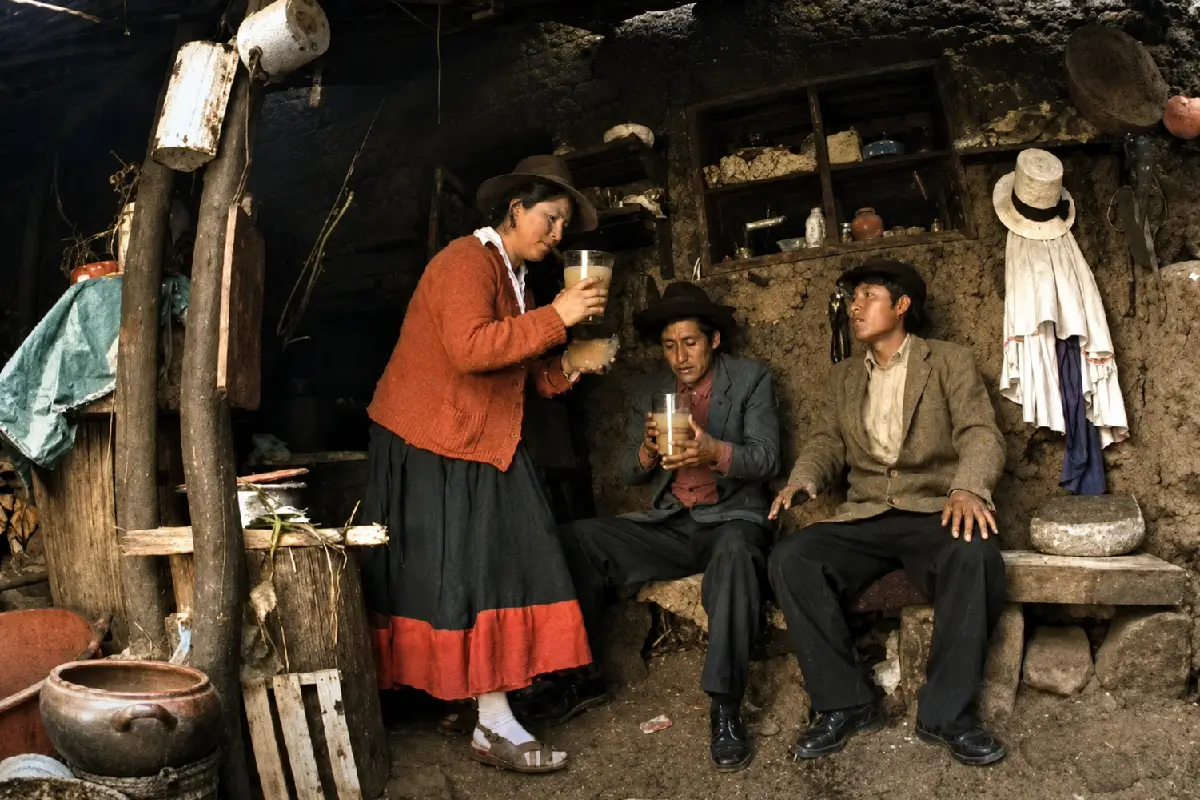
In many communities, sharing Chicha was a way to build bonds. People drank it during agricultural festivals, family gatherings, communal work, and ceremonies dedicated to Pachamama, the Apus, or the Sun.
What does Jora mean?
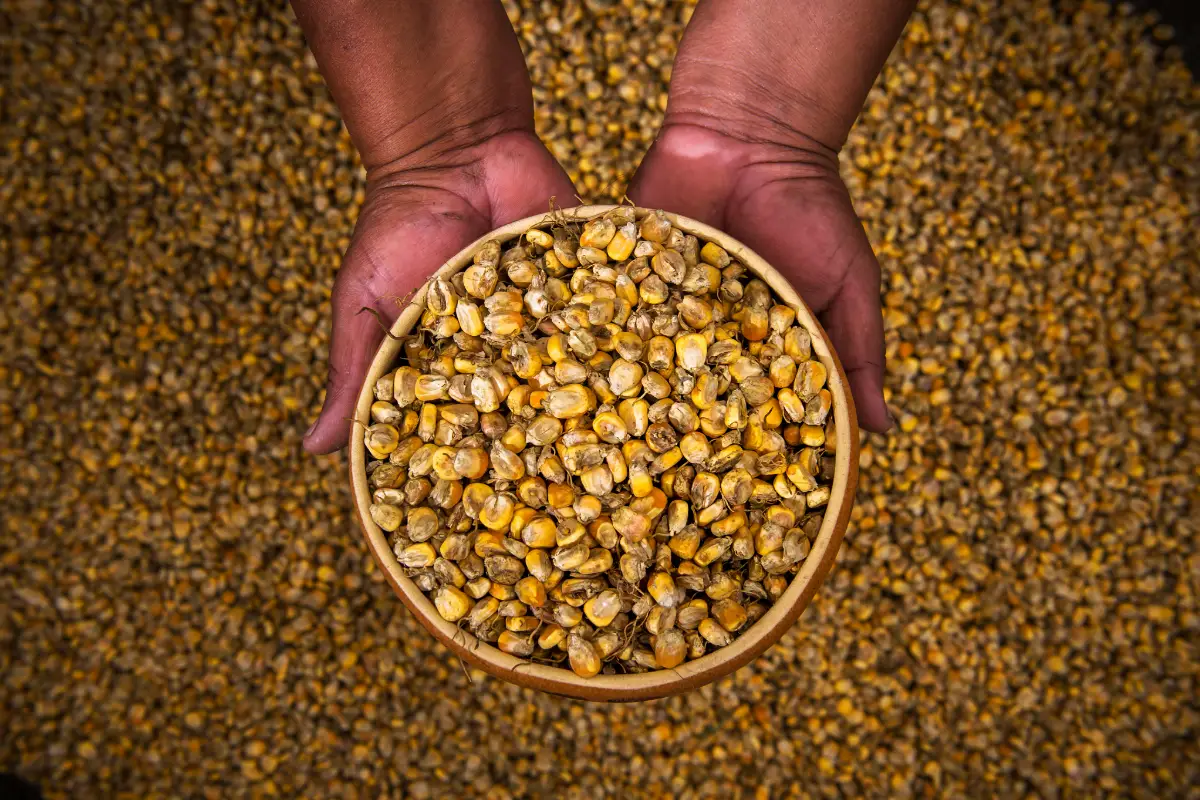
The word jora refers to corn that has gone through a germination process. To make it, the kernels are moistened until they begin to sprout, then dried in the sun. This process turns part of the corn’s starches into natural sugars, which helps fermentation and gives the drink its flavor. Jora is the key ingredient in Chicha, a traditional Andean drink that has been consumed since pre-Hispanic times.
Thanks to its properties, jora corn produces a fermented drink with a distinctive flavor, slightly sweet and tangy, that forms an important part of Peruvian culture.
Origin and history of Chicha de Jora
The origins of Chicha de Jora go back to before the Inca Empire. Different archaeological findings show that fermented corn drinks were already part of pre-Hispanic societies before the expansion of the Inca Empire. On Peru’s northern coast, vessels found at archaeological sites point to the pre-Hispanic origin of chicha de jora as a traditional drink.
This means the Incas did not create Chicha from scratch. Instead, they inherited it from a much older practice. As Tawantinsuyu expanded, the Chicha beer gained a central role in official ceremonies, agricultural festivals, and religious rituals.
Chicha de Jora in the Inca Empire
During the Inca Empire, Chicha de Jora was important for its social, religious, and political value. It was consumed during ceremonies, festivals, and community gatherings, helping strengthen bonds between people and symbolizing the abundance given by nature.
The Incas used Chicha as an offering in rituals dedicated to the Sun, Pachamama, and other Andean deities.
Before drinking it, it was common to pour a few drops onto the ground as a sign of gratitude and respect for Pachamama. The acllas are also worth mentioning. They were selected women, and one of their roles was to prepare this drink for religious ceremonies and important events. Because of its cultural value, the Inca drink became one of the most representative drinks of Inca civilization, a tradition that is still alive in many Andean communities today.
The legend of Túpac Yupanqui and the discovery of chicha
There is a legend about the discovery of Chicha de Jora during the rule of the Inca Túpac Yupanqui. It is said that during the rainy season, the storage facilities where corn was kept were damaged. When the grain got wet, it began to sprout and ferment, creating a malt with a strong smell that was first considered useless.
Since the food was no longer suitable for storage, people decided to cook it and use it in another way.
Over time, the mixture fermented and turned into a drink with a pleasant taste. When people tried it, they were surprised and began making it more often. As time passed, this drink became a symbol of celebration and a connection to the ancestral customs of the Andean region.
Chicha de Jora Ingredients
The ingredients of this Chicha beer can vary depending on the region, the family, and local customs, but the base is always jora corn, meaning germinated, dried, and ground corn.
The main ingredients are:
- Jora corn: this is the base ingredient. It is made from germinated, dried, and ground corn.
- Water: used to soak, cook, and extract the flavor and sugars from the corn.
In many Andean communities, chicha is left to rest in a raqi, also written as raki, a large fired-clay vessel traditionally used to ferment and store this drink. This container represents the continuity of an ancestral custom connected to cooking, community life, and Andean ceremonial traditions.
Chicha de Jora recipes
Preparing Chicha is a slow and careful process. Although faster recipes exist today, the traditional method has several stages that help explain why this drink has such a special flavor.
- Selection and germination of the corn: First, good-quality corn is selected. It should be clean and in good condition. Then it is moistened so it can begin to germinate. During this stage, the grain comes to life and develops small sprouts. This change is very important because it turns the corn into Jora, the base of the drink.
- Drying the Jora corn: Once the corn has germinated, it is dried. Traditionally, this could be done in the sun by spreading the grains in a clean, well-ventilated place. Once dry, the grain takes on the characteristic aroma of Jora.
- Grinding: After drying, the Jora is ground. In the past, this was done with a batán, a traditional grinding stone, or with hand mills. Today, modern mills can also be used. Grinding breaks the grain so that, during cooking, the water can better extract its flavors and components.
- Cooking: The ground jora is boiled in plenty of water for several hours. This is one of the most important stages because it produces the base liquid for the chicha. During cooking, the mixture is stirred carefully, and if too much water evaporates, more hot water can be added.
- Straining: After cooking, the mixture is strained to separate the solid pieces of corn. The result is a dark, aromatic, and slightly sweet liquid. This liquid becomes the base that will later ferment.
- Fermentation: Finally, the strained liquid is left to rest in a clean container for several days. During this time, the sugars transform, and the drink begins to develop its tangy flavor, strong aroma, and light alcohol content.
- Serving: Once fermented, this Chicha beer is served fresh, often in large glasses or traditional containers such as caporales. In picanterías and chicherías, it is commonly enjoyed with typical dishes and shared moments.
Benefits of Chicha de Jora
This Peru corn beer is often mentioned for its possible benefits, but it is important to explain this carefully. As a fermented corn drink, it has nutritional, cultural, and culinary value. However, it is worth noting that it contains alcohol, so it should not be presented as a medicinal drink or recommended for excessive consumption.
One of its main contributions is its energy value. Since it comes from germinated corn, Chicha de Jora has a direct connection to one of the most important foods in the Andean world. That is why, in many communities, it is not seen only as a drink to accompany food, but as part of an agricultural tradition in which corn represents abundance, work, and life.
Even so, because it contains alcohol, it should be consumed in moderation. Chicha should mainly be valued as cultural heritage, a traditional drink, and a culinary expression, not as a remedy.
Chicha de Jora and its connection to Pachamama
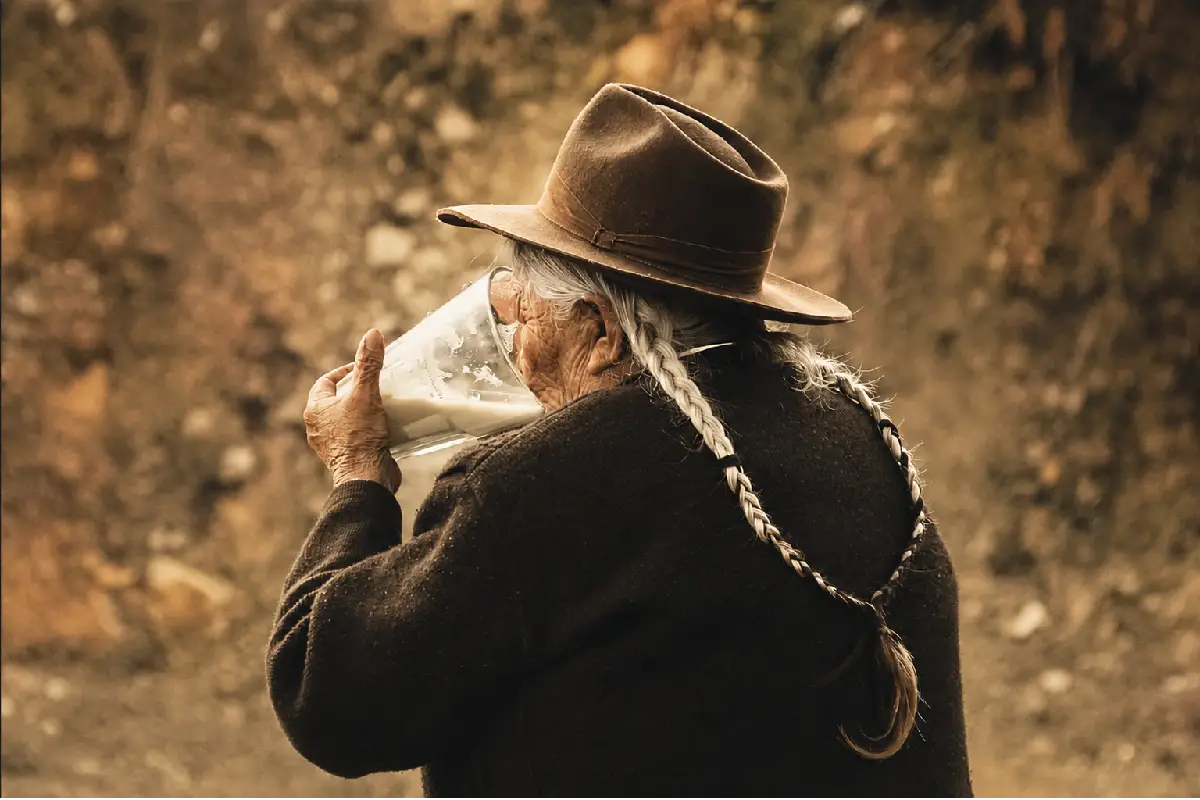
The relationship between this ancestral Peru corn beer and Pachamama comes from a deep idea in the Andean worldview: all food comes from the earth and should be received with gratitude. Chicha is made with corn, water, fire, and time; in other words, with essential elements of rural life. That is why, in many Andean communities, this drink is not enjoyed only for pleasure, but also as a way to show respect for the land, the Apus, and the ancestors.
Offerings, gratitude, and Andean rituals
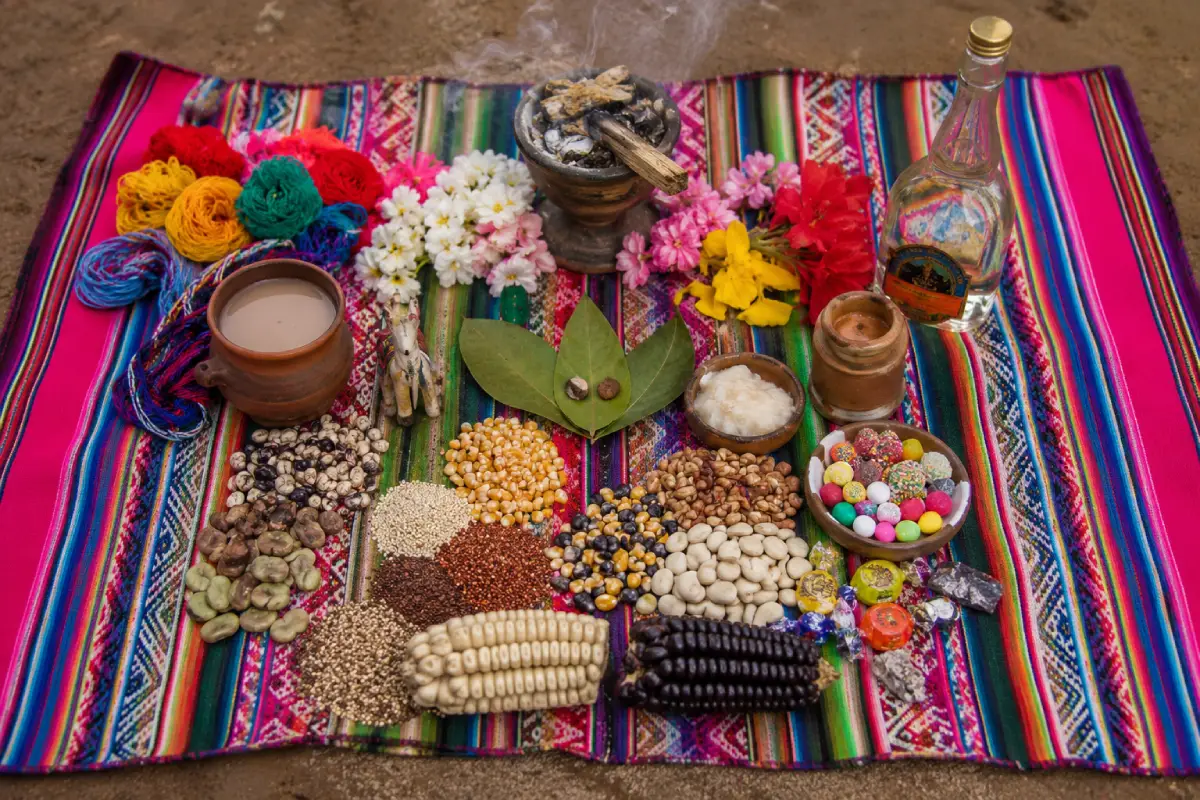
- In Andean rituals, Chicha de Jora is often part of the offerings. It may be placed alongside coca leaves, corn, seeds, sweets, wool, incense, and other symbolic elements.
- In ceremonies such as Haywaricuy, an offering to Pachamama held in August, some communities include drinks like Chicha to represent fertility, abundance, and gratitude toward the earth.
- One of the most important gestures is the challa, which consists of pouring a little Chicha onto the ground before drinking.
- This act expresses gratitude and reciprocity: first, the drink is shared with Pachamama, and then with the people. It is not just a symbolic spill, but a way of recognizing that the earth also takes part in the celebration.
- In many rituals, chicha also accompanies requests for protection for crops, livestock, family health, and the community.
Importance of the Inti Raymi and other celebrations
Chicha de Jora played a very important role in the great ceremonies of the Inca world, especially in festivals dedicated to the Sun.
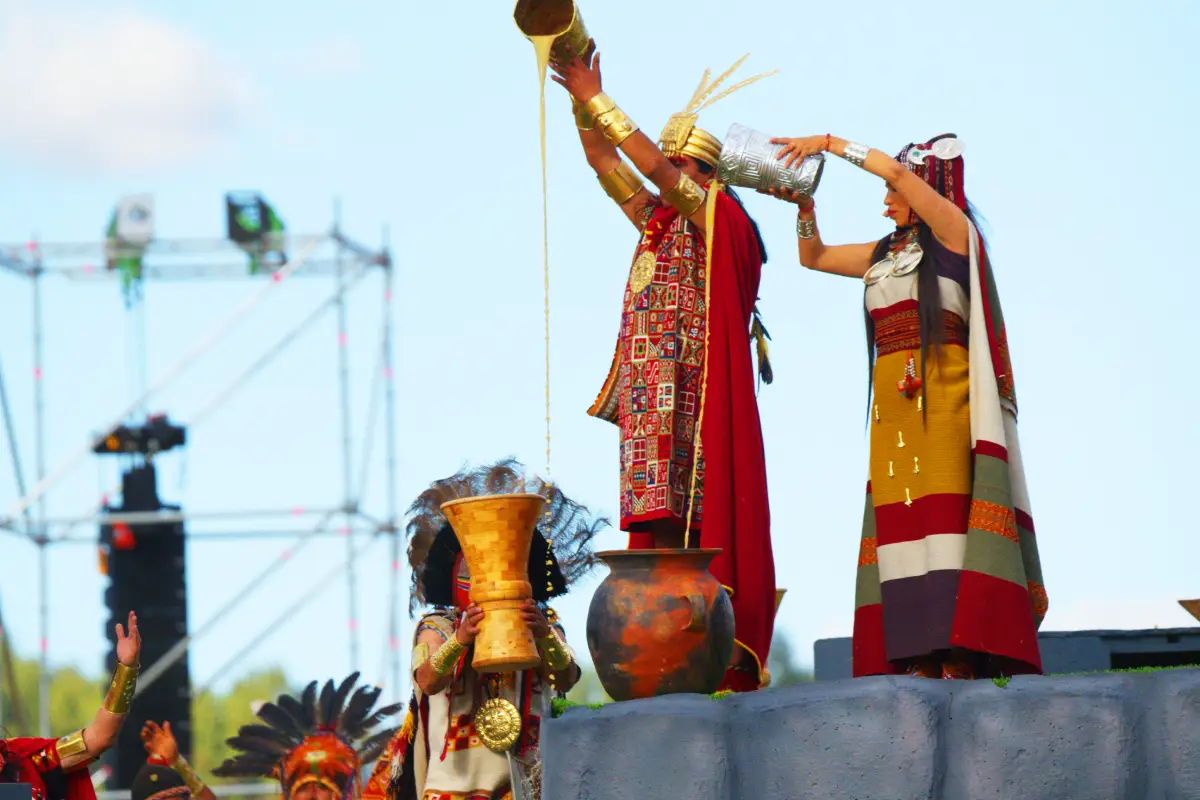
One of the most symbolic accounts says that the Inca held two golden cups, called aquilla, filled with the ceremonial drink.
With one, he offered Chicha to the Sun and then poured the drink into a golden container connected to the House of the Sun, as if Inti himself were receiving it. Afterward, the Inca drank from the other cup, and the drink was shared among members of the royal lineage.
This shows that Chicha was not just any drink in the Inca world. It was part of the ritual language of power, religion, and reciprocity. Drinking Chicha, sharing it, and offering it to the Sun was a way to create a bond between the Inca and the deities, and between the nobility and the people.
Today, Inti Raymi, celebrated every June 24 in Cusco, keeps this ceremonial memory alive through cultural representation.
Chicha de Jora in traditional festivals
Chicha de Jora plays an important role in many traditional festivals in Peru, especially in the Andean regions. It is commonly found in celebrations such as Inti Raymi in Cusco, the Feast of the Virgin of Carmen in Paucartambo, carnivals, the Feast of the Virgin of Candelaria in Puno, and many patron saint festivals held throughout the year in towns and rural communities.
This tradition remains especially popular in regions such as Cusco, Arequipa, Ayacucho, Apurímac, Puno, and the Sacred Valley of the Incas, where Chicha de Jora is part of the local cultural identity.
Beyond major festivals, Chicha is also present in agricultural celebrations connected to planting and harvesting, where it continues to symbolize abundance and the connection between communities and the land.
Differences according to fermentation time
The flavor of Chicha de jora changes a lot depending on how long it ferments. The more days it rests, the stronger its aroma becomes, the more noticeable its acidity gets, and the higher its alcohol content may be.
| Estimated time | Chicha type | Flavor and Characteristics |
| 1 to 2 days | Young or sweet Chicha | It has a milder, sweeter, and lighter flavor. The fermentation level is still low. |
| 3 to 5 days | Traditional Chicha | It offers a better balance of sweetness, acidity, and fermented aroma. It is the most common choice for everyday or festive occasions. |
| 6 to 8 days or more | Strong Chicha | It has a more tart flavor, a more intense aroma, and a more pronounced alcoholic sensation. |
These times can vary depending on the climate, room temperature, the container used, and the customs of each family or region. In warm areas, fermentation can move faster; in colder places, such as some high-altitude areas of Cusco, it may take longer.
How is it traditionally served?
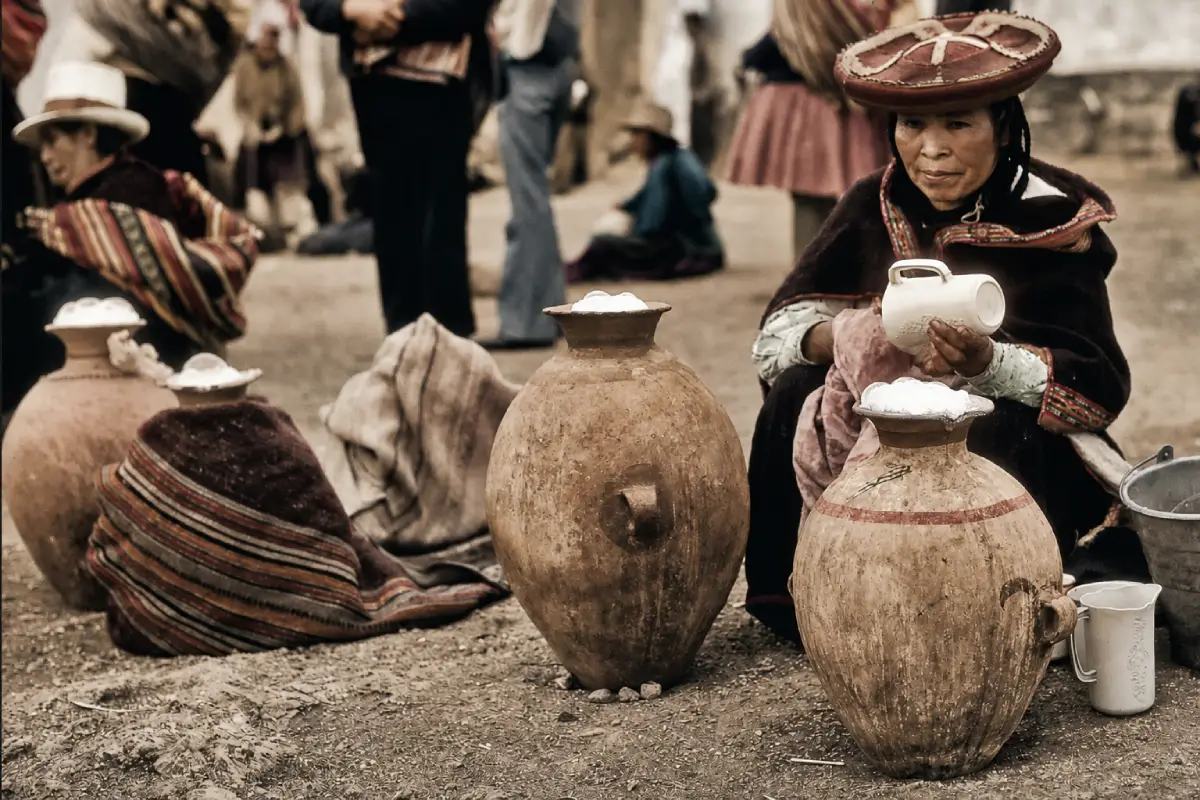
Traditionally, Chicha de Jora is served in large glasses or containers known as caporales, although in some communities people also use glass cups, clay jars, or gourds. It is usually consumed at room temperature or slightly chilled, depending on local customs.
In the Andes, it is common to pour a few drops onto the ground before drinking as an offering to Pachamama, an ancestral practice of gratitude and respect.
Chicha de jora is often shared during family gatherings, patron saint festivals, community celebrations, and Andean rituals, reinforcing its role as a symbol of hospitality and unity among people.
Chicha de jora vs Chicha morada vs Frutillada
| Drink | Main ingredient | Fermentation | Flavor |
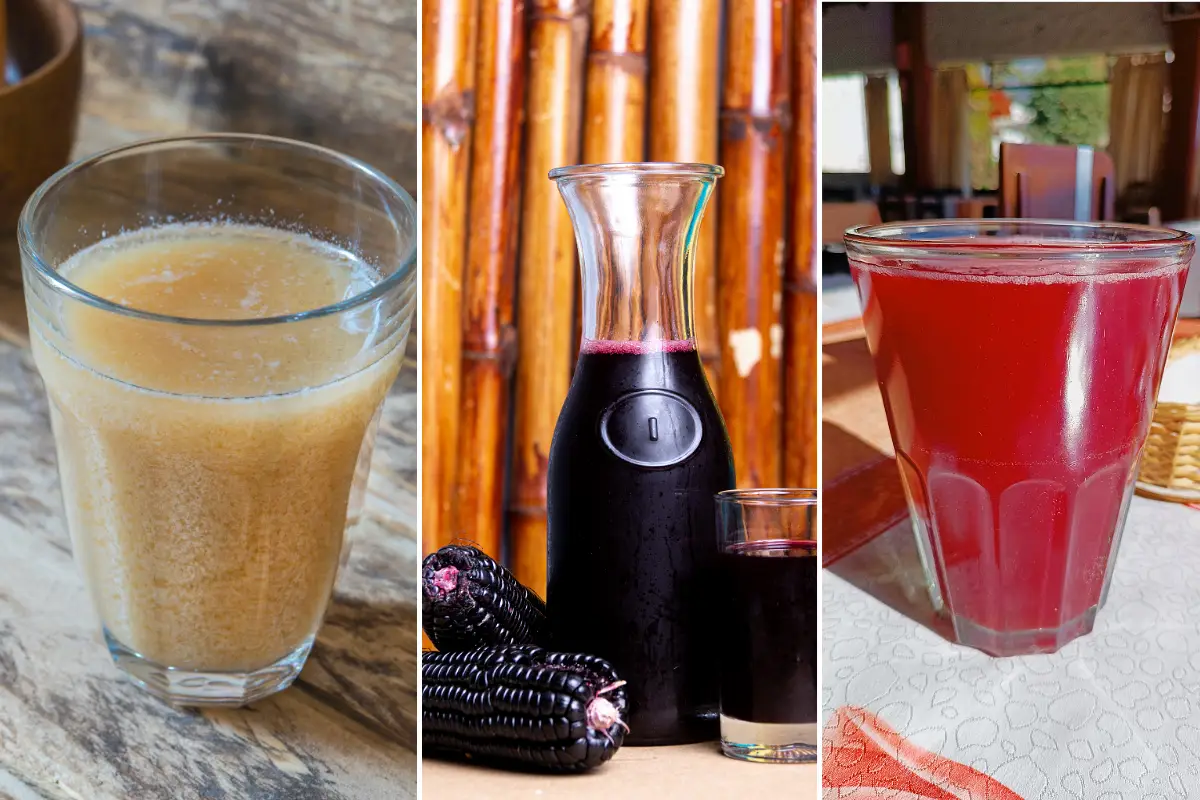
| Chicha de jora | Sprouted corn or jora | Yes, it's fermented. | Tart, intense, slightly alcoholic |
| Chicha morada (Purple Chicha) | Purple corn | No, it's usually boiled soda. | Sweet, fruity, and spicy |
| Frutillada (Strawberry Chicha) | Chicha de jora with strawberries | Yes, it's made from a fermented base | Sweet, fruity, and smooth |
The main difference is fermentation. Chicha de Jora is a fermented Peru corn beer; Chicha morada is usually made by boiling purple corn with fruit, cinnamon, and cloves, and is enjoyed as a non-fermented refreshment. Frutillada, on the other hand, is a Cusco-style variation made with a base of Chicha de jora, to which local strawberry or frutilla juice is added. The Ministry of Culture mentions frutillada as a particular form of Chicha de jora made with strawberry juice.
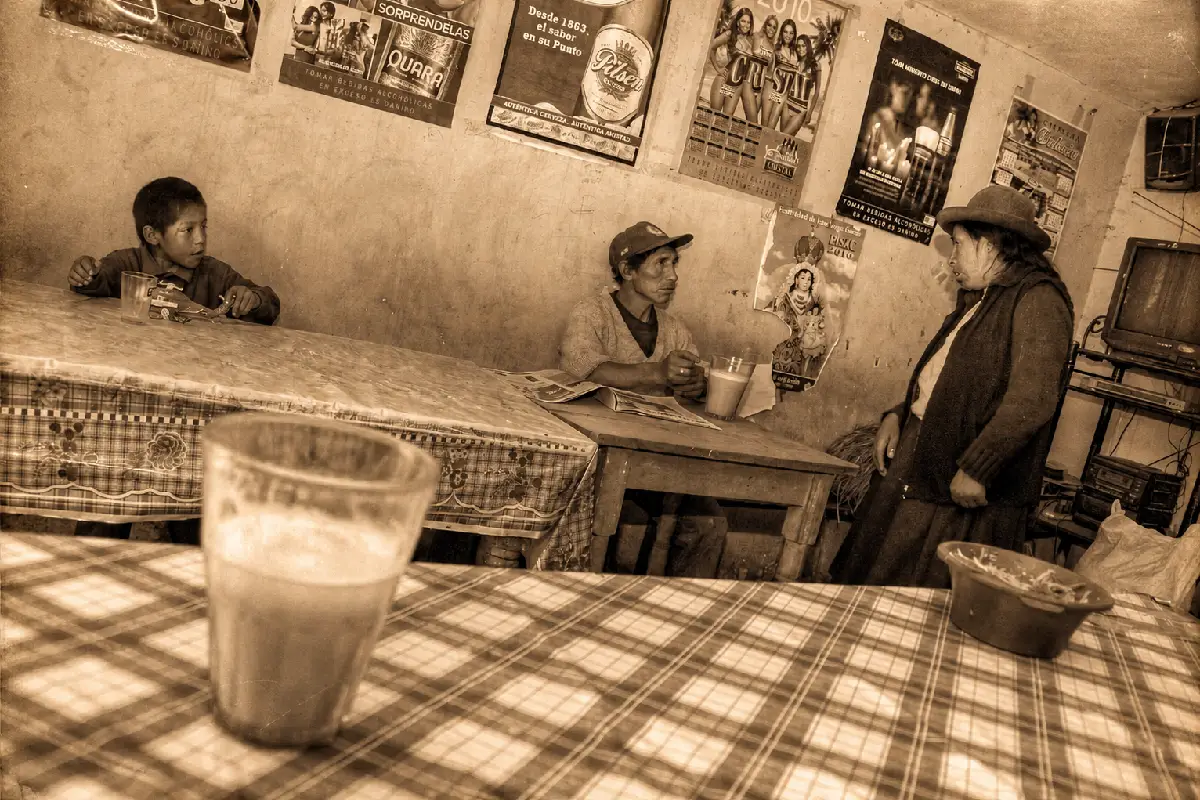
Chicha de Jora in the city of Cusco: Picanterías and Chicherías
In Cusco, Chicha de Jora is closely tied to picanterías and chicherías, traditional spaces where people eat, talk, and keep an important part of local identity alive. The Ministry of Culture declared the picanterías and chicherías of regions such as Cusco, Piura, Lambayeque, La Libertad, and Tumbes as Cultural Heritage of the Nation, highlighting their value as spaces of memory and cultural pride.
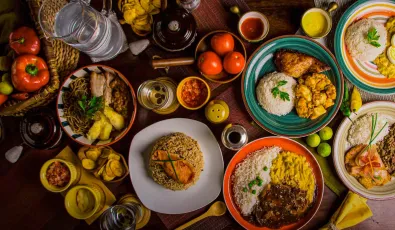
In Cusco, the main drink in these places is Chicha de jora. It is usually served with traditional food, especially dishes made with meats, offal, spicy sauces, and stews, often enjoyed at lunchtime or in the afternoon.
Cusco’s picanterías are not just old restaurants. They are places where food, peruvian drinks, and conversation come together as part of the same experience. There, Chicha is shared in pitchers, drunk slowly, and served with very local dishes such as chiriuchu, baked guinea pig, adobo, kapchi de habas, spicy stews, and other traditional flavors.
Dishes made with Chicha de Jora
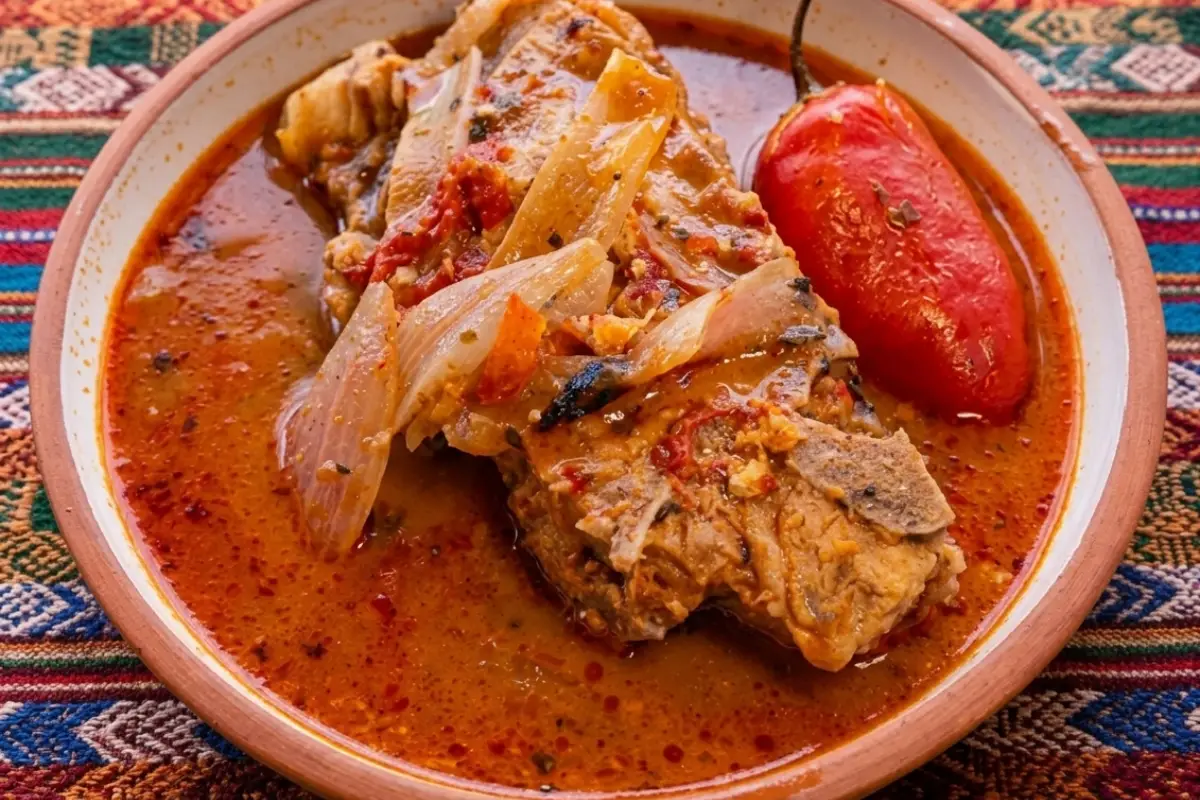
Chicha is also a widely used ingredient in Peruvian cuisine. Its acidity and fermented aroma help marinate meats, soften textures, and give traditional stews more character.
Some dishes that use the Inca drink are:
- Cusco-style adobo (Adobo cusqueño): a pork stew prepared with ají panca, garlic, spices, and chicha de jora. The drink helps give it an intense, slightly tangy flavor.
- Lamb seco (Seco de cordero): In some regional recipes, chicha is added to deepen the flavor of the stew.
- Homemade stews and casseroles: many families use it as a cooking liquid or marinade for pork, beef, chicken, or lamb.
- Meat marinades: Their acidity helps tenderize the meat and gives it a deeper flavor before cooking.
- Parihuela: a traditional seafood soup from Peru’s coast. In some versions, chicha de jora is added to bring a tangy touch, more depth of flavor, and a light fermented note that enhances the broth.
That is why Chicha de Jora has a double importance: it is a traditional drink and, at the same time, a culinary ingredient. In Peruvian cooking, it works almost like a flavor base, especially in slow-cooked dishes.
Chicha de Jora in Peru today
Today, Chicha de Jora is still alive in different regions of Peru. It is consumed at patron saint festivals, picanterías, chicherías, markets, family celebrations, and Andean rituals. Although its preparation can vary depending on the area, it keeps the same basic process: germinated corn, cooking the base liquid, and fermentation.
In Cusco, Chicha de Jora and frutillada also continue to appear in local festivals and cultural activities. During Ajha Raymi, a fair promoted by the Provincial Municipality of Cusco as a celebration of the sacred drink of the Incas, traditional picanterías gather and offer typical dishes along with Chicha de Jora and frutillada.
In Peru today, Chicha represents tradition, regional cuisine, and Andean memory. It is not a mass-consumption drink like Chicha Morada, but it still holds a special place in towns, festivals, picanterías, and at tables where handmade traditions are still valued.
Tips for tasting the Chicha de Jora
If you are going to try Chicha de Jora for the first time, it is best to do it in a picantería, chichería, or traditional restaurant where it is prepared carefully. Its flavor may surprise you, because it is not as sweet as Chicha morada. It has a tangy touch, a fermented aroma, and a more rustic feel.
Some useful tips:
- Start with a small amount, especially if you are not used to fermented drinks.
- Ask whether it is mild or strong, because the flavor changes depending on the number of fermentation days.
- Try it with traditional food, such as adobo, guinea pig, chicharrón, seco, spicy dishes, or regional meals.
- Look for traditional and clean places, especially if the drink is handmade.
- Do not confuse it with Chicha Morada, because they are very different drinks.
- Avoid it if you do not drink alcohol, since Chicha de Jora does go through fermentation.
- In Cusco, also try frutillada, a sweeter and fruitier version made from Chicha de Jora.
The best way to understand Chicha beer is to drink it the way people have for generations: slowly, with food on the side, and with respect for the history behind it.
Frequently asked questions
Does Chicha de Jora contain alcohol?
Yes. Chicha contains alcohol because it is made through the fermentation of jora corn. Its alcohol level varies depending on the fermentation time, becoming stronger the longer it rests.
What does Chicha taste like?
Chicha has a slightly tangy and refreshing flavor, with sweet notes that come from the fermented corn. Its taste can vary depending on the recipe and fermentation time, becoming more intense and stronger as it matures.
Why is Chicha de Jora also called “corn beer”?
Because it is made from germinated or malted corn and then goes through fermentation, a process similar to that of some craft beers. Even so, culturally, it is not consumed like modern beer, but as a traditional Andean drink.
Is Chicha de Jora served cold or at room temperature?
It depends on the area and local customs. In many chicherías, it is served at room temperature or slightly chilled, but not necessarily ice-cold like a commercial drink.
Why does every Chicha de Jora taste different?
Because there is no single recipe. The type of corn, fermentation time, container, climate, altitude, and the technique of each family or chichera can all change the flavor.
Who prepared Chicha de Jora in ancient times?
In many places, chicheras have been key figures in preparing, preserving, and passing down this tradition.
Why are chicherías important in Peruvian culture?
Because they are not just places to drink. They are social spaces where food, music, conversation, and local identity are shared.

Add new comment