



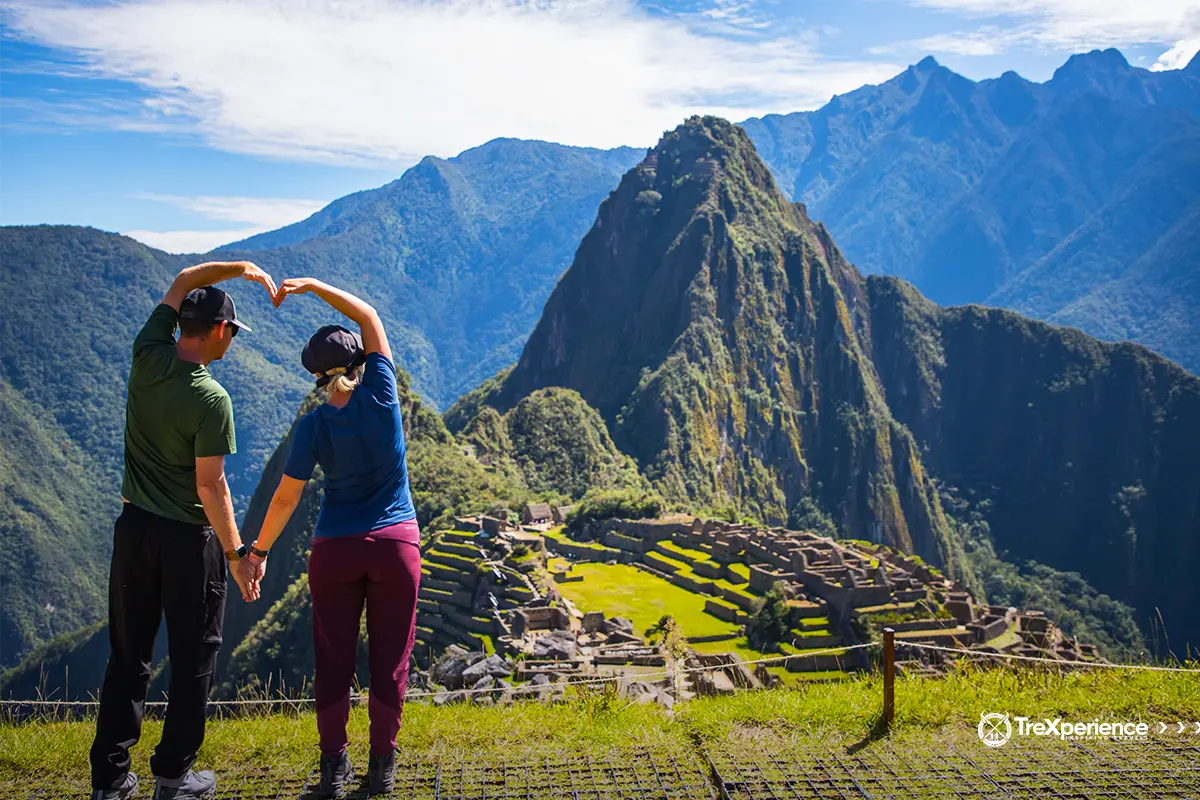
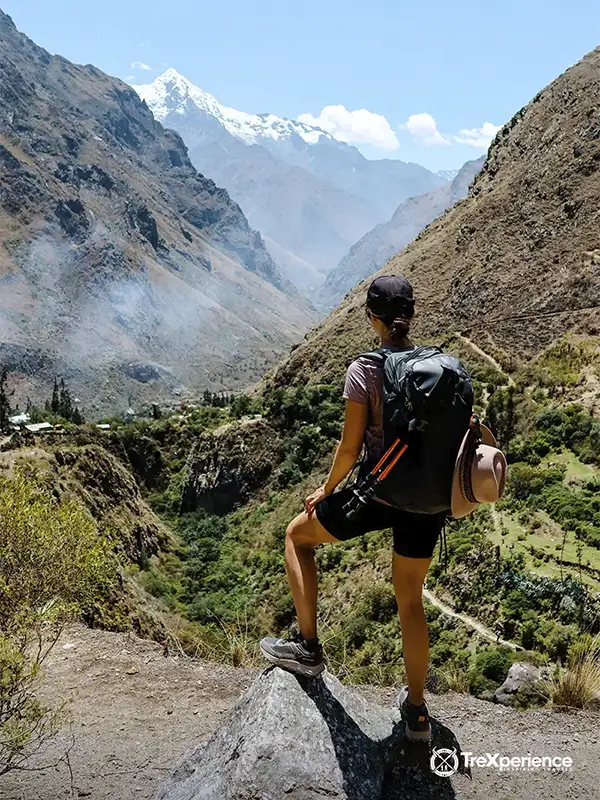
The Inca Trail to Machu Picchu is one of the 50 best hiking trails around the world, according to National Geographic magazine. Hiking it gives you the chance to follow the same paths the Incas used more than 500 years ago on their way to Machu Picchu. The journey even takes you through Inti Punku, the original entrance to the Inca citadel, among other hidden Inca architectural gems.
Still, it’s completely normal to have many questions before embarking on this multi-day camping trek. In this complete guide, you’ll find everything you need to know, including Inca Trail permits and how they work, the classic 4-day itinerary, altitude and difficulty, the best time to hike, a practical packing list, and much more.
What is the Inca Trail?
The Inca Trail represents a small section of a vast network of Inca trails, called Qhapac Ñan, that connected the Tawantinsuyo region, the name of the Incas land. This extensive network of trails spans present-day Peru, southern Colombia and Ecuador, western Bolivia, and northern Argentina and Chile, totaling over 30,000 kilometers of pathways. Thus, it´s often compared to the Roman Empire's pedestrian path system, which is quite remarkable!
The Classic Inca Trail has a total length of 26 miles (42 kilometers) and is the main trail to reach Machu Picchu from the Sacred Valley of the Incas. This segment is one of the best-preserved and most iconic segments of the Qhapac Ñan.
Over four days and three nights, hikers will encounter ancient stone paths, Inca archaeological sites, and breathtaking high-mountain landscapes. The journey culminates in your entry to Machu Picchu through its original access point, Inti Punku (the Sun Gate).
Why is the Inca Trail so famous?
There are several reasons for the success of this hike; among the most important are:
- Built by the Incas over 500 years ago, this trail is a living history lesson. It’s a deep dive into the life and culture of the ancient Incas.
- Expect to be wowed! You’ll encounter breathtaking mountains, lush forests, and ancient Inca sites.
- Combine history, nature and adventure! Discover lesser-visited Inca sites and enjoy the natural landscapes while hiking.
- Taste the best of Peruvian cuisine! Each day of the hike, the trail cooks will prepare the most delicious dishes of Peruvian cuisine for you.
- Experience camping in the beautiful landscapes of mountains, inter-Andean valleys, and tropical forests.
- It’s no walk in the park! The trail is tough with steep climbs and high altitudes, but finishing it feels like a real achievement.
- Not everyone gets hike the Inca Trail. The government only allows 500 hikers each day, making it an exclusive adventure.
The Inca Trail at Glance
| Distance | 26 miles (42 kilometers) |
| Duration | 4 Days / 3 Nights |
| Acommodation | Camping |
| Difficulty | Moderate |
| Maximum Altitude | Dead Woman's Pass - 13,828 feet (4,215 meters) |
| Starting Point Elevation | KM 82 Piscacucho - 8,858 feet (2,700 meters) |
| Arrival Point Elevation | Aguas Calientes town - 6,693 feet (2,040 meters) |
First tip...
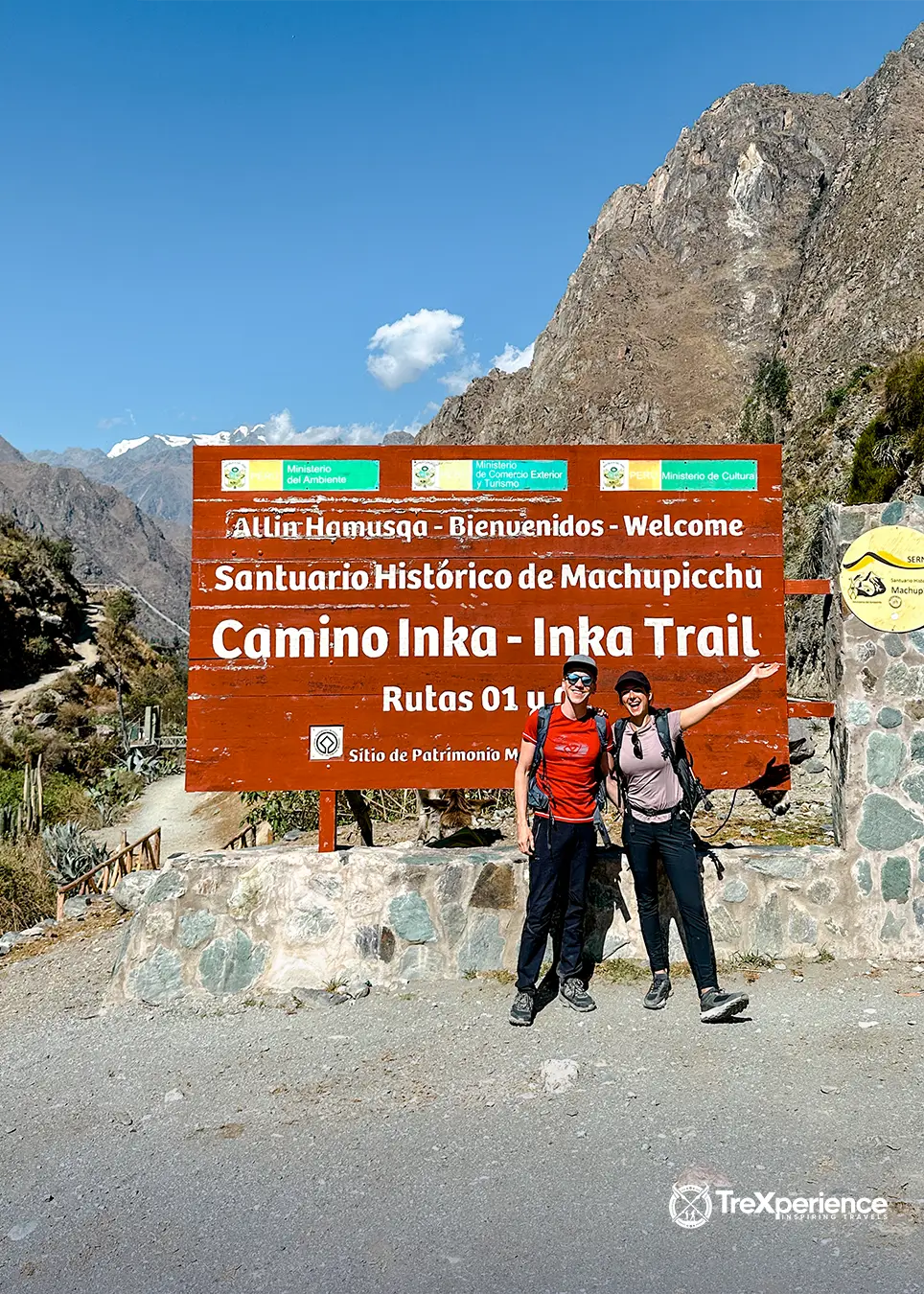
You cannot hike the Inca Trail on your own; hiring an authorized travel agency by the Peruvian government is mandatory. They’ll provide you Inca Trail permits, tour guides, camping equipments and more.
 |  |
Inca Trail Options
The original Classic Inca Trail 4 days is a long and challenging hike, but there is also a shorter version known as the Short Inca Trail. So, which one should you choose?
Slow-version Inca Trail 5 Days
The 5-day Inca Trail tour follows the same route as the Inca trail for 4 days, but you will spend more time at each Inca Site. The Inca Trail slow version will allow you to explore the Inca Sites more, hike at your own pace, and camp in the less crowded campsites. The Treks start at Kilometer 82; hike the Inca Trail with 3 nights of Camping plus one night in a 3-star hotel in Aguas Calientes.
Ultimate Inca Trail Tour 5 days
Visit the most remote and isolated Inca Sites while traveling in small groups along the famous Inca Trail. The Ultimate Inca Trail tour 5 days and nights will take you to places where other people don't arrive, allowing you to experience these beautiful paths with a few other travelers. The trek starts at Kilometer 82. Hike the Inca Trail with 3 nights of Camping plus one night in a 3-star hotel in Aguas Calientes.
Classic Inca Trail 4 days
The Classic 4-Day Inca Trail is a 26-mile (42-kilometer) long hike and takes four days to complete. It starts at Km 82, in the Sacred Valley, and ends at Machu Picchu. Trekkers will pass through beautiful scenery along the way, including alpine forests, mountain valleys, and lush jungles. The trail also crosses several high-altitude passes, reaching a maximum elevation of 13,829 feet (4,215 meters).
Short Inca Trail 2 days
The Short Inca Trail to Machu Picchu is only 10 miles (16 kilometers) long and can be completed in just 1 day. The second day is used to re-enter Machu Picchu, tour it, and go back to Cusco. It starts at Km 104 and ends at Machu Picchu. While this route doesn't offer the same variety of scenery as the longer Inca Trail, it still passes through some stunning landscapes, including cloud forests and jungles. The trail also crosses several high-altitude passes, reaching a maximum elevation of 13,829 feet (4,215 meters).
Full Day Inca Trail
The 1 Day Inca Trail to Machu Picchu is 8 miles (8 kilometers) long, and you can hike the last part of the classic Inca Trail, visit Machu Picchu and return to Cusco the same day. This tour is perfect for those who don't have much time. Like the Short Inca Trail, it begins at km 104 and includes visits to the same Inca sites, such as Wiñay Wayna, and entry to Machu Picchu through the famous Sun Gate (Inti Punku). You will traverse beautiful landscapes of tropical cloud forest at the edge of the jungle.
In this article, we will focus solely on the CLASSIC INCA TRAIL 4 DAYS.
Hiking the classic Inca Trail
The Classic 4-day Inca Trail to Machu Picchu is the most popular route, so it's important to book your tour well in advance. The journey begins with a pick-up in Cusco or the Sacred Valley, followed by a drive to Kilometer 82 in the village of Piskacucho, where the main checkpoint for the Inca Trail is located.
The Inca Trail can only be hiked with a licensed tour operator like TreXperience. Solo hiking is not allowed; you must be accompanied by a guide, chef, and porters throughout the trek.
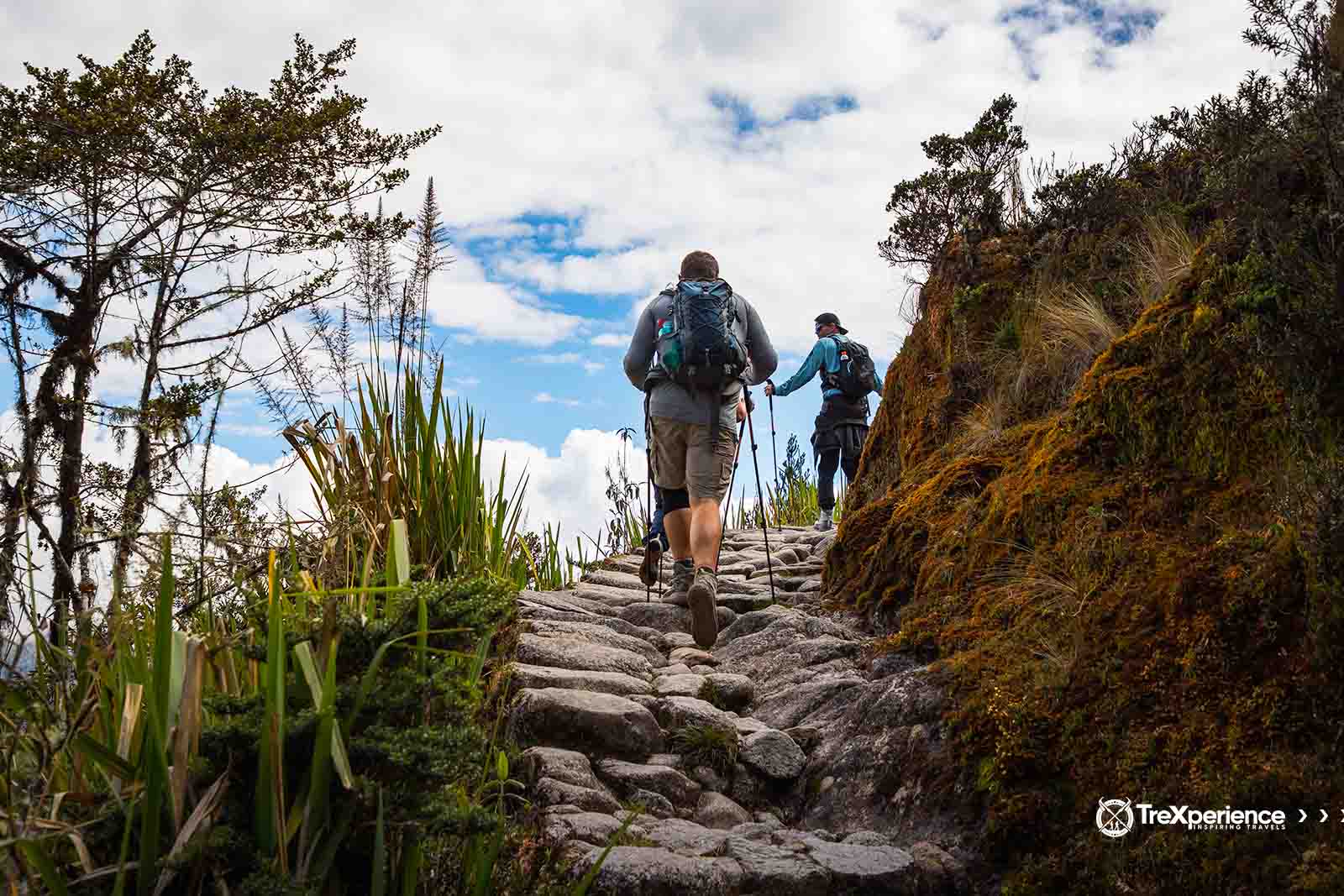
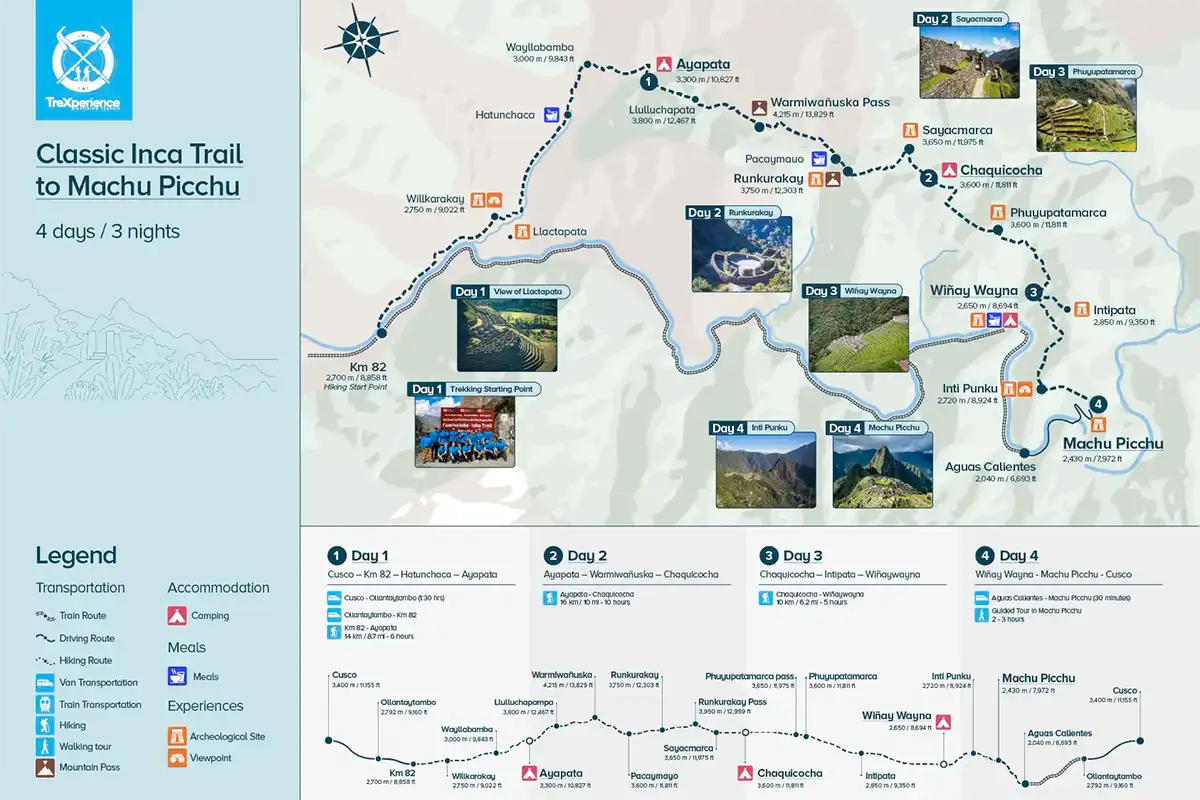
Day 1: Cusco – Km 82 – Llactapata – Ayapata
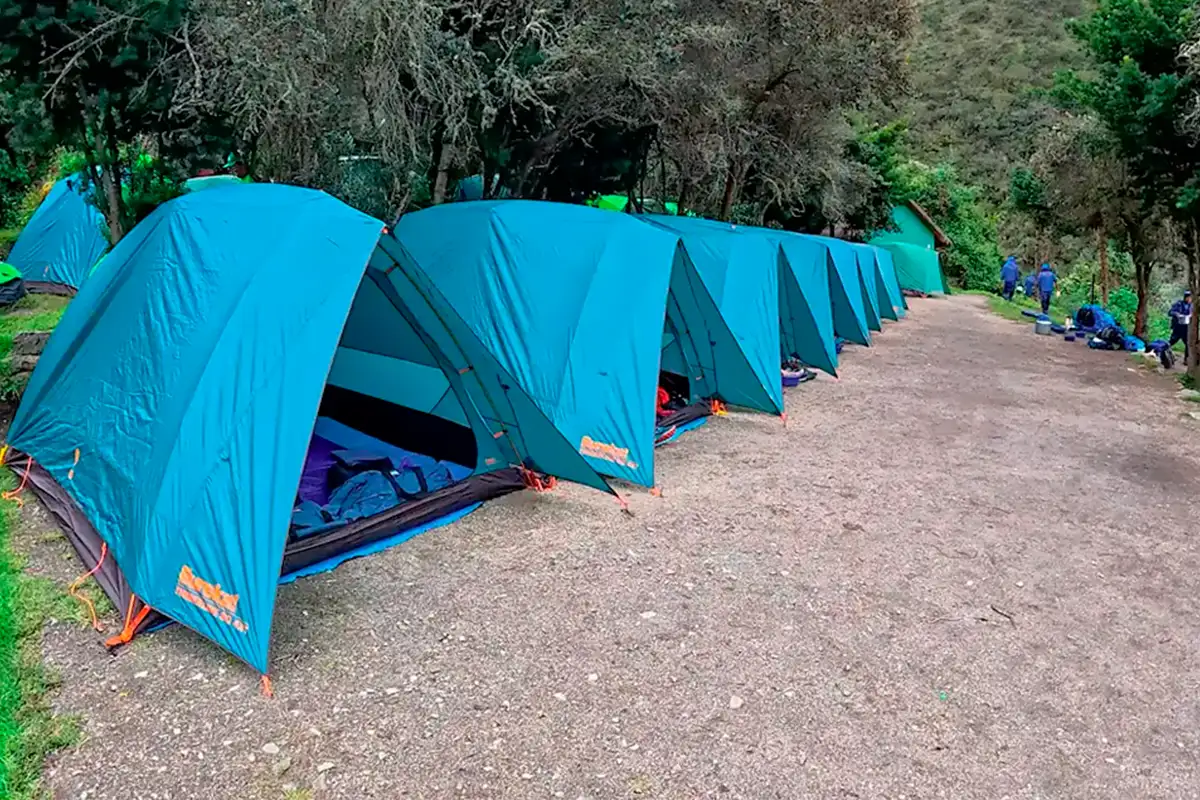
The travel agency will pick you up from your hotel in Cusco and then travel by car to Km 82 to start your Inca Trail Hike to Machu Picchu. The first campsite will be Ayapata at 3,300 m (10,826 feet), where you’ll sleep in comfortable tents.
- Duration: 6 Hours
- Hiking Distance: 14 km / 8,7 mi
- Highest Altitude: 3,300 m / 10,826 ft
- Campsite Altitude: 3,300 m / 10,826 ft
- Difficulty: Moderate
- Meals: Breakfast, snacks, lunch, tea time, dinner
Day 2: Ayapata – Dead Women’s Pass – Chaquicocha
This is the most challenging section of the Classic Inca Trail, where you’ll tackle two high-altitude passes. You'll ascend to the highest point of the route at Dead Woman’s Pass and take in breathtaking views from Runkuraqay before continuing to Chaquicocha.
- Duration: 10 Hours
- Hiking Distance: 16 km / 10 mi
- Highest Altitude: 4,215 m / 13,829 ft
- Campsite Altitude: 3,600 m / 11,811 ft
- Difficulty: Challenging
- Meals: Breakfast, snacks, lunch, tea time, dinner
Day 3: Chaquicocha – Intipata – Wiñaywayna
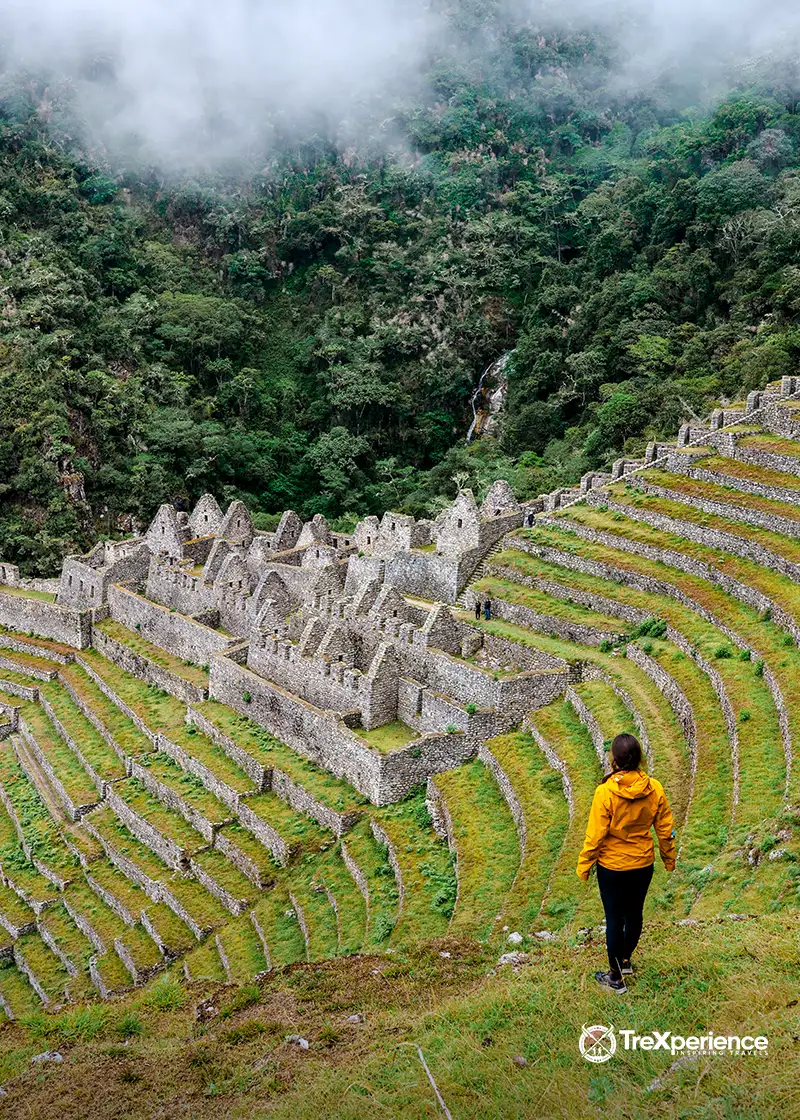
This is one of the most scenic and peaceful days, with a 5-hour trek that takes you through diverse ecosystems and leads you to the mysterious archaeological sites of Phuyupatamarca, Intipata, and Wiñaywayna.
- Duration: 5 Hours
- Hiking Distance: 10 km / 6.2 mi
- Highest Altitude: 3,600 m / 11,811 ft
- Campsite Altitude: 2,600 m / 8,530 ft
- Difficulty: Moderate
- Meals: Breakfast, snacks, lunch, tea time, dinner
Day 4: Discover Machu Picchu
Start the day early with a final 2-hour walk to the Sun Gate, where you'll catch your first wide-angle glimpse of Machu Picchu. After touring the citadel, you'll return to Cusco by Vistadome train and bus, arriving at your hotel around 7:30 p.m.
- Hiking Distance: 6 km / 3.7 mi
- Highest Altitude: 2,720 m / 8,923 ft
- Difficulty: Easy to Moderate
- Meals: Breakfast, snacks
Inca Trail Map
Inca Trail Campsites
- Mescay: The first stop on the Inca Trail. It’s a small, family-run campsite where most groups usually stop only for lunch—or to spend the night on the slower 5-day version.
- Tarayoc: A group of campsites. This is the first campsite for routes like the Ultimate 5-Day Inca Trail.
- Hatunchaca: A small village used as a campsite on the slower 5-day Inca Trail option.
- Wayllabamba: The last village along the trail. This campsite is used for the Classic 4-Day Inca Trail and the slower 5-day version.
- Ayapata: The first and most popular campsite on the Classic Inca Trail, located at 3,300 meters inside the protected Inca Trail area.
- Lluluchapampa: The second campsite on the Ultimate Inca Trail, located at 3,800 m.
- Pacaymayu Alto: Located at 3,600 m, this is the second campsite on the Classic Inca Trail and also used on the slower 5-day version.
- Chaquicocha: Located at 3,600 m, this is the preferred second campsite on the Classic Inca Trail.
- Phuyupatamarca: Located at 3,600 meters, this is the best campsite for watching both sunset and sunrise.
- Wiñaywayña: The last campsite on the Inca Trail, located at 2,600 meters and about 2 hours from Machu Picchu.
- Puente Ruinas: Located at 2,000 meters near Aguas Calientes, this is an optional campsite.
Inca Trail Archaeological Sites
| Salapunku The first archaeological site after Km 82 is only visible from the other side of the river. The site has impressive walls and a vast gate believed to be the entrance to Machu Picchu from the Sacred Valley. | K'anabamba Also located on the opposite side of the river from the Inca Trail, this second archaeological site was a resting place for travelers. |
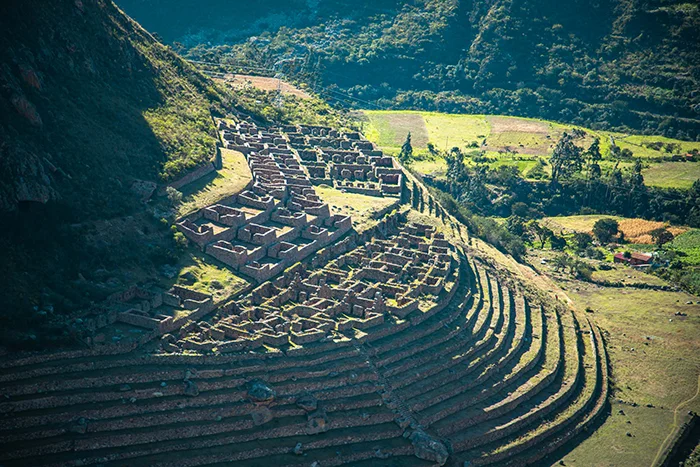 | 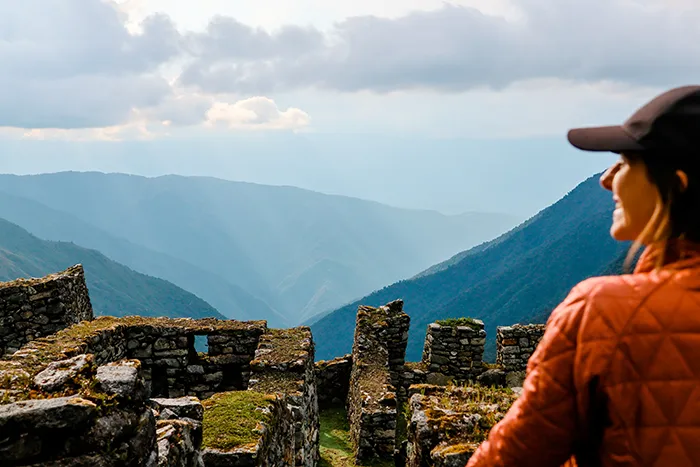 |
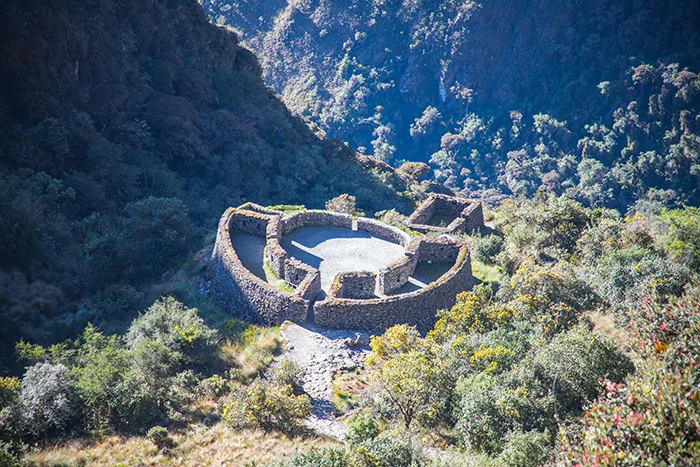
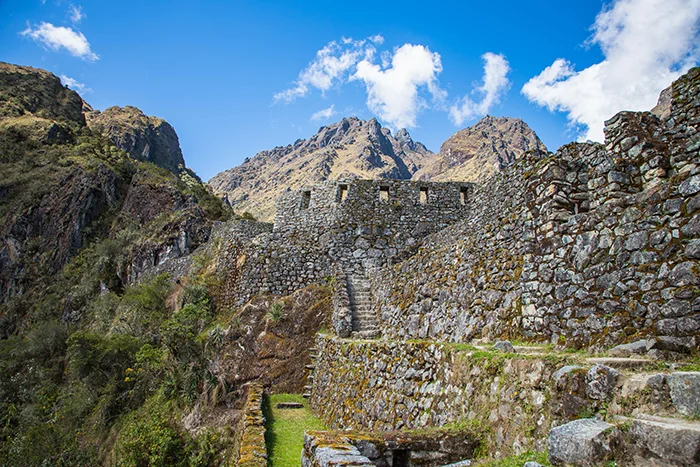
| Llactapata This is one of the most impressive sites along the route. While you won’t be able to explore it up close, you’ll catch a great view of it on the first day of the Inca Trail. It’s believed to have been an important urban and agricultural center, thanks to its complex and well-preserved terrace system. | Willkarakay Located in the upper part of Llactapata, with circular construction and a great location, it shows that it was used and inhabited by religious priests. |
 |  |
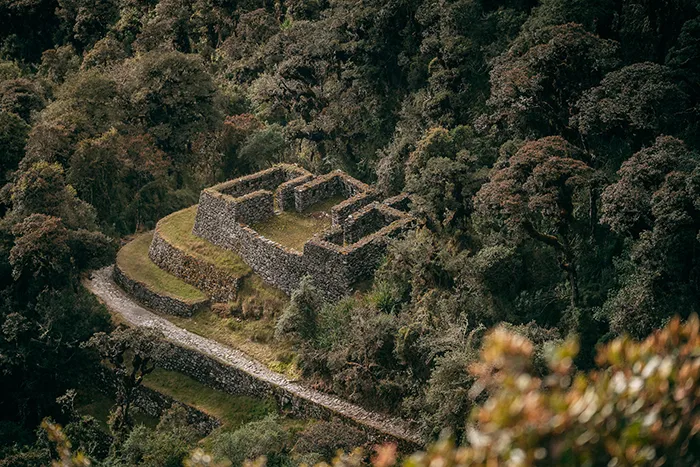
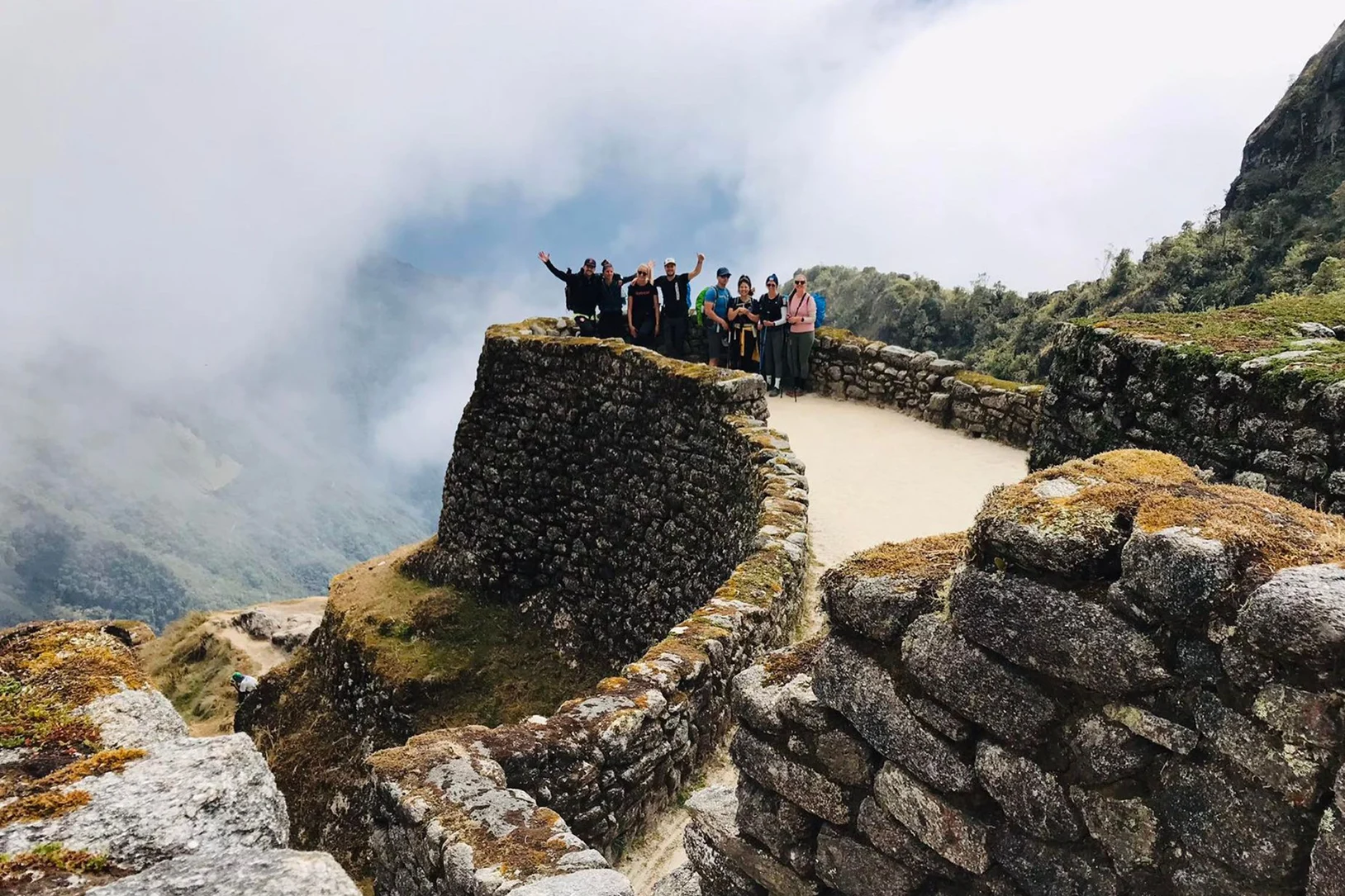
| Runkurakay Located in the heart of the Inca Trail, these semi-circular shaped ruins were once used as a resting stop for messengers and a religious place for the moon. | Sayakmarka A unique archaeological site with a strategic location that controls all the cloud forest valleys below. This place was used for religious and military purposes. The main temple at Sayakmarka is dedicated to the sun god, Inti. |
 |  |
| Conchamarka It was located right below Sayakmarca and probably was home to a significant person or a high priest. It consists of terraces with large rectangular buildings at the top. | Phuyupatamarca "The City Above the Clouds" is located on a mountaintop above Machu Picchu Mountain. This place was an important religious site for water and the mountains. The site is 3,700 meters (12,100 ft) above sea level. |
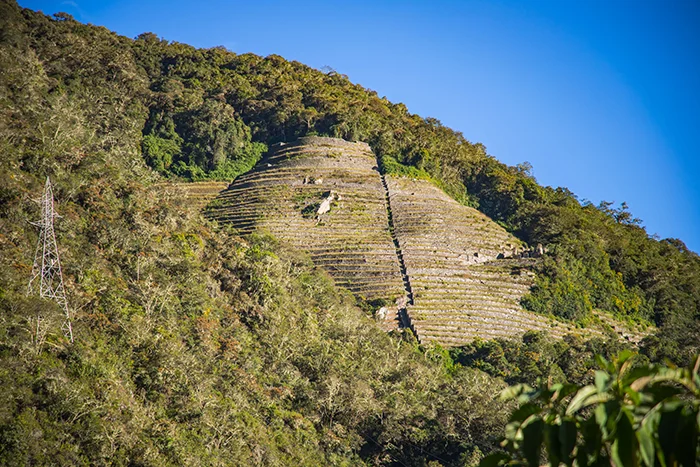 | 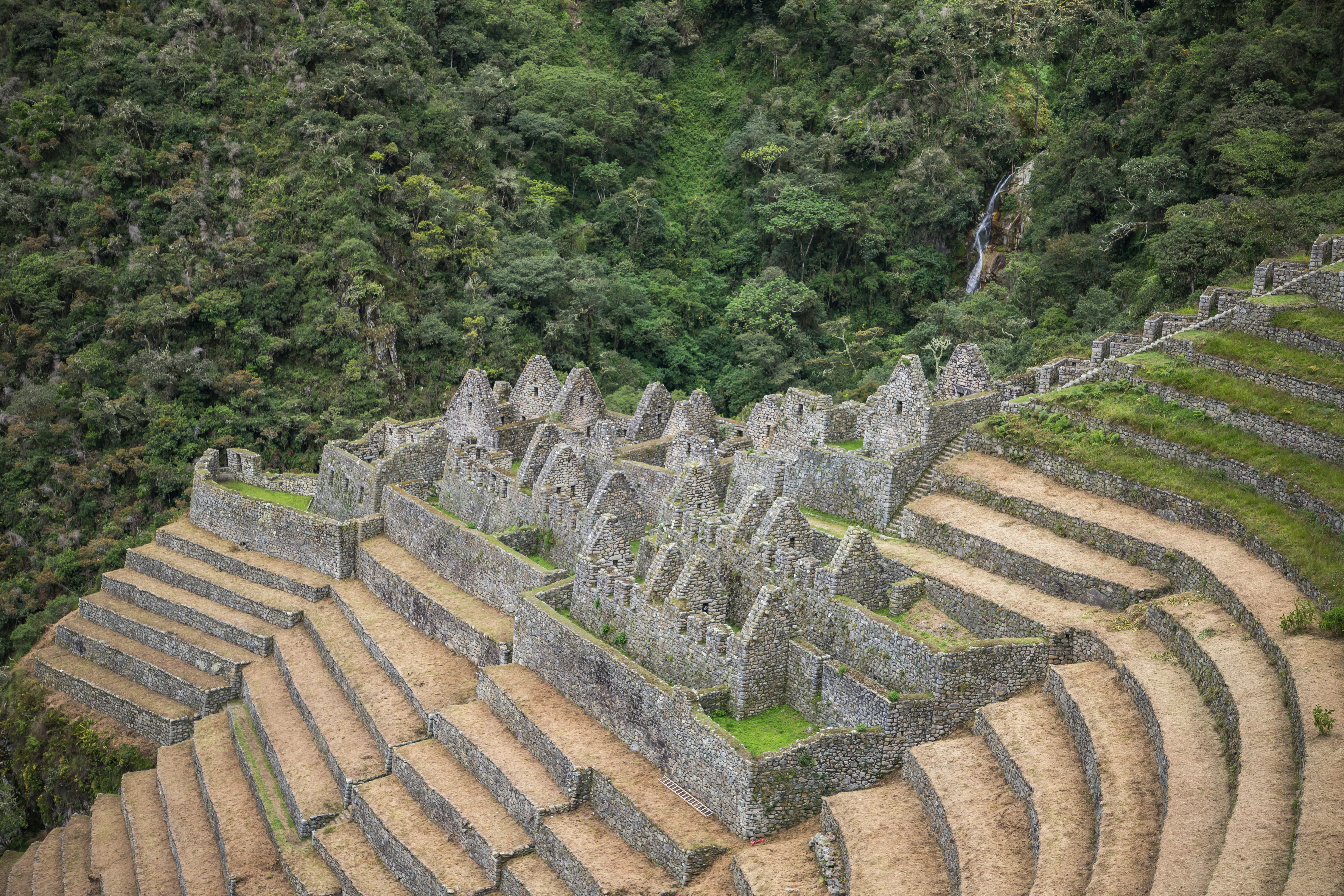 |
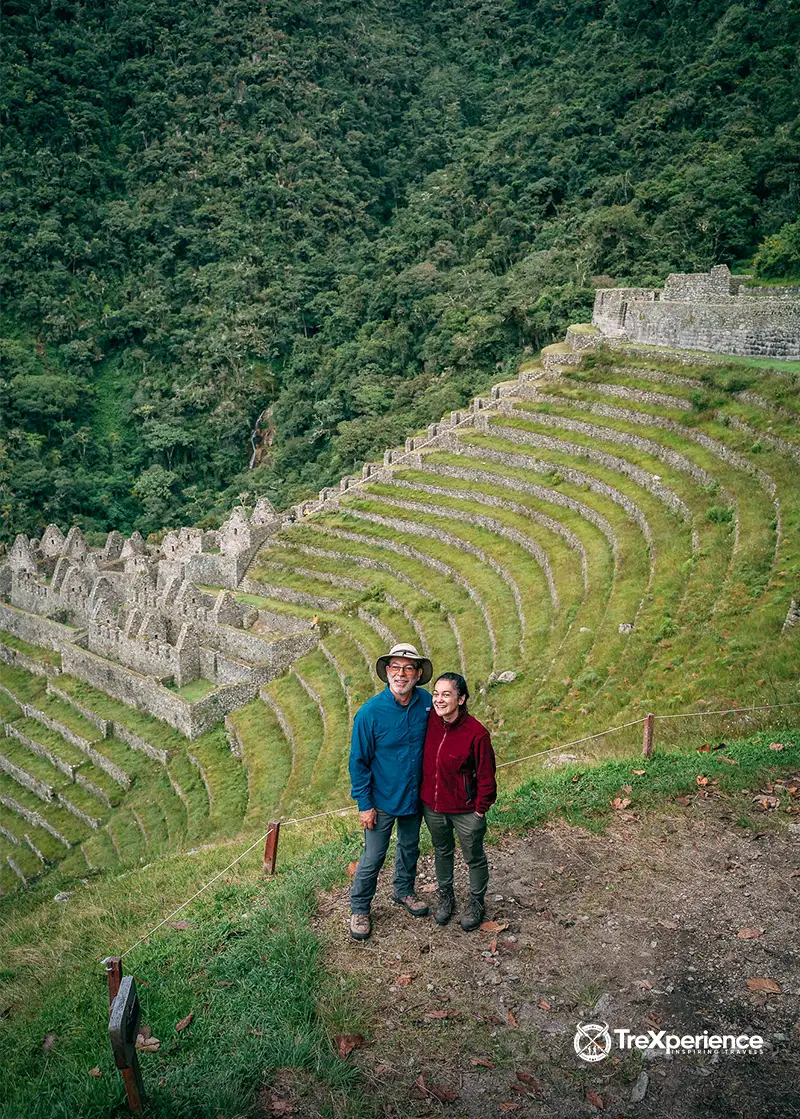
| Intipata: This mountainside site was an essential agricultural site in the thick cloud forest. The terraces, perfectly adapted to the mountain's shape, were built to provide agricultural land for the Inca people and their animals. The terraces, believed to have been made by the Inca people between the 15th and 16th centuries. | Wiñaywayna Wiñaywayna (Quechua: [wiɲaˈʝwana]) is an archaeological site located 6 kilometers (3.7 mi) from Machu Picchu. It is believed to be the gateway to the sacred city of the Incas and was possibly used as a Tambo or resting place for travelers. |
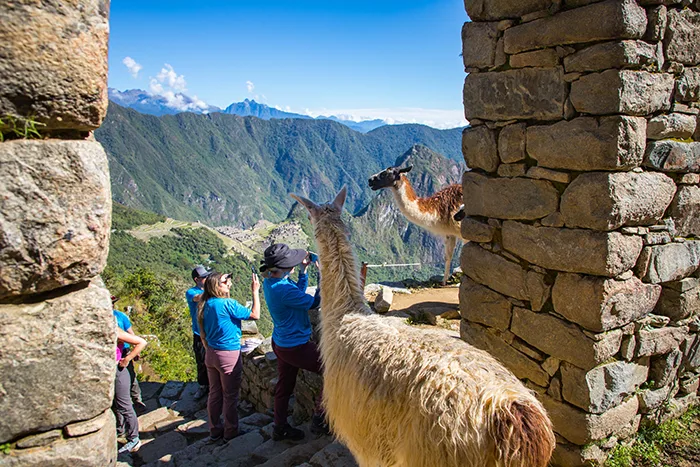 | 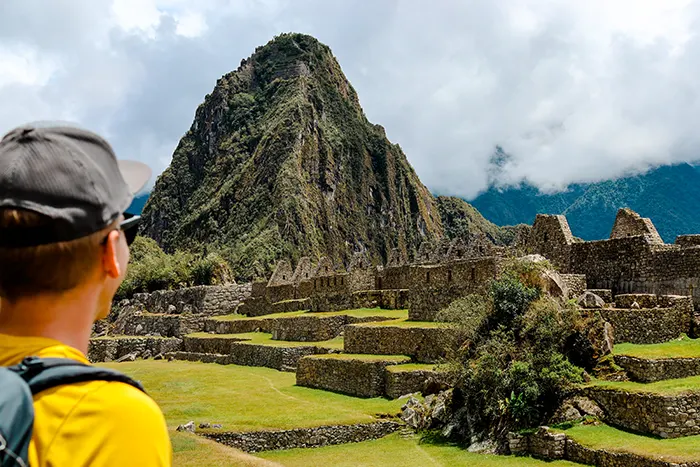 |
| Intipunku Intipunku, also known as the "Sun Gate," is the main entrance to the Inca citadel of Machu Picchu. The name comes from the Quechua words inti (sun) and punk (door). The Incas built this gate to align with the sunset of the winter solstice. | Machu Picchu There is no greater joy than arriving at Machu Picchu from the Inca Trail. Built in the 15th century, it was abandoned shortly after the Spanish conquest of Peru in the 16th century. However, it was rediscovered in 1911 by the American explorer Hiram Bingham. Since then, it has become one of Peru's most popular tourist destinations. |
Inca Trail Altitude
 |  |
Distance and Altitude
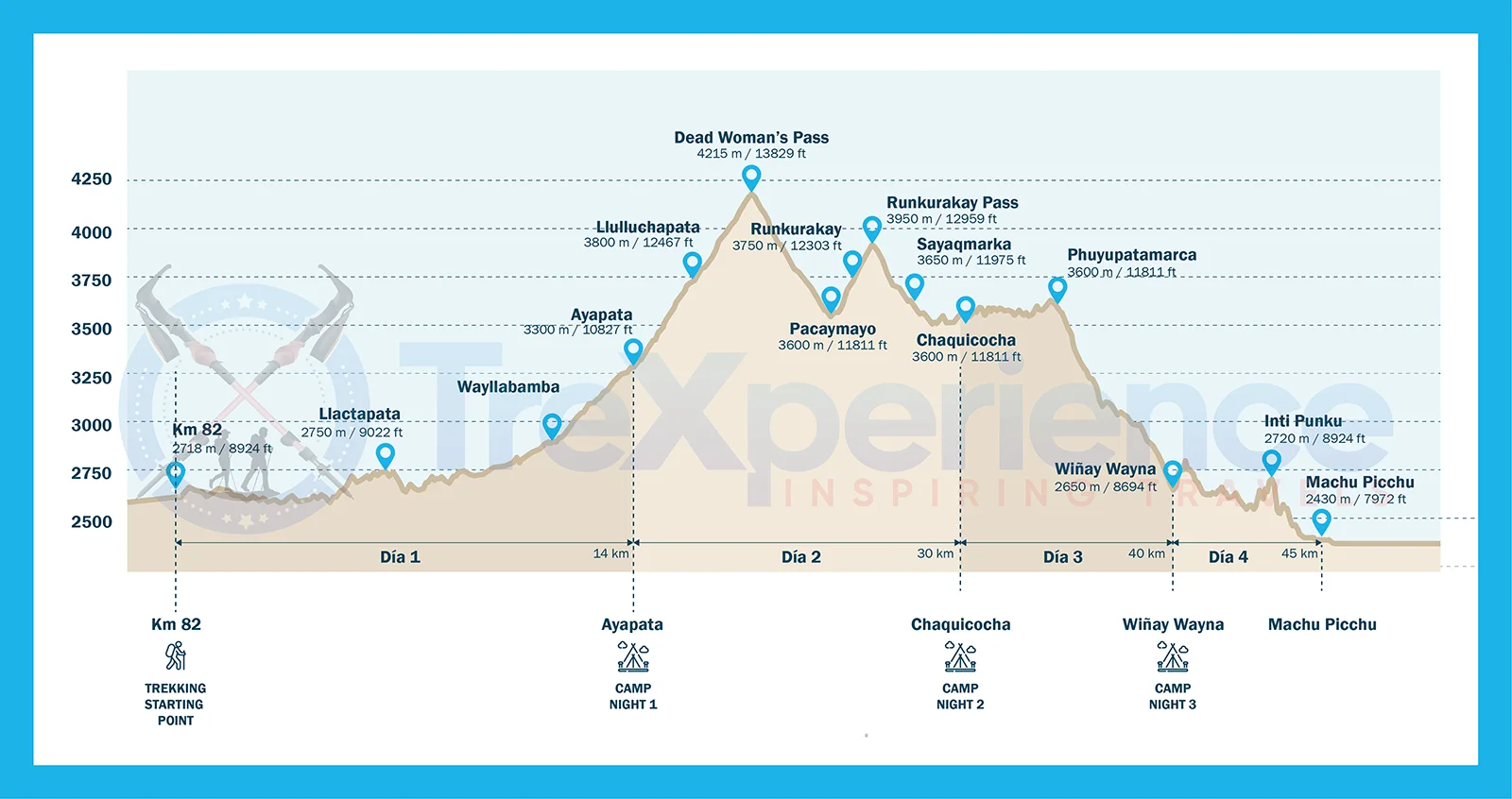
The Inca Trail stretches for about 26 miles (42 kilometers) from the Sacred Valley (km 82), through the Andes Mountains, to the lost city of Machu Picchu.
The Inca Trail elevation gain is around 3,000 feet (914 meters) from start to finish. The highest point on the trail is 13,828 feet (4,215 meters) at Dead Woman's Pass. Most of the elevation gain is in the first few days, with around 1,000 feet (305 meters) of ascent on Day 1 and 800 feet (244 meters) on Day 2. After that, the trial levels out somewhat, although there are still some ups and downs.
Inca Trail Difficulty
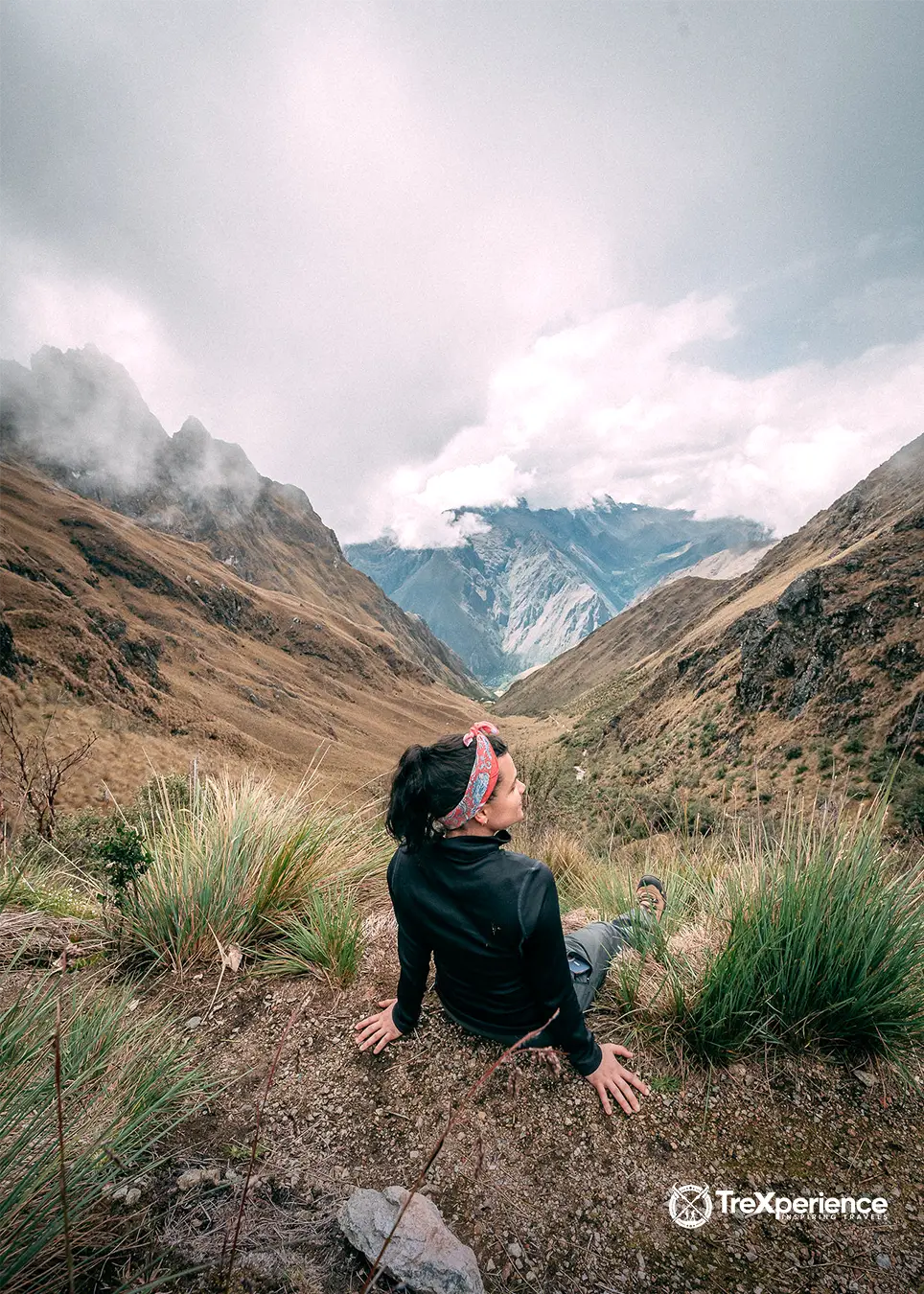
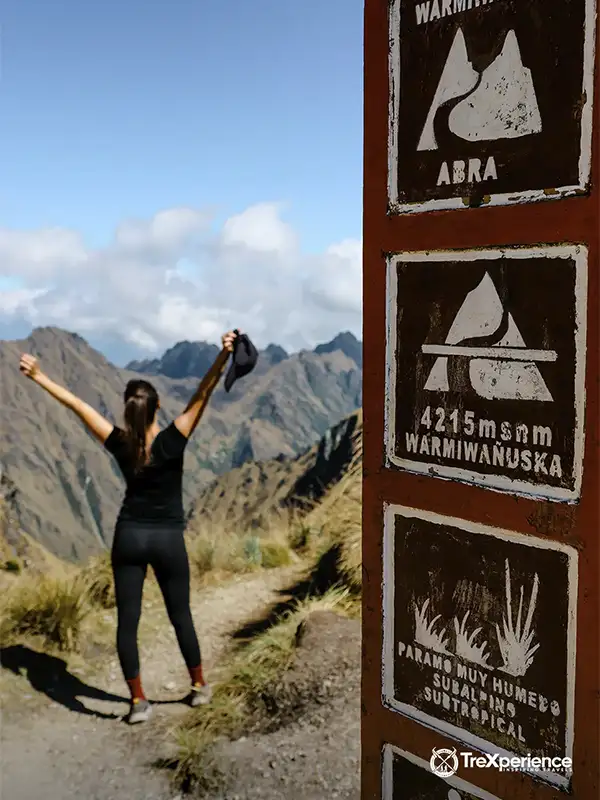
How difficult is the Inca Trail? Hiking this trail can be challenging due to its length and high altitudes; however, its rewards make the experience worthwhile. Its breathtaking scenery will impress anyone while feeling great satisfaction from having accomplished something big!
 |  |
Best Time to hike the Inca Trail
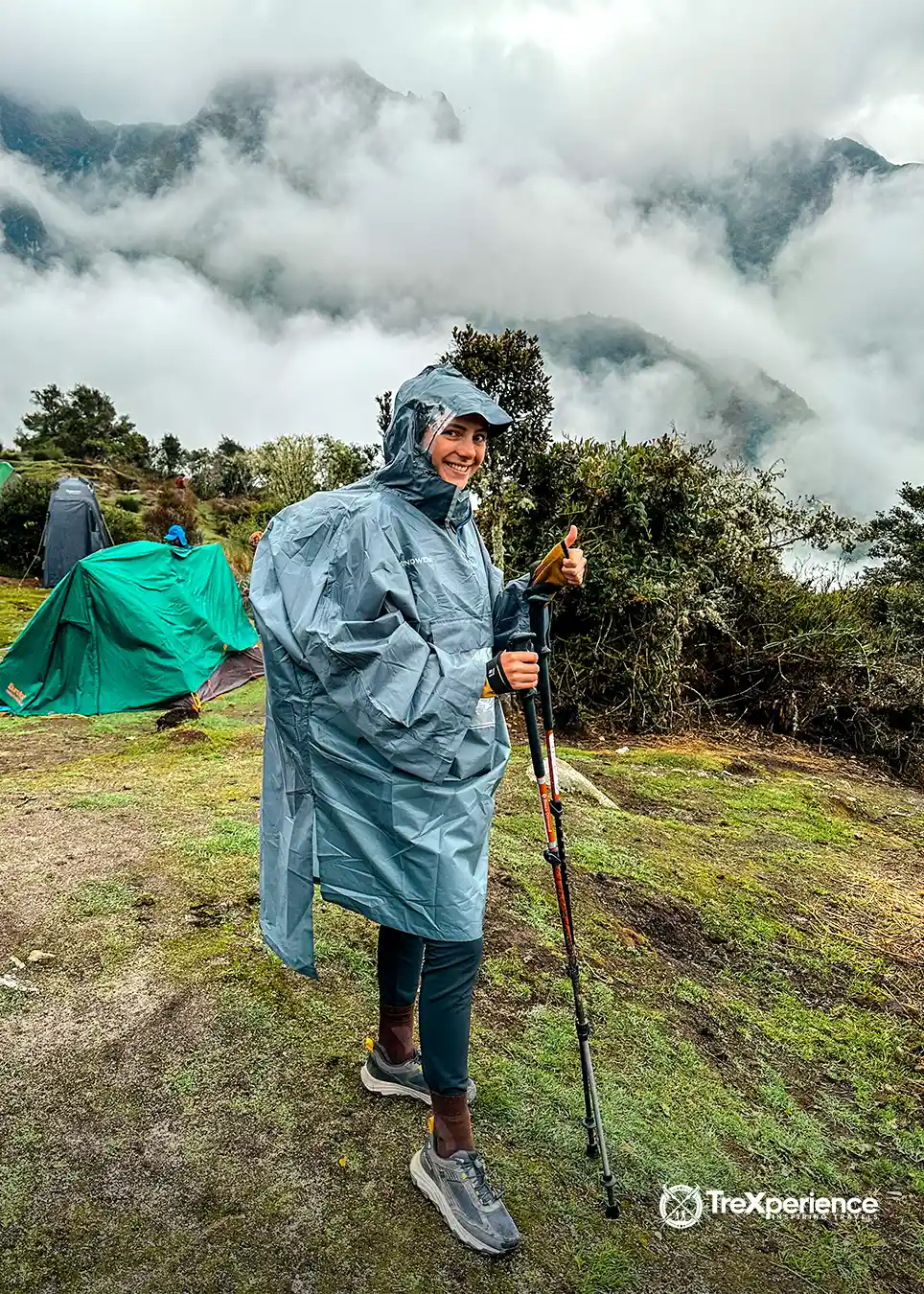
The Inca Trail is located in the Cloud Forest, a warm, humid, mountainous area that forms a barrier between the cold Andes and the dense Amazonas, Southern Peru. Without mentioning that the country has two seasons, wet and dry. The wet or rainy season lasts from November to April, with average daytime temperatures of 18 °C (64 °F) and nighttime temperatures around 9 °C (48 °F). Hiking the Inca Trail during this season means having fewer people on the trail, less crowds, more exclusivity for you, but with abundant rain, gray and overcast skies and muddy, slippery trails.
 |  |
The winter or dry season occurs from May to October. During this time, the average daytime temperature is 16 °C (61 °F), while nighttime temperatures can sometimes drop below 0 °C (32 °F). However, you'll find the days are clear with bright sunshine and dry trails. But the number of hikers will increase.
If you're looking for a quick answer, the best time to hike the Inca Trail is during the shoulder seasons, which are April to May and September to November. These months offer the best weather and fewer crowds on the trail. However, the Inca Trail weather is unpredictable. You can be enjoying the sunshine, and in a matter of minutes, it can turn into rain.
Rainy season (November to April)
November | Temperature: 21°C day / 7°C night. It’s warmer, especially at night, with a noticeable difference compared to colder months like June or July. Pros: Fewer visitors and amazing mountain views. Cons: Frequent rain, with damp trails and campsites. |
December | Temperature: 22°C day / 6°C night Pros: Green landscapes and beautiful views. Cons: Wet trails and campsites, plus a risk of landslides during heavy rain. |
January | Temperature: 19°C day / 7°C night Pros: Short bursts of rain followed by sunshine, orchid season, rainbows, and misty landscapes. Cons: Landslides can affect the trail, and can also cause delays for trains and flights. |
February | Closed for maintenance and because of the rainy season. Alternative options: Lares Trek, Quarry Trek, and Huchuy Qosqo Trek. Avoid the Salkantay Trek due to the high risk of landslides. |
March | Temperature: 17°C day / 6°C night. Pros: Refreshed campsites and Holy Week celebrations in Cusco and across Peru. Cons: There is still a risk of landslides, and campsites and trails can remain damp. |
April | Temperature: 19°C day / 5°C night Pros: Warm days, clear nights, and pleasant temperatures. Cons: Holy Week can bring more visitors and higher prices, so we recommend booking in advance. |
Dry season (May to October)
May | Temperature: 19°C day / 3°C night Pros: Sunny days and clear nights, perfect for enjoying the views. Cons: Long lines for the bus to Machu Picchu, and you need to book hotels and tours well in advance. Nights can be quite cold. |
June | Temperature: 19°C day / 1°C night Pros: Sunny days with clear skies, ideal for enjoying the views. Cons:Peak crowds, long lines for buses and archaeological sites. Bring sunscreen for the day and warm layers for the nights. |
July | Temperature: 19°C day / 0°C night Pros:Clear days with excellent views as you hike. Cons: Sites are busy, and you’ll need to book tours and hotels ahead of time. |
August | Temperature: 20°C day / 3°C night Pros:Sunny days and clear nights, although an unexpected shower can happen at any time. August offers fantastic views along the hike. Cons:It’s still quite busy, and hotels and tours remain in high demand—so book early. |
September | Temperature: 21°C day / 5°C night Pros:Fewer people on the Inca Trail and at Machu Picchu, and it’s the last good month to hike before the heavier rains arrive. Cons: Rain can still surprise you, so bring waterproof gear. |
October | Temperature: 21°C day / 5°C night Pros:Very little rain and clear skies during the day. Nights start to feel warmer. Cons:It can still rain, especially at night, so come prepared with waterproof clothing. |
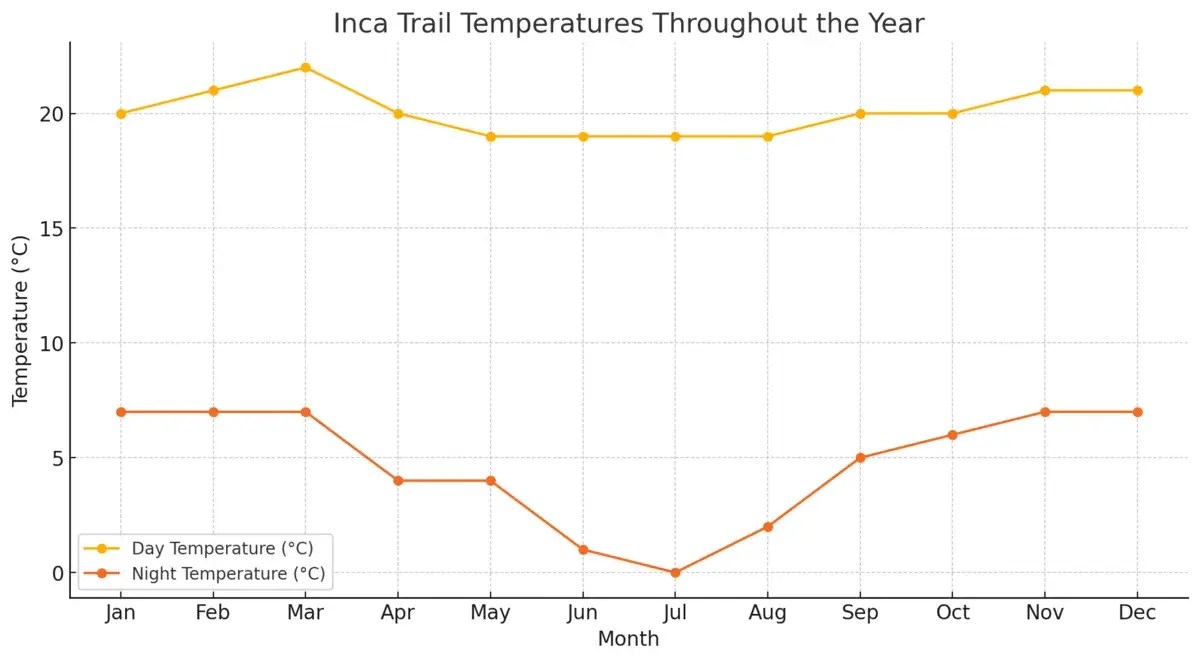
Inca Trail temperatures throughout the year
Preparing for the Inca Trail
Preparing for the Inca Trail to Machu Picchu can be demanding. Below are some recommendations for enjoying this amazing hike.
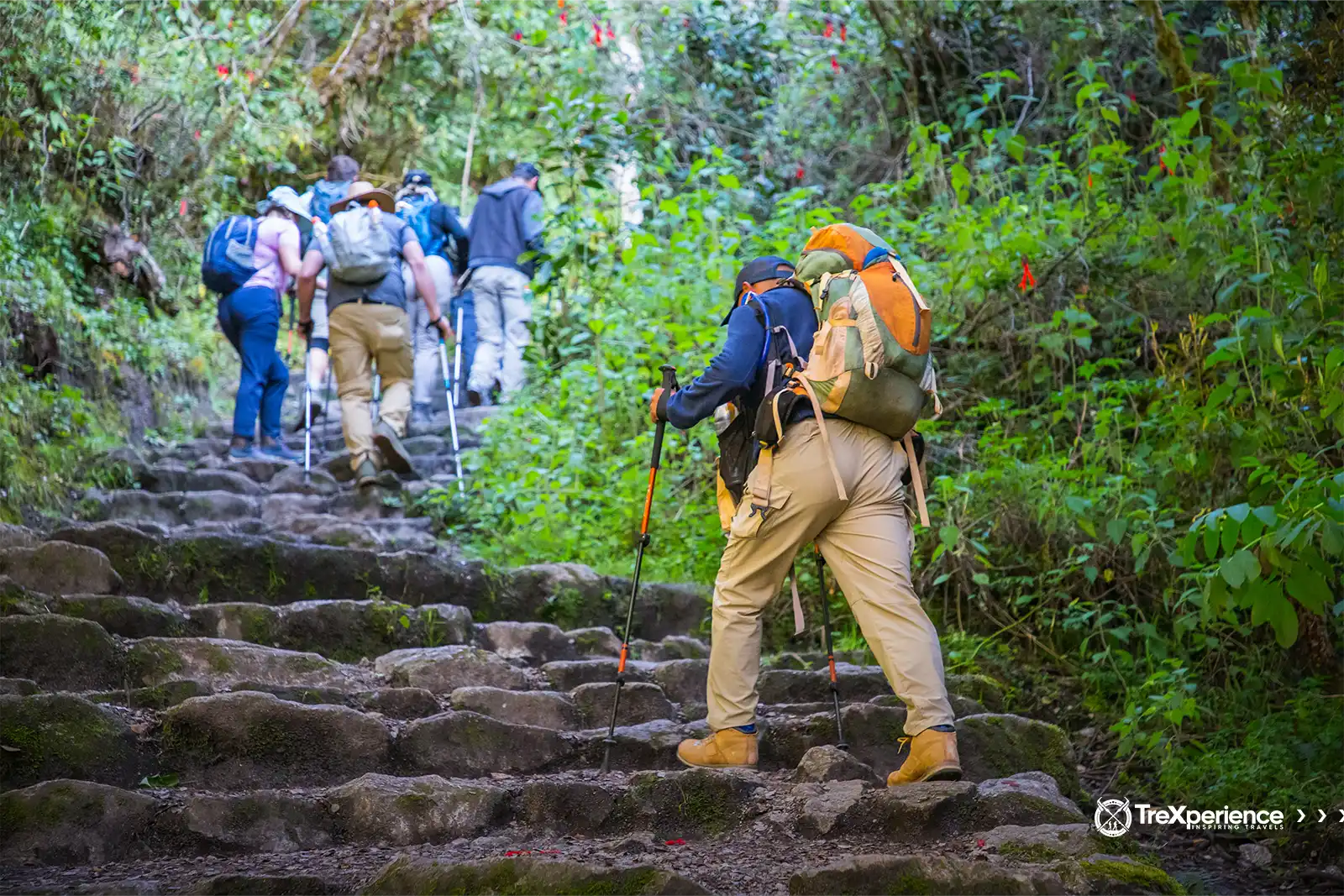
If you are still in your country of origin:
- After booking the tour, start by walking for 40 minutes near your home
- Take advantage of circuits in parks and in areas with elevation
- Increase your physical activities gradually
- Do this exercise at least eight times before coming to Peru
- Squats and lunges at home or mountain hikes will prepare you for your trail in Peru
Acclimatization
Before hiking the Inca Trail, allow time to acclimate to Cusco's high altitude. The trail reaches 4,000 meters (13,000 feet). Thus, progressive acclimatization is the key to preventing altitude sickness. Once you arrive in Cusco, follow these steps:
- Spend at least two days adapting to the altitude before beginning the Inca Trail, especially if you arrive directly from sea level.
- Staying in a high-altitude city like Cusco is a very good option.
- Take your first days slowly, stay hydrated, rest well, and avoid strenuous exercise immediately after arrival.
- Avoid eating anything spicy, meaty, or fishy for the first few days.
- Avoid extreme physical exertion, like carrying luggage.
- Drink coca tea and muña after meals.
By following these steps for the first two days in Cusco, you will be fully acclimatized by the third day.
However, acclimatization varies from person to person, so travelers with medical concerns should speak with a healthcare professional before a high-altitude trek.
What to pack for the Inca Trail?
Inca Trail tour operators authorized by the Peruvian government provide porters to lighten the hiker's load during the trek. Porters can carry up to 7 kg of personal luggage (duffel bag), including the tent and blanket provided by the travel agency.
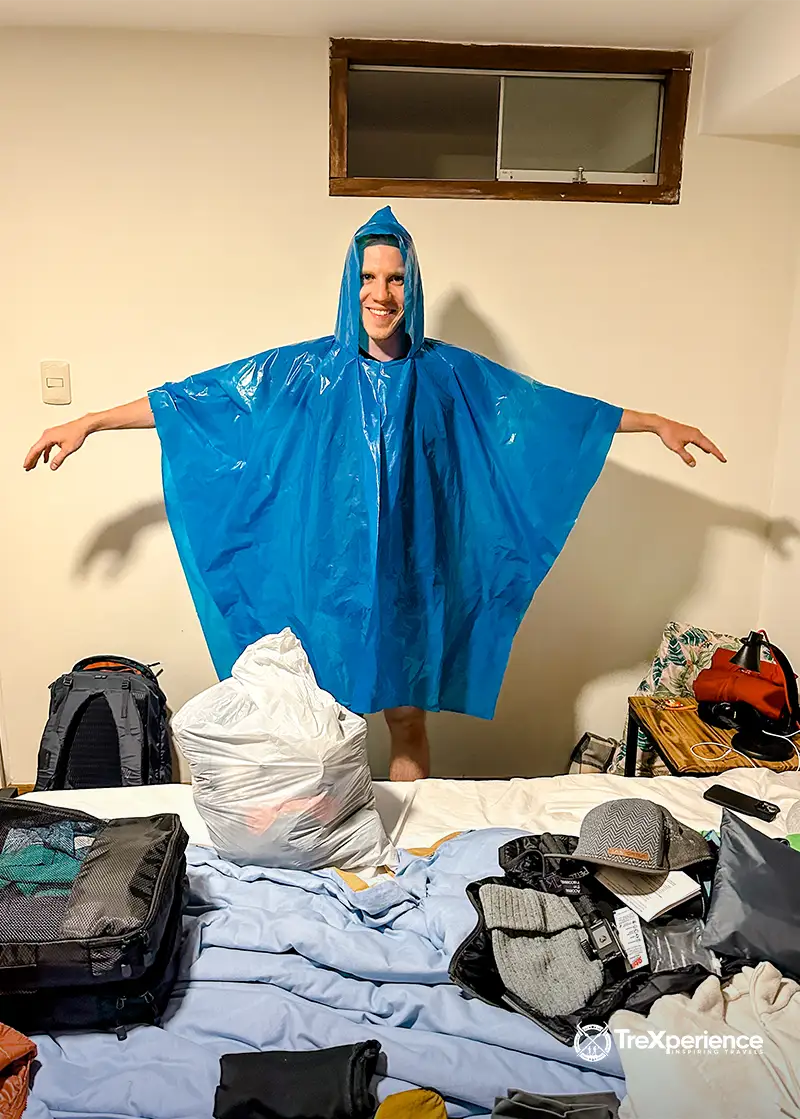
Travelers may carry a small daypack for personal items, such as sunscreen.
- Original passport
- Valid Student ID
- Hiking boots
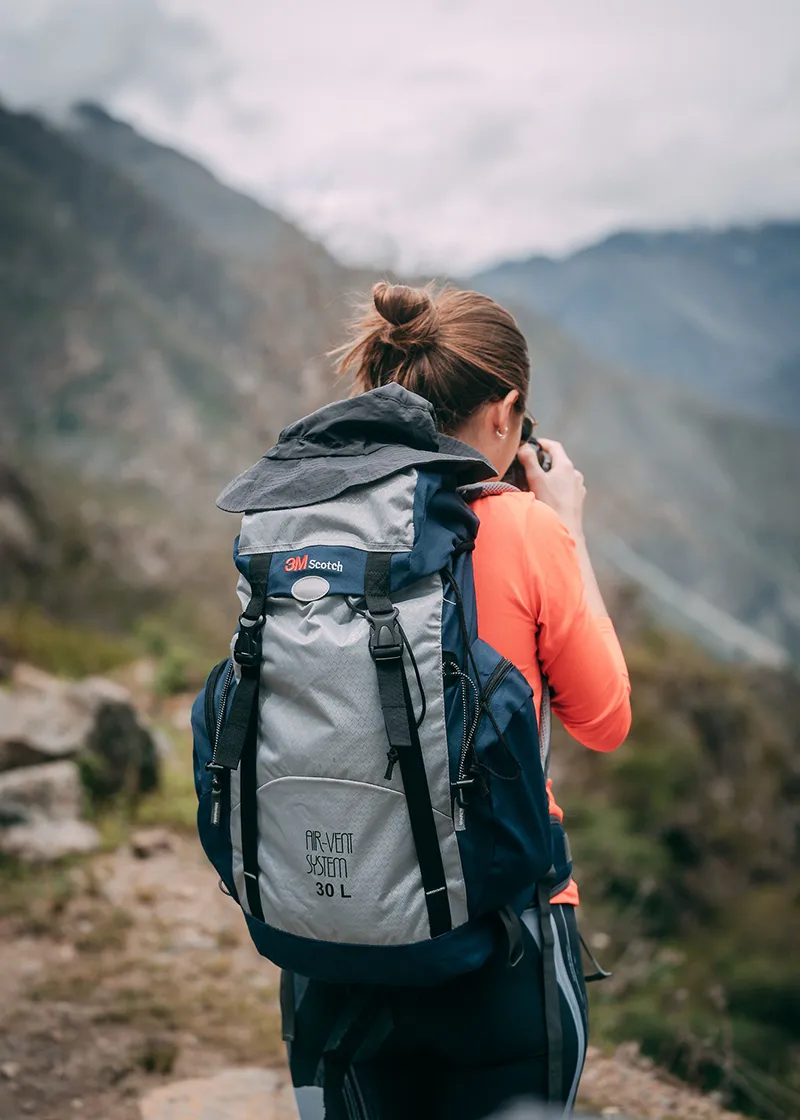
- Good-quality daypack
- Camel bag or water bottle
- Trekking poles
- Sleeping bags
- Headlamp
 |  |
›› For more information, check out our complete Inca Trail Packing List.
Best Alternative Inca Trail Tours
There are several alternatives to the Inca Trail, and some also take you to Machu Picchu. These treks focus more on nature and high-mountain landscapes than on visiting Inca sites. The trek to the Inca citadel of Choquequirao is an exception, combining nature and culture much like the Classic Inca Trail.
| Alternative Treks | Itinerary | Details |
| 4-Day Classic Salkantay Trek |
|
|
| 4-Day Lares Trek to Machu Picchu |
|
|
| 4-Day Choquequirao Trek |
|
|
| 4-Day Inca Jungle |
|
|
Some trips combine these alternative treks with either the 4-day Classic Inca Trail or the 2-day Short Inca Trail. This lets you enjoy the best of both routes in a single trip. Here are some of the main options.
1. Inca Trail + Salkantay - 6 Days
The Salkantay Inca Trail is the most remote and challenging way to hike the Inca Trail, combining two iconic routes: the Salkantay Trek and the Inca Trail.
This 6-day Salkantay and Inca Trail tour begins with pickup in Cusco and a transfer to Mollepata. Along the way, you'll visit Humantay Lake, walk around Salkantay Mountain, and join the Classic Inca Trail to reach Machu Picchu through Intipunku (Sun Gate).
Trip Details:
- Duration: 6 days / 5 nights
- Starting point: Soraypampa
- Difficulty: Moderate to challenging
- Season: March to December
- Hiking distance: 70 km / 43 miles
Itinerary:
- Day 1: Soraypampa – Humantay Lake – Salkantaypampa – Ichupata (15 km / 9.3 miles)
- Day 2: Ichupata – Sisaypampa – Inca Canal (13 km / 8 miles)
- Day 3: Inca Canal – Wayllabamba – Ayapata (15 km / 9.3 miles)
- Day 4: Ayapata – Warmiwañuska – Chaquicocha (16 km / 9.9 miles)
- Day 5: Chaquiccocha – Phuyupatamarca – Wiñaywayna (10 km / 6.2 miles)
- Day 6: Wiñaywayna – Machu Picchu – Cusco (6 km / 3.7 miles)
Pros:
- Combine two of Peru's most popular trekking routes and reach Machu Picchu through Intipunku (Sun Gate) on the morning of day 6.
Cons:
- This is a demanding trek, so you need to be in good physical shape. A minimum of two people is required for a departure. If you're traveling solo, contact us to join a group.
2. Lares Trek + Short Inca Trail to Machu Picchu - 5 Days
The 5-day Lares Trek and Short Inca Trail takes you through the mountain landscapes of Lares before joining the Short Inca Trail toward Machu Picchu. Visit Quechua communities, hike past high-altitude lakes, relax in the Lares hot springs, and see the Maras Salt Mines. Once on the Inca Trail, explore Wiñay Wayna and enter Machu Picchu through the Sun Gate (Inti Punku). You'll spend two nights camping and two in hotels, then return to Cusco on the panoramic Vistadome train.
Trip Details:
- Duration: 5 days / 4 nights
- Starting point: Ancashmarca
- Difficulty: Moderate to challenging
- Season: May to September
- Hiking distance: 54 km / 34 miles
Itinerary:
- Day 1: Cusco – Lares Hot Springs – Kiswarani – Blue Lake (10 km / 6 miles)
- Day 2: Blue Lake – Condor Pass – Cancha Cancha (16 km / 10 miles)
- Day 3: Cancha Cancha – Huaran – Maras Salt Mines – Ollantaytambo (12 km / 7.4 miles)
- Day 4: Ollantaytambo – Km 104 – Short Inca Trail – Sun Gate – Aguas Calientes (16 km / 10 miles)
- Day 5: Explore Machu Picchu – Return to Cusco
Pros:
- Get to know local Quechua families and their traditions while also hiking the Short Inca Trail to Machu Picchu.
Cons:
- Crossing Condor Pass and hiking for up to seven hours a day make this a demanding option for travelers with little experience walking at high altitude.
3. Huchuy Qosqo and Short Inca Trail - 4 Days
Hike from the Tambomachay archaeological site to Huchuy Qosqo, passing Andean lakes and enjoying views of the Sacred Valley of the Incas. Then follow the Short Inca Trail from km 104, visit Wiñay Wayna, and reach Machu Picchu through the Sun Gate. The 4-day Huchuy Qosqo + Short Inca Trail trek includes one night of camping, two nights in hotels, a guided visit to the Inca citadel, and the return to Cusco on the Vistadome train.
Trip Details:
- Duration: 4 days / 3 nights
- Starting point: Tambomachay
- Difficulty: Moderate
- Season: April to October
- Hiking distance: 37 km / 23 miles
Itinerary:
- Day 1: Cusco – Tambomachay – Pukamarca (13 km / 8.1 miles)
- Day 2: Pukamarca – Huchuy Qosqo – Lamay – Ollantaytambo (8 km / 5 miles)
- Day 3: Ollantaytambo – Km 104 – Machu Picchu Pueblo (16 km / 10 miles)
- Day 4: Machu Picchu, the Lost City of the Incas
Pros:
- Visit several Inca sites in four days with just one night of camping, a good option for travelers who prefer comfortable hotels for part of the trip.
Cons:
- Although this is a shorter trip, it isn't an easy hike. The first day involves six to eight hours of walking through the mountains near Cusco.
Inca Trail availability 2027
The Inca Trail is not a free way. Since it forms part of the Machu Picchu archaeological park, it has a plan of conservation and capacity for visitors to prevent its fast erosion. In this way, the Peruvian government, through its culture ministry, manages and controls access to the path.
In this sense, nobody can hike the Inca Trail on their own. All visitors must hire an authorized travel agency (by the Peruvian government) to get their Inca Trail permits, tour guide, porters, tents, and other logistics.
Our recommendation is to get the permits long in advance. Only a specific number of entry permits are made available each day. This quota is distributed among trail visitors, guides, porters, and trail cooks. Ministerial Resolution 294-2025-MC establishes the following:
- Routes 01, 02, 03, and 04: 500 daily entry permits. (This includes the Classic Inca Trail)
- Route 05, Km 104: 250 daily entry permits. (This includes the Short Inca Trail)
- Route 06: 100 daily entry permits.
The Inca Trail 2027 season is now open for reservations, and spots are already filling up quickly! If you’re planning to hike the classic route to Machu Picchu, the best tip is to secure your permit as early as possible, since spaces are limited each day. For a smoother booking process, make sure you have your passport details ready, as this information is required to confirm your entry. And don’t forget: permits are non-transferable, so double-check your travel dates before making your reservation.
Take note
›› If you're ready for the adventure, get your Inca Trail permits 2027 now.
Inca Trail tips
- Prepare your body: The Inca Trail is no joke: 26 miles in length with more than 4000 steps! Hiking it over four days requires you to be in peak physical condition.
- Be Sure to Plan in Advance: For an enjoyable hiking experience, make sure you purchase comfortable hiking shoes, rain gear, a daypack, and other essentials as soon as possible to give yourself enough time for break-in before beginning.
- Book Your Spot: As one of the world's premier treks, the Inca Trail quickly fills up. If you wish to hike this magnificent trail, book early as spots often sell out quickly.
- Be Sure to Acquire Permits Early: In order to hike the Inca Trail, permits are a necessary component. Start this process early to avoid disappointment!
- Learning some basic Spanish: When traveling the Inca Trail, you may encounter people who only speak Spanish - making your trip more enjoyable if you know some basic phrases to communicate with them and help your journey go more smoothly.
Inca Trail FAQs
Every year, thousands of people from around the globe come to Peru to trek the trail and see the ancient Incan ruins. You probably have many questions about taking on the Inca Trail. This article will answer some of the most frequently asked questions about the Inca Trail to help you better prepare for your adventure.
Are there age restrictions to hike the Inca Trail?
There is no set age limit for the Inca Trail, but travelers under 18 must be accompanied by an adult. The minor must be in perfect physical condition and fully acclimatized.
How much does the Inca Trail cost?
The Classic 4-Day Inca Trail of TreXperience starts at US$820 per adult. Permits, guides, meals on the trail, camping equipment, porters, and the Vistadome return train are included. Gear rentals and optional mountain hikes cost extra.
Does the Inca Trail Tour Include a Machu Picchu entrance ticket?
Yes. The Classic Inca Trail includes the permit to hike the trail, as well as entrance tickets to visit the Machu Picchu citadel. Optional climbs up Huayna Picchu or Machu Picchu Mountain require additional tickets.
How much time will I have at Machu Picchu?
Expect around two hours for the guided tour, depending on your assigned circuit. Route 3B allows up to 2.5 hours. On the classic trek, you also stop at the Sun Gate (Inti Punku) and upper viewpoints beforehand.
Do I need to set up camp each day during the classic Inca Trail?
No. The porters of the Travel Agency carry the tents, set up camp before you arrive, and pack everything away each morning. You only need to organize your personal belongings and enjoy your time at camp.
What do porters carry?
The Travel Agency's porters carry tents, food, cooking equipment, and your duffel bag. Your personal allowance is 7 kg, including your sleeping bag and air mattress. You carry a daypack with water, snacks, rain gear, and anything you need while hiking.
What camping equipment do I need to bring?
In the TreXperience case, we provide tents, basic sleeping mats, and shared camp equipment. Bring or rent a warm sleeping bag. An inflatable mat and trekking poles are optional extras. Pack a headlamp, warm layers, rain gear, and personal toiletries.
Are there showers in the Inca Trail camp zones?
Basic cold showers are available at some campsites, including Wiñay Wayna, but not every night. Bring wet wipes and a small towel.
Is there cellphone signal or Wi-Fi in the Inca Trail?
Cellphone reception is patchy or unavailable, and there is no reliable Wi-Fi along the trail. Plan to be offline for most of the trek. Our guides carry satellite phones for emergencies.
Can I charge my phone?
Yes, with your own power bank. Campsites have no electricity, so fully charge your phone and power bank before leaving Cusco. Bring enough battery capacity for four days of photos and essential use.
What happens if the trail closes due to weather?
If severe weather closes the trail, the Travel Agency may change, postpone, or cancel the tour. In TreXperience, we try to offer alternatives before canceling. Refunds depend on the circumstances and our booking conditions, so a full refund is not guaranteed.

Add new comment