



Quelccaya Glacier is one of the most stunning sights in the Peruvian Andes. It is a remote location where ice, mountains, and expansive highland plains combine to create a landscape that is unlike any other in Cusco.
Set away from the main tourist routes, this area of the Andes is known for its vastness, tranquil surroundings, and the chance to explore a landscape that remains off the beaten path.
What is Quelccaya?
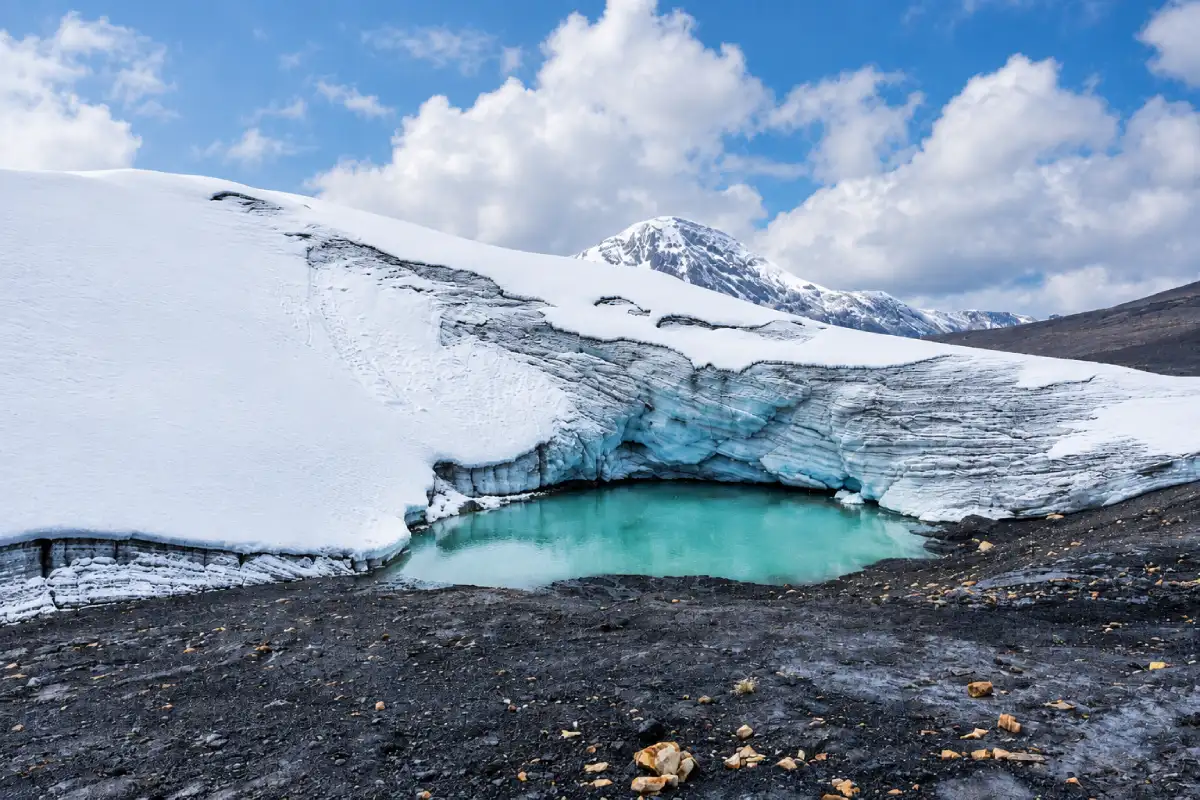
Quelccaya is a tropical ice cap, a large mass of ice that covers a high-altitude area of the Vilcanota mountain range. It features several glacier tongues that extend from it. Although it is commonly referred to as Quelccaya Glacier, it is not a single valley glacier; rather, it is an extensive ice system.
It is considered “tropical” because it is located within the Earth’s tropical zone, but its high elevation allows the ice to remain throughout the year. This unique combination of location and altitude makes Quelccaya one of the most distinctive ice formations in the Andes.
Why is Quelccaya so well known?
The Quelccaya ice cap is significant for climate research. In 1983, scientists drilled through its ice to reach the bedrock, collecting ice cores that enabled them to study centuries of climate change in the Andes.
Its ice layers preserve more than 1,800 years of information about temperature, precipitation, and other environmental changes in this part of South America.
Where is Quelccaya Glacier?
The Quelccaya Glacier is located in the Vilcanota mountain range in southern Peru, specifically between the regions of Cusco and Puno. Scientific studies indicate that its central area is situated at approximately 13°56′ S latitude and 70°50′ W longitude, making it one of the highest and most remote regions in the Peruvian Andes.
The broader Quelccaya area extends into the communities of Pitumarca and Checacupe in Cusco, as well as parts of Corani and Macusani in Puno. On the Cusco side, the community of Phinaya serves as a key access point for routes leading to the glacier. The surrounding landscape features numerous lakes, high-altitude wetlands, and large areas utilized for raising alpacas.
How high is Quelccaya?
The Quelccaya ice cap is not located at a single elevation, as it spans a vast area of high mountain terrain. Its highest point reaches approximately 5,670 meters above sea level, while its edges extend into lower elevations.
The elevation you experience during a visit will depend on which part of the glacier you approach and the route you choose. However, much of the journey typically occurs at elevations above 4,800 meters.
How to get to Quelccaya Glacier from Cusco
From Cusco, the route to Quelccaya goes through Checacupe, Pitumarca, and Phinaya, continuing along high mountain roads toward the glacier. This long journey often takes more than five hours, depending on road and weather conditions.
The route from Cusco to Quelccaya
The route begins in Cusco and travels to Checacupe, then continues through Pitumarca, Jahuaycate Pass, Sibinacocha, and Phinaya. The first section of the journey is mainly on paved roads, while the paths into the higher areas consist of gravel or dirt tracks.
Along the way, you'll encounter open plains, wetlands, lakes, and grazing areas where alpacas and vicuñas are commonly seen.
Where does the hike start?
Phinaya serves as the primary base for accessing Quelccaya, although the hike may not always start there. Depending on road conditions and the chosen route, vehicles may be able to get closer to the glacier.
The exact starting point of the hike varies based on available access and the specific area of Quelccaya that you plan to visit.
Can you visit Quelccaya on your own?
Yes, but it takes careful planning. The area is remote, services are limited, and there is no regular tourist transportation to the glacier.
It is advisable to arrange transportation in advance, check the road conditions, and consider getting help from a local, especially during your first visit.
Quelccaya glacier tour
Tours to Quelccaya usually depart from Cusco between 3:00 and 4:00 a.m. and return around 7:30 to 9:00 p.m., making it a full-day excursion. The trip includes transport to the glacier area and a hike, with some itineraries also stopping at Lake Sibinacocha.
Most organized tours include breakfast and lunch, typically served in towns or communities along the route, such as Phinaya or Cusipata. Dinner is generally not included, although this depends on the tour operator and the tour package you book.
What is the hike to Quelccaya Glacier like?
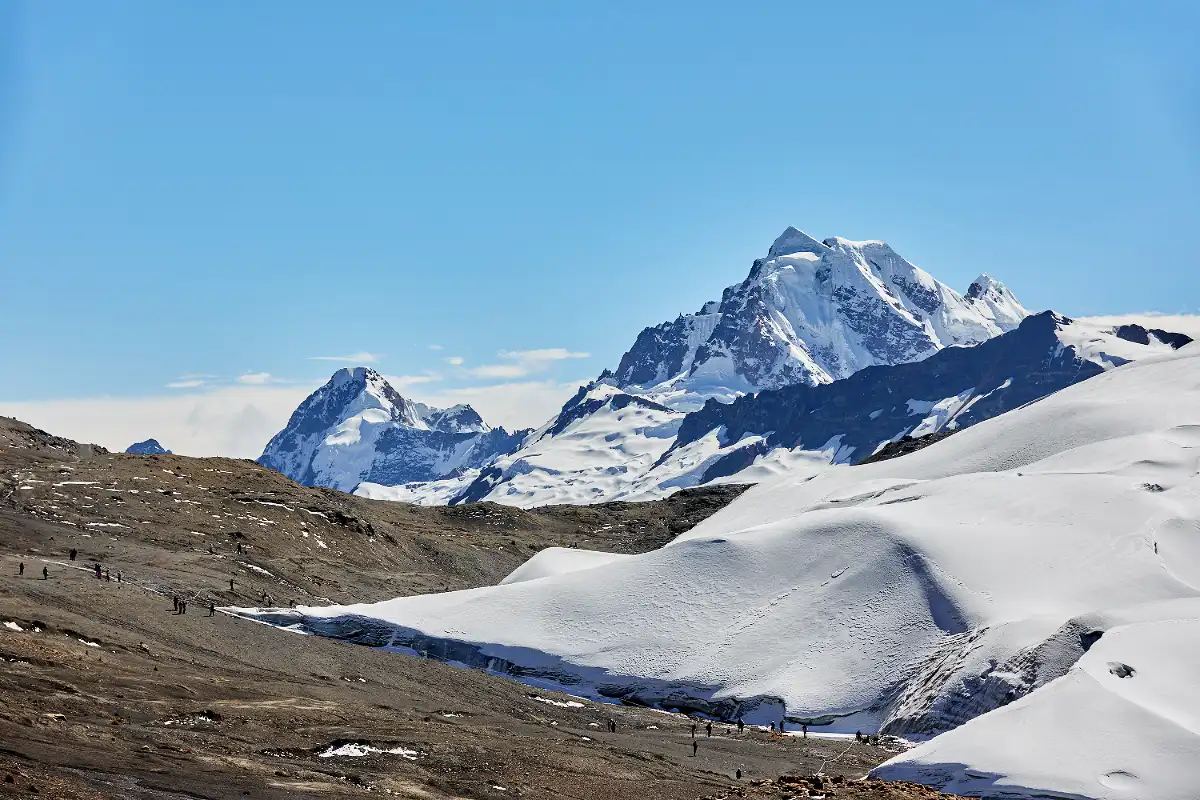
The hike to Quelccaya takes you through a high mountain landscape characterized by open plains, wetlands, lakes, and rocky areas, which gradually lead you to the glacier. There is no single established route, as the starting point varies depending on how far the vehicle can travel and which area you choose to visit.
The hike occurs at high altitude and may reach elevations above 5,000 meters, depending on the chosen route. Even short stretches can be quite challenging at this elevation.
How long does the hike take?
The time required for each excursion can vary based on the access route. For some trips, the final walk to the glacier takes between 30 and 45 minutes each way. However, routes that begin farther away may require several hours of hiking.
As a result, the total time depends on where the vehicle stops, the group's pace, and the condition of the terrain.
How far do you walk?
The distance also varies. Some visits involve around 1 km of walking from an access point near the glacier, while other trekking routes can cover approximately 14 km.
The exact distance depends on the available access and which part of Quelccaya you want to explore.
What is the terrain like?
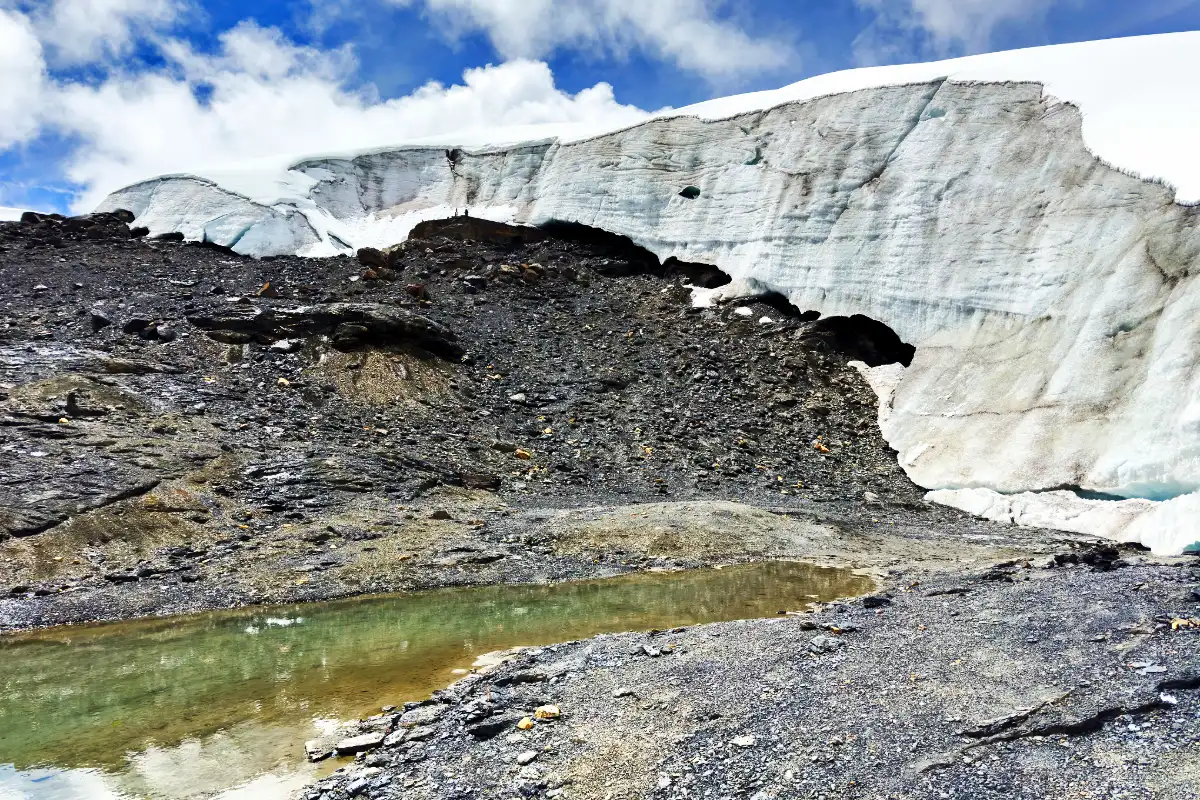
The route crosses high-altitude grasslands, wetlands, and open ground before reaching rockier terrain. As you approach the glacier, the terrain becomes rockier and more uneven. You may also come across moraines, wet areas, and ground that has been affected by melting ice.
Wear hiking shoes with good grip and take extra care on unstable sections.
How difficult is it to reach Quelccaya Ice Cap?
The difficulty depends on the route and where the hike begins, but altitude is the main challenge. As you approach the glacier, you may climb above 5,000 meters, where physical effort feels harder and a slower pace is normal.
You do not need technical mountaineering experience to reach the areas commonly visited on tours. However, you should be well acclimatized, reasonably fit, and prepared for cold weather and changing conditions.
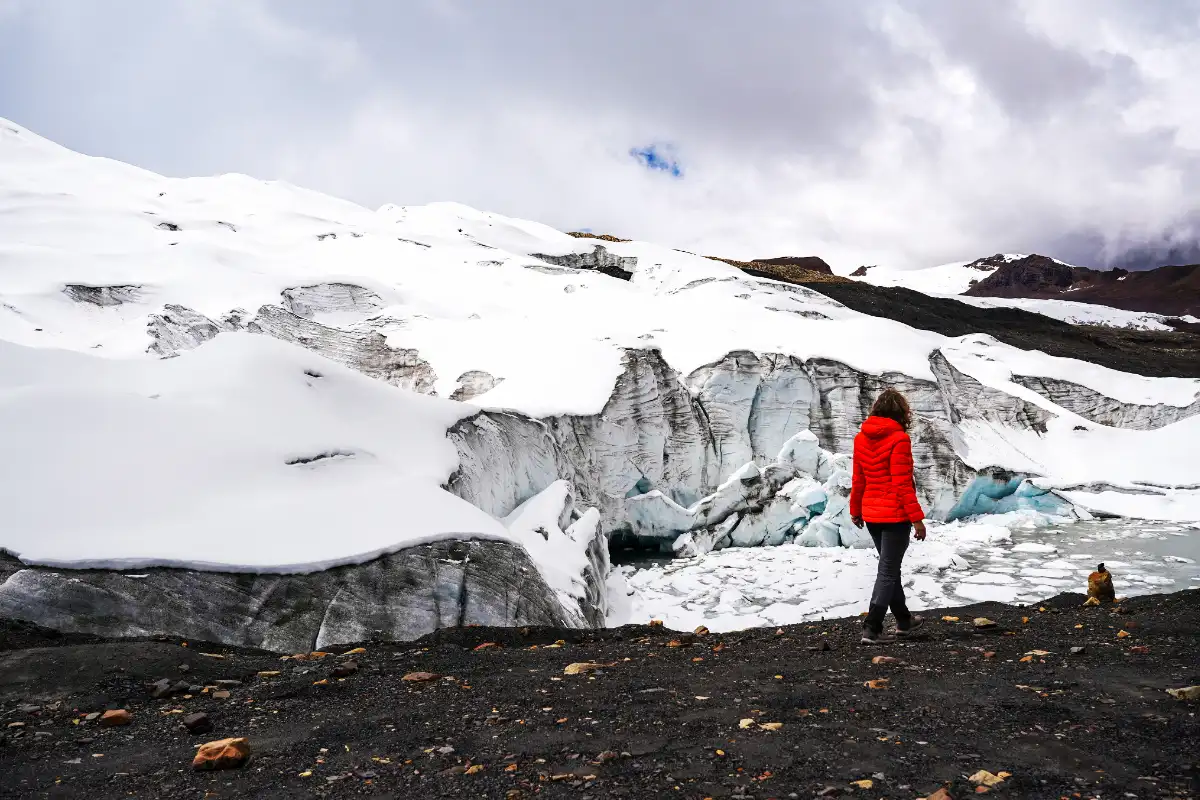
What to see in and around Quelccaya
The area around Quelccaya has some of the most interesting high mountain scenery in the Vilcanota range. Along the route, you’ll see lakes, wetlands, open plains, glacial formations, and communities whose main livelihood is raising alpacas.
Glacial landscapes and lakes
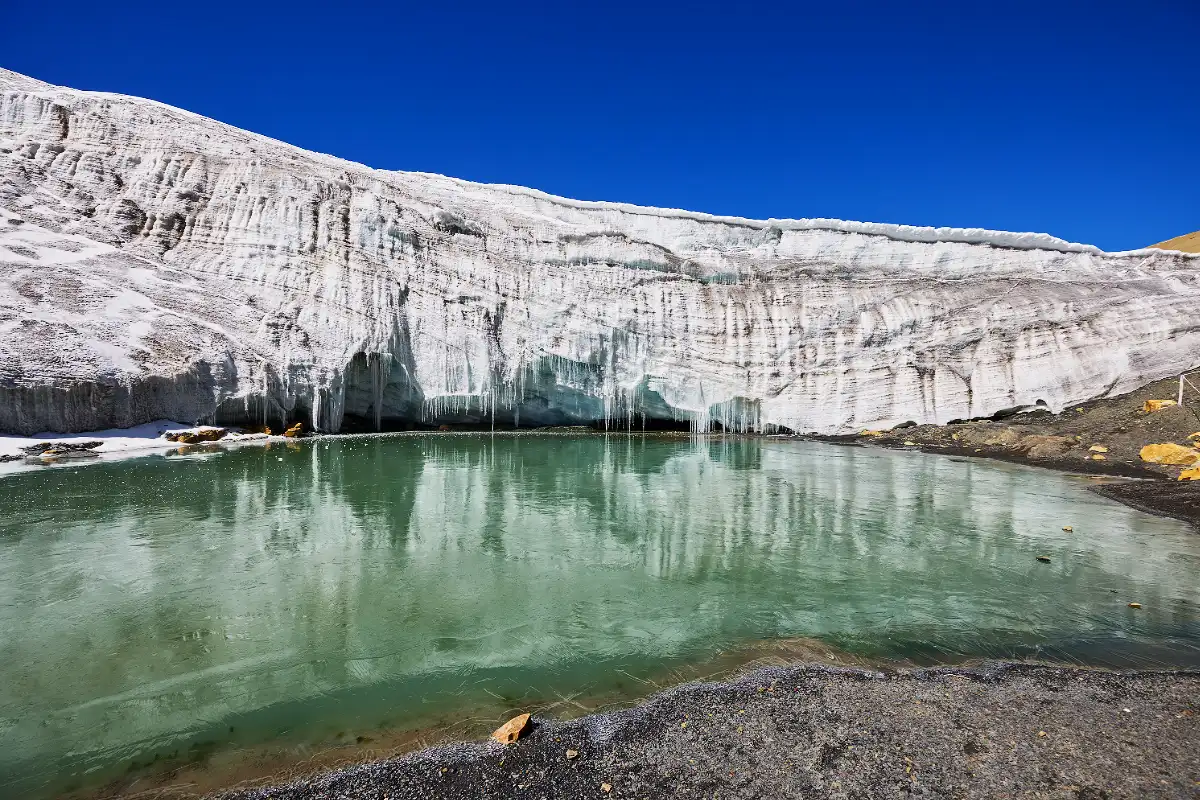
Around Quelccaya, you can see glacial valleys, moraines, rocky surfaces, and areas exposed by the retreating ice. One of the best-known sections is Qori Kalis, a glacier tongue that has helped scientists study changes in the Quelccaya ice cap for decades.
The area also features high-altitude lakes, including Ritiananta, Cocha Uma, Ccasccara, Accocancha, and Lluchuyoc Cocha, all surrounded by stunning mountain scenery and puna grasslands.
Wetlands and puna grasslands
The area around Quelccaya is covered by extensive puna grasslands and high-altitude wetlands, known as bofedales. The vegetation is adapted to cold temperatures, strong winds, and high elevation. Ichu grass is one of the most characteristic plants in this landscape.
These wetlands play a crucial role in water storage and serve as a food source for alpacas, vicuñas, and other animals that inhabit the region.
Alpacas, vicuñas, and high-altitude wildlife
Alpacas are a familiar sight and an important source of income for nearby communities. You may also spot vicuñas and various bird species adapted to life at high altitude.
Birds recorded in the area include the Andean condor, puna tinamou, Andean ibis, and glacier finch, a species known to nest in cavities close to the ice.
Lake Sibinacocha
Sibinacocha, located at an elevation of approximately 4,884 meters above sea level, is one of the most significant lakes in the Vilcanota mountain range. It stretches around 16 kilometers and is surrounded by snowy peaks, including Chumpe, Callangate, and Quelccaya.
The lake's blue and green waters create a striking contrast with the surrounding puna grasslands, where you can spot alpacas, vicuñas, Andean geese, and various other high-altitude birds.
Phinaya and nearby communities
Phinaya is one of the closest communities to Quelccaya and an important access point for reaching the glacier. Raising alpacas remains one of the main sources of income for families living in this high mountain area.
Nearby communities include Chimboya-Aymaña and Quelccaya, where traditional forms of cooperation, such as ayni and minka, continue to be a part of daily life. These communities also maintain strong cultural connections to the mountains and the natural environment.
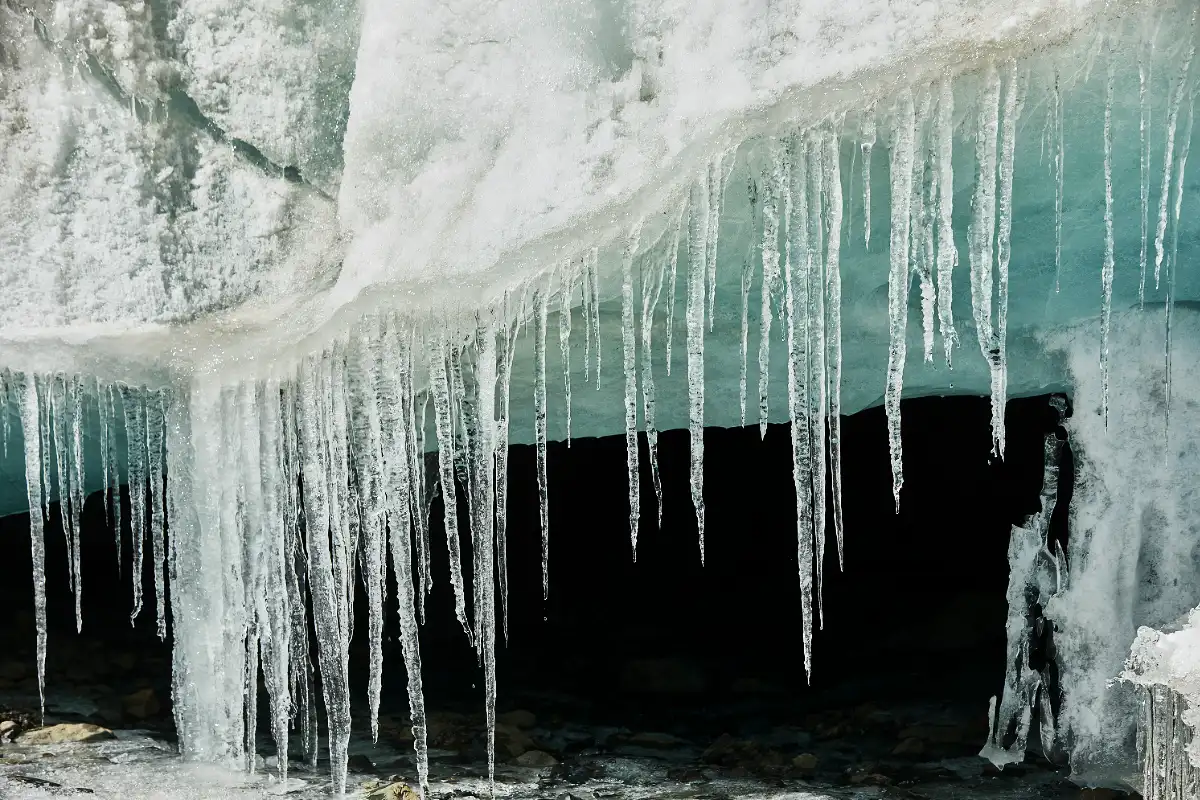
What is the best time to visit Quelccaya?
The best time to visit Quelccaya is usually during the dry months, when rainfall is minimal, and conditions are more favorable for both travel and hiking.
- Dry season, May to September: This period offers a lower chance of rain, improved visibility, and generally easier access to roads. However, be prepared for very low temperatures.
- Rainy season, November to April: During this time, rain and snowfall are more frequent, which can impact road conditions and reduce visibility during your visit.
The retreat of Quelccaya Glacier
Quelccaya has lost a substantial amount of ice cover in recent decades. Recent studies indicate that its area has shrunk by approximately 58% in around 40 years, from nearly 100 km² to about 42 km².
This retreat has changed the surrounding landscape, exposing rocky ground and altering ecosystems that depend on the ice. Rising temperatures and changes in precipitation, particularly the amount of snowfall the glacier receives, are among the main factors linked to this loss.
Tips for visiting Quelccaya Glacier
Quelccaya is remote and at high altitude, so it is important to acclimatize well and plan your visit in advance. Leave early, check the weather and road conditions, walk at a comfortable pace, and keep away from crevasses, ice walls, and unstable areas. Follow the guidance of local communities and take all your rubbish with you.
What to pack for Quelccaya
- Thermal clothing and layers
- A waterproof, windproof jacket
- Comfortable hiking pants
- Hiking shoes with good grip
- Gloves and a warm hat
- Sunglasses with UV protection
- Sunscreen and a sun hat
- Water and snacks for the hike
- A small backpack for personal items
- Trekking poles, provided you are used to using them
- Personal medication and basic first-aid supplies
Where to stay when visiting Quelccaya
- Cusco is the most practical base for visiting Quelccaya on a day trip.
- Pitumarca has small guesthouses and basic services for travelers who prefer to get closer to the area the day before.
- Phinaya has far fewer services, and any accommodation should be arranged in advance with local residents or community authorities.
- Camping can be an option for multi-day trips, but it needs to be planned in advance, using areas approved by the local communities.
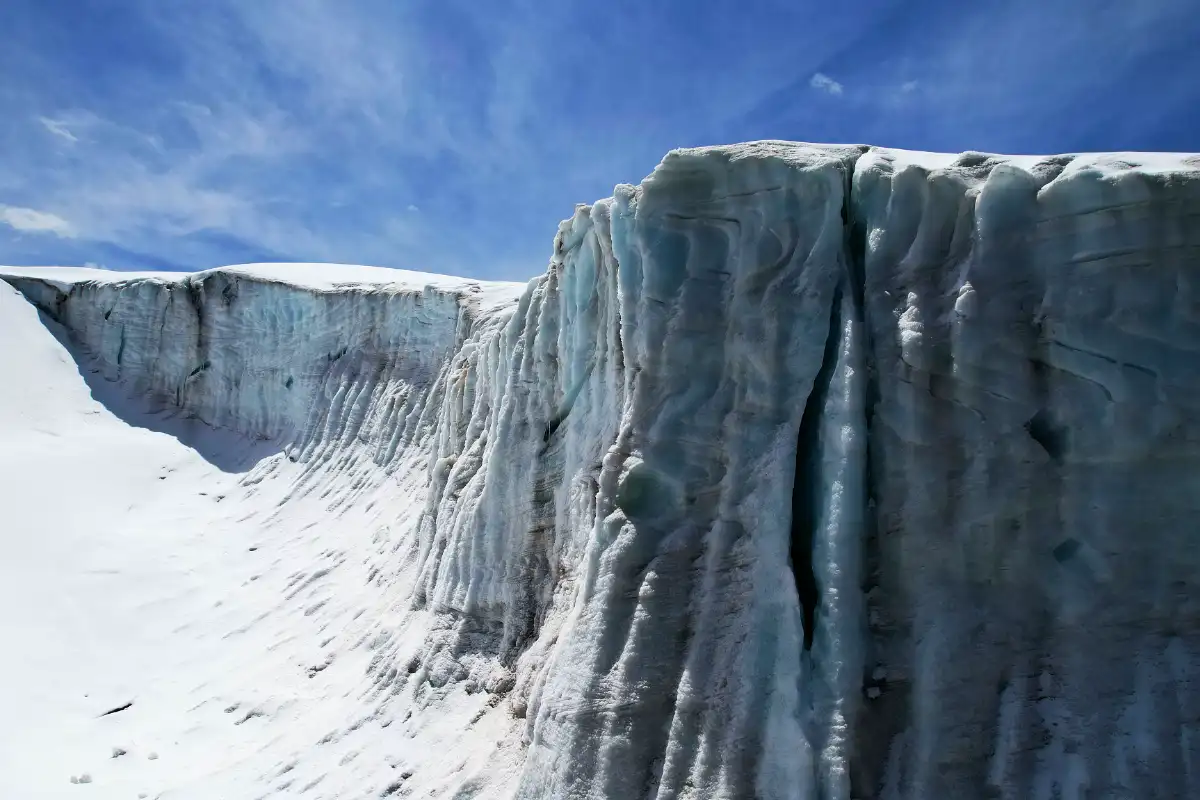
Interesting facts about Quelccaya
- Reaching Quelccaya used to be much harder. Early scientific teams needed up to two days of hiking to reach the glacier, with their equipment carried by pack animals.
- Some birds build their nests directly on the ice. The glacier finch has been observed nesting in cavities at Quelccaya above 5,200 meters.
- Quelccaya is now considered the world’s second-largest tropical ice cap and remains an important example of these high-altitude ice formations.
Frequently asked questions about Quelccaya Glacier
Is there an entrance fee to visit Quelccaya?
There is no single entrance fee for the entire glacier, although some access points may involve local charges or community contributions. Bring cash and confirm any costs before you travel.
Do I need to arrange my visit in advance?
Yes, especially when traveling independently, as the area is remote and services are limited. It is best to arrange transport, a guide, and meals in advance.
Are there toilets or other facilities along the route?
Facilities are very limited near the glacier, and there is no developed tourist infrastructure. It is best to use toilets and buy anything you need before reaching the more remote areas.
Can children visit Quelccaya?
The trip is not recommended for young children because of the altitude, cold, and distance involved. For older children, consider how well they have acclimatized and their level of fitness.
Is there mobile reception or internet access in the area?
Coverage is limited and may disappear completely near the glacier. Do not rely on your mobile phone during the visit.
Can you camp near Quelccaya Glacier?
Yes, camping is possible in some areas, but it must be arranged in advance with the local communities. It is also important to choose safe, approved campsites.
Can you hire horses or arrange help from local muleteers?
Yes, some residents and local operators can provide horses or pack animals. This service should be arranged in advance.
Can you combine Quelccaya with nearby attractions?
Yes, you can combine the visit with places such as Lake Sibinacocha and Phinaya. To explore more of the Vilcanota mountain range, it is best to allow several days.

Add new comment