



Hello, dear reader. Have you ever woken up, made yourself a delicious cup of coffee, and noticed a red-and-white flag on the packet? Well, Peru is to blame. Peruvian coffee can be chocolatey and comforting, bright and fruity, or somewhere in between. The flavor depends on where the beans grow, how the producer processes them, and how the roaster brings out their character.
It is no surprise that Peru is the world's largest exporter of fair-trade coffee and that its quality is gaining recognition in competitions, restaurants, and among the most discerning palates.
Whether you’re choosing a bag for home or hoping to visit a coffee farm during your Peru trip, a few details make the choice easier. Start with the origin, tasting notes, and roast date, then look a little closer at the people and work behind the coffee.
What is Peruvian coffee?
Peruvian coffee comes from coffee plants grown in Peru. Production centers on the eastern slopes of the Andes, where mountain landscapes meet the Amazon basin.
The coffee from Peru is a high-quality drink, a product of small coffee farms organized in cooperatives, the " Arabica " coffee bean type, and the altitude of the soil where these are cultivated.
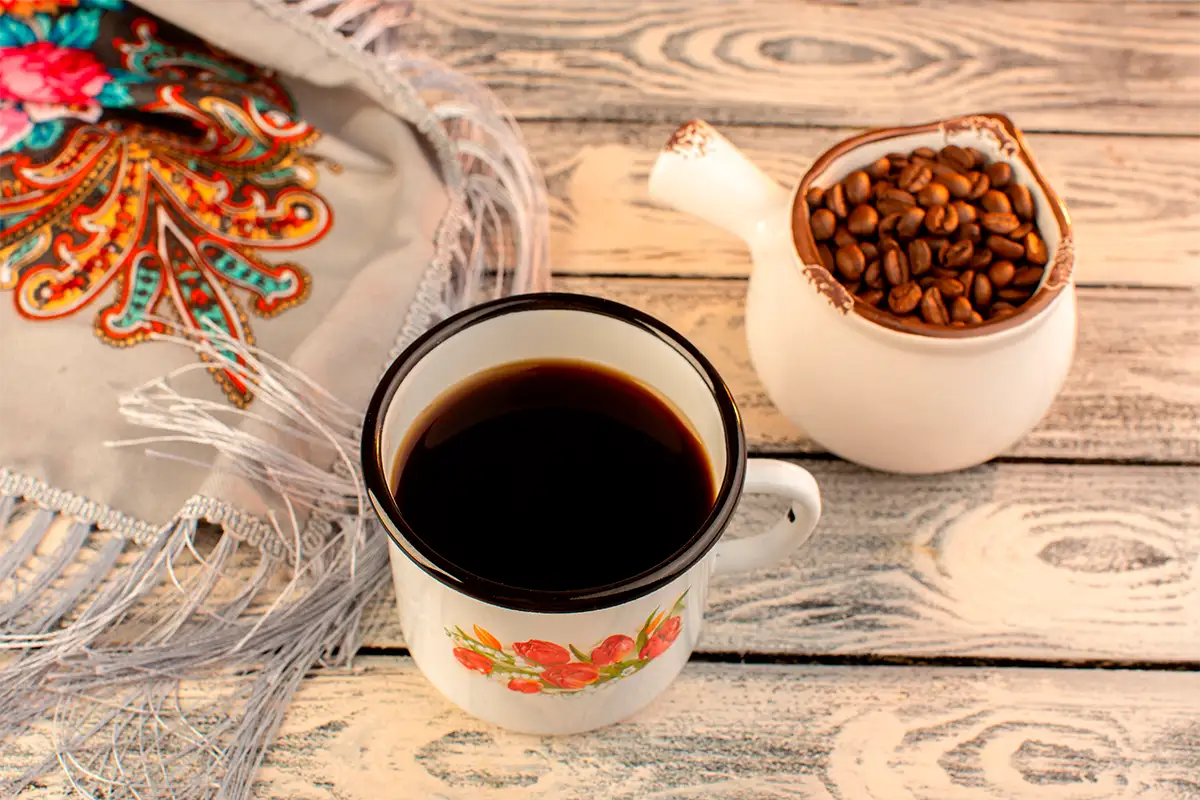
What does Peruvian coffee taste like?
Trying it for the first time? A washed, medium-roast Peru coffee with chocolate or nut tasting notes is a useful starting point. If you enjoy brighter flavors, look for a lighter roast with citrus or floral notes.
The world's most renowned tasters indicate that Peruvian coffee beans produce an aromatic and flavorful beverage with mild acidity. In the cup, the coffee presents a medium body; not as watery as Mexican coffee, characterized by a light body, nor as dense as Sumatran coffee, with its syrupy body.
Its exquisite flavor, with subtle notes of chocolate, nut, and even citrus aromas, is the result of the type of soil in which its seeds were grown.
However, Peruvian coffees go further. These offer a wide range of flavors, including chocolate, nuts, fruit, flowers, and spices. Some cups feel rounded and mellow; others have a brighter, fruitier character.
Peruvian coffee variety and processing
The variety of Peruvian coffee beans and the work after harvesting both help shape a final coffee cup. In addition, understanding a few terms makes coffee packaging labels much easier to read.
Arabica varieties grown in Peru
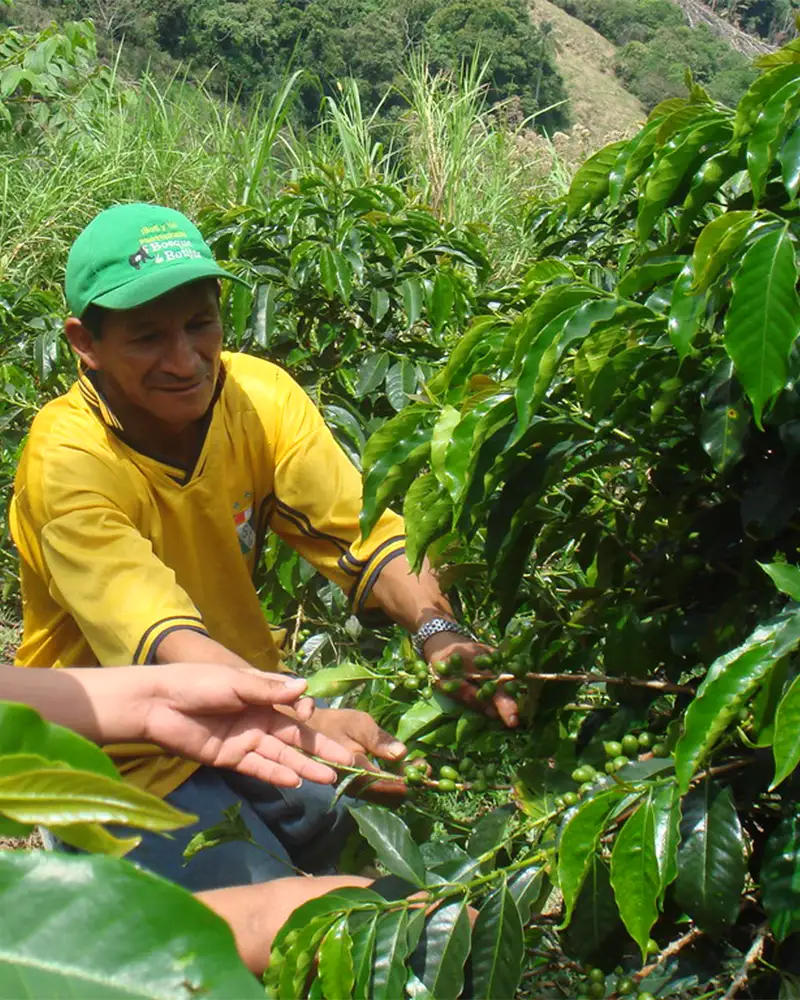
Peru grows Arabica coffee shrub varieties including Typica, Bourbon, Caturra, and Pache, as well as coffees from the Catimor group. These names describe the coffee plants rather than the roast level.
For example, Caturra developed as a natural mutation of Bourbon. Variety is one part of a coffee’s identity, alongside its growing conditions and the producer’s work.
 |  |
Washed, natural, and honey processing
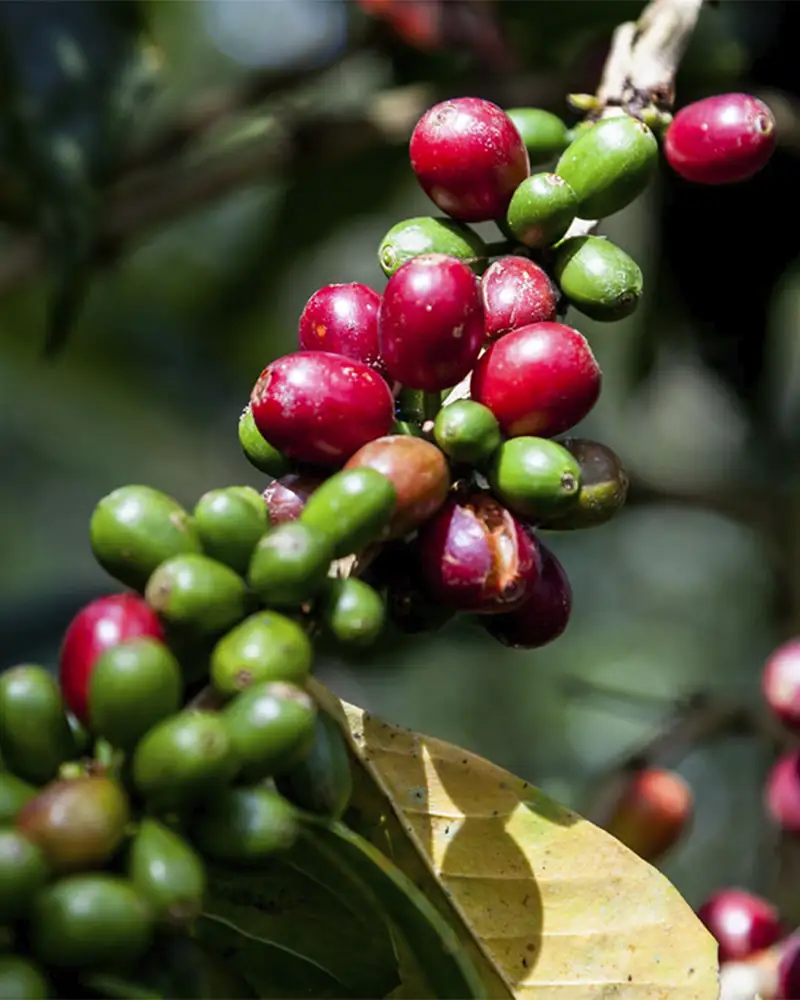
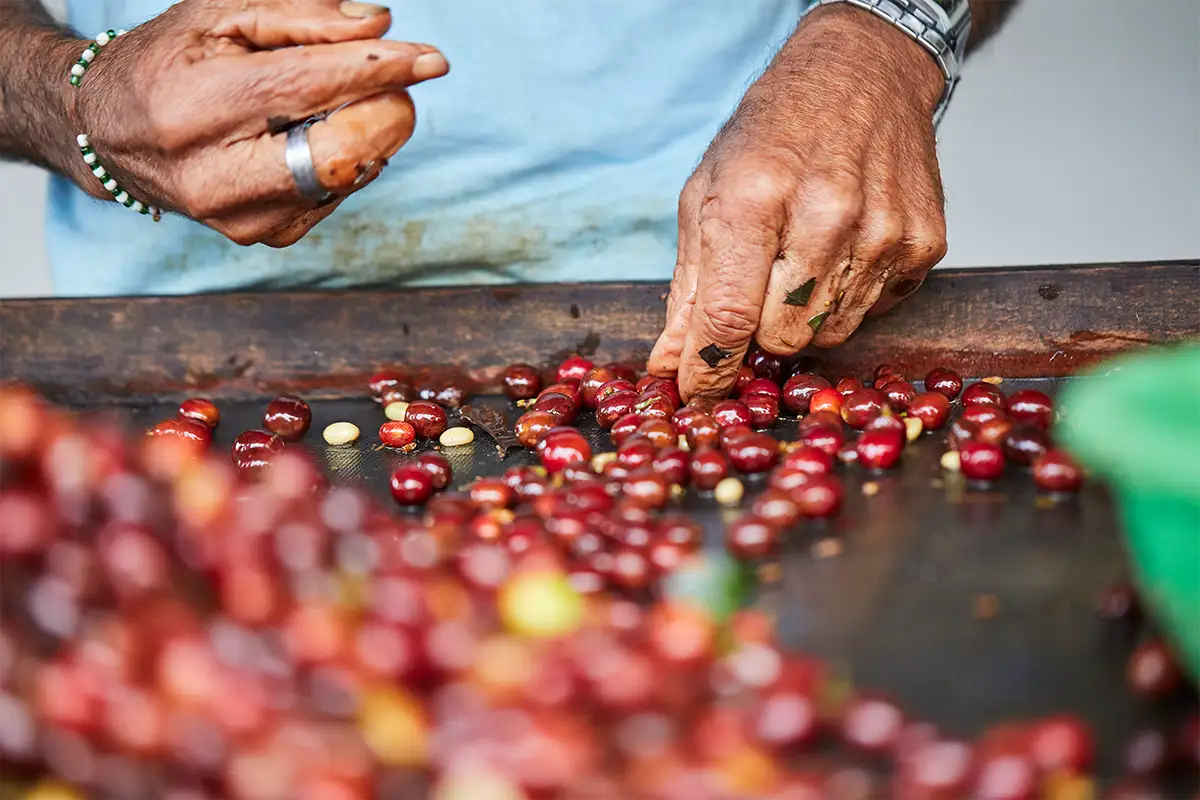
Each coffee fruit is composed of different layers:
- The outer skin (pulp) or exocarp
- The mucilage or mesocarp, a silky, sticky layer responsible for much of the coffee's sweetness.
- The endocarp, a paper-like layer also known as parchment.
- A silverskin that covers the two seeds.
Processing describes how producers handle the harvested coffee fruit, remove the pulp, mucilage, the parchment, the silverskin, and prepare its seeds for drying and later roasting.
| Process | What happens |
| Washed | Producers remove the fruit and remaining mucilage before completing the drying process. |
| Natural | The seeds dry inside the harvested coffee cherries. |
| Honey | Producers remove the skin but leave some sticky mucilage (called honey) on the seeds during drying. This adds sweetness and acidity to the coffee. |
Washed processing is common in Peru.
How to choose Peruvian coffee beans
The best choice starts with the way you like to drink coffee. Tell the seller whether you prefer it black, with milk, bright and fruity, or more chocolatey and rounded.
| Label detail | How it helps |
| Region and producer | Shows more precisely where the beans come from |
| Roast date | Helps you discuss freshness and the recommended drinking window |
| Processing method | Gives useful context about how the coffee was prepared after harvest |
| Roast level | Helps you choose a style that suits your taste |
| Tasting notes | Suggests flavors to look for |
| Certification | Identifies any verified standards attached to the product |
| Whole bean or ground | Helps you match the coffee to your equipment |
Ask the coffee seller when they recommend opening the bag and which brewing method suits it to enjoy the coffee. If you need ground coffee, tell them exactly what you use at home.
Buying a small bag first also gives you room to experiment. Once you find a coffee you enjoy, keep a photo of the label so you can recognize the producer or ask for something similar.
Choosing a roast for your taste
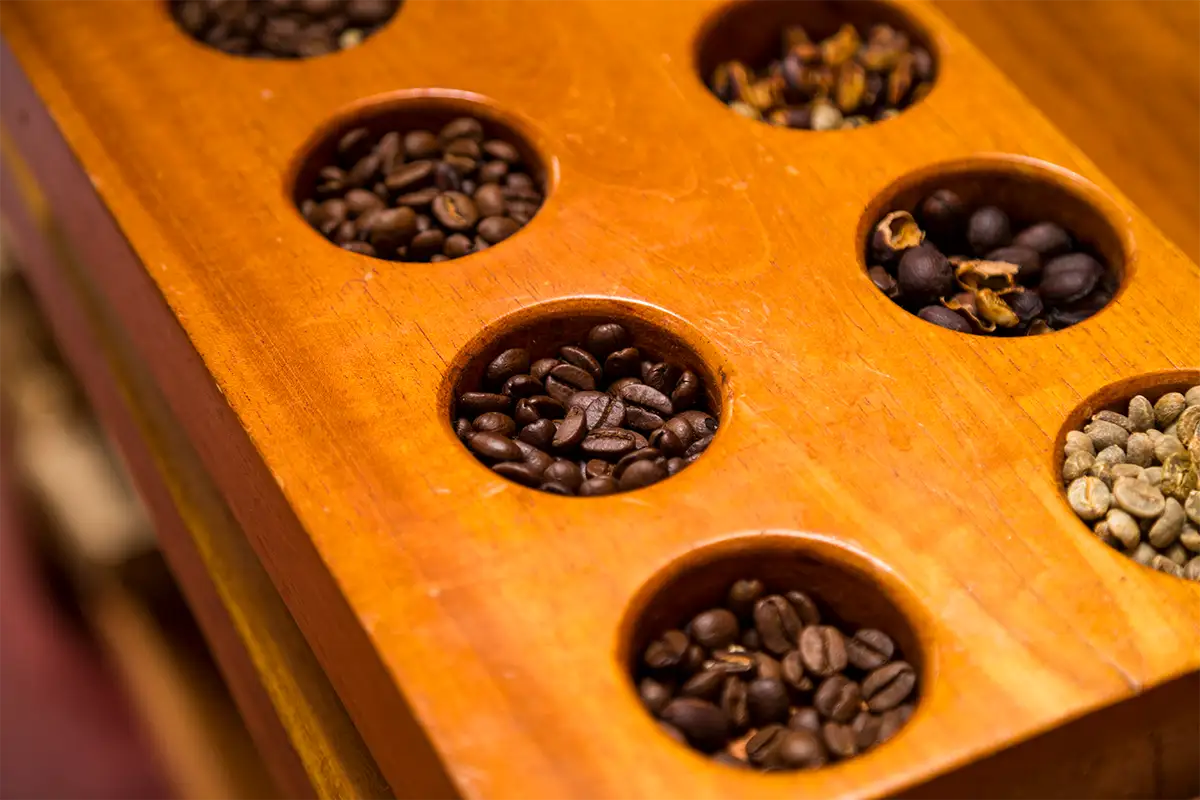
Use roast level as a starting point, then check the coffee processing method.
- Light roast can suit drinkers who enjoy brighter, fruitier, or more delicate flavors.
- Medium roast is a useful place to start if you want sweetness, some brightness, and a rounded cup.
- Dark roast can appeal to people who prefer a stronger roasted character, particularly with milk.
Roast labels vary between companies. Asking for a coffee that tastes like one you already enjoy often helps more than asking for a particular color or category.
Where is coffee grown in Peru?
Coffee-growing areas stretch across northern, central, and southern Peru. For a first introduction, it helps to recognize these regional names and their coffee plantations.
Northern Peru
Cajamarca, Amazonas, and San Martín are important northern coffee origins. If your coffee comes from Cajamarca, look for plantation names such as Jaén and San Ignacio. In Amazonas, plantations like Rodríguez de Mendoza and Luya also appear on the coffee map.
The name of a coffee farm on the bag matters more than a broad regional label. Two farms in the same region may produce very different coffees.
Central Peru
Chanchamayo in Junín and Villa Rica in Pasco are established coffee-growing areas. You may see either locality named prominently on a bag, with the region shown in smaller print.
These names help you place your coffee package geographically. Read the producer and processing information alongside them when comparing different bags.
Southern Peru
Cusco and Puno also produce coffee. Within the Cusco region, La Convención includes recognized coffee-growing communities such as Lucmabamba. In Puno, Sandia is an important name to recognize.
Coffee tourism is possible in these producing areas, but check the exact location when planning a visit. A regional name on a bag can cover a much wider area than the city you’re staying in.
A short history of coffee in Peru
Coffee reached Peru in the eighteenth century thanks to the Spanish invasion, having originated in the African country of Ethiopia. Once harvesting began in the country, exports started to expand during the late nineteenth century. Over time, this smallholder farming became central to the Peruvian industry.
Peruvian coffee has historically come from small farms and coffee estates that, over time, organized into cooperatives to share drying facilities and take advantage of large-scale international exports.
Today, a bag of Peruvian coffee may come from an individual farm, a group of neighboring growers, or a larger cooperative.
Fairtrade Peru coffee
Peru is the world's largest producer of Fairtrade-certified coffee, boasting the highest number of coffee organizations certified under the "Fairtrade" label, approximately 150 in total.
This distinction is no coincidence. The movement, which began in Peru shortly before 2003, aims to ensure that producers and pickers receive fair compensation for their labor.
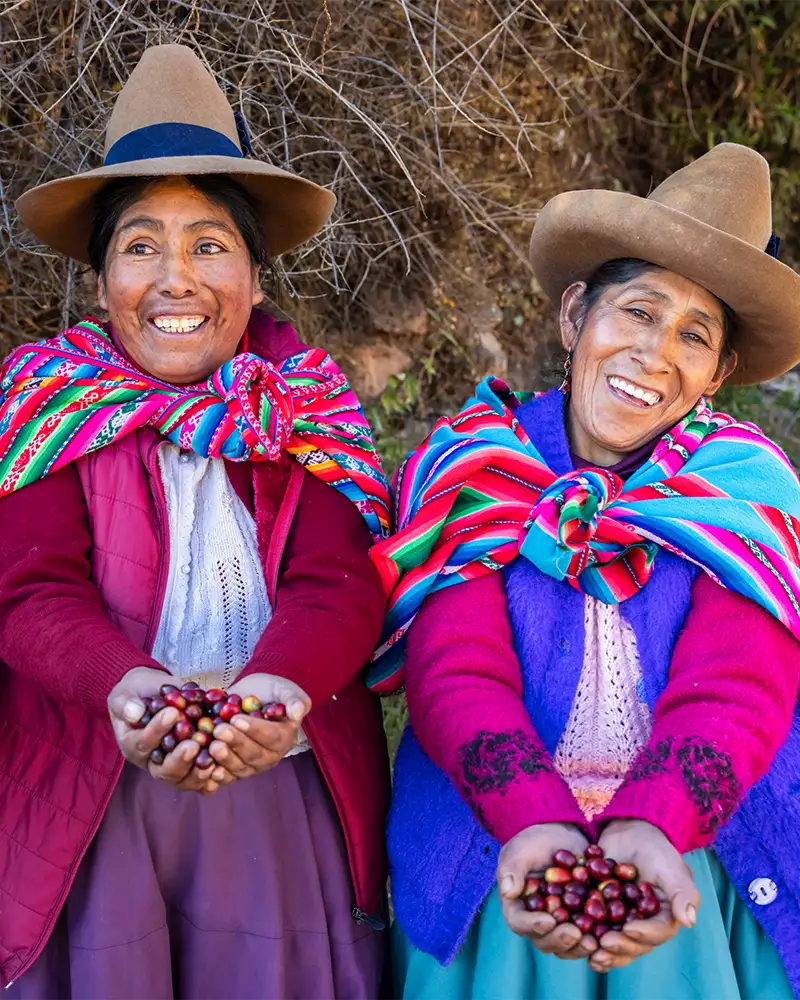 |  |
This initiative is particularly significant in the country, where much of the coffee comes from small plots of land, no larger than 3 hectares (about 7.5 acres). To share resources and sell their produce abroad, farmers organize into cooperatives. This allows them to utilize shared drying facilities and aggregate larger quantities of coffee for export.
So, when buying coffee, look for the "Fairtrade" label on the packaging.
Peruvian Women's Coffee
You might be surprised to learn that there is also a movement dedicated to ensuring fair compensation for cooperatives made up exclusively of women.
For years, Peruvian women coffee farmers performed much of the fieldwork, yet men retained control over the finances. In 2004, 464 female producers decided to organize and found the first Café Femenino cooperative to gain economic autonomy and a greater voice in the country's coffee sector decisions. The women of CECANOR take pride in having launched this initiative. Today, they share what they have learned with their daughters, encouraging them to see themselves as future leaders in their communities, following in the footsteps of their mothers and grandmothers.
Organic Peruvian coffee
Following the growth of fair trade in Peruvian coffee production, many coffee-farming families also sought organic certification, yet obtaining it presented even greater challenges. The process can take up to three years. Producers face an additional hurdle, as organic farms typically yield significantly smaller harvests than those using conventional methods.
Nevertheless, more than 40% of all coffee grown in the country today is organic. This demonstrates remarkable growth in the production of Peru organic coffee that is cultivated and processed without the use of artificial chemicals, such as pesticides, herbicides, or synthetic fertilizers, and is harvested, gathered, and dried using the most artisanal methods possible.
The Poop coffee
Did you know that one of the world’s most prized coffees comes from animal droppings?
Often called “poop coffee,” it is made from coffee beans that an animal, usually an Asian palm civet, passes in its droppings after eating coffee cherries.
Producers collect the beans and wash them thoroughly before continuing with processing, drying, and roasting. Passing through the animal’s digestive system can reduce the beans’ bitterness, while its diet may also influence the coffee’s final flavor.
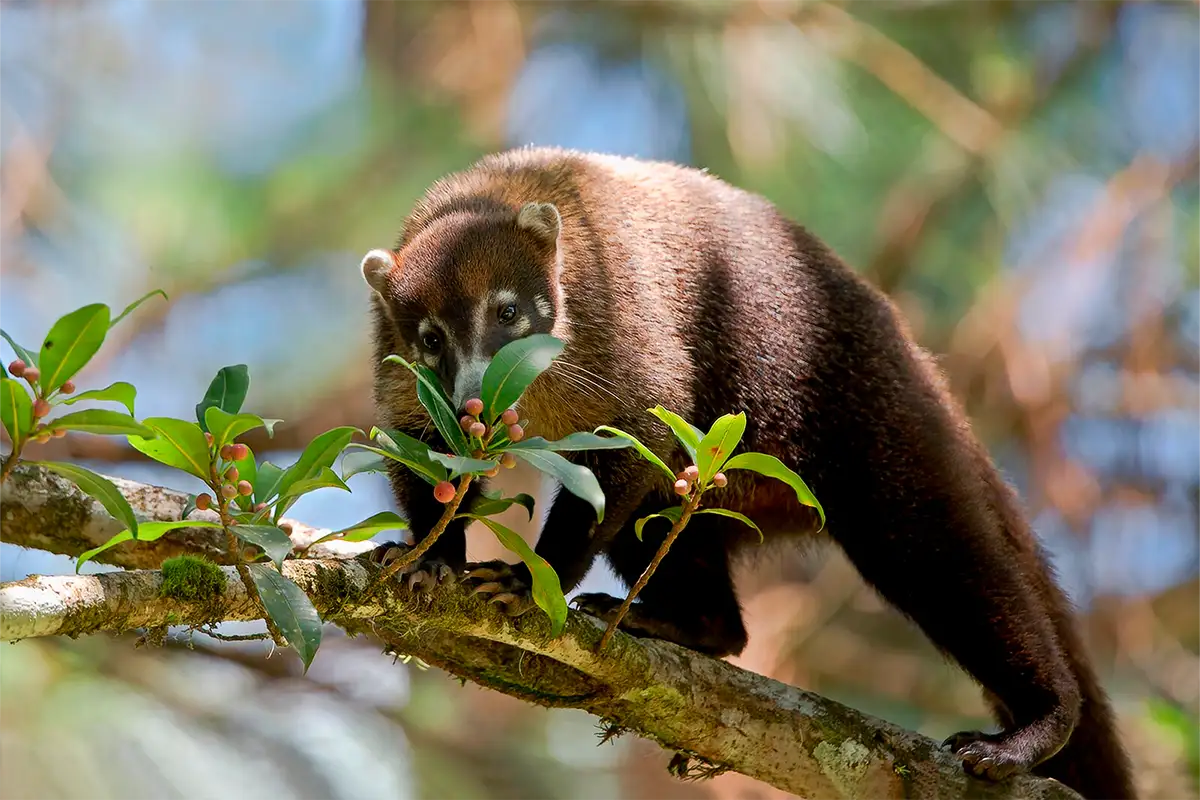
The practice began in Indonesia with Asian palm civets before spreading to Vietnam, Thailand, and the Philippines. It has also gained popularity in Peru, where producers use coatis, animals that look similar to raccoons. They feed them selected Arabica coffee cherries and wait for the beans to pass through their digestive system.
Where to try Peruvian coffee in Peru
You can learn more about Peruvian coffee through a café tasting, a conversation with a roaster, a visit to a coffee museum, or a visit to a Peruvian producing community. Choose the option that fits the time you have.
Tasting coffee in Lima and Cusco
At a specialty café, ask which Peruvian origins are available that day. Menus and beans change, so the barista’s current recommendation is more useful than choosing only by the café’s reputation.
If possible, compare two coffees prepared in the same way. Try a chocolate-forward option alongside something fruitier, and ask what differs between them.
| Coffee shop | Description | Place |
| Florencia y Fortunata | It specializes in Peruvian coffee grown by women and roasted in Cusco. It serves espresso and pour-over coffee, with a selection focused on small batches and showcasing the women who produce the beans. | Suecia street 332, Historic center of Cusco. |
| Demo | It focuses on specialty Peruvian coffee, with beans from Jaén, Cajamarca, roasted in Rito. It serves cappuccinos and cold brew coffee, along with breads and pastries. | Jr. Domeyer 282, Barranco, Lima. |
| Ayllu | It maintains a traditional Cusco style, featuring drip coffee from the Quillabamba coffee-growing regions and coffee with milk. Its breads, pastries, and sandwiches round out the breakfast offerings. | Almagro street 137, Historic center of Cusco. |
| El Pan de la Chola | It works with Peruvian coffee from various origins. Its menu focuses on espresso-based drinks, such as Americanos, cappuccinos, and lattes, to accompany its sourdough breads. | Av. Mariscal La Mar 918, Miraflores, Lima. |
| Cafeto 109 | It offers coffees from various coffee-growing regions of the country. Its café au lait stands out in customer reviews and is accompanied by desserts and breakfast dishes. | Portal de Panes 109, second floor, Plaza de Armas, Cusco. |
Visiting a coffee farm in Lucmabamba
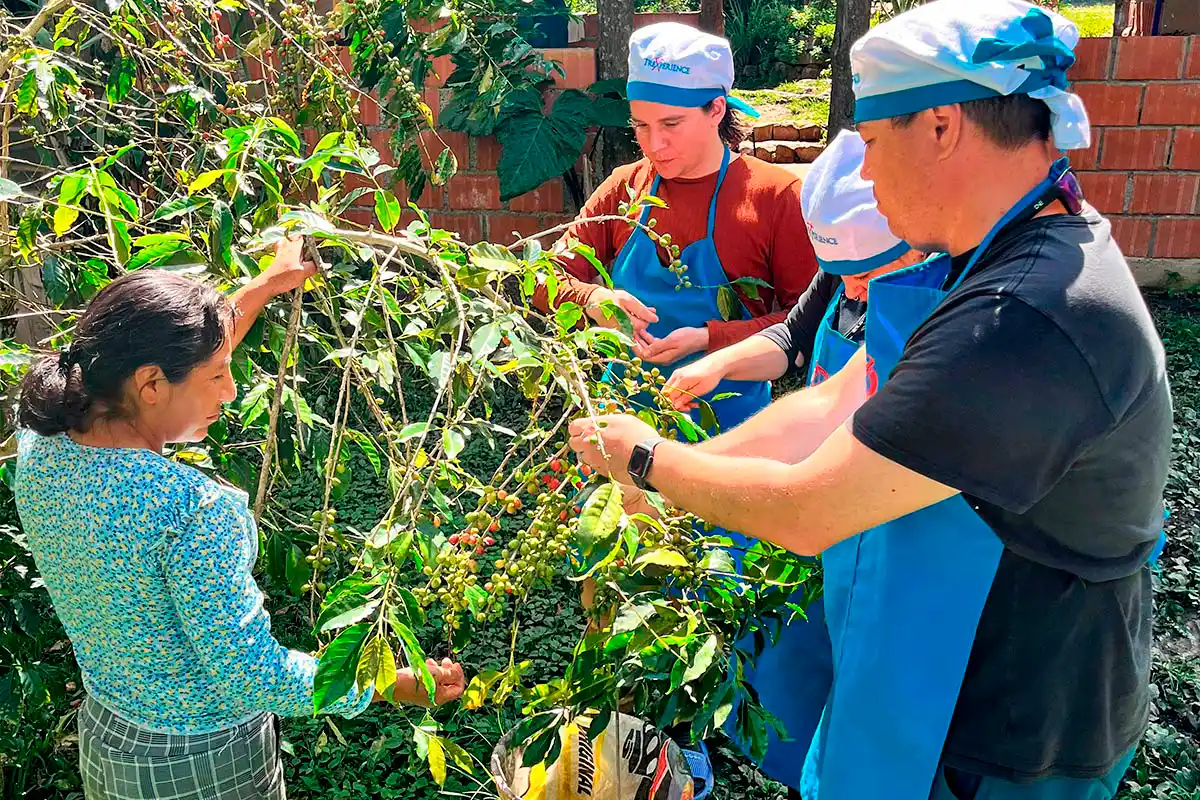
Lucmabamba offers a chance to connect a cup of coffee with the place in Cusco where it grows. Coffee farming and visitor experiences form part of local tourism in this area of La Convención, Cusco.
Our Salkantay Trek 5 Days to Machu Picchu includes a coffee experience in Lucmabamba on Day 3, before continuing toward Llactapata. It gives travelers a way to include the visit of a coffee plantation in a trekking trip to Machu Picchu.
Harvesting is seasonal. Confirm what will actually be happening on your dates, especially if seeing ripe cherries being picked is a priority.
Conclusion
From chocolatey cups to fruity brews, Peruvian coffee gives you plenty of flavors to try. Stop at a café in Lima or Cusco, ask about the peru coffee beans, or visit a farm in Lucmabamba to see how coffee grows. Once you find a favorite, take a bag home and enjoy a little of Peru with your morning coffee.
Coffee from Peru - FAQs
Is Peruvian coffee better than Colombian coffee?
Both countries produce a wide range of coffees. Your preference will depend on the particular beans, roast, and preparation. For a useful comparison, try coffees with similar roast levels and brew them using the same recipe.
What is café pasado in Peru?
Café pasado is a traditional way to brew coffee in Peru. Hot water drips through ground coffee in a reusable filter, often in a two-part metal pot called a gota a gota.
Can I buy decaf Peruvian coffee?
Yes. Some roasters sell decaf made with Peruvian beans, including Swiss Water options. Check the label for both “decaf” and “Peru” to make sure you’re buying the origin you want.
How much Peruvian coffee should I use per cup?
For pour-over, start with 15 g of medium-ground coffee and 240 ml of water at about 93°C (199°F). Adjust from there to suit your beans and taste.
Can I bring Peruvian coffee back to the United States?
Yes. You can bring roasted Peruvian coffee into the U.S. in your luggage. Declare it on arrival and keep the original packaging and receipt. Different rules apply to green beans and coffee cherries.




Add new comment