



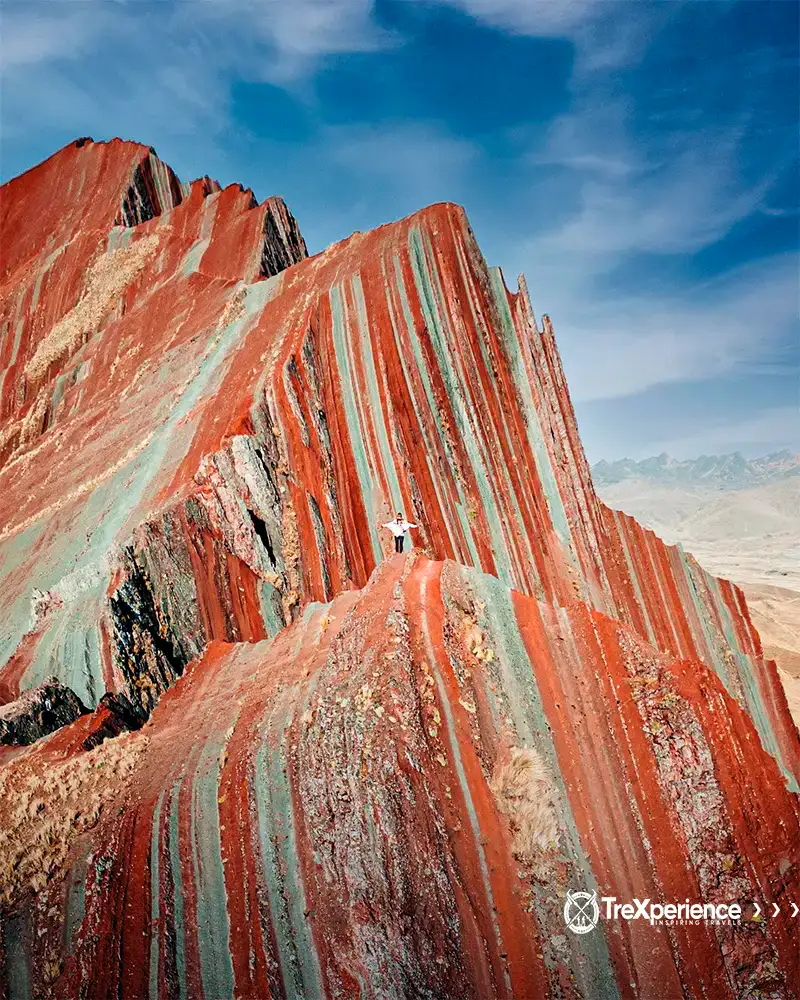
If you thought Peru had only two rainbow mountains to visit, such as Vinicunca and Palcoyo, think again. Meet Pallay Punchu, the new colorful mountain that is quickly gaining attention. Located in Cusco, the same region where Machu Picchu is located, this geological formation stands out for its sharp ridges, reddish, ochre, green, and whitish stripes, and views of Langui lagoon.
In this guide, you’ll find everything you need to know to get to Pallay Punchu from Cusco and enjoy its colors and landscapes without large crowds. Use this guide and be one of the first to visit.
What is Pallay Punchu?
Pallay Punchu is the most recently discovered colorful mountain promoted for tourism in Peru. It became known during the Covid-19 lockdown and is located in the far south of Cusco, at over 15,419 ft. Its ochre, reddish, bluish, and greenish tones set it apart from Vinicunca and Palcoyo, the most popular rainbow mountains in the region.
The mountain is part of an even larger peak called "Apu Taqllo Apacheta", which reaches 15,718 ft. The hike to reach it is 3 km long and stands out for its beautiful high-Andean landscapes, panoramic views of the mountain itself, and views of Langui lagoon in the distance.
Meaning of Pallay Punchu
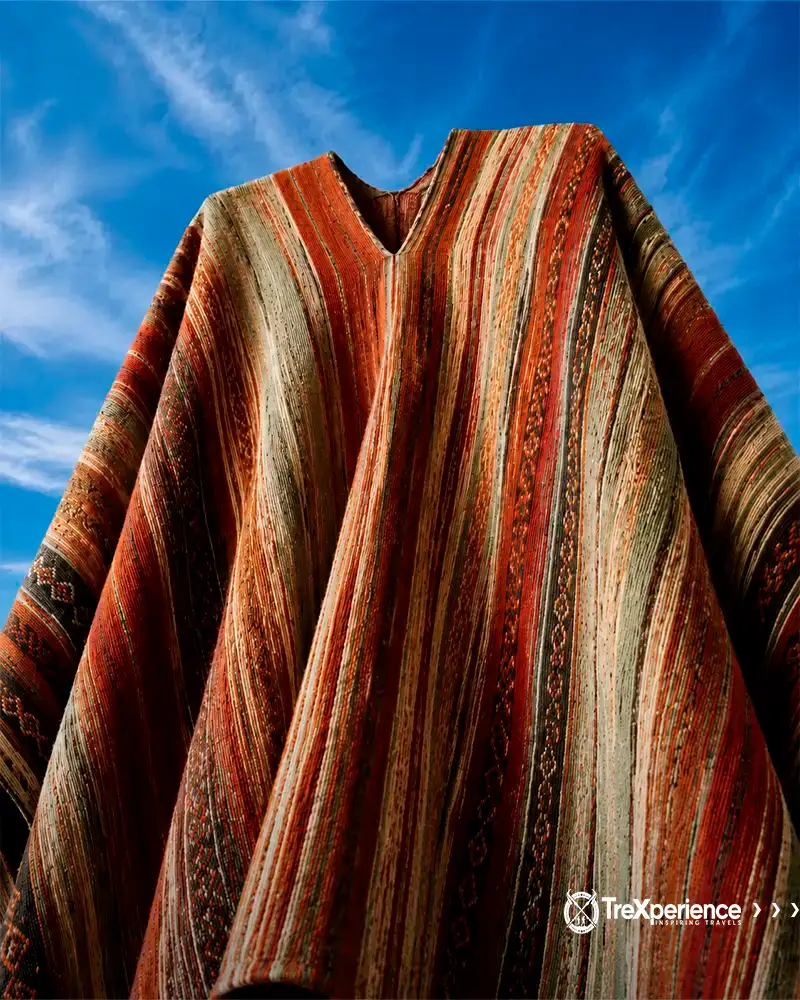
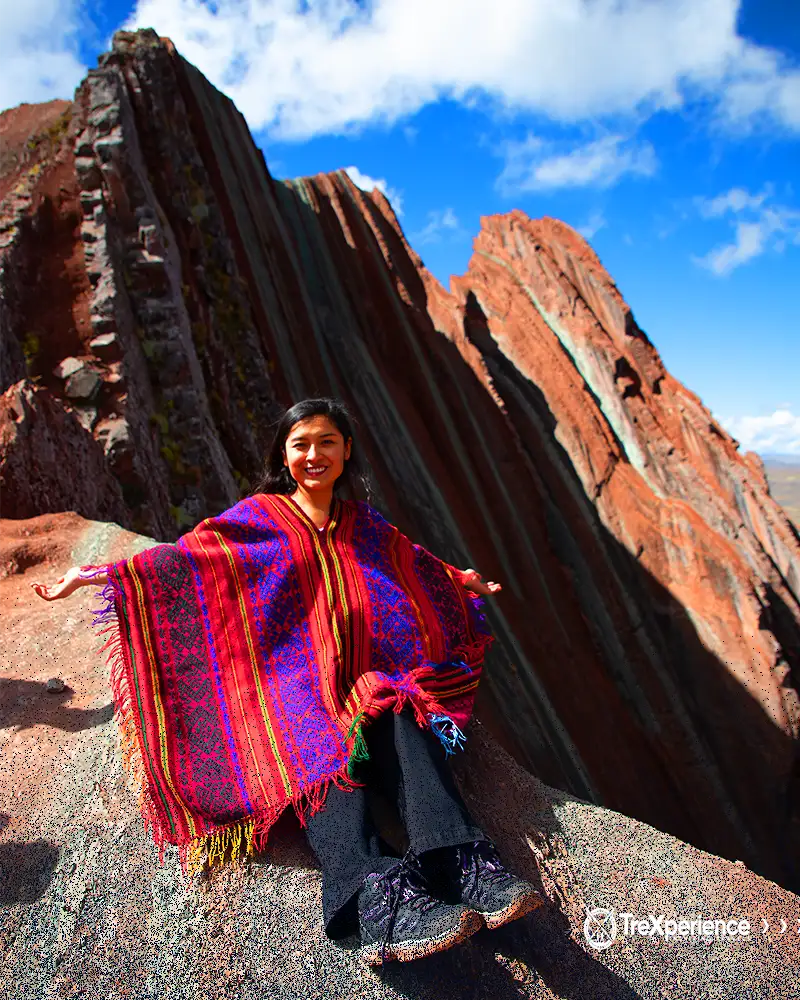
The name means "Andean poncho" in Quechua, the ancient language of the Incas. It refers to the way the mountain’s shapes and colors resemble a traditional poncho from southern Peru.
It is also known as "colorful sharp mountain" because of the pointed ridges along its summit.
 |  |
Take note
Its recent discovery makes it perfect for those who want to visit a colorful mountain and take the perfect photos without crowds of visitors around.
History
How was it formed?
This colorful mountain was formed about 250 million years ago, during a period of intense movement in the Earth’s crust and through two important geological processes: mineral sedimentation and plate movement. The collision of the South American and Nazca tectonic plates folded layers of soil, minerals, and sand across the new continent, creating mountains and valleys throughout South America. This process gave rise to what we now know as the Andes Mountains. Pallay Punchu, along with the mountain that surrounds it, Apu Taqllo Apacheta, is part of the Andes.
Who discovered it?
Its modern-day discovery happened by chance. During the Covid lockdown in 2020, a local young man named Tony Ccalta set out in search of an ancestral native plant called Sasawi. This plant is locally known for its medicinal properties against respiratory illnesses, and he was especially concerned about his parents’ health. His search led him to the slopes of Pallay Punchu, where he was amazed by the colorful landscape in front of him. Without hesitation, he took photos of the mountain to share as proof, bringing his discovery to the attention of the media and travel agencies.
Note
In reality, older residents from nearby communities had always known about the mountain, but they had not shown interest in promoting it.
Where is Pallay Punchu?
Pallay Punchu is located in the district of Layo, province of Canas, in the southern part of the Cusco region. It sits near Langui-Layo Lagoon and forms part of the Apu Taqllo Apacheta mountain area. From Cusco, the road trip usually takes around 4.5 to 5 hours, depending on traffic, weather and the access route used.
Pallay Punchu: Altitude
This colorful sharp mountain sits at over 15,419 ft, in a high-mountain area surrounded by snow-capped peaks. A visit here is made even more special by the panoramic views of Langui lagoon (12,975 ft).
Weather in Pallay Punchu
The weather in this high-Andean area is cold and dry, with sharp drops in temperature, sometimes even below 32 °F. During the day, temperatures can reach around 64 °F and drop to about 46 °F. Nights are the coldest time, with highs of around 41 °F and lows of up to 21 °F.
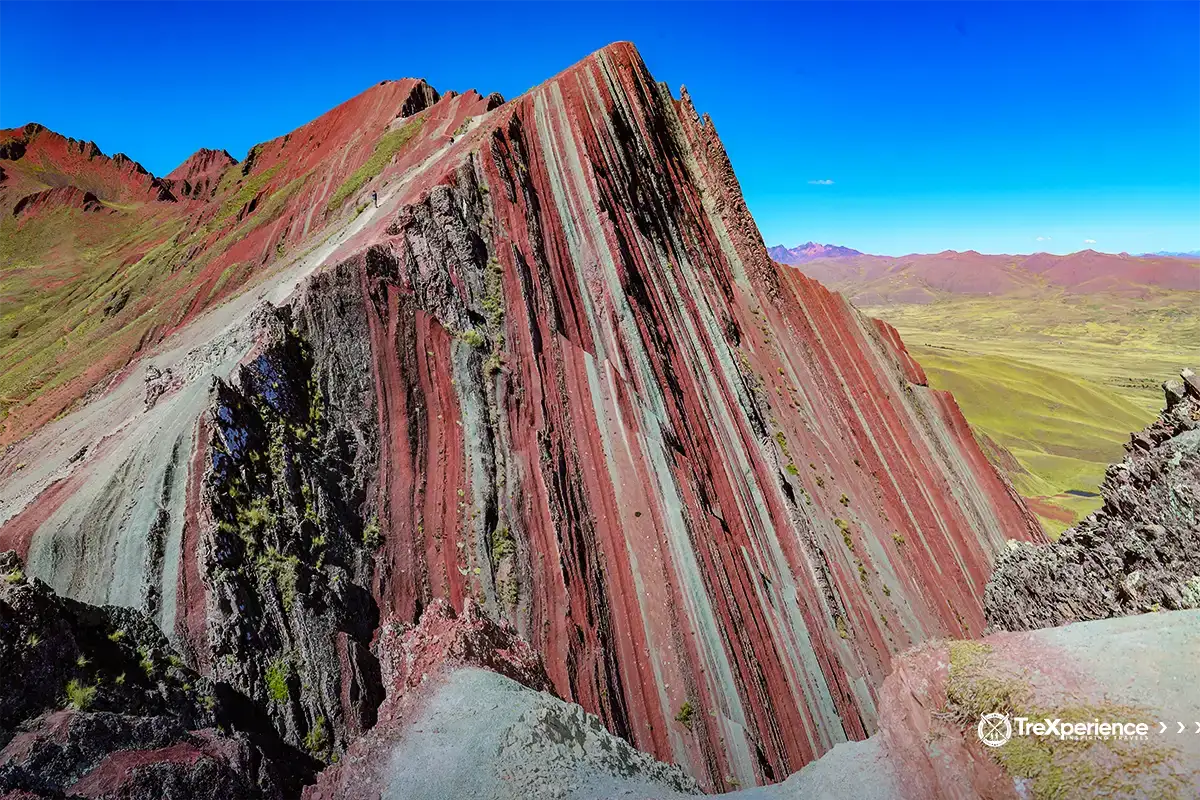
In general, the day starts off quite cold, but as the morning goes on, the sun usually gets stronger. At the viewpoint, near the slopes of Pallay Punchu, cold winds are also common, and the weather can change from one moment to the next. Light rain may appear at any time, whether you are traveling during the dry season or the rainy season.
Dry Season
The dry season runs from April to October. During these months, the sky is usually clearer, the sun is stronger, visibility is better, and the trails tend to stay firm and dry, making the hike more comfortable and safer.
Rainy Season
The rainy season in the Cusco region begins in November and lasts until March. During these months, there may be fog, hail, or even snow covering the colorful mountain, so the weather is less predictable. Even so, this season has its own charm: there are fewer visitors and, when the mountain is only damp, its colors can look more intense and vibrant.
Best Time to Visit Pallay Punchu
The best time to visit Pallay Punchu is usually from April to October, as this is the dry season. However, the best time really depends on what you want from your trip. If you prefer clear skies and drier trails, the dry season may be ideal. If you want fewer people and landscapes with stronger colors, as long as there is no snow or hail, the rainy season can also surprise you.
The hike to Pallay Punchu
In most cases, the transport takes you to an open area that also works as a parking spot for tourist vehicles. It is located at the end of a dirt road (Passing through Sicuani and the community of Layo) and is the closest point to begin the hike.
The walk starts on a trail that climbs steadily toward the mountain ridge. The path is marked with white arrows painted on rocks along the way. Since you will use the same trail to go up and come back down, these signs are very helpful.
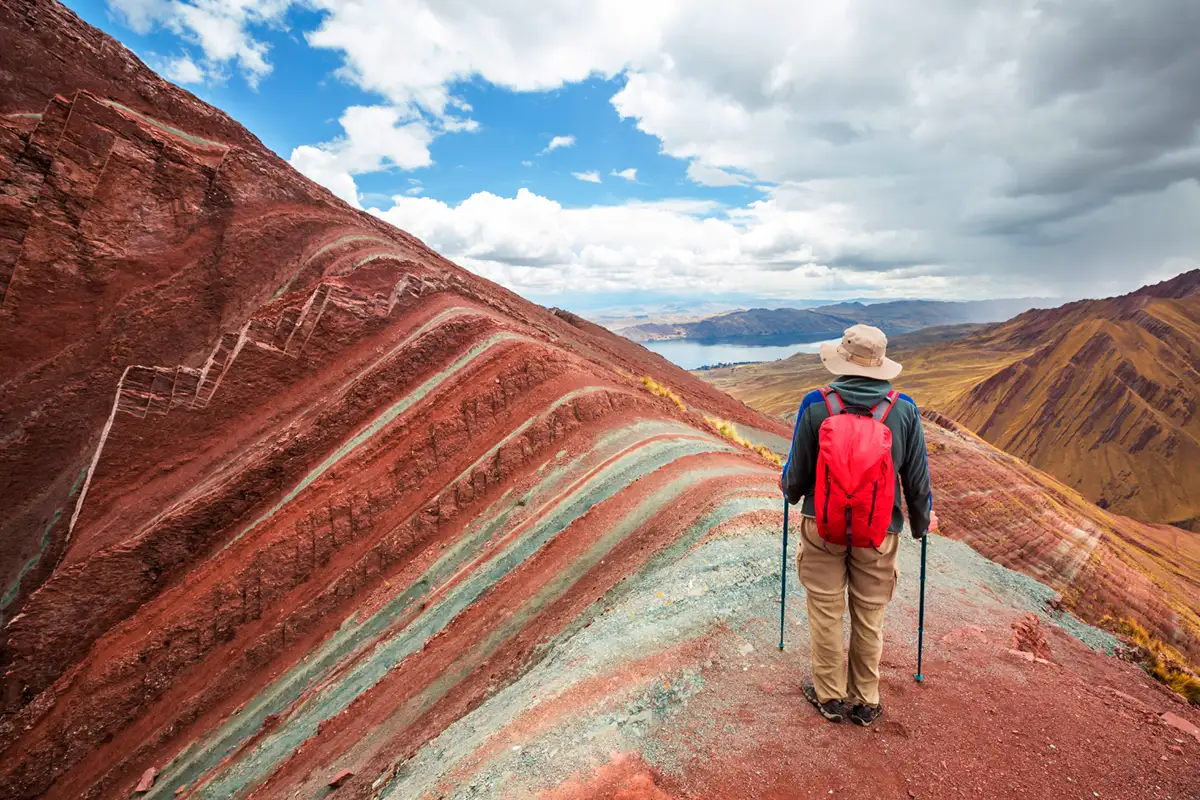
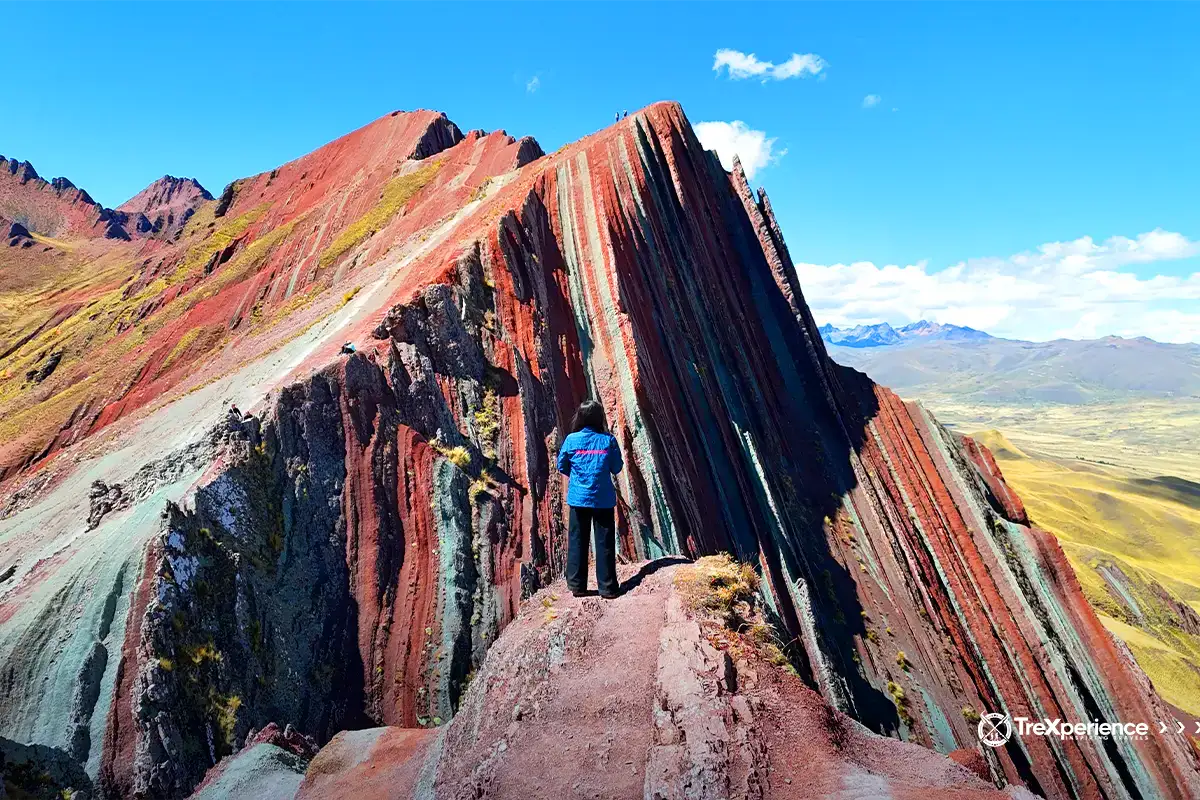
As you gain altitude, the famous folded shape of Pallay Punchu begins to appear in front of you, with sharp angles and bands of ochre, cream, and magenta tones that look like an Andean poncho spread across the mountain.
Most travelers take between 1 hour and 1.5 hours to hike up along a 1.5-kilometer trail. The descent follows the same route and covers the same distance in a similar amount of time. Of course, hiking time can vary depending on the trail conditions, the weather, and each traveler’s fitness level.
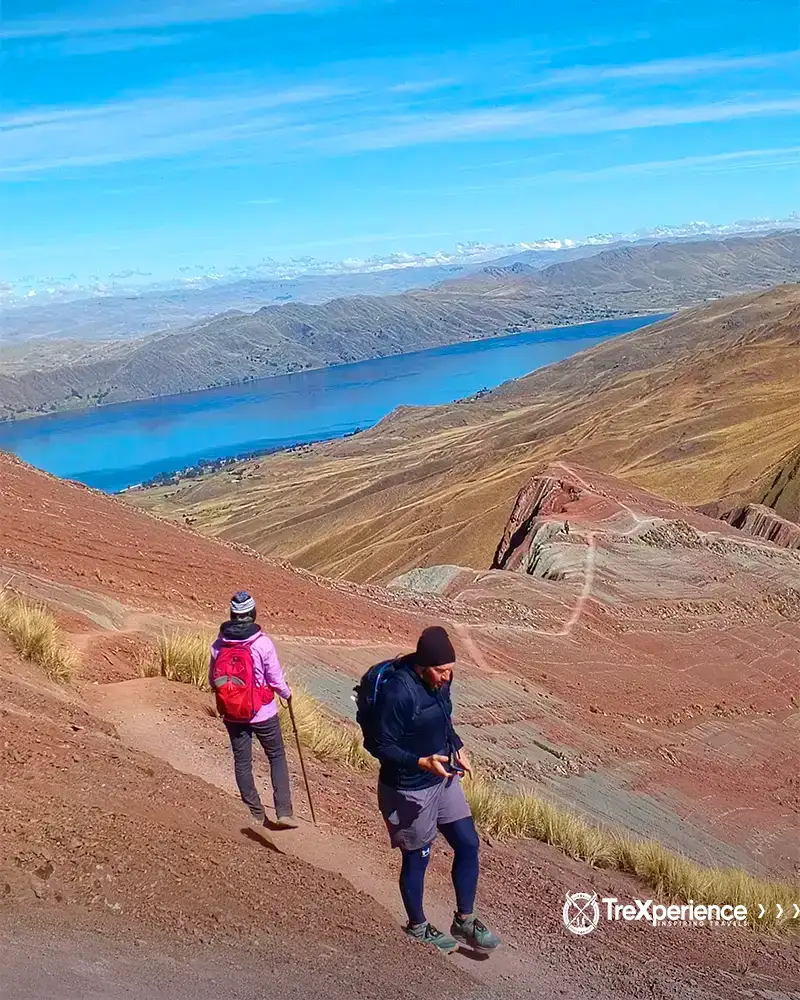 | 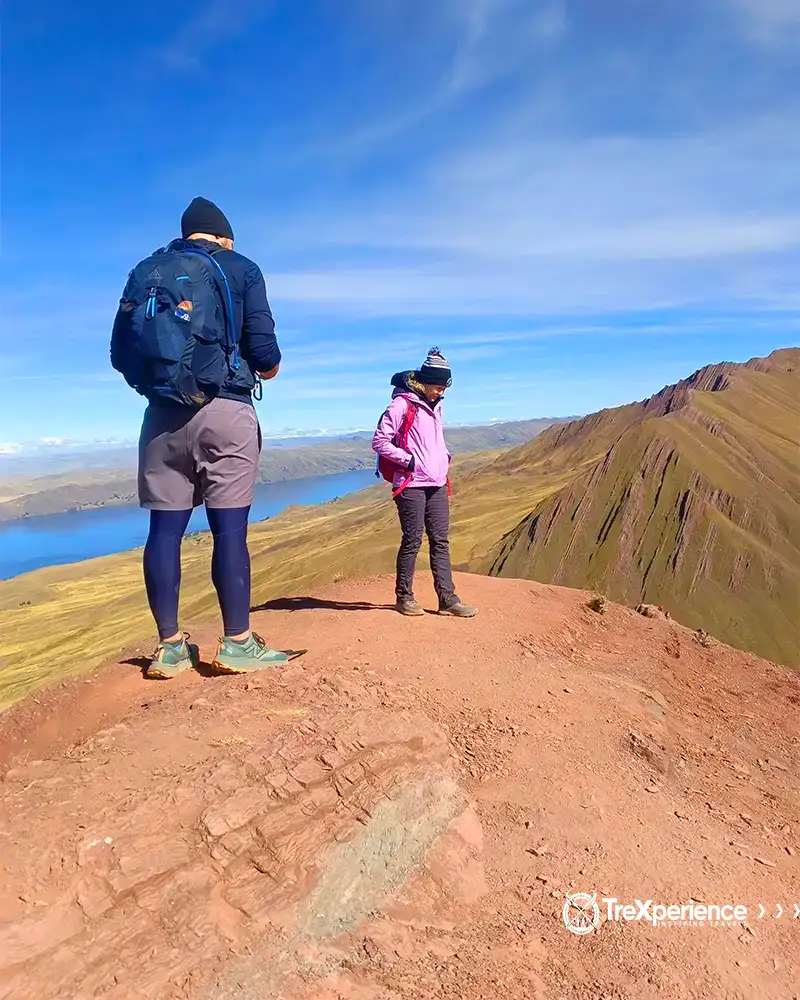 |
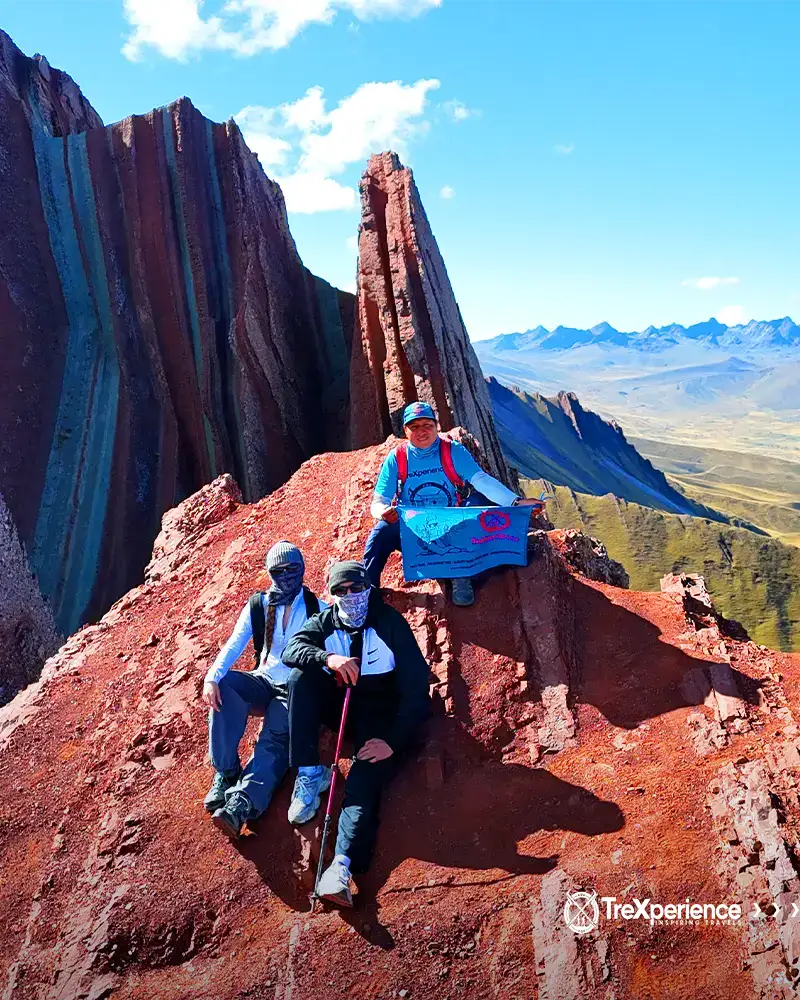
Once you reach the upper part, the reward is immediate: a colorful ridge with well-defined rock textures will appear right before your eyes. Cold wind is common at the viewpoint, so warm layers will be very useful. If you go with a guide, they will help you find the best and safest spots for photos. If you wish, you can continue hiking for about 5 more minutes to reach the highest point of the mountain and enjoy a wider view of the colors around you, with Langui lagoon in the background.
After taking in the impressive views, you will begin the return along the same path. The descent is usually faster, but it includes uneven sections, so it is important to walk carefully until you reach the starting point again.
Difficulty
The hike to Pallay Punchu is considered moderate to challenging. It does not require technical experience, but the uphill sections and high altitude can make it feel demanding. The best approach is to walk slowly, breathe well, and follow your own pace.
Although this hike is shorter than many other full-day treks, being well acclimatized makes a big difference. Good trekking shoes, warm clothing, and a steady pace will also help you enjoy the experience much more.
How to get to Pallay Punchu
There are three ways to reach this new colorful mountain. The first two options can be done on your own, while the third is through a travel agency.
Cusco - Sicuani - Layo route
If you are going on your own, head to the bus terminal to Sicuani, located at Av. Huayruropata 1703, Cusco (reference: behind the Casa de la Juventud Indoor Coliseum). From there, take a bus to the district of Sicuani. The trip takes about 4 hours heading southeast, and the ticket costs around 20 soles (US$ 6). Once you arrive, take another bus to the community of Layo. This second ride takes about 1 more hour heading southeast, and the ticket costs around 10 soles (US$ 3) per person. You can buy all tickets directly at the terminal without booking in advance.
From the community of Layo, you will need to pay your entrance ticket and begin the hike. From this point, the round-trip walk takes about 5 hours and covers approximately 5 km.
Cusco - Sicuani - Occobamba route
This option can also be done on your own. First, go to the bus terminal to Sicuani, located at Av. Huayruropata 1703 in Cusco, behind the Casa de la Juventud Indoor Coliseum. From there, take a bus to Sicuani. The trip takes around 4 hours heading southeast, and the ticket costs about S/ 20 or US$ 6.
Once in Sicuani, you will need to take another transport, this time to Occobamba. This second stretch takes about 1 more hour, and the ticket also costs around S/ 10 or US$ 3 per person. You do not need to book in advance, as tickets can be purchased directly at the terminal.
From Occobamba, you can start the hike to the mountain. The round-trip walk takes around 4 hours. However, this section is steep and has very demanding climbs, so it is recommended only for travelers in very good physical condition.
Through a travel agency
This is the easiest way to reach the sharp-edged colorful mountain. In most cases, agencies provide tourist transport with pickup from your hotel in Cusco, taking you to the end of a dirt road, the closest point to the mountain, where the hike begins. In addition to transport, they usually include a tour guide, breakfast and lunch along the route, and sometimes even the entrance ticket that must be paid in the community of Layo. Of course, this option is also the most expensive, but it is the safest.
Keep in mind
We will always recommend putting your safety first, above everything else.
Before you go: Key things to know
Is Pallay Punchu open all year round?
Access to Pallay Punchu is open year-round. However, because it sits at more than 4,700 meters above sea level, the weather plays a big role. Be sure to check the weather section of this guide before your visit.
Is there an entrance control or community fee?
Yes, there is an entrance control and a ticket for Pallay Punchu. Since the attraction is managed directly by the local communities of the Layo district, the entrance ticket is not sold through a government online ticketing system. Instead, it is purchased at the access point, in the community of Layo.
Which route is currently open?
The main, official, and fully open route is the route through the district of Layo (Canas). It is the safest option and the one used by 99% of travel agencies. Vehicles drive up from Layo along a dirt road to a high base camp/parking area, located at around 4,500 m a.s.l. This shortens the hike to a section of about 45 minutes to 1.5 hours to reach the top viewpoint, depending on your fitness level.
What should you ask your agency before booking?
Since Pallay Punchu is a less crowded destination with rougher terrain, including sharp mountain ridges and steep drops, make sure to ask the following questions:
- Does the tour price already include the Layo community entrance fee? Many agencies do not include it in the base price.
- Does the hike start from the town of Layo, or does the transport drive up to the high parking area? This determines whether you will hike for 4 hours or only about 1 hour.
- Does the group carry a portable oxygen tank and a first-aid kit? This is essential because of the altitude of 4,790 meters.
- What is the maximum group size, and what is included for breakfast and lunch?
Did you find yourself wanting to take the tour? - We invite you to check out TreXperience’s Pallay Punchu New Mountain of Colors Tour.
Did you find yourself wanting to take the tour?
We invite you to check out TreXperience’s Pallay Punchu New Mountain of Colors Tour.
Pallay Punchu packing list
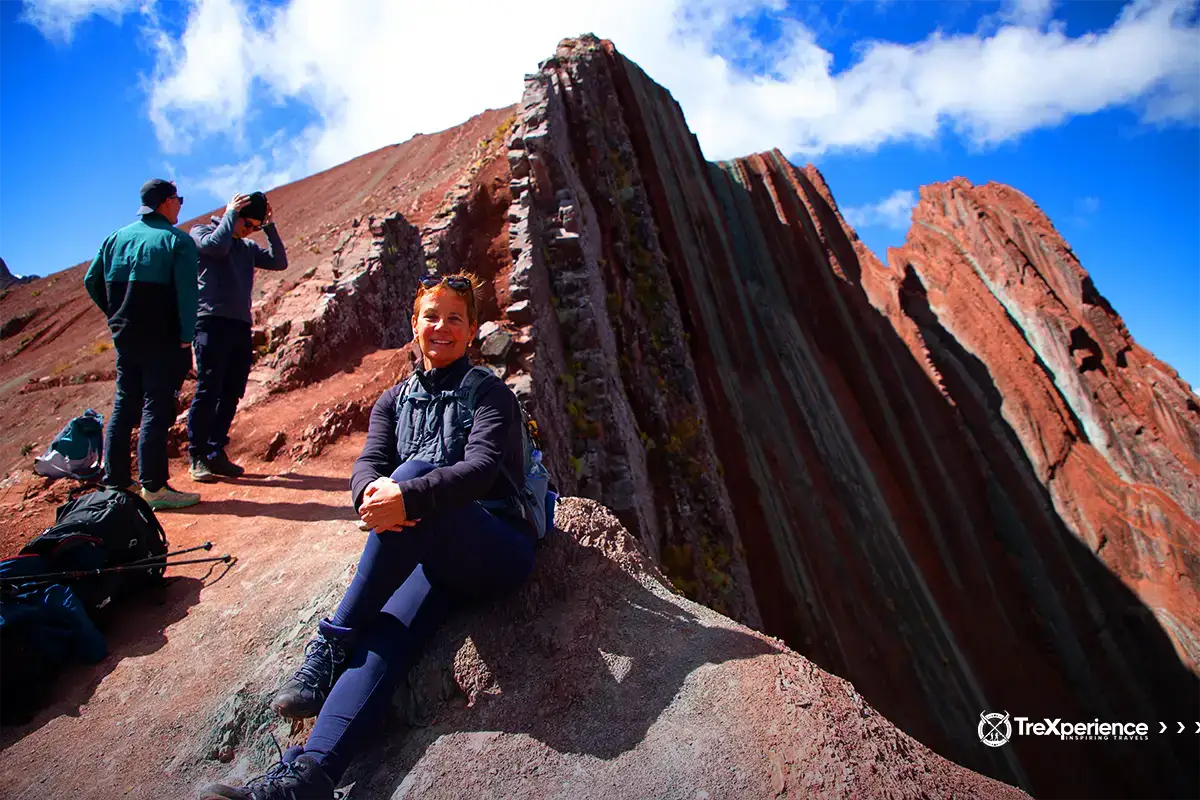
Visiting Pallay Punchu does not require technical mountain gear, but it is important to be well prepared. The hike takes place at high altitude, where the cold, wind, strong sun, and sudden weather changes can feel intense. Bringing the right clothing and accessories will help you enjoy the route much more and avoid discomfort caused by the weather or altitude.
Before leaving Cusco, make sure your backpack is comfortable, light, and packed only with what you really need. The goal is not to carry too much, but to have the basics on hand so you can walk safely, stay warm, and protect yourself from the sun.
- Thermal base layer: For the mornings, which are usually very cold
- Warm jacket: The cold can feel strong, especially early in the day and at the viewpoint
- Windbreaker or waterproof jacket: Protects you from the wind and light rain
- Long-sleeve shirt: Helps protect you from both the sun and the cold
- Comfortable trekking pants: Make it easier to move during the uphill and downhill sections
- Trekking shoes or boots: Provide better grip on uneven trails
- Trekking poles: Helpful on climbs, descents, and slippery sections
- Water: Helps prevent dehydration during the hike
- Snacks: Give you quick energy along the way
- Sunscreen: The sun at high altitude can burn your skin faster
- Sunglasses: Protect your eyes from glare and UV rays
- Hat or cap: Useful for the cold morning and the daytime sun
- Gloves: Recommended because of the cold wind in the upper part of the trail
- Cash in soles: For the entrance fee, community restrooms, snacks, or local expenses
- ID or passport: May be needed for checks or registration
What Not to Bring
- Avoid wearing jeans, as they are not comfortable for hiking, get heavier when wet, and limit your movement.
- Also avoid urban shoes with smooth soles, purses, handbags, or clothing that is too heavy.
- Do not carry unnecessary valuables, too many electronic devices, or too much food.
- Also, avoid bringing single-use plastics or leaving trash along the route. Everything you take with you should come back with you.
Mountain Entrance Fee
The entrance fee to this colorful mountain is 10 soles (US$ 3) and is paid directly in the community of Layo. Try to bring local currency, Peruvian soles. Since this fee is collected by the community itself, they usually do not accept U.S. dollars or any other foreign currency.
If you book a tour, the travel agency often includes this cost in its service.
Cost of tour
- Travel agencies and tour operators that run the Pallay Punchu tour directly usually include tourist transportation with pickup and drop-off at your hotel in Cusco, a professional guide in English and Spanish, breakfast and lunch, plus a first-aid kit and oxygen. The price is usually around US$100 to US$150 per person for a group tour. Some tours even include the entrance ticket to the mountain and trekking poles. Private tours vary depending on the number of travelers.
- If you go on your own, the transport to Sicuani and then to the community of Layo or Occobamba, along with the mountain entrance fee, breakfast, lunch, and snacks, can cost up to around US$50.
 |  |
Take note
If you want to do this hike on your own, make sure you are well acclimatized, in good physical shape, and have previous trekking experience.
Pallay Punchu vs Vinicunca vs Palcoyo
If you are still not sure which colorful mountain to visit in Peru, maybe Vinicunca or maybe Palcoyo, here is a comparison table with the most useful details for your trip. Compare them and decide which rainbow mountain you want to explore first.
| Pallay Punchu | Vinicunca | Palcoyo |
Best for | Travelers looking for a less common colorful mountain, with sharp ridges, dramatic landscapes, and a more adventurous route. | Travelers who want to visit Peru’s most famous rainbow mountain and take the classic photo of the trip. | Travelers looking for something quieter, with fewer people and an easier hike. |
Location | Layo district, Canas province, more than 122 mi from Cusco. The recommended route is through Sicuani and Layo. | Pitumarca district, Canchis province, about 174 mi from Cusco. | Pitumarca district, about 93 mi southeast of Cusco; the drive takes around 3 hours. |
Approx. altitude | Over 15,419 ft | Around 17,060 ft, making it one of the highest and most demanding because of the altitude. | Around 16,076 ft. |
Hiking time | Approx. 1.86 mi in 3 hours round trip, starting from the end of a dirt road. | Approx. 2.48 mi in 4 hours. | Approx. 2 hours round trip. |
Difficulty | Moderate to challenging | Moderate to challenging | Moderate |
How crowded is it? | Less visited than Vinicunca and Palcoyo. A good choice if you want a newer experience with less mass tourism. | It is the most famous colorful mountain, so it usually receives more visitors and larger groups. | Less crowded than Vinicunca and a quieter option, with more space to walk and take photos. |
Main landscape | Sharp ridges and red, pink, purple, green, and white stripes. Its shape looks like an Andean poncho, with Langui Lagoon in the background. | Bright color bands, views of Ausangate Mountain, viewpoints, and high-Andean landscapes. | Three colorful mountains, alpacas, the Stone Forest, and distant views of Ausangate on clear days. |
Best time to go | Dry season, from April to October | From April to August, when there is less chance of rain. | From May to October, with clearer skies and better visibility. |
Entrance fee | US$ 3 per person / same price for everyone | US$ 8 for foreigners and US$ 5 for Peruvians | US$ 6 for foreigners and US$ 3 for Peruvians |
Tour or on your own? | You can go on your own via Cusco–Sicuani–Layo or Occobamba. | It is recommended to go with an operator so transport, guide, meals, and permits are arranged. | You can go with a tour or on your own. There is no direct public transport to Palcoyo, so going independently takes more planning. |
What to bring | Warm clothing, rain poncho, water, snacks, sunscreen, gloves, trekking shoes, trekking poles, and extra cash. | ID, proper footwear, waterproof jacket, mountain clothing, sunglasses, sunscreen, water, personal medication, and trekking poles. | Warm clothing, sunscreen, sunglasses, water, snacks, shoes with good grip, rain poncho, toilet paper, and hand sanitizer. |
Strong point | It is the most visually different: its ridges are more dramatic and photogenic. A good choice for travelers who already know Vinicunca. | It is the most iconic and well-known. If you want the classic Rainbow Mountain photo, this is the one. | It is the easiest one to enjoy without so much physical pressure or large crowds. Plus, you get three colorful mountains and the Stone Forest. |
Weak point | It is farther away, the route can be more demanding, and it is best to check the current access conditions before traveling. | The altitude can hit hard, there are usually more people, and the experience may feel more touristy. | Although it is easier, it is still close to 5,000 m, so you should not underestimate the altitude. |
Quick tips | Choose Pallay Punchu if you want adventure, different photos, and a less common mountain. | Choose Vinicunca if you want to visit Cusco’s most famous rainbow mountain. | Choose Palcoyo if you want a gentler hike, fewer people, and more time to enjoy the landscape. |
Final recommendations
If you are planning to visit Pallay Punchu rainbow mountain, keep these tips in mind before leaving Cusco. Although the hike is not technical, the altitude, cold weather, and sudden changes in climate can make the experience more demanding than expected.
- Acclimate before you go: Spend at least 1 or 2 days in Cusco before doing the hike. If you arrive directly from Lima or another low-altitude city, it is better not to take this tour the next day.
- Leave Cusco early: The trip to the Pallay Punchu area is long. The earlier you leave, the more time you will have to walk at a relaxed pace, enjoy the scenery, and avoid stronger weather changes in the afternoon. Tours usually pick you up from your hotel at 4:00 a.m.
- Dress in layers: Mornings are usually very cold, the sun can feel strong later on, and the wind at the viewpoint can be intense.
- Wear good trekking shoes: The trail has uphill sections, downhill sections, and uneven parts. Avoid wearing shoes with smooth soles.
- Bring trekking poles if you are not used to hiking at altitude: Poles help a lot on the way up and down, especially if the ground is wet or you want to reduce the effort on your legs.
- Do not underestimate the altitude: Even if the hike seems short, the air feels thinner at this elevation. Walk slowly, breathe calmly, and do not try to rush.
- Stay hydrated during the hike: Bring enough water and take small sips along the way.
- Pack light snacks: Nuts, cereal bars, chocolate, or fruit can help you recover energy during the hike.
- Protect your skin and eyes: The sun at high altitude can burn even when it feels cold. Use sunscreen, sunglasses, and a hat or cap.
- Bring cash in soles: There is not always signal, ATMs, or card payment in the area. Carry coins and small bills for the entrance fee, restrooms, snacks, or any local expenses.
- Check the weather before leaving: The weather in Pallay Punchu can change quickly. If rain, hail, or heavy fog is forecast, bring a poncho, a waterproof jacket, and a cover to protect your backpack.
- Book with a reliable agency if you do not know the route: Going with a guide can make the experience safer and more comfortable, especially if it is your first high-altitude hike.
- Stay on the marked trail: The ridges of Pallay Punchu are sharp, and some areas have steep drops. Always follow the marked path and avoid getting too close to the edges just for a photo.
- Take great photos, but put your safety first: Pallay Punchu is very photogenic, but no picture is worth taking a risk. If you go with a guide, ask them to show you the safest spots for taking photos.
- Respect the local community: Pallay Punchu is located in an area managed by local communities. Greet people respectfully, pay the established fees, and avoid uncomfortable bargaining over small local services.
- Do not leave trash on the route: Bring a small bag to carry your waste. Everything you take up with you should come back with you. The mountain stays cleaner when every visitor does their part.
- Listen to your body: If you feel a strong headache, nausea, dizziness, or intense shortness of breath, tell your guide and rest. The mountain will still be there; your health always comes first.
FAQs - Pallay Punchu
Is Pallay Punchu difficult?
The hike is moderate to challenging. It is not a technical trek, but the altitude, uphill sections, and wind can make it feel demanding. It is best to be well acclimatized before going.
What time does the Pallay Punchu tour start and end?
The tour usually starts with pickup in Cusco at around 4:00 a.m. and ends with the return between 5:30 and 6:00 p.m., depending on the weather, traffic, and the group’s pace.
Is Pallay Punchu better than Vinicunca?
It depends on what you are looking for. Pallay Punchu is less crowded and more adventurous, while Vinicunca is more famous and offers the classic rainbow mountain photo.
Are there restrooms or restaurants along the route?
There are basic services in the community, but do not expect restaurants during the hike. If you go with a tour, breakfast and lunch are usually included. If you travel on your own, bring your own food.
Is it recommended for children?
It can be suitable for active children who are well acclimatized, as long as they go with a guide and the weather is good. It is not ideal for very young children or those sensitive to altitude.
Are there horses in Pallay Punchu?
Yes, you can rent horses locally, with prices ranging from S/ 80 to S/ 140. Check with the local providers in Layo before heading up.
Can you fly a drone in Pallay Punchu?
Since this is a rural area, Peru’s Ministry of Transport and Telecommunications states that there are no general restrictions on drone flights. However, as this area is managed by the local community of Layo, please ask the administrator or ticket collector for permission before using your drone, and avoid flying over people or restricted areas.

Add new comment