



The Sanctuary of the Lord of Huanca, or Señor de Huanca, is one of those places where faith and history meet in a special way. For many people in Cusco, it is a place of promises, gratitude, and hope, surrounded by mountains that have been considered sacred since ancient times.
In this blog, you will learn what the sanctuary is, who this sacred image represents, where it is located, how its devotion began in Cusco, and why it remains one of the most important pilgrimages in the region. You will also discover the spiritual meaning of this place within Andean faith and why thousands of people visit it every year with such deep devotion.
What is the Sanctuary of the Lord of Huanca?
The sanctuary is one of the most important devotional sites in Cusco. Here, people venerate a much-loved image of the wounded Christ. The place brings together religious tradition, pilgrimage, and Andean spirituality in a setting shaped by popular faith and deep respect for the sacred landscape around it. Many visitors also search for this place as Señor de Huanca Peru when planning a faith-based trip from Cusco.
Important fact
The festivity and pilgrimage were declared Cultural Heritage of the Nation in 2014 because of their religious, cultural, and community value within the Cusco region.
Who is the Lord of Huanca?
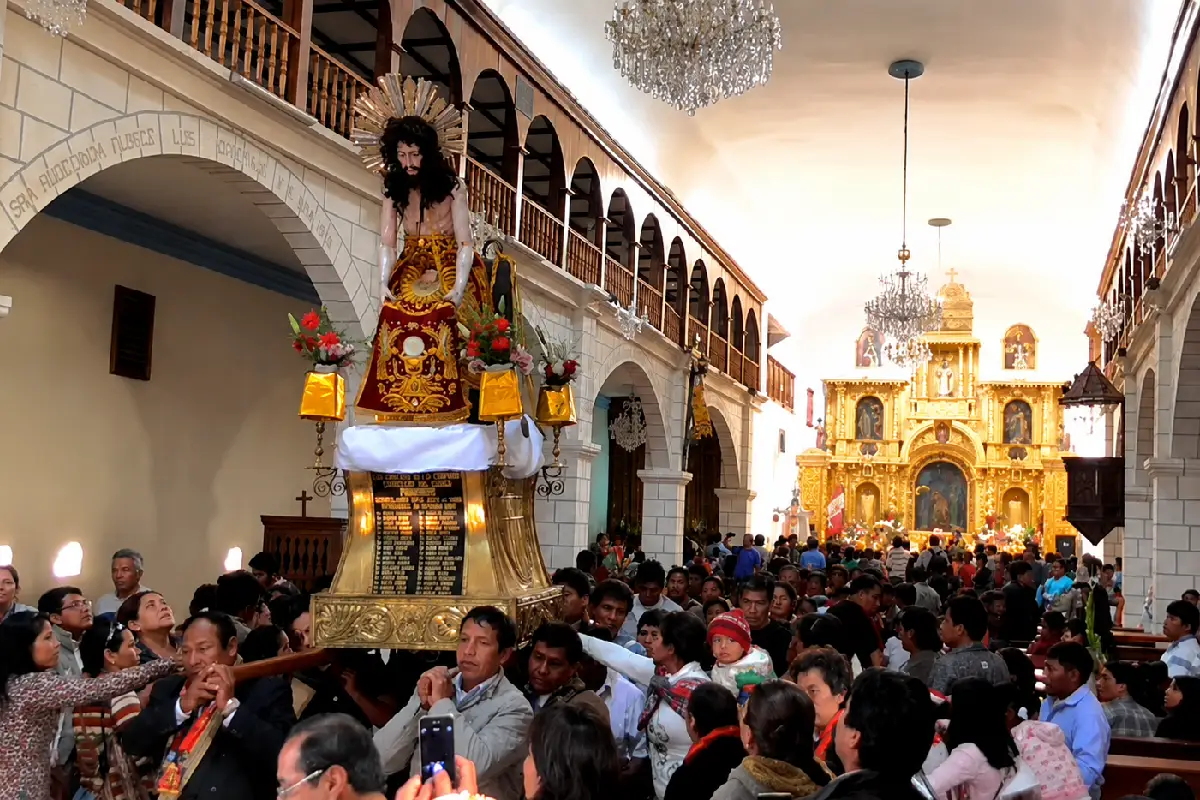
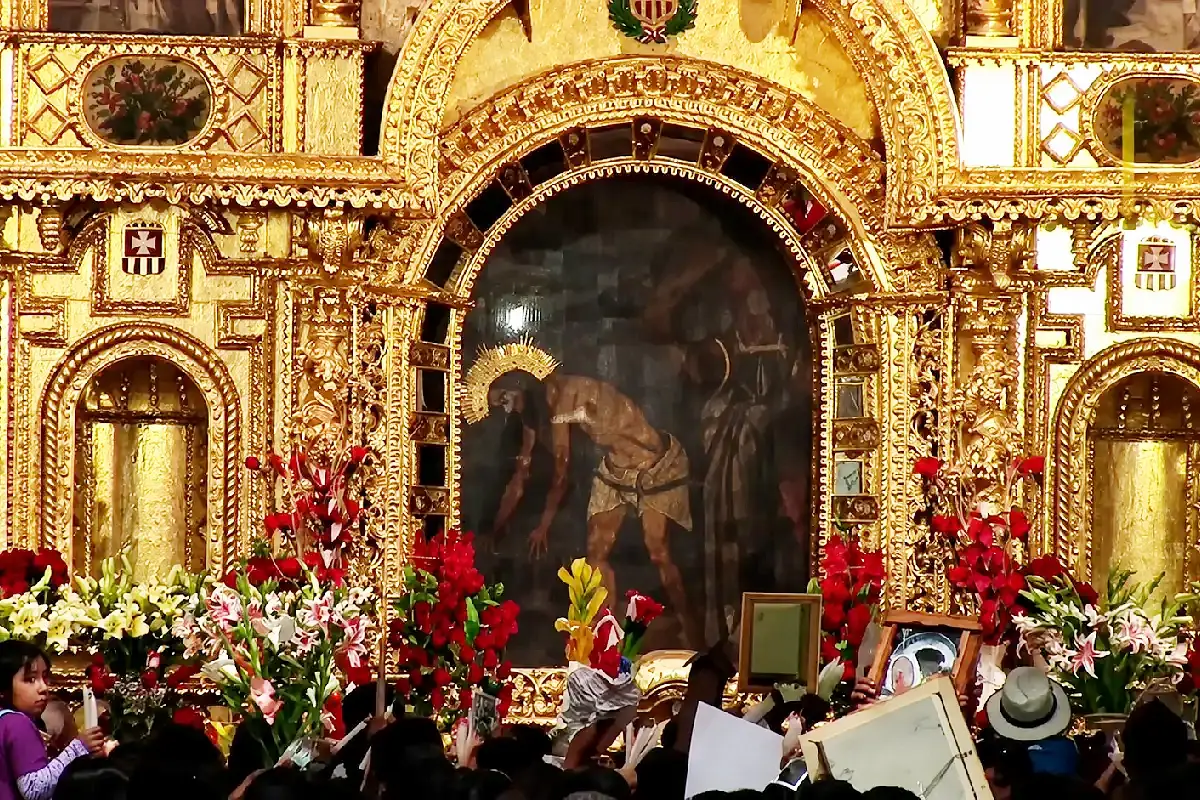
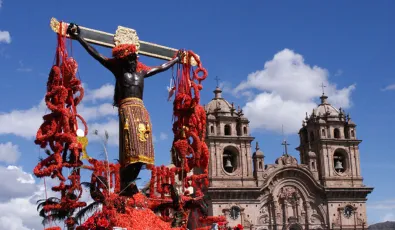
This sacred image is a representation of the wounded Christ, venerated in Cusco as a miraculous figure. According to oral tradition, the devotion began in 1675, when Diego Quispe is said to have seen the apparition of the injured Christ in a cave in Huanca.
Since then, the image has been tied to the faith of thousands of devotees who come to the sanctuary to ask for protection, health, comfort, or to give thanks for blessings received.
History of the devotion in Cusco
The story goes back to the 17th century. According to oral tradition, in 1675, Diego Quispe, an Indigenous man from Chinchero, fled to the Huanca area in search of refuge. There, inside a cave, he is said to have seen the apparition of the wounded and suffering Christ, a vision that marked the beginning of this devotion.
Later, the image was painted on the stone wall of the cave, following the description of that apparition. Over the years, the site became a pilgrimage point for the faithful, and the devotion grew until the sanctuary became one of the most representative religious centers in Cusco. Its main feast is celebrated every September 14, although religious activities begin days earlier with masses, prayers, and moments of spiritual preparation.
Where is the Sanctuary of the Lord of Huanca?
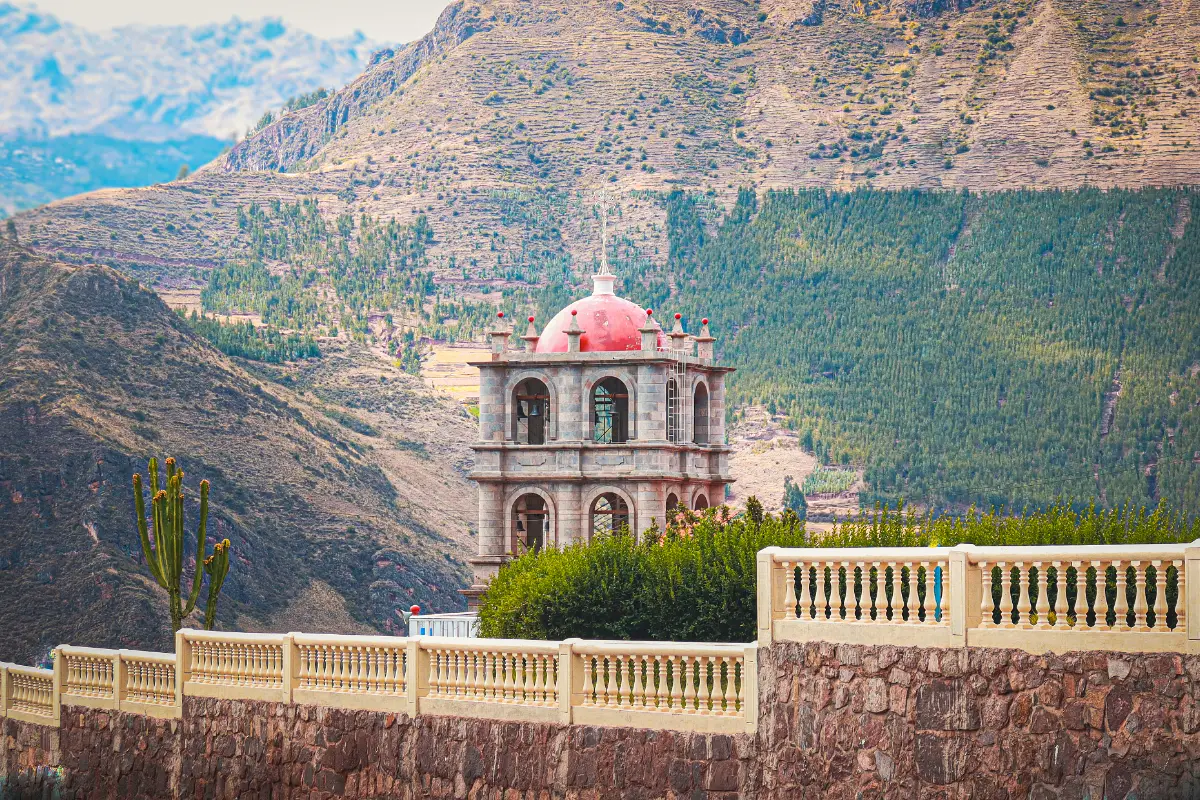
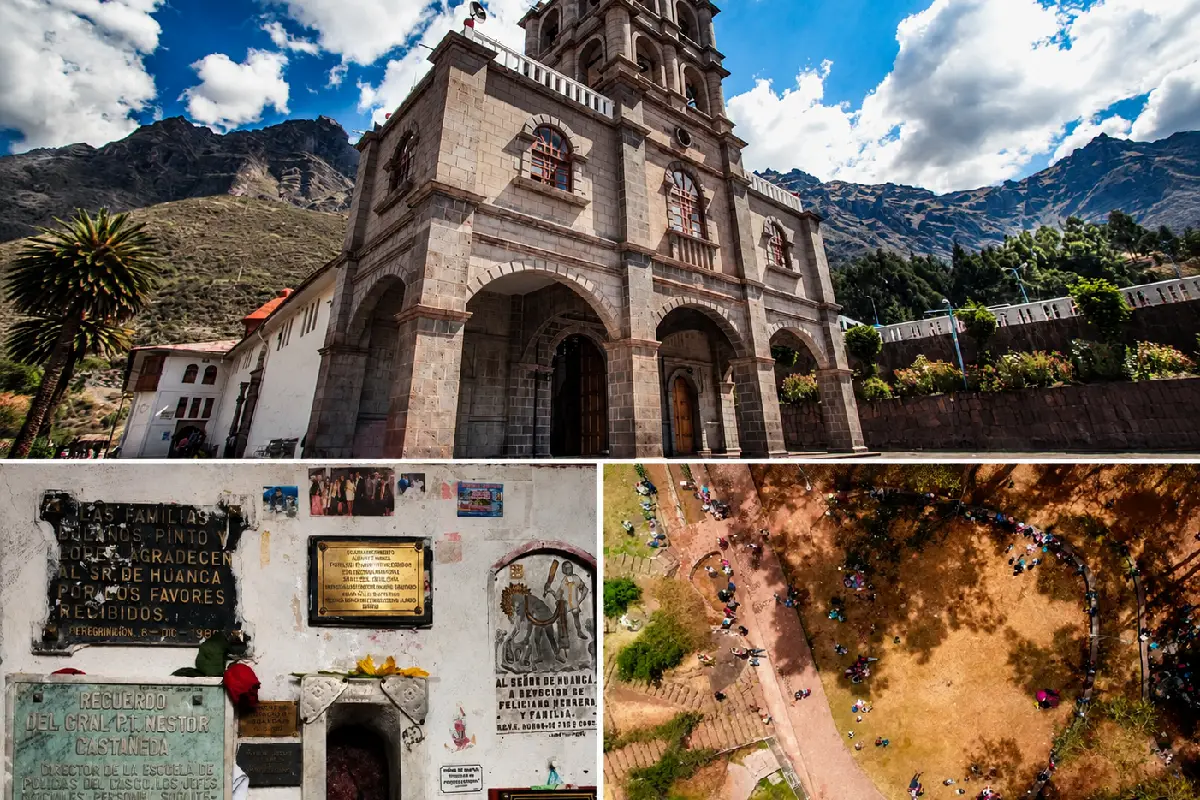
The sanctuary is located in the community of Huanca, in the district of San Salvador, province of Calca, in the Cusco region. It is about 48 to 50 kilometers from the city of Cusco and sits at an approximate altitude of 3,100 meters above sea level.
The site is only a few kilometers from the town of San Salvador, in an area surrounded by mountains, including Apu Pachatusan, a sacred mountain in the Andean worldview. It is considered a protector of the territory and nearby communities.
How to get to the sanctuary from Cusco
To get to the sanctuary from Cusco, the most common route is to leave through the southern part of the city and continue toward Oropesa, San Salvador, and finally Huanca. Depending on the kind of trip you prefer, you can choose from these options:
- By urban transport or shared car: you can take cars or colectivos that go to Huanca, usually from the area around the Coliseo Cerrado or Casa de la Juventud in Wanchaq. The fare may cost around S/10 to S/15, depending on the season.
- Route through San Salvador: the most common route is Cusco – Oropesa – San Salvador – Huanca. The trip usually takes between 1 hour and 1 hour and a half, depending on traffic.
- By taxi or private transport: this is the most comfortable option if you are traveling with family, older adults, or want to go directly. The price may vary depending on the vehicle, waiting time, and negotiation.
- Walking as a pilgrimage: during the September festivity, many devotees walk from San Jerónimo to the sanctuary. The walk may take around 6 to 7 hours, depending on the pace.
When is the main celebration held?
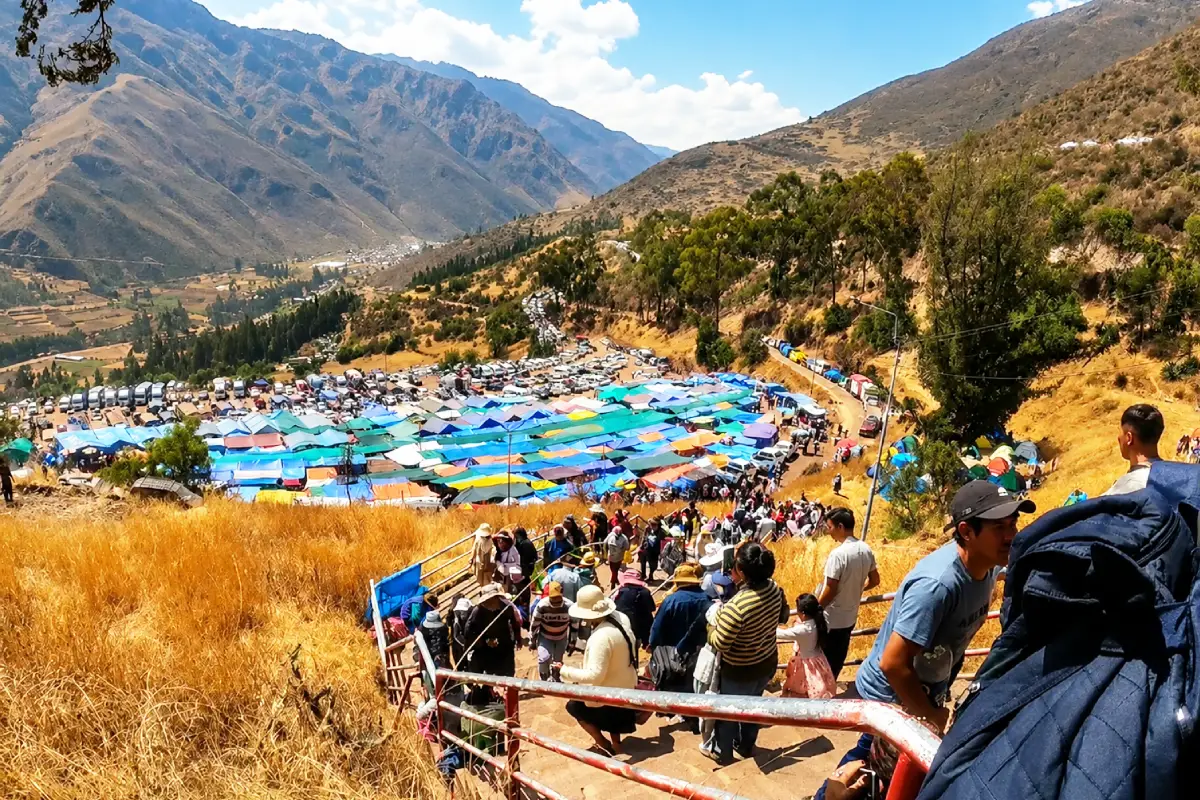
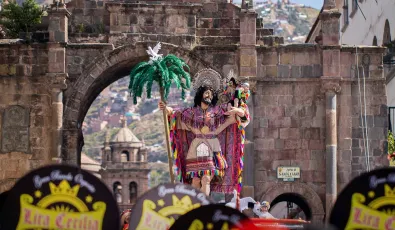
The feast is celebrated every September 14 and is one of the most important religious expressions in Cusco. During this date, the sanctuary receives thousands of devotees who arrive from different parts of the region and also from other areas of Peru to ask for blessings, give thanks for favors received, or fulfill a promise. For anyone looking up Señor de Huanca, this is the busiest and most meaningful time to visit. The celebration begins days earlier with masses, novenas, prayers, and acts of spiritual preparation.
In Huanca, faith is also expressed through walks, lit candles, blessings, songs, offerings, and the small personal promises that each devotee carries with them.
The Lord of Huanca pilgrimage and its spiritual meaning
The pilgrimage is the heart of this festivity. Many devotees do not come only to visit the sanctuary; they walk to give thanks, ask for health, fulfill a promise, or renew their spiritual bond with this sacred image.
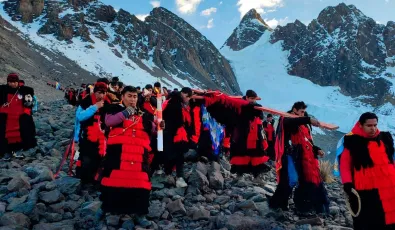
One of the traditional routes starts on the night of September 13 from the district of San Jerónimo, in the city of Cusco. From there, pilgrims walk for several hours along rural roads and mountain areas until they reach the sanctuary at dawn on September 14. The route usually passes through communities such as Huaccoto and Huancapata, as well as areas near Apu Pachatusan.
Along the way, some people walk with their families, others with groups of friends or communities, and many carry a very personal intention. Some carry stones as a symbol of penance or effort, and when they arrive at the sanctuary, they leave them there as part of their promise. There are also prayers, religious songs, and, in some cases, offerings connected to Andean tradition.
This is why Señor de Huanca in Peru is not only a religious tradition but also a shared act of memory, gratitude, and hope. The spiritual meaning of the walk is found in the act of moving forward with faith. Every climb, every dark stretch of the night, and every step toward Huanca becomes a form of devotion.
What to see at the sanctuary
The sanctuary does not need to be imposing to leave a deep impression. Its value lies in the faith of the people who visit it, in the silent prayers, in the lit candles, and in the simple spaces that form part of a devotion deeply loved in Cusco.
Church or chapel at Huanca
The main church, also called the chapel by some visitors, is the central space of the sanctuary. Here, the image of the wounded Christ is venerated with deep respect by the faithful.
During the year, the atmosphere is usually quiet and reflective. However, in September, especially during the central feast, the church fills with pilgrims who arrive from all over the Cusco region.
Sacred Rock of the Lord of Huanca
The sacred rock is one of the most symbolic elements of the sanctuary. According to tradition, it is connected to the apparition and to the origin of this devotion in Cusco.
Devotees often approach this space to pray in silence, ask for protection, or give thanks for blessings received. Its value lies in what it represents: the point where the sacred story of Huanca joins the faith of the Andean people.
Siloé Park and holy water pools
Siloé Park is an outdoor area of the sanctuary. It is located near the main church and is associated with the pools or water sources that devotees consider blessed. It also works as a rest and meeting area for pilgrims, especially during the September festivity.
What to do at the sanctuary in Cusco?
Visiting the sanctuary is an experience to be lived calmly, respectfully, and with an open spirit. Some people arrive out of devotion, others because of family tradition, and many simply want to understand an important place within Cusco’s faith. During the visit, there are several activities that help you better understand the meaning of this sanctuary.
Take part in masses and prayers
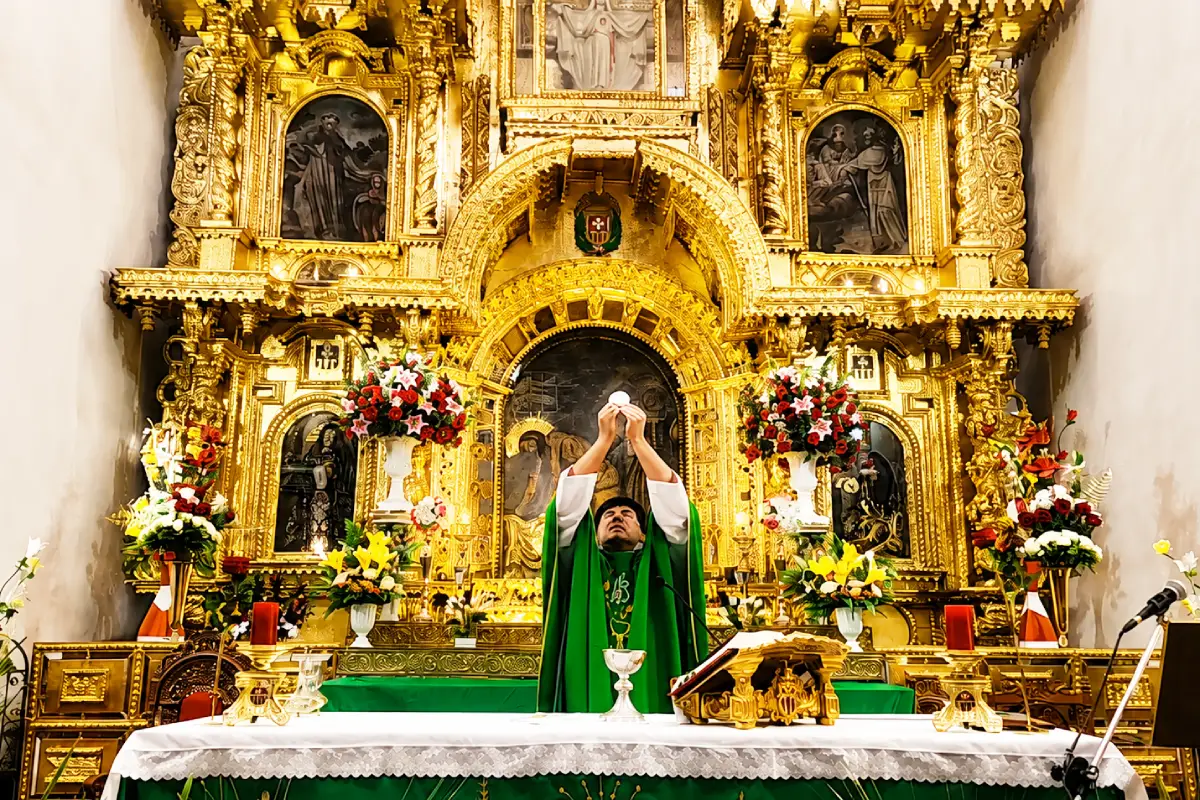
One of the main activities at the sanctuary is taking part in masses and moments of prayer. During the Lord of Huanca feast, especially in September, religious celebrations bring together hundreds of faithful people. On other days of the year, the atmosphere is usually quieter, ideal for those looking for a moment of reflection.
Mass schedules may vary depending on the season and the sanctuary’s program:
| Moment of visit | Reference schedule | What to keep in mind |
| During the year | 12:00 pm | This is the most common time for people visiting the sanctuary on normal days. |
| Sundays and busier days | 12:00 pm | There may be more devotees, families, and local visitors. |
| September 14, central day | From 7:00 am | Pilgrims arrive very early, many after walking through the night. |
| Masses on the central day | About every 2 hours | Because of the large number of faithful people, several masses and blessings are usually held throughout the day. |
Important: take these schedules as a practical reference. Before traveling, especially if you want to attend mass, it is best to confirm the current program with the sanctuary or the local parish.
Light candles as an act of faith
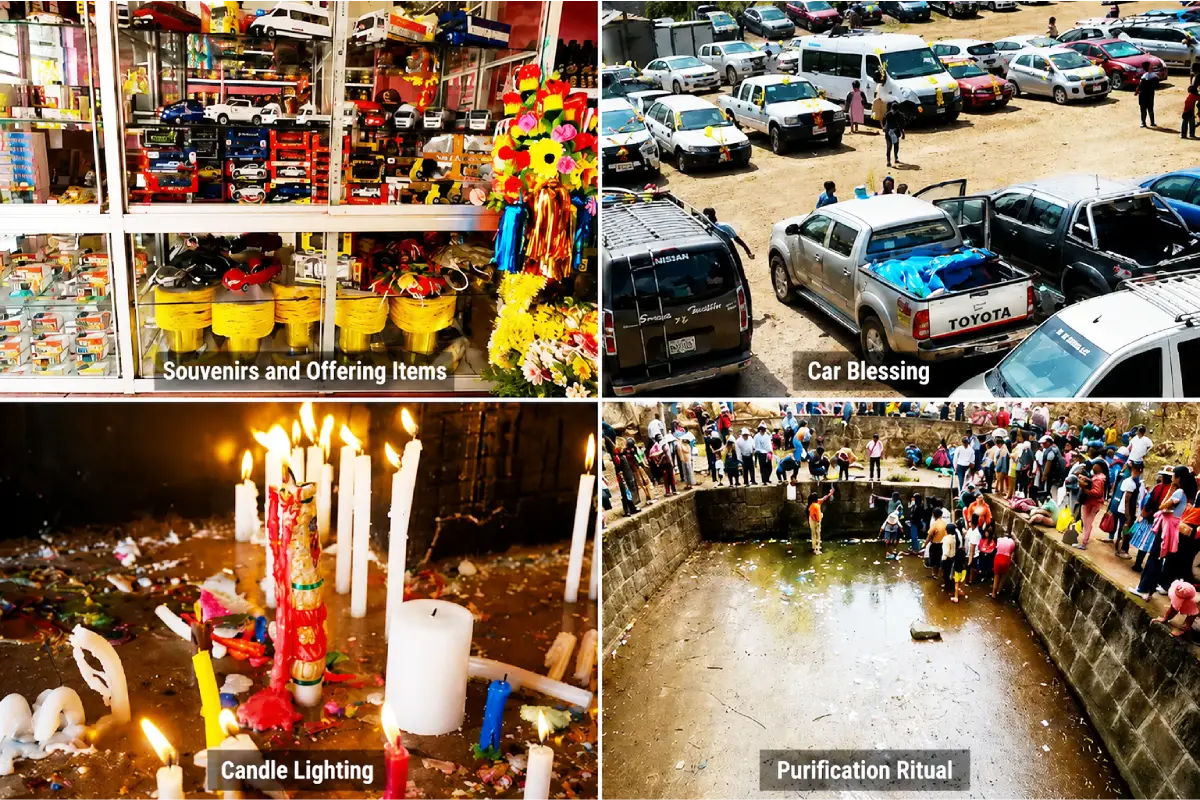
At the sanctuary, many devotees light candles as an act of faith, request, or gratitude. This practice takes place in a special area outside the temple, since lighting candles inside is not allowed for safety reasons and out of respect for the sacred space.
Although the meaning may vary depending on each person’s custom, each color is popularly linked to a special intention.
- White: peace, purity, faith, and spiritual protection.
- Red: love, strength, health, and courage.
- Yellow or gold: work, prosperity, money, and good paths.
- Green: hope, health, growth, and family well-being.
- Blue: calm, harmony, protection, and serenity.
- Purple: forgiveness, penance, inner change, and spiritual renewal.
- Pink: family love, unity, affection, and reconciliation.
- Orange: energy, opportunities, success, and open paths.
- Black: protection against bad energy, envy, or negative situations.
Receive blessings or make requests
Another important practice is to approach the sacred image to receive blessings or make personal requests. Some people bring photographs, religious objects, family keepsakes, or written intentions that they want to present during their visit.
It is also common for pilgrims to arrive with promises. For many, completing the walk, praying inside the church, or visiting the water pools is part of a faith experience born from a need, gratitude, or hope.
Purification in the holy water pools
The water pools in Siloé Park are another of the most visited spaces in the sanctuary. Many faithful people see these waters as a symbol of cleansing, relief, and spiritual renewal. For that reason, some devotees wash their faces, hands, or even bathe with this clear water as part of their act of faith.
In Andean and Christian tradition, water represents life, purification, and hope. In this sense, approaching these pools is not just a custom but a way to renew faith, ask for spiritual relief, and feel protected through this devotion.
Receive a blessing for vehicles
A very popular practice at the sanctuary is bringing cars, vans, buses, or new vehicles to receive a blessing. Many families and drivers come to ask for protection on their journeys, safe roads, and care against accidents or difficulties.
This custom reflects the everyday faith of devotees, who seek to place under sacred protection what forms part of their daily life, their work, or their family’s livelihood.
Buy religious items or souvenirs
Around the sanctuary, especially during the busiest dates, you can find candles, prayer cards, rosaries, medals, small framed images, and other religious objects connected to this devotion.
These keepsakes are not just souvenirs. For many devotees, they are a way to carry protection with them or share their faith with their families. You can also find simple products offered by local vendors, which helps keep the area’s economy active during the festivity.
What to bring for the pilgrimage or visit
- Identity document
- Cash
- Warm clothing
- Rain poncho or waterproof jacket
- Comfortable shoes
- Water
- Light snacks
- Flashlight if you will do the pilgrimage at night
- Sunscreen, hat, and sunglasses
- Candles or religious objects if you want to make a request
- Personal medicine
- Bag to carry your waste
Tips for visiting the sanctuary
- Visit the sanctuary with respect, as it is a place of faith.
- Arrive early if you go in September or on the main day.
- Confirm mass schedules before traveling.
- Bring cash for transport, candles, souvenirs, or food.
- Avoid making noise inside the church.
- Ask before taking photos in religious spaces.
- Take care of your belongings if there are many people.
- Do not leave trash in the sanctuary or nearby areas.
Frequently asked questions about the sanctuary
Can you take photos inside the sanctuary?
Yes, but with respect. It is best to avoid taking photos during mass, in front of people praying, or during moments of prayer. In indoor spaces, it is always better to ask first.
Are there masses every day or only on special dates?
The sanctuary usually has masses throughout the year, but schedules may vary. The most important celebration is on September 14, when there are more masses, blessings, and pilgrims.
Can you visit without doing the pilgrimage?
Yes. You can arrive by public transport, taxi, or private vehicle. The pilgrimage is a very important act of faith, but it is not required in order to visit the sanctuary.
Are there bathrooms, shops, or services near the sanctuary?
Yes, around the area, there are usually bathrooms, small shops, candle sellers, religious souvenirs, and simple food. During the central feast, there is more activity, but also more people.
Can you go with children or older adults?
Yes, especially if you arrive by private transport or taxi. For children and older adults, it is best to avoid the long pilgrimage and choose a calm daytime visit.
What precautions should you take during the pilgrimage?
Bring warm clothing, water, a flashlight, comfortable shoes, and some cash. It is also recommended to walk in a group, follow the main route, and avoid carrying valuables.
What should you avoid during a religious visit to the sanctuary?
Avoid making noise, taking photos without permission, interrupting prayers, leaving trash, entering with a disrespectful attitude, or treating the place only as a tourist attraction. The sanctuary is, above all, a place of faith.

Add new comment