



When you visit Cusco, there are many attractive buildings to see and appreciate. However, one you absolutely must visit is the Cusco Cathedral, the most important church in the historic center. It's a key stop for understanding the blend of Inca and colonial Cusco. Located in the main square (Plaza de Armas), it brings together Renaissance, Baroque, and Andean architecture, historic chapels, altarpieces, silver pieces, and works from the "Escuela Cusqueña" art style, such as the famous Last Supper with Guinea Pig.
In this guide, we'll lead you through its naves and corridors, as well as tell you how to get there, how much time to spend, visiting hours and prices, rules of conduct, and the best time to visit. If it's your first time in Cusco and you want to make the most of your visit without missing any important details, join us.
Cathedral of Cusco: Quick Facts
| Location | Plaza de Armas s/n, 08002, Historic Center of Cusco, Peru. |
| Visiting hours | Every day from 10:00 a.m. to 5:00 p.m. |
| Entrance fee | Foreign adult: S/40 or US$ 12. Foreign student: S/20 or US$ 6 (student ID required, such as a university or institute card). Peruvian adult: S/20 or US$ 6. Children up to 9 years old enter for free. |
| Where to buy tickets | Calle Triunfo 122, Historic Center of Cusco, Peru. Entrance through the Church of the Triumph, next to the Cathedral. |
| How much time you need | A basic visit takes about 30 minutes, a full visit about 60 minutes, and a guided visit about 90 minutes. |
| Best time to visit | Between 10:00 a.m. and 11:30 a.m. You will avoid crowds and make the most of the natural light. |
| Important rules | Photography is not allowed inside. Please keep silent. Dress modestly: clothing should cover your shoulders and knees. Hats and caps are not allowed inside the church. |
Location of Cusco Cathedral
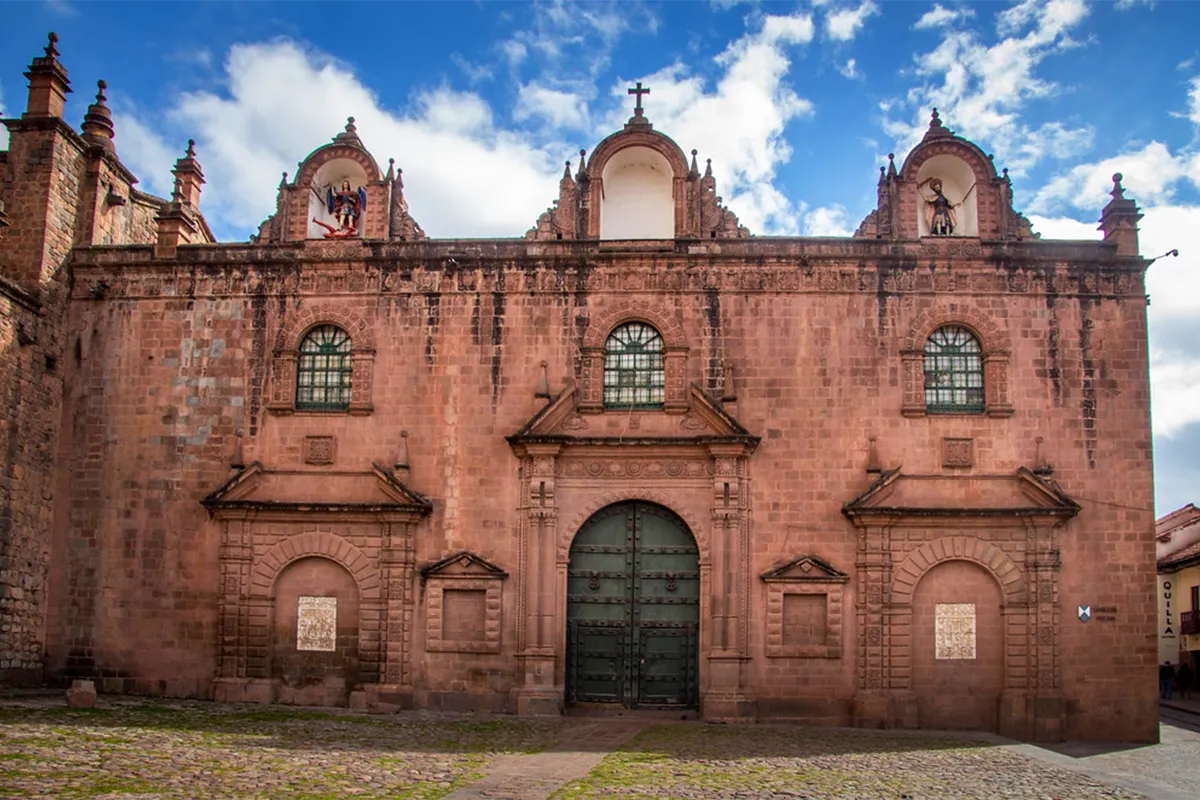
The cathedral of cusco is located on the city’s main square (Plaza de Armas), exactly on the northeast side of the square. It stands between the Church of the Triumph, the city’s first cathedral, on the right, and the Chapel of the Holy Family on the left. The building sits on a raised platform with steps that blend into the ground and help support the structure.
How to get to the cathedral?
Since it is in the heart of the city, in Cusco’s Plaza de Armas, where many streets meet, getting there is very easy. In most cases, walking a couple of blocks is enough, as many hotels, hostels, and Airbnbs are located within the historic center.
- Taxi: If you decide to take a taxi for just a few blocks, the fare should not be more than S/10 (US$ 3). Keep in mind that taxis in Peru, especially in Cusco, don't use taximeters, so you should agree on the price with the driver before getting in. We recommend using apps such as Uber or InDrive.
- Public transport: There is no public transport within the historic center that would take you such a short distance. However, if you are staying outside the center and want to use public transport, ask the bus conductor if the bus stops at Almagro. Get off there and walk half a block north to the Plaza de Armas. The city bus fare is S/1.50.
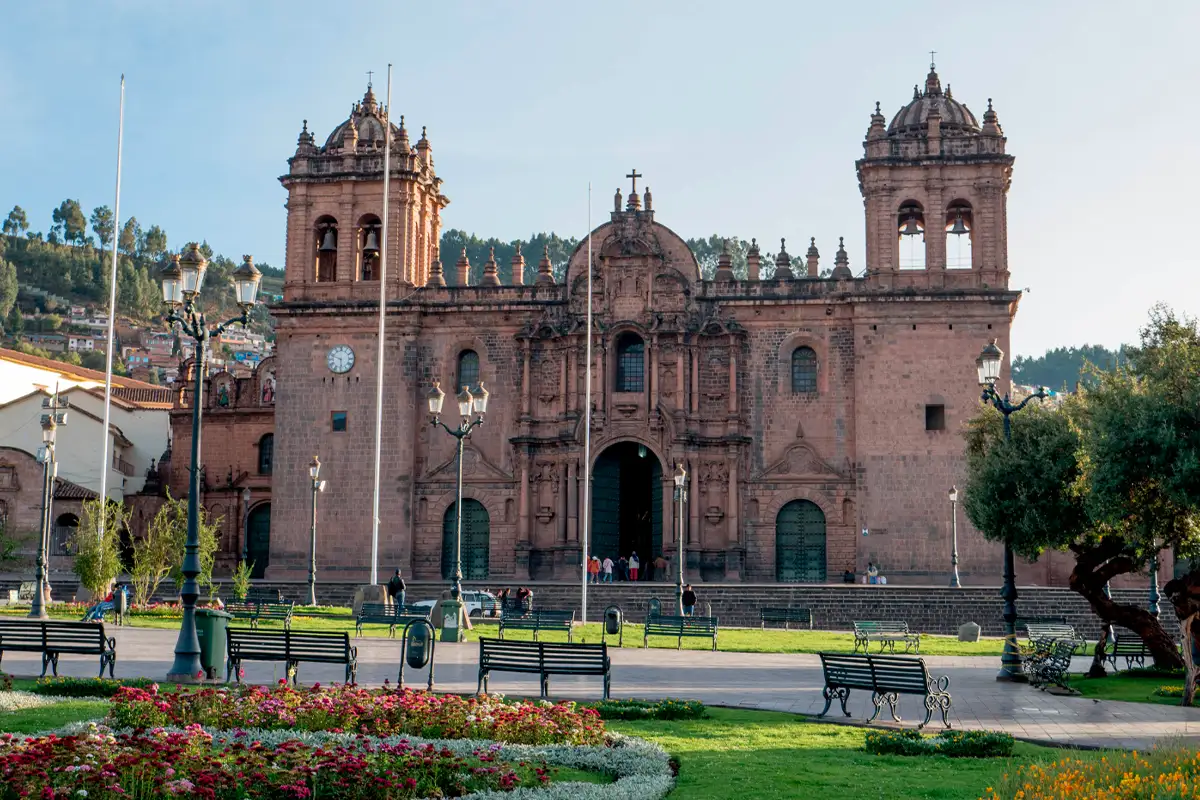
- City Tour: You can make things easier by booking a City Tour, which is a half-day guided tour around the city. This service usually includes transportation, a guide, entrance tickets, and visits to Qoricancha, the Inca Temple of the Sun, Cusco Cathedral, and the Inca fortress of Sacsayhuaman. Prices can range from US$ 45 to US$ 70.
History of the Cathedral in Cusco
To talk about the history of Cusco Cathedral is to talk about the very foundations of the city itself. Its story goes back to Inca times, and the building has witnessed some of the most important events in Cusco’s history.
Before the Cathedral: Suntur Wasi and Kiswarcancha
Before the cathedral was built, this area was home to Kiswarcancha, a palace ordered by Inca Wiracocha, the eighth ruler of the empire, between the 14th and 15th centuries. It served as a royal residence for him, his family, and his descendants, known as his panaca. The palace was built with large stone blocks, finely cut and fitted together without mortar, leaving almost no gaps between the joints, a clear example of Inca architecture.
Its name means “courtyard of the quiswar,” referring to a native Andean tree, Buddleja incana, which may have once decorated the site.
Right next to Kiswarcancha, and connected to it, stood Suntur Wasi, built during the same period and by the same ruler. Unlike most Inca buildings, which were rectangular, this one stood out for its cylindrical shape and great height. It was seen as the center of the center, a symbol of Inca power, where weapons, shields, and other objects used in the worship of the gods were kept.
From its highest point, the Inca ruler watched the different ceremonies held in Huacaypata, today’s Plaza de Armas, which was also one of the main settings for Inti Raymi.
Construction of El Triunfo: Cusco’s First Cathedral
In 1536, after the Spanish invaders had settled in the city of Cusco, they were surrounded inside Suntur Wasi by the forces of Manco Inca, the Inca ruler who had been stripped of his position.
It is said that during the Siege of Cusco, Inca warriors shot flaming arrows and set fire to the thatched roofs of the Kiswarcancha complex. However, the roof of Suntur Wasi either did not burn or the flames went out quickly. The Spanish saw their survival as a heavenly intervention, claiming they had seen the Virgin of the Descent, later known as the Virgin of Triumph, putting out the flames, while Saint James the Apostle fought on horseback against the Indigenous warriors.
After the siege, the Spanish conquerors destroyed most of both structures. They then reused the remains of Suntur Wasi as the base for the first Cathedral of Cusco in 1539, now known as the Church of El Triunfo. Many historians see this act as the symbolic replacement of one religion by another: Catholicism over Inca beliefs.
Construction of the Current Cathedral
- 1559: Construction of the current cathedral began on the foundations of the other destroyed temple, Kiswarcancha. This happened because the first, more rustic cathedral had deteriorated over time.
- 1560: The Spanish architect Juan Miguel de Veramendi took charge of the project. He laid the first stone and designed the plans in the shape of a Latin cross, with a strong Renaissance style. However, work moved very slowly due to a lack of funding.
- 1615 - 1640: The architect Francisco Becerra changed the design to a hall-style layout, with three naves at the same height, making the building more resistant to earthquakes. Around this time, large amounts of andesite and basalt, dark volcanic stones, began to be brought from the Rumicolca quarries and the nearby ruins of Sacsayhuaman.
- 1650: A powerful earthquake shook Cusco and destroyed much of the colonial city. According to tradition, the tremors stopped when the forgotten statue of a dark-skinned Christ, the Lord of the Earthquakes (Señor de los Temblores), was carried in procession. Remarkably, the cathedral’s thick vaults and the walls already under construction withstood the quake, thanks to the flexibility and quality of the Inca stonework, confirming the value of Becerra’s changes.
- 1654: Under the direction of master builder Juan Alonso de los Ríos, the final domes were completed and the two large bell towers were raised. The church was officially consecrated and opened for worship in August 1654.
 |  |
Cusco Cathedral: Architecture
The architecture of Cusco Cathedral blends European art, Indigenous craftsmanship, and Andean details. That is why it does not feel like just another colonial church. In its walls, altars, and chapels, you can read part of the city’s history: the shift from the Inca world to the colonial period and the religious influence that still lives on in the historic center.
Facade, Towers, and Architectural Styles
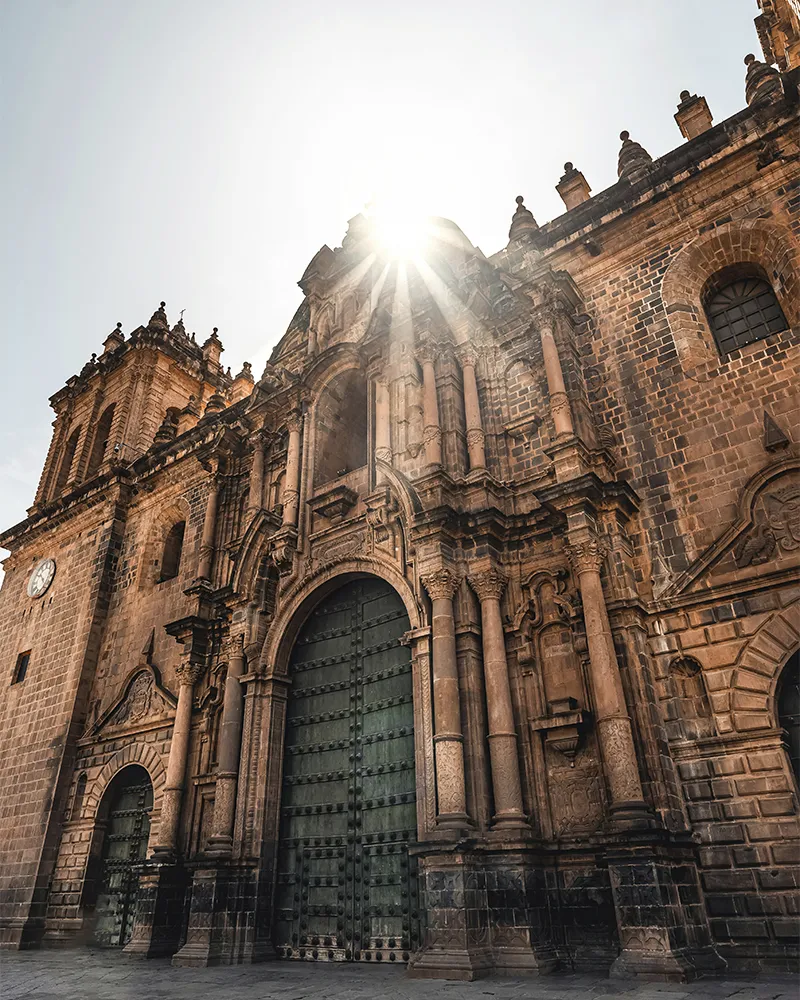
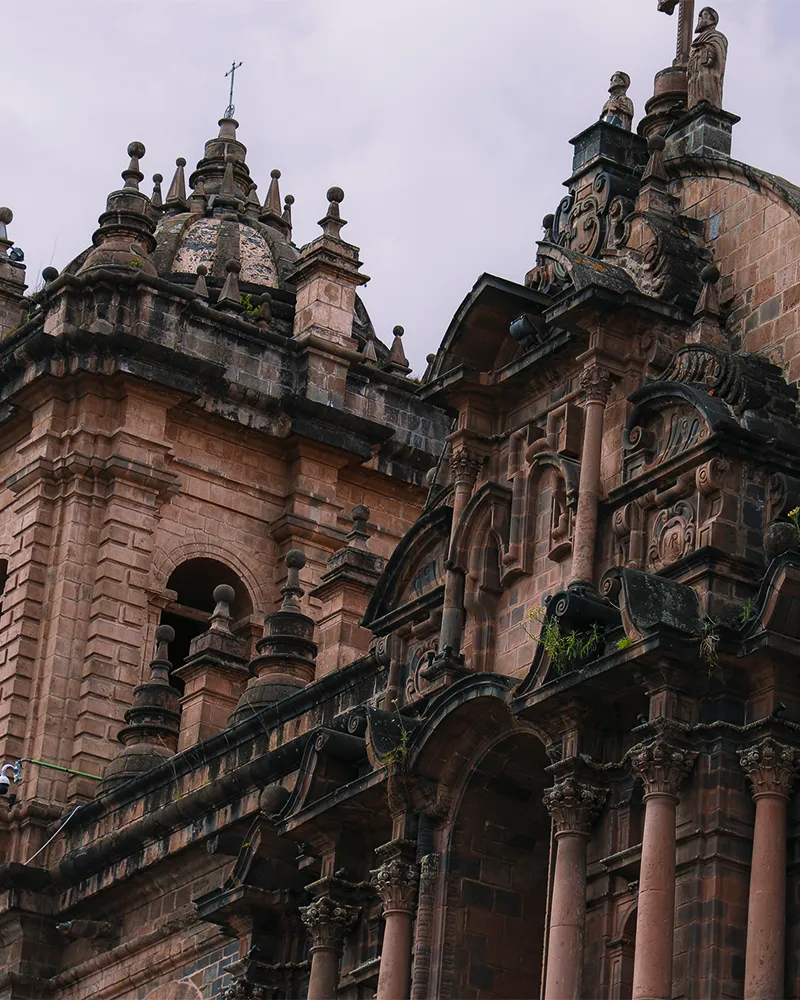
The facade of Cusco Cathedral has a Renaissance base, visible in its layout, but it also shows Baroque details in the decoration of its doorways, columns, and reliefs. This mix gives it a sober and elegant presence facing the Plaza de Armas.
Its towers and walls also reveal traces of late Gothic and Mannerist styles, especially in the proportions and some decorative details.
What makes the Cathedral especially interesting is that it does not copy Europe exactly. Andean elements appear in several details, both in the way religious art was interpreted and in the way the stone was worked. This mix is one of the reasons it stands out among the main churches in Cusco.
Materials and Stone Used in the Construction
The Cathedral was built with strong stones, chosen to withstand time and seismic activity. One of the most mentioned materials is andesite, a volcanic stone widely used in old constructions in the area because of its hardness and durability. Most of the stone blocks were taken from the Inca fortress of Sacsayhuaman and the Rumiqolqa quarries.
Interior: Naves, Vaults, Pillars, and Chapels
The interior of Cusco Cathedral is arranged into three naves. The central nave is the widest and naturally draws the eye toward the main altar. On both sides are the lateral naves, the Gospel nave (left) and the Epistle nave (Right), where you will find 9 chapels, as well as altarpieces and paintings.
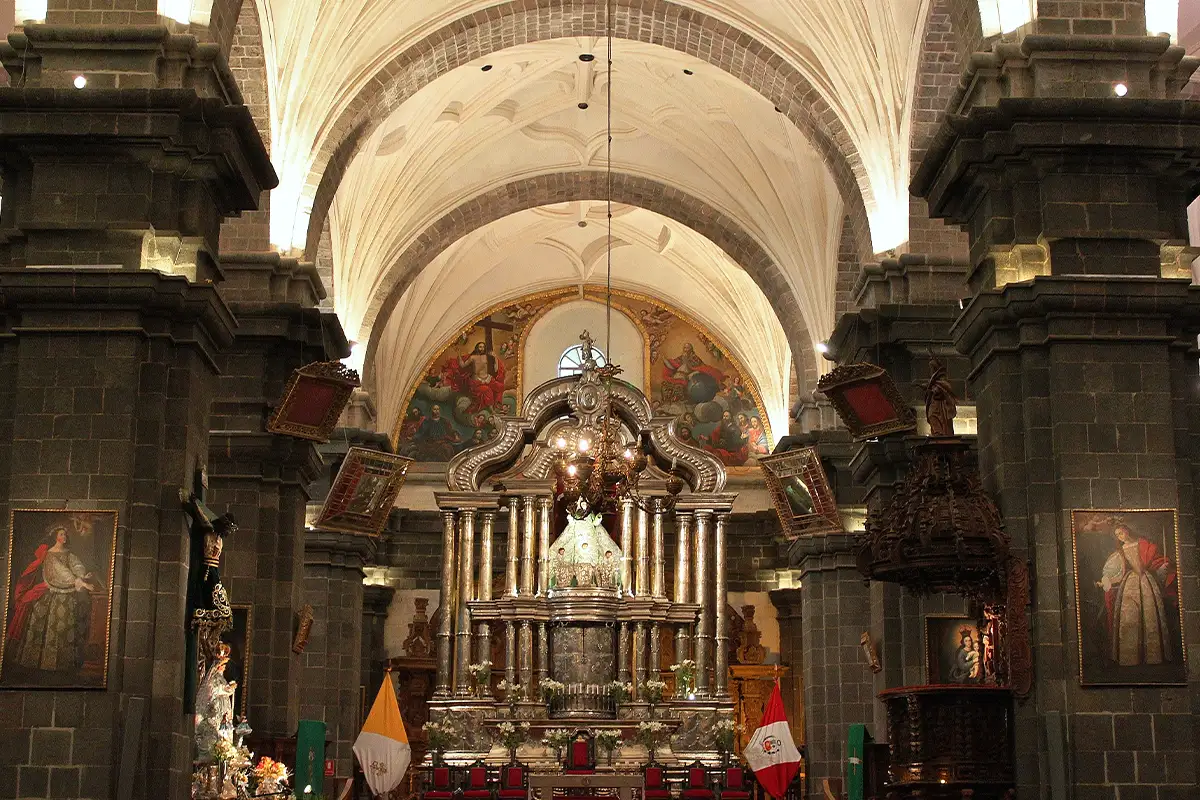
The 24 ribbed vaults that cover the temple give the space a sense of height and solemnity. Its 14 pillars support the structure and divide the interior spaces without interrupting the overall view. As you walk inside, you can see that each part has a clear purpose.
The 9 side chapels are key to understanding the artistic value of the temple. They hold religious images, paintings from the Cusco School, carved wooden pieces, and decorated altars. Many of these works are linked to the history of the Archbishopric of Cusco and the city’s religious life.
The Three Churches of the Cathedral Complex
The cathedral complex is made up of three connected churches: the Cathedral Basilica, the Church of the Triumph, and the Church of the Holy Family. From the outside, they may look like one large building, but each church has its own origin, style, and historical value.
- The Cusco Cathedral Basilica is the main temple. It is the largest part of the complex and holds some of its most important works, including the main altar, side chapels, colonial paintings, and religious art pieces. It is usually the area visitors spend the most time exploring.
- The Church of the Triumph stands on the right side of the Cathedral and was the first cathedral of the city. It was built over the former Suntur Wasi and carries strong symbolic meaning, as it represents the early years of Spanish and Catholic presence in Cusco.
- The Church of the Holy Family is located on the left side of the complex. It is smaller than the Cathedral Basilica, but it completes the layout of the religious complex. Its presence helps show how the Archbishopric of Cusco organized its places of worship in the heart of the city.
What to see in the Cathedral of Cusco
There are many things to see inside the cathedral, including Catholic art pieces, some of which are masterpieces of colonial craftsmanship from the “Cusco School”:
- The main altar and embossed silverwork
- The sacristy and the silver room
- The Cusco School
- The María Angola Bell
- The Lord of the Earthquakes
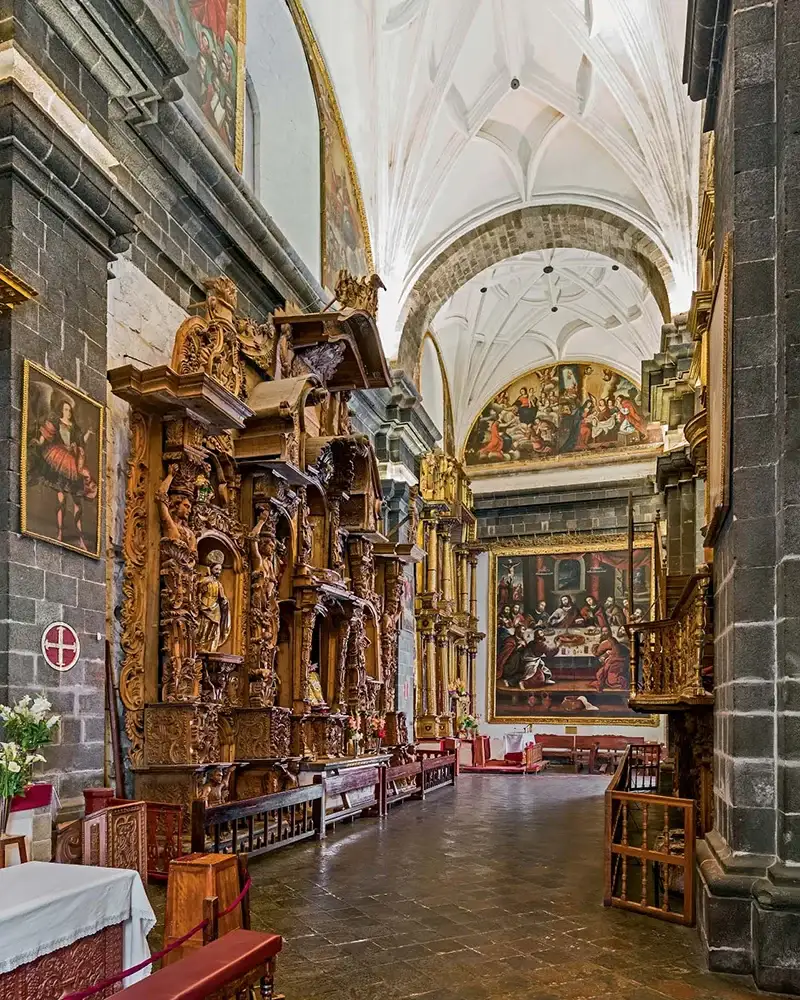 | 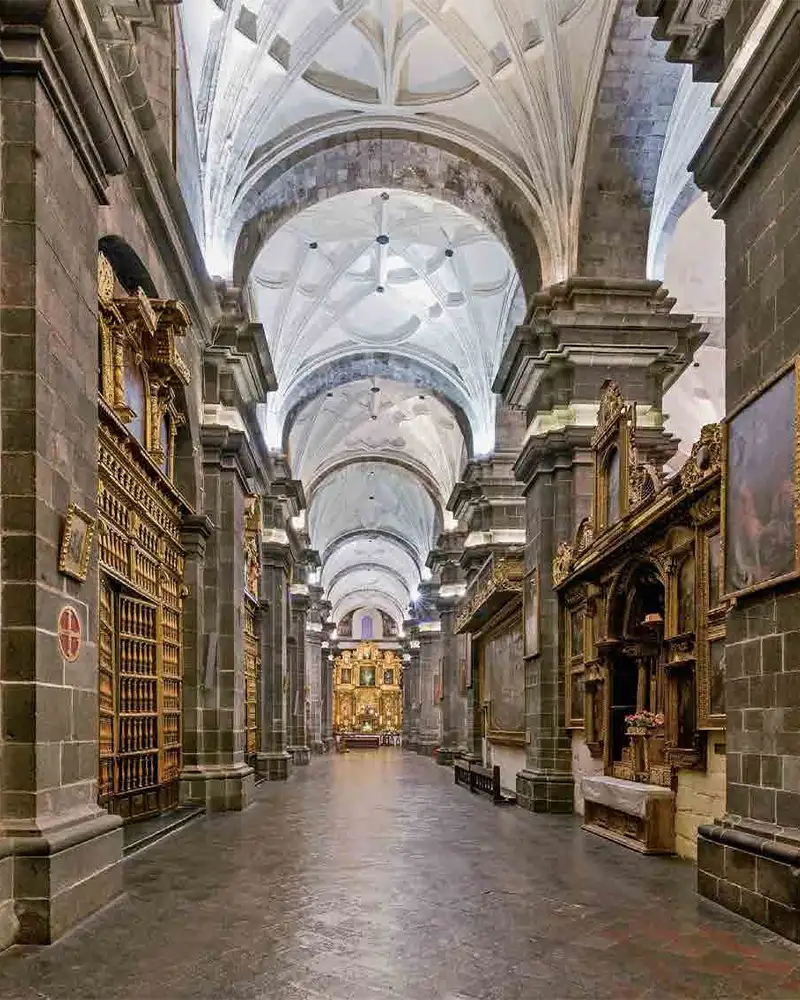 |
*Taken from Treasures of Cusco Cathedral, by Fundación Telefónica, 2013, Cusco: Editorial Fábrica de Ideas.
The main altar and embossed silverwork
The cathedral has two different main altars, one facing the other. The older one is attached to the wall at the northern end of the central nave. It is a carved wooden altarpiece made from lambran, or alder wood.
Around 1972, Bishop Bartolomé María de las Heras promoted the creation of a new cedarwood altar covered with gold leaf. Later, De las Heras himself donated silver to cover the newer altar, which stands in front of the older one.
The design of this embossed silver main altar follows a neoclassical and late Baroque style. It is arranged in several sections, with Solomonic columns and niches. At the center, the image of the Virgin of the Assumption, patron saint of the cathedral, stands out.
The sacristy and the silver room
The sacristy is a closed room with access from one side of the main altar. This is where priests prepare before leading any liturgical ceremony, and it also serves as a storage space for sacred objects. In the cathedral, the sacristy is decorated with a beautiful Baroque altarpiece made of cedarwood. At its center is the image of a Crucified Christ, a work by the Spanish artist Alonso Cano.
The walls and side areas display portraits of all the bishops of Cusco, starting with the first one, Vicente de Valverde. They are a clear example of the local artistic style known as the Cusco School.
The Silver Room is a direct reminder of the great metalworking wealth of the Viceroyalty of Peru. It holds a fascinating collection of sacred objects made by skilled Spanish and Indigenous silversmiths and woodworkers. Among them, you can see a silver carriage used to carry the monstrance during Corpus Christi, as well as gold and silver monstrances, chalices, crowns, and halos made from the same materials.
The Cusco School
Most of the cathedral’s paintings come from the Cusco School, also known as the Cusco School of Art. This was an artistic style born in the Andes, shaped by the adaptation of European painting techniques, including Renaissance, Baroque, and Flemish styles, to local canvases with Catholic themes, Andean landscapes, backgrounds, and symbols.
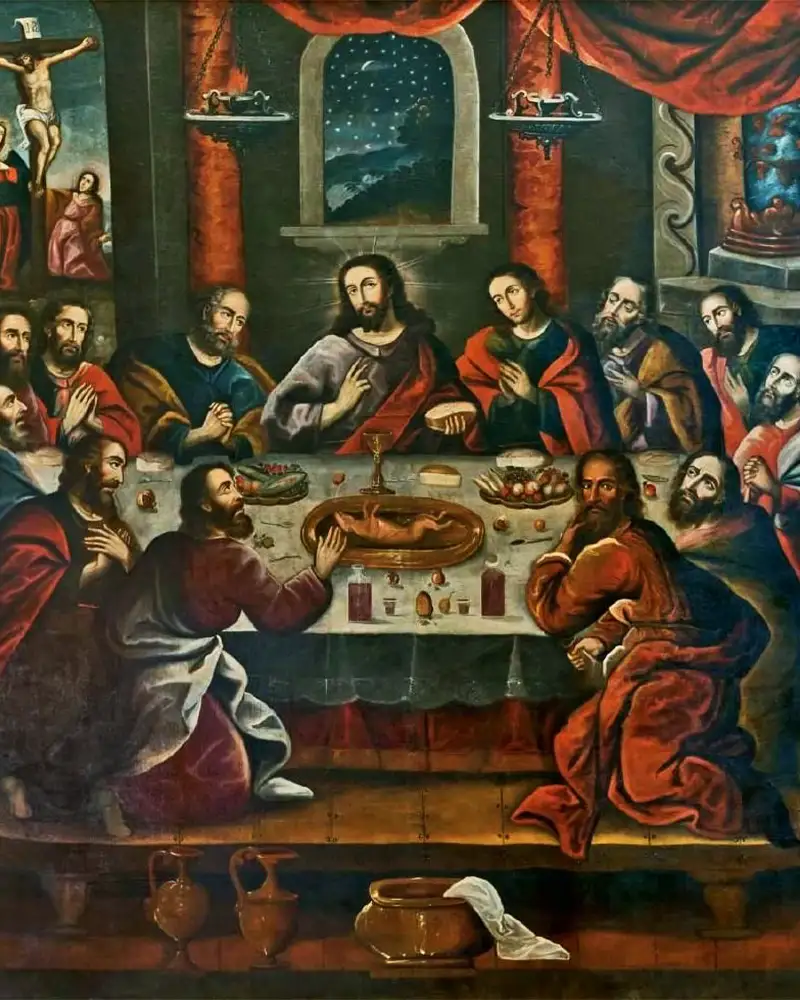 |  |
The Spanish taught Indigenous artists to paint Catholic saints, scenes, and religious images as a way to replace Inca beliefs with Catholicism. Andean artists learned these techniques but often added their own symbols, themes, and references from the Inca religion, sometimes clearly and sometimes more subtly. Inside Cusco Cathedral, you can appreciate these paintings more deeply, especially if you visit with a tour guide.
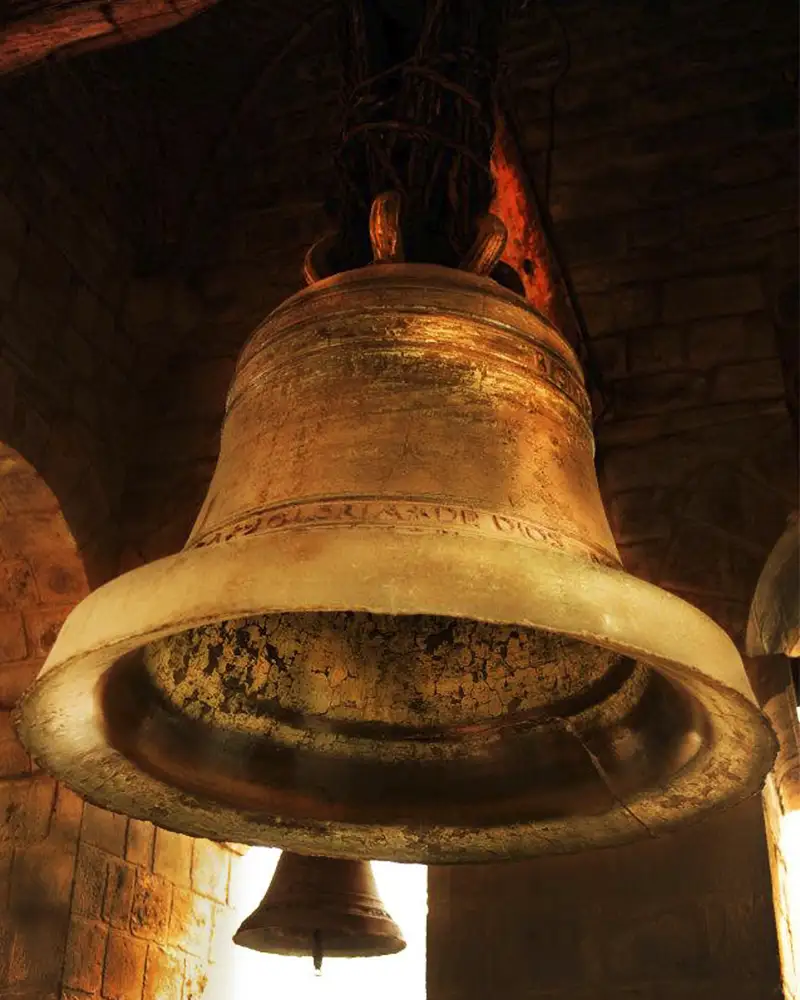
The María Angola Bell
This is the most famous bell among the churches of Cusco. It was commissioned in 1659 by the then Bishop of Cusco, Diego de Ortega y Benavides. The master founder was the Cusco artisan Diego Arias de la Cerda, who created a monumental bell more than two meters high and weighing 5.6 tons. It is said that, in those days, its deep sound could be heard as far as towns in the Sacred Valley of the Incas.
The bell is located in the Cathedral’s Gospel Tower, on the northern side, and its name comes from a legend. It is said that the master founder could not find the perfect alloy to produce the deep, powerful sound expected from the bell. Moved by his efforts, a noble Cusco woman of African origin named María Angola decided to donate her gold and diamond jewelry to be melted down. Only then, according to the story, was the perfect alloy achieved, giving the bell its unique sound. Today, the bell is only rung on special dates to help preserve it.
The Lord of the Earthquakes
The history of the Lord of the Earthquakes in Cusco is as extraordinary as the image itself. This sculpture represents Christ on the cross, and what makes it striking is its completely dark skin. It is the sworn patron of Cusco and is carried in procession through the city’s historic center every Holy Monday. The people of Cusco feel deep faith and devotion toward this image because of two major events: the devastating earthquake of 1650 and the plague of 1720. After the image was taken out in procession, both events are said to have ended miraculously. That is where the name “Lord of the Earthquakes” comes from.
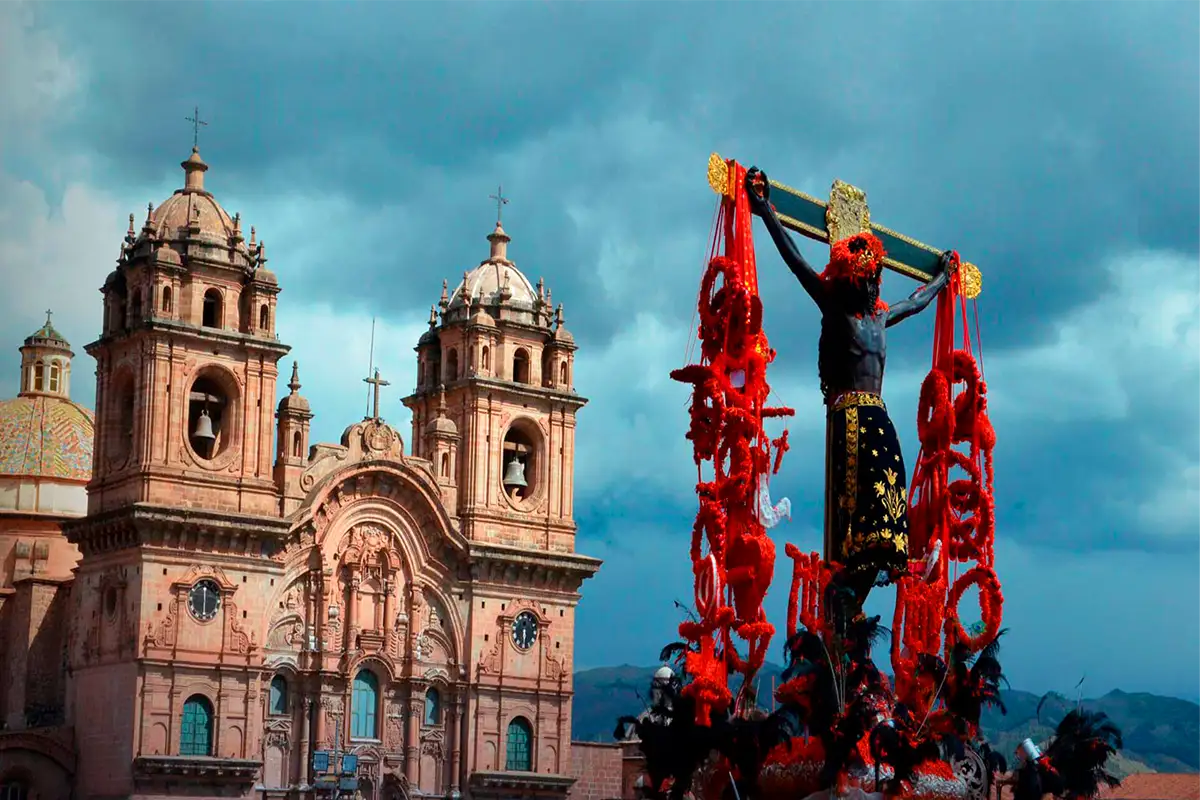
Originally, the image was sent from Spain by King Charles V under the name Lord of the Good Death. According to tradition, during the journey, the image became heavier in the area of Mollepata and stayed there. The current image is a replica, and when it arrived in Cusco, it remained forgotten for years until it was brought out during the 1650 earthquake, when the tremors stopped. From then on, thousands of worshippers placed lit candles at the foot of its altar, darkening its skin over time. Today, it is located in the Epistle nave.
Entrances and Opening Hours
The Cathedral Basilica has continuous opening hours, except on special dates such as Holy Week, Christmas, or New Year’s, when the Archbishopric of Cusco announces special visiting hours in advance.
- Every day from 10:00 a.m. to 5:00 p.m.
As for entrance fees:
- Foreign adult: S/40 or US$ 12
- Foreign student: S/20 or US$ 6. A valid student ID is required, such as a university or institute card.
- Peruvian adult: S/20 or US$ 6.
- Children up to 9 years old enter for free.
Where can I buy tickets?
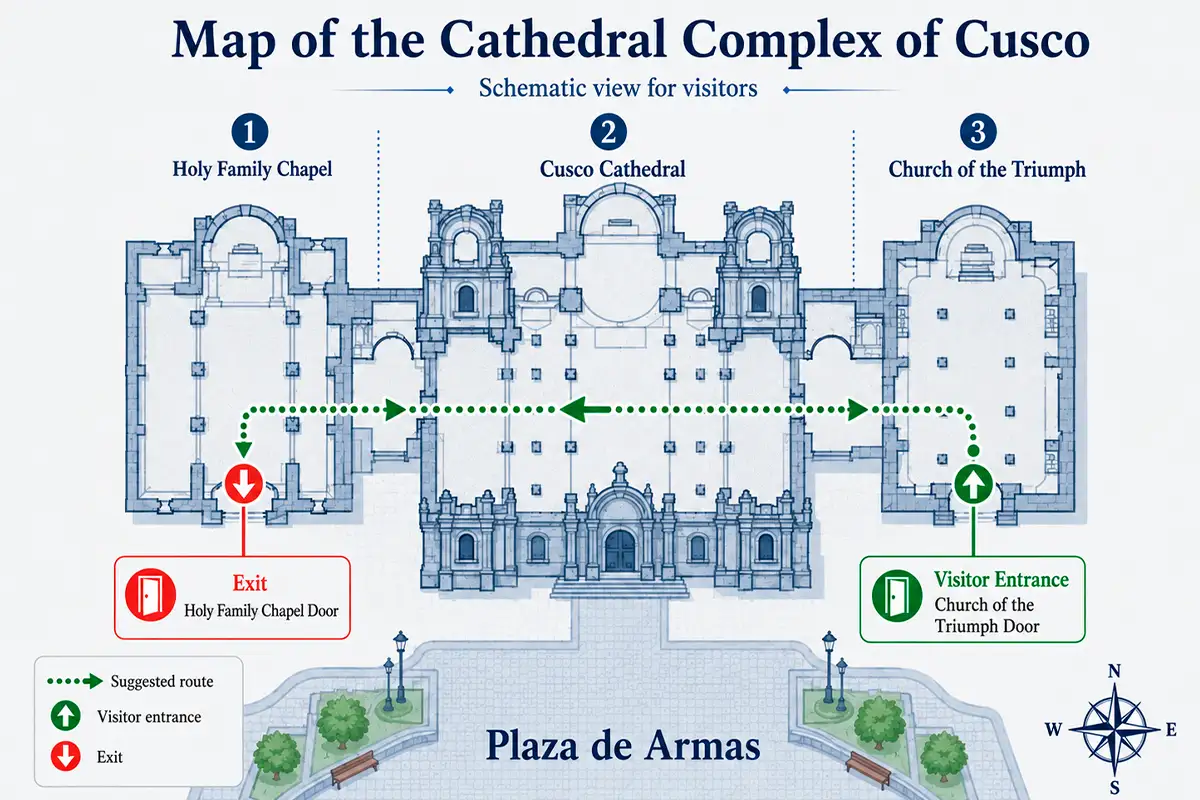
Entrance tickets are purchased at the entrance, or main door, of the Church of the Triumph, located next to the Cathedral on the left-hand side.
- Calle Triunfo 122, Historic Center of Cusco, Peru.
Bring your passport for identification. Payments may be accepted in local currency or by credit card. If you are visiting with children, bring an official document that proves their age.
Archbishopric Religious Circuit
This is a combined ticket that includes entry to Cusco Cathedral (including the Church of the Triumph and the Holy Family Chapel), as well as entry to the Church of San Cristóbal and the Archbishop’s Museum, which holds some of the finest works from the “Cusco School.”
- Foreign adult: S/50 or US$ 15.
- Foreign student: S/25 or US$ 8. A valid student ID is required, such as a university or institute card.
Please note
Do not confuse this with the Cusco Tourist Ticket. The Archbishopric Religious Circuit includes entry to churches and the Archbishop’s Museum, while the Cusco Tourist Ticket includes entry to archaeological sites and municipal museums.
How to Visit Cusco Cathedral
Do not be surprised if you walk past the Cathedral and find all its doors closed: the Gospel Door on the left, the Door of Forgiveness in the center, and the Epistle Door on the right. As mentioned earlier, the Cathedral is part of the cathedral complex, together with the Church of the Triumph on the left side and the Holy Family Chapel on the right side.
The entrance to visit the Cathedral Basilica is through the door of the Church of the Triumph. When you enter through this door, you can visit Cusco Cathedral, the Church of the Triumph, and finish at the Holy Family Chapel, which is the exit area.
Best time to visit
The best time to visit the Cathedral Basilica is from 10:00 a.m. to 11:30 a.m. You will find fewer people inside and enjoy the soft morning light, which, even in an enclosed space, naturally brightens the entrance area.
What to See Near Cusco Cathedral
Since it is located within the Historic Center of Cusco, there are many nearby attractions you can visit after your tour of Cusco Cathedral, making the most of your time in the city.
Plaza de Armas
This is the lively heart of the city and the square that surrounds the cathedral. It is framed by beautiful colonial stone arcades and wooden balconies. In the center, you will see its elegant fountain with the statue of the Inca.
Church of La Compañía de Jesús
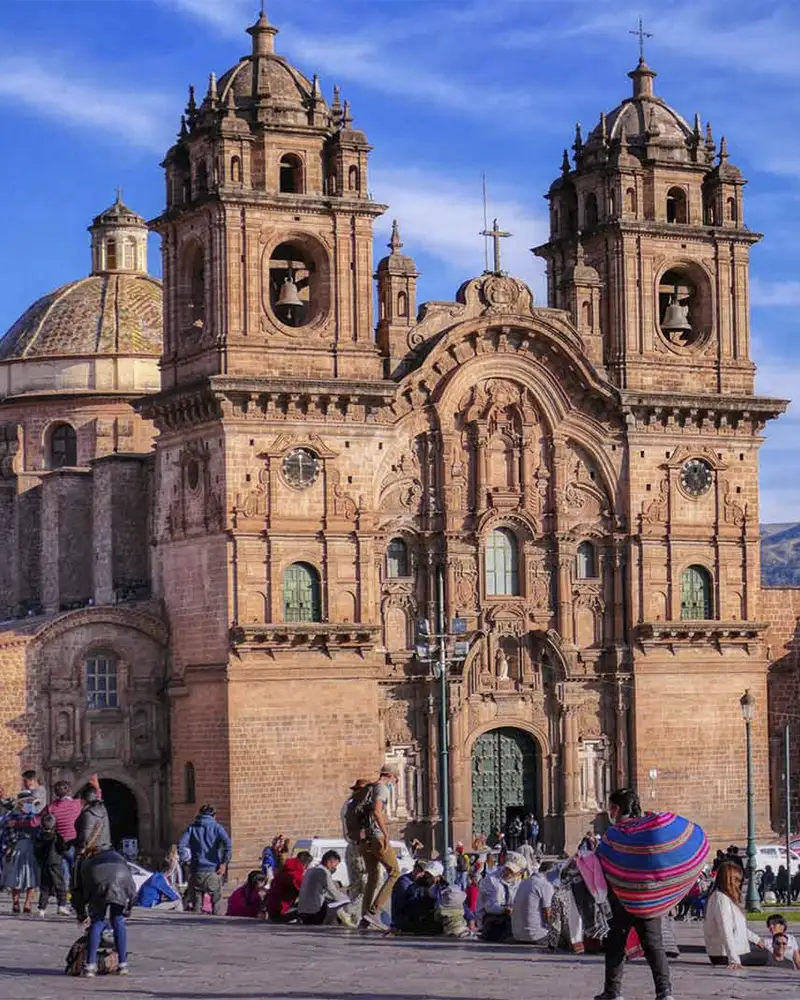
This church is located just across the square, on its southern side. Its Andean Baroque-style facade is one of the most impressive in South America. Inside, it has a main altarpiece fully covered in gold leaf, works of art from the Cusco School, and access to its upper choir, where you can enjoy a unique view of the square.
Twelve-Angled Stone
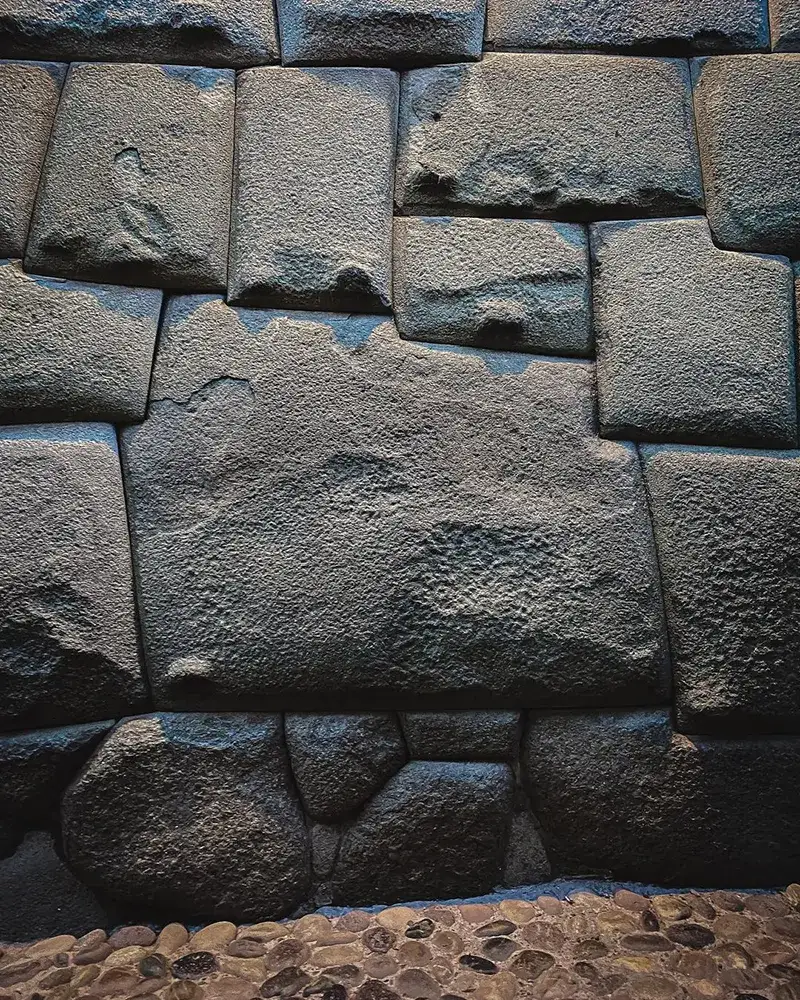
It is located just two blocks from the square, going up the famous pedestrian street of Hatun Rumiyoc. It is one of the best examples of the remarkable engineering and precise stonework of the Inca Empire. The Twelve-Angled Stone is part of the wall of the Palace of Inca Roca, today the Archbishop’s Palace, and stands out because its twelve corners fit perfectly with the surrounding stones without the use of glue or mortar.
Nazarenas Square
This is a quiet cobblestone corner located up Cuesta de Palacio, less than a 5-minute walk away. It is one of the most peaceful and charming colonial squares in the historic center. It is surrounded by important colonial buildings that now house prestigious hotels and museums.
 |  |
San Blas Neighborhood
This is the famous “artisan neighborhood,” located about 4 or 5 blocks from the cathedral, up a series of steep streets. It is a bohemian area full of charm, narrow stone streets, and traditional white houses with blue doors. Here you will find workshops run by well-known Cusco artisan families, street art galleries, cozy cafés, and a very relaxed atmosphere.
Coricancha
Coricancha, or the Temple of the Sun, is about a 10-minute walk away, going straight down Loreto Street or El Sol Avenue. It was the most sacred and important temple in the entire Inca Empire. On top of its finely carved stone foundations, the Spanish built the Convent of Santo Domingo. The contrast between the fine Inca walls, which survived major earthquakes, and the Baroque arches of the colonial cloister is truly striking.
San Pedro Central Market
San Pedro Central Market is about a 10-minute walk west, passing through San Francisco Square. It is the main market in the historic area and a true feast for the senses, bringing you closer to the most authentic, everyday side of Cusco. There, you will find rows full of colorful local fruits, Andean cheeses, hundreds of varieties of native potatoes, handicrafts, and busy stalls serving traditional food.
Practical Tips for Your Visit
- Dress respectfully: Since this is an active Catholic church, visitors are asked to dress modestly. It is best to cover your shoulders and knees, so avoid short shorts, tank tops, or sleeveless shirts.
- Bring a light jacket: The stone walls make the interior quite cold, even when it is sunny outside.
- Speak softly: Keep your voice low, as you would in a church, out of respect for people who come in to pray, especially near the Chapel of the Lord of the Earthquakes.
- Rent an audio guide or go with an official guide: The real value of the cathedral is in its details and stories, such as the guinea pig in the Last Supper painting. A guide can make the visit much more meaningful.
- Photos and videos are not allowed: Taking pictures inside is not permitted under any circumstances, not even without flash. This helps protect the colonial paintings and keeps the space respectful. Guards watch closely.
- Do not enter wearing caps or hats: Men are expected to uncover their heads when entering as a sign of respect.
- Do not eat or drink inside: Eating, drinking water, or chewing gum inside the naves is strictly forbidden.
- Do not touch the artworks: Avoid leaning on or touching the gilded frames, sculptures, or silver altars. The natural oils from your hands can damage this historic heritage.
- Do not use your phone: Put it on silent or vibrate before entering, and avoid answering calls inside.
Cusco Cathedral - FAQs
Can you enter Cusco Cathedral during Mass?
Yes, but visiting during Mass is different from a tourist visit. If you enter during a religious service, you should do so respectfully, remain silent, and avoid walking through the chapels or interior areas as if you were on a tour. Mass times may change by season or during special celebrations, so it is best to confirm them before you go.
Is Cusco Cathedral accessible for people with limited mobility?
Access can be somewhat difficult for people with limited mobility, as the complex has steps, stone floors, and old areas with uneven surfaces. If you are traveling with older adults or someone who needs support, it is best to go with a companion and ask at the entrance if assistance is available on the day of your visit.
Is it better to buy the individual ticket or the Archbishopric Religious Circuit ticket?
It depends on how much time you have. If you only want to visit Cusco Cathedral, the individual ticket is enough. If you are also interested in visiting the Church of San Cristóbal and the Archbishop’s Museum, the Archbishopric Religious Circuit may be a better option, as it includes several religious sites in a single ticket.
Where can you take good photos of Cusco Cathedral?
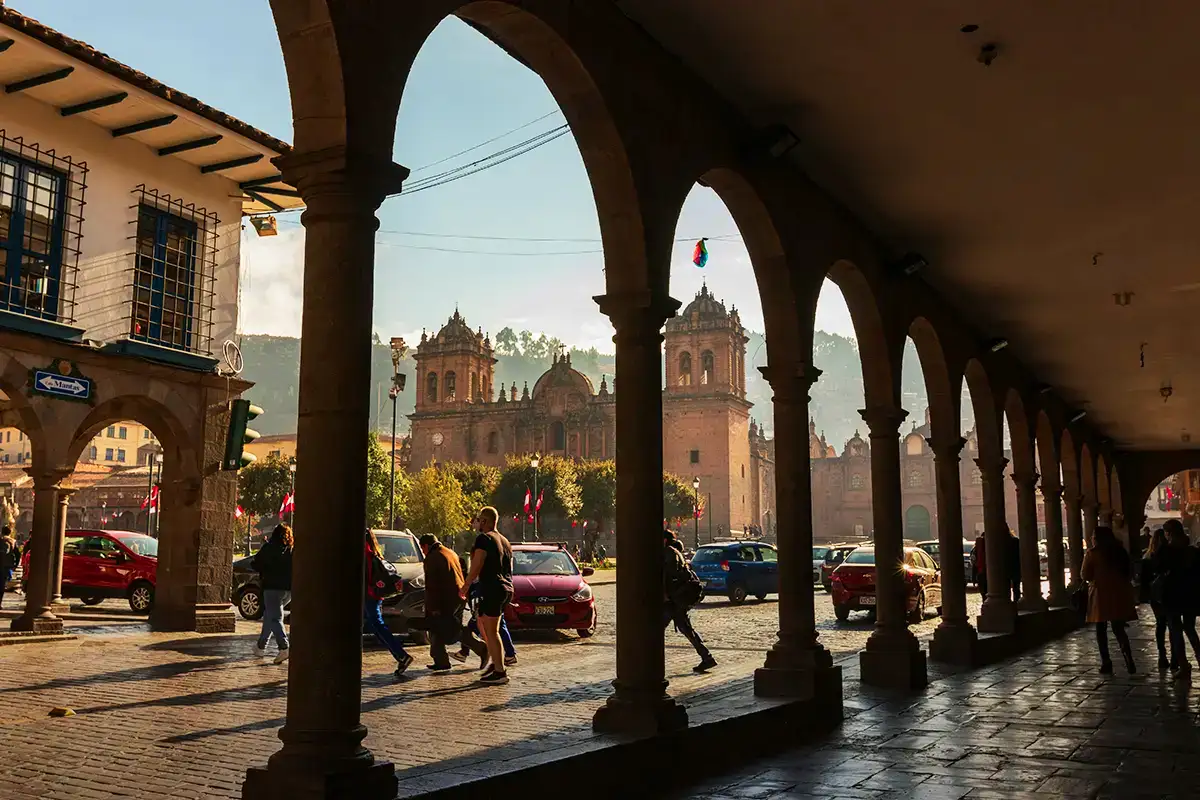
Since photos are not allowed inside the church, the best photo spots are outside. You can photograph the facade from the Plaza de Armas, from the arcades across the square, or from the second floor of some nearby cafés. Morning usually offers cleaner light to capture the stonework and the details of the facade.
Is it a good idea to visit Cusco Cathedral with children?
Yes, but it is better to keep the visit short and calm. For young children, a 30- to 40-minute visit may be enough. It is important to remind them not to run, touch the altars, speak loudly, or eat inside. If you visit with a guide, ask for a simple and visual explanation.

Add new comment