



Exploring the traditional dishes of the Peruvian Andean food means discovering an essential part of Peruvian food, shaped by centuries of history, native ingredients, and customs that are still part of everyday life in the Andes. These dishes bring together ingredients such as potatoes, corn, quinoa, and different types of meat in recipes filled with history.
From pachamanca cooked beneath the ground to traditional cuy chactado, each preparation preserves part of the Andean story and shows how local communities transformed regional products into dishes rich in flavor and identity.
What Makes Peruvian Andean Cuisine Special?
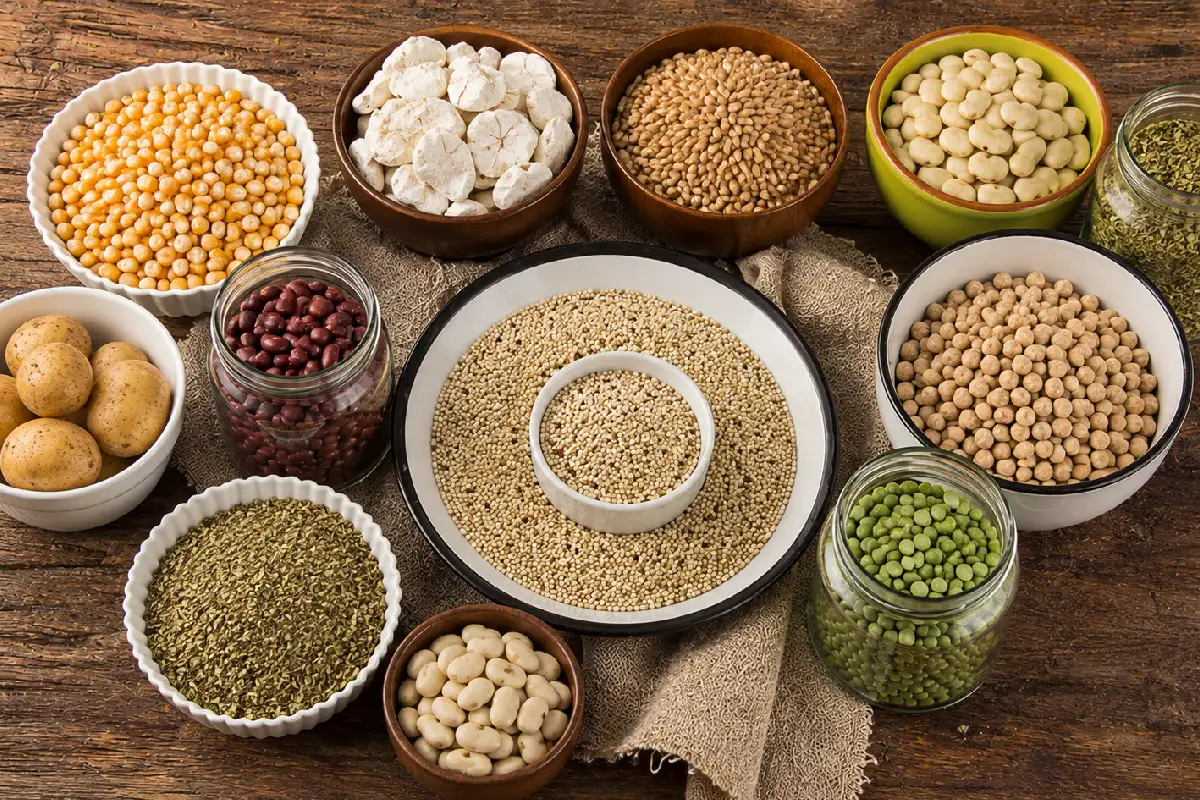
One of the most distinctive features of highland cuisine is its close connection to the products provided by the land. Native potatoes, corn, quinoa, broad beans, olluco, chuño, and herbs such as chincho and huacatay are used in many traditional recipes.
These ingredients are often combined with meats such as guinea pig, lamb, pork, and alpaca, creating flavorful dishes that reflect an authentic Andean taste and are well suited to the climate and lifestyle of the Andes.
Beyond its ingredients, Andean cuisine also stands out for its traditional cooking techniques. Some dishes are cooked underground, while others use ancient preservation methods such as drying. Many recipes are still prepared for family gatherings, festivals, and celebrations where food holds a special cultural meaning.
A Brief History of Traditional Peruvian Andean Cuisine
Long before the arrival of the Spanish, Andean communities had already developed a deep relationship with their food. Products such as potatoes, corn, quinoa, oca, and olluco were part of their daily diet, while preservation techniques such as chuño and charqui made it possible to store food for long periods.
The arrival of the Spanish introduced new ingredients, including pork, wheat, onions, garlic, and dairy products. Over time, these foods blended with Andean traditions and helped shape some of the most representative traditional food in Peruvian highlands.
The demanding conditions of the Andes also encouraged the development of special preparation and preservation methods, creating practical, nutritious food adapted to life at high altitude.
The Main Traditional Dishes of the Peruvian Andes
The Peruvian highlands have a diverse culinary tradition in which every dish reflects the ingredients and customs of Andean communities. Many of these Peruvian meals are prepared for everyday family life, while others are reserved for festivals and special celebrations.
Potatoes, corn, quinoa, and different meats are used in recipes filled with history, including pachamanca, cuy chactado, and chiriuchu.
Below, discover some of the most representative Peruvian dishes from the Andes, their main ingredients, and the stories behind each preparation.
Pachamanca
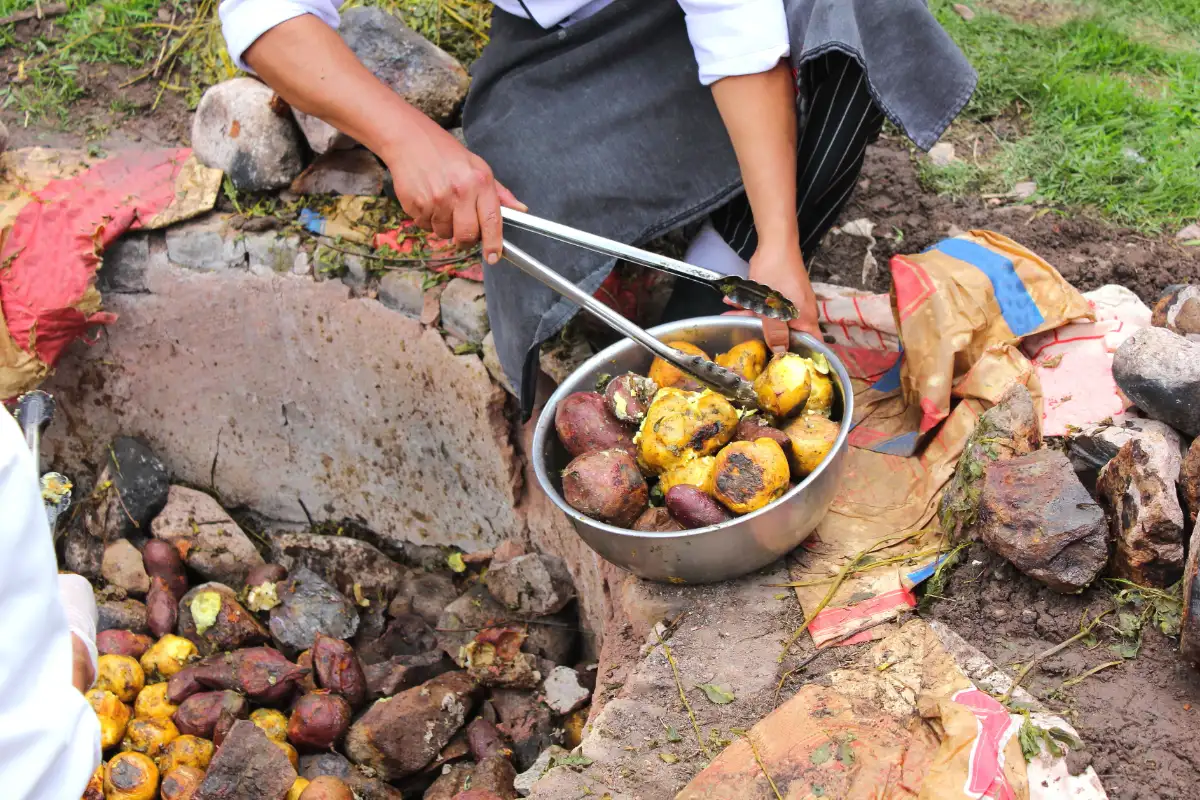
Pachamanca is one of the most representative dishes of the Peruvian highlands and one of the preparations that best preserves the connection between Andean food and the earth. It is made with meats such as pork, lamb, chicken, or guinea pig, together with potatoes, broad beans, corn, and aromatic herbs such as chincho.
The ingredients are cooked inside an underground oven made with previously heated stones. They are arranged in layers and left to cook slowly, allowing their flavors to blend. This cooking method has survived through generations and remains an important part of Andean celebrations, family gatherings, and festivals.
Today, you can enjoy traditional pachamanca in Sacred Valley communities, at local festivities, and through selected culinary experiences in Cusco. You can also experience this tradition during the Salkantay Trek, where pachamanca is prepared as part of the journey, combining an unforgettable hike through the Andes with the flavors of traditional Peruvian cuisine.
Cuy Chactado
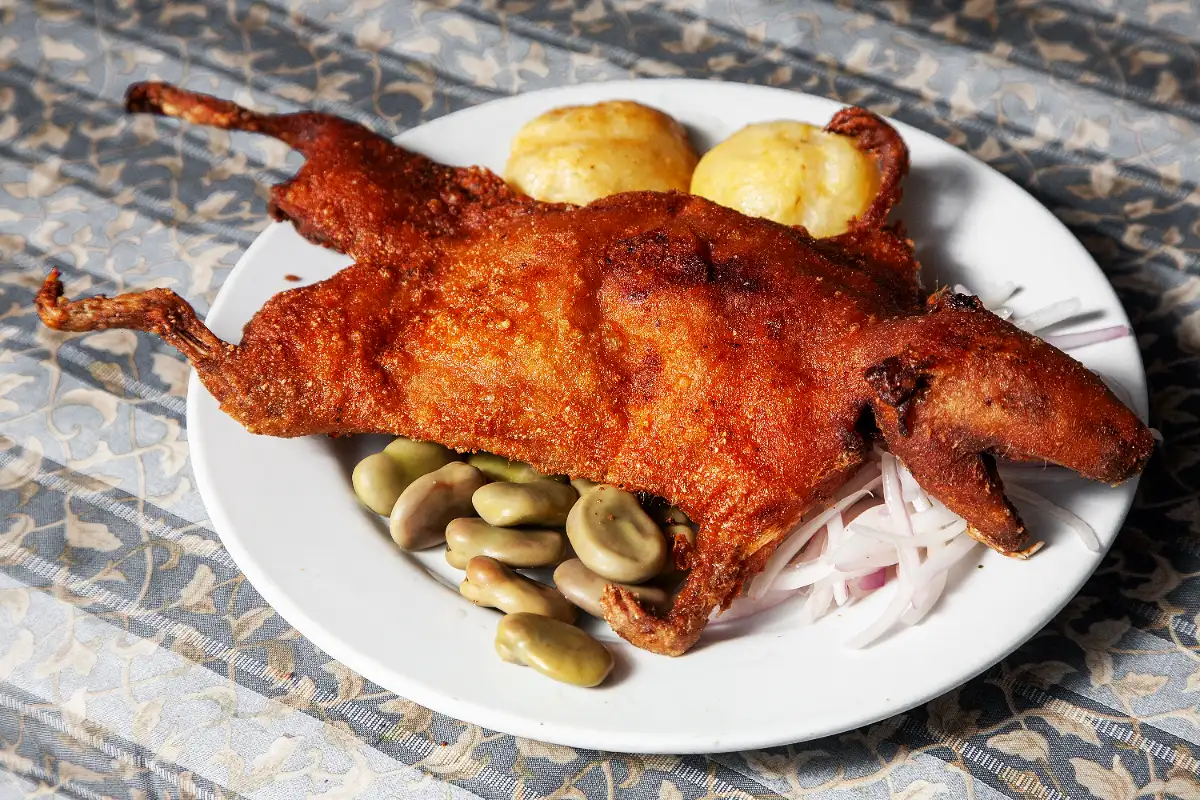
Cuy chactado is prepared by seasoning guinea pig and frying it under pressure until the outside becomes golden and crispy. It is usually served with potatoes, corn, salad, and regional sauces that complement its flavor and highlight the traditional ingredients of the Andes.
This dish has a long history within Andean communities, where guinea pig has been an important source of food since pre-Hispanic times. It is especially well known in Arequipa, although it is also enjoyed in Cusco, Ayacucho, Cajamarca, and other Andean regions, where it is commonly prepared for festivals, family gatherings, and special occasions.
Fried Trout (Trucha Frita)
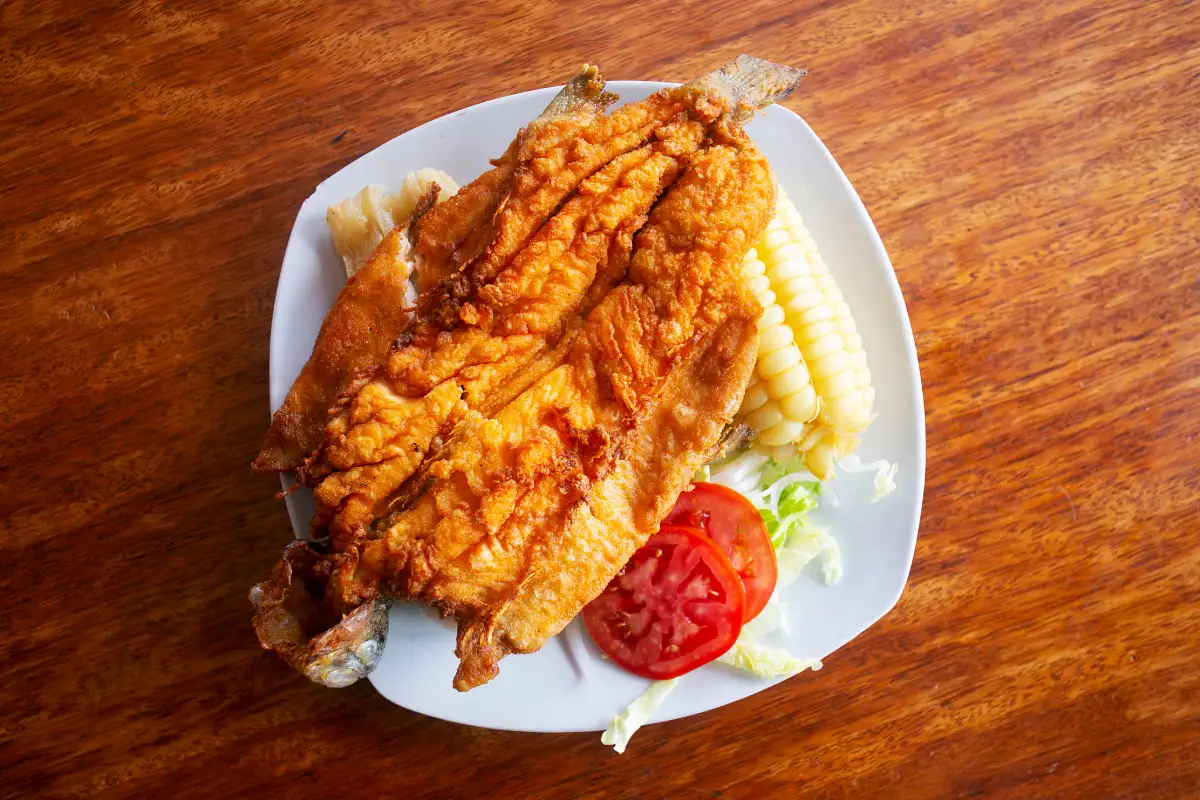
Fried trout has become one of the most popular dishes in Peru’s Andean regions, particularly in Puno, Junín, and Cusco. Its preparation is simple, but a light seasoning brings out the fresh flavor of the fish before it is fried until golden and crispy.
It is commonly served with potatoes, rice, salad, or corn and is one of the traditional dishes of the Peruvian highlands most frequently ordered by travelers visiting the country’s Andean regions.
Additional fact: Fried trout is easy to find in restaurants near lakes, rivers, and high-altitude fish farms, where it is usually served fresh with locally grown ingredients.
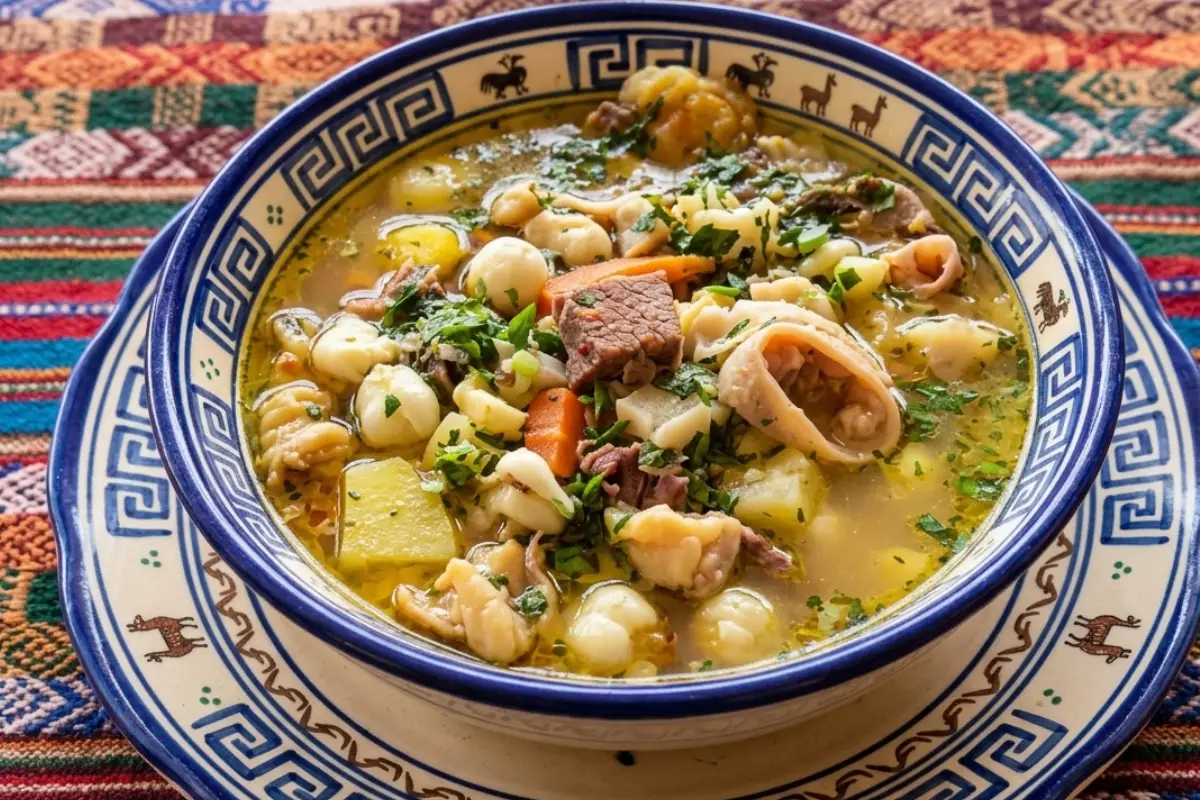
Patasca or Mote Soup
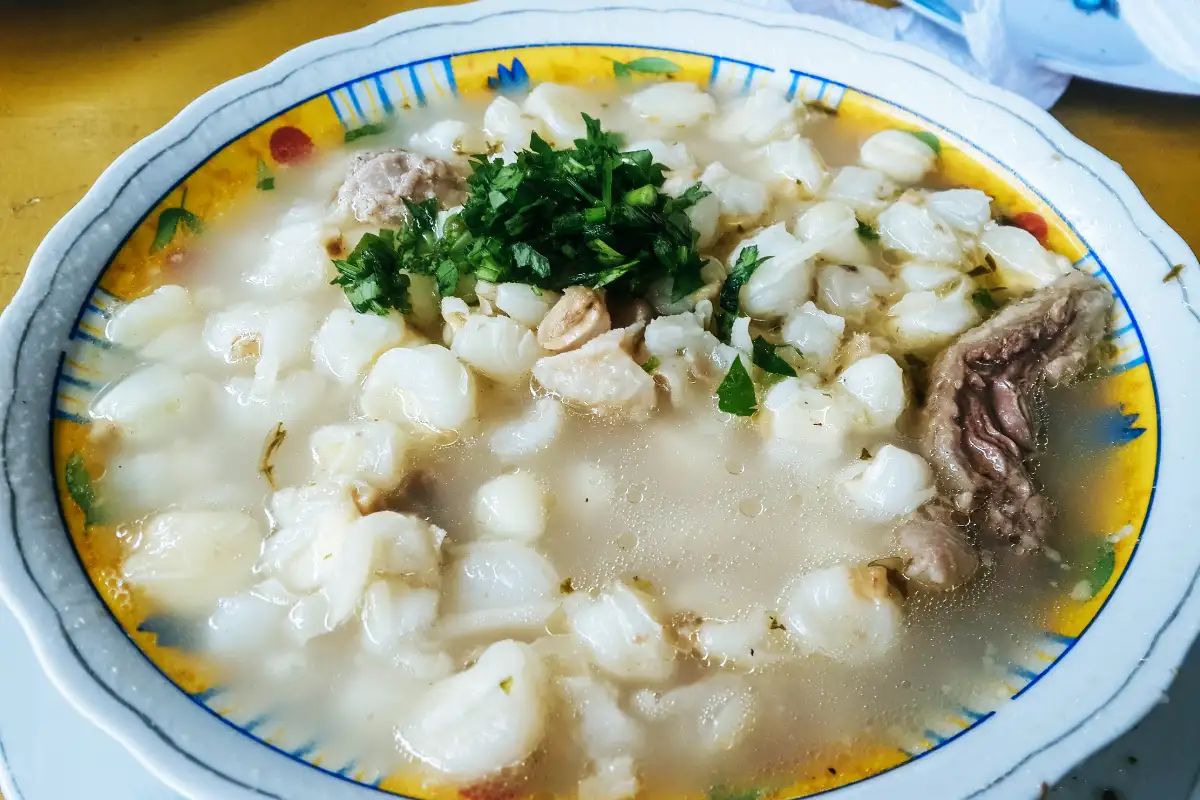
Known in some regions as mote soup, patasca is prepared with peeled corn, meat, and other ingredients that vary depending on the area. It requires a long cooking time so that the flavors of the corn, meat, and additional ingredients come together, creating a rich and satisfying broth.
Because it is nutritious and filling, patasca is commonly eaten in colder areas of the Andes and during family gatherings or celebrations. It may have different names from one region to another, but mote remains its main ingredient and an essential product in traditional Peruvian cuisine.
Pork Chicharrón
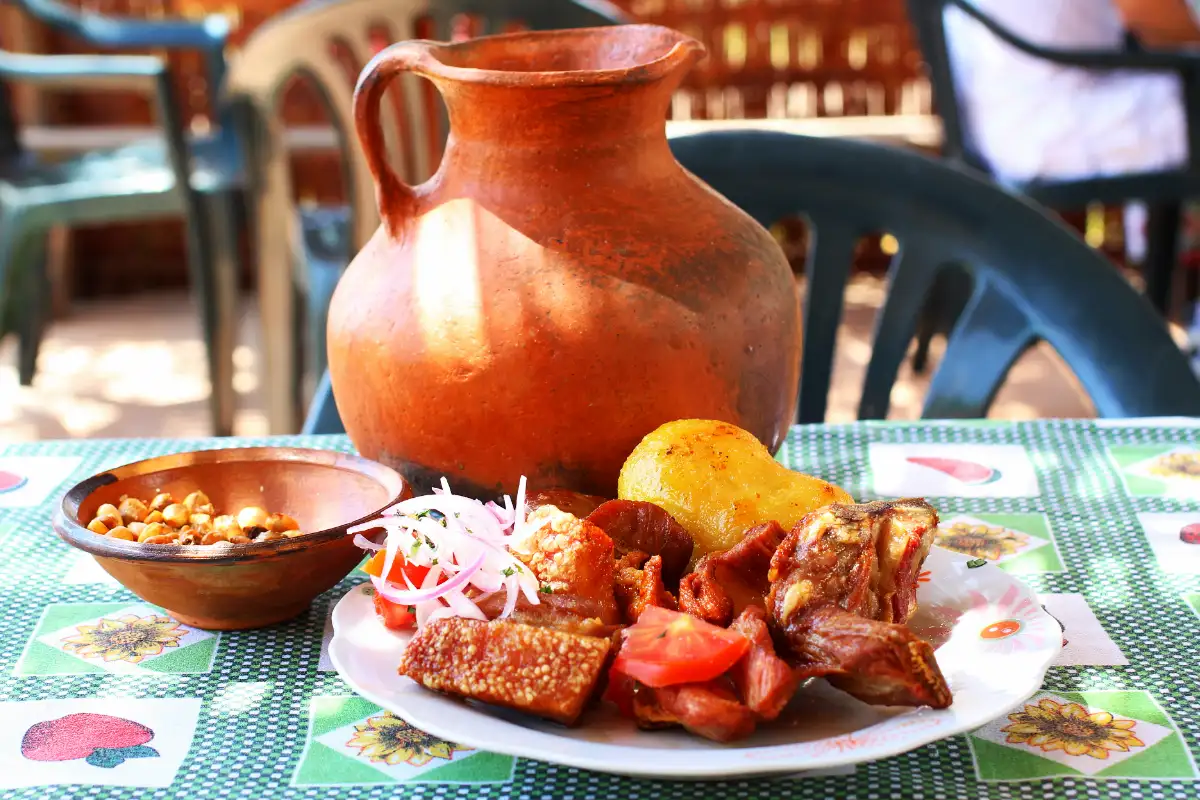
Pork chicharrón is a traditional dish made by slowly cooking and browning pork until it becomes crispy on the outside while remaining tender and juicy inside. It is generally served with mote, potatoes, sweet potatoes, salsa criolla, or regional chili sauces, creating a combination of flavors widely appreciated throughout Peru.
Although it is eaten in many parts of the country, chicharrón has a strong presence in the Andes, especially in Cusco, where it is commonly found at traditional breakfasts, local markets, and food fairs.
One of its best-known versions is pan con chicharrón, a popular breakfast sandwich that combines pork with fried sweet potato and salsa criolla. It has become one of Peru’s most representative sandwiches.
Olluquito con Charqui
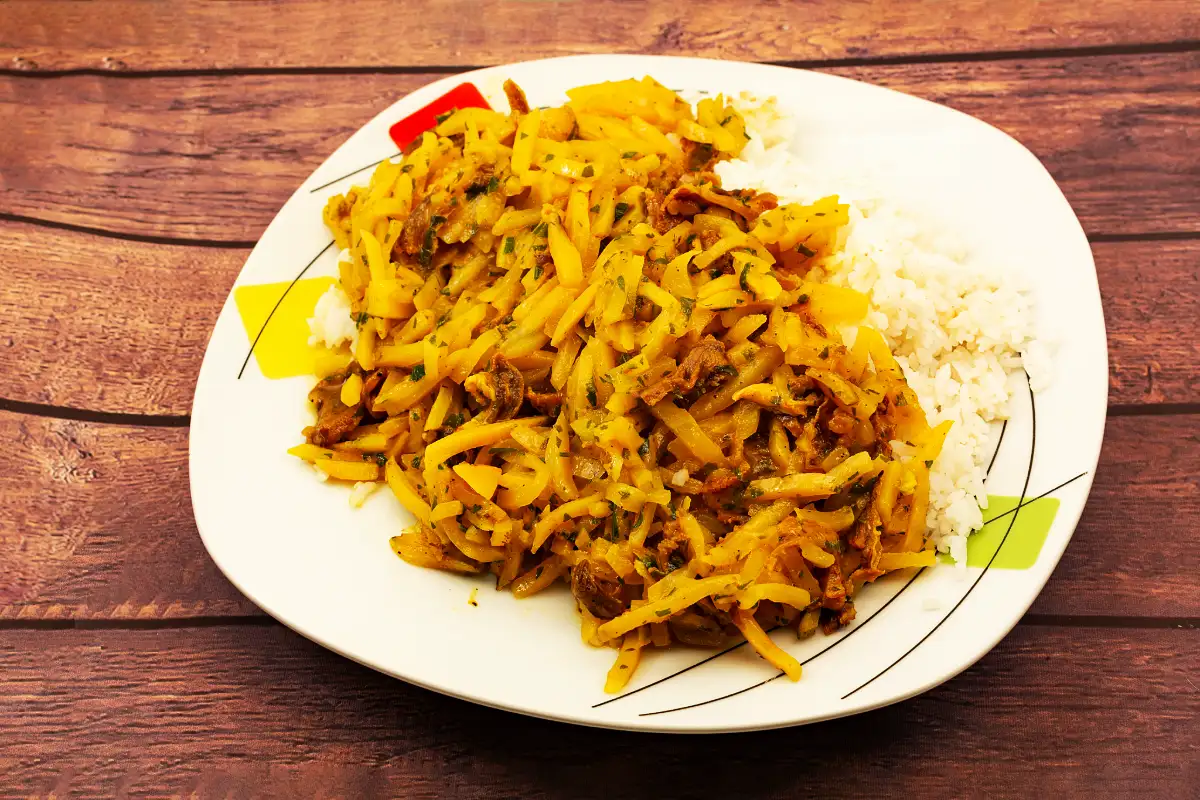
Olluquito con charqui brings together two ingredients deeply connected to the food history of the Andes: olluco, a traditional tuber grown by Andean communities, and charqui, dried meat that once allowed food to be preserved for long periods. The dish is prepared with chili peppers, onions, and seasonings that enhance the distinctive flavors of the olluco and dried meat.
Adobo
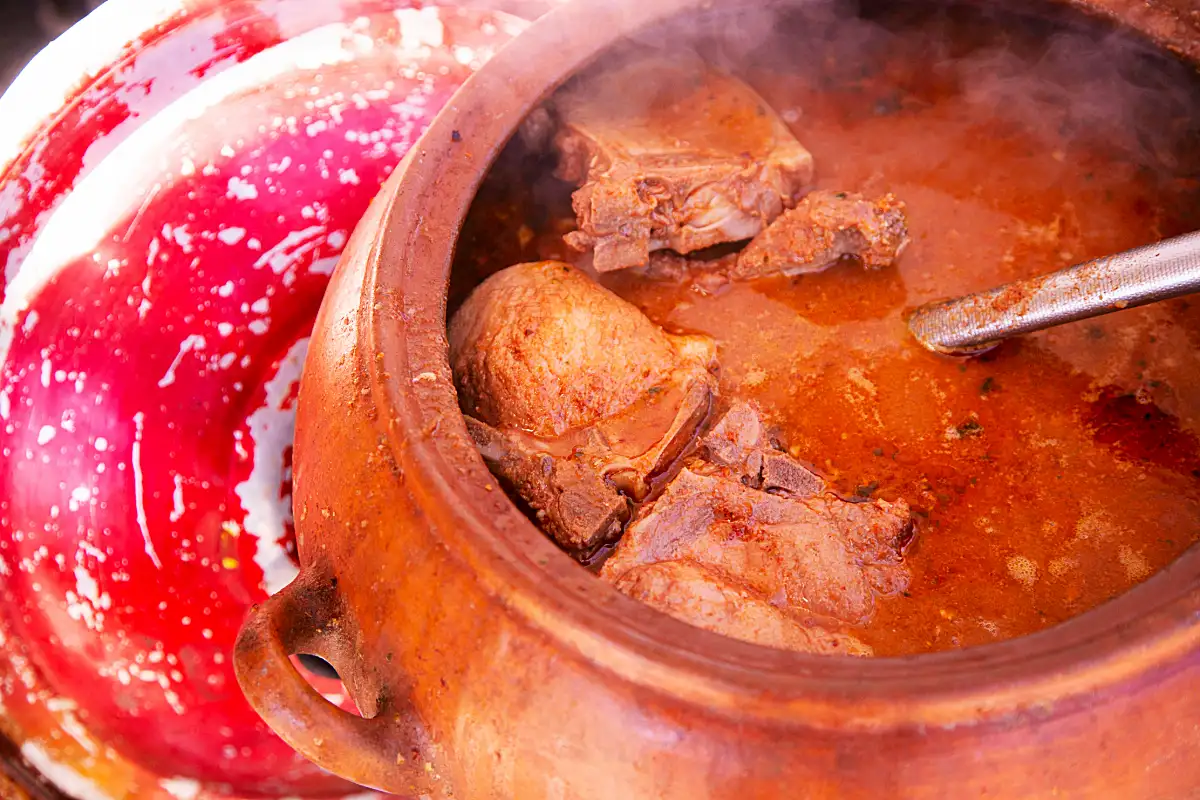
Adobo is a traditional preparation in which meat, mainly pork, is marinated in a mixture of chili peppers, garlic, onions, vinegar or chicha de jora, and spices. It is then cooked slowly until the meat becomes tender and the broth develops a deep, rich flavor. Ingredients and preparation methods vary from region to region, resulting in several different versions.
In the Peruvian highlands, adobo has a particularly important place in regions such as Arequipa, where it has become one of the area’s most representative dishes. Similar preparations can also be found in other parts of the Andes.
Chiriuchu
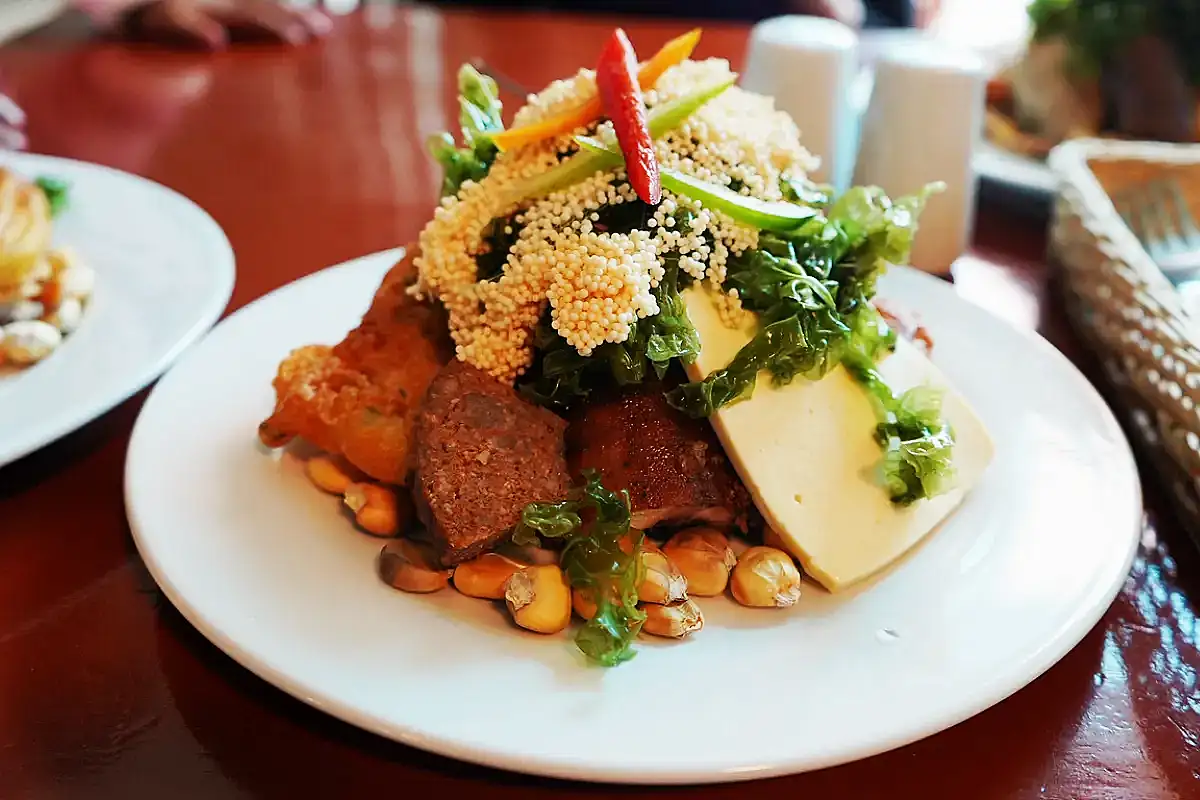
Chiriuchu is one of Cusco’s most important festive dishes and an excellent example of how different Andean ingredients can come together in a single preparation. Its name comes from Quechua and means “cold chili,” referring to the traditional way its ingredients are prepared in advance and served at room temperature.
Its main ingredients include guinea pig, chicken, fish roe, cochayuyo seaweed, charqui, cheese, toasted corn, rocoto pepper, and other regional products. It is prepared especially during celebrations such as Corpus Christi and represents the union of different culinary traditions from the Cusco region.
Lamb Head Soup
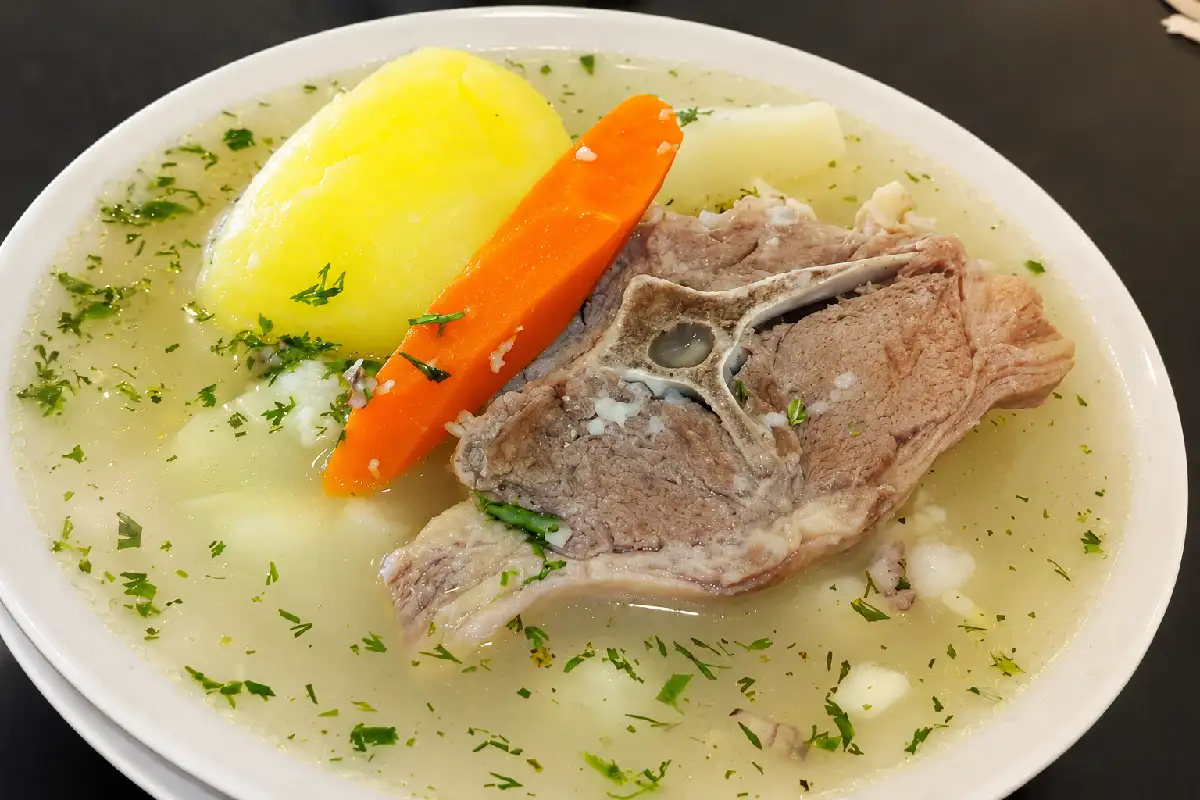
Lamb head soup is a traditional dish from the Peruvian Andes known for being rich, nutritious, and filling. It is prepared by slowly cooking a lamb’s head with potatoes, chuño, herbs, and seasonings. The result is a concentrated broth commonly enjoyed in areas with cold climates.
In many Andean communities, it is served for breakfast and can be found in local markets and during festivals. Its preparation has been passed down from one generation to the next.
Puchero
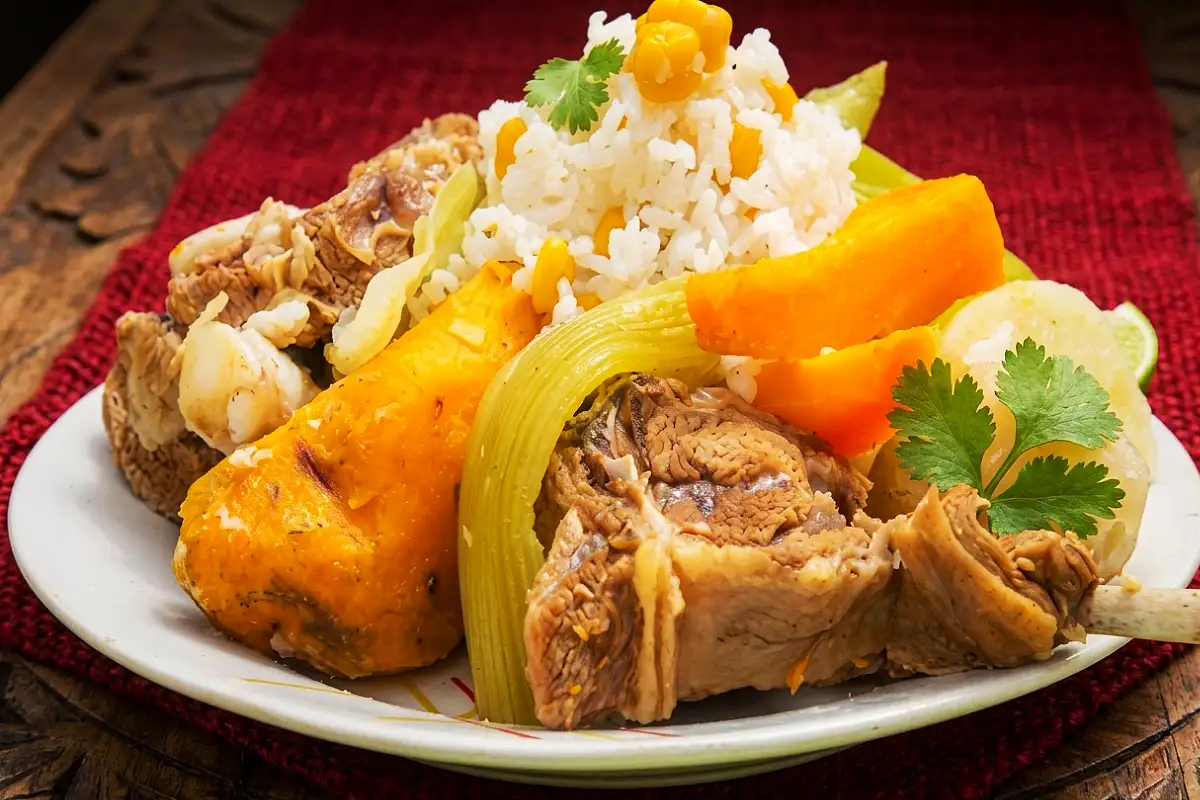
Puchero, known as timpu in some Andean regions, is a traditional dish made with meat, vegetables, potatoes, cabbage, chickpeas, and other ingredients that may vary by location. Its main characteristic is the combination of several products cooked together to create a complete and generous meal.
In Cusco, puchero has a special connection to the Carnival season, when it becomes one of the most representative dishes of the celebrations. It is also associated with family gatherings and festive occasions, highlighting the importance of food within Andean traditions.
Pepián de Cuy
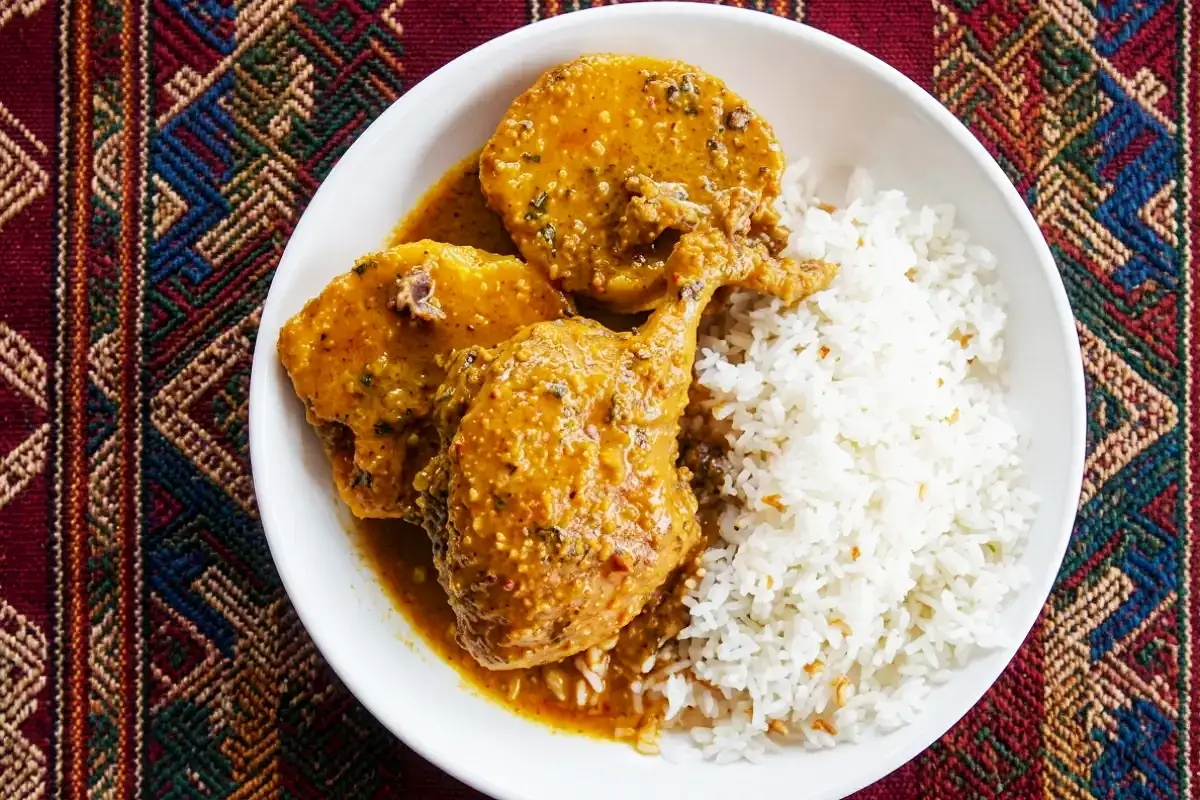
Pepián de cuy is a traditional stew made with guinea pig and a thick sauce prepared with chili peppers, spices, and local ingredients. Its creamy texture and intense flavor offer another way to enjoy one of the oldest ingredients in Andean cuisine.
This dish is prepared in different regions of Peru, with variations based on local customs. It is especially popular in Ayacucho and other areas of the central highlands, where it remains part of the traditional cuisine of local communities. Its preparation is connected to ancient methods of making thick stews and using the ingredients available in each region, maintaining a link between modern Peruvian food and long-standing Andean traditions.
Kankacho
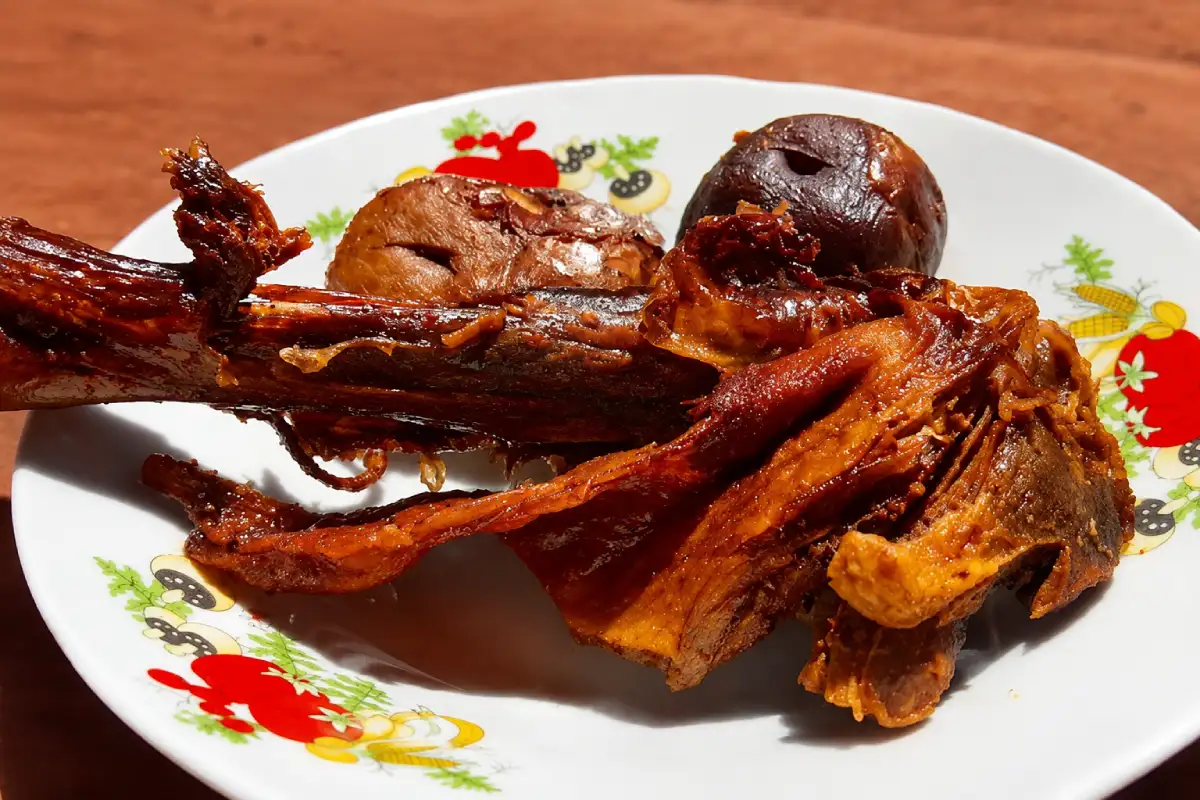
Kankacho is a traditional dish from Ayaviri, in the Puno region. It is mainly prepared with lamb marinated in chili peppers, garlic, and spices before being slowly roasted. The result is tender, juicy meat with a rich flavor, usually served with potatoes and other Andean products.
Its name comes from the Quechua word kanka, which is related to roasting or cooking over a fire. Kankacho is highly valued in the province of Melgar and forms an important part of Puno’s culinary identity.
Chairo
Chairo is a traditional soup made with ingredients such as chuño, meat, vegetables, herbs, and grains. This combination gives it a thick consistency and high nutritional value, making it especially suitable for the cold climate of high-altitude Andean regions.
It is closely associated with Cusco and Puno, where it is part of the everyday cuisine of many families. Its origin is connected to the need to make the most of Andean products available throughout the year, particularly ingredients that could be preserved for long periods.
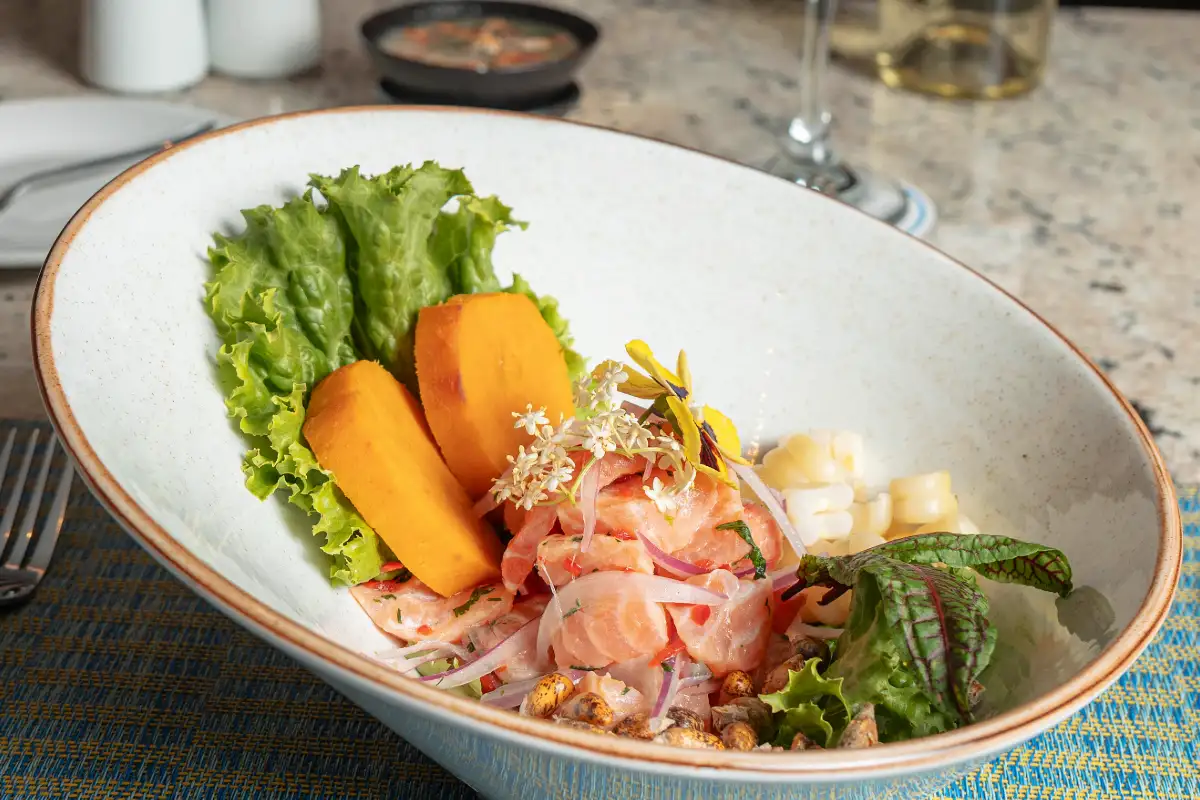
Trout Ceviche (Ceviche de trucha)
Trout ceviche is an Andean version of traditional Peruvian ceviche that replaces ocean fish with fresh trout from high-altitude rivers and lakes. It is prepared with lime juice, onions, chili peppers, and other ingredients that enhance the delicate flavor of the fish.
This adaptation reflects the diversity of Peruvian cuisine and the way recipes change according to the products available in each region. It is commonly found in places such as Cusco and Puno, especially near lakes, trout farms, and popular tourist destinations in the Andes.
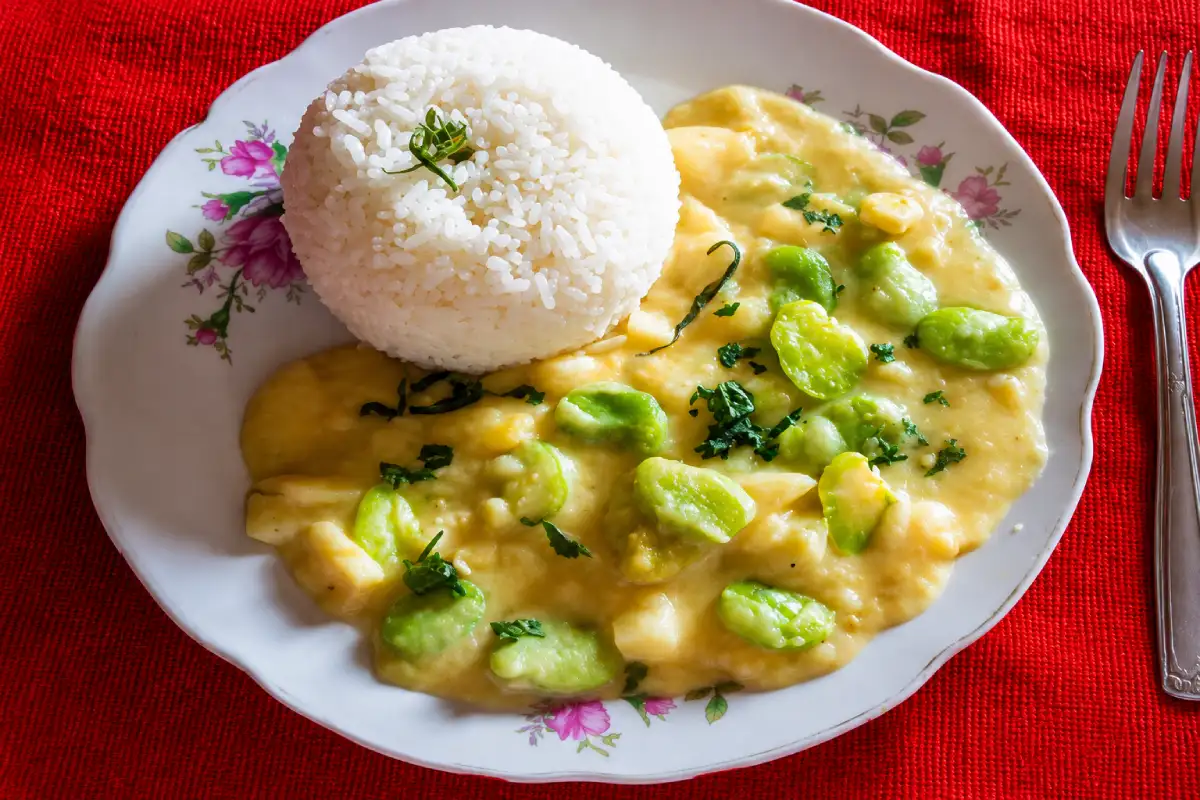
Broad Bean Kapchi
Broad bean kapchi is a traditional Cusco dish made with broad beans, fresh cheese, milk, aromatic herbs, and chili pepper. Its creamy texture and mild flavor make it a representative example of homemade Andean cooking.
Its popularity comes from the way it combines ingredients grown in the Cusco region in a simple, nutritious recipe filled with local identity. It is especially enjoyed during the fresh broad bean season and remains part of family meals that keep the culinary traditions of the Andes alive.
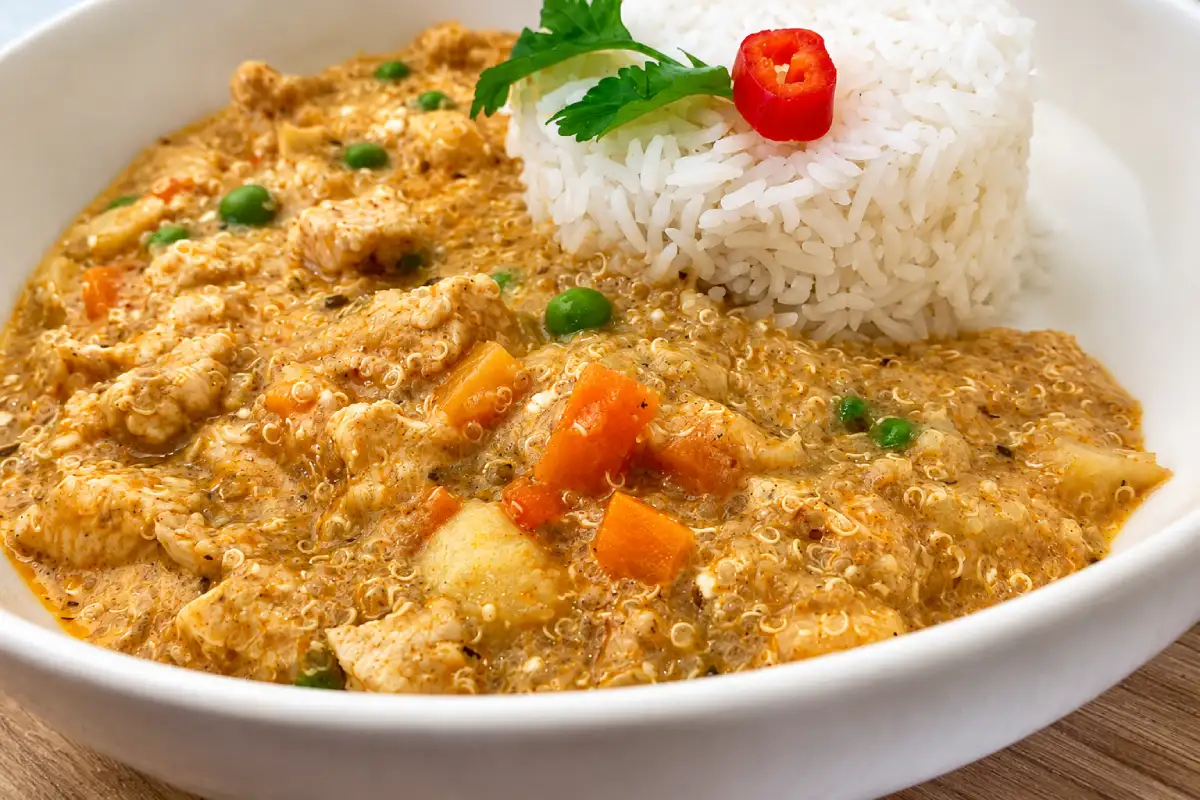
Quinoa Stew
Quinoa stew uses one of the most important grains of Peru, a food that has been part of the Andean diet for centuries, it is often considered an Andean superfood because of its nutritional value and its ability to grow at high altitudes. It is prepared with vegetables, herbs, and seasonings. Depending on the region, cheese, milk, or meat may also be added to create a more complete and flavorful meal.
This dish reflects the importance of quinoa within Peruvian cuisine and the way Andean communities have continued to preserve and use their traditional products.
Huatia
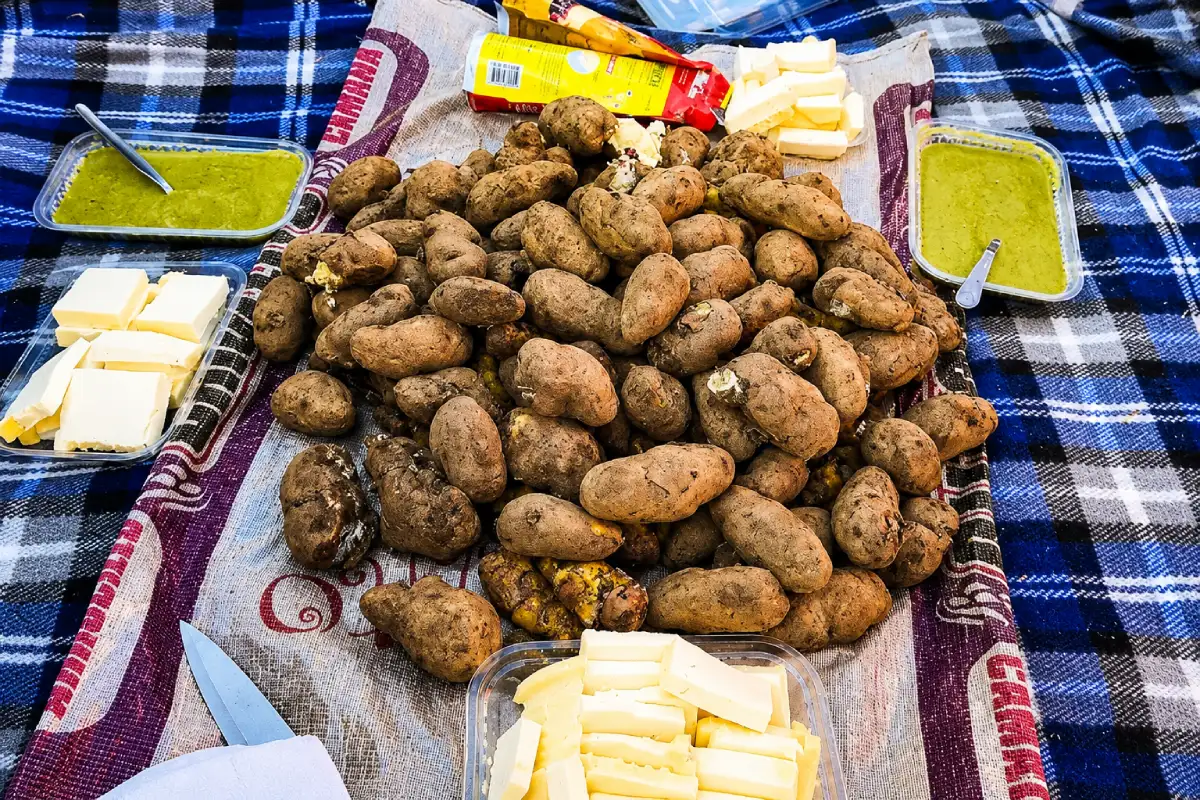
Huatia is an ancient method of cooking products from the land that originated in Andean communities. It involves building a temporary oven with hot stones and earth, where potatoes, ocas, and other freshly harvested products are placed and slowly cooked, preserving their natural flavors.
More than just a dish, huatia represents a tradition connected to agricultural work and gratitude for the food provided by the earth. It is commonly prepared during harvest season and at community gatherings, keeping alive a custom that connects food with daily life, nature, and the ancestral practices of the Andes.
Main Ingredients in Traditional Peruvian Andean Cuisine
| Ingredient | Importance in Andean Cuisine |
| Potatoes and Andean tubers | Potatoes, olluco, oca, and mashua form the base of many traditional dishes. They are commonly used in soups, stews, and side dishes. |
| Corn | One of the oldest crops in the Andes. It is enjoyed in different forms, including fresh corn, mote, and toasted corn, and is used in traditional dishes and drinks. |
| Quinoa and other Andean grains | Quinoa, cañihua, and kiwicha provide valuable nutrients and are commonly used in soups, stews, and homemade meals. |
| Traditional meats | Guinea pig, lamb, alpaca, pork, and chicken are key ingredients in festive dishes and everyday meals across different regions. |
| Charqui and preserved foods | Dried meat and other preservation methods allowed Andean communities to store food for long periods in high-altitude regions. |
| Chili peppers and aromatic herbs | Ingredients such as ají amarillo, rocoto, chincho, huacatay, and other herbs give Andean recipes their distinctive flavor and identity. |
| Broad beans and legumes | These ingredients are widely used in soups, stews, and side dishes, especially in agricultural communities throughout the Andes. |
| Trout | Trout has become an important part of the cuisine in many high-altitude regions, especially in areas with rivers and lakes where the fish is raised. |
Where Can You Try Traditional Dishes from the Peruvian Andes?
The best way to experience authentic Peruvian food is to visit the places where these recipes are still part of everyday life. Traditional markets, local fairs, and small regional restaurants offer a genuine Andean taste through homemade dishes prepared with fresh ingredients from each area.
In destinations such as Cusco, Arequipa, Puno, Cajamarca, and Junín, you will find places where food preserves its traditional flavors and reflects the identity of each community. Beyond trying a typical dish, visiting these places allows you to discover Andean products, local customs, and the close relationship between food and the culture of the Andes.
Peruvian Andean Food FAQs
What Is the Most Famous Dish from the Peruvian Andes?
There is no single dish that represents the entire Peruvian highlands, as every region has its own culinary traditions. However, pachamanca and cuy chactado stand out because of their long history, widespread recognition, and importance within Andean cuisine.
Why Does the Same Dish Have Different Names in Different Regions?
Each region adapts its recipes according to its local ingredients, customs, and history. For this reason, the same dish may vary in name, preparation, or ingredients while still preserving the essence of traditional Andean cuisine.
Which Dishes Are Eaten Every Day, and Which Are Prepared for Festivals?
Soups and stews made with potatoes, quinoa, and broad beans are part of everyday meals in many communities. In contrast, dishes such as pachamanca, chiriuchu, and kankacho are often prepared for festivals, important celebrations, and family gatherings.
Is Food from the Peruvian Andean Spicy?
Not every dish from the Peruvian highlands is spicy. Although many recipes use chili peppers to add flavor and aroma, the level of heat depends on the dish and the region. Most preparations can also be adjusted to suit each person’s preferences.

Add new comment